AI in Veterinary Market Size, Share, and Trends Analysis by Offering (Software, Hardware, & Services), Deployment (Cloud, On Premises, Hybrid, & Edge Embedded), Technology (Computer Vision, Natural Language Processing, Predictive Analytics, & Generative AI), Animal Type (Companion Animals, Livestock Animals, & Others), Application (Diagnostic Imaging, Laboratory Diagnostics, & Others), End User (Independent Veterinary Practices, Veterinary Hospitals& Others), and Region, 2026–2035
Industry: Healthcare | Publishing Date: July 28, 2026 | Last Updated: September 30, 2026 | No of Pages: N/A | No. of Tables: N/A | No. of Figures: N/A | Format: PDF | Report Code: HC5435
What Is the AI in Veterinary Market Size?
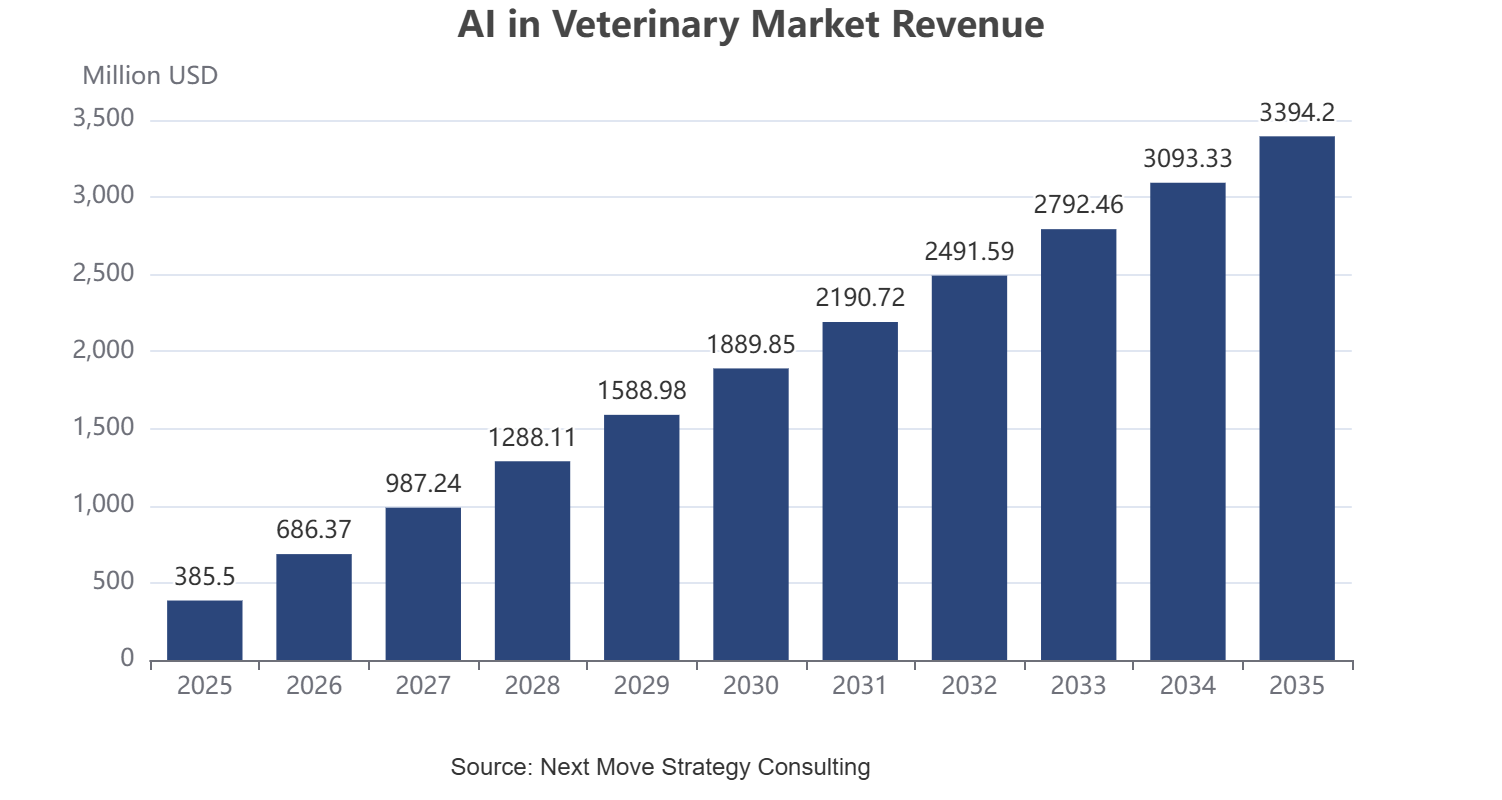
The global AI in Veterinary Market size reached USD 385.5 Million in 2025 and is estimated at USD 479.2 Million in 2026, forecast to reach USD 3394.2 Million by 2035 at a CAGR of 24.3% between 2026 and 2035. North America leads with an approximate 46% share, while Software dominates the offering segment at approximately 52% share in 2025.
We observed that AI-powered point-of-care diagnostic analyzers are driving early revenue while clinician-facing decision support and generative AI documentation tools are scaling fastest, reflecting a market that is moving from standalone diagnostic hardware toward integrated software ecosystems across veterinary practices.
|
Key Takeaways |
|
By Offering: Software held the largest share, expanding from USD 200.5 million in 2025 to USD 1,968.7 million by 2035; Software is also the fastest-growing sub-segment at 25.8% CAGR from 2026–2035. |
|
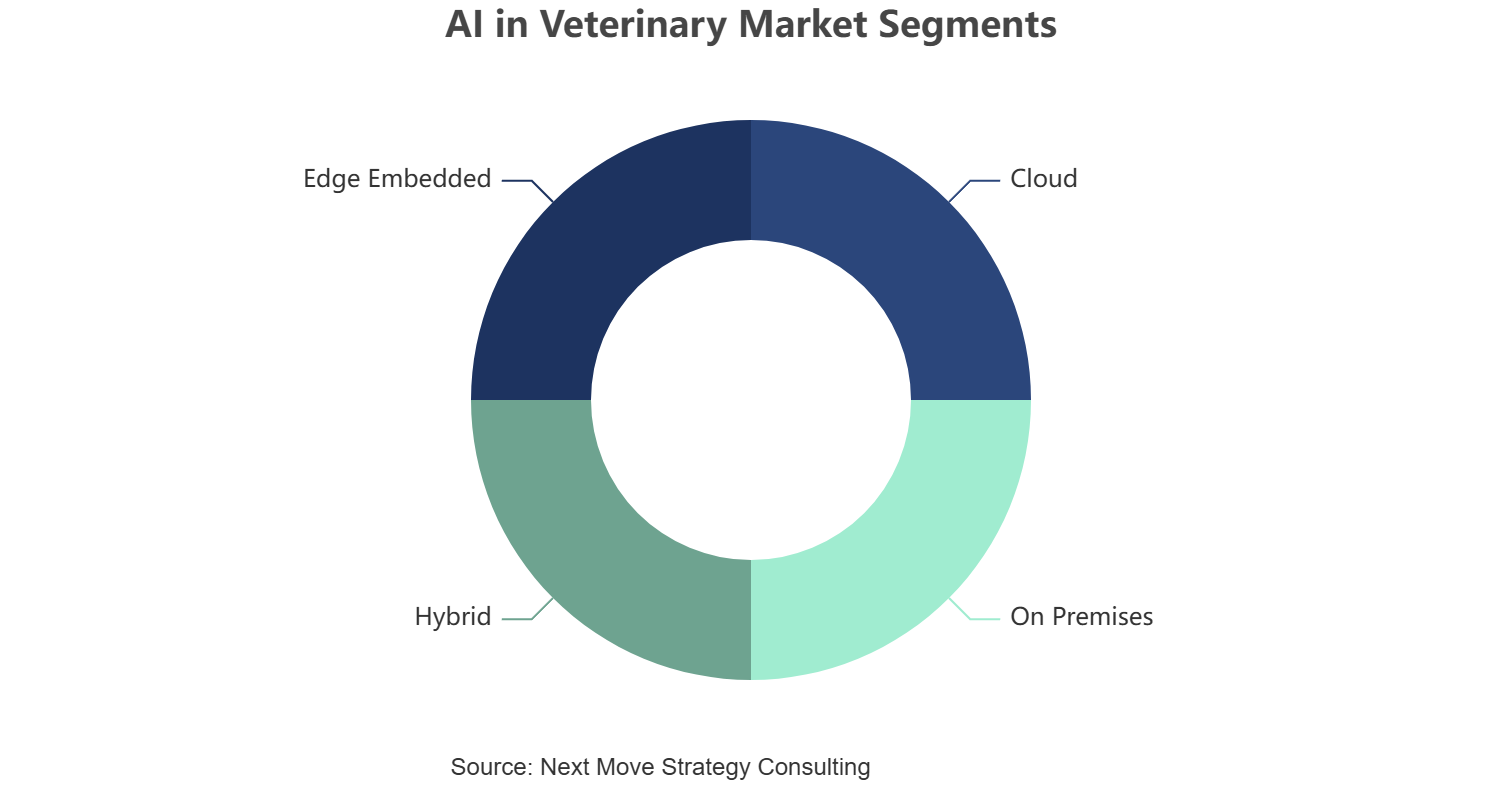
By Deployment: Cloud held the largest share, reflecting SaaS-based practice management and diagnostic platforms. |
|
By Technology: Computer Vision held the largest share, expanding from USD 161.9 million in 2025 to USD 1,222.0 million by 2035; Generative AI is the fastest-growing sub-segment at 33.0% CAGR from 2026–2035. |
|
By Animal Type: Companion Animals held the largest share, expanding from USD 262.2 million in 2025 to USD 2,104.4 million by 2035; Aquaculture is the fastest-growing sub-segment at 31.5% CAGR from 2026–2035. |
|
By Application: Diagnostic Imaging held the largest share, led by AI-assisted radiography and point-of-care cytology. |
|
By End User: Veterinary Hospitals held the largest share, reflecting concentrated diagnostic and imaging volume. |
|
Dominant Region: North America dominated with approximately 46% revenue share in 2025. |
|
Fastest-Growing Region: Asia-Pacific is expected to register the highest CAGR of 28.0% during 2026–2035. |
|
Dominant Country: The U.S. led the market, anchored by concentrated veterinary diagnostic and imaging infrastructure. |
|
Fastest-Growing Country: India is the fastest-growing country, supported by rapidly expanding companion animal and livestock veterinary services. |
Market Opportunity: The market presents an absolute investment opportunity of approximately USD 2915.0 Million between 2026 and 2035, calculated as the difference between the 2035 forecast of USD 3394.2 Million and the 2026 base of USD 479.2 Million, positioning AI-powered diagnostic software and imaging platforms as a high-conviction category for animal health companies and digital health investors.
According to NMSC analysis, the segment's momentum stems from the veterinary workforce capacity constraint documented across the profession, which is pushing practices to adopt AI decision support and automation tools as a productivity lever rather than a discretionary technology purchase.
What Does the AI in Veterinary Market Encompass?
The AI in Veterinary Market covers software, hardware, and services that apply computer vision, natural language processing, predictive analytics, and generative AI to diagnostic imaging, laboratory diagnostics, clinical decision support, precision medicine, practice management, telemedicine, and remote monitoring across companion animal, livestock, equine, and aquaculture populations. We observed that the market has evolved from isolated diagnostic imaging tools into integrated clinical decision support ecosystems spanning the full veterinary workflow.
Our findings suggest that the absence of a dedicated veterinary AI regulatory pathway, unlike the FDA's framework for human software as a medical device, is allowing faster commercial deployment while placing validation responsibility largely on vendors and practicing veterinarians. Technology adoption trends toward point-of-care AI analyzers and generative AI clinical documentation are directly addressing the veterinary workforce capacity constraints documented across the profession.
|
Parameter |
Details |
|
Market Size in 2025 |
USD 385.5 Million |
|
Market Size in 2026 |
USD 479.2 Million |
|
Revenue Forecast in 2035 |
USD 3394.2 Million |
|
Growth Rate |
CAGR of 24.3% from 2026 to 2035 |
|
Analysis Period |
2025–2035 |
|
Base Year Considered |
2025 |
|
Forecast Period |
2026–2035 |
|
Market Size Estimation |
USD Million |
|
Companies Profiled |
20 |
|
Countries Covered |
38 |
|
Market Share |
Available for Top 10 Companies |
Key Emerging Trends
Based on research conducted by NMSC, we found that four structural trends are redefining how AI in veterinary vendors compete, deploy, and expand their addressable applications through 2035.
How Is Slide-Free Point-of-Care Diagnostics Transforming In-Clinic Workflows?
We found that slide-free, AI-powered cellular analyzers are transforming in-clinic diagnostic workflows by eliminating manual slide preparation and delivering results within minutes rather than hours. IDEXX's inVue Dx Cellular Analyzer, trained by board-certified veterinary pathologists, exemplifies this transformation, expanding from ear cytology and blood morphology at launch to fine needle aspirate cytology for mast cell tumor detection in dogs by late 2025.
What Role Does Generative AI Play in Clinical Documentation Adoption?
Our assessment indicates that generative AI is gaining the fastest adoption in clinical documentation, automatically drafting visit notes and client communication from consultation audio to reduce administrative burden. This adoption directly addresses capacity constraints identified in AVMA workforce data, where companion animal practices reported an average labor capacity utilization approaching full staff hours in 2024.
How Are Stakeholders Responding to AI-Assisted Cancer Diagnostics?
We observed that veterinary oncologists and general practitioners are responding strongly to AI-assisted cancer diagnostics that combine point-of-care cytology with reference laboratory review. IDEXX's Cancer Dx panel, paired with inVue Dx fine needle aspirate cytology, illustrates how stakeholders are embracing hybrid in-clinic and laboratory AI workflows for earlier tumor detection and treatment planning.
Why Is Livestock Precision Monitoring Gaining Traction?
During our market evaluation, we noticed that livestock operations are adopting AI-based monitoring devices and wearables to track herd-level health and behavioral patterns at scale, a use case distinct from companion animal diagnostics. This traction reflects livestock producers' need to manage large animal populations with comparatively limited veterinary staffing per head, making automated monitoring a practical necessity rather than a premium feature.
Growth Drivers & Restraints
Growth Catalyst & Risk Assessment Matrix
|
Factors |
Type |
(+/−) % Impact on CAGR |
Geographic Relevance |
Impact Timeline |
|
Veterinary workforce capacity constraints |
Driver |
+5.8% |
North America, Europe |
2026–2035 |
|
Expanding point-of-care AI diagnostic analyzer adoption |
Driver |
+4.7% |
Global |
2026–2032 |
|
Rising companion animal ownership and healthcare spend |
Driver |
+3.9% |
North America, Asia-Pacific |
2026–2035 |
|
Generative AI adoption for clinical documentation |
Driver |
+3.1% |
North America, Europe |
2026–2031 |
|
Precision livestock monitoring investment |
Driver |
+2.0% |
Asia-Pacific, Latin America |
2026–2035 |
|
Absence of standardized veterinary AI validation framework |
Restraint |
−2.6% |
Global |
2026–2033 |
|
Limited veterinary AI budget in emerging markets |
Restraint |
−2.1% |
Asia-Pacific, MEA, Latin America |
2026–2035 |
|
Data fragmentation across practice management systems |
Restraint |
−1.5% |
Global |
2026–2032 |
|
Clinician trust and training gaps in AI-assisted diagnosis |
Restraint |
−1.2% |
Global |
2026–2030 |
What Is the Primary Growth Driver?
The primary growth driver is the persistent capacity constraint across the veterinary workforce, which AVMA data placed at 130,415 total U.S. veterinarians in 2024, with only 3.4% in food animal practice and 5.9% in equine practice. This structural staffing gap is pushing practices toward AI-based diagnostic and documentation tools that expand effective capacity without proportional headcount growth.
How Is Point-of-Care AI Diagnostics Driving the Market Growth?
Our analysis shows that point-of-care AI diagnostic analyzers are directly driving market growth by compressing diagnostic turnaround from hours to minutes within the clinic itself. IDEXX reported nearly 1,600 global pre-orders for its inVue Dx analyzer by the end of 2024 alone, evidencing strong practitioner demand for AI-powered, slide-free cytology and blood morphology assessment at the point of care.
What Is Restraining the AI in Veterinary Market?
We found that the primary restraint is the absence of a standardized veterinary AI validation framework comparable to human software as a medical device regulation, which leaves practitioners and practices to independently assess diagnostic reliability. Industry-derived estimates suggest this validation gap is slowing enterprise-wide adoption among larger hospital groups that require documented accuracy benchmarks before system-wide deployment.
Pain Point Analysis of the AI in Veterinary Industry
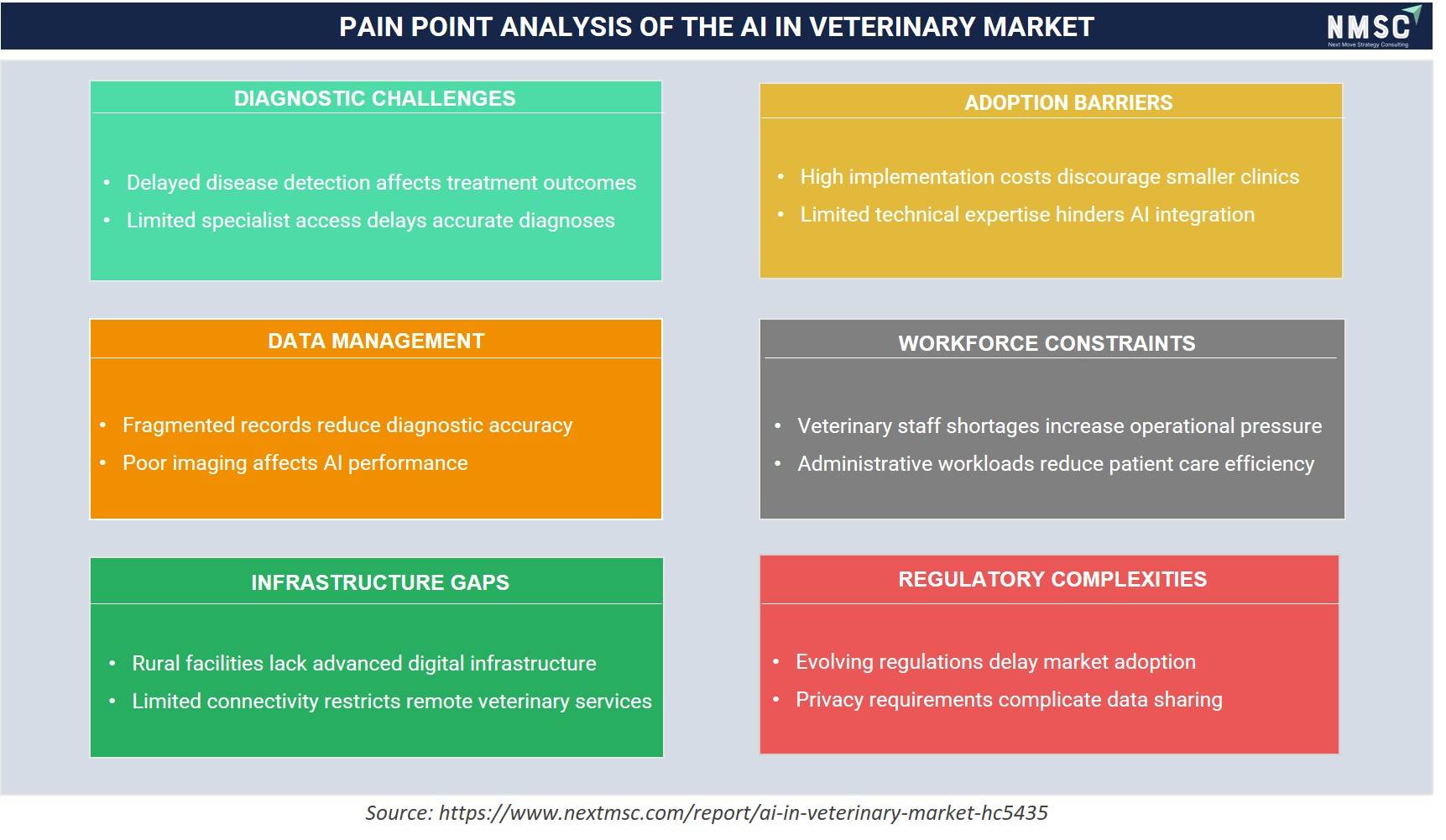
The above infographic presents a pain point analysis of the AI in veterinary market, highlighting key challenges across diagnostics, data management, infrastructure, adoption, workforce, and regulation. Delayed disease detection and fragmented records are affecting diagnostic accuracy, while rural infrastructure gaps and limited connectivity are restricting remote services. High implementation costs and limited technical expertise are discouraging smaller clinics, and staff shortages are increasing operational pressure. Evolving regulations and privacy requirements are further complicating data sharing and adoption. Looking ahead, we observed that these pain points are driving demand for more accessible and integrated AI solutions across the veterinary sector.
Segmentation Analysis
Segment Sizing: By Offering
|
Segment |
2025 (USD Mn) |
2035 (USD Mn) |
CAGR% (2026–2035) |
|
Software |
200.5 |
1968.7 |
25.8% |
|
Hardware |
127.2 |
916.4 |
21.6% |
|
Services |
57.8 |
509.1 |
24.3% |
|
Total |
385.5 |
3394.2 |
24.3% |
Which Offering Segment Dominates the AI in Veterinary Market?
Software leads with USD 200.5 Million in 2025, expanding to USD 1968.7 Million by 2035, reflecting the shift toward clinical decision support, diagnostic, and telemedicine software layered atop existing diagnostic hardware. Software is also the fastest-growing offering segment at a 25.8% CAGR, as vendors increasingly monetize recurring subscription access to AI models rather than one-time hardware or service fees.
Segment Sizing: By Technology
|
Segment |
2025 (USD Mn) |
2035 (USD Mn) |
CAGR% (2026–2035) |
|
Computer Vision |
161.9 |
1222.0 |
22.2% |
|
Natural Language Processing |
69.4 |
577.0 |
23.5% |
|
Predictive Analytics |
107.9 |
848.5 |
22.7% |
|
Generative AI |
46.3 |
746.7 |
33.0% |
|
Total |
385.5 |
3394.2 |
24.3% |
Which Technology Segment Leads and Which Grows Fastest in the AI in Veterinary Market?
Computer Vision remains the largest technology segment at USD 161.9 Million in 2025, underpinning AI-assisted diagnostic imaging and point-of-care cytology analyzers. Generative AI is the fastest-growing technology at a 33.0% CAGR, driven by rapid adoption of AI-drafted clinical documentation and client communication tools that reduce administrative burden across veterinary practices.
Segment Sizing: By Animal Type
|
Segment |
2025 (USD Mn) |
2035 (USD Mn) |
CAGR% (2026–2035) |
|
Companion Animals |
262.2 |
2104.4 |
23.0% |
|
Livestock Animals |
73.2 |
746.7 |
26.3% |
|
Equine |
23.1 |
203.7 |
24.3% |
|
Aquaculture |
11.6 |
169.7 |
31.5% |
|
Wildlife |
7.7 |
67.9 |
24.3% |
|
Zoo Animals |
7.7 |
101.8 |
30.0% |
|
Total |
385.5 |
3394.2 |
24.3% |
Which Animal Type Dominates and Which Is Fastest-Growing in the AI in Veterinary Market?
Companion Animals dominate demand at USD 262.2 Million in 2025, growing to USD 2104.4 Million by 2035, reflecting concentrated diagnostic imaging and clinical decision support spend on dogs and cats in well-capitalized veterinary hospitals. Aquaculture is the fastest-growing animal type at a 31.5% CAGR, as AI-based monitoring expands into fish health and water-quality management within commercial aquaculture operations.
Growth Opportunities
Our analysis shows that three whitespace opportunities stand out for vendors positioning ahead of 2035 demand.
Can Generative AI Documentation Unlock Independent Practice Adoption?
Vendors offering affordable generative AI clinical documentation tools can capture the large population of independent veterinary practices currently underserved by enterprise-priced platforms, benefiting the Software offering and Independent Veterinary Practices end-user segments with a lower-cost productivity solution.
Does Precision Livestock Monitoring Create Value for Large-Scale Operations?
Vendors that combine wearable monitoring devices with predictive analytics for herd-level health tracking can capture rising demand from large-scale cattle, swine, and poultry operations, benefiting the Livestock Animals segment as producers seek to manage animal health at scale with limited veterinary staffing per head.
Can AI-Assisted Telemedicine Triage Expand Access in Underserved Regions?
Vendors offering AI-based symptom assessment and case triage for remote consultation can extend veterinary access into rural and underserved regions with limited in-person veterinary availability, benefiting the Telemedicine application and Pet Owners end-user segments with a scalable first-line care option.
Regional Outlook
|
Region |
2025 (USD Mn) |
2035 (USD Mn) |
CAGR% (2026–2035) |
Key Driver |
|
North America |
177.3 |
1357.6 |
22.4% |
Concentrated veterinary diagnostic and imaging infrastructure |
|
Europe |
96.4 |
780.7 |
23.2% |
Established companion animal healthcare spend and clinician adoption |
|
Asia-Pacific |
77.1 |
882.5 |
28.0% |
Rapidly expanding companion animal and livestock veterinary services |
|
Latin America |
19.3 |
237.6 |
29.0% |
Growing private veterinary healthcare investment |
|
Middle East & Africa |
15.4 |
135.8 |
24.3% |
Emerging veterinary digitization initiatives |
|
Total |
385.5 |
3394.2 |
24.3% |
|
North America AI in Veterinary Market
North America holds the largest regional share, supported by concentrated veterinary diagnostic infrastructure and the presence of leading AI diagnostics vendors including IDEXX Laboratories and Zoetis. We observed that veterinary workforce capacity constraints are most acute in this region, positioning North America as both the largest revenue base and the primary launch market for new point-of-care AI diagnostic tools.
Europe AI in Veterinary Market
Europe's market is shaped by established companion animal healthcare spend and growing clinician adoption of AI-assisted diagnostic imaging across national veterinary networks. Our findings suggest that regional adoption of remote pathology review services, such as teleradiology and telecytology, is accelerating as practices seek specialist support without proportional increases in in-house staffing.
Asia-Pacific AI in Veterinary Market
Asia-Pacific is the fastest-growing region, driven by rapidly expanding companion animal ownership and large-scale livestock operations across China and India. We found that domestic AI diagnostics vendors are scaling fastest in this region, reflecting price-sensitive demand that favors software-based diagnostic tools over premium imaging hardware in early adoption phases.
Middle East & Africa AI in Veterinary Market
The Middle East & Africa region remains an early-stage market, with the UAE and Saudi Arabia leading early veterinary digitization initiatives tied to broader healthcare modernization programs. Industry-derived estimates suggest regional growth will track broader digital-health infrastructure investment rather than veterinary-specific regulatory mandates, given the comparatively nascent AI adoption environment in the region.
Latin America AI in Veterinary Market
Latin America is expanding at a 29.0% CAGR, led by Brazil's growing private veterinary healthcare sector and expanding livestock operations. We observed that Argentina's veterinary sector offers latent demand for AI-based diagnostic tools as private clinics begin adopting point-of-care analyzers previously limited to premium urban practices.
U.S. AI in Veterinary Market
Based on our estimates, the U.S. market was valued at approximately USD 153.0 Million in 2025 and is projected to reach USD 1174.0 Million by 2035 at a CAGR near 22.4%. Demand structure is anchored by concentrated veterinary diagnostic infrastructure and high technology penetration among AI-powered point-of-care analyzers, with strong competitive intensity between IDEXX Laboratories, Zoetis, and Antech Diagnostics.
Canada AI in Veterinary Market
The market in Canada was estimated at around USD 24.3 Million in 2025, forecast to reach USD 183.6 Million by 2035 at roughly 22.6% CAGR. Canada's demand structure closely mirrors U.S. adoption patterns, with veterinary hospitals increasingly deploying AI diagnostic analyzers to address capacity constraints, supporting steady technology penetration and moderate competitive intensity.
UK AI in Veterinary Market
As per our estimate, the UK market stood near USD 23.9 Million in 2025 and is expected to reach USD 193.5 Million by 2035 at approximately 23.3% CAGR. Strong companion animal healthcare spend and early adoption of AI-assisted diagnostic imaging support high technology penetration, with regulatory influence centered on veterinary professional standards rather than binding AI-specific legislation.
Germany AI in Veterinary Market
According to our analysis, Germany's market was valued at about USD 26.6 Million in 2025, projected to reach USD 214.7 Million by 2035 at a CAGR near 23.2%. Germany's demand structure benefits from a large domestic companion animal population and cautious clinical adoption practices that favor vendors with strong diagnostic validation credentials.
France AI in Veterinary Market
Based on our estimates, France's market reached approximately USD 17.4 Million in 2025 and is forecast to grow to USD 140.5 Million by 2035 at around 23.2% CAGR. Demand is supported by growing veterinary hospital investment in AI-assisted imaging, with moderate competitive intensity among regional and global diagnostics vendors.
China AI in Veterinary Market
The AI in Veterinary Market in China was valued at nearly USD 20.8 Million in 2025 and is projected to reach USD 264.8 Million by 2035 at approximately 29.4% CAGR. China's growth reflects its enormous livestock population and rapidly expanding urban companion animal ownership, with domestic AI diagnostics developers competing intensely alongside global entrants for veterinary hospital adoption.
India AI in Veterinary Market
As per our estimate, India's market was close to USD 9.2 Million in 2025, expected to reach USD 132.4 Million by 2035 at roughly 31.6% CAGR, the fastest among covered countries. Rising companion animal ownership and expanding livestock operations are driving demand, though technology penetration remains moderate as veterinary AI adoption is still concentrated in urban diagnostic centers.
Japan AI in Veterinary Market
According to our analysis, Japan's market stood at about USD 12.3 Million in 2025 and is forecast to reach USD 123.6 Million by 2035 at approximately 25.9% CAGR. Japan's demand structure benefits from an aging companion animal population and strong clinical adoption of precision diagnostic tools among established veterinary hospital networks.
South Korea AI in Veterinary Market
Based on our estimates, South Korea's market was valued at around USD 7.7 Million in 2025, projected to reach USD 88.2 Million by 2035 at around 27.6% CAGR. Rising urban pet ownership and growing veterinary hospital investment in AI diagnostic tools support increasing technology adoption across the country's concentrated veterinary services sector.
Australia AI in Veterinary Market
As per our estimate, Australia's market reached approximately USD 6.2 Million in 2025 and is expected to grow to USD 61.9 Million by 2035 at roughly 25.7% CAGR. Australia's demand structure benefits from strong livestock health monitoring needs alongside companion animal diagnostic adoption, positioning the country as a steady adopter of AI-based veterinary tools.
UAE AI in Veterinary Market
Based on our estimates, the UAE market was valued at about USD 2.3 Million in 2025 and is forecast to reach USD 20.4 Million by 2035 at approximately 24.6% CAGR. Growing veterinary healthcare investment and expanding companion animal ownership support the UAE's emerging role as a regional digital veterinary hub.
Saudi Arabia AI in Veterinary Market
According to our analysis, Saudi Arabia's market stood at around USD 3.1 Million in 2025, projected to reach USD 27.2 Million by 2035 at around 24.4% CAGR. Vision 2030-linked healthcare digitization initiatives are supporting early-stage investment in veterinary AI infrastructure, with competitive intensity currently limited to a small number of regional distributors.
South Africa AI in Veterinary Market
As per our estimate, South Africa's market was close to USD 2.3 Million in 2025 and is expected to reach USD 19.0 Million by 2035 at roughly 23.7% CAGR. A growing private veterinary sector gives South Africa the strongest technology penetration in the MEA region, supporting a strategic outlook centered on livestock health monitoring adoption.
Brazil AI in Veterinary Market
Based on our estimates, Brazil's market reached approximately USD 10.6 Million in 2025 and is projected to reach USD 133.0 Million by 2035 at around 29.6% CAGR. Rapid expansion of private veterinary healthcare and large-scale livestock operations is driving demand structure, with strategic investment appeal strengthening as reimbursement and technology penetration mature.
Argentina AI in Veterinary Market
According to our analysis, Argentina's market was valued at about USD 3.9 Million in 2025, forecast to reach USD 46.6 Million by 2035 at approximately 28.7% CAGR. A growing livestock and companion animal veterinary sector offers rising demand for AI-based diagnostic tools, though competitive intensity remains moderate given the still-developing formal veterinary AI adoption infrastructure.
Competitive Landscape
Our assessment indicates that the competitive landscape spans diversified animal health conglomerates, diagnostic laboratory networks, and pure-play AI veterinary specialists, each competing on diagnostic accuracy, deployment breadth, and clinical validation depth.
|
Dimension |
Assessment |
|
Market Structure |
Moderately consolidated; top 10 companies hold the majority of Market Share, led by diversified animal health and diagnostic laboratory conglomerates |
|
Innovation Focus |
Point-of-care AI cellular analyzers, generative AI clinical documentation, precision livestock monitoring, and AI-assisted cancer diagnostics |
|
M&A Activity |
Selective product-line expansion and pathology-network partnerships rather than large-scale consolidation among top-tier diagnostics companies |
How Do Companies Compete in the AI In Veterinary Market?
Companies compete primarily on diagnostic accuracy, breadth of clinical application coverage across imaging and laboratory diagnostics, and depth of integration with existing practice management systems. Our findings suggest that vendors with established veterinary pathologist networks hold a structural credibility advantage over pure-technology entrants, since clinical validation remains the primary purchase criterion for veterinary hospitals.
Which Competitive Archetypes Dominate the AI in Veterinary Industry?
Diversified animal health conglomerates such as IDEXX Laboratories and Zoetis dominate through integrated point-of-care hardware, reference laboratory networks, and software ecosystems, while pure-play AI specialists including SignalPET and ImpriMed differentiate through focused diagnostic imaging and precision oncology algorithms. Telemedicine and remote monitoring specialists compete on access and convenience underserved by hardware-first incumbents.
What Innovation and Differentiation Strategies Are Companies Pursuing?
We observed that leading vendors are investing in slide-free point-of-care cellular analysis and generative AI clinical documentation to compress diagnostic turnaround and reduce administrative burden simultaneously. Differentiation increasingly rests on the breadth of validated diagnostic menu items, since practices favor platforms that expand testing capability over time rather than single-use diagnostic tools.
What M&A and Partnership Activity Is Shaping the AI in Veterinary Market?
Recent activity favors internal product-line expansion and pathologist-network partnerships over outright acquisitions, exemplified by IDEXX's expansion of its inVue Dx menu from ear cytology to cancer-focused fine needle aspirate testing. Our analysis shows that such structures let incumbents deepen customer wallet share within existing installed hardware bases without the integration risk of large-scale M&A.
Key Market Players
Based on research conducted by NMSC, the following companies represent the validated set of leading participants across AI-powered veterinary diagnostics, imaging, clinical decision support, and monitoring solutions.
-
Zoetis Inc.
-
Antech Diagnostics, Inc.
-
SignalPET, Inc.
-
VetCT Ltd.
-
PetPace Ltd.
-
ImpriMed, Inc.
-
Vetology Innovations LLC
-
Oncura Partners Diagnostics, LLC
-
Petriage, Inc.
-
VetChip, Inc.
-
Aiforia Technologies Plc
-
Digitail Ltd.
-
Vetspire, Inc.
-
One Health Company, Inc.
-
Vet-AI Ltd.
-
DeepScan Diagnostics ApS
-
Animalytix LLC
-
Mella Pet Care, Inc.
Latest Developments
We found that recent corporate activity reflects continued expansion of AI-powered diagnostic menus and cancer-detection capability even as the overall competitive landscape remains concentrated among established diagnostics leaders.
|
Date |
Event |
|
January 2026 |
IDEXX advanced veterinary cancer care with comprehensive mast cell tumor testing, expanding inVue Dx FNA cytology and the Cancer Dx panel |
Expert Insights
 “Our technology is about more than just speed; it’s about establishing a new standard of care. By combining clinical history with AI-driven insights, veterinarians gain diagnostic confidence that simply wasn’t possible a few years ago.”
— Dr. Neil Shaw, Co-Founder and Chief Veterinary Officer, SignalPET
Statement made during a discussion on the application of AI in veterinary radiology.
Market Interpretation
The insight highlights the increasing role of AI as a clinical decision-support tool in veterinary medicine, particularly in diagnostic imaging. NMSC's analysis indicates that AI is moving beyond basic automation and speed improvements toward augmenting veterinarians' expertise by combining imaging data with clinical context. This evolution is expected to support wider adoption of AI-powered veterinary diagnostics, helping practitioners improve diagnostic confidence, identify subtle abnormalities, and expand access to advanced diagnostic capabilities across veterinary practices.
Consumer Behavior Analysis of the AI in Veterinary Industry
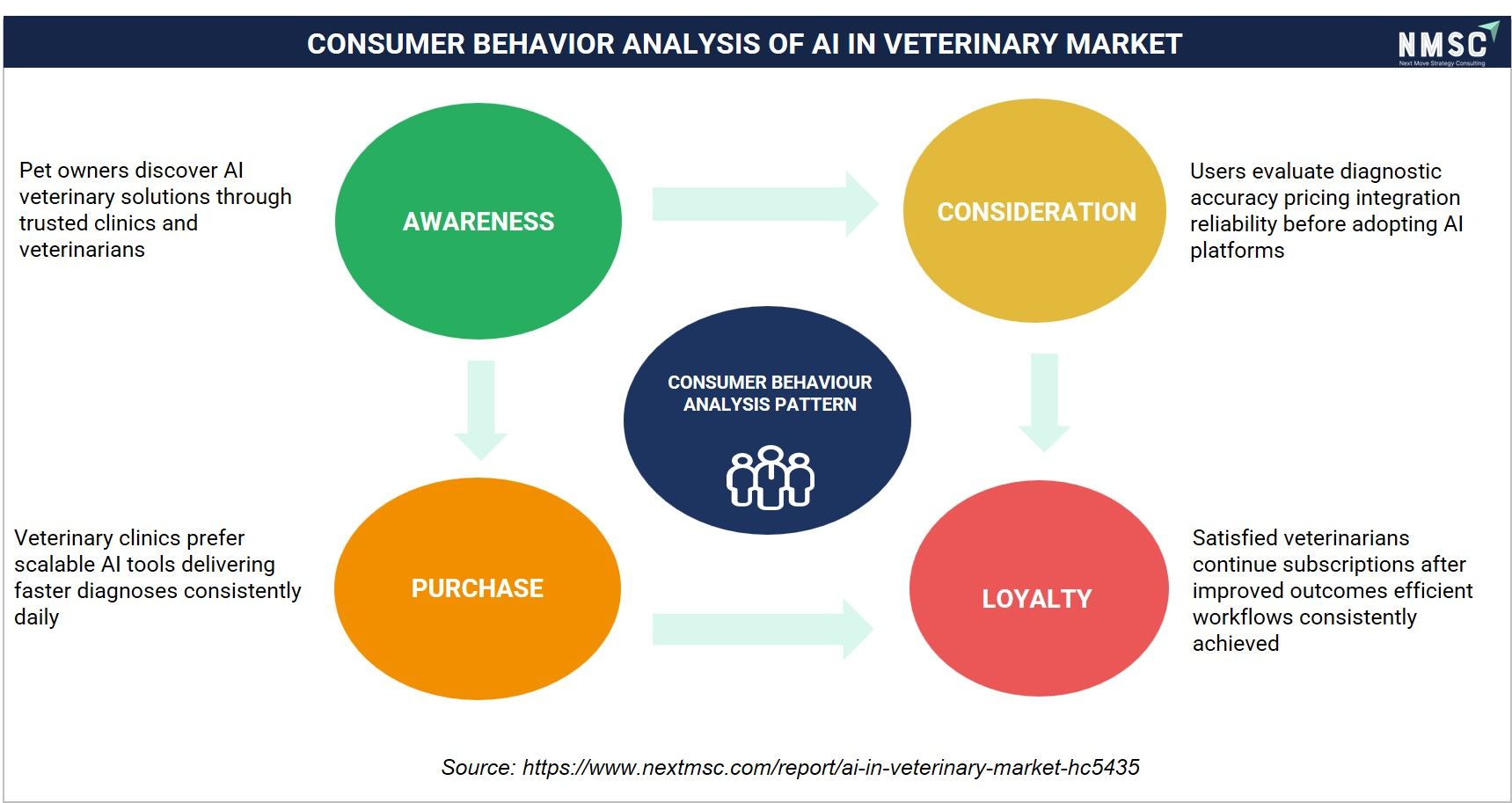
The above infographic presents a consumer behavior analysis of the AI in veterinary market, mapping the journey from awareness to loyalty. Pet owners discover AI solutions through trusted clinics and veterinarians, leading veterinary professionals to evaluate diagnostic accuracy, pricing, integration, and reliability before adoption. Clinics then prefer scalable AI tools that deliver faster diagnoses and improve daily workflows. At the same time, satisfaction is reinforced by improved outcomes and operational efficiency, encouraging continued subscriptions and long-term engagement. Looking ahead, we observed that these behavioral patterns collectively shape adoption and retention across the veterinary sector.
Investment Opportunities
Where Are Capital Inflows Concentrating in the AI in Veterinary Market?
Capital is concentrating in point-of-care diagnostic hardware with expanding AI-validated test menus and in generative AI documentation tools addressing practitioner administrative burden. IDEXX's continued menu expansion of its inVue Dx platform from cytology into cancer diagnostics signals sustained capital allocation toward software-enabled hardware differentiation within the diagnostics segment.
How Is Infrastructure Investment Shaping Long-Term Capacity?
Our findings suggest that infrastructure investment is shifting toward cloud-based reference laboratory networks that allow point-of-care analyzers to route complex cases to remote veterinary pathologists for expert review. This shift favors vendors with existing pathologist networks and reference laboratory infrastructure that can be extended to new diagnostic menu items.
What ESG Considerations Are Influencing Investment Decisions?
Environmental, Social, and Governance considerations in this market center on veterinary workforce wellbeing and animal welfare outcomes, given documented burnout and capacity pressure across the profession. We found that investors increasingly favor vendors demonstrating measurable practitioner productivity gains as a proxy for durable, socially aligned growth.
Key Benefits for Stakeholders
How Does This Report Benefit Industry Leaders?
Industry leaders gain segment-level revenue forecasts and CAGR benchmarks across offering, technology, and animal-type axes, enabling product-roadmap decisions grounded in the same 2025–2035 figures used consistently throughout this analysis. Our findings on regional growth differentials further support market-entry and go-to-market decisions.
How Does This Report Benefit Investors and Financial Analysts?
Investors and financial analysts gain a reconciled market-sizing model, competitive-landscape assessment, and named-company development tracking that supports valuation and capital-allocation decisions. The report's Growth Catalyst & Risk Assessment Matrix quantifies driver and restraint impact on CAGR, aiding scenario analysis for portfolio positioning.
How Does This Report Benefit Technology Vendors and Product Teams?
Technology vendors and product teams gain visibility into which technology and animal-type segments, such as Generative AI and Aquaculture, are growing fastest, informing where to prioritize engineering investment and go-to-market focus through 2035.
Key Market Segments
By Offering
-
Software
-
Diagnostic Software
-
Clinical Decision Support Software
-
Precision Medicine Software
-
Practice Management Software
-
Telemedicine Software
-
Monitoring Software
-
-
Hardware
-
Imaging Systems
-
Diagnostic Analyzers
-
Monitoring Devices
-
Wearables
-
-
Services
-
Diagnostic Interpretation Services
-
Clinical Support Services
-
Integration Services
-
Maintenance Services
-
By Deployment
-
Cloud
-
On Premises
-
Hybrid
-
Edge Embedded
By Technology
-
Computer Vision
-
Natural Language Processing
-
Predictive Analytics
-
Generative AI
By Animal Type
-
Companion Animals
-
Dogs
-
Cats
-
Birds
-
Small Mammals
-
-
Livestock Animals
-
Cattle
-
Swine
-
Poultry
-
Sheep
-
Goats
-
-
Equine
-
Aquaculture
-
Wildlife
-
Zoo Animals
By Application
-
Diagnostic Imaging
-
Radiography
-
Ultrasound
-
CT
-
MRI
-
Dental Imaging
-
-
Laboratory Diagnostics
-
Hematology
-
Cytology
-
Histopathology
-
Urinalysis
-
Clinical Chemistry
-
Microbiology
-
-
Clinical Decision Support
-
Differential Diagnosis
-
Treatment Recommendation
-
Prognostic Assessment
-
Drug Safety Analysis
-
-
Precision Medicine
-
Genomic Analysis
-
Oncology Decision Support
-
Personalized Therapy Planning
-
-
Practice Management
-
Clinical Documentation
-
Appointment Scheduling
-
Revenue Management
-
Inventory Management
-
Client Communication
-
-
Telemedicine
-
Symptom Assessment
-
Case Triage
-
Remote Consultation
-
Remote Diagnostics
-
-
Remote Monitoring
-
Vital Sign Monitoring
-
Activity Monitoring
-
Behavioral Monitoring
-
Post-Treatment Monitoring
-
By End User
-
Independent Veterinary Practices
-
Veterinary Hospitals
-
Veterinary Diagnostic Laboratories
-
Academic Institutions
-
Research Institutions
-
Livestock Operations
-
Pet Owners
-
Animal Welfare Organizations
By Region
-
North America: U.S., Canada, Mexico
-
Europe: UK, Germany, France, Italy, Spain, Sweden, Denmark, Finland, Netherlands, Rest of Europe
-
Asia-Pacific: China, India, Japan, South Korea, Taiwan, Indonesia, Vietnam, Australia, Philippines, Malaysia, Rest of APAC
-
Middle East & Africa: Saudi Arabia, UAE, Egypt, Israel, Turkey, Nigeria, South Africa, Rest of MEA
-
Latin America: Brazil, Argentina, Chile, Colombia, Rest of LATAM
Conclusion & Recommendations
What Is the Long-Term Outlook for the AI in Veterinary Market?
The long-term outlook remains structurally positive, with the market expanding from USD 479.2 Million in 2026 to USD 3394.2 Million by 2035 at a 24.3% CAGR, driven by veterinary workforce capacity constraints and expanding point-of-care AI diagnostic adoption. We observed that this growth trajectory is underpinned by a documented staffing gap rather than speculative adoption, supporting sustained software and hardware investment.
What Strategic Positioning Do We Recommend?
Our assessment indicates that vendors should prioritize generative AI documentation and point-of-care diagnostic menu expansion to capture the fastest-growing Generative AI and Software segments. Companies without established veterinary pathologist networks should pursue reference laboratory partnerships rather than standalone technology strategies given the market's clear preference for clinically validated diagnostic tools.
How Attractive Is the AI in Veterinary Market for Investment?
Investment attractiveness is high in Asia-Pacific and Latin America given superior CAGR profiles of 28.0% and 29.0%, respectively, while North America offers the largest absolute revenue base with strong practitioner-driven recurring demand. We found that software subscription and services revenue streams materially de-risk vendor revenue relative to one-time hardware sales alone.
What Are the Key Market Shifts and Risks in the AI in Veterinary Market?
Key risks include the absence of a standardized veterinary AI validation framework and persistent data fragmentation across competing practice management systems. Our analysis shows that vendors unable to demonstrate clinical validation credibility risk ceding share of the fastest-growing diagnostic and clinical decision support segments to competitors with established pathologist networks.
What Are the Primary Growth Pathways Through 2035?
Primary growth pathways include point-of-care diagnostic menu expansion, deeper generative AI integration for clinical documentation, and precision livestock monitoring partnerships with large-scale animal operations. We observed that vendors combining all three pathways are best positioned to capture a disproportionate share of the USD 2915.0 Million absolute opportunity created between 2026 and 2035.
About the Author
 Mayurima Roy
— Mayurima Roy is Research Analyst at Next Move Strategy Consulting, where she has spent 4 years working across the firm's full industry coverage rather than a single fixed vertical. Her work centers on structured research, ongoing trend tracking, competitive assessment, and insight-led content development, translating complex market data into clear, decision-ready narratives that support informed client decision-making across diverse global industries, market sectors, and world regions every day.
Mayurima Roy
— Mayurima Roy is Research Analyst at Next Move Strategy Consulting, where she has spent 4 years working across the firm's full industry coverage rather than a single fixed vertical. Her work centers on structured research, ongoing trend tracking, competitive assessment, and insight-led content development, translating complex market data into clear, decision-ready narratives that support informed client decision-making across diverse global industries, market sectors, and world regions every day.
About the Reviewer
 Supradip Baul
— Supradip Baul is an accomplished business consultant and strategist with over a decade of rich experience in market intelligence, strategy, technology, and business transformation. His work has included rigorous qualitative and quantitative analysis across multiple industries, helping clients shape investment decisions and long-term roadmaps. Earlier in his career, he was associated with Gartner, where he contributed to industry-leading reports and market share analyses. He has worked with leading global companies and holds an MBA with a dual specialization in Marketing and Finance.
Supradip Baul
— Supradip Baul is an accomplished business consultant and strategist with over a decade of rich experience in market intelligence, strategy, technology, and business transformation. His work has included rigorous qualitative and quantitative analysis across multiple industries, helping clients shape investment decisions and long-term roadmaps. Earlier in his career, he was associated with Gartner, where he contributed to industry-leading reports and market share analyses. He has worked with leading global companies and holds an MBA with a dual specialization in Marketing and Finance.
At Next Move Strategy Consulting, we understand that insightful market research is the cornerstone of successful business decisions. That's why we employ a robust and multifaceted approach, combining various methodologies to deliver the most accurate and actionable data for our clients.

Research Landscape
We navigate the world of research with two primary approaches:
Qualitative Approach
Our qualitative research methodologies involve immersive techniques such as in-depth interviews, focus groups, and observational studies. By engaging directly with individuals and stakeholders, we uncover valuable insights that quantitative data alone may overlook.

Quantitative Research
In tandem with qualitative methodologies, NMSC leverages the power of Quantitative Research to provide a robust foundation of numerical insights. Through systematic data collection and analysis, we quantify patterns, preferences, and market trends, offering a comprehensive view of the business landscape.
Our quantitative research approach employs diverse tools, including surveys, experiments, and statistical modelling. These methodologies enable us to gather data from a large and representative sample, ensuring the statistical significance of our findings. By employing structured questionnaires and standardized data collection methods, we guarantee the reliability and validity of the information we present to our clients.
Quantitative research is particularly effective in measuring the prevalence of trends, assessing market size, and gauging the impact of various factors on consumer behavior. The numerical precision attained through this approach equips our clients with actionable insights, facilitating data-driven decision-making and strategy formulation.


Our Specialized Toolbox for Industry-Specific Market Research
We deploy a specialized arsenal of techniques tailored to meet your unique requirements. Here's a glimpse into our comprehensive toolbox:

Information Procurement
The stage entails acquiring market data or relevant information through various sources and methodologies.


Market Research Approach
We utilize both top-down and bottom-up approaches in market research analysis to achieve a comprehensive understanding of the market dynamics, leveraging the broad perspective of industry trends and macroeconomic factors alongside detailed insights from specific segments and individual companies.

Porters Five Forces Analysis
We conduct Porter's Five Forces analysis to evaluate the competitive landscape of an industry, providing us with insights into factors that affect profitability and strategic positioning.

SWOT Analysis

Forecasting
We utilize a forecasting model to predict future consumption by considering parameters like population, economics, regulations, market competition, drivers, constraints, technology, and pricing. We also employ statistical techniques such as multilinear regression, exponential smoothing, moving average, ARIMA, and Monte Carlo simulations for accurate predictions. In econometric forecasting, we analyzed short-term and long-term event impacts, attributing values based on regulatory frameworks, economic factors, and market events.





 Speak to Our Analyst