Bio-production CMO & CRO Market Size, Share, Growth & Forecast by Service Type (Contract Research Services, Contract Development Services, Contract Manufacturing Services), Molecule Type (Monoclonal Antibodies, Recombinant Proteins, Vaccines, Cell Therapies, Gene Therapies, ADCs, mRNA, Oligonucleotides, Peptides), Source System, Program Stage, Sponsor Type, and Therapeutic Area — Global Analysis 2025–2035
Industry: Healthcare | Publishing Date: July 10, 2026 | Last Updated: September 30, 2026 | No of Pages: N/A | No. of Tables: N/A | No. of Figures: N/A | Format: PDF | Report Code: HC269
What Is the Bio-production CMO & CRO Market Size?
The global Bio-production CMO & CRO Market size was valued at USD 41.32 billion in 2025 and is expected to reach USD 43.34 billion in 2026. Sustained expansion of biologics pipelines, the rapid rise of advanced therapies including cell and gene therapies, and escalating pharmaceutical outsourcing penetration are projected to propel the market to USD 80.37 billion by 2035, advancing at a CAGR of 7.10% from 2026 to 2035. Key growth drivers include the growing complexity of biologic drug development that demands specialized manufacturing expertise, the increasing adoption of single-use bioreactor technologies, aggressive capacity investment by leading CDMOs, and the acceleration of mRNA and nucleic acid therapy pipelines following the COVID-19 vaccine era.
|
Parameter |
Details |
|
Market Size in 2025 |
USD 41.32 Billion |
|
Market Size in 2026 |
USD 43.34 Billion |
|
Revenue Forecast in 2035 |
USD 80.37 Billion |
|
Growth Rate |
CAGR of 7.10% from 2026 to 2035 |
|
Analysis Period |
2025–2035 |
|
Base Year Considered |
2025 |
|
Forecast Period |
2026–2035 |
|
Market Size Estimation |
Billion (USD) |
|
Companies Profiled |
20 |
|
Countries Covered |
36 |
|
Market Share |
Top 10 |
Bio-production CMO & CRO Market Overview
What Is the Bio-production CMO & CRO Market?
The bio-production CMO & CRO market encompasses contract research organizations and contract development and manufacturing organizations that provide outsourced services for the research, development, and large-scale production of biologics and advanced therapeutics. These services span target identification and validation, process development, analytical characterization, clinical trial manufacturing, and commercial-scale drug product supply. The market supports pharmaceutical and biotechnology sponsors seeking specialized expertise, flexible capacity, and cost-efficient pathways to bring biologic candidates from discovery through commercial launch.
How Has the Bio-production CMO & CRO Market Evolved?
The bio-production CMO & CRO market has evolved through three distinct transformation phases. The first phase centered on microbial and mammalian cell culture systems supporting monoclonal antibody and recombinant protein production. The second phase introduced process intensification, perfusion bioreactors, and integrated CMC development capabilities. Based on NMSC's research, we found that the current phase is defined by the emergence of advanced therapy manufacturing platforms for cell therapies, gene therapies, and nucleic acid modalities, combined with the digital integration of bioprocess analytics and real-time release testing across multi-modal CDMO networks.
How Do Regulations Influence the Bio-production CMO & CRO Market?
Regulatory frameworks across major markets are pivotal structural determinants of the bio-production CMO & CRO market. The U.S. Food and Drug Administration's (FDA) Biologics License Application (BLA) pathway, the European Medicines Agency's (EMA) Marketing Authorization Application (MAA) process, and the International Council for Harmonisation (ICH) Q10 and Q12 guidelines collectively define quality system requirements that CDMOs must implement. Our analysis indicates that regulatory expectations around comparability studies, process validation, and data integrity are compelling CDMOs to invest substantially in quality management systems, analytical platform standardization, and regulatory intelligence capabilities.
How Is Technology Adoption Expanding Across the Bio-production CMO & CRO Market?
Technology adoption across the bio-production CMO & CRO market is accelerating as sponsors demand faster development timelines, greater manufacturing flexibility, and improved cost efficiency. Single-use bioreactor systems have displaced stainless-steel fixed equipment for clinical-scale production across leading CDMOs, reducing cross-contamination risk and changeover time. Through our market assessment, we observed that continuous bioprocessing approaches, perfusion culture, and integrated downstream operations are increasingly deployed at commercial scale to improve volumetric productivity. Digitalization of bioprocess monitoring, inline PAT sensors, and AI-driven process optimization are further accelerating technology adoption across the market.
|
Key Takeaways |
|
By service type, Contract Manufacturing Services held the largest Bio-production CMO & CRO Market share at USD 8.6 billion in 2025. Advanced Therapies Manufacturing is the fastest-growing sub-segment, projected to expand at a CAGR of 18.4% from 2026 to 2035, fueled by surging demand for cell therapy and gene therapy manufacturing capacity. |
|
By service type, Contract Research Services represented USD 6.8 billion in 2025. Clinical Development Services is the most critical sub-segment driving sponsor outsourcing decisions, with Phase II and Phase III trial management contributing the largest clinical revenue share. |
|
By molecule type, Monoclonal Antibodies held the largest share at USD 7.8 billion in 2025, representing approximately 34.8% of total market revenue. Cell Therapies and Gene Therapies are collectively the fastest-growing molecule categories at CAGRs exceeding 17.5% through 2035. |
|
By source system, Mammalian Systems dominated the Bio-production CMO & CRO Market at USD 10.8 billion in 2025, accounting for approximately 48.2% of market revenue. Viral Vector Systems are the fastest-growing source platform, advancing at a CAGR of 17.9%, driven by demand for lentiviral and adeno-associated virus production for gene and cell therapy programs. |
|
By program stage, the Clinical Stage accounted for USD 8.8 billion in 2025, the largest revenue share of the Bio-production CMO & CRO Market. The Commercial Stage is the fastest-growing program stage at a CAGR of 16.6%, as biologics previously in late-stage trials reach commercial approval and require scaled manufacturing capacity. |
|
By sponsor type, Large Pharmaceutical Companies held USD 8.4 billion in 2025. Biotechnology Companies are the fastest-growing sponsor segment at a CAGR of 15.5%, as emerging biotech firms increasingly rely on CDMOs as virtual manufacturing partners across the entire development lifecycle. |
|
By therapeutic area, Oncology held the largest share at USD 8.2 billion in 2025, projected to reach USD 28.6 billion by 2035 at a CAGR of 14.9%. Neurology is the fastest-growing therapeutic area at a CAGR of 17.4%, driven by gene therapy programs targeting rare neurological disorders. |
|
North America held the largest regional share in the Bio-production CMO & CRO Market in 2025, supported by the highest concentration of biopharmaceutical companies, advanced CDMO infrastructure, strong biologics R&D spending, and a mature regulatory framework led by the FDA. |
|
Asia-Pacific is the fastest-growing major region in the Bio-production CMO & CRO Market, driven by rapid CDMO capacity expansion in China, increasing biologics outsourcing in India, and growing investments in advanced therapy manufacturing across South Korea and Japan. |
|
The United States is the largest country market in the Bio-production CMO & CRO Market, benefiting from a large biopharmaceutical industry, extensive biologics development pipelines, substantial outsourcing expenditure, and the presence of leading CDMO and CRO providers. |
|
India is the fastest-growing country market in the Bio-production CMO & CRO Market, supported by expanding biosimilar and biologics manufacturing capabilities, government incentives under the PLI scheme, a cost-competitive talent base, and increasing global outsourcing demand. |
Key Emerging Trends in the Bio-production CMO & CRO Market
How Is the Surge in Cell and Gene Therapy Programs Transforming the Bio-production CMO & CRO Market?
Cell and gene therapy pipeline expansion is fundamentally reshaping the bio-production CMO & CRO market trends by driving unprecedented demand for specialized viral vector manufacturing, plasmid DNA production, and autologous cell therapy processing capabilities. Based on NMSC's research, we found that the Alliance for Regenerative Medicine (ARM) documented over 3,300 active cell, gene, and RNA therapy clinical trials globally as of 2024, each representing a potential manufacturing outsourcing opportunity. CDMOs including Lonza, WuXi Biologics, and Thermo Fisher Scientific have committed billions in dedicated advanced therapy manufacturing infrastructure to address this structural demand surge.
How Is Single-Use Technology Reshaping Manufacturing Flexibility in the Bio-production CMO & CRO Market?
Single-use bioreactor and processing systems have become the foundational technology standard for clinical-scale bioproduction within the bio-production CMO & CRO market, enabling rapid changeover between products, reduced cleaning validation burden, and lower capital intensity for capacity expansion. Through NMSC's assessment, we found that leading CDMOs have transitioned 60 to 80 percent of clinical manufacturing lines to single-use platforms. Suppliers including Cytiva, Sartorius, and Merck KGaA have responded with expanded single-use product portfolios and supply chain resilience programs following pandemic-related shortages experienced in 2021 and 2022.
What Role Is Continuous Bioprocessing Playing in the Evolution of the Bio-production CMO & CRO Market?
Continuous bioprocessing, encompassing perfusion upstream culture and continuous downstream chromatography, is gaining commercial adoption within the bio-production CMO & CRO market as sponsors and CDMOs seek higher volumetric productivity and reduced facility footprint. Our analysis indicates that the FDA's Center for Drug Evaluation and Research (CDER) has published guidance supporting continuous manufacturing adoption, which is accelerating regulatory acceptance. Samsung Biologics and Boehringer Ingelheim have publicly disclosed continuous bioprocessing capabilities, with perfusion bioreactors enabling higher cell densities and extended production campaigns that reduce the cost of goods for high-volume monoclonal antibodies.
How Is Digitalization and Process Analytical Technology Driving Efficiency in the Bio-production CMO & CRO Market?
Digitalization and Process Analytical Technology (PAT) adoption are driving significant manufacturing efficiency gains within the bio-production CMO & CRO market by enabling real-time patient monitoring of critical quality attributes and process parameters during production. NMSC's analysis indicates that the FDA's PAT Framework guidance, first published under 21 CFR Part 211, provides the regulatory foundation for inline sensor integration, multivariate data analysis, and real-time release testing. Sartorius, Cytiva, and Danaher have developed integrated CDMO-grade digital bioprocess platforms that connect PAT sensors, data historians, and MES systems, enabling predictive process control across multi-site CDMO networks.
Ecosystem Analysis of the Bio Production CMO & CRO Market
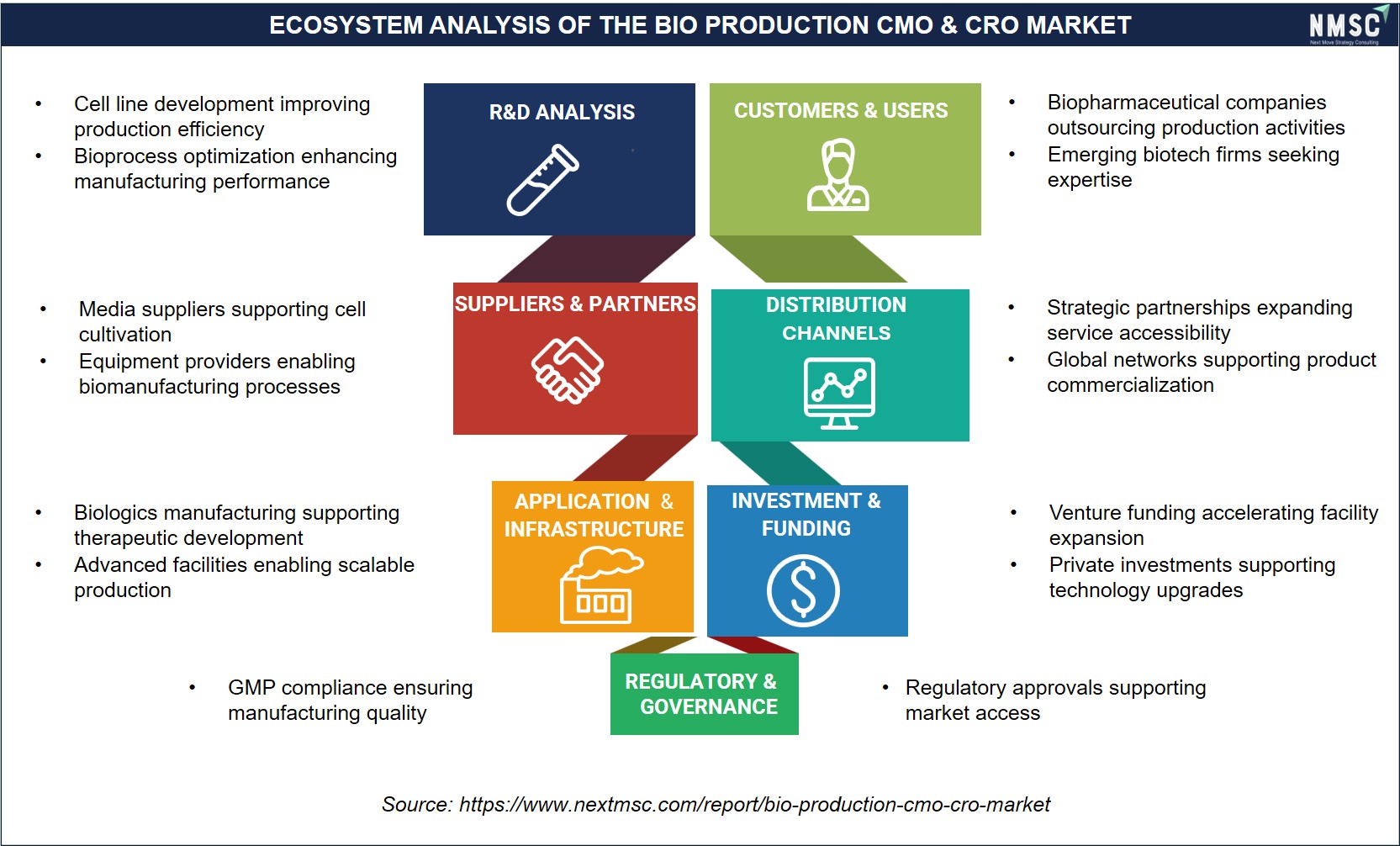
NMSC analysis indicates that the Bio Production CMO & CRO market operates through a highly interconnected ecosystem spanning R&D, suppliers, customers, infrastructure, funding, distribution, and regulatory functions. Our assessment finds that increasing biologics outsourcing, continuous process innovation, and expanding manufacturing investments collectively strengthen market growth. Furthermore, regulatory compliance and strategic partnerships enhance operational efficiency, scalability, and long-term competitiveness.
What Are the Key Market Drivers, Breakthroughs, and Investment Opportunities that Will Shape the Bio-production CMO & CRO Market Industry in the Next Decade?
|
Drivers / Trends / Restraints |
(+/-) % Impact on CAGR Forecast |
Geographic Relevance |
Impact Timeline |
|
Expanding Advanced Therapy Pipelines |
+2.4% |
Global (led by North America, Europe) |
2025–2032 |
|
Rising Biologics Outsourcing Penetration |
+1.8% |
North America, Europe, Asia-Pacific |
2025–2030 |
|
mRNA and Nucleic Acid Platform Growth |
+1.6% |
Global (all regions) |
2026–2035 |
|
Single-Use and Continuous Bioprocessing Adoption |
+1.2% |
North America, Europe, APAC |
2025–2030 |
|
Digital Bioprocess and PAT Integration |
+0.8% |
North America, Europe |
2026–2035 |
|
Regulatory Complexity and CMC Burden |
-1.4% |
Global (all regions) |
Ongoing |
|
Skilled Workforce Shortage in Bioprocessing |
-0.9% |
North America, Europe, APAC |
2025–2029 |
|
Supply Chain Concentration Risk |
-0.6% |
All regions |
Ongoing |
|
Antibody Drug Conjugate Manufacturing Demand |
+1.4% |
Global |
2026–2035 |
|
Emerging Market CDMO Infrastructure Development |
+1.0% |
Asia-Pacific, Latin America |
2025–2032 |
What Are the Growth Drivers of the Bio-production CMO & CRO Market?
How Are the Accelerating Biologics and Advanced Therapy Pipeline Driving Growth in the Bio-production CMO & CRO Market?
The global biologics development pipeline is the primary structural catalyst for accelerated investment in the bio-production CMO & CRO market. The FDA's Center for Drug Evaluation and Research (CDER) reported a record number of novel biological entity approvals in recent years, reflecting deep and active biologic candidate pipelines across oncology, immunology, and rare diseases. From our assessment, we found that the Pharmaceutical Research and Manufacturers of America (PhRMA) reported that biopharmaceutical companies invested over USD 102 billion in research and development in 2023, a substantial portion of which supports outsourced biologic development and manufacturing activities.
How Is Rising Pharmaceutical Outsourcing Penetration Fueling Bio-production CMO & CRO Market Growth?
Strategic outsourcing penetration within the pharmaceutical and biotechnology industry continues to expand as sponsors prioritize capital efficiency, speed to clinic, and access to specialized biomanufacturing expertise over internal facility investment. Based on NMSC's research, we found that the outsourcing penetration rate for biologics manufacturing has increased steadily, driven by the capital intensity of biologic manufacturing facilities, the complexity of multi-product campaign management, and the growing preference among biotech companies to adopt asset-light, virtual development models. Large pharmaceutical companies including those reporting to the Securities and Exchange Commission (SEC) have disclosed increasing external manufacturing spend in annual filings.
How Is the Global Expansion of mRNA and Nucleic Acid Therapeutics Creating Structural Demand in the Bio-production CMO & CRO Market?
The clinical validation of mRNA vaccine technology during the COVID-19 pandemic created a lasting infrastructure demand within the bio-production CMO & CRO market as sponsors across infectious disease, oncology, and rare disease pursue mRNA, siRNA, and antisense oligonucleotide therapeutic programs. The National Institutes of Health (NIH) and the Biomedical Advanced Research and Development Authority (BARDA) have provided substantial funding supporting mRNA platform development in the United States. Our findings suggest that CDMOs with plasmid DNA production, in vitro transcription, and lipid nanoparticle formulation capabilities are experiencing some of the strongest capacity utilization and demand signals within the broader biologics outsourcing ecosystem.
What Are the Growth Inhibitors of the Bio-production CMO & CRO Market?
How Is the Complexity of Regulatory and CMC Requirements Constraining Bio-production CMO & CRO Market Expansion?
Regulatory complexity represents one of the most significant structural constraints on the bio-production CMO & CRO market. The FDA's expectations for Chemistry, Manufacturing, and Controls (CMC) documentation, comparability protocols for manufacturing site changes, and process validation requirements under 21 CFR Part 211 impose substantial compliance investments on CDMOs. The ICH Q5E guideline on comparability of biotechnological products and the ICH Q10 pharmaceutical quality system guideline collectively define extensive documentation and risk management obligations. Our observation indicates that regulatory delays in technology transfer approvals and site qualification extend outsourcing project timelines and increase total development costs for sponsors.
How Does the Shortage of Specialized Bioprocessing Talent Limit Bio-production CMO & CRO Market Growth?
The global shortage of bioprocess engineers, analytical scientists, and regulatory affairs professionals with biologic drug expertise represents a persistent operational constraint on the bio-production CMO & CRO market. The National Center for Science and Engineering Statistics (NCSES) and the U.S. Bureau of Labor Statistics (BLS) have documented structural gaps in life sciences and bioengineering workforce supply relative to industry demand. Through our market assessment, we observed that CDMOs face significant challenges in recruiting, training, and retaining GMP-qualified personnel across upstream processing, downstream purification, and analytical characterization functions, particularly in regions where manufacturing capacity expansion is outpacing local workforce development programs.
What Are the Growth Opportunities in the Bio-production CMO & CRO Market?
How Does the Commercial Launch Wave of Cell and Gene Therapies Create a Multi-Billion Dollar Opportunity in the Bio-production CMO & CRO Market?
The first wave of cell and gene therapy commercial approvals by the FDA and EMA has created structurally durable manufacturing outsourcing demand within the bio-production CMO & CRO market. The FDA's Center for Biologics Evaluation and Research (CBER) has approved multiple CAR-T cell therapies and gene therapies, each requiring GMP-compliant specialized manufacturing through CDMOs. Our analysis shows that as these therapies transition from clinical to commercial scale, the manufacturing complexity of viral vector production and autologous cell processing supports sustained premium CDMO pricing and long-term capacity agreements. This commercial launch wave is expected to generate significant incremental revenue through the forecast period.
How Is the Antibody Drug Conjugate Pipeline Creating High-Value Outsourcing Opportunities in the Bio-production CMO & CRO Market?
Antibody drug conjugates (ADCs) represent one of the fastest-growing and most technically demanding biologic modalities within the bio-production CMO & CRO market, combining monoclonal antibody production with highly potent small molecule payloads and bioconjugation chemistry. The FDA has approved over a dozen ADCs and the clinical pipeline exceeds 150 programs globally, creating substantial demand for specialized CDMOs with both biologic and cytotoxic manufacturing capabilities. Based on our market evaluation, we noticed that CDMOs including WuXi Biologics, Samsung Biologics, and Lonza are investing in dedicated ADC manufacturing suites to capture this premium segment.
How Does the Digital Public Health Infrastructure in Emerging Markets Present Structural Opportunities for the Bio-production CMO & CRO Market?
Emerging market governments across India, China, and Southeast Asia are investing in domestic biomanufacturing capabilities that create significant outsourcing opportunities for established CDMOs and analytical CROs. The Government of India's Production Linked Incentive (PLI) scheme for pharmaceuticals, administered by the Department of Pharmaceuticals under the Ministry of Chemicals and Fertilizers, has committed substantial funding to support biopharmaceutical manufacturing capacity development. Through our analysis, we assessed that similar initiatives in South Korea, China, and Singapore are creating demand for technology transfer, process development, and analytical services from internationally certified bio-production CMO & CRO market participants.
How Is the Bio-production CMO & CRO Market Segmented in This Report, and What Are the Key Insights from the Segmentation Analysis?
How Does Service Type Segmentation Reveal the Structural Composition of the Bio-production CMO & CRO Market?
|
Service Type Segment |
2025 (USD Bn) |
2035 (USD Bn) |
CAGR (%) |
|
Contract Research Services |
6.8 |
21.4 |
13.6% |
|
Contract Development Services |
5.2 |
16.8 |
13.9% |
|
Contract Manufacturing Services |
8.6 |
33.6 |
16.2% |
|
Other Contract Services |
1.8 |
5 |
12.0% |
Based on our analysis of pharmaceutical outsourcing strategy and biologics manufacturing investment trends, we observed that the bio-production CMO & CRO market is segmented into Contract Research Services, Contract Development Services, Contract Manufacturing Services, and Other Contract Services. From our market assessment, we observed that Contract Manufacturing Services continues to hold the largest market share due to rising enterprise demand for scalable biologic drug substance and drug product manufacturing. Contract Research Services are witnessing strong adoption as sponsors increasingly outsource discovery, preclinical safety, and clinical phase management to specialized CROs with deep therapeutic expertise. Contract Development Services are expanding steadily as process development and cell line engineering complexity drives demand for integrated CMC support.
How Does Molecule Type Segmentation Reflect the Therapeutic Innovation Landscape in the Bio-production CMO & CRO Market?
|
Molecule Type Segment |
2025 (USD Bn) |
2035 (USD Bn) |
CAGR (%) |
|
Monoclonal Antibodies |
7.8 |
23.8 |
7.10% |
|
Recombinant Proteins |
3.4 |
9 |
11.4% |
|
Vaccines |
3.2 |
9.4 |
12.7% |
|
Cell Therapies |
2.1 |
10.4 |
17.5% |
|
Gene Therapies |
1.8 |
9.6 |
18.3% |
|
Antibody Drug Conjugates |
1.6 |
5.8 |
15.4% |
|
Messenger RNA |
1.2 |
5 |
17.2% |
|
Oligonucleotides |
0.8 |
2.8 |
14.9% |
|
Other Biologics (incl. Peptides) |
0.5 |
1 |
8.0% |
On the basis of biologic modality adoption patterns and clinical pipeline composition, we observed that the bio-production CMO & CRO market is segmented into Monoclonal Antibodies, Recombinant Proteins, Vaccines, Cell Therapies, Gene Therapies, ADCs, mRNA, Oligonucleotides, and Other Biologics. From our market analysis, we found that Monoclonal Antibodies continue to dominate due to their established manufacturing processes, deep clinical pipeline, and broad therapeutic application across oncology and autoimmune diseases. Meanwhile, Cell Therapies and Gene Therapies are witnessing the strongest growth as commercial approvals validate manufacturing platforms and drive investment in dedicated production infrastructure. mRNA and Oligonucleotides are emerging high-growth segments supported by continued pipeline development post-pandemic.
How Does Source System Segmentation Reveal Production Platform Preferences in the Bio-production CMO & CRO Market?
|
Source System Segment |
2025 (USD Bn) |
2035 (USD Bn) |
CAGR (%) |
|
Mammalian Systems |
10.8 |
35.6 |
14.2% |
|
Microbial Systems |
4.2 |
12.8 |
7.10% |
|
Viral Vector Systems |
2.8 |
14.4 |
17.9% |
|
Plasmid DNA Systems |
1.8 |
7.2 |
16.6% |
|
Yeast Systems |
1.4 |
3.6 |
11.0% |
|
Insect Systems |
0.6 |
1.4 |
8.8% |
|
Cell-Free Systems |
0.4 |
1.2 |
13.0% |
|
Plant Systems |
0.2 |
0.4 |
8.0% |
|
Other Source Systems |
0.2 |
0.2 |
— |
We observed that the bio-production CMO & CRO market is segmented by source system into Mammalian Systems, Microbial Systems, Viral Vector Systems, Plasmid DNA Systems, Yeast Systems, Insect Systems, Cell-Free Systems, Plant Systems, and Other Source Systems. The Mammalian Systems segment dominates due to its central role in producing monoclonal antibodies, recombinant proteins, and cell therapy products that require post-translational modifications for biological activity. Viral Vector Systems are the fastest-growing platform, driven by surging demand for lentiviral, adeno-associated virus (AAV), and adenoviral vectors supporting gene therapy and CAR-T manufacturing programs globally. Plasmid DNA Systems are also experiencing rapid growth as both a standalone product and essential input for viral vector and mRNA production.
Which Program Stage Generates the Most Value in the Bio-production CMO & CRO Market?
|
Program Stage Segment |
2025 (USD Bn) |
2035 (USD Bn) |
CAGR (%) |
|
Discovery Stage |
2.4 |
6.8 |
12.3% |
|
Preclinical Stage |
4.2 |
12.6 |
13.0% |
|
Clinical Stage (Total) |
8.8 |
29.4 |
14.3% |
|
Commercial Stage |
7 |
28 |
16.6% |
Based on our analysis of sponsor outsourcing strategies across the biologic development lifecycle, we noticed that the bio-production CMO & CRO market is segmented into Discovery Stage, Preclinical Stage, Clinical Stage, and Commercial Stage programs. The Clinical Stage holds the largest revenue share at USD 8.8 billion in 2025, reflecting the volume of active Phase I, II, and III clinical trials requiring GMP biologic manufacturing and analytical support. The Commercial Stage is the fastest-growing program stage as a wave of recently approved biologics, biosimilars, and advanced therapies transitions from clinical to full-scale commercial supply. Preclinical Stage outsourcing remains significant as sponsors rely on CROs for target validation, in vitro pharmacology, and IND-enabling toxicology studies.
How Do Sponsor Types Shape Outsourcing Dynamics in the Bio-production CMO & CRO Market?
|
Sponsor Type Segment |
2025 (USD Bn) |
2035 (USD Bn) |
CAGR (%) |
|
Large Pharmaceutical Companies |
8.4 |
26.2 |
13.5% |
|
Mid-Sized Pharmaceutical Companies |
4.2 |
13.4 |
13.7% |
|
Biotechnology Companies |
6.8 |
24.8 |
15.5% |
|
Academic and Government Institutions |
1.8 |
6.8 |
14.3% |
|
Other Sponsor Types |
1.2 |
5.6 |
16.6% |
Through our market assessment, we observed that the bio-production CMO & CRO market is segmented into Large Pharmaceutical Companies, Mid-Sized Pharmaceutical Companies, Biotechnology Companies, Academic and Government Institutions, and Other Sponsor Types. Large Pharmaceutical Companies dominate outsourcing revenue due to their extensive commercial biologic portfolios and strategic use of CDMOs for capacity supplementation and geographic market supply. Biotechnology Companies are the fastest-growing sponsor segment, driven by the large number of clinical-stage biotech firms that operate as virtual organizations without internal manufacturing and rely entirely on CDMOs across discovery through commercial supply. Academic and Government Institutions are an increasingly important segment, particularly for advanced therapy and infectious disease program outsourcing.
Which Therapeutic Areas Drive the Highest Outsourcing Value in the Bio-production CMO & CRO Market?
|
Therapeutic Area Segment |
2025 (USD Bn) |
2035 (USD Bn) |
CAGR (%) |
|
Oncology |
8.2 |
28.6 |
14.9% |
|
Infectious Diseases |
4.2 |
13.4 |
13.7% |
|
Autoimmune and Inflammatory Diseases |
3.4 |
11.2 |
14.0% |
|
Neurology |
1.8 |
7.6 |
17.4% |
|
Metabolic Diseases |
1.6 |
5.4 |
14.4% |
|
Cardiovascular Diseases |
1.4 |
4.6 |
13.0% |
|
Other Therapeutic Areas |
1.8 |
6 |
13.9% |
Based on our analysis of biologic pipeline distribution and clinical trial activity, we assessed that the bio-production CMO & CRO market is segmented into Oncology, Infectious Diseases, Autoimmune and Inflammatory Diseases, Neurology, Metabolic Diseases, Cardiovascular Diseases, and Other Therapeutic Areas. Oncology dominates at USD 8.2 billion in 2025, reflecting the large volume of monoclonal antibody, ADC, bispecific antibody, and cell therapy programs targeting cancer indications. Neurology is the fastest-growing therapeutic area at a CAGR of 17.4%, driven by a rapidly expanding pipeline of gene therapies and antisense oligonucleotides targeting rare neurological disorders including spinal muscular atrophy, amyotrophic lateral sclerosis, and Huntington disease.
Regional Outlook
Geographic Performance Snapshot
|
Region |
2025 (USD Bn) |
2035 (USD Bn) |
CAGR (%) |
Key Driver |
|
North America |
10.4 |
33.8 |
14.0% |
FDA maturity, biotech concentration, CDMO infrastructure |
|
Europe |
5.8 |
18.6 |
13.8% |
EMA compliance, biosimilar manufacturing, ADC pipelines |
|
Asia-Pacific |
4.4 |
18.4 |
17.2% |
China/India CDMO expansion, cost-competitive capacity |
|
Middle East & Africa |
1.0 |
2.6 |
11.2% |
Vision programs, pharma sector development |
|
Latin America |
0.8 |
3.4 |
17.5% |
Biosimilar manufacturing, PLI-style incentives |
North America Bio-production CMO & CRO Market
North America is the global epicenter of the bio-production CMO & CRO market, accounting for USD 10.4 billion in 2025 and forecast to reach USD 33.8 billion by 2035 at a CAGR of 14.0%. The region benefits from the headquarters of all major CDMO platform leaders, the world's most active biotech venture capital ecosystem, and the FDA's well-established biological product regulatory infrastructure. Strong enterprise outsourcing budgets, a dense concentration of clinical-stage biotechnology firms, and mature GMP manufacturing networks underpin North America's sustained leadership in the global market.
U.S. Bio-production CMO & CRO Market
Based on our engagements with North American market participants, the United States represents over 78% of the North American bio-production CMO & CRO market and is the world's single largest national market. The U.S. benefits from the highest concentration of biopharmaceutical companies, the headquarters of Thermo Fisher Scientific, Charles River Laboratories, and Catalent, and a mature FDA regulatory framework that enables rapid technology transfer and site approval. The FDA CBER's continuous engagement with advanced therapy manufacturers through the Regenerative Medicine Advanced Therapy (RMAT) designation further accelerates clinical and commercial manufacturing partnerships within the domestic CDMO ecosystem.
Canada Bio-production CMO & CRO Market
From our assessment, Canada represents approximately 14% of North American Bio-production CMO & CRO revenue, supported by world-class academic research institutions including the University of Toronto and McGill University, established vaccine manufacturing infrastructure from pandemic-era investments, and a supportive Health Canada biologics approval pathway. The Government of Canada's Biomanufacturing and Life Sciences Strategy has committed over CAD 2.2 billion to rebuild domestic biomanufacturing capacity, creating downstream demand for CDMO process development and scale-up services from biotech companies leveraging Canadian R&D incentives.
Mexico Bio-production CMO & CRO Market
Through our analysis, Mexico is the fastest-growing market within North America for Bio-production CMO & CRO services. Mexico's growing pharmaceutical manufacturing sector, its proximity to the U.S. market, and COFEPRIS regulatory alignment with international standards are attracting incremental outsourcing investment. The nearshoring trend is generating demand for analytical CRO services supporting bioequivalence and stability testing for biosimilar candidates manufactured for North American and Latin American markets. Mexico's National Institute of Public Health (INSP) and national biosimilar policy frameworks are further shaping local demand.
Europe Bio-production CMO & CRO Market
Europe is the second-largest region in the bio-production CMO & CRO market, contributing USD 5.8 billion in 2025 and forecast to reach USD 18.6 billion by 2035 at a CAGR of 13.8%. Europe's regulatory environment, governed by EMA, the Clinical Trials Regulation (CTR), and the Advanced Therapy Medicinal Products (ATMP) Regulation, provides a structured framework that simultaneously drives compliance investment and innovation in biologic manufacturing. Sovereign manufacturing capabilities in Germany, Switzerland, Ireland, and Denmark represent the densest concentration of European CDMO capacity.
UK Bio-production CMO & CRO Market
Based on our engagements with European CDMO stakeholders, the United Kingdom is among Europe's leading bio-production CMO & CRO markets, representing approximately 18% of European revenue in 2025. Post-Brexit, the UK Medicines and Healthcare products Regulatory Agency (MHRA) has streamlined biologics approval pathways, attracting international clinical trial sponsors. The UK's Cell and Gene Therapy Catapult and the BioIndustry Association (BIA) support an active advanced therapy manufacturing ecosystem. The government's Life Sciences Vision has committed resources to sustaining the UK's clinical trial and biomanufacturing competitiveness, creating demand for specialized CDMO and CRO services.
Germany Bio-production CMO & CRO Market
According to our evaluation, Germany is the largest individual country market for Bio-production CMO & CRO services within continental Europe, driven by a world-class biopharmaceutical industry, strong government investment in bioprocess research, and established GMP manufacturing infrastructure. Boehringer Ingelheim's CDMO division, headquartered in Biberach, is among the world's top mammalian cell culture manufacturing providers. The German Federal Ministry of Education and Research (BMBF) actively funds biomanufacturing research. Germany's Paul-Ehrlich-Institut regulates biological medicinal products, maintaining rigorous oversight that positions German CDMOs as high-quality manufacturing partners.
France Bio-production CMO & CRO Market
Through our analysis, France represents a significant and growing bio-production CMO & CRO market, distinguished by strong public sector investment in biotherapeutics research and national commitment to biomanufacturing sovereignty. The France Relance and France 2030 strategic plans have allocated substantial resources to biopharmaceutical capacity expansion and advanced therapy manufacturing. The French National Agency for the Safety of Medicines and Health Products (ANSM) regulate ATMPs and biological medicines with rigorous GMP inspection programs. Major CDMOs including Novasep and Delpharm operate French GMP manufacturing facilities serving European sponsor needs.
Italy Bio-production CMO & CRO Market
From our assessment, Italy is a mid-tier but growing bio-production CMO & CRO market with active biopharmaceutical manufacturing and clinical CRO activity. Italy's Agenzia Italiana del Farmaco (AIFA) oversees regulatory approval of biological medicines, and Italy's PNRR recovery plan has allocated funding toward life sciences and biomanufacturing modernization. Italian CROs including Quoted Alliance (QPS) affiliates and global firms with Italian operations service a dense network of pharmaceutical companies. Italy's academic research institutions support preclinical and clinical outsourcing activity across oncology and rare disease therapeutic areas.
Spain Bio-production CMO & CRO Market
Based on our evaluation, Spain demonstrates growing momentum in the bio-production CMO & CRO market, driven by a dynamic pharmaceutical sector, active clinical trial infrastructure, and government support under the Agenda España Digital 2026. Spain's Agencia Española de Medicamentos y Productos Sanitarios (AEMPS) manages biological medicine approval, and Spain hosts a significant number of hospital-based Phase I and Phase II clinical trial units. Spanish CROs including Apices and international operators serve a growing base of biotech and pharmaceutical sponsors. Barcelona and Madrid are emerging as European clinical operations hubs supporting the broader CDMO ecosystem.
Sweden Bio-production CMO & CRO Market
Through our analysis, Sweden is a high-per-capita Bio-production CMO & CRO consumer, supported by a highly digitized life sciences sector anchored by AstraZeneca, Recipharm, and Cambrex manufacturing operations. Swedish CDMOs have invested in single-use and continuous bioprocessing infrastructure aligned with European GMP standards. The Swedish Medical Products Agency (MPA) provides a responsive regulatory framework for biological product manufacturing site authorization. Sweden's academic excellence in molecular biology, supported by institutions such as Karolinska Institutet, sustains a rich preclinical and analytical CRO ecosystem in the bio-production CMO & CRO market.
Denmark Bio-production CMO & CRO Market
From our assessment, Denmark is among the most advanced bio-production CMO & CRO markets in Europe, with the country's life sciences sector anchored by Novo Nordisk, one of the world's largest biopharmaceutical companies, and its extensive contract manufacturing supplier network. The Danish Medicines Agency (DKMA) maintains rigorous GMP oversight, and Denmark's Medicon Valley cluster across Copenhagen and southern Sweden represents one of Europe's most active biotech innovation ecosystems. Demand for preclinical CRO services, protein analytical characterization, and clinical biomanufacturing support is consistently strong across the Danish Bio-production CMO & CRO landscape.
Finland Bio-production CMO & CRO Market
Based on our engagements, Finland represents a niche but growing bio-production CMO & CRO market, characterized by strong academic research infrastructure centered on the University of Helsinki and Aalto University, an active advanced therapy research ecosystem, and government support through Business Finland. The Finnish Medicines Agency (FIMEA) regulates biological product manufacturing with EU-aligned GMP standards. Finland's emerging gene therapy research activity and biosimilar development programs are generating increasing demand for preclinical research, analytical development, and early-phase manufacturing outsourcing within the market.
Netherlands Bio-production CMO & CRO Market
Through our analysis, the Netherlands is a critical hub for the European bio-production CMO & CRO market, hosting international CDMO and CRO operations that serve pan-European sponsors. The Netherlands hosts the EMA headquarters, making Amsterdam a strategic location for regulatory intelligence and regulatory affairs outsourcing. Dutch biopharmaceutical companies and international sponsors leverage CDMO facilities located across the Netherlands for clinical and commercial biologic manufacturing. The Medicines Evaluation Board (CBG-MEB) provides effective regulatory oversight, and the Netherlands Enterprise Agency (RVO) supports life sciences investment and innovation programs.
Rest of Europe Bio-production CMO & CRO Market
The Rest of Europe, encompassing Switzerland, Austria, Ireland, Belgium, Poland, Czech Republic, and other European nations, collectively represents a significant and commercially active component of the European bio-production CMO & CRO market. Switzerland is host to Lonza Group, one of the world's largest CDMOs, and its headquarters in Basel makes Switzerland a globally important node in biologic contract manufacturing. Ireland has emerged as a premier biologics manufacturing location for major pharmaceutical companies, with multiple FDA and EMA-inspected large-scale bioreactor facilities supporting commercial-stage programs. Belgium's biotechnology cluster around Ghent and Leuven also contributes analytical CRO and early-stage development activity.
Asia-Pacific Bio-production CMO & CRO Market
Asia-Pacific is the fastest-growing major region in the bio-production CMO & CRO market, advancing from USD 4.4 billion in 2025 to an estimated USD 18.4 billion by 2035 at a CAGR of 17.2%. The region's growth is propelled by China's aggressive CDMO capacity expansion, India's growing biologics outsourcing ecosystem, and the advanced biopharmaceutical industries of Japan, South Korea, and Australia. Regulatory frameworks including Japan's PMDA, South Korea's MFDS, and India's CDSCO biologics guidelines are shaping enterprise outsourcing investment across the region.
China Bio-production CMO & CRO Market
Based on our engagements with Asia-Pacific CDMO stakeholders, China is the largest single market in Asia-Pacific for Bio-production CMO & CRO services, driven by its massive domestic pharmaceutical industry, government investment in biomanufacturing capacity through the Made in China 2025 initiative, and the global leadership of WuXi Biologics and WuXi AppTec in offshore CDMO services. China's National Medical Products Administration (NMPA) has implemented ICH-aligned quality guidelines, increasing the regulatory compatibility of Chinese CDMOs with international sponsors. Geopolitical considerations are, however, prompting some Western sponsors to diversify beyond China, creating both risk and consolidation opportunities within the regional market.
India Bio-production CMO & CRO Market
Through our analysis, India is the fastest-growing national market within Asia-Pacific for Bio-production CMO & CRO services, advancing at a CAGR that reflects the country's rapidly developing biologics and biosimilar manufacturing ecosystem. India's Department of Pharmaceuticals, under the Production Linked Incentive (PLI) scheme, is providing incentives for domestic biopharmaceutical manufacturing investment. Syngene International, a Bengaluru-based fully integrated CRO and CDMO, exemplifies India's growing capability to serve global biologic sponsors across discovery, development, and manufacturing. The Central Drugs Standard Control Organisation (CDSCO) provides regulatory oversight aligned with WHO GMP standards.
Japan Bio-production CMO & CRO Market
From our assessment, Japan is the second-largest Asia-Pacific market for Bio-production CMO & CRO services, supported by a mature biopharmaceutical industry with global leaders including Daiichi Sankyo, Takeda, and Astellas. Japan's Pharmaceuticals and Medical Devices Agency (PMDA) provides a responsive GMP inspection framework. Japanese CDMOs and CROs including FUJIFILM Diosynth Biotechnologies operate advanced bioproduction facilities with global service capabilities. Japan's national Regenerative Medicine and Cell Therapy Act has created structured regulatory pathways for advanced therapy manufacturing outsourcing, supporting sustained demand in the domestic Bio-production CMO & CRO ecosystem.
South Korea Bio-production CMO & CRO Market
According to our evaluation, South Korea demonstrates high bio-production CMO & CRO market maturity, with Samsung Biologics emerging as one of the world's largest contract biologics manufacturers by installed bioreactor capacity. Korea's Ministry of Food and Drug Safety (MFDS) implements ICH-aligned GMP standards that support international sponsor engagement. South Korea's national biosimilar strategy, combined with significant government investment in biopharmaceutical R&D, has created a sophisticated domestic outsourcing ecosystem. Samsung Biologics' Incheon facilities and a growing cluster of Korean CROs position South Korea as one of the most competitive bioproduction outsourcing destinations in Asia.
Taiwan Bio-production CMO & CRO Market
Through our analysis, Taiwan's bio-production CMO & CRO market is characterized by strong activity in biologics analytical services, vaccine manufacturing, and early-phase clinical research. The Taiwan Food and Drug Administration (TFDA) oversees biological product GMP compliance. Taiwan's Biomedical Industry Innovation Program, supported by the Ministry of Health and Welfare, is driving investment in advanced biotherapy development capacity. Taiwan's dense cluster of high-technology life sciences companies and its proximity to global supply chains position it as an emerging hub for analytical CRO and process development services within the Asia-Pacific market.
Indonesia Bio-production CMO & CRO Market
Based on our engagements, Indonesia is among the most rapidly growing bio-production CMO & CRO markets in Southeast Asia, driven by a large domestic pharmaceutical market, government-mandated domestic vaccine production requirements, and the expanding infrastructure of state-owned enterprise Bio Farma. The National Agency of Drug and Food Control (BPOM) provide regulatory oversight of biological product manufacturing in Indonesia. Indonesia's increasing participation in global vaccine alliances and its growing biotechnology sector are creating incremental demand for contract research and analytical services. The government's Visi Indonesia 2045 digital and industrial strategy includes life sciences manufacturing capacity targets.
Vietnam Bio-production CMO & CRO Market
From our assessment, Vietnam is an emerging and high-growth market for Bio-production CMO & CRO services in Southeast Asia, supported by a rapidly expanding pharmaceutical manufacturing sector and government ambitions under the National Pharmaceutical Industry Development Strategy to 2030. The Drug Administration of Vietnam (DAV) regulates pharmaceutical and biological product manufacturing under WHO GMP-aligned standards. Vietnamese manufacturers including VABIOTECH and POLYVAC are developing domestic bioproduction capabilities. Growing foreign direct investment in Vietnam's pharmaceutical sector is creating incremental demand for contract analytical and process development services from internationally certified providers.
Australia Bio-production CMO & CRO Market
Through our analysis, Australia is the most mature bio-production CMO & CRO market in Asia-Pacific outside of Northeast Asia, with strong adoption across medical research institutes, government-funded clinical trial networks, and a growing advanced therapy sector. The Therapeutic Goods Administration (TGA) oversees biologics manufacturing GMP compliance under a framework closely aligned with EMA and FDA standards. Australia's National Health and Medical Research Council (NHMRC) funds significant academic preclinical research generating CRO outsourcing demand. The Australian government's Medical Products Manufacturing program, announced under the National Manufacturing Priority Road Map, targets domestic biomanufacturing capability development.
Philippines Bio-production CMO & CRO Market
Based on our evaluation, the Philippines is a developing but growing bio-production CMO & CRO market in Southeast Asia, supported by a large clinical trial infrastructure serving as a research site for international sponsors. The Food and Drug Administration (FDA) Philippines regulates biological product quality and manufacturing. Philippine hospitals and academic medical centers participate actively in Phase II and Phase III oncology and infectious disease clinical trials. The government's Innovative Startup Act and Universal Health Care Act are expanding domestic pharmaceutical R&D investment, creating incremental demand for preclinical and analytical CRO services within the Philippine Bio-production CMO & CRO ecosystem.
Malaysia Bio-production CMO & CRO Market
From our assessment, Malaysia is a mid-tier and growing bio-production CMO & CRO market, characterized by government-led pharmaceutical investment under the National Pharmaceutical Industry Blueprint, a rapidly maturing clinical trial infrastructure, and Kuala Lumpur's emergence as a Southeast Asian life sciences hub. The National Pharmaceutical Regulatory Agency (NPRA) under the Ministry of Health provides regulatory oversight under WHO GMP-aligned frameworks. Malaysia's Bioeconomy Corporation is actively attracting CDMO investment. Major contract manufacturers operate in Penang and Selangor, leveraging Malaysia's established electronics and precision manufacturing industrial base.
Rest of Asia-Pacific Bio-production CMO & CRO Market
The Rest of Asia-Pacific, comprising Singapore, Thailand, Bangladesh, New Zealand, Sri Lanka, and other nations, collectively represents a growing share of the regional bio-production CMO & CRO market. Singapore is a critical hub for regional CDMO headquarters, hosting regional operations of Lonza, AGC Biologics, and Rentschler Biopharma, supported by the Economic Development Board (EDB) life sciences cluster initiative and Health Sciences Authority (HSA) regulatory excellence. Thailand's National Drug System Development Committee and growing biosimilar sector are supporting early-stage CDMO activity. New Zealand hosts clinical trial sites aligned with Medsafe regulatory standards, contributing to regional clinical CRO activity.
Middle East and Africa Bio-production CMO & CRO Market
The Middle East and Africa are a steadily growing region in the bio-production CMO & CRO market, advancing from USD 1.0 billion in 2025 to USD 2.6 billion by 2035 at a CAGR of 11.2%. Vision-driven national biomanufacturing ambitions in Saudi Arabia and the UAE are the primary growth engines, supplemented by Israel's advanced biotechnology sector, South Africa's clinical research infrastructure, and growing pharmaceutical R&D investment across the GCC. Sovereign biomanufacturing capability development across the Gulf Cooperation Council is creating structured demand for technology transfer and process development outsourcing.
Saudi Arabia Bio-production CMO & CRO Market
Based on our engagements, Saudi Arabia is the largest bio-production CMO & CRO market in the Middle East and Africa region, driven by Vision 2030's National Biotechnology Strategy and Saudi Aramco's diversification into life sciences through investment vehicles including the Saudi Venture Capital Company. The Saudi Food and Drug Authority (SFDA) has strengthened its GMP inspection program and is implementing ICH guidelines to attract international CDMO investment. National programs targeting domestic vaccine and biologic manufacturing capability through SIHI and national health authorities are creating structured technology transfer demand from international CDMOs.
UAE Bio-production CMO & CRO Market
From our assessment, the UAE is the second-largest bio-production CMO & CRO market in MEA, powered by Dubai and Abu Dhabi's ambitions as global healthcare and life sciences innovation hubs. The UAE's Ministry of Health and Prevention (MOHAP) and Abu Dhabi Health Authority (HAAD) are implementing regulatory frameworks supporting clinical trial activity and biological product development. The Abu Dhabi Investment Office (ADIO) actively attracts biopharmaceutical investment to Abu Dhabi's Masdar City life sciences cluster. Emerging clinical CRO activity and technology transfer programs position the UAE as a regional anchor for Bio-production CMO & CRO service growth.
Egypt Bio-production CMO & CRO Market
Through our analysis, Egypt is an emerging bio-production CMO & CRO market in Africa and the broader MEA region, supported by a large academic medical research sector, the Egyptian Drug Authority (EDA), and government health sector reform under Egypt Vision 2030. Egypt's Vacsera (Holding Company for Biological Products and Vaccines) represents a major national biologic manufacturing asset with ongoing modernization investment. Egyptian academic institutions including Cairo University and Ain Shams University support preclinical research and clinical trial site activities that generate incremental demand for contract analytical and early-phase research services within the regional market.
Israel Bio-production CMO & CRO Market
Based on our analysis, Israel occupies a unique position within the bio-production CMO & CRO market as both a significant vendor origin country and an active enterprise buyer. Israel's vibrant biotech ecosystem, supported by the Israel Innovation Authority and the Hebrew University Technology Transfer company Yissum, generates substantial demand for CRO and early-phase development outsourcing. Israel's Ministry of Health and the Israel Pharmaceutical Association maintain rigorous quality standards aligned with FDA and EMA expectations. Israeli biopharmaceutical companies are significant consumers of preclinical research, analytical, and clinical phase outsourcing services globally.
Turkey Bio-production CMO & CRO Market
Through our evaluation, Turkey is a mid-sized and growing bio-production CMO & CRO market within MEA, characterized by a dynamic pharmaceutical manufacturing sector and the government's National Biotechnology Strategy 2021–2025. The Turkish Medicines and Medical Devices Agency (TITCK) provides regulatory oversight under EU GMP-compatible frameworks. Turkey's growing biosimilar manufacturing capabilities and a deep pool of bioprocess engineers trained at institutions including Hacettepe University are supporting CDMO service capacity development. Turkish biopharmaceutical companies are active consumers of international CRO services for clinical trial management across oncology and autoimmune therapeutic programs.
Nigeria Bio-production CMO & CRO Market
From our assessment, Nigeria represents Sub-Saharan Africa's largest bio-production CMO & CRO market segment, driven by its 220 million population, rapidly growing pharmaceutical sector, and the Nigeria Centre for Disease Control (NCDC) mandate for domestic biological product development. The National Agency for Food and Drug Administration and Control (NAFDAC) regulates pharmaceutical manufacturing, and Nigeria's Petroleum Technology Development Fund (PTDF) supports STEM talent development that sustains CRO research activity. Growing vaccine manufacturing ambitions through partnerships with international organizations are creating structured demand for CDMO process development and technology transfer services.
South Africa Bio-production CMO & CRO Market
According to our evaluation, South Africa is the most mature and developed bio-production CMO & CRO market in Sub-Saharan Africa, with Johannesburg and Cape Town hosting established clinical CRO operations serving international sponsors. The South African Health Products Regulatory Authority (SAHPRA) has modernized its GMP inspection program under a WHO PQ-compatible framework. South Africa's Biovac Institute supports domestic vaccine manufacturing, and the country's world-class academic medical centers including University of Cape Town and Wits University generate significant clinical trial and preclinical research outsourcing activity within the African Bio-production CMO & CRO ecosystem.
Rest of MEA Bio-production CMO & CRO Market
The Rest of Middle East and Africa, encompassing Kuwait, Qatar, Bahrain, Oman, Jordan, Morocco, Kenya, Ghana, Ethiopia, and other nations, collectively represents a growing segment of the bio-production CMO & CRO market. GCC countries outside Saudi Arabia and UAE are investing in national pharmaceutical manufacturing capability through sovereign wealth fund-supported life sciences parks. Kenya is Africa's fastest-growing clinical research market, with Nairobi hosting regional CRO offices serving East African clinical trial networks. Morocco serves as a nearshore pharmaceutical manufacturing hub for European sponsors seeking MEA-proximate production capacity.
Latin America Bio-production CMO & CRO Market
Latin America is among the fastest-growing regions in the bio-production CMO & CRO market at a CAGR of 17.5% from 2026 to 2035, advancing from USD 0.8 billion in 2025 to USD 3.4 billion by 2035. Brazil and Mexico collectively account for approximately 68% of regional revenue. Growing biosimilar manufacturing activity, hyperscaler investment in regional pharmaceutical digitalization, and evolving data protection and clinical trial regulation across major economies are the primary growth drivers. The region's large patient population and growing clinical trial infrastructure represent significant opportunities for market participants.
Brazil Bio-production CMO & CRO Market
Based on our engagements, Brazil is the largest bio-production CMO & CRO market in Latin America, accounting for approximately 40% of regional revenue in 2025. Brazil's Agência Nacional de Vigilância Sanitária (ANVISA) operates one of Latin America's most sophisticated biological product regulatory frameworks, aligned with international GMP standards. The Brazilian Ministry of Health's Productive Development Partnerships (PDP) program has created structured demand for technology transfer and domestic biosimilar manufacturing. Fiocruz, Brazil's national biomedical research institution, represents a significant consumer of contract analytical and preclinical research services across infectious disease and tropical medicine programs.
Argentina Bio-production CMO & CRO Market
Through our analysis, Argentina is the second-largest bio-production CMO & CRO market in Latin America, with Buenos Aires hosting a concentration of regional CRO operations and clinical trial management organizations. Argentina's National Administration of Drugs, Food and Medical Technology (ANMAT) provides regulatory oversight for biological product manufacturing and clinical trial authorization. Argentina's CONICET national research council and biopharmaceutical companies including Bagó and Sinergium Biotech generate preclinical and analytical CRO demand. Argentina's pharmaceutical manufacturing regulatory equivalence with international standards positions it as a regional hub for clinical CRO services.
Chile Bio-production CMO & CRO Market
From our assessment, Chile represents a stable and growing bio-production CMO & CRO market, benefiting from one of Latin America's strongest regulatory environments under the Institute of Public Health (ISP) oversight, which maintains GMP standards compatible with international requirements. Chile's strategic location as a regional clinical trial site for oncology and infectious disease sponsors, combined with its advanced healthcare infrastructure, supports growing CRO activity. The Chilean government's Biobío region has attracted pharmaceutical manufacturing investment, and Chile's national biotechnology association (ASEMBIO) actively promotes the country's biomanufacturing capability development.
Colombia Bio-production CMO & CRO Market
Based on our evaluation, Colombia is among the fastest-growing bio-production CMO & CRO markets in Latin America, supported by Bogotá's emergence as a regional technology and services hub, active clinical trial infrastructure across major hospitals, and the National Institute of Food and Drug Surveillance (INVIMA) regulatory framework. Colombia's CTeI national science and technology policy supports biopharmaceutical research investment. Colombian hospitals and academic medical centers are active Phase II and III clinical trial sites for oncology and infectious disease sponsors, generating growing demand for clinical CRO services within the Colombian Bio-production CMO & CRO ecosystem.
Rest of LATAM Bio-production CMO & CRO Market
The Rest of Latin America, including Peru, Ecuador, Uruguay, Bolivia, Paraguay, Costa Rica, Panama, and Caribbean nations, represents a smaller but growing component of the bio-production CMO & CRO market. Peru and Ecuador are experiencing early-stage growth in clinical CRO activity driven by patient diversity for clinical trial enrollment. Costa Rica serves as a nearshore life sciences hub for North American sponsors, leveraging a well-educated workforce and the CIHD regulatory framework. Panama's role as a regional logistics hub and its active clinical research center network at Hospital Nacional generate incremental demand for clinical and analytical CRO services.
Strategic Framework Impacting the Bio Production CMO & CRO Market
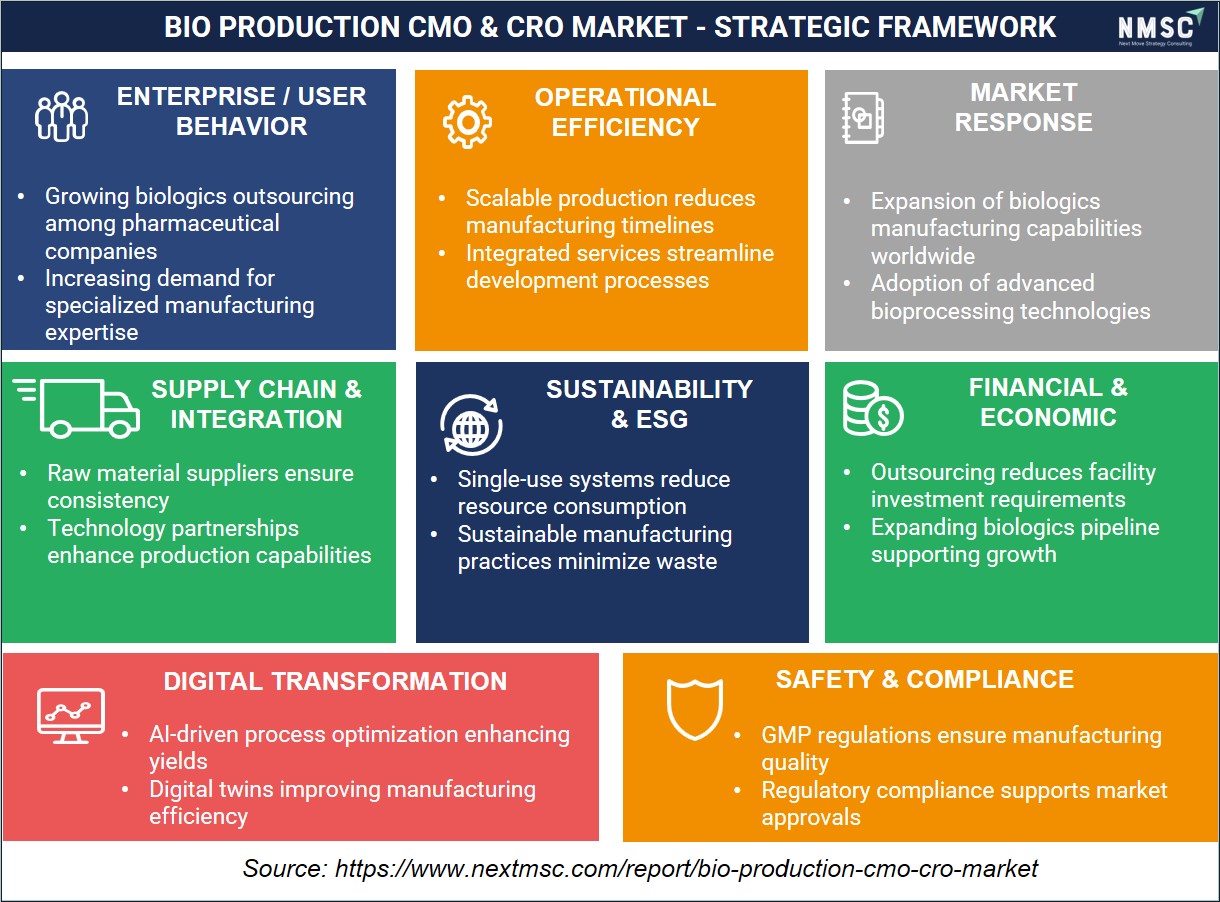
Based on NMSC's evaluation, we found that the Bio Production CMO & CRO market is advancing through stronger outsourcing adoption, operational efficiencies, digital transformation, and supply chain integration. Our assessment identifies that AI-enabled manufacturing, sustainability initiatives, and expanding biologics pipelines are supporting market expansion. Moreover, compliance-driven quality standards and ongoing capacity investments are enabling organizations to improve productivity, profitability, and market responsiveness.
Competitive Landscape
Competitive Dynamics and M&A Landscape
|
Key Takeaways |
Details |
|
Market Structure |
The Bio-production CMO & CRO Market features multi-tiered competition among global integrated CDMO platforms (Lonza, Thermo Fisher, WuXi Biologics), large-scale CRO networks (IQVIA, LabCorp, ICON), and specialist advanced therapy manufacturers (Catalent, FUJIFILM Diosynth, Rentschler), each competing on distinct biologic manufacturing capabilities and therapeutic expertise. |
|
Innovation Focus |
Innovation in the Bio-production CMO & CRO Market centers on advanced therapy manufacturing platforms (viral vectors, cell therapy, mRNA), continuous bioprocessing and process intensification, digital MES and PAT integration, and modular pod-based facility architectures that accelerate clinical program timelines. |
|
M&A Activity |
Thermo Fisher Scientific's acquisition of Patheon and subsequent biosafety testing acquisitions have consolidated integrated CDMO capabilities. Baxter's sale of its pharmaceutical manufacturing operations and Catalent's acquisition by Novo Holdings in 2024 have reshaped the competitive landscape. Private equity consolidation of mid-tier CDMOs continues, particularly in fill-finish, cell therapy, and nucleic acid manufacturing sub-segments. |
How Do Companies Compete in the Bio-production CMO & CRO Market?
The bio-production CMO & CRO market is characterized by multi-tiered competition across integrated CDMO platforms, large clinical CRO networks, and specialist modality manufacturers. Global CDMO leaders including Lonza, WuXi Biologics, and Thermo Fisher Scientific compete on breadth of biologic service capability, global multi-site manufacturing networks, and integrated development-to-commercial program support. Specialized players including Rentschler Biopharma and AGC Biologics differentiate on depth of mammalian cell culture expertise and European regulatory manufacturing compliance. CRO networks including IQVIA, LabCorp, Charles River, and ICON compete on therapeutic area expertise, global clinical trial site density, and data analytics capabilities. Innovation focus is concentrated in advanced therapy manufacturing, continuous bioprocessing, digital integration, and sustainable single-use infrastructure.
Which Kind of Companies Dominate the Bio-production CMO & CRO Market?
Three categories of companies dominate the bio-production CMO & CRO market. First, global integrated CDMO and CRO platforms including Lonza, Thermo Fisher Scientific, WuXi AppTec, WuXi Biologics, and Samsung Biologics provide end-to-end biological product development and manufacturing services. Second, large CRO networks including IQVIA, LabCorp, Charles River, ICON, Parexel, and Syneos Health provide contract research, clinical operations, and regulatory services at global scale. Third, specialist manufacturers including Catalent, Vetter Pharma, AGC Biologics, Rentschler Biopharma, Curia Global, FUJIFILM Diosynth, and Medpace focus on specific modalities, manufacturing technologies, or therapeutic areas within the Bio-production CMO & CRO ecosystem.
Advanced Bioprocessing Technologies and Integrated Service Models Drive Competitive Advantage in the Bio-production CMO & CRO Market
Innovation within the bio-production CMO & CRO market is increasingly centered on next-generation biologics manufacturing platforms, continuous bioprocessing technologies, cell and gene therapy production capabilities, AI-enabled process optimization, and integrated development-to-commercialization service offerings. Companies are investing heavily in high-throughput process development, single-use manufacturing systems, advanced analytics, and digital biomanufacturing solutions to improve production efficiency and accelerate regulatory approvals. Service providers that combine clinical development expertise with large-scale biologics manufacturing capabilities are securing long-term partnerships with biopharmaceutical innovators. Additionally, investments in flexible manufacturing facilities, mRNA production platforms, and specialized capabilities for complex biologics are enabling providers to differentiate themselves in an increasingly competitive market environment.
Strategic Partnerships, Capacity Expansion, and Acquisitions Strengthen Market Positioning in the Bio-production CMO & CRO Market
Strategic acquisitions, manufacturing capacity expansions, and service portfolio integration continue to reshape the competitive landscape of the bio-production CMO & CRO market. Leading organizations such as Lonza Group Ltd., Thermo Fisher Scientific Inc., WuXi AppTec Co., Ltd., Samsung Biologics Co., Ltd., and FUJIFILM Diosynth Biotechnologies U.S.A., Inc. are expanding global production networks to meet rising demand for biologics, biosimilars, cell therapies, and gene therapies. Major CROs including IQVIA Holdings Inc., ICON plc, Parexel International Corporation, Medpace Holdings, Inc., and Syneos Health, Inc. are strengthening their end-to-end clinical development capabilities through strategic collaborations and technology investments. Meanwhile, specialized providers such as Charles River Laboratories International, Inc., Catalent, Inc., AGC Biologics A/S, Curia Global, Inc., Vetter Pharma-Fertigung GmbH & Co. KG, Rentschler Biopharma SE, and Syngene International Limited continue to enhance their service offerings through targeted facility expansions, advanced biologics manufacturing investments, and strategic partnerships, supporting the growing outsourcing requirements of global biopharmaceutical companies.
Key Market Players in the Bio-production CMO & CRO Market
-
Lonza Group Ltd.
-
Thermo Fisher Scientific Inc.
-
WuXi AppTec Co., Ltd.
-
Samsung Biologics Co., Ltd.
-
WuXi Biologics (Cayman) Inc.
-
IQVIA Holdings Inc.
-
Laboratory Corporation of America Holdings
-
Charles River Laboratories International, Inc.
-
ICON plc
-
Catalent, Inc.
-
Parexel International Corporation
-
Medpace Holdings, Inc.
-
Boehringer Ingelheim International GmbH
-
FUJIFILM Diosynth Biotechnologies U.S.A., Inc.
-
Syngene International Limited
-
Syneos Health, Inc.
-
Curia Global, Inc.
-
Vetter Pharma-Fertigung GmbH & Co. KG
-
AGC Biologics A/S
-
Rentschler Biopharma SE
What Are the Latest Developments in the Bio-production CMO & CRO Market Industry?
|
Date |
Event |
|
April 2026 |
Thermo Fisher Scientific Inc. expanded its 290,000-square-foot facility in Plainville, Massachusetts, by launching its flagship U.S. Bioprocess Design Center (BDC). The new center integrates Thermo Fisher's end-to-end bioproduction workflows (media, single-use systems, purification) directly alongside its existing sterile fill-finish and viral vector services to expedite customer scale-up timelines. |
|
March 2026 |
Samsung Biologics Co., Ltd. completed its USD 353 million acquisition of a commercial manufacturing facility in Rockville, Maryland. Marking the company's very first physical manufacturing presence in the United States, the newly acquired asset includes two CGMP plants with a combined 60 kiloliters (kL) of drug substance capacity tailored for mid-to-large-scale customer programs. |
|
March 2026 |
Lonza Group Ltd. entered into a definitive agreement to divest its Capsules & Health Ingredients (CHI) business to Lone Star Funds for an enterprise value of USD 3 billion. Combined with three other recent spin-offs (including its Personalized Medicines division), this multi-billion-dollar divestment effectively completes Lonza's corporate transformation |
Expert Insights
 “We will continue to make bold investments in capacity and geographic expansion to address the growing market demand, while securing core capabilities in new modalities to better serve and meet the evolving needs of our clients.”
– John Rim, President & CEO, Samsung Biologics
Statement made during Samsung Biologics' 2024 business plan presentation at the J.P. Morgan Healthcare Conference.
Market Interpretation
Rim's statement underscores the growing importance of strategic investment, technological capability expansion, and global market penetration across healthcare and life sciences ecosystems that increasingly support personalized healthcare solutions. The focus on developing capabilities in new modalities reflects the broader industry movement toward precision medicine, advanced diagnostics, and data-driven health interventions, all of which serve as foundational enablers for the AI Personalized Nutrition Platform Market.
What Are the Investment Opportunities in the Bio-production CMO & CRO Market?
Capital Inflows and Venture Activity
The bio-production CMO & CRO market continues to attract substantial private and institutional capital. Private equity firms including Bain Capital, Carlyle Group, and EQT have been active investors in CDMO and CRO platform companies, attracted by the market's high revenue visibility from long-term manufacturing agreements and recurring analytical service contracts. The National Venture Capital Association (NVCA) has reported sustained life sciences venture investment, with cell therapy, gene therapy, and mRNA-focused biotech companies representing significant CRO and CDMO outsourcing clients. SPAC transactions and traditional IPOs of CDMO operators further reflect sustained capital market confidence in the market's durable growth profile.
Infrastructure Investment
Biologics manufacturing infrastructure investment is a foundational enabler of bio-production CMO & CRO market growth, with leading CDMOs committing multi-billion dollar capital programs to global facility expansion. Lonza announced a five-year CHF 2 billion capital expenditure program focused on biologics manufacturing capacity. Samsung Biologics has disclosed plans exceeding USD 7 billion in cumulative bioreactor capacity investment through its plant expansion program. These capital programs directly expand the capacity available for clinical and commercial Bio-production CMO & CRO services while lowering per-unit manufacturing costs for consumption-based service agreements globally.
ESG and Sustainable Biomanufacturing
Environmental, Social, and Governance considerations are increasingly influencing Bio-production CMO & CRO investment decisions. Biologics manufacturing is energy and water-intensive, and CDMOs are responding with renewable energy commitments, water recycling systems, and single-use technology adoption that reduces chemical cleaning agent consumption. The U.S. Environmental Protection Agency (EPA) and European Environment Agency (EEA) guidance on pharmaceutical manufacturing environmental compliance are shaping facility design standards. Lonza has published carbon neutrality targets aligned with the Science Based Targets initiative (SBTi), and Samsung Biologics has committed to Korean RE100 renewable electricity procurement.
Digital Transformation Enablement
Digitalization represents a significant investment and differentiating opportunity within the bio-production CMO & CRO market as sponsors and CDMOs seek to reduce batch failures, accelerate technology transfers, and improve analytical characterization speed. The FDA's Data Integrity Guidance under 21 CFR Part 11 and the EU GMP Annex 11 on computerized systems provide the regulatory framework for digital bioprocess investment. MES platforms from providers including Danaher's IDBS, Cytiva's Unicorn software, and Sartorius' Ambr and SIMCA systems are being adopted by leading CDMOs to digitalize process records, automate equipment interfaces, and enable real-time process control dashboards.
Private Equity and Strategic M&A Activity
Private equity firms are deploying significant capital into the Bio-production CMO & CRO ecosystem, targeting mid-market biologics CDMOs, analytical CROs, and specialized advanced therapy manufacturers. Vista Equity Partners, Blackstone Life Sciences, and TA Associates have been active acquirers of CDMO and CRO platforms. Strategic M&A is accelerating as integrated platform leaders seek to acquire modality-specific capabilities in viral vectors, mRNA manufacturing, and cell therapy processing. Investors should monitor consolidation activity around fill-finish specialists, nucleic acid CDMOs, and clinical-stage CRO networks as structurally attractive acquisition targets through the forecast period.
Key Benefits for Stakeholders
For Biopharmaceutical Sponsors and Enterprise Buyers
Biopharmaceutical sponsors gain comprehensive, vendor-neutral intelligence on the bio-production CMO & CRO market, including quantitative sizing across all service types, molecule types, program stages, and therapeutic areas. This intelligence supports CDMO partner selection, outsourcing strategy planning, and multi-year manufacturing network optimization decisions. Our competitive landscape analysis enables procurement and CMC teams to benchmark CDMO capabilities, assess capacity availability, and evaluate build-versus-outsource decisions for biologic manufacturing operations with analytical rigor and commercial confidence.
For Investors and Financial Analysts
Investors and financial analysts access a structured, data-rich assessment of the bio-production CMO & CRO market's growth trajectory, competitive dynamics, M&A pipeline, and segment-level revenue forecasts through 2035. The CAGR analysis by service type, molecule, source system, sponsor type, and region enables precise portfolio construction and valuation modeling for CDMO and CRO platform investments. Detailed company profiles and latest development tracking provide an early-signal framework for identifying acquisition targets, emerging leaders, and at-risk incumbents within the global biologics outsourcing landscape.
For CDMOs, CROs, and Service Providers
CDMO and CRO service providers gain actionable intelligence on white-space opportunities, competitive positioning gaps, and fastest-growing subsegments in the bio-production CMO & CRO market. Service type analysis reveals underserved areas including advanced therapy manufacturing capacity and nucleic acid process development. Regional outlook sections identify geographic expansion priorities with regulatory and market maturity context. The sponsor type and therapeutic area analysis enables providers to refine go-to-market strategies, identify cross-sell opportunities, and optimize capacity investment allocation across clinical and commercial manufacturing programs.
For Government and Regulatory Bodies
Government agencies and regulatory bodies gain a structured analysis of how national biomanufacturing strategies, biosimilar policies, and clinical trial regulatory frameworks are influencing the bio-production CMO & CRO market's structure and competitive dynamics. Country-level insights provide policymakers with evidence-based perspectives on how regulatory design choices affect domestic biomanufacturing competitiveness, foreign CDMO investment attraction, and enterprise biologics development outsourcing trends. The regional analysis offers direct relevance to national biomanufacturing self-sufficiency strategy development.
Bio-Production CMO & CRO Market Key Segments
By Service Type
-
Contract Research Services
-
Discovery and Preclinical Research
-
Target Identification and Validation
-
Lead Optimization and Pharmacology
-
Toxicology and Safety Assessment
-
-
Analytical and Bioanalytical Services
-
Method Development
-
Release Testing
-
Stability and Characterization Testing
-
-
Clinical Development Services
-
Phase I Clinical Trials
-
Phase II Clinical Trials
-
Phase III Clinical Trials
-
Phase IV Clinical Trials
-
-
-
Contract Development Services
-
Cell Line Development
-
Process Development
-
Upstream Process Development
-
Downstream Process Development
-
-
Formulation Development
-
CMC Support
-
Technology Transfer
-
-
Contract Manufacturing Services
-
Drug Substance Manufacturing
-
Drug Product Manufacturing
-
Aseptic Fill and Finish
-
Packaging and Labeling
-
-
Advanced Therapies Manufacturing
-
Cell Therapy Manufacturing
-
Gene Therapy Manufacturing
-
-
-
Other Contract Services
By Molecule Type
-
Monoclonal Antibodies
-
Recombinant Proteins
-
Vaccines
-
Cell Therapies
-
Gene Therapies
-
Antibody Drug Conjugates
-
Messenger RNA
-
Oligonucleotides
-
Peptides
-
Other Biologics
By Source System
-
Mammalian Systems
-
Microbial Systems
-
Yeast Systems
-
Plant Systems
-
Insect Systems
-
Cell-Free Systems
-
Viral Vector Systems
-
Plasmid DNA Systems
-
Other Source Systems
By Program Stage
-
Discovery Stage
-
Preclinical Stage
-
Clinical Stage
-
Clinical Phase I
-
Clinical Phase II
-
Clinical Phase III
-
Clinical Phase IV
-
-
Commercial Stage
By Sponsor Type
-
Large Pharmaceutical Companies
-
Mid-Sized Pharmaceutical Companies
-
Biotechnology Companies
-
Academic and Government Institutions
-
Other Sponsor Types
By Therapeutic Area
-
Oncology
-
Infectious Diseases
-
Autoimmune and Inflammatory Diseases
-
Metabolic Diseases
-
Neurology
-
Cardiovascular Diseases
-
Other Therapeutic Areas
By Region
-
North America: U.S., Canada, and Mexico.
-
Europe: UK, Germany, France, Italy, Spain, Sweden, Denmark, Finland, the Netherlands, and the rest of Europe.
-
Asia Pacific: China, India, Japan, South Korea, Taiwan, Indonesia, Vietnam, Australia ]
-
Middle East & Africa (MEA): Saudi Arabia, UAE, Egypt, Israel, Turkey, Nigeria, South Africa, and the rest of MEA.
-
Latin America: Brazil, Argentina, Chile, Colombia, and the rest of LATAM.
Conclusion and Recommendations
Long-Term Outlook
The bio-production CMO & CRO market is entering the most consequential growth decade in its history, driven by the advanced therapy commercialization wave, sustained biologics pipeline expansion, and deepening pharmaceutical outsourcing penetration. The market is forecast to grow from USD 43.34 billion in 2025, propelled by the convergence of cell and gene therapy commercialization, mRNA platform expansion, biosimilar market maturation, and increasing enterprise willingness to outsource complex biologic manufacturing. North America and Europe will maintain their combined dominance through 2030, while Asia-Pacific — led by China, India, and South Korea — will capture an expanding share of global CDMO capacity investment. The long-term outlook is structurally supported by demographic healthcare demand growth, regulatory frameworks that increasingly facilitate cross-border manufacturing partnerships, and the irreversibility of outsourcing as a core biopharmaceutical industry strategy.
Strategic Positioning Recommendations
CDMO and CRO service providers should prioritize advanced therapy manufacturing differentiation through dedicated viral vector, cell therapy, and nucleic acid platform capabilities. Organizations that embed integrated CMC support and regulatory expertise within biologic manufacturing partnerships, rather than treating them as separate service lines, will capture premium pricing and superior program retention rates. Sovereign and regional biomanufacturing investment is essential for vendors targeting European, Middle Eastern, and Asia-Pacific enterprise buyers. CDMOs without in-country GMP-compliant manufacturing options will face structural disadvantage in regulated-market procurement processes.
Investment Attractiveness
The bio-production CMO & CRO market represents an exceptionally attractive investment environment given durable multi-decade secular drivers, recurring long-term manufacturing agreement revenue, and a structural shift from capital-intensive internal biomanufacturing toward managed outsourcing. The highest-conviction investment themes include Advanced Therapy Manufacturing (CAGR above 18%), Gene Therapy Source Systems at 17.9% CAGR, mRNA molecule type at 17.2% CAGR, and Latin America regional growth at 17.5% CAGR. Investors should monitor consolidation plays in advanced therapy fill-finish, nucleic acid process development, and integrated clinical CRO networks as structurally attractive M&A targets.
Market Shifts and Key Risks
The most significant market shift underway is the migration from discrete, single-service CDMO or CRO engagement toward integrated, platform-based outsourcing partnerships where a single provider manages the entire biologics program lifecycle from cell line development through commercial supply. This shift benefits full-service integrated platforms at the expense of point-solution specialists. Key risks include geopolitical pressures on China-based CDMO supply chains, regulatory delays in advanced therapy manufacturing site qualification, macroeconomic pressures slowing biotech venture financing, and supply chain concentration in single-use consumables sourcing.
Growth Pathways
Organizations seeking to maximize value from the bio-production CMO & CRO market should pursue a three-horizon strategy. In the near term from 2025 to 2027, prioritize mammalian cell culture platform modernization, single-use infrastructure conversion, and analytical method digitalization to establish the GMP foundation required for advanced therapy programs. In the mid-term from 2027 to 2031, invest in continuous bioprocessing capability, viral vector and nucleic acid modality expansion, and multi-region GMP manufacturing network development. In the long term from 2031 to 2035, position for AI-driven bioprocess control, modular facility architectures, and fully integrated sponsor-CDMO digital supply chains.
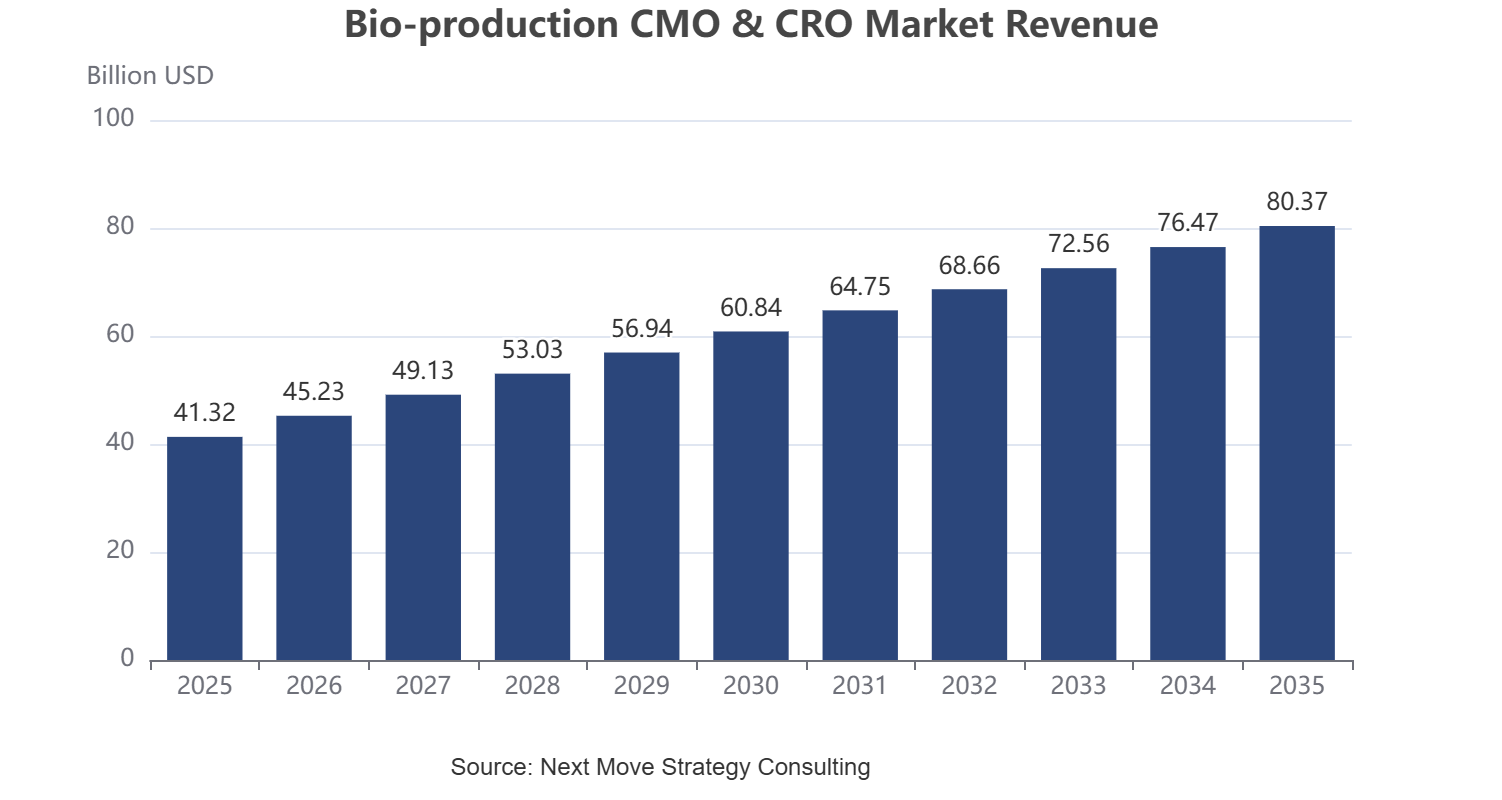
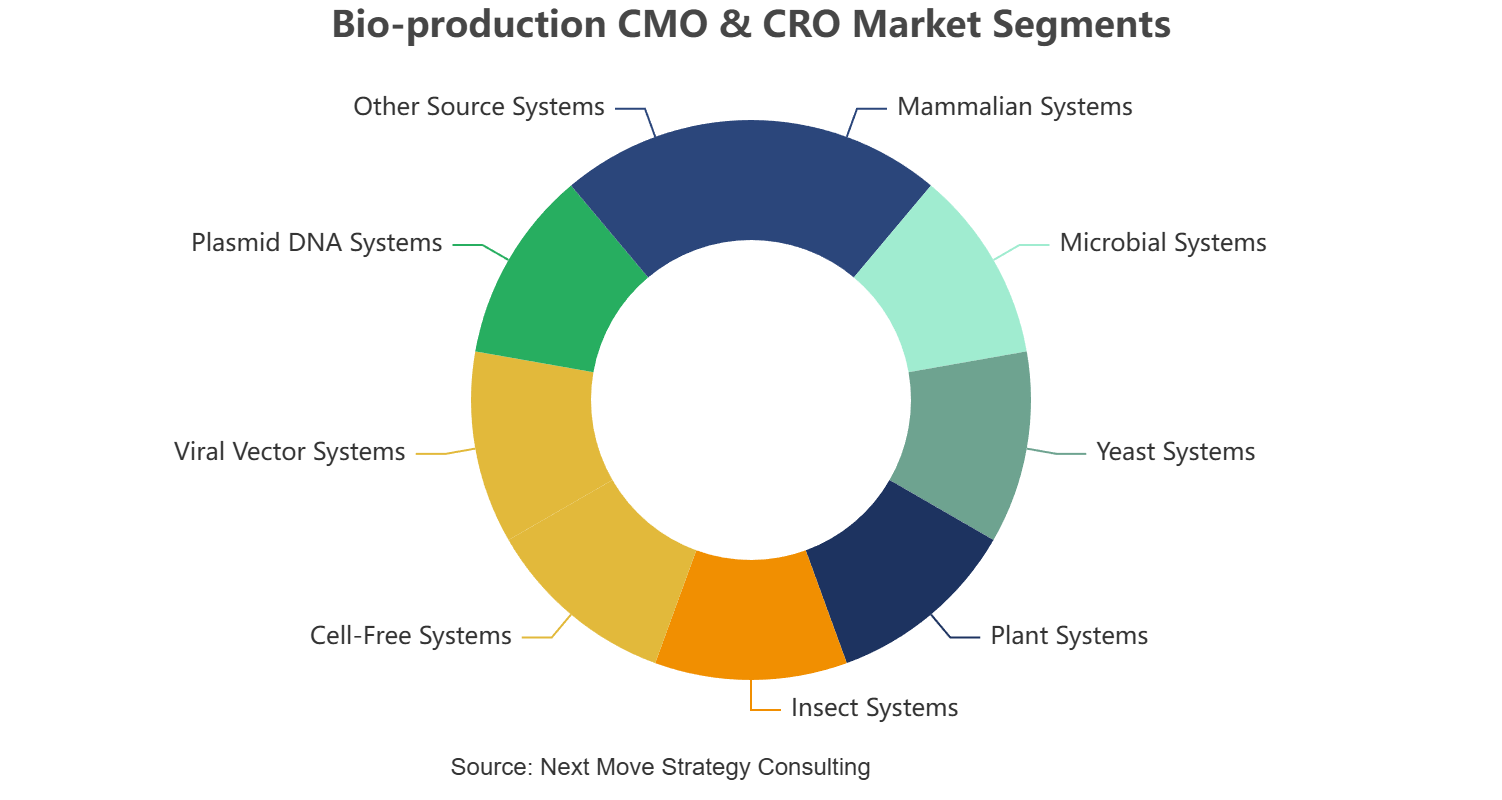
About the Author
 Saista Faiyaz
— Saista Faiyaz is Research Associate at Next Move Strategy Consulting, where she has covered consumer markets and healthcare technologies for 3 years. Her work includes primary interview review, secondary-source validation, market sizing, and structured analysis of company and industry data. She supports research by comparing evidence across sources, organizing findings into market narratives, and documenting assumptions used in analysis. Her scope includes cross-market benchmarking, and reports.
Saista Faiyaz
— Saista Faiyaz is Research Associate at Next Move Strategy Consulting, where she has covered consumer markets and healthcare technologies for 3 years. Her work includes primary interview review, secondary-source validation, market sizing, and structured analysis of company and industry data. She supports research by comparing evidence across sources, organizing findings into market narratives, and documenting assumptions used in analysis. Her scope includes cross-market benchmarking, and reports.
About the Reviewer
 Supradip Baul
— Supradip Baul is an accomplished business consultant and strategist with over a decade of rich experience in market intelligence, strategy, technology, and business transformation. His work has included rigorous qualitative and quantitative analysis across multiple industries, helping clients shape investment decisions and long-term roadmaps. Earlier in his career, he was associated with Gartner, where he contributed to industry-leading reports and market share analyses. He has worked with leading global companies and holds an MBA with a dual specialization in Marketing and Finance.
Supradip Baul
— Supradip Baul is an accomplished business consultant and strategist with over a decade of rich experience in market intelligence, strategy, technology, and business transformation. His work has included rigorous qualitative and quantitative analysis across multiple industries, helping clients shape investment decisions and long-term roadmaps. Earlier in his career, he was associated with Gartner, where he contributed to industry-leading reports and market share analyses. He has worked with leading global companies and holds an MBA with a dual specialization in Marketing and Finance.
At Next Move Strategy Consulting, we understand that insightful market research is the cornerstone of successful business decisions. That's why we employ a robust and multifaceted approach, combining various methodologies to deliver the most accurate and actionable data for our clients.

Research Landscape
We navigate the world of research with two primary approaches:
Qualitative Approach
Our qualitative research methodologies involve immersive techniques such as in-depth interviews, focus groups, and observational studies. By engaging directly with individuals and stakeholders, we uncover valuable insights that quantitative data alone may overlook.

Quantitative Research
In tandem with qualitative methodologies, NMSC leverages the power of Quantitative Research to provide a robust foundation of numerical insights. Through systematic data collection and analysis, we quantify patterns, preferences, and market trends, offering a comprehensive view of the business landscape.
Our quantitative research approach employs diverse tools, including surveys, experiments, and statistical modelling. These methodologies enable us to gather data from a large and representative sample, ensuring the statistical significance of our findings. By employing structured questionnaires and standardized data collection methods, we guarantee the reliability and validity of the information we present to our clients.
Quantitative research is particularly effective in measuring the prevalence of trends, assessing market size, and gauging the impact of various factors on consumer behavior. The numerical precision attained through this approach equips our clients with actionable insights, facilitating data-driven decision-making and strategy formulation.


Our Specialized Toolbox for Industry-Specific Market Research
We deploy a specialized arsenal of techniques tailored to meet your unique requirements. Here's a glimpse into our comprehensive toolbox:

Information Procurement
The stage entails acquiring market data or relevant information through various sources and methodologies.


Market Research Approach
We utilize both top-down and bottom-up approaches in market research analysis to achieve a comprehensive understanding of the market dynamics, leveraging the broad perspective of industry trends and macroeconomic factors alongside detailed insights from specific segments and individual companies.

Porters Five Forces Analysis
We conduct Porter's Five Forces analysis to evaluate the competitive landscape of an industry, providing us with insights into factors that affect profitability and strategic positioning.

SWOT Analysis

Forecasting
We utilize a forecasting model to predict future consumption by considering parameters like population, economics, regulations, market competition, drivers, constraints, technology, and pricing. We also employ statistical techniques such as multilinear regression, exponential smoothing, moving average, ARIMA, and Monte Carlo simulations for accurate predictions. In econometric forecasting, we analyzed short-term and long-term event impacts, attributing values based on regulatory frameworks, economic factors, and market events.





 Speak to Our Analyst