Cardiac AI Monitoring and Diagnostics Market Size, Share, Trends and Growth Analysis, By Offering (Software, Hardware, and Services), By Technology (Machine Learning, Deep Learning, Computer Vision, NLP, Predictive AI, Generative AI, and Hybrid AI), By Clinical Application, By Modality, By Deployment, By Commercial Model, By Distribution Channel, By End User, and Region — Global Industry Report and Forecast, 2026–2035
Industry: Healthcare | Publishing Date: July 23, 2026 | Last Updated: September 30, 2026 | No of Pages: N/A | No. of Tables: N/A | No. of Figures: N/A | Format: PDF | Report Code: HC5357
What Is the Cardiac AI Monitoring and Diagnostics Market Size?
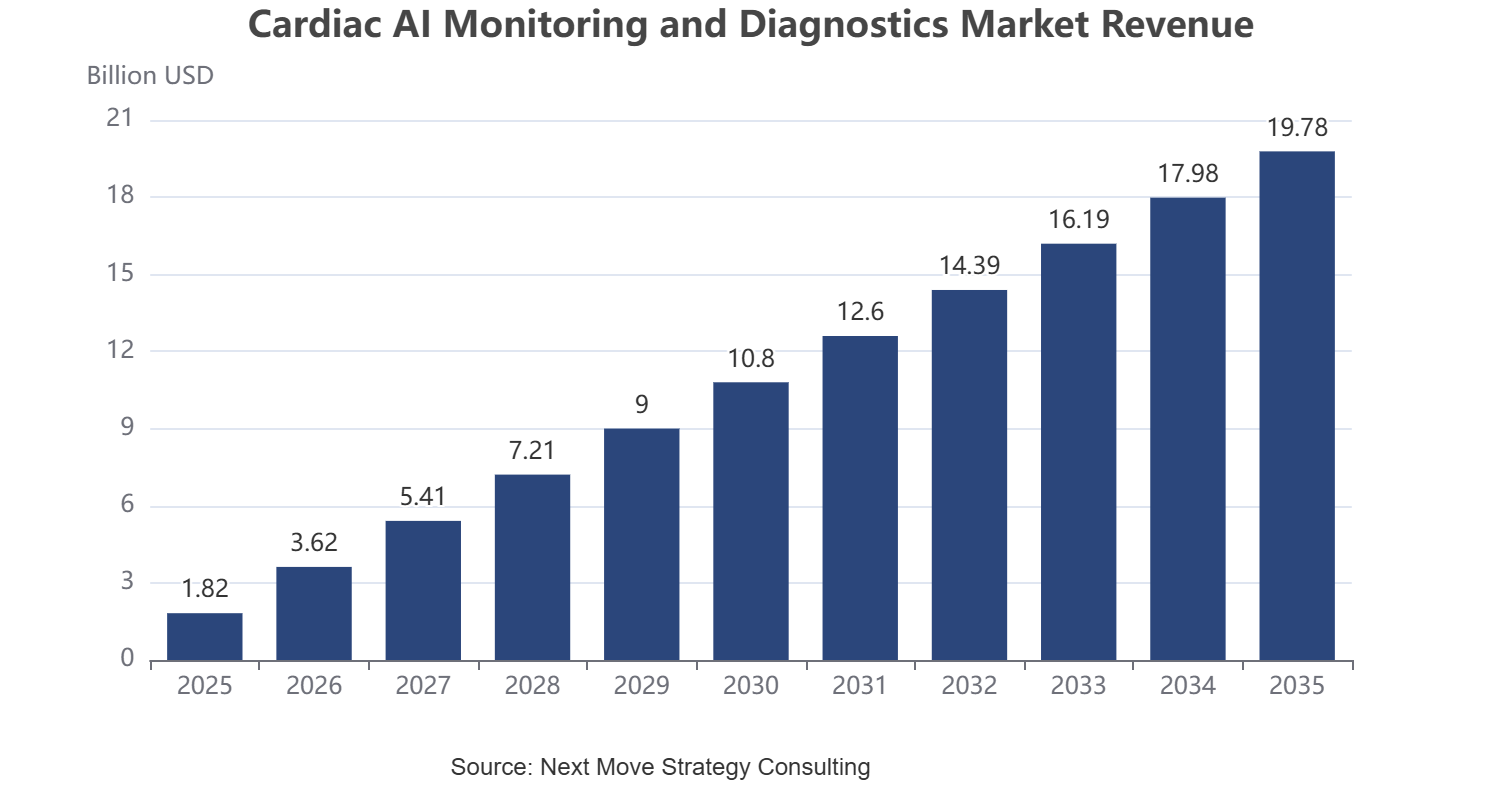
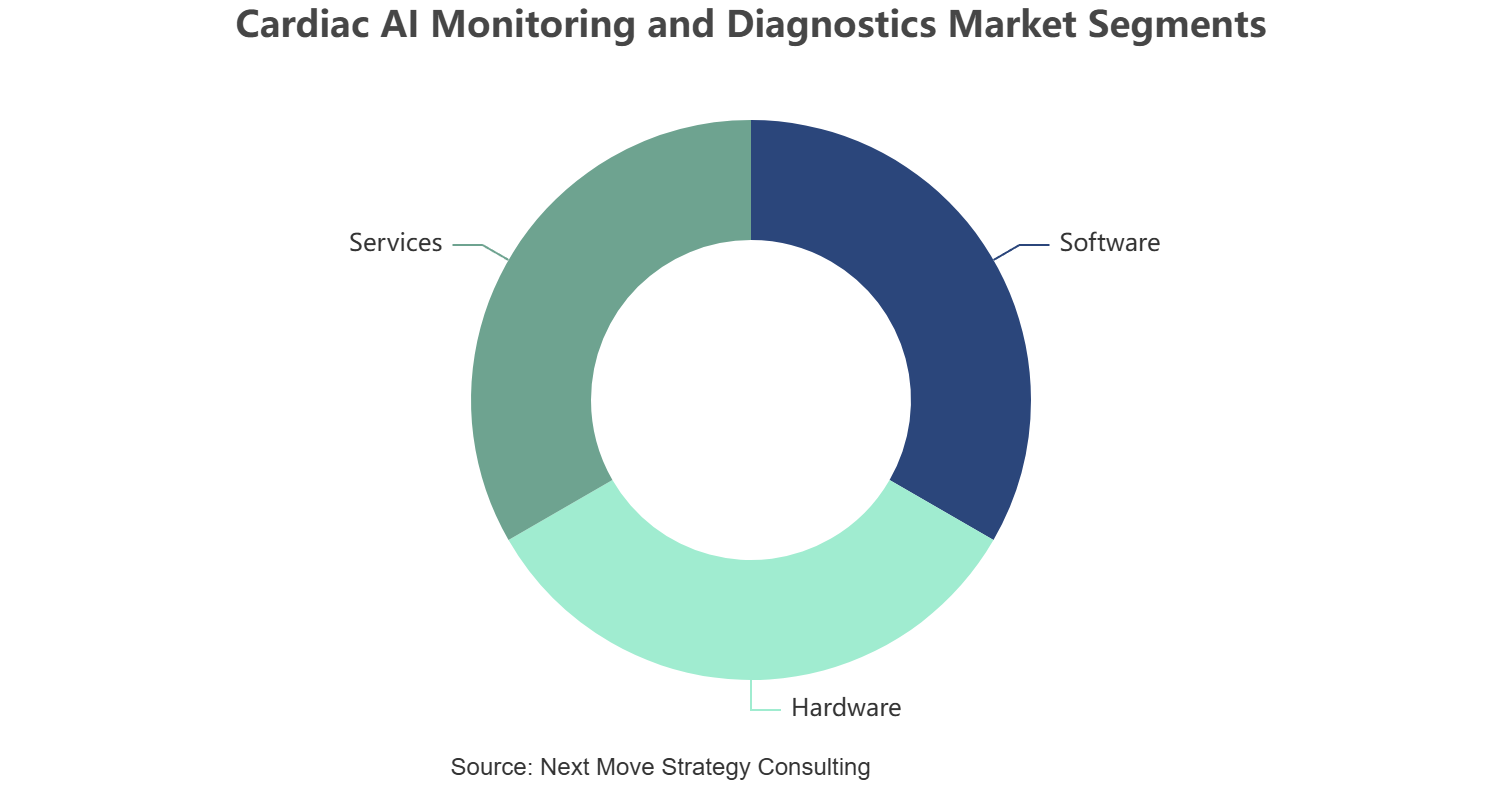
The global cardiac AI monitoring and diagnostics market size was valued at USD 1.82 billion in 2025 and is estimated at USD 2.31 billion in 2026, forecast to reach USD 19.78 billion by 2035, expanding at a 27.0% CAGR between 2026 and 2035. North America leads with approximately 42% share, while software dominates all other offerings with approximately 44% share.
We observed that growth is broad-based across every segmentation axis, with deep learning-based arrhythmia detection and cloud-based deployment driving the dominant structural shifts through 2035.
|
Key Takeaways |
|
By Offering: Software held the largest share of approximately 44% (USD 0.80 Billion) in 2025; Services is the fastest-growing sub-segment at 33.9% CAGR from 2026–2035. |
|
By Technology: Deep Learning held the largest share of approximately 29% (USD 0.53 Billion) in 2025; Generative AI is the fastest-growing sub-segment at 41.2% CAGR from 2026–2035. |
|
By Clinical Application: Arrhythmia held the largest share of approximately 29.1% (USD 0.53 Billion) in 2025; Heart Failure is the fastest-growing sub-segment at 29.8% CAGR from 2026–2035. |
|
By Modality: ECG held the largest share of approximately 36% (USD 0.66 Billion) in 2025; Multimodality is the fastest-growing sub-segment at 32.9% CAGR from 2026–2035. |
|
By Deployment: Cloud held the largest share of approximately 58% (USD 1.05 Billion) in 2025; Hybrid is the fastest-growing sub-segment at 33.9% CAGR from 2026–2035. |
|
By Commercial Model: Subscription held the largest share of approximately 41% (USD 0.75 Billion) in 2025; Outcome Based is the fastest-growing sub-segment at 35.1% CAGR from 2026–2035. |
|
By Distribution Channel: Direct Sales held the largest share of approximately 47% (USD 0.85 Billion) in 2025; Digital Channel is the fastest-growing sub-segment at 32.9% CAGR from 2026–2035. |
|
By End User: Hospital held the largest share of approximately 46% (USD 0.84 Billion) in 2025; Remote Monitoring Provider is the fastest-growing sub-segment at 32.9% CAGR from 2026–2035. |
|
Dominant Region: North America dominated with approximately 42% revenue share (USD 0.77 billion) in 2025. |
|
Fastest-Growing Region: Asia-Pacific is expected to register the highest CAGR of 32.9% during 2026–2035. |
|
Dominant Country: U.S. led with approximately USD 0.60 billion in 2025. |
|
Fastest-Growing Country: India is the fastest-growing country at approximately 38.9% CAGR from 2026–2035. |
Market Opportunity: The cardiac AI monitoring and diagnostics market is expected to create an absolute dollar opportunity of USD 17.47 billion between 2026 and 2035, presenting significant investment potential across the AI-enabled cardiovascular diagnostics value chain.
According to Next Move Strategy Consulting analysis, hospitals and remote monitoring providers are increasingly bundling subscription-based software with ambulatory ECG hardware to reduce per-patient interpretation costs, a shift that favors diversified software-hardware providers over single-product vendors as FDA clearance volume for cardiology AI algorithms accelerates through 2035.
What Does the Cardiac AI Monitoring and Diagnostics Market Encompass?
The cardiac AI monitoring and diagnostics market encompasses software, hardware, and services that apply machine learning and deep learning to detect, interpret, and predict cardiovascular conditions across ECG, echocardiography, cardiac CT, and cardiac MRI modalities. Our assessment indicates that the scope spans diagnostic software, clinical decision support tools, remote monitoring platforms, wearable and implantable cardiac monitors, and AI interpretation services supplied to hospitals, cardiology clinics, diagnostic imaging centers, and telehealth providers worldwide.
Regulatory frameworks such as the U.S. Food and Drug Administration's 510(k) clearance pathway and predetermined change control plans shape how cardiology algorithms reach clinical use, with cardiology accounting for more than 140 FDA-cleared artificial intelligence algorithms as of March 2026. We observed that technology adoption is shifting toward deep learning-based, cloud-deployed platforms that integrate directly with hospital EHR and PACS systems. Next Move Strategy Consulting's analysis indicates that this structural shift, combined with expanding payer reimbursement for AI-derived plaque and ejection fraction analysis, is redefining procurement criteria across the cardiac AI monitoring and diagnostics market.
|
Field |
Details |
|
Market Size in 2025 |
USD 1.82 Billion |
|
Market Size in 2026 |
USD 2.31 Billion |
|
Revenue Forecast in 2035 |
USD 19.78 Billion |
|
Growth Rate |
CAGR of 27.0% from 2026 to 2035 |
|
Analysis Period |
2025–2035 |
|
Base Year Considered |
2025 |
|
Forecast Period |
2026–2035 |
|
Market Size Estimation |
USD Billion |
|
Companies Profiled |
17 |
|
Countries Covered |
33 |
|
Market Share |
Available for Top 10 Companies |
Key Emerging Trends
Based on research conducted by Next Move Strategy Consulting, we found that four structural trends are reshaping algorithm design, clinical adoption, and stakeholder engagement across the industry.
How Is Deep Learning Transforming Arrhythmia Detection?
Deep learning algorithms are transforming how arrhythmias are detected and confirmed across ambulatory and implantable monitoring devices. We observed that iRhythm Technologies' Zio ECG Utilization Software, a deep-learning algorithm, generates end-of-wear reports achieving 99% physician agreement across reviewed cases. Hospitals and cardiology clinics are adopting similar electrocardiograph interpretation platforms to reduce manual review burden, while device manufacturers redesign patch and telemetry systems to stream data directly into cloud-based analysis pipelines.
Why Is AI-Powered Coronary Plaque Analysis Gaining Clinical Adoption?
AI-powered plaque and stenosis analysis is gaining clinical adoption as payers expand reimbursement coverage for CT-derived coronary assessment. Our findings suggest that HeartFlow's next-generation Plaque Analysis platform, cleared by the FDA in September 2025, gained coverage from both UnitedHealthcare and Cigna following its Nasdaq listing. This trend is elevating demand for cardiac imaging analysis software among diagnostic imaging centers pursuing earlier, non-invasive coronary artery disease detection.
How Is Remote Monitoring Software Reshaping Post-Diagnosis Cardiac Care?
Remote monitoring software is reshaping how physicians track patients after an initial cardiac diagnosis, replacing periodic in-clinic visits with continuous, AI-triaged data streams. We observed that companies including Medicalgorithmics have expanded FDA-cleared remote ECG monitoring and analytics platforms during 2025. Remote monitoring providers and telehealth providers are adopting population analytics dashboards to prioritize high-risk patients, exemplifying how vendors are engineering scalable platforms for distributed cardiac care networks.
What Role Does Generative AI Play in Cardiac Report Generation?
Generative AI is emerging as a tool for automating structured cardiac report generation and clinical documentation, reducing radiologist and cardiologist reporting time. Our analysis shows that vendors are piloting large language model-based summarization tools that draft echocardiography and CT reports for physician review before finalization. This trend, while nascent relative to established deep learning diagnostic algorithms, is expanding fastest among software categories as hospitals seek to address documentation burden alongside diagnostic accuracy.
Ecosystem Analysis of the Cardiac AI Monitoring and Diagnostics Market
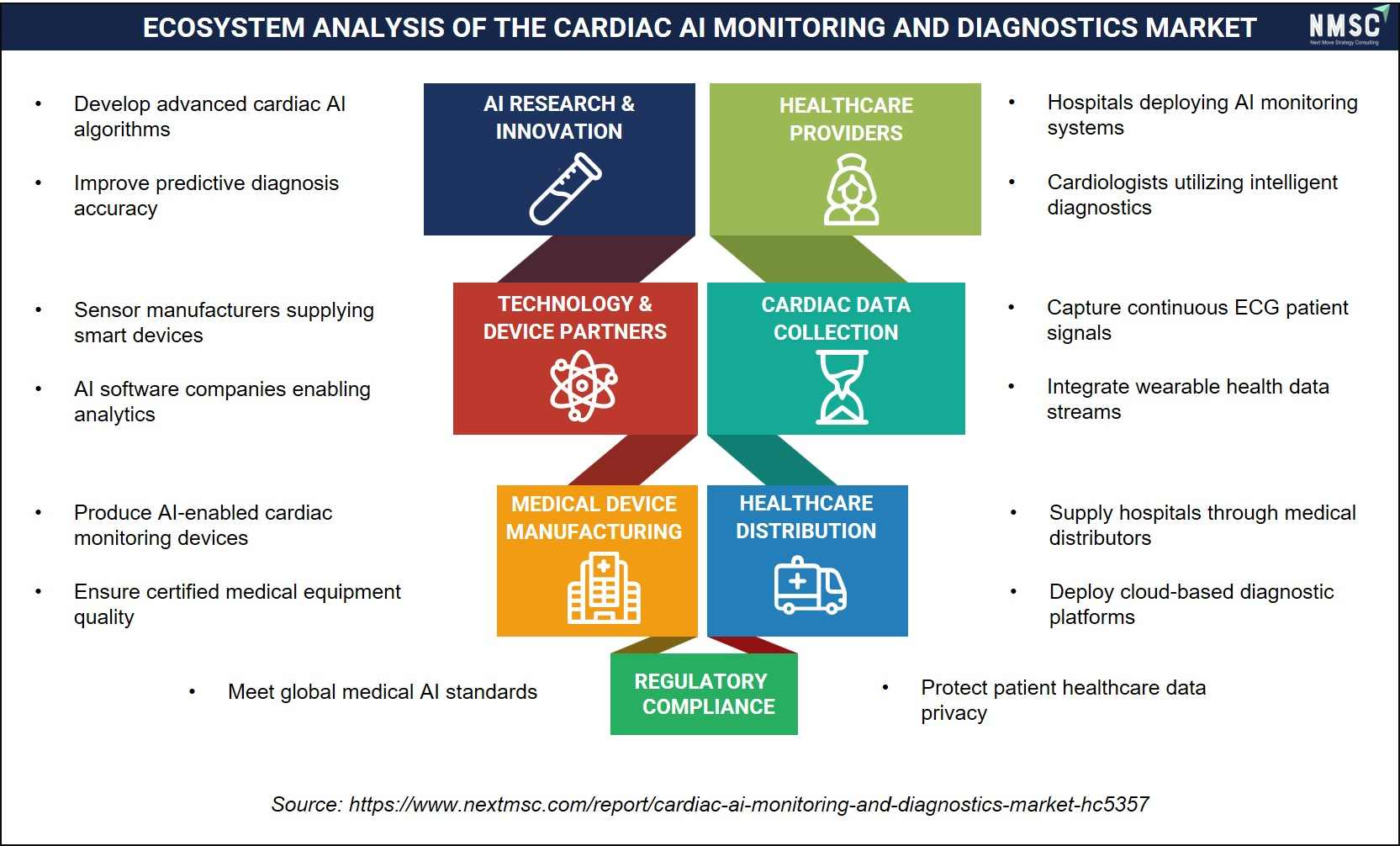
The cardiac AI monitoring and diagnostics market ecosystem integrates AI research organizations, healthcare providers, technology and device partners, cardiac data collection platforms, medical device manufacturers, healthcare distribution networks, and regulatory authorities. AI algorithms are developed through research and technology collaborations, validated using clinical cardiac data, embedded into diagnostic devices and software, distributed through healthcare networks, and deployed in hospitals and remote monitoring settings while complying with evolving regulatory standards to ensure safe, accurate, and effective cardiovascular diagnostics.
Growth Drivers and Restraints
Growth Catalyst and Risk Assessment Matrix
|
Factors |
Type |
(+/−) % Impact on CAGR |
Geographic Relevance |
Impact Timeline |
|
Rising FDA clearance volume for cardiology AI algorithms |
Driver |
+4.1% |
Global |
2026–2035 |
|
Expanding payer reimbursement for AI-derived cardiac imaging analysis |
Driver |
+3.4% |
North America, Europe |
2026–2035 |
|
Growing prevalence of cardiovascular disease and arrhythmia burden |
Driver |
+2.9% |
Global |
2026–2035 |
|
Rising adoption of cloud-based, subscription-priced diagnostic software |
Driver |
+2.1% |
Global |
2026–2032 |
|
Expanding remote and ambulatory cardiac monitoring adoption |
Driver |
+1.8% |
North America, Asia-Pacific |
2026–2035 |
|
Government digital health and AI diagnostics investment programmes |
Driver |
+1.2% |
Global |
2026–2035 |
|
Data privacy and interoperability constraints across health systems |
Restraint |
−1.6% |
Global |
2026–2035 |
|
Regulatory uncertainty around algorithm updates and change control |
Restraint |
−1.1% |
North America, Europe |
2026–2032 |
|
Shortage of clinically validated training datasets for rare conditions |
Restraint |
−0.8% |
Global |
2028–2035 |
What Is the Primary Growth Driver of the Cardiac AI Monitoring and Diagnostics Market?
Rising FDA clearance volume for cardiology AI algorithms is the primary driver of the market. FDA documentation tracked through March 2026 shows more than 140 cardiology-specific AI algorithms cleared, out of over 200 including cardiac-specific imaging AI classified under radiology, with 193 new AI algorithms cleared across all specialties between June and December 2025 alone. We observed that this accelerating clearance pace, reinforced by predetermined change control plan authorizations, continues to anchor baseline demand for diagnostic and clinical decision support software.
How Is Payer Reimbursement Expansion Driving Cardiac AI Monitoring and Diagnostics Market Growth?
Expanding payer reimbursement for AI-derived cardiac imaging analysis is accelerating market growth toward CT and MRI-based diagnostic software. The Centers for Medicare and Medicaid Services began separately reimbursing coronary plaque analysis as an outpatient service, while a new Category I CPT code for plaque analysis from CT angiography took effect in January 2026. Our assessment indicates that this reimbursement clarity, combined with commercial payer coverage decisions, is compressing adoption timelines for cardiac imaging analysis software across North America and Europe.
What Is Restraining Cardiac AI Monitoring and Diagnostics Market Expansion?
Data privacy and interoperability constraints across fragmented health information systems restrain adoption among hospitals lacking modern EHR and PACS infrastructure. Regulatory documentation from health authorities continues to require rigorous validation before AI algorithm updates reach clinical use, delaying deployment cycles. We found that vendors offering pre-validated EHR integration and cloud workflow software are beginning to offset this restraint, though full interoperability across diverse hospital IT environments remains gradual.
Segmentation Analysis
Segment Sizing: By Offering
|
Segment |
2025 (USD) |
2035 (USD) |
CAGR% (2026–2035) |
|
Software |
USD 0.80 Billion |
USD 9.37 Billion |
28.0% |
|
Hardware |
USD 0.67 Billion |
USD 4.34 Billion |
19.8% |
|
Services |
USD 0.35 Billion |
USD 6.07 Billion |
33.9% |
|
Total |
USD 1.82 Billion |
USD 19.78 Billion |
27.0% |
Which Offering Segment Dominates the Cardiac AI Monitoring and Diagnostics Market?
Software, encompassing diagnostic, clinical decision support, remote monitoring, and cardiac workflow applications, led the market with USD 0.80 billion in 2025, supported by hospitals' preference for algorithm-driven interpretation layered onto existing imaging and ECG infrastructure. We observed that Services is the fastest-growing offering, expanding at a 33.9% CAGR from 2026 to 2035, as hospitals increasingly contract AI interpretation and integration services to deploy algorithms without building in-house data science capability.
Segment Sizing: By End User
|
Segment |
2025 (USD) |
2035 (USD) |
CAGR% (2026–2035) |
|
Hospital |
USD 0.84 Billion |
USD 8.69 Billion |
26.3% |
|
Cardiology Clinic |
USD 0.36 Billion |
USD 4.00 Billion |
27.1% |
|
Diagnostic Imaging Center |
USD 0.24 Billion |
USD 2.43 Billion |
26.1% |
|
Independent Diagnostic Center |
USD 0.15 Billion |
USD 1.27 Billion |
23.9% |
|
Remote Monitoring Provider |
USD 0.11 Billion |
USD 1.78 Billion |
32.9% |
|
Telehealth Provider |
USD 0.09 Billion |
USD 1.32 Billion |
31.2% |
|
Research Institute |
USD 0.04 Billion |
USD 0.28 Billion |
22.1% |
|
Total |
USD 1.82 Billion |
USD 19.78 Billion |
27.0% |
Which End User Segment Leads Cardiac AI Monitoring and Diagnostics Market Demand?
Hospitals remained the leading end user segment, valued at USD 0.84 billion in 2025 as the primary site for cardiac diagnostic testing and inpatient arrhythmia management. Based on research conducted by Next Move Strategy Consulting, we found that Remote Monitoring Provider is the fastest-growing end user at a 32.9% CAGR from 2026 to 2035, reflecting rising demand for continuous patient monitoring outside traditional hospital settings among post-discharge and chronic cardiac patients.
Segment Sizing: By Technology
|
Segment |
2025 (USD) |
2035 (USD) |
CAGR% (2026–2035) |
|
Machine Learning |
USD 0.42 Billion |
USD 3.21 Billion |
22.1% |
|
Deep Learning |
USD 0.53 Billion |
USD 5.28 Billion |
25.8% |
|
Computer Vision |
USD 0.24 Billion |
USD 2.43 Billion |
26.1% |
|
NLP |
USD 0.15 Billion |
USD 1.94 Billion |
29.8% |
|
Predictive Analytics |
USD 0.29 Billion |
USD 2.54 Billion |
23.9% |
|
Generative AI |
USD 0.11 Billion |
USD 3.08 Billion |
41.2% |
|
Hybrid AI |
USD 0.09 Billion |
USD 1.32 Billion |
31.1% |
|
Total |
USD 1.82 Billion |
USD 19.78 Billion |
27.0% |
Which Technology Leads Cardiac AI Monitoring and Diagnostics Adoption?
Deep Learning remained the dominant technology category, reaching USD 0.53 billion in 2025 due to its proven accuracy in ECG waveform classification and cardiac image segmentation tasks. Our findings suggest that Generative AI is the fastest-growing technology at a 41.2% CAGR from 2026 to 2035, reflecting early but rapidly scaling adoption of large language model-based report generation and clinical documentation tools across cardiology workflows.
Growth Opportunities
Our analysis shows that three forward-looking opportunities stand out for stakeholders positioning within the cardiac AI monitoring and diagnostics market over the 2026–2035 forecast period.
How Can Computer Vision Unlock Value in Echocardiography Interpretation?
Automated echocardiography interpretation presents a whitespace opportunity for vendors applying computer vision to reduce reliance on scarce expert sonographers. Suppliers that scale AI-guided image capture and ejection fraction quantification stand to capture recurring software revenue as diagnostic imaging centers and community hospitals adopt novice-accessible scanning tools, benefiting the echocardiography and heart failure clinical application segments.
Where Does Outcome-Based Pricing Create New Demand?
Value-based care contracts represent an underpenetrated opportunity for vendors willing to price cardiac AI software on measurable clinical outcomes rather than per-seat or per-study fees. Suppliers that structure outcome-based contracts can secure long-term hospital and health system relationships, benefiting from reduced procurement friction as risk-averse buyers favor payment models tied to diagnostic accuracy and readmission reduction.
How Can Multimodality Platforms Benefit Diagnostic Imaging Centers?
Diagnostic imaging centers seeking to consolidate ECG, echocardiography, and cardiac CT interpretation onto a single platform create an opportunity for multimodality software vendors. Early movers that integrate cross-modality analysis into unified workflow software can differentiate with independent diagnostic centers and specialty cardiac hospitals pursuing operational efficiency without maintaining separate point solutions for each imaging modality.
Regulatory Framework Impacting the Cardiac AI Monitoring and Diagnostics Market
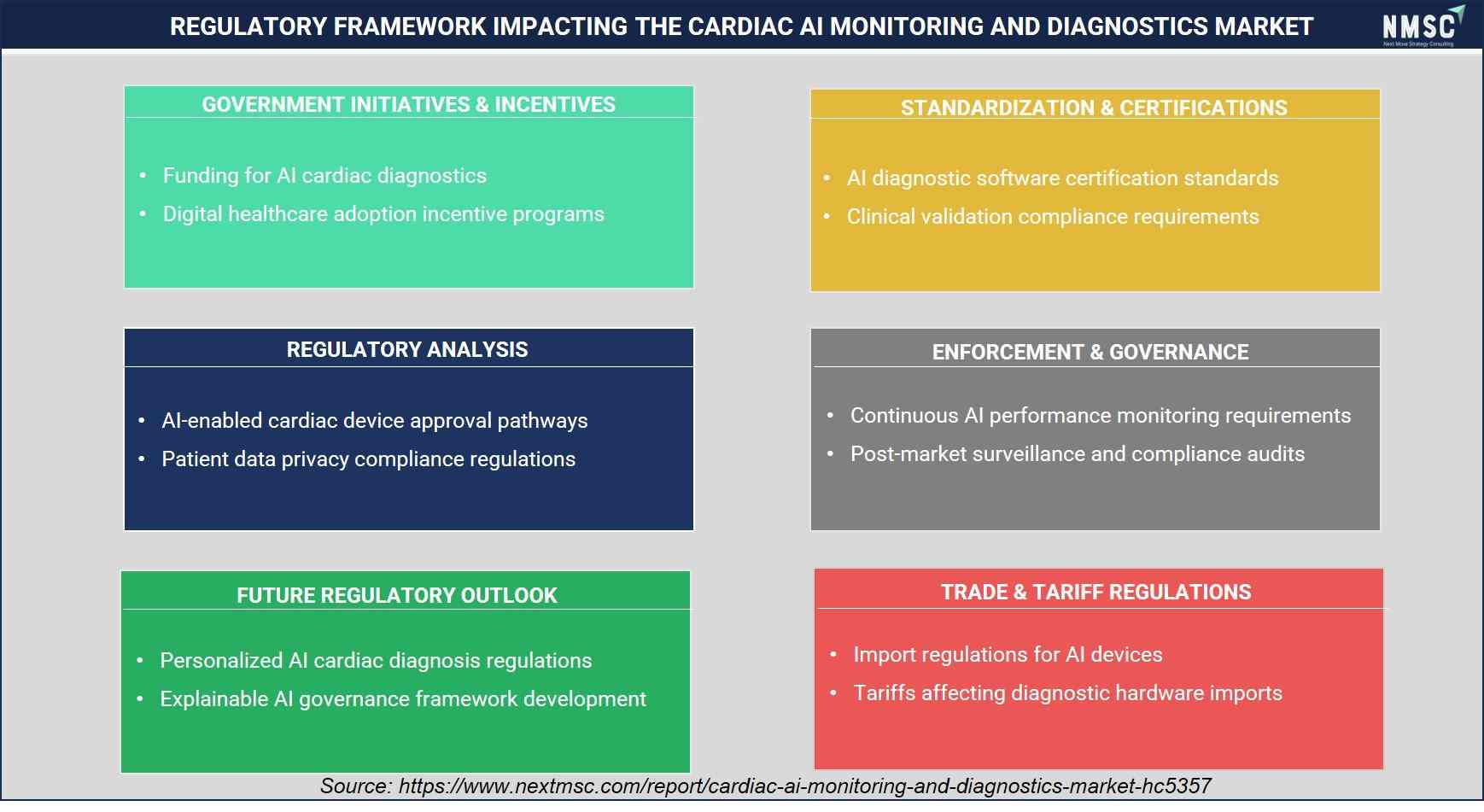
The regulatory framework for the cardiac AI monitoring and diagnostics market is evolving to ensure the safety, effectiveness, and transparency of AI-enabled cardiovascular technologies. Government initiatives encourage digital health innovation through funding and adoption programs, while regulatory agencies establish certification standards, clinical validation requirements, and patient data privacy regulations. Continuous post-market surveillance, AI performance monitoring, and emerging explainable AI governance frameworks are shaping commercialization, alongside trade policies influencing the global movement of AI-enabled diagnostic devices and components.
Regional Outlook
Geographic Performance Snapshot
|
Region |
2025 (USD) |
2035 (USD) |
CAGR% (2026–2035) |
Key Driver |
|
North America |
USD 0.77 Billion |
USD 6.43 Billion |
23.4% |
FDA algorithm clearance leadership and expanding payer reimbursement |
|
Europe |
USD 0.46 Billion |
USD 4.34 Billion |
25.1% |
CE mark pathway maturity and national digital health investment |
|
Asia-Pacific |
USD 0.40 Billion |
USD 6.57 Billion |
32.9% |
Expanding cardiology infrastructure and rising cardiovascular disease burden |
|
Middle East & Africa |
USD 0.11 Billion |
USD 1.44 Billion |
29.8% |
Vision-linked healthcare digitization and specialty hospital investment |
|
Latin America |
USD 0.09 Billion |
USD 0.99 Billion |
27.1% |
Growing cardiology infrastructure modernization and telehealth expansion |
|
Total |
USD 1.82 Billion |
USD 19.78 Billion |
27.0% |
— |
North America Cardiac AI Monitoring and Diagnostics Market Outlook
North America leads the cardiac AI monitoring and diagnostics market with the deepest pipeline of FDA-cleared cardiology algorithms and an established reimbursement pathway for AI-derived diagnostics. We observed that CMS coverage decisions for coronary plaque analysis sustain demand for cardiac imaging analysis software, while hospitals increasingly specify cloud-deployed, subscription-priced platforms. Technology adoption remains advanced, with deep learning and generative AI integration accelerating across the region's patient monitoring and diagnostic imaging sectors.
Europe Cardiac AI Monitoring and Diagnostics Market Outlook
Europe's cardiac AI monitoring and diagnostics market reflects a mature but regulation-intensive landscape shaped by CE mark requirements under the EU Medical Device Regulation and national digital health investment programmes. Our findings suggest that hospitals across Germany, France, and the UK are accelerating adoption of cloud-deployed diagnostic software to satisfy national health service modernization targets. Technology adoption favors hybrid deployment models, supported by regional integrators investing in EHR-integrated cardiac workflow software.
Asia-Pacific Cardiac AI Monitoring and Diagnostics Market Outlook
Asia-Pacific is the fastest-growing cardiac AI monitoring and diagnostics market region, propelled by expanding cardiology infrastructure in China and India alongside rising cardiovascular disease prevalence. We found that regulatory frameworks remain less harmonized than in the U.S. or Europe, giving software vendors flexibility to scale standard diagnostic platforms rapidly. Technology adoption is accelerating as regional providers, including several Japan-based device manufacturers, expand cardiac AI software portfolios to serve growing domestic demand.
Middle East & Africa Cardiac AI Monitoring and Diagnostics Market Outlook
The cardiac AI monitoring and diagnostics market in Middle East & Africa is expanding as Gulf Cooperation Council economies invest in specialty cardiac hospital capacity and national healthcare digitization programmes. Our analysis shows that Saudi Arabia and the UAE are attracting cardiac AI software investment tied to Vision 2030-linked healthcare modernization. Regulatory influence remains moderate, while technology adoption is gradually shifting toward cloud-deployed diagnostic software as regional hospitals align with global clinical standards.
Latin America Cardiac AI Monitoring and Diagnostics Market Outlook
Latin America's cardiac AI monitoring and diagnostics market is supported by growing cardiology infrastructure modernization in Brazil and Argentina and expanding telehealth adoption. We observed that regulatory frameworks are less stringent than in North America or Europe, though multinational hospital networks operating locally are introducing AI-enabled diagnostic specifications. Technology adoption remains centered on direct sales channels, with competitive intensity increasing as regional distributors partner with global device and software providers.
U.S. Cardiac AI Monitoring and Diagnostics Market
Based on our estimates, the U.S. market was valued at approximately USD 0.60 billion in 2025, projected to reach USD 4.98 billion by 2035 at a 23.1% CAGR. Demand structure is anchored by the deepest FDA-cleared cardiology algorithm pipeline globally and expanding CMS and commercial payer reimbursement. Technology penetration favors deep learning and generative AI-enabled software, and competitive intensity remains high among established device manufacturers and specialized AI diagnostics companies serving national hospital networks.
Canada Cardiac AI Monitoring and Diagnostics Market
The market in Canada was valued at approximately USD 0.09 billion in 2025 and is projected to reach USD 0.81 billion by 2035, growing at a 24.1% CAGR. Demand is reflecting demand patterns similar to the U.S. market, while provincial health authority procurement shapes software adoption timelines. Technology penetration is rising as hospitals request cloud-deployed, EHR-integrated platforms, with competitive intensity moderate given reliance on cross-border software supply from U.S.-based vendors.
UK Cardiac AI Monitoring and Diagnostics Market
As per our estimate, the UK market was valued at approximately USD 0.10 billion in 2025, projected to reach USD 0.85 billion by 2035 at a 24.1% CAGR. Demand structure is driven by National Health Service digital transformation programmes and growing cardiology AI pilot adoption. Regulatory influence from the Medicines and Healthcare products Regulatory Agency is significant, technology penetration favors cloud-deployed clinical decision support software, and competitive intensity remains steady among domestic and global integrators. This builds on a broader UK patient monitoring base that continues to expand alongside AI-enabled cardiac diagnostics.
Germany Cardiac AI Monitoring and Diagnostics Market
According to our analysis, the Germany market was valued at approximately USD 0.12 billion in 2025, projected to reach USD 1.12 billion by 2035 at a 25.1% CAGR. Demand structure is benefiting from a strong domestic hospital network pursuing digital health investment under national eHealth policy. Germany's Digital Healthcare Act implementation drives regulatory influence, while technology penetration favors hybrid deployment and EHR-integrated cardiac workflow software among leading academic hospitals. This builds on a broader Germany patient monitoring base that continues to expand alongside AI-enabled cardiac diagnostics.
France Cardiac AI Monitoring and Diagnostics Market
Based on our estimates, the France market was valued at approximately USD 0.06 billion in 2025, projected to reach USD 0.52 billion by 2035 at a 22.9% CAGR. Demand structure is supported by France's national health digitization strategy and prominent academic cardiology centers shaping specialty software adoption. Regulatory influence from French health authority guidelines is notable, and competitive intensity remains high given the concentration of premium diagnostic imaging providers headquartered domestically.
China Cardiac AI Monitoring and Diagnostics Market
The market in China was valued at approximately USD 0.14 billion in 2025 and is projected to reach USD 2.11 billion by 2035, growing at a 32.1% CAGR. Demand is fueled by expanding domestic cardiology infrastructure and a dense base of regional AI diagnostics suppliers. Regulatory influence is increasing gradually under National Medical Products Administration guidelines, technology penetration is accelerating through hospital digitization programmes, and competitive intensity remains elevated among numerous China-based integrators. This builds on a broader China patient monitoring base that continues to expand alongside AI-enabled cardiac diagnostics.
India Cardiac AI Monitoring and Diagnostics Market
As per our estimate, the India market was valued at approximately USD 0.08 billion in 2025, projected to reach USD 1.86 billion by 2035 at a 38.9% CAGR. Demand structure is the fastest among covered countries, reflecting rapid cardiology infrastructure expansion and rising cardiovascular disease burden. Regulatory influence remains developing, while technology penetration is rising quickly as multinational vendors localize cardiac AI software sourcing to serve India's growing hospital and diagnostic imaging network. This builds on a broader India patient monitoring base that continues to expand alongside AI-enabled cardiac diagnostics.
Japan Cardiac AI Monitoring and Diagnostics Market
According to our analysis, the Japan market was valued at approximately USD 0.06 billion in 2025, projected to reach USD 0.66 billion by 2035 at a 27.1% CAGR. Demand structure is supported by Japan's precision-engineered medical device heritage and PMDA-approved diagnostic algorithm adoption, led by domestic imaging equipment manufacturers. Regulatory influence is well established, technology penetration is advanced, and competitive intensity remains high among long-standing domestic device and software providers.
South Korea Cardiac AI Monitoring and Diagnostics Market
Based on our estimates, the South Korea market was valued at approximately USD 0.04 billion in 2025, projected to reach USD 0.64 billion by 2035 at a 31.1% CAGR. Demand structure is benefiting from the country's globally influential medical device manufacturing base and rising AI diagnostics investment. Technology penetration is high, with domestic integrators supplying premium cardiac imaging analysis software, and competitive intensity remains pronounced amid rapid product innovation cycles.
Australia Cardiac AI Monitoring and Diagnostics Market
The market in Australia was valued at approximately USD 0.03 billion in 2025 and is projected to reach USD 0.33 billion by 2035, growing at a 28.1% CAGR. Demand is supported by a well-established hospital network and growing government-backed digital health investment. Regulatory influence stems from Therapeutic Goods Administration frameworks, while technology penetration favors imported cloud-deployed diagnostic software amid moderate competitive intensity.
UAE Cardiac AI Monitoring and Diagnostics Market
As per our estimate, the UAE market was valued at approximately USD 0.03 billion in 2025, projected to reach USD 0.42 billion by 2035 at a 31.1% CAGR. Demand structure is shaped by the UAE's role as a regional healthcare digitization and specialty hospital hub. Regulatory influence remains moderate, technology penetration is improving through imported cloud-deployed diagnostic formats, and competitive intensity is rising as integrators expand portfolios to serve Gulf hospital networks.
Saudi Arabia Cardiac AI Monitoring and Diagnostics Market
According to our analysis, the Saudi Arabia market was valued at approximately USD 0.03 billion in 2025, projected to reach USD 0.51 billion by 2035 at a 32.1% CAGR. Demand structure is driven by Vision 2030-linked healthcare investment and rising specialty cardiac hospital capacity. Regulatory influence is developing under national health authority guidelines, and technology penetration is advancing as domestic hospitals scale AI-enabled diagnostic software adoption.
South Africa Cardiac AI Monitoring and Diagnostics Market
Based on our estimates, the South Africa market was valued at approximately USD 0.02 billion in 2025, projected to reach USD 0.15 billion by 2035 at a 25.1% CAGR. Demand structure is reflecting a growing private hospital sector that continues to drive investment in AI-enabled diagnostic imaging. Regulatory influence is moderate, technology penetration favors cloud-deployed software formats, and competitive intensity is increasing as regional distributors expand product breadth.
Brazil Cardiac AI Monitoring and Diagnostics Market
The market in Brazil was valued at approximately USD 0.04 billion in 2025 and is projected to reach USD 0.46 billion by 2035, growing at a 28.1% CAGR. Demand is supported by growing cardiology infrastructure modernization and expanding telehealth adoption. We observed that regulatory frameworks are less stringent than in North America or Europe, though multinational hospital operators are introducing AI-enabled diagnostic specifications across major metropolitan health systems.
Argentina Cardiac AI Monitoring and Diagnostics Market
As per our estimate, the Argentina market was valued at approximately USD 0.01 billion in 2025, projected to reach USD 0.14 billion by 2035 at a 25.1% CAGR. Demand structure is reflecting rising cardiology infrastructure investment amid gradual digital health adoption. Regulatory influence remains developing, technology penetration is gradually increasing through imported cloud-deployed diagnostic software, and competitive intensity is moderate among regional distributors serving hospital networks.
Competitive Landscape
We observed that the cardiac AI monitoring and diagnostics market remains moderately fragmented among diversified global medical device groups and specialized AI diagnostics companies competing for hospital and diagnostic imaging center accounts.
|
Field |
Details |
|
Market Structure |
Moderately fragmented, led by diversified global device manufacturers and specialized AI diagnostics companies |
|
Innovation Focus |
Deep learning arrhythmia detection, AI-derived coronary plaque analysis, and generative AI report drafting |
|
M&A Activity |
Active, concentrated in FDA clearance-driven public listings and strategic clinical collaborations |
How Do Companies Compete in the Cardiac AI Monitoring and Diagnostics Market?
Companies compete primarily on FDA clearance breadth, clinical validation depth, and payer reimbursement coverage across the industry. Global device manufacturers such as GE HealthCare Technologies Inc. and Siemens Healthineers AG leverage broad imaging hardware installed bases to cross-sell AI software, while specialized companies such as HeartFlow, Inc. and iRhythm Technologies, Inc. compete on algorithm accuracy and category-specific clinical evidence for narrower diagnostic applications.
Which Competitive Archetypes Dominate the Cardiac AI Monitoring and Diagnostics Market?
Two archetypes dominate the market: diversified global device manufacturers offering integrated hardware and software platforms, and specialized AI diagnostics companies focused on single-modality algorithm excellence. Koninklijke Philips N.V. and Medtronic plc exemplify the diversified archetype through combined implantable cardiac monitor and imaging portfolios, while Viz.ai, Inc. and Aidoc Ltd. exemplify the specialized archetype through deep, workflow-integrated AI triage software.
How Are Companies Differentiating Through Innovation in Cardiac AI?
Innovation and differentiation strategy increasingly center on expanding FDA clearance scope and securing payer coverage. HeartFlow's next-generation Plaque Analysis platform and iRhythm's deep-learning Zio ECG Utilization Software both target broadened clinical indications to justify premium subscription pricing. Our analysis shows that suppliers unable to demonstrate reproducible, physician-validated accuracy risk exclusion from hospital and health system procurement shortlists.
What M&A and Expansion Activity Is Shaping the Cardiac AI Monitoring and Diagnostics Market?
Public listings and strategic collaborations continue to consolidate capital access within the industry. HeartFlow's August 2025 Nasdaq initial public offering, which raised approximately USD 364 million, illustrates how specialized cardiac AI companies are scaling through public markets, while Anumana's Series C financing with Boston Scientific participation and Mayo Clinic Platform collaboration demonstrates how strategic partnerships accelerate clinical validation and distribution reach.
Key Market Players
Our assessment indicates that the following 17 companies are actively shaping algorithm innovation, clinical validation, and commercial strategy within the global cardiac AI monitoring and diagnostics market.
-
iRhythm Technologies, Inc.
-
GE HealthCare Technologies Inc.
-
Siemens Healthineers AG
-
Medtronic plc
-
HeartFlow, Inc.
-
Boston Scientific Corporation
-
AliveCor, Inc.
-
Aidoc Ltd.
-
Viz.ai, Inc.
-
Circle Cardiovascular Imaging Inc.
-
Ultromics Limited
-
Schiller AG
-
Lepu Medical Technology (Beijing) Co., Ltd.
-
VUNO Inc.
-
Eko Health, Inc.
-
IDOVEN 1903, S.L.
Latest Developments
We found that recent activity within the cardiac AI monitoring and diagnostics market is concentrated on FDA clearances, public market listings, and payer coverage expansion, reflecting the industry's transition toward mainstream clinical adoption.
|
Date |
Event |
|
June 2024 |
AliveCor announced dual FDA clearance for its AI technology capable of delivering 35 cardiac determinations along with the first-of-its-kind Kardia 12L ECG System, significantly expanding AI-powered cardiac monitoring and diagnostic capabilities. |
|
January 2024 |
iRhythm received CE Mark under the EU Medical Device Regulation (MDR) for its Zio Monitor System and ZEUS AI ECG Analysis Software, enabling broader commercialization of its AI-enabled ambulatory cardiac monitoring solution across Europe. |
Expert Insights
 “Effective cardiac monitoring starts with quality data, and with the AI-powered data platform behind MCOT, Philips is uniquely positioned to help care teams make quick, impactful, and cost-conscious decisions for their cardiac patients.”
— Dr. Manish Wadhwa Chief Medical Officer, Philips Ambulatory Monitoring & Diagnostics
Statement Made In Philips' official press release, "Philips presents study results at Heart Rhythm Annual Meeting demonstrating benefits of its AI-powered cardiac monitoring solutions," published on May 17, 2024. The statement accompanied the presentation of clinical evidence at the Heart Rhythm Society (HRS) 2024 Annual Meeting, highlighting the role of Philips' AI-powered Mobile Cardiac Outpatient Telemetry (MCOT) platform in improving cardiac monitoring, accelerating clinical decision-making, and supporting cost-effective patient care.
Market Interpretation
The statement highlights the growing importance of AI-powered cardiac monitoring platforms that combine high-quality physiological data with advanced analytics to improve diagnostic accuracy and clinical efficiency. As healthcare providers increasingly adopt remote monitoring and AI-assisted ECG analysis, demand is rising for intelligent solutions that enable earlier detection of cardiac abnormalities, faster clinical interventions, improved patient outcomes, and more cost-effective cardiovascular care. This reflects a broader market shift toward AI-driven, data-centric cardiac diagnostics and remote patient monitoring.
Investment Opportunities
What Capital Inflows Are Targeting the Cardiac AI Monitoring and Diagnostics Market?
Capital inflows into the cardiac AI monitoring and diagnostics market are increasingly directed toward companies with broad FDA clearance portfolios and demonstrated payer coverage. HeartFlow's public listing and Anumana's Series C financing, which included strategic participation from Boston Scientific Corporation, illustrate how investors are funding both public and late-stage private cardiac AI companies. We observed that investors favor vendors demonstrating validated clinical accuracy, viewing FDA clearance breadth as a proxy for long-term reimbursement durability.
How Is Infrastructure Investment Supporting Cardiac AI Software Deployment?
Infrastructure investment is expanding cloud computing capacity and EHR integration tooling to support real-time cardiac AI deployment across hospital networks. Our findings suggest that vendors investing in digital healthcare infrastructure, including standardized PACS and EHR connectors, are reducing implementation timelines for hospitals adopting multiple AI diagnostic tools simultaneously across cardiology departments.
What ESG Considerations Are Shaping Cardiac AI Monitoring and Diagnostics Investment Decisions?
Environmental, social, and governance considerations are increasingly relevant to investment decisions across the industry, with equitable access to AI-enabled cardiac diagnostics and algorithmic bias mitigation as key criteria. FDA guidance on predetermined change control plans continues to inform governance disclosures for continuously updated algorithms. We found that investors increasingly favor companies with validated cross-population clinical performance, treating diagnostic equity as a governance indicator alongside data security practices.
Key Benefits for Stakeholders
How Does This Report Benefit Enterprise and Industry Leaders?
Enterprise and industry leaders gain access to validated segmentation, competitive benchmarking, and regional demand forecasts that support sourcing and clinical technology investment decisions across the cardiac AI monitoring and diagnostics industry. Our analysis shows that detailed offering, technology, and clinical application breakdowns help hospital procurement teams align software investment with FDA clearance status and reimbursement eligibility while identifying underserved end-user segments for expansion.
How Does This Report Benefit Investors and Financial Analysts?
Investors and financial analysts benefit from consistent, single-point market size and CAGR estimates that support valuation and capital-allocation decisions across the cardiac AI monitoring and diagnostics market supply chain. We observed that the report's regional and segment-level growth differentials help identify which device manufacturers and specialized AI companies are best positioned to capture above-market growth in software and services categories through 2035.
How Does This Report Benefit Technology Vendors and Product Teams?
Technology vendors and product teams gain insight into emerging design requirements, including generative AI report drafting, multimodality analysis, and outcome-based commercial models, that are reshaping the industry. Our findings suggest that this analysis helps R&D teams prioritize development roadmaps around expanding healthcare artificial intelligence software clearance scope and cloud-native deployment that are increasingly required by hospital and diagnostic imaging center procurement processes.
Key Market Segments
By Offering
-
Software
-
Diagnostic Software
-
ECG Analysis
-
Resting ECG
-
Ambulatory ECG
-
Event Recorder Analysis
-
Implantable Device Analysis
-
-
Cardiac Imaging Analysis
-
Echocardiography
-
Cardiac CT
-
Cardiac MRI
-
Nuclear Cardiology
-
Multimodality Imaging
-
-
-
CDS Software
-
Triage
-
Risk Stratification
-
Therapy Planning
-
-
Remote Monitoring Software
-
Monitoring Dashboard
-
Mobile Application
-
Population Analytics
-
-
Cardiac Workflow Software
-
EHR Integration
-
PACS Integration
-
Data Management
-
-
-
Hardware
-
Wearable Cardiac Monitor
-
ECG Patch
-
Smartwatch ECG
-
Chest Monitor
-
-
Ambulatory ECG Device
-
Holter Monitor
-
Event Recorder
-
Mobile Cardiac Telemetry
-
-
Implantable Cardiac Monitor
-
Insertable Cardiac Monitor
-
Pacemaker
-
ICD
-
-
Stationary Diagnostic System
-
ECG System
-
Stress Test System
-
Cardiac Ultrasound System
-
Cardiac CT System
-
Cardiac MRI System
-
-
Handheld Diagnostic Device
-
Handheld ECG
-
Handheld Cardiac Ultrasound
-
-
-
Services
-
AI Interpretation Service
-
Remote Monitoring Service
-
Implementation Service
-
Integration Service
-
Maintenance Service
-
Support Service
-
By Technology
-
Machine Learning
-
Supervised Learning
-
Unsupervised Learning
-
Ensemble Learning
-
-
Deep Learning
-
CNN
-
RNN
-
LSTM
-
Transformer
-
-
Computer Vision
-
Image Segmentation
-
Motion Tracking
-
Strain Analysis
-
-
NLP
-
Report Generation
-
Clinical Documentation
-
-
Predictive Analytics
-
Risk Prediction
-
Event Prediction
-
-
Generative AI
-
Hybrid AI
By Clinical Application
-
Arrhythmia
-
Atrial Fibrillation
-
Ventricular Arrhythmia
-
Bradyarrhythmia
-
Supraventricular Tachycardia
-
-
Coronary Artery Disease
-
Stenosis Detection
-
Plaque Analysis
-
FFR Assessment
-
-
Heart Failure
-
Ejection Fraction Assessment
-
Volume Assessment
-
Decompensation Prediction
-
-
Cardiomyopathy
-
Hypertrophic Cardiomyopathy
-
Dilated Cardiomyopathy
-
-
Structural Heart Disease
-
Ischemic Heart Disease
-
Congenital Heart Disease
-
Pericardial Disease
-
Myocarditis
-
Cardiac Sarcoidosis
-
Pulmonary Hypertension
By Modality
-
ECG
-
Echocardiography
-
Cardiac CT
-
Cardiac MRI
-
Nuclear Cardiology
-
Multimodality
By Deployment
-
Cloud
-
Public Cloud
-
Private Cloud
-
-
On Premise
-
Server Based
-
Edge Based
-
-
Hybrid
By Commercial Model
-
Perpetual License
-
Subscription
-
Per Seat
-
Per Study
-
Per Interpretation
-
PPPM
-
-
Usage Based
-
Pay Per Interpretation
-
Pay Per Study
-
-
Hardware Sale
-
Bundled Solution
-
Outcome Based
By Distribution Channel
-
Direct Sales
-
Channel Partner
-
Medical Distributor
-
GPO
-
OEM Partner
-
Healthcare IT Partner
-
-
Digital Channel
-
Government Tender
By End User
-
Hospital
-
Academic Hospital
-
Community Hospital
-
Specialty Cardiac Hospital
-
-
Cardiology Clinic
-
Diagnostic Imaging Center
-
Independent Diagnostic Center
-
Remote Monitoring Provider
-
Telehealth Provider
-
Research Institute
By Region
-
North America: U.S., Canada, Mexico
-
Europe: UK, Germany, France, Italy, Spain, Sweden, Denmark, Finland, Netherlands, Rest of Europe
-
Asia-Pacific: China, India, Japan, South Korea, Taiwan,Indonesia, Vietnam, Australia, Philippines, Malaysia, Rest of APAC
-
Middle East & Africa: Saudi Arabia, UAE, Egypt, Israel, Turkey, Nigeria, South Africa, Rest of MEA
-
Latin America: Brazil, Argentina, Chile, Colombia, Rest of LATAM
Conclusion and Recommendations
What Is the Long-Term Outlook for the Cardiac AI Monitoring and Diagnostics Market?
The long-term outlook for the market remains highly positive, with global revenue projected to grow more than tenfold from USD 1.82 billion in 2025 to USD 19.78 billion by 2035 at a 27.0% CAGR. We observed that sustained FDA clearance momentum, expanding payer reimbursement, and deep learnig-based diagnostic accuracy will continue underpinning demand across hospital, cardiology clinic, and remote monitoring applications through the forecast period.
What Strategic Positioning Should Cardiac AI Suppliers Pursue?
Suppliers should prioritize broad FDA clearance portfolios and cloud-native, subscription-priced software while pursuing multimodality analysis capability to secure long-term hospital and health system contracts. Our assessment indicates that companies investing early in outcome-based commercial models and generative AI-assisted reporting will be best positioned to capture premium pricing within the cardiac AI monitoring and diagnostics market.
How Attractive Is the Cardiac AI Monitoring and Diagnostics Market for New Investment?
The cardiac AI monitoring and diagnostics industry presents a highly attractive investment case, supported by a USD 17.47 billion absolute dollar opportunity between 2026 and 2035 and above-average growth in Asia-Pacific and services categories. We found that investment attractiveness is highest for companies combining validated clinical accuracy with scaled payer reimbursement coverage, positioning them to serve both academic and community hospital customers simultaneously.
What Market Shifts and Key Risks Should Stakeholders Monitor?
Stakeholders should monitor regulatory change control requirements, data privacy constraints, and competitive pressure from imaging OEMs expanding into software as key risks to the cardiac AI monitoring and diagnostics market. Our analysis shows that suppliers unable to adapt to evolving predetermined change control plan requirements risk losing hospital contracts to competitors with validated, continuously updated algorithm platforms, particularly within North America's increasingly reimbursement-driven procurement environment.
What Are the Key Growth Pathways for the Cardiac AI Monitoring and Diagnostics Market?
Key growth pathways include expanding generative AI-assisted reporting, scaling remote monitoring service networks, and deepening penetration into telehealth and independent diagnostic center channels. Next Move Strategy Consulting's analysis indicates that suppliers pursuing these pathways while maintaining broad payer reimbursement coverage in standard software categories will be best positioned to capture the cardiac AI monitoring and diagnostics market's projected growth through 2035.
About the Author
 Liza Phukan
— Liza Phukan is Research Associate at Next Move Strategy Consulting, where she has covered emerging industries and market research across sectors for 3.5 years. Her work includes analyzing industry developments, validating market data, and developing structured business content from research findings. She uses secondary research and data-validation practices to turn complex market information into clear decision-useful market analysis for business audiences and support report development and B2B.
Liza Phukan
— Liza Phukan is Research Associate at Next Move Strategy Consulting, where she has covered emerging industries and market research across sectors for 3.5 years. Her work includes analyzing industry developments, validating market data, and developing structured business content from research findings. She uses secondary research and data-validation practices to turn complex market information into clear decision-useful market analysis for business audiences and support report development and B2B.
About the Reviewer
 Supradip Baul
— Supradip Baul is an accomplished business consultant and strategist with over a decade of rich experience in market intelligence, strategy, technology, and business transformation. His work has included rigorous qualitative and quantitative analysis across multiple industries, helping clients shape investment decisions and long-term roadmaps. Earlier in his career, he was associated with Gartner, where he contributed to industry-leading reports and market share analyses. He has worked with leading global companies and holds an MBA with a dual specialization in Marketing and Finance.
Supradip Baul
— Supradip Baul is an accomplished business consultant and strategist with over a decade of rich experience in market intelligence, strategy, technology, and business transformation. His work has included rigorous qualitative and quantitative analysis across multiple industries, helping clients shape investment decisions and long-term roadmaps. Earlier in his career, he was associated with Gartner, where he contributed to industry-leading reports and market share analyses. He has worked with leading global companies and holds an MBA with a dual specialization in Marketing and Finance.
At Next Move Strategy Consulting, we understand that insightful market research is the cornerstone of successful business decisions. That's why we employ a robust and multifaceted approach, combining various methodologies to deliver the most accurate and actionable data for our clients.

Research Landscape
We navigate the world of research with two primary approaches:
Qualitative Approach
Our qualitative research methodologies involve immersive techniques such as in-depth interviews, focus groups, and observational studies. By engaging directly with individuals and stakeholders, we uncover valuable insights that quantitative data alone may overlook.

Quantitative Research
In tandem with qualitative methodologies, NMSC leverages the power of Quantitative Research to provide a robust foundation of numerical insights. Through systematic data collection and analysis, we quantify patterns, preferences, and market trends, offering a comprehensive view of the business landscape.
Our quantitative research approach employs diverse tools, including surveys, experiments, and statistical modelling. These methodologies enable us to gather data from a large and representative sample, ensuring the statistical significance of our findings. By employing structured questionnaires and standardized data collection methods, we guarantee the reliability and validity of the information we present to our clients.
Quantitative research is particularly effective in measuring the prevalence of trends, assessing market size, and gauging the impact of various factors on consumer behavior. The numerical precision attained through this approach equips our clients with actionable insights, facilitating data-driven decision-making and strategy formulation.


Our Specialized Toolbox for Industry-Specific Market Research
We deploy a specialized arsenal of techniques tailored to meet your unique requirements. Here's a glimpse into our comprehensive toolbox:

Information Procurement
The stage entails acquiring market data or relevant information through various sources and methodologies.


Market Research Approach
We utilize both top-down and bottom-up approaches in market research analysis to achieve a comprehensive understanding of the market dynamics, leveraging the broad perspective of industry trends and macroeconomic factors alongside detailed insights from specific segments and individual companies.

Porters Five Forces Analysis
We conduct Porter's Five Forces analysis to evaluate the competitive landscape of an industry, providing us with insights into factors that affect profitability and strategic positioning.

SWOT Analysis

Forecasting
We utilize a forecasting model to predict future consumption by considering parameters like population, economics, regulations, market competition, drivers, constraints, technology, and pricing. We also employ statistical techniques such as multilinear regression, exponential smoothing, moving average, ARIMA, and Monte Carlo simulations for accurate predictions. In econometric forecasting, we analyzed short-term and long-term event impacts, attributing values based on regulatory frameworks, economic factors, and market events.





 Speak to Our Analyst