Colombia Agriculture Robots Market By Type (Unmanned Aerial Vehicles (UAVs), Milking Robots, Driverless Tractors, Automated Harvest Robots and Others), By Farming Type (Indoor Farming, Outdoor Farming and Indoor & Outdoor), and By Application (Aerial Monitoring & Scouting, Dairy & Livestock Automation, Field Operations, Harvest Management and Others): Opportunity Analysis & Industry Forecast, 2025–2035
Industry: Agriculture | Latest Edition: September 30, 2026 | No of Pages: 174 | No. of Tables: 66 | No. of Figures: 60 | Format: PDF | Report Code: AG5780
Market Size & Forecast
|
Parameters |
Details |
|
Market Size in 2025 |
USD 24.06 Million |
|
Market Size in 2026 |
USD 32.15 Million |
|
Revenue Forecast in 2035 |
USD 180.04 Million |
|
Growth Rate |
CAGR of 21.09% from 2026 to 2035 |
|
Market Volume in 2025 |
230 Units |
|
Market Volume in 2026 |
342 Units |
|
Volume Forecast in 2035 |
3,134 Units |
|
Growth Rate |
CAGR of 27.92% from 2026 to 2035 |
|
Analysis Period |
2025–2035 |
|
Base Year Considered |
2025 |
|
Forecast Period |
2026–2035 |
|
Market Size Estimation |
Million (USD) |
|
Companies Profiled |
11 |
|
Market Share |
Available for 10 Companies |
Industry Outlook
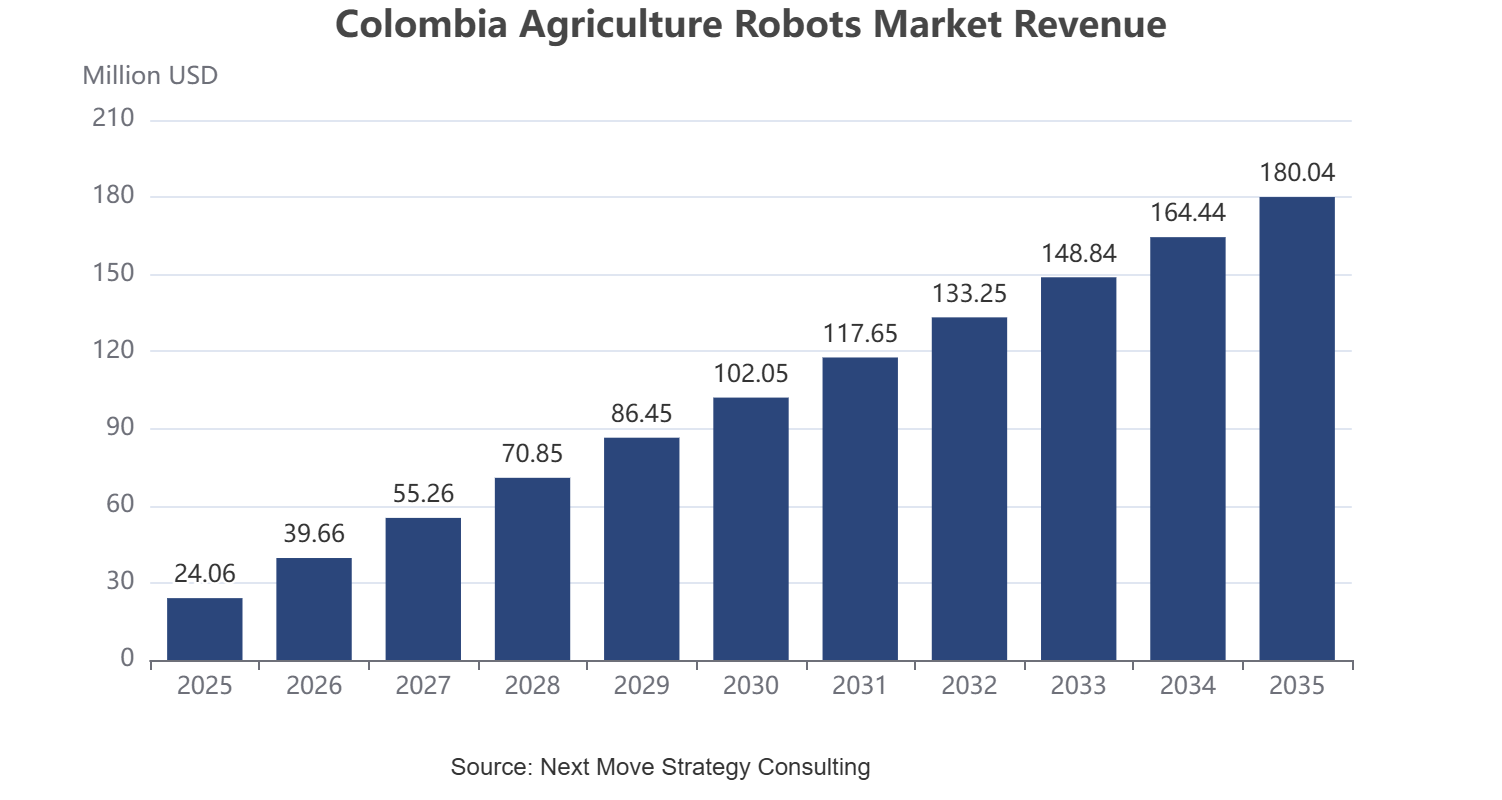
The Colombia Agriculture Robots Market was valued at USD 24.06 million in 2025 and is estimated to reach USD 32.15 million in 2026. The market is projected to reach USD 180.04 million by 2035, registering a CAGR of 21.09% during 2026–2035. In volume terms, the market accounted for 230 units in 2025 and is expected to reach 342 units in 2026, with shipments forecast to increase to 3,134 units by 2035, reflecting a volume CAGR of 27.92%. Growth is driven by agricultural modernization initiatives, rising labor costs, and increasing investments in precision farming and automated agricultural technologies across Colombia.
Consumer Behavior Analysis of the Colombia Agriculture Robots Market
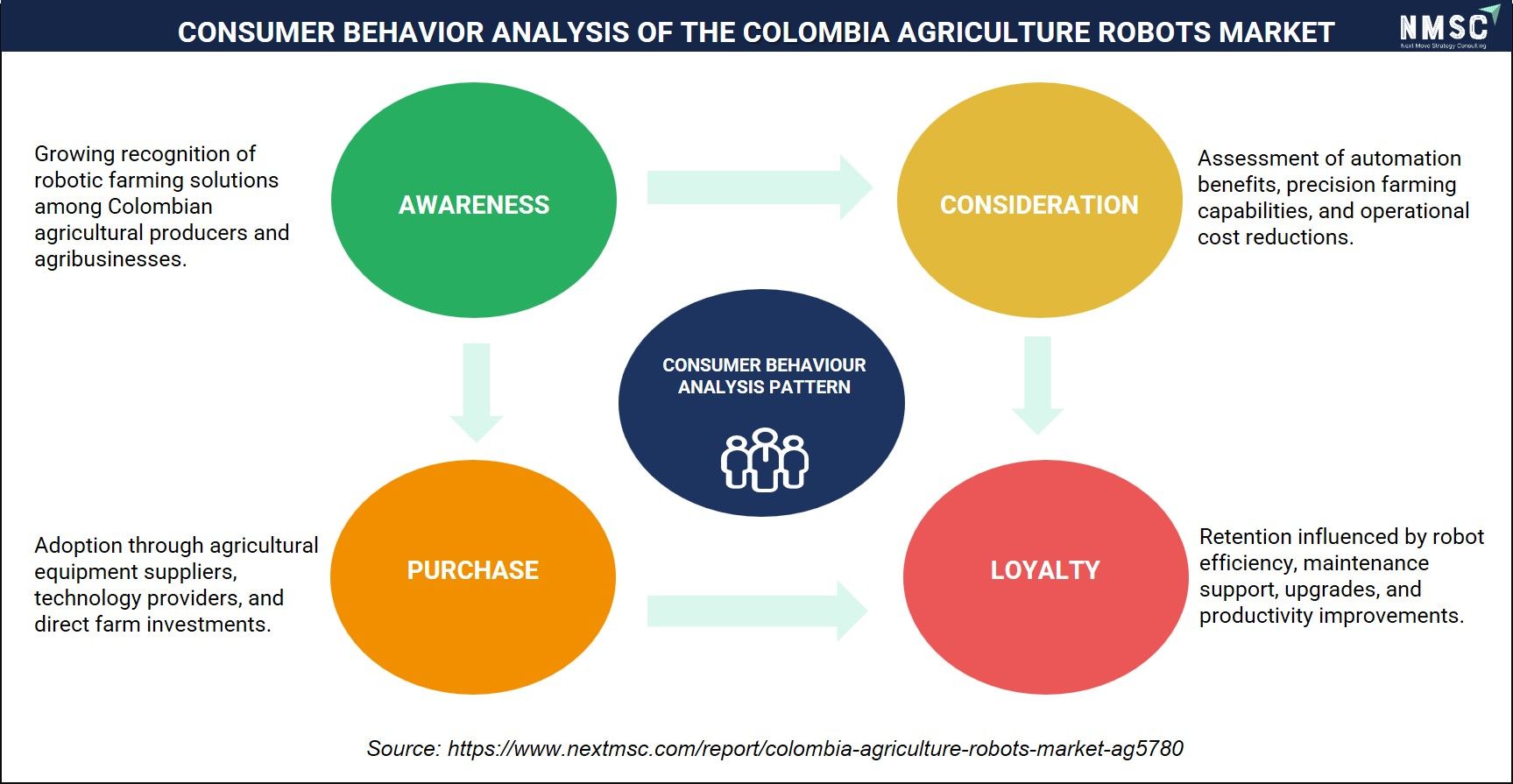
Consumer behavior in the Colombia Agricultural Robots Market reflects a growing preference for automation that enhances productivity and reduces operating costs. Agricultural producers evaluate robotic solutions based on precision farming capabilities, efficiency, reliability, and long-term value. Adoption is supported by equipment suppliers and technology providers, while strong after-sales service, maintenance, and performance upgrades are key factors driving customer satisfaction, retention, and continued investment in agricultural robotics.
What Are the Key Growth Catalysts, Inhibitors, and Opportunities Shaping the Colombia Agriculture Robots Market?
Growth Catalyst & Risk Assessment Matrix
|
Drivers / Trends / Restraints |
(+/–) % Impact on CAGR Forecast |
Geographic Relevance |
Impact Timeline |
|
Agricultural modernization initiatives are encouraging adoption of advanced farming technologies. |
+2.10% |
Colombia |
Short to medium term (1–4 years) |
|
Rising labor costs are increasing demand for automated crop monitoring and management systems. |
+1.90% |
Colombia |
Medium term (2–5 years) |
|
Expansion of high-value crop cultivation is supporting investments in precision agriculture solutions. |
+1.80% |
Colombia |
Medium to long term (3–7 years) |
|
Limited access to advanced agricultural technologies constrains market growth. |
-1.50% |
Colombia |
Short to medium term (1–4 years) |
|
Robotic solutions for coffee, fruits, and specialty crop production present substantial opportunities. |
+2.00% |
Colombia |
Medium term (2–5 years) |
The Colombia Agriculture Robots Market is shaped by a dynamic interplay of growth drivers, restraints, and opportunities that collectively define the competitive trajectory of the industry. Agricultural modernization initiatives, escalating labor costs, and the expansion of high-value crop cultivation are serving as primary catalysts driving market expansion. However, limited access to advanced agricultural technologies constrains broader adoption, particularly among smallholder farming communities. Simultaneously, the growing potential for robotic applications in coffee, fruit, and specialty crop production presents transformative growth opportunities across the forecast period.
Growth Driver
How Are Agricultural Modernization Initiatives Encouraging Adoption of Advanced Farming Technologies in Colombia?
Colombia’s national agricultural modernization agenda is actively fostering the deployment of advanced farming technologies, including precision robotics and automation solutions. Government-led rural development programs, infrastructure investments, and technology adoption incentives are collectively enabling the agricultural sector to transition toward higher productivity and resource efficiency. Public and private sector collaborations are further accelerating the integration of robotic platforms into mainstream farming operations. These modernization efforts are creating a favorable regulatory and economic environment for sustained agriculture robot market growth throughout the 2026–2035 forecast period.
How Are Rising Labor Costs Increasing Demand for Automated Crop Monitoring and Management Systems in Colombia?
Increasing agricultural labor costs across Colombia are compelling farm operators to seek cost-effective and scalable alternatives through robotic automation. Rural labor availability is declining due to urbanization trends and shifting workforce demographics, creating persistent operational challenges for farming enterprises. Automated crop monitoring and management systems, including UAVs, sensor-equipped robots, and autonomous field equipment, are emerging as viable solutions to offset labor dependency and improve farm profitability. This structural labor market dynamic is serving as a consistent and long-term demand catalyst for agricultural robots throughout the Colombian market.
How Is the Expansion of High-Value Crop Cultivation Supporting Investments in Precision Agriculture Solutions in Colombia?
Colombia’s expanding cultivation of high-value crops, including coffee, tropical fruits, flowers, and specialty agricultural commodities, is creating strong demand for precision agriculture solutions. High-value crop production requires meticulous management of soil conditions, irrigation, pest control, and harvest timing, which robotic systems are increasingly capable of delivering with superior consistency and accuracy. Investment in precision agriculture tools, including drones, robotic harvesters, and automated monitoring systems, is growing among large commercial farms and cooperatives. This trend is significantly broadening the addressable market for agricultural robots across Colombian agriculture.
Growth Inhibitor:
How Does Limited Access to Advanced Agricultural Technologies Constrain Market Growth in Colombia?
Limited access to advanced agricultural technologies represents a significant structural barrier to market expansion within Colombia’s agriculture robots sector. Smallholder farmers, who constitute a substantial proportion of Colombia’s agricultural workforce, often lack access to capital financing, digital infrastructure, and technical expertise required to adopt and maintain sophisticated robotic systems. Inadequate rural connectivity, fragmented supply chains, and constrained after-sales service networks further exacerbate technology accessibility challenges. These combined constraints restrict the pace of adoption and limit market penetration among a significant portion of Colombia’s agricultural community throughout the forecast period.
Growth Opportunity:
How Do Robotic Solutions for Coffee, Fruits, and Specialty Crop Production Present Substantial Opportunities in Colombia?
Colombia’s globally recognized agricultural diversity, particularly its premium coffee, tropical fruit, and specialty crop sectors, presents substantial market opportunities for robotic technology providers. These crop categories demand precision cultivation, selective harvesting, and rigorous quality management that robotic platforms can deliver more efficiently than manual labor. Automated harvesting solutions equipped with computer vision and AI-driven algorithms are increasingly capable of operating within complex, varied crop environments. The deployment of targeted robotic solutions across Colombia’s specialty crop segments is expected to generate significant revenue growth and addressable market expansion throughout the 2026–2035 forecast period.
How Is the Colombia Agriculture Robots Market Segmented in This Report, and What Are the Key Insights from the Segmentation Analysis?
By Type
Which Robot Type Is Driving the Greatest Revenue Growth across the Colombia Agriculture Robots Market?
The Colombia Agriculture Robots Market by type is segmented into Unmanned Aerial Vehicles (UAVs), Milking Robots, Driverless Tractors, Automated Harvest Robots, and Others.
Among all robot types, Unmanned Aerial Vehicles (UAVs) and Automated Harvest Robots are emerging as the fastest-growing categories in the Colombia Agriculture Robots Market. UAVs are gaining widespread adoption for aerial crop monitoring, precision spraying, and yield estimation across diverse Colombian agricultural environments. Driverless Tractors maintain strong revenue contributions given their broad field operation applicability, while Milking Robots are gaining traction as dairy automation intensifies across the country. The diversification of robotic platforms is expanding addressable market segments and supporting sustained revenue growth throughout the forecast period.
By Application
Which Application Segment Holds the Largest Share of the Colombia Agriculture Robots Market Revenue?
By application, the Colombia Agriculture Robots Market is segmented into Aerial Monitoring & Scouting, Dairy & Livestock Automation, Field Operations, Harvest Management, and Others.
Field Operations represents a dominant application segment, encompassing plowing, seeding, field farming, and soil and irrigation management activities that benefit significantly from robotic automation in Colombia. Aerial Monitoring & Scouting is also experiencing strong growth, driven by UAV-enabled crop protection, weed control, and weather tracking capabilities tailored to Colombia’s diverse agricultural regions. Harvest Management is emerging as a high-priority segment as labor shortages intensify demand for automated picking and collection systems across specialty crops. Dairy & Livestock Automation continues to exhibit steady growth supported by expanding precision livestock technologies nationwide.
Key Segments
By Type
-
Unmanned Aerial Vehicles (UAVs)
-
Milking Robots
-
Driverless Tractors
-
Automated Harvest Robots
-
Others
By Farming Type
-
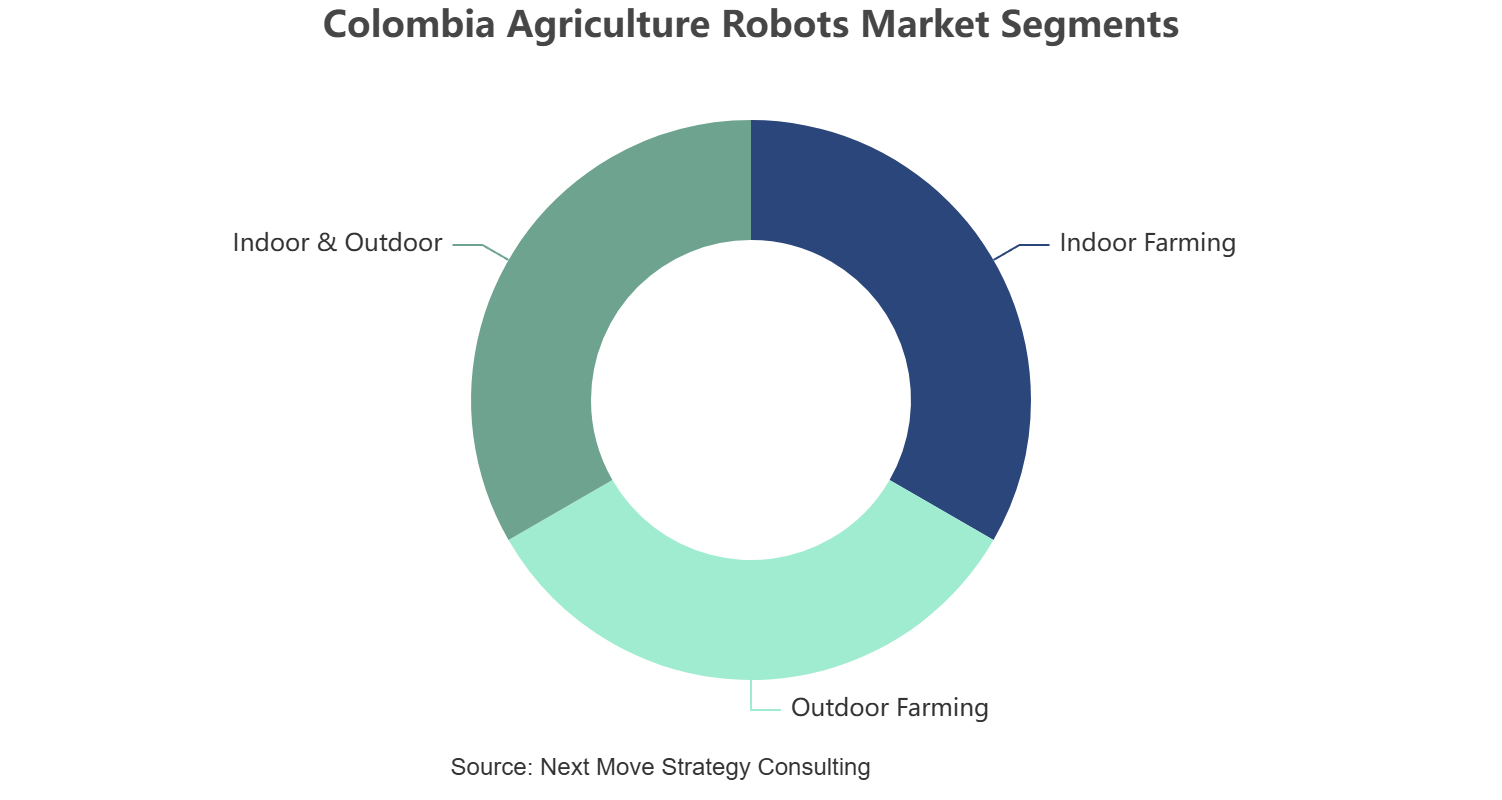
Indoor Farming
-
Outdoor Farming
-
Indoor & Outdoor
By Application
-
Aerial Monitoring & Scouting
-
Crop Protection & Weed Control
-
Crop Scouting & Monitoring
-
Weather Tracking
-
Inventory Management
-
-
Dairy & Livestock Automation
-
Milking
-
Dairy Management
-
Shepherding and Herding
-
-
Field Operations
-
Plowing
-
Seeding
-
Field Farming
-
Soil & Irrigation Management
-
-
Harvest Management
-
Others
Competitive Landscape
The Colombia Agriculture Robots Market features a competitive landscape characterized by a mix of global agricultural equipment manufacturers, specialized precision agriculture technology providers, and regional distributors. Market participants are actively investing in product localization, strategic distribution partnerships, and after-sales service capabilities to strengthen their competitive positioning within Colombia. The integration of robotics with artificial intelligence and precision agriculture technologies is driving rapid product evolution, with companies competing on the basis of automation capabilities, operational reliability, adaptability to local agricultural conditions, and integration with existing Colombian farm management infrastructure.
Supply Chain Structure of the Colombia Agriculture Robots Market
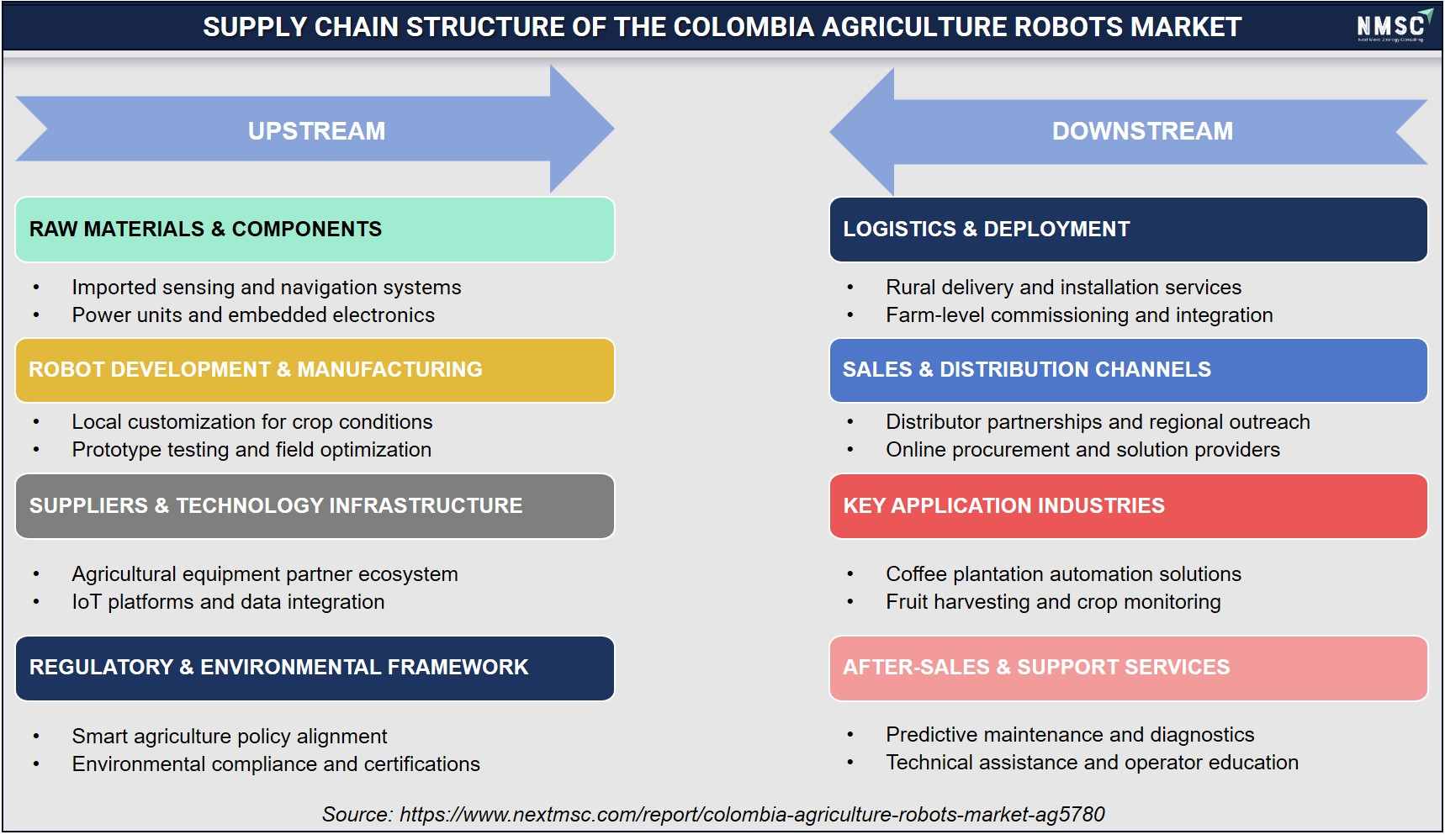
The Colombia Agricultural Robots Market supply chain is supported by an integrated ecosystem spanning component sourcing, robot development, technology partnerships, logistics, and after-sales services. Imported sensing technologies, local customization, IoT-enabled integration, and expanding distribution networks enable efficient deployment across agricultural applications. Strong regulatory alignment, technical support, and predictive maintenance services further enhance operational reliability, accelerate technology adoption, and strengthen the market’s long-term growth prospects.
Key Players
-
XAG Colombia S.A.S.
-
CNH Industrial Colombia S.A.S.
-
TopXGun Colombia S.A.S.
-
BouMatic Colombia S.A.S.
-
Jacto Colombia S.A.S.
-
Yanmar Colombia S.A.S.
-
FJDynamics Colombia S.A.S.
-
Stara Colombia S.A.S.
The competitive landscape of the Colombia Agriculture Robots Market includes key global players operating through local entities, including John Deere Colombia S.A.S. and CNH Industrial Colombia S.A.S., which lead field automation and tractor robotics segments. XAG Colombia S.A.S., TopXGun Colombia S.A.S., and FJDynamics Colombia S.A.S. are advancing UAV and aerial precision agriculture capabilities. DeLaval S.A.S. Colombia, GEA Colombia S.A.S., and BouMatic Colombia S.A.S. dominate dairy and livestock automation. Jacto Colombia S.A.S., Yanmar Colombia S.A.S., and Stara Colombia S.A.S. contribute to a competitive and diversified market environment.
Key Benefits for Stakeholders
This report delivers comprehensive market intelligence for stakeholders across the Colombia Agriculture Robots Market, enabling informed strategic decision-making. Industry participants, including manufacturers, technology developers, and agricultural enterprises, benefit from detailed segmentation analysis, competitive benchmarking, and growth opportunity identification. Investors and venture capital firms gain access to rigorous market sizing and revenue forecasting data spanning the 2026–2035 forecast period, facilitating accurate investment evaluation and portfolio management decisions within the rapidly evolving Colombian agricultural automation sector.
Policymakers and regulatory bodies can leverage the report’s insights to develop evidence-based frameworks that support sustainable agricultural automation adoption in Colombia. Research institutions and academic organizations benefit from the report’s comprehensive analysis of market trends, innovation trajectories, and technology adoption patterns specific to Colombia’s agricultural environment. The customizable nature of the report’s segmentation structure enables stakeholders to tailor analytical outputs to specific regional, product, or application requirements, enhancing relevance and applicability of market intelligence across diverse organizational contexts.
Customization Options
|
Parameters |
Details |
|
Customization Scope |
Free customization (equivalent to up to 80 analyst-working hours) after purchase. |
|
Pricing and Purchase Options |
Avail customized purchase options to meet your exact research needs. |
|
Approach |
In-depth primary and secondary research; proprietary databases; rigorous quality control and validation measures. |
|
Analytical Tools |
Porter’s Five Forces, SWOT, value chain, and Harvey ball analysis to assess competitive intensity, stakeholder roles, and relative impact of key factors. |
Conclusion
The Colombia Agriculture Robots Market is positioned for exceptional growth, underpinned by strong agricultural modernization initiatives, rising labor costs, and expanding cultivation of high-value specialty crops. With revenue projected to grow from USD 32.15 million in 2026 to USD 180.04 million by 2035 at a CAGR of 21.09%, the market presents compelling opportunities across robotic platforms and agricultural applications. Competitive dynamics continue to intensify as global and regional players invest in localized solutions for Colombia’s unique agricultural landscape, particularly in coffee, tropical fruit, and dairy automation segments throughout the forecast period.
About the Author
 Mihul Sharma
— Mihul Sharma is Research Associate at Next Move Strategy Consulting, where he has covered technology, industrial, and healthcare markets for 3 years. His work applies structured business research, market analysis, and secondary-source review to assess market trends, competitive developments, and growth opportunities. He supports report development by fully synthesizing industry data, company information, and market signals into concise findings for strategy and investment-focused research teams.
Mihul Sharma
— Mihul Sharma is Research Associate at Next Move Strategy Consulting, where he has covered technology, industrial, and healthcare markets for 3 years. His work applies structured business research, market analysis, and secondary-source review to assess market trends, competitive developments, and growth opportunities. He supports report development by fully synthesizing industry data, company information, and market signals into concise findings for strategy and investment-focused research teams.
About the Reviewer
 Supradip Baul
— Supradip Baul is an accomplished business consultant and strategist with over a decade of rich experience in market intelligence, strategy, technology, and business transformation. His work has included rigorous qualitative and quantitative analysis across multiple industries, helping clients shape investment decisions and long-term roadmaps. Earlier in his career, he was associated with Gartner, where he contributed to industry-leading reports and market share analyses. He has worked with leading global companies and holds an MBA with a dual specialization in Marketing and Finance.
Supradip Baul
— Supradip Baul is an accomplished business consultant and strategist with over a decade of rich experience in market intelligence, strategy, technology, and business transformation. His work has included rigorous qualitative and quantitative analysis across multiple industries, helping clients shape investment decisions and long-term roadmaps. Earlier in his career, he was associated with Gartner, where he contributed to industry-leading reports and market share analyses. He has worked with leading global companies and holds an MBA with a dual specialization in Marketing and Finance.
At Next Move Strategy Consulting, we understand that insightful market research is the cornerstone of successful business decisions. That's why we employ a robust and multifaceted approach, combining various methodologies to deliver the most accurate and actionable data for our clients.

Research Landscape
We navigate the world of research with two primary approaches:
Qualitative Approach
Our qualitative research methodologies involve immersive techniques such as in-depth interviews, focus groups, and observational studies. By engaging directly with individuals and stakeholders, we uncover valuable insights that quantitative data alone may overlook.

Quantitative Research
In tandem with qualitative methodologies, NMSC leverages the power of Quantitative Research to provide a robust foundation of numerical insights. Through systematic data collection and analysis, we quantify patterns, preferences, and market trends, offering a comprehensive view of the business landscape.
Our quantitative research approach employs diverse tools, including surveys, experiments, and statistical modelling. These methodologies enable us to gather data from a large and representative sample, ensuring the statistical significance of our findings. By employing structured questionnaires and standardized data collection methods, we guarantee the reliability and validity of the information we present to our clients.
Quantitative research is particularly effective in measuring the prevalence of trends, assessing market size, and gauging the impact of various factors on consumer behavior. The numerical precision attained through this approach equips our clients with actionable insights, facilitating data-driven decision-making and strategy formulation.


Our Specialized Toolbox for Industry-Specific Market Research
We deploy a specialized arsenal of techniques tailored to meet your unique requirements. Here's a glimpse into our comprehensive toolbox:

Information Procurement
The stage entails acquiring market data or relevant information through various sources and methodologies.


Market Research Approach
We utilize both top-down and bottom-up approaches in market research analysis to achieve a comprehensive understanding of the market dynamics, leveraging the broad perspective of industry trends and macroeconomic factors alongside detailed insights from specific segments and individual companies.

Porters Five Forces Analysis
We conduct Porter's Five Forces analysis to evaluate the competitive landscape of an industry, providing us with insights into factors that affect profitability and strategic positioning.

SWOT Analysis

Forecasting
We utilize a forecasting model to predict future consumption by considering parameters like population, economics, regulations, market competition, drivers, constraints, technology, and pricing. We also employ statistical techniques such as multilinear regression, exponential smoothing, moving average, ARIMA, and Monte Carlo simulations for accurate predictions. In econometric forecasting, we analyzed short-term and long-term event impacts, attributing values based on regulatory frameworks, economic factors, and market events.





 Speak to Our Analyst