Ornithine Transcarbamylase (OTC) Deficiency Treatment Market

OTC Deficiency Treatment Market was USD 620M in 2025, forecast to reach USD 2,356M by 2035, growing at a 14.3% CAGR from 2026 to 2035, per this market report.

Download Free Sample PDF
Base Year (2025)
$620.0 Million
Forecast (2035)
$2,356.0 Million
CAGR (2026-2035)
14.3%
Top Region
North America

What Is the Ornithine Transcarbamylase (OTC) Deficiency Treatment Market Size?

The global Ornithine Transcarbamylase (OTC) Deficiency Treatment market was valued at USD 620 million in 2025 and is estimated at USD 708 million in 2026, forecast to reach USD 2,356 million by 2035, growing at a 14.3% CAGR from 2026 to 2035. North America leads with approximately 50% revenue share, while Pharmacotherapy commands approximately 70% of total 2025 market value.

NMSC’s analysis indicates that the Ornithine Transcarbamylase (OTC) Deficiency Treatment market is positioned at a structural inflection point, as clinical-stage gene therapy and mRNA therapy candidates for OTC deficiency are advancing toward pivotal trial readouts that could transform the revenue trajectory from incremental pharmacotherapy growth to a high-value curative or near-curative therapy segment through the 2030s.

Ornithine Transcarbamylase (OTC) Deficiency Treatment Market Revenue Forecast

Values in USD Million

2025 $620.0 Million
2025
2026 $708.7 Million
2026
2027 $810.0 Million
2027
2028 $925.8 Million
2028
2029 $1,058.2 Million
2029
2030 $1,209.5 Million
2030
2031 $1,382.5 Million
2031
2032 $1,580.2 Million
2032
2033 $1,806.2 Million
2033
2034 $2,064.5 Million
2034
2035 $2,356.0 Million
2035

Key Takeaways

By Product Type: Pharmacotherapy held the largest share of approximately 70% (USD 434 Million) in 2025 and is estimated at USD 1,586 Million in 2035; Advanced Therapies is the fastest-growing sub-segment at 23.4% CAGR from 2026–2035.

By Treatment Type: Maintenance Therapy held the largest share of approximately 80% (USD 496 Million) in 2025; Acute Therapy is the fastest-growing sub-segment at 17.6% CAGR from 2026–2035.

By Route of Administration: Oral held the largest share of approximately 70% (USD 434 Million) in 2025 and is estimated at USD 1,556 Million in 2035; Intravenous is the fastest-growing sub-segment at 18.4% CAGR from 2026–2035.

By Patient Age Group: Pediatric held the largest share of approximately 60% (USD 372 Million) in 2025; Adult is the fastest-growing segment at approximately 16.7% CAGR from 2026–2035.

By Disease Onset: Neonatal Onset held the largest share of approximately 40% (USD 248 Million) in 2025; Adult Onset is the fastest-growing sub-segment at approximately 17.1% CAGR from 2026–2035.

By Distribution Channel: Hospital Pharmacy held the largest share of approximately 40% (USD 248 Million) in 2025; Institutional Channel is the fastest-growing sub-segment at approximately 21.6% CAGR from 2026–2035.

By End User: Hospitals held the largest share of approximately 50% (USD 310 Million) in 2025 and is estimated at USD 1,116 Million in 2035; Home Care is the fastest-growing segment at 18.4% CAGR from 2026–2035.

Dominant Region: North America dominated with approximately 50% revenue share (USD 310 Million) in 2025.

Fastest-Growing Region: Latin America is expected to register the highest regional CAGR of approximately 19.0% during 2026–2035.

Dominant Country: U.S. led with approximately USD 280 Million in 2025.

Fastest-Growing Country: India is the fastest-growing country at approximately 19.6% CAGR from 2026–2035.

Market Opportunity: The Ornithine Transcarbamylase (OTC) Deficiency Treatment market is expected to create an absolute dollar opportunity of USD 1,648 million between 2026 and 2035, representing a compelling investment destination across pharmacotherapy, advanced gene therapy, and specialized medical nutrition sub-segments.

According to NMSC analysis, the underdiagnosis of late-onset and adult OTC deficiency — estimated to affect a substantial proportion of carrier females and mild phenotype males who remain undetected without metabolic crisis — represents a structural demand expansion driver that newborn screening program extensions and heightened clinician awareness are beginning to convert into incrementally diagnosed and treated patient populations across North America and Europe.

Regulatory Framework of the Ornithine Transcarbamylase (OTC) Deficiency Treatment Market

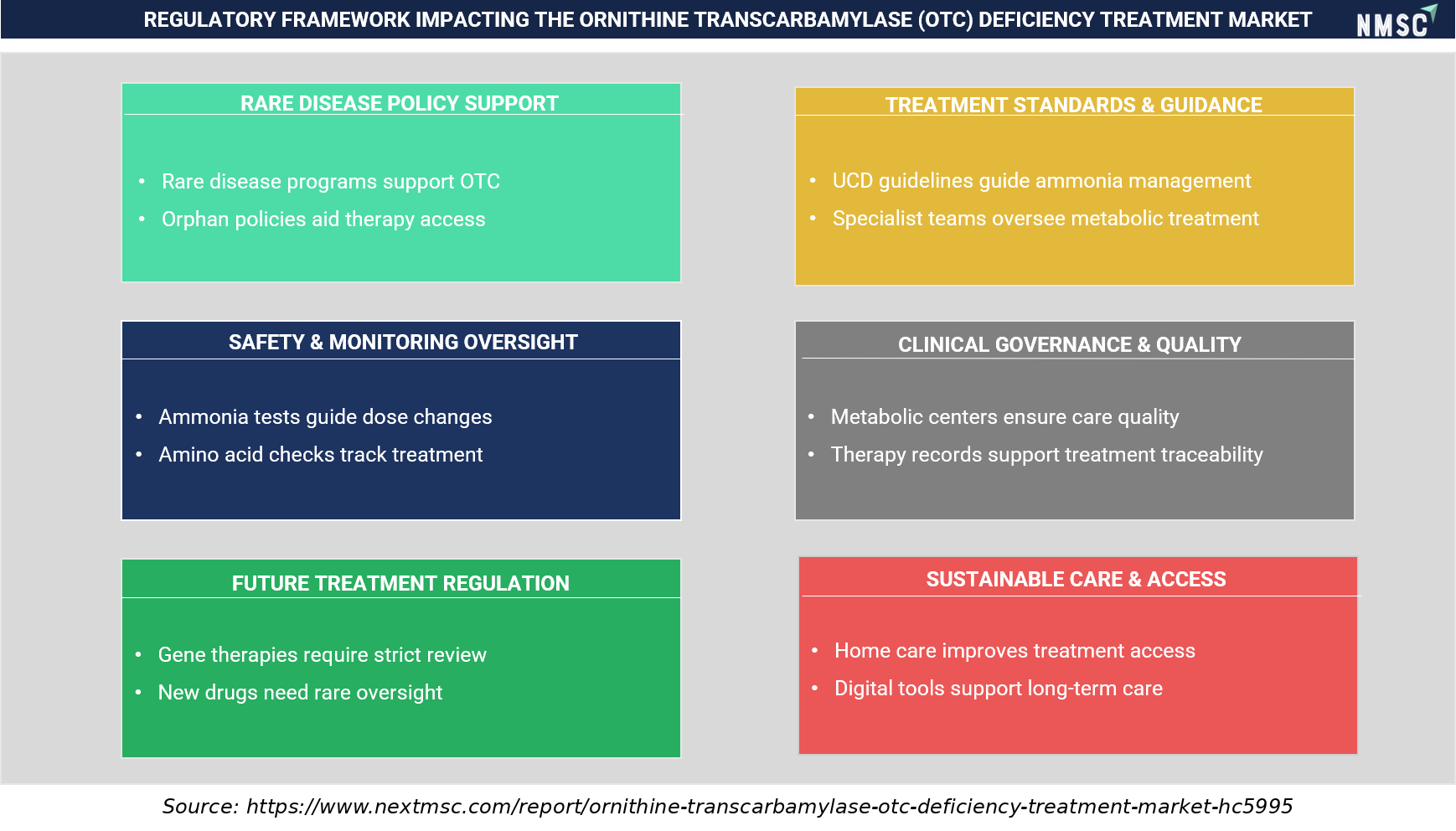
The regulatory framework for the ornithine transcarbamylase (OTC) deficiency treatment market emphasizes rare-disease policy support, treatment standards, patient safety, and clinical governance. Regulatory requirements encourage structured ammonia monitoring, specialist-led metabolic care, treatment traceability, and quality oversight. Emerging therapies, including gene-based approaches, are expected to undergo rigorous evaluation, while digital and home-care solutions may support long-term treatment access.

What Does the Ornithine Transcarbamylase (OTC) Deficiency Treatment Market Encompass?

The Ornithine Transcarbamylase (OTC) Deficiency Treatment market encompasses all commercially available and pipeline therapeutic products and nutritional management solutions for the treatment of OTC deficiency, the most prevalent urea cycle disorder, resulting from mutations in the OTC gene on chromosome Xp21 that impair hepatic conversion of carbamoyl phosphate and ornithine to citrulline. The market spans nitrogen scavenger pharmacotherapy including glycerol phenylbutyrate and sodium phenylbutyrate, amino acid supplementation, disease-specific medical nutrition including protein substitutes and low-protein foods, and emerging advanced therapeutic modalities including AAV gene therapy, mRNA therapy, and gene editing programs currently in clinical development.
The regulatory environment is strongly supportive through orphan drug designation pathways in the U.S. (FDA OOPD), European Union (EMA Orphan Office), and Japan (PMDA), providing market exclusivity, fee waivers, and accelerated review mechanisms that materially reduce development risk. The FDA’s Rare Pediatric Disease designation and Priority Review Voucher program create additional financial incentives for sponsors advancing pediatric OTC deficiency programs into registration. Technology adoption trends reflect a decisive shift from sodium phenylbutyrate-only regimens toward glycerol phenylbutyrate (Ravicti) as the pharmacotherapy standard, with advanced gene therapy and mRNA programs progressing from preclinical to Phase 1/2 studies and generating significant investor and strategic pharmaceutical interest in a potential one-time curative treatment.

Market Drivers & Dynamics

Interactive Dataset
Clinical advancement of gene therapy and mRNA therapy candidates toward market authorization driver +3.5% Global 2026–2035
Expansion of newborn screening programs enabling earlier diagnosis and lifetime treatment initiation driver +2.8% North America, Europe 2026–2035
Improved recognition of adult-onset and carrier female OTC deficiency increasing diagnosed patient pool driver +2.1% Global 2026–2032
Orphan drug regulatory incentives and Priority Review Vouchers reducing development risk driver +1.5% North America, Europe 2026–2035
Growing patient registries and real-world data supporting treatment guideline evolution driver +1.2% Global 2026–2035
Transition from sodium phenylbutyrate to glycerol phenylbutyrate elevating revenue per patient driver +1.0% North America, Europe 2026–2032
High cost of gene therapy and mRNA therapy limiting access in low- and middle-income countries restraint −1.8% MEA, Latin America, APAC 2026–2035
Liver transplantation as a curative alternative constraining pharmacotherapy market ceiling in severe cases restraint −0.8% North America, Europe 2026–2032
Limited metabolic specialist clinical expertise outside major academic centers constraining diagnosis rates restraint -1.3% Global 2026–2030
Source: Next Move Strategy Consulting

Growth Drivers

What Is the Primary Growth Driver of the Ornithine Transcarbamylase (OTC) Deficiency Treatment Market?

The advancement of gene therapy and mRNA therapy candidates through clinical development is the most structurally significant demand catalyst for the Ornithine Transcarbamylase (OTC) Deficiency Treatment market. The U.S. FDA’s Office of Orphan Products Development has designated multiple OTC gene therapy programs as orphan drug candidates, activating accelerated regulatory pathways that compress time-to-market and provide seven-year market exclusivity upon approval. An approved gene therapy for OTC deficiency would command high single-instance treatment pricing analogous to other rare disease gene therapies, potentially adding several hundred million dollars of annual revenue to a market currently sized below USD 1 billion.

How Is Newborn Screening Expansion Driving Ornithine Transcarbamylase (OTC) Deficiency Treatment Market Growth?

Universal newborn screening using tandem mass spectrometry, endorsed by the American College of Medical Genetics and Genomics and progressively adopted across European national health systems, is systematically identifying OTC-deficient newborns before their first hyperammonemic crisis. The U.S. Health Resources and Services Administration’s Recommended Uniform Screening Panel formally includes OTC deficiency, and states that have adopted RUSP see earlier treatment initiation, longer treatment duration, and improved survival outcomes. We observed that each screened and diagnosed newborn becomes a lifelong pharmacotherapy and medical nutrition customer, creating a structural demand accumulation dynamic that builds the treated population base year-over-year across the forecast period.

Growth Inhibitors

What Is Restraining the Ornithine Transcarbamylase (OTC) Deficiency Treatment Market?

High therapy costs and limited metabolic specialist clinical expertise outside major academic centers represent the primary structural restraints on Ornithine Transcarbamylase (OTC) Deficiency Treatment market expansion, particularly in low- and middle-income countries across Latin America, the Middle East, and Asia-Pacific. A single year of glycerol phenylbutyrate therapy can exceed USD 100,000 per patient in the United States, a cost structure that healthcare systems without robust rare disease drug reimbursement frameworks cannot sustain. The National Organization for Rare Disorders (NORD) has documented access inequities in rare disease pharmacotherapy, highlighting the systemic gap between treatment efficacy evidence and patient access in non-specialty healthcare environments.

What Are the Growth Opportunities?

How Can a Gene Therapy Approval Create a Transformational Revenue Event for the OTC Deficiency Market?

The first approved gene therapy for OTC deficiency would represent the most significant single revenue catalyst in the history of this market, introducing ultra-high-value pricing analogous to approved gene therapies in other rare liver metabolic diseases. Sponsors with late-stage clinical programs — particularly iECURE and Ultragenyx — are positioned to convert clinical success into commercial authorization under accelerated FDA and EMA orphan disease pathways. Payers managing rare disease budgets have established precedent for single-administration gene therapy reimbursement through outcomes-based contracts, creating a viable commercial model for gene therapy sponsors targeting the severe neonatal onset OTC deficiency patient population.

What Opportunity Does Expanded Adult-Onset OTC Deficiency Diagnosis Create for Pharmacotherapy?

Adult-onset OTC deficiency, including symptomatic carrier females and late-presenting males with partial enzyme function, represents a structurally underdiagnosed patient population whose recognition is expanding through metabolic genetics awareness programs and targeted testing of adults presenting with unexplained episodic neurological symptoms or dietary protein intolerance. We found that each newly diagnosed adult patient initiates pharmacotherapy and dietary management, adding to the chronic treatment base without displacing pediatric demand. Nitrogen scavenger manufacturers and medical nutrition providers that develop adult-specific product formulations, simplified dosing regimens, and patient support programs are best positioned to capture this incremental segment.

How Can Digital Nutrition Management Platforms Improve Medical Nutrition Adherence and Revenue?

Medical nutrition adherence in OTC deficiency is chronically suboptimal due to the palatability challenges of protein substitutes and the complexity of protein intake restriction calculations across diverse meal patterns. Digital health platforms integrating protein tracking, formula intake logging, and telehealth support with metabolic dietitians can substantially improve adherence rates and daily formula utilization, directly expanding revenue per patient in the Medical Nutrition segment. Medical nutrition companies including Nestlé S.A., Danone S.A., and Abbott Laboratories are positioned to leverage proprietary digital health tools as differentiated service wrappers that strengthen formulary inclusion, patient loyalty, and payer value demonstration.

Segmentation Analysis

2025 (USD Million)
2035 (USD Million)
Pharmacotherapy 2025: $434.0 Million | 2035: $1,586.0 Million
Pharmacother
Medical Nutrition 2025: $124.0 Million | 2035: $357.0 Million
Medical Nutr
Advanced Therapies 2025: $62.0 Million | 2035: $413.0 Million
Advanced The
Pharmacotherapy $434.0 Million $1,586.0 Million 15.4%
Medical Nutrition $124.0 Million $357.0 Million 12.4%
Advanced Therapies $62.0 Million $413.0 Million 23.4%

Which Product Type Segment Dominates the Ornithine Transcarbamylase (OTC) Deficiency Treatment Market?

Pharmacotherapy commanded the largest revenue share in the Ornithine Transcarbamylase (OTC) Deficiency Treatment market, reaching USD 434 million in 2025, anchored by glycerol phenylbutyrate (Ravicti) and sodium phenylbutyrate formulations that constitute the chronic nitrogen scavenging backbone for the majority of managed OTC-deficient patients globally. Advanced Therapies is the fastest-growing product type segment at a 23.4% CAGR from 2026 to 2035, driven by the anticipated clinical progression of gene therapy and mRNA therapy programs from Phase 1/2 to pivotal studies and eventual market authorization, which would introduce ultra-high-value single-administration or periodic-dosing revenue streams not currently present in the market.

2025 (USD Million)
2035 (USD Million)
Maintenance
Chronic Nitr
Chronic Amin
Chronic Medi
Acute Therap
Segment Item 2025 (USD Million) 2035 (USD Million) CAGR
Maintenance Therapy $10.0 USD Million $40.0 USD Million 18.0%
Chronic Nitrogen Scavenging $17.1 USD Million $51.1 USD Million 8.0%
Chronic Amino Acid Therapy $24.2 USD Million $62.2 USD Million 10.0%
Chronic Medical Nutrition $31.3 USD Million $73.3 USD Million 20.0%
Acute Therapy $38.4 USD Million $84.4 USD Million 27.0%

Segment-wise data is locked

Unlock complete segment-wise numbers for Treatment Type.

Unlock Full Data
2025 (USD Million)
2035 (USD Million)
Oral
Tablet
Powder
Granules
Oral Liquid
Segment Item 2025 (USD Million) 2035 (USD Million) CAGR
Oral $10.0 USD Million $40.0 USD Million 19.0%
Tablet $17.1 USD Million $51.1 USD Million 25.0%
Powder $24.2 USD Million $62.2 USD Million 23.0%
Granules $31.3 USD Million $73.3 USD Million 13.0%
Oral Liquid $38.4 USD Million $84.4 USD Million 22.0%

Segment-wise data is locked

Unlock complete segment-wise numbers for Route of Administration.

Unlock Full Data

Which Route of Administration Leads the Ornithine Transcarbamylase (OTC) Deficiency Treatment Market?

Oral administration dominated the route of administration axis, accounting for USD 434 million in 2025 revenue, reflecting the chronic outpatient nature of OTC deficiency maintenance therapy where glycerol phenylbutyrate liquid, sodium phenylbutyrate tablets and powder, and oral amino acid supplements are dispensed through specialty and hospital pharmacy channels for daily home administration. Intravenous is the fastest-growing route at an 18.4% CAGR from 2026 to 2035, as the anticipated authorization of intravenous gene therapy and mRNA therapy delivery formats — requiring hospital or clinic administration — will shift a growing proportion of market revenue toward parenteral administration, alongside existing IV sodium phenylacetate-sodium benzoate use during acute hyperammonemic crises.

2025 (USD Million)
2035 (USD Million)
Pediatric
Neonatal
Infant
Child
Adolescent
Segment Item 2025 (USD Million) 2035 (USD Million) CAGR
Pediatric $10.0 USD Million $40.0 USD Million 20.0%
Neonatal $17.1 USD Million $51.1 USD Million 26.0%
Infant $24.2 USD Million $62.2 USD Million 12.0%
Child $31.3 USD Million $73.3 USD Million 22.0%
Adolescent $38.4 USD Million $84.4 USD Million 25.0%

Segment-wise data is locked

Unlock complete segment-wise numbers for Patient Age Group.

Unlock Full Data
2025 (USD Million)
2035 (USD Million)
Neonatal Ons
Childhood On
Adult Onset
Segment Item 2025 (USD Million) 2035 (USD Million) CAGR
Neonatal Onset $10.0 USD Million $40.0 USD Million 15.0%
Childhood Onset $17.1 USD Million $51.1 USD Million 25.0%
Adult Onset $24.2 USD Million $62.2 USD Million 19.0%

Segment-wise data is locked

Unlock complete segment-wise numbers for Disease Onset.

Unlock Full Data
2025 (USD Million)
2035 (USD Million)
Hospital Pha
Specialty Ph
Retail Pharm
Direct to Pa
Medical Nutr
Segment Item 2025 (USD Million) 2035 (USD Million) CAGR
Hospital Pharmacy $10.0 USD Million $40.0 USD Million 25.0%
Specialty Pharmacy $17.1 USD Million $51.1 USD Million 19.0%
Retail Pharmacy $24.2 USD Million $62.2 USD Million 25.0%
Direct to Patient $31.3 USD Million $73.3 USD Million 19.0%
Medical Nutrition Provider $38.4 USD Million $84.4 USD Million 20.0%

Segment-wise data is locked

Unlock complete segment-wise numbers for Distribution Channel.

Unlock Full Data
2025 (USD Million)
2035 (USD Million)
Hospitals
Specialty Cl
Home Care
Emergency Ca
Segment Item 2025 (USD Million) 2035 (USD Million) CAGR
Hospitals $10.0 USD Million $40.0 USD Million 26.0%
Specialty Clinics $17.1 USD Million $51.1 USD Million 16.0%
Home Care $24.2 USD Million $62.2 USD Million 18.0%
Emergency Care $31.3 USD Million $73.3 USD Million 8.0%

Segment-wise data is locked

Unlock complete segment-wise numbers for End User.

Unlock Full Data

Which End User Segment Leads the Ornithine Transcarbamylase (OTC) Deficiency Treatment Market?

Hospitals accounted for the largest end-user revenue share, generating USD 310 million in 2025, encompassing inpatient hyperammonemia management, gene therapy administration, multidisciplinary metabolic team outpatient visits, and hospital pharmacy dispensing of complex pharmacotherapy regimens for newly diagnosed neonates and children. Home Care is the fastest-growing end-user segment at an 18.4% CAGR from 2026 to 2035, driven by the chronic oral pharmacotherapy and medical nutrition management model that enables stable OTC-deficient patients to receive treatment through prescription delivery service and specialty pharmacy direct-to-patient distribution, reducing hospital visits and improving quality of life through home-based nitrogen management.

Growth Opportunities

Our analysis shows that three forward-looking growth opportunities are creating meaningful whitespace for market participants across the Ornithine Transcarbamylase (OTC) Deficiency Treatment value chain through the 2026–2035 forecast period.

How Can a Gene Therapy Approval Create a Transformational Revenue Event for the OTC Deficiency Market?

The first approved gene therapy for OTC deficiency would represent the most significant single revenue catalyst in the history of this market, introducing ultra-high-value pricing analogous to approved gene therapies in other rare liver metabolic diseases. Sponsors with late-stage clinical programs — particularly iECURE and Ultragenyx — are positioned to convert clinical success into commercial authorization under accelerated FDA and EMA orphan disease pathways. Payers managing rare disease budgets have established precedent for single-administration gene therapy reimbursement through outcomes-based contracts, creating a viable commercial model for gene therapy sponsors targeting the severe neonatal onset OTC deficiency patient population.

What Opportunity Does Expanded Adult-Onset OTC Deficiency Diagnosis Create for Pharmacotherapy?

Adult-onset OTC deficiency, including symptomatic carrier females and late-presenting males with partial enzyme function, represents a structurally underdiagnosed patient population whose recognition is expanding through metabolic genetics awareness programs and targeted testing of adults presenting with unexplained episodic neurological symptoms or dietary protein intolerance. We found that each newly diagnosed adult patient initiates pharmacotherapy and dietary management, adding to the chronic treatment base without displacing pediatric demand. Nitrogen scavenger manufacturers and medical nutrition providers that develop adult-specific product formulations, simplified dosing regimens, and patient support programs are best positioned to capture this incremental segment.

How Can Digital Nutrition Management Platforms Improve Medical Nutrition Adherence and Revenue?

Medical nutrition adherence in OTC deficiency is chronically suboptimal due to the palatability challenges of protein substitutes and the complexity of protein intake restriction calculations across diverse meal patterns. Digital health platforms integrating protein tracking, formula intake logging, and telehealth support with metabolic dietitians can substantially improve adherence rates and daily formula utilization, directly expanding revenue per patient in the Medical Nutrition segment. Medical nutrition companies including Nestlé S.A., Danone S.A., and Abbott Laboratories are positioned to leverage proprietary digital health tools as differentiated service wrappers that strengthen formulary inclusion, patient loyalty, and payer value demonstration.

Regional Outlook

2025 (USD Million)
2035 (USD Million)
North Americ
Europe
Asia-Pacific
Middle East
Latin Americ
Region 2025 (USD Million) 2035 (USD Million) CAGR (%)
North America $10.0 USD Million $40.0 USD Million 9.0%
Europe $17.1 USD Million $51.1 USD Million 27.0%
Asia-Pacific $24.2 USD Million $62.2 USD Million 25.0%
Middle East & Africa $31.3 USD Million $73.3 USD Million 23.0%
Latin America $38.4 USD Million $84.4 USD Million 12.0%

Regional data is locked

Unlock complete regional numbers for this market.

Unlock Full Data

Competitive Landscape

We observed that the Ornithine Transcarbamylase (OTC) Deficiency Treatment market features a concentrated competitive structure in pharmacotherapy anchored by glycerol phenylbutyrate, a highly specialized medical nutrition segment served by major nutrition companies, and a nascent but rapidly developing advanced therapy cohort of gene therapy and mRNA therapy sponsors.

Dimension Description
Market Structure Concentrated pharmacotherapy layer dominated by Amgen Inc. (Immedica Pharma AB) through Ravicti global franchise and sodium phenylbutyrate-based competition from Bausch Health, Glenmark, and Galen; medical nutrition served by Nestlé, Danone, and Abbott; advanced therapy segment emerging with iECURE, Arcturus, and Ultragenyx leading clinical programs.
Innovation Focus AAV gene therapy using liver-targeted vectors for durable OTC enzyme expression; lipid nanoparticle-delivered circular mRNA for repeat-dose OTC protein restoration; base editing and prime editing approaches for precise OTC mutation correction; digital nutrition platforms improving medical nutrition adherence and patient-reported outcome documentation.
M&A Activity Amgen Inc. completed the acquisition of Immedica Pharma AB to secure the global Ravicti (glycerol phenylbutyrate) commercial franchise; strategic licensing and collaboration activity between biotechnology developers and large pharma around advanced therapy OTC programs; patient advocacy organization partnerships informing registry and natural history data for regulatory submissions.

How Do Companies Compete in the OTC Deficiency Treatment Industry?

Competition in the OTC deficiency pharmacotherapy segment is structured around product differentiation on palatability, dosing convenience, and clinical evidence of superior ammonia control, with glycerol phenylbutyrate (Ravicti) commanding premium positioning over older sodium phenylbutyrate products through its favorable palatability, volume-based dosing, and lower dietary protein interaction. In medical nutrition, competition centers on formula taste acceptability, protein equivalent content, UCD-specific amino acid composition, and digital adherence support tools. In advanced therapies, competitive differentiation is driven by vector design, hepatic transduction efficiency, manufacturing scalability, and the speed and rigor of clinical development programs.

Which Competitive Archetypes Dominate the Ornithine Transcarbamylase (OTC) Deficiency Treatment Market?

Three archetypes define the competitive landscape: established rare disease pharmaceutical companies monetizing approved nitrogen scavenger and amino acid pharmacotherapy through specialty channel distribution with patient hub support programs (Amgen/Immedica, Bausch Health, Zevra Therapeutics); global clinical nutrition companies leveraging metabolic disease expertise and manufacturing scale for protein substitute and low-protein food portfolios (Nestlé Health Science, Danone’s Nutricia, Abbott); and biotechnology gene therapy specialists with high-risk, high-reward clinical programs targeting one-time curative or transformative revenue opportunities (iECURE, Arcturus, Ultragenyx).

How Are Companies Innovating and Differentiating in the Ornithine Transcarbamylase (OTC) Deficiency Treatment Market?

Innovation investment is concentrated in three areas: clinical advancement of AAV gene therapy and mRNA therapy programs toward pivotal study designs informed by Phase 1/2 safety and efficacy data; development of next-generation nitrogen scavenger formulations with improved patient adherence profiles; and digital health and remote monitoring tools for medical nutrition management. Our assessment indicates that companies investing in OTC-specific patient registries, natural history data platforms, and biomarker endpoint development are building regulatory dossier strength that accelerates future approval submissions. The interplay between CAR T-cell therapy and gene therapy manufacturing ecosystem development is also creating transferable manufacturing capabilities that OTC gene therapy sponsors are leveraging to reduce production costs.

What M&A and Strategic Expansion Activity Is Shaping the Ornithine Transcarbamylase (OTC) Deficiency Treatment Market?

Amgen Inc.’s acquisition of Immedica Pharma AB to secure the global Ravicti commercial franchise is the defining M&A event in recent Ornithine Transcarbamylase (OTC) Deficiency Treatment Market history, consolidating the highest-revenue pharmacotherapy asset within a large-cap rare disease-focused pharmaceutical company with global commercial infrastructure. Zevra Therapeutics, Inc.’s development of OLPRUVA (sodium phenylbutyrate for oral suspension) for pediatric and adult UCD patients demonstrates organic product innovation differentiation. NMSC’s analysis indicates that the advanced therapy companies — iECURE, Arcturus, and Ultragenyx — are actively seeking large pharmaceutical partnership or acquisition discussions contingent on Phase 2 clinical data readouts, positioning them as likely acquisition targets within the forecast period.

Key Market Players

Our findings suggest that the following 14 companies represent the confirmed set of active producers, developers, and providers within the global Ornithine Transcarbamylase (OTC) Deficiency Treatment market as of 2026, spanning pharmacotherapy, medical nutrition, and advanced therapy segments.

Amgen Inc. Immedica Pharma AB Bausch Health Companies Inc. Zevra Therapeutics, Inc. Nestlé S.A. Danone S.A. Abbott Laboratories Ajinomoto Co., Inc. Medunik Canada Inc. Glenmark Pharmaceuticals Limited Galen Limited Ultragenyx Pharmaceutical Inc. Arcturus Therapeutics Holdings Inc. iECURE, Inc.

Ecosystem Analysis of the Ornithine Transcarbamylase (OTC) Deficiency Treatment Market

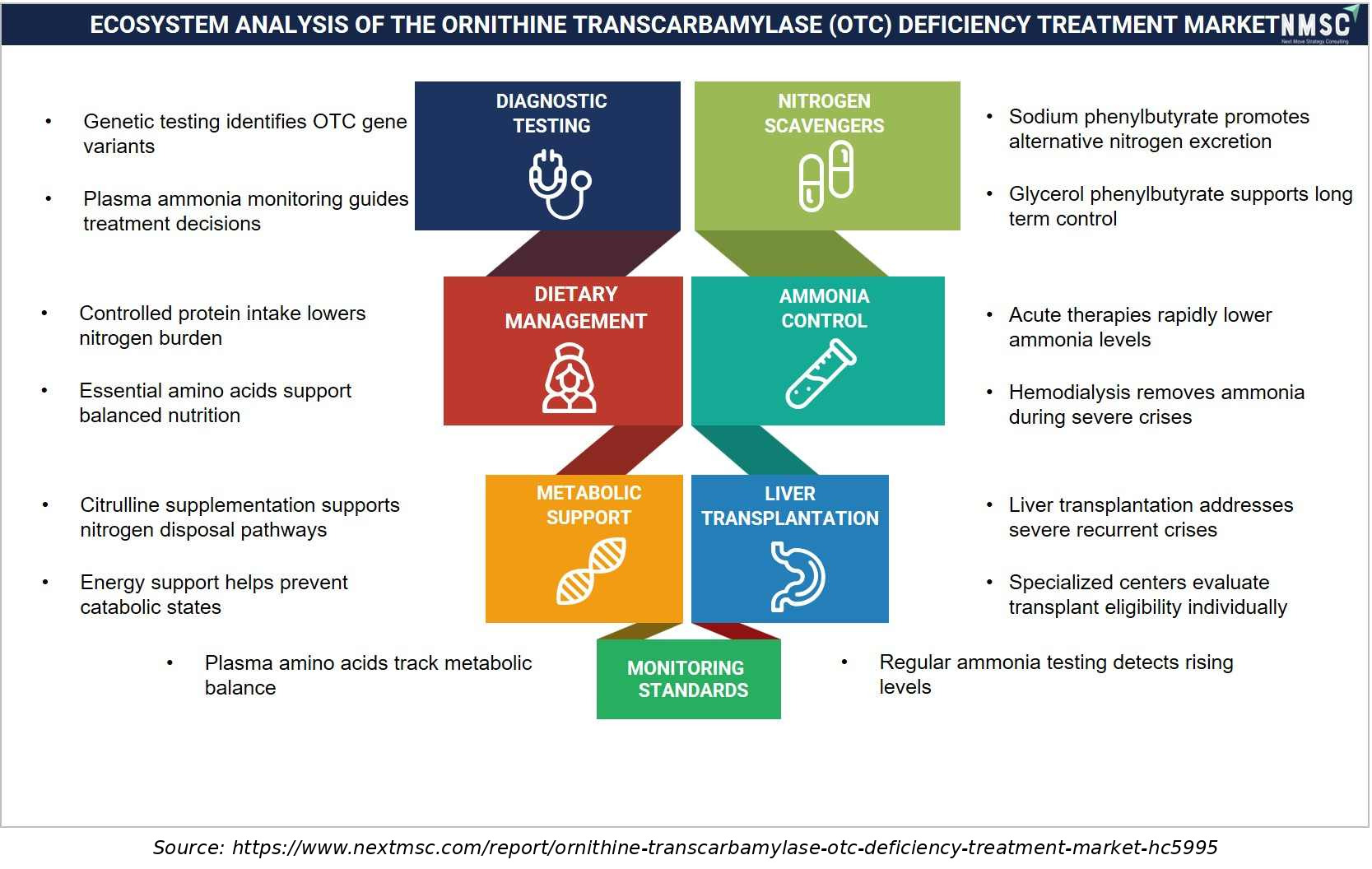
The OTC deficiency treatment market ecosystem involves diagnostic testing, dietary management, nitrogen scavengers, ammonia control, metabolic support, and liver transplantation. These components work together to manage ammonia accumulation and support metabolic stability in affected patients. Specialized healthcare providers, diagnostic laboratories, treatment centers, and monitoring systems collectively contribute to disease management, treatment continuity, and long-term patient care.

Latest Developments

Based on research conducted by NMSC, we found that 2025–2026 developments across the Ornithine Transcarbamylase (OTC) Deficiency Treatment market are concentrated on advanced therapy clinical milestones, pharmacotherapy label expansions, and rare disease reimbursement policy developments that are reshaping market access dynamics globally.

Date Event
August 2026 iECURE announced that updated clinical data from the ongoing OTC-HOPE trial of ECUR-506 in neonatal-onset OTC deficiency would be presented at the 2026 SSIEM Annual Symposium. The presentation included safety observations, genome-editing data and metabolic-control measures from the low-dose cohort, with analyses examining the relationship between baseline disease severity and clinical response.
March 2026 Ultragenyx reported positive 36-week Phase 3 Enh3ance results for DTX301, an investigational AAV8 gene therapy. Treated patients showed an 18% reduction in 24-hour plasma-ammonia exposure versus placebo, with ammonia generally maintained within the normal range and clinically meaningful improvements reported by patients.
June 2025 Arcturus reported positive interim Phase 2 results for ARCT-810, an mRNA therapeutic designed to replace the OTC enzyme. Multiple administrations consistently reduced glutamine into the normal range, while ammonia remained stable and within normal limits, and treatment continued to be safe and well tolerated at tested doses.

Expert Insights

Joe Truitt

CEO | iECURE

"The current standard of care for infants affected by neonatal onset OTC deficiency leaves significant room for improvement, and should these results hold true for additional participants, we believe there is tremendous potential for our gene editing approach to treat this devastating disease."

Analyst Interpretation

The statement indicates the unmet need driving innovation in OTC deficiency treatment. Current management can control hyperammonemia but does not directly correct the underlying genetic defect. This unmet need is encouraging investment in gene insertion, gene replacement, mRNA, and other disease-modifying approaches. If durability and safety are demonstrated in larger studies, these technologies could substantially change the treatment landscape and the competitive composition of the OTC deficiency market.

Investment Opportunities

What Capital Inflows Are Targeting the Ornithine Transcarbamylase (OTC) Deficiency Treatment Market?

Capital inflows into the Ornithine Transcarbamylase (OTC) Deficiency Treatment market are concentrated in three vectors: venture and growth equity investment in gene therapy and mRNA therapy clinical-stage companies (iECURE, Arcturus, and Ultragenyx collectively attracting multi-hundred-million-dollar investment rounds); strategic pharmaceutical acquisition activity targeting approved or near-approved rare disease pharmacotherapy assets (exemplified by Amgen’s acquisition of Immedica Pharma AB for the Ravicti franchise); and specialty pharma investment in improved pharmacotherapy formulations targeting the adherence gap in existing patient populations. The FDA’s Priority Review Voucher program, which has created vouchers valued above USD 100 million for rare pediatric disease program approvals, provides a financially material non-dilutive revenue mechanism for OTC gene therapy sponsors.

How Is Healthcare Infrastructure Investment Supporting Ornithine Transcarbamylase (OTC) Deficiency Treatment Market Development?

Healthcare infrastructure investment in rare disease specialist metabolic centers, newborn screening laboratory capacity, and rare disease pharmacy distribution networks is directly expanding the commercial reach of Ornithine Transcarbamylase (OTC) Deficiency Treatment products into previously underserved patient populations. The U.S. Health Resources and Services Administration’s funding of state newborn screening programs, the EU’s investment in the European Reference Network for rare metabolic diseases, and Saudi Arabia’s Vision 2030 healthcare expansion program are each creating the specialist clinical infrastructure prerequisite for pharmacotherapy and advanced therapy market development in regions where currently diagnosed OTC patients represent a fraction of the epidemiologically estimated prevalence.

What ESG Considerations Are Shaping Investment in the Ornithine Transcarbamylase (OTC) Deficiency Treatment Market?

Environmental, Social, and Governance considerations are shaping OTC deficiency treatment investment in two primary dimensions. On the social equity dimension, patient advocacy organizations including the National Urea Cycle Disorders Foundation (NUCDF) are documenting disparities in OTC deficiency diagnosis rates and pharmacotherapy access across racial, ethnic, and socioeconomic groups within the U.S. and between high-income and lower-income countries, creating advocacy pressure for manufacturer patient assistance programs and international access commitments. On governance, gene therapy and mRNA therapy developers are increasingly evaluated on manufacturing capacity transparency, clinical trial diversity metrics, and outcomes-based reimbursement agreement willingness as institutional ESG investment criteria.

Key Benefits for Stakeholders

How Does This Report Benefit Pharmaceutical Manufacturers and Biotech Developers?

Pharmaceutical manufacturers and biotechnology developers gain validated market sizing — USD 620 million in 2025 growing to USD 2,356 million by 2035 at a 14.3% CAGR — alongside granular segmentation across Product Type, Treatment Type, Route of Administration, Patient Age Group, Disease Onset, Distribution Channel, and End User axes, enabling commercial strategy development, product positioning decisions, and investment prioritization across pharmacotherapy, medical nutrition, and advanced therapy sub-segments. Our analysis shows that the report’s identification of Advanced Therapies as the fastest-growing segment at 23.4% CAGR provides a data-grounded investment case for clinical program development decisions.

How Does This Report Benefit Investors and Financial Analysts in the Ornithine Transcarbamylase (OTC) Deficiency Treatment Market?

Investors and financial analysts benefit from internally consistent single-point market size estimates and regional breakdowns that support valuation, enterprise value benchmarking, and portfolio construction across rare disease pharmaceutical equities. We observed that the report’s country-level CAGR differentiation — from India’s 19.6% to established markets such as the UK at 15.3% — enables investors to identify geographic revenue concentration risk and international market development optionality within OTC deficiency asset valuations. The 14 profiled companies provide a complete competitive intelligence map for M&A screening and pipeline due diligence.

How Does This Report Benefit Medical Nutrition Companies and Specialty Pharmacy Operators?

Medical nutrition companies and specialty pharmacy operators gain strategic intelligence on the Medical Nutrition segment’s 12.4% CAGR trajectory to USD 357 million by 2035, Distribution Channel shifts toward direct-to-patient and institutional channels, and the End User mix evolution favoring Home Care (18.4% CAGR) as OTC deficiency management increasingly moves to community and home-based settings. Our findings suggest that the report’s distribution channel analysis identifying Hospital Pharmacy dominance at USD 248 million in 2025 alongside the fastest-growing Institutional Channel at 21.6% CAGR provides actionable channel strategy prioritization data for specialty distributors seeking to capture above-market-growth commercial segments.

Key Market Segments Evaluated

By Region

  • North America 
    • U.S.
    • Canada
    • Mexico
  • Europe 
    • UK
    • Germany
    • France
    • Italy
    • Spain
    • Sweden
    • Denmark
    • Finland
    • Netherlands
    • Rest of Europe
  • Asia-Pacific 
    • China
    • India
    • Japan
    • South Korea
    • Taiwan
    • Indonesia
    • Vietnam
    • Australia
    • Philippines
    • Malaysia
    • Rest of APAC
  • Middle East & Africa 
    • Saudi Arabia
    • UAE
    • Egypt
    • Israel
    • Turkey
    • Nigeria
    • South Africa
    • Rest of MEA
  • Latin America 
    • Brazil
    • Argentina
    • Chile
    • Colombia
    • Rest of LATAM

Conclusion & Recommendations

The Ornithine Transcarbamylase (OTC) Deficiency Treatment market is on a structurally robust growth trajectory through 2035, advancing from USD 708 million in 2026 to USD 2,356 million by 2035 at a 14.3% CAGR. NMSC’s analysis indicates that this growth is underpinned by three durable structural forces: the compounding effect of newborn screening expansion growing the lifetime-treatment patient base, the revenue mix-shift from legacy sodium phenylbutyrate toward premium glycerol phenylbutyrate within pharmacotherapy, and the anticipated market authorization of the first gene therapy or mRNA therapy for OTC deficiency during the forecast period, which would create a step-change revenue inflection independent of underlying patient population growth.

What Strategic Positioning Should Market Participants Pursue?

Pharmacotherapy companies should invest in patient support programs, digital adherence tools, and outcomes documentation capabilities that demonstrate the long-term clinical and health-economic value of sustained nitrogen scavenging therapy to health technology assessment bodies across European and Asia-Pacific markets where reimbursement expansion represents the primary revenue growth pathway. Advanced therapy developers should focus capital on clinical development speed, manufacturing scalability at commercial-relevant vector doses, and early reimbursement strategy engagement with payers to establish payment model frameworks for a potential one-time curative therapy before pivotal data is available. Medical nutrition providers should invest in digital nutrition management platforms and adult-specific product innovations to capture the expanding adult-onset OTC deficiency segment.

How Attractive Is the Ornithine Transcarbamylase (OTC) Deficiency Treatment Market for New Investment?

The Ornithine Transcarbamylase (OTC) Deficiency Treatment Market presents a highly attractive rare disease investment profile through 2035, combining a 14.3% CAGR with structural demand anchoring from mandatory newborn screening, lifelong chronic therapy requirements, and the transformational revenue potential of a first-in-disease gene therapy approval. We found that Advanced Therapies at 23.4% CAGR, Home Care end-user segment at 18.4% CAGR, and Intravenous route at 18.4% CAGR represent the highest-growth investment vectors. The market’s orphan disease regulatory environment provides development cost subsidies, accelerated review, and long exclusivity periods that make new therapy development economics more favorable than standard pharmaceutical markets.

What Market Shifts and Key Risks Should Stakeholders Monitor?

The primary structural shift is the impending transition from pharmacotherapy-dominant revenue to a mixed pharmacotherapy and advanced therapy revenue model as gene therapy and mRNA therapy candidates approach pivotal trials and potential market authorization through the late 2020s and early 2030s. Key risks include clinical trial failures or safety signals in OTC gene therapy programs that could delay or prevent advanced therapy commercialization, payer resistance to ultra-high-cost gene therapy reimbursement creating access barriers that constrain real-world revenue below clinical potential, and the loss of orphan drug exclusivity for glycerol phenylbutyrate creating pricing pressure in the dominant pharmacotherapy segment from generic nitrogen scavenger entrants.

What Are the Key Growth Pathways for the Ornithine Transcarbamylase (OTC) Deficiency Treatment Market?

Three growth pathways exist through 2035: first, geographic expansion of reimbursed pharmacotherapy access into Latin America, Middle East, and Asia-Pacific markets where current penetration is well below the epidemiologically identified OTC deficiency patient population, capturing incremental revenue through existing approved products at above-average regional CAGR rates; second, advanced therapy market authorization converting the highest-severity neonatal onset patient population to a one-time curative intervention generating transformational per-patient revenue relative to chronic pharmacotherapy; and third, adult-onset OTC deficiency diagnosis expansion through targeted genetic testing campaigns among neurological outpatient and hepatology populations, creating a previously unaddressed patient cohort for both pharmacotherapy and medical nutrition initiation.

FAQs

About the Author

Mihul Sharma

Mihul Sharma

Mihul Sharma is Research Associate at Next Move Strategy Consulting, where he has covered technology, industrial, and healthcare markets for 3 years. His work applies structured business research, market analysis, and secondary-source review to assess market trends, competitive developments, and growth opportunities. He supports report development by fully synthesizing industry data, company information, and market signals into concise findings for strategy and investment-focused research teams.

About the Reviewer

Supradip Baul

Supradip Baul

Supradip Baul is an accomplished business consultant and strategist with over a decade of rich experience in market intelligence, strategy, technology, and business transformation. His work has included rigorous qualitative and quantitative analysis across multiple industries, helping clients shape investment decisions and long-term roadmaps. Earlier in his career, he was associated with Gartner, where he contributed to industry-leading reports and market share analyses. He has worked with leading global companies and holds an MBA with a dual specialization in Marketing and Finance.

Download Free Sample

Gaurav Jaiswal

GAURAV JAISWAL

Founder & CEO

Yano Charge Private Limited

The EV Charging market research report provided by the NextMSC was exceptionally detailed and insightful. It offered a comprehensive analysis that proved to be a game-changer for our strategic planning. Truly a testament to the NextMSC’s expertise and thoroughness in EV market landscape & analysis.

Melanie Samko

MELANIE SAMKO

Director of Marketing

TOSOH BIOSCIENCE, INC.

The information provided by NMSC is incredibly valuable, thank you so much for such a excellent work. I really appreciate it. I will make sure to reference all of it, in my summary document.

Robert Sean Trevino

ROBERT SEAN TREVINO

Sr. Director, Head of Strategic Insights & Analytics

Foundation Medicine

I realized that it was a reliable source of information. These days, there are many people who are looking for authentic data, and this is one of the only sources that can offer them with what they need;

Diana Trejo

DIANA TREJO

Assistant Manager

Sumitomo Corporation de Mexico, S.A. de C.V.

Recently, we purchased a report on the Mexico Data Center Market from Next Move Strategy Consulting. The service has been excellent, with support that is always timely and thoroughly professional. The information provided is interesting, highly useful, and delivered with clarity. I would highly recommend NextMSC for anyone seeking insightful and dependable analysis.

Nishant Awate

NISHANT AWATE

Business Development Global Sales

Zehnder Group Deutschland GmbH

Our experience working with Next Move Strategy Consulting was positive. The team was responsive, professional, and open to incorporating our specific requirements throughout the project. The India AHU market study was comprehensive and well structured, covering market value and volume forecasts, product and application segments, and key industry trends. The inclusion of both AHU and residential MVHR market insights made the study particularly relevant for our strategic market assessment. Overall, the report provides a solid foundation for evaluating market potential, identifying priority segments, and supporting business-development decisions in India.

Custom Market Research Services

We will customize the research for you if the listed report does not fully match your requirements.

Get 30% Free Customization

Select License

This website uses cookies to ensure you get the best experience on our website. Learn more

✖