Androgen Replacement Therapy Market By Product Type (Testosterone Preparations, Non-Testosterone Androgens), By Route of Administration (Oral, Implant, Oromucosal, Others), By Distribution Channel (Hospital Pharmacies, Retail Pharmacies, Online Pharmacies), By Application (Male Hypogonadism, Age-related Testosterone Deficiency and Others), By End User (Hospitals, Specialty Endocrinology Centers, Clinics, Home Care) – Global Analysis & Forecast, 2025–2030
Industry: Healthcare | Publishing Date: June 19, 2026 | Last Updated: October 16, 2026 | No of Pages: N/A | No. of Tables: N/A | No. of Figures: N/A | Format: PDF | Report Code: HC3823
Industry Outlook
The global Androgen Replacement Therapy Market size was valued at USD 7.46 billion in 2024, and is expected to be valued at USD 7.99 billion by the end of 2025. The industry is projected to grow, hitting USD 11.24 billion by 2030, with a CAGR of 7.06% between 2025 and 2030.
The androgen replacement therapy market is experiencing significant growth driven by the increasing prevalence of metabolic disorders and obesity, which are closely linked to testosterone deficiency in men. As awareness of hypogonadism rises, healthcare providers are increasingly screening and diagnosing at-risk populations, expanding the pool of patients eligible for androgen replacement therapies. This growing patient base encourages pharmaceutical companies to develop clinically tailored treatment strategies that address comorbid conditions such as diabetes and cardiovascular risks, enhancing the overall effectiveness and safety of therapies.
At the same time, the market presents opportunities for companies to differentiate their offerings through integrated care approaches and collaboration with endocrine and primary-care networks. Educational initiatives that connect metabolic health with hypogonadism, along with real-world evidence programs demonstrating improved patient outcomes support therapy adoption and reimbursement discussions. By focusing on patient-centric solutions and innovative treatment models, companies strengthen their competitive position while addressing an expanding and increasingly health-conscious patient population.
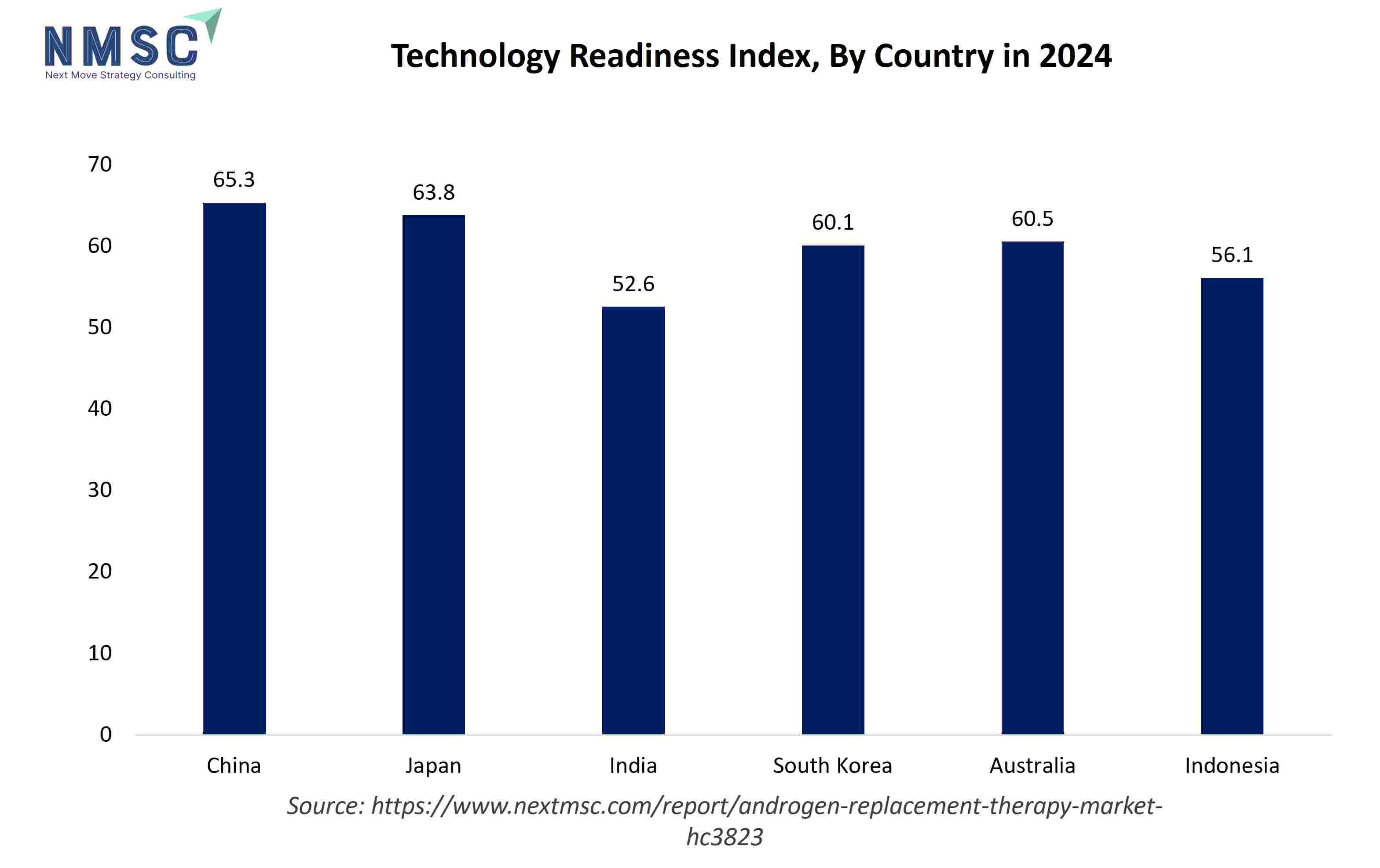
This chart presents the 2024 Technology Readiness Index for selected Asia-Pacific countries, with China (65.3) and Japan (63.8) leading, followed by Australia (60.5), South Korea (60.1), Indonesia (56.1), and India (52.6), reflecting their relative ability to develop and adopt new technologies. In the context of the market, this indicates that countries with higher scores, such as China and Japan, are better equipped to implement advanced healthcare infrastructure, digital health solutions, and streamlined distribution networks, facilitating faster adoption and commercialization of innovative ART treatments. Conversely, nations with lower scores experience slower market growth due to technological and infrastructural limitations affecting therapy delivery and patient access.
What Are the Key Trends in Androgen Replacement Therapy Industry?
How is the Androgen Replacement Therapy Market Adjusting to New Regulatory and Safety Signals?
Regulatory developments since 2024 are increasingly shaping the trajectory of the global androgen replacement therapy market. By actively reassessing product labels and post-market requirements, regulators are influencing how therapies are marketed, adopted, and reimbursed. For instance, in February 2025, the U.S. FDA implemented class-wide labeling updates for testosterone products following reviews of large clinical trials and ambulatory blood-pressure monitoring data. While the agency maintained the “limitation of use” for age-related low testosterone, it required additional blood-pressure warnings and inclusion of trial results in labeling. This regulatory shift is expected to impact prescribing patterns, restrict off-label use, and heighten the need for companies to generate robust safety evidence. Consequently, market players are now prioritizing compliance-driven product positioning, integrating patient monitoring solutions, and emphasizing cardiovascular safety in promotional strategies to safeguard market share and maintain prescriber trust.
How is the Androgen Replacement Therapy Market Reacting to Changing Epidemiology and Diagnostic Practice?
The growing awareness of hypogonadism and its association with aging, obesity, and metabolic disorders is significantly expanding the addressable market for androgen replacement therapy. Post-2024 studies and clinical guidance indicate a broad prevalence range, approximately 40% of men over 45 and nearly 50% of men in their 80s, highlighting a large pool of potential patients. However, variability in diagnostic practices and criteria creates both opportunities and challenges for the market. On one hand, a substantial number of symptomatic but undiagnosed men represent untapped demand, offering growth potential for therapy providers. On the other hand, inconsistent testing and over-prescription risk market inefficiencies and regulatory scrutiny. Companies capitalize on this trend by investing in clinician education, standardized diagnostic tools, and targeted awareness campaigns, ensuring that therapies reach the right patients while reinforcing appropriate, guideline-driven use. By doing so, market players drive sustainable growth while differentiating themselves through evidence-based and patient-centric approache.
What Are the Key Market Drivers, Breakthroughs, and Investment Opportunities that will Shape the Androgen Replacement Therapy Industry in the Next Decade?
The global market is experiencing rapid growth, driven by the increasing prevalence of metabolic disorders and the rising awareness of hypogonadism among aging men. As more men are identified as at risk due to conditions such as obesity, diabetes, and cardiovascular disease, the demand for clinically tailored androgen therapies is expanding. Companies are focusing on developing treatment approaches that address these comorbidities, improving patient outcomes and enhancing therapy adoption. By integrating safety-focused care strategies and personalized treatment plans, pharmaceutical players better meet the needs of an increasingly health-conscious patient population.
At the same time, the market is supported by opportunities in emerging regions where conditions associated with testosterone deficiency are on the rise. Initiatives aimed at increasing awareness among healthcare providers, along with educational programs linking metabolic health to hypogonadism, are encouraging wider diagnosis and treatment. By collaborating with endocrine and primary-care networks and implementing real-world evidence programs, companies strengthen therapy adoption, facilitate reimbursement, and expand their presence in untapped patient populations. Together, these factors are driving androgen replacement therapy market growth, innovation, and long-term potential for replacement therapies.
Growth Drivers:
How is the Rise in Cardiometabolic Disease Driving Growth in the Market?
The global increase in obesity and metabolic disorders is creating a significant expansion in the potential patient base for testosterone replacement therapy. According to WHO data, approximately 2.5 billion adults were overweight, with nearly 890 million classified as obese, many of whom face a higher risk of developing hypogonadism. This rising prevalence of metabolic disease not only increases the number of men who benefit from testosterone therapy but also underscores the need for clinically tailored treatment strategies that address comorbid conditions such as diabetes and cardiovascular risk. For the market, this trend represents a dual opportunity: companies grow by targeting the increasing pool of at-risk patients while differentiating their therapies through safety-focused, integrated care approaches. Pharmaceutical players are encouraged to collaborate with endocrine and primary-care networks, develop educational initiatives linking metabolic health with hypogonadism, and incorporate real-world evidence programs demonstrating improved outcomes, which facilitate adoption and support reimbursement discussions.
How is the Increasing Awareness and Diagnosis of Hypogonadism Expanding the Androgen Replacement Therapy Market?
The rising recognition of hypogonadism as a critical health issue is significantly influencing the market for testosterone replacement therapies. Studies indicate that the condition affects a substantial portion of aging men, with prevalence notably higher among those with comorbidities, such as a 2025 study reporting 30.3% of men with type 2 diabetes diagnosed with hypogonadism, compared to 7.2% in the general population (PubMed). This growing awareness is driving healthcare providers to more actively screen and diagnose at-risk individuals, thereby increasing the adoption of testosterone replacement therapies. As diagnostic practices improve and awareness continues to rise, the market is poised for expansion, creating opportunities for companies to introduce innovative treatments and cater to a broader patient population.
Growth Inhibitors:
How are FDA Labeling Changes Affecting the Growth of the Androgen Replacement Therapy Market?
A major factor restraining the expansion of the androgen replacement therapy market is the FDA-mandated labeling changes for testosterone products, implemented in February 2025. While the TRAVERSE trial showed that testosterone therapy does not significantly increase cardiovascular risk, postmarket ambulatory blood pressure monitoring (ABPM) studies revealed that testosterone use elevates blood pressure. Consequently, the FDA required updated product labeling to include warnings about increased blood pressure. These regulatory measures reduce prescriber confidence and patient acceptance, thereby slowing the adoption of TRT and limiting the market’s growth potential.
How does the Rising Prevalence of Diabetes Create Opportunities for the Androgen Replacement Therapy Market?
A significant opportunity for the androgen replacement therapy (ART) market in India arises from the growing prevalence of conditions linked to testosterone deficiency among aging men. According to the National Programme for Prevention and Control of Cancer, Diabetes, Cardiovascular Diseases & Stroke (NPCDCS), the number of people with diabetes in India is currently around 40.9 million and is projected to increase to 69.9 million by 2025. Since diabetes is a known risk factor for hypogonadism, this rising patient population represents a substantial pool of potential candidates for ART. By targeting this demographic, companies expand the adoption of therapies, improve disease management, and address unmet clinical needs, positioning the market for meaningful growth in the coming years.
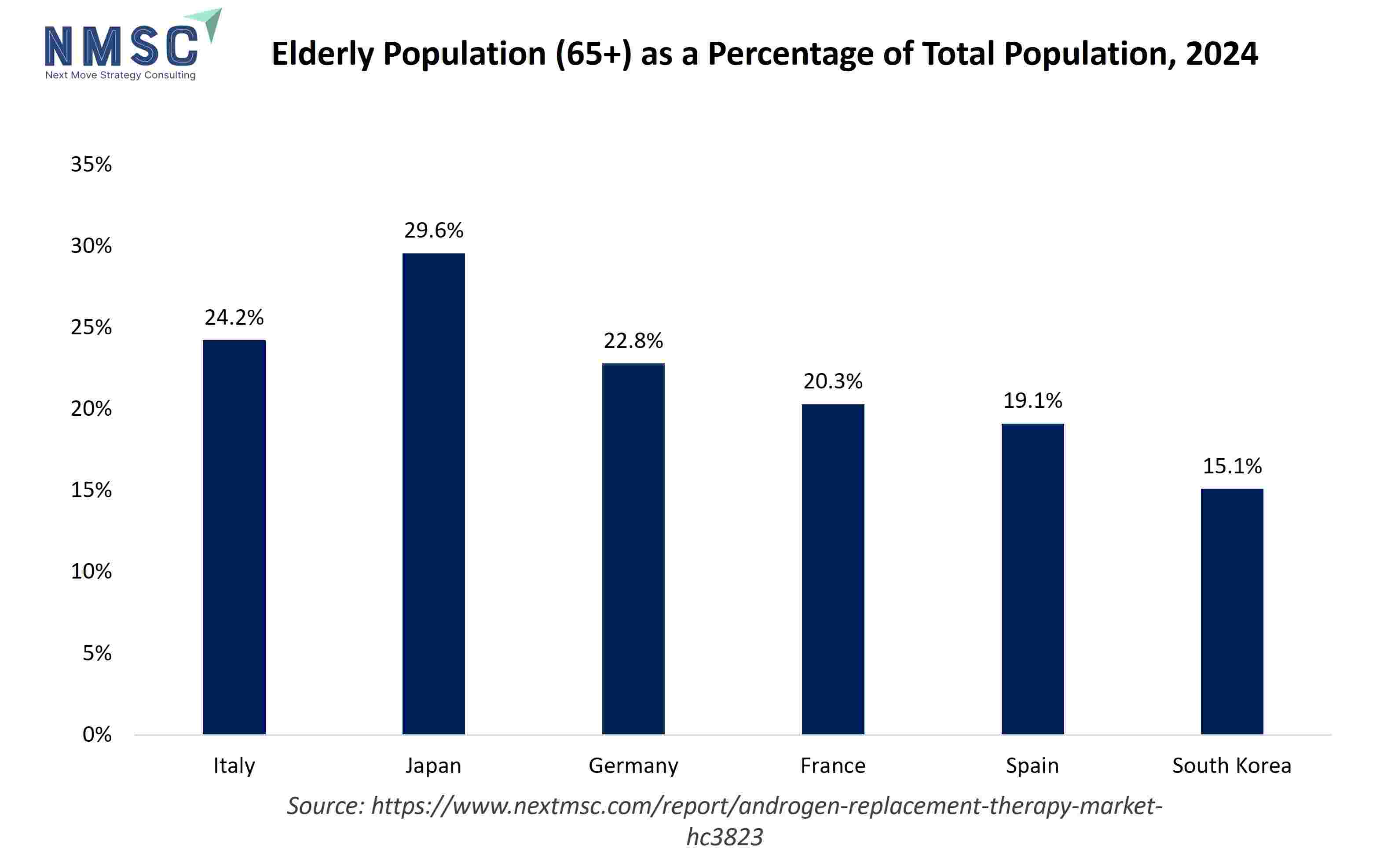
The chart, showing that over 20% of the population in major economies like Italy, Japan, and Germany is aged 65+, demonstrates a powerful demographic tailwind for the androgen replacement therapy market. The primary driver is the strong correlation between advancing age and the onset of late-onset hypogonadism (or age-related low testosterone), significantly expanding the potential patient pool in these affluent, aging nations. This creates a larger addressable market for ART products aimed at alleviating symptoms like low energy, reduced muscle mass, and diminished libido.
How Is the Androgen Replacement Therapy Industry Segmented in this Report, and What are the Key Insights from Segmentation Analysis?
By Product Type Insights
How is the Androgen Replacement Therapy Market Shaped by Vehicle Type?
Based on product type, the market is segmented into testosterone preparations and non-testosterone androgens.
The testosterone preparations segment in the market represents therapies that utilize testosterone, the primary male sex hormone, to treat conditions associated with low androgen levels. This androgen replacement therapy market segment includes various formulations designed to restore or maintain optimal testosterone levels in the body. It is typically subdivided into Injectable Testosterone, which is administered via intramuscular or subcutaneous injections for sustained hormone delivery; transdermal testosterone gels, which involves creams, or patches applied to the skin for steady absorption; and other testosterone forms, which include oral tablets, buccal systems, or novel delivery mechanisms. This segment is a cornerstone of androgen therapy, addressing issues such as testosterone deficiency, hypogonadism, and age-related hormonal decline, and is preferred for its direct supplementation of the body’s primary androgen.
By Distribution Channel Insights
Which Distribution Channel Is Emerging as the Most Flexible in the Autonomous Commercial Vehicle Industry?
Based on distribution channel, the market is segmented into hospital pharmacies, retail pharmacies and others.
The hospital pharmacies segment in the market refers to the distribution of androgen therapies directly through pharmacies located within hospitals and healthcare facilities. These pharmacies serve patients who receive treatment as part of inpatient or outpatient care, under the supervision of physicians or specialists. Hospital pharmacies provide a controlled environment for dispensing medications, ensuring proper dosing, monitoring, and adherence to clinical guidelines. This channel is particularly important for therapies like injectable testosterone, which require administration or supervision within a clinical setting. It also allows healthcare providers to counsel patients on therapy management, side effects, and follow-up care, making it a critical touchpoint in the overall treatment journey.
By End-User Insights
How Is the Androgen Replacement Therapy Market Shaped by End User Segmentation?
Based on end use, the market is segmented into hospitals, clinics and others.
The clinics segment in the androgen replacement therapy market refers to outpatient healthcare facilities that provide specialized or general medical services, including hormone therapy. Clinics offer convenient access for patients seeking diagnosis, prescription, and monitoring of androgen replacement treatments without the need for hospitalization. They are equipped to handle routine consultations, administer certain forms of therapy such as injections, and provide follow-up care to ensure treatment effectiveness and patient safety. Clinics serve a broad patient base, combining personalized care with relatively quick access, making them an important channel for delivering androgen therapies to individuals managing conditions like testosterone deficiency or other hormonal imbalances.
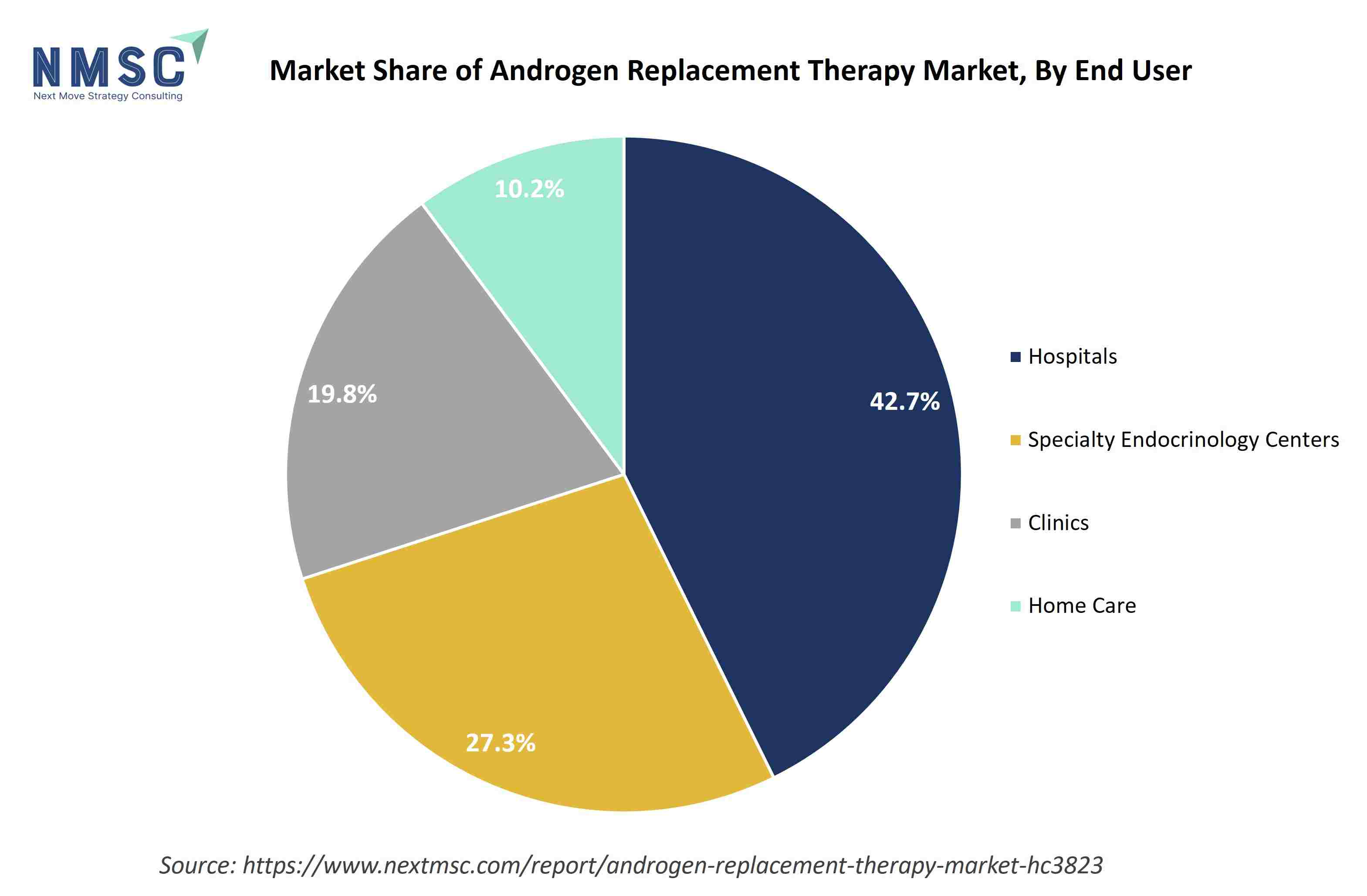
This chart represents the distribution of the androgen replacement therapy industry by end users, showing how the market is divided among different types of healthcare settings. It highlights that hospitals account for the largest share, reflecting their central role in diagnosing, prescribing, and administering therapies under medical supervision. Specialty endocrinology centers serve a significant portion of patients requiring expert hormone management, while clinics provide convenient outpatient care. Home care represents a smaller but growing segment, catering to patients who self-administer therapies under remote medical guidance. Overall, the chart illustrates how the market is accessed and utilized across various healthcare delivery points.
Regional Outlook
The market is geographically studied across North America, Europe, Asia Pacific, Latin America and the Middle East & Africa and each region is further studied across countries.
Androgen Replacement Therapy Market in North America
The North American androgen replacement therapy (ART) market is witnessing robust growth, driven by the increasing prevalence of testosterone deficiency among aging men and rising awareness of male hormonal health. Moreover, innovations in testosterone delivery systems, including long-acting injectables, transdermal gels, and oral formulations, enhance patient adherence and therapy convenience. Additionally, growing healthcare expenditure, proactive screening programs, and insurance coverage support broader therapy adoption. Lifestyle factors such as obesity, metabolic disorders, and sedentary habits further fuel demand. Strong pharmaceutical R&D, coupled with physician awareness initiatives, positions North America as the most advanced and dominant ART market globally.
Androgen Replacement Therapy Market in the United States
The U.S. androgen replacement therapy (ART) market is driven by a rising prevalence of testosterone deficiency among aging men and increasing awareness of male hormonal health. Moreover, technological advancements in testosterone delivery systems, such as long-acting injectables, transdermal gels, and oral formulations, enhance patient adherence. Expanding healthcare expenditure, proactive screening programs, and lifestyle-related factors like obesity and metabolic disorders further boost market growth. Additionally, physician awareness campaigns and insurance coverage for ART encourage broader therapy adoption, positioning the U.S. as the largest and most technologically advanced ART market in North America.
Androgen Replacement Therapy Market in Canada
Canada’s ART Market growth is fueled by the increasing aging male population and rising recognition of hypogonadism symptoms, including fatigue, low libido, and reduced muscle mass. Moreover, government and private health programs supporting male health initiatives promote early diagnosis and therapy adoption. Technological advancements in convenient testosterone formulations, such as long-acting injections and gels, enhance patient compliance. Additionally, strong healthcare infrastructure and preventive care focus encourage physician-led screening, while urbanization and obesity-related lifestyle changes further drive demand for androgen replacement therapies.
Androgen Replacement Therapy Market in Europe
Europe’s ART Market is expanding steadily, supported by a growing aging male population and heightened awareness of testosterone deficiency-related conditions across countries like the U.K., Germany, France, and Spain. Moreover, technological advancements in patient-friendly delivery systems, including gels and long-acting injectables, improve compliance and treatment outcomes. Additionally, government-backed healthcare initiatives, preventive screenings, and public awareness campaigns promote early diagnosis and therapy adoption. Rising lifestyle-related disorders such as obesity, diabetes, and sedentary habits increase market demand. Collaborative R&D efforts and strong healthcare infrastructure position Europe as a key region for hypogonadism treatment adoption and innovation.
Androgen Replacement Therapy Market in the United Kingdom
The U.K. ART Market is driven by a growing aging male population and rising awareness of testosterone deficiency’s health impacts, including cardiovascular and metabolic risks. Moreover, innovations in transdermal gels and injectable formulations improve patient adherence and convenience. National health campaigns and insurance coverage further support therapy adoption. Additionally, lifestyle factors such as sedentary behavior, stress, and obesity-related hormonal decline contribute to increasing demand. Growing research initiatives and clinical trials in testosterone therapies position the U.K. as one of the key ART markets in Europe.
Androgen Replacement Therapy Market in Germany
Germany’s ART Market is expanding due to high awareness of male hormonal health and increasing prevalence of hypogonadism among aging men. Moreover, advanced pharmaceutical research supports the development of novel testosterone formulations with improved safety and efficacy profiles. Additionally, increasing healthcare expenditure and supportive life insurance coverage enhance patient access to ART. Lifestyle-related factors, including rising obesity and metabolic disorders, are further driving therapy adoption. Government initiatives focusing on preventive healthcare and male wellness programs reinforce the market, making Germany one of the leading European countries for male infertility therapy.
Androgen Replacement Therapy Market in France
France’s ART Market growth is supported by rising testosterone deficiency cases and awareness of hypogonadism symptoms among men. Moreover, advancements in patient-friendly delivery systems, including long-acting injectables and gels, improve compliance and expand therapy reach. Government healthcare initiatives promoting preventive care and male health screenings further drive adoption. Additionally, lifestyle changes, such as sedentary behavior and diet-related metabolic disorders, increase the need for hormone replacement therapies. Collaborations between pharmaceutical companies and research institutions encourage development of next-generation androgen therapies, positioning France as a key European market.
Androgen Replacement Therapy Market in Spain
Spain’s ART Market is fueled by a growing aging male population and rising prevalence of low testosterone levels. Moreover, increasing awareness among healthcare professionals and patients regarding hypogonadism’s impact on quality-of-life drives adoption. Innovative formulations, such as transdermal gels and long-acting injectables, enhance treatment convenience. Additionally, lifestyle changes linked to urbanization, obesity, and metabolic disorders contribute to the androgen replacement therapy market share. Government healthcare programs supporting male wellness and preventive screenings further strengthen ART uptake, establishing Spain as a significant market in Southern Europe.
Androgen Replacement Therapy Market in Asia Pacific
The Asia Pacific ART Market is growing rapidly due to increasing awareness of male hormonal health and a rising aging male population in countries like China, Japan, India, South Korea, and Australia. Moreover, government healthcare initiatives, preventive screenings, and male wellness programs support early diagnosis and therapy uptake. Additionally, technological advancements in delivery systems, such as transdermal gels and long-acting injections, improve patient adherence. Lifestyle changes, including urbanization, obesity, and stress-induced metabolic disorders, further drive demand. Expanding healthcare infrastructure, rising disposable incomes, and pharmaceutical R&D collaborations position Asia Pacific as one of the fastest-growing and most promising ART markets globally.
Androgen Replacement Therapy Market in China
China’s ART Market is growing due to a large aging male population and rising awareness of testosterone deficiency-related conditions. Moreover, government initiatives promoting preventive healthcare and male wellness programs support therapy adoption. The increasing prevalence of lifestyle diseases, such as obesity and metabolic syndrome, further fuels demand for androgen replacement therapies. Additionally, advancements in delivery technologies, including long-acting injections and gels, enhance patient compliance. Expanding healthcare infrastructure, rising disposable incomes, and increasing physician awareness contribute to positioning China as the fastest-growing ART market in the Asia-Pacific region.
Androgen Replacement Therapy Market in Japan
Japan’s ART Market is driven by a high proportion of aging males and growing awareness of low testosterone’s impact on physical and mental health. Moreover, innovations in safe, long-acting testosterone therapies improve patient adherence and expand treatment accessibility. Additionally, government-backed healthcare initiatives, preventive screenings, and public awareness campaigns support therapy uptake. Rising prevalence of obesity, stress, and lifestyle-related metabolic disorders further increases demand for androgen replacement therapies. A strong pharmaceutical R&D ecosystem ensures continuous introduction of advanced formulations, making Japan a key contributor to the Asia-Pacific ART market.
Androgen Replacement Therapy Market in India
India’s ART Market is expanding due to increasing cases of male hypogonadism and rising awareness of testosterone deficiency symptoms. Moreover, government initiatives such as “Make in India” and healthcare programs promoting male wellness support therapy adoption. Additionally, growing urbanization, rising disposable income, and lifestyle changes, including obesity and stress-related hormonal decline, drive demand. Technological advancements in delivery systems, such as transdermal gels and long-acting injections, improve patient compliance. Collaborations between pharmaceutical companies and healthcare institutions further enhance access, positioning India as an emerging hub for androgen replacement therapies in the Asia-Pacific region.
Androgen Replacement Therapy Market in South Korea
South Korea’s ART Market is driven by a growing aging male population and increasing prevalence of low testosterone due to lifestyle-related disorders. Moreover, government support for male health and preventive screenings encourages early diagnosis and therapy adoption. Additionally, innovative delivery systems, including long-acting injectables and transdermal gels, enhance patient adherence. Rising awareness among physicians and consumers about the benefits of hormone replacement therapies further supports growth. Strong healthcare infrastructure, coupled with increasing urbanization and lifestyle changes, positions South Korea as a key market for androgen replacement therapies in Asia-Pacific.
Androgen Replacement Therapy Market in Australia
Australia’s ART Market growth is fueled by a rising aging male population and growing awareness of testosterone deficiency and its impact on quality of life. Moreover, government-backed male health programs and preventive screenings support early diagnosis and therapy uptake. Additionally, lifestyle-related conditions, such as obesity, metabolic syndrome, and stress-induced hormonal decline, further drive demand. Technological innovations in long-acting injectables, gels, and oral formulations enhance treatment adherence. The country’s robust healthcare infrastructure, physician awareness programs, and rising disposable incomes position Australia as a stable and growing market for androgen replacement therapies in the Asia-Pacific region.
Androgen Replacement Therapy Market in Latin America
The Latin American ART Market is growing due to increasing awareness of male hormonal health and rising prevalence of hypogonadism in aging populations across Brazil, Mexico, and Argentina. Moreover, advancements in testosterone delivery systems, such as gels and long-acting injections, enhance patient compliance. Additionally, urbanization, lifestyle-related diseases, and obesity drive demand. Government initiatives promoting preventive healthcare and collaborations with local pharmaceutical companies further expand market adoption. Increasing disposable incomes and growing access to healthcare facilities position Latin America as an emerging regional hub for androgen replacement therapy.
Androgen Replacement Therapy Market in the Middle East & Africa
The Middle East & Africa ART Market is driven by rising awareness of male hormonal health and increasing prevalence of testosterone deficiency among aging men. Moreover, growing adoption of modern healthcare practices, preventive screenings, and lifestyle awareness programs support therapy uptake. Additionally, innovations in long-acting injectable and transdermal delivery systems improve patient compliance. Urbanization, rising obesity, and metabolic disorders further increase demand. Collaborations between regional pharmaceutical manufacturers and international players, coupled with government initiatives promoting male wellness, position the Middle East & Africa as a promising market for androgen replacement therapies.
Competitive Landscape
Who are the Leading Companies in the Androgen Replacement Therapy Market and How are they Competing?
The global androgen replacement therapy (ART) market competition is driven by a combination of established pharmaceutical giants and agile, innovation-focused specialists. Companies such as Dr. Reddy's Laboratories, Cipla, Sun Pharmaceutical Industries, Bayer, and Lupin dominate the market through their extensive product portfolios, global distribution networks, and strong brand recognition. These players focus on delivering a wide range of ART formulations, ensuring high-quality manufacturing standards, regulatory compliance, and broad accessibility. Their emphasis on clinical efficacy, safety, and consistent patient outcomes helps them maintain leadership in a market that is increasingly driven by the demand for effective hormone replacement solutions.
Meanwhile, specialized and niche innovators like Teva Pharmaceutical, Pfizer, Eli Lilly and Company, Endo Pharmaceuticals, and Tolmar focus on targeted therapies, novel formulations, and patient-centric approaches. These companies emphasize research-driven innovation, flexible treatment options, and advanced delivery methods to address specific patient needs. Their agility in adopting new technologies, exploring personalized therapy solutions, and responding to emerging clinical androgen replacement therapy market trends creates competitive pressure on established players, driving the market toward more innovative, patient-focused, and outcomes-driven treatment solutions.
Market Dominated by Androgen Replacement Therapy Giants and Specialists
The androgen replacement therapy market is increasingly shaped by a mix of established pharmaceutical leaders and specialized innovators. Companies like Dr. Reddy's Laboratories, Cipla, Sun Pharmaceutical Industries, Bayer, and Lupin dominate the landscape by offering comprehensive therapy solutions that include a wide range of formulations, standardized treatment protocols, and extensive distribution networks. These players focus on ensuring consistent efficacy, safety, and patient support programs to deliver reliable outcomes. Meanwhile, specialized companies like Teva Pharmaceutical, Pfizer, Eli Lilly and Company, Endo Pharmaceuticals, and Tolmar are introducing targeted, technology-enabled, and patient-centric solutions such as novel delivery methods, personalized dosing, and digital adherence tools. Together, these players are driving innovation, creating competitive differentiation, and fueling the growth of the ART market by addressing evolving patient needs and the increasing focus on effective, personalized hormone replacement therapies.
List of Key Androgen Replacement Therapy Companies
-
Dr. Reddy's Laboratories
-
Sun Pharmaceutical Industries
-
Bayer
-
Teva Pharmaceutical
-
Pfizer
-
Eli Lilly and Company
-
Endo Pharmaceuticals
-
Tolmar
What Are the Latest Key Industry Developments?
Pharmaceutical companies are fueling the expansion of the market by increasing access to advanced treatments, launching innovative formulations, and prioritizing patient-centric care. Established leaders like Dr. Reddy’s Laboratories, Cipla, Sun Pharmaceutical Industries, Bayer, and Lupin utilize their extensive distribution networks, regulatory expertise, and broad therapy portfolios to ensure consistent quality and reliability. Meanwhile, specialized innovators such as Teva Pharmaceutical, Pfizer, Eli Lilly, Endo Pharmaceuticals, and Tolmar focus on novel delivery methods, personalized dosing, and technology-enabled solutions that enhance treatment adherence and outcomes. Through strategic partnerships, product launches, and ongoing research, these companies are not only broadening market availability but also shaping patient expectations and driving adoption, fostering a more dynamic and competitive androgen replacement therapy market.
What Are the Key Factors Influencing Investment Analysis & Opportunities in the Market?
Investment in the androgen replacement therapy market is increasingly driven by the rising demand for personalized and effective hormone replacement solutions. Funding trends indicate that investors are drawn to companies developing innovative formulations, novel delivery methods, and technology-enabled patient support tools that improve adherence and outcomes. Valuations are influenced by a company’s ability to expand its product portfolio, scale operations globally, and introduce value-added services such as digital healthcare, patient education, and tailored treatment plans. Investors are particularly interested in businesses that combine clinical efficacy, safety, and patient-centric approaches, reflecting the growing focus on individualized healthcare solutions.
Geographically, regions with higher awareness of men’s health and access to advanced healthcare infrastructure are emerging as key investment hotspots, offering strong growth potential and higher adoption of ART therapies. Startups and specialized pharmaceutical innovators are attracting attention for their agility, research-driven innovations, and targeted therapies, creating opportunities for strategic partnerships, acquisitions, and portfolio diversification. Together, these factors are fostering a dynamic and competitive investment landscape in the global market.
Key Benefits for Stakeholders:
Next Move Strategy Consulting (NMSC) presents a comprehensive analysis of the androgen replacement therapy market, covering historical trends from 2020 through 2024 and offering detailed forecasts through 2030. Our study examines the market at global, regional, and country levels, providing quantitative projections and insights into key growth drivers, challenges, and investment opportunities across all major market segments.
Report Scope
|
Parameters |
Details |
|
Market Size in 2025 |
USD 7.99 Billion |
|
Revenue Forecast in 2030 |
USD 11.24 Billion |
|
Growth Rate |
CAGR of 7.06% from 2025 to 2030 |
|
Analysis Period |
2024–2030 |
|
Base Year Considered |
2024 |
|
Forecast Period |
2025–2030 |
|
Market Size Estimation |
Billion (USD) |
|
Growth Factors |
|
|
Countries Covered |
33 |
|
Companies Profiled |
15 |
|
Market Share |
Available for 10 companies |
|
Customization Scope |
Free customization (equivalent up to 80 analyst-working hours) after purchase. Addition or alteration to country, regional & segment scope. |
|
Pricing and Purchase Options |
Avail customized purchase options to meet your exact research needs. |
|
Approach |
In-depth primary and secondary research; proprietary databases; rigorous quality control and validation measures. |
|
Analytical Tools |
Porter's Five Forces, SWOT, value chain, and Harvey ball analysis to assess competitive intensity, stakeholder roles, and relative impact of key factors. |
Key Market Segments
By Product Type
-
Testosterone Preparations
-
Injectable Testosterone
-
Transdermal Testosterone
-
Others
-
-
Non-Testosterone Androgens
-
Dihydrotestosterone (DHT)
-
Synthetic Androgens
-
By Route of Administration
-
Oral
-
Implant
-
Oromucosal
-
Others
By Distribution Channel
-
Hospital Pharmacies
-
Retail Pharmacies
-
Online Pharmacies
By Application
-
Male Hypogonadism
-
Primary Hypogonadism
-
Secondary Hypogonadism
-
-
Age-related Testosterone Deficiency
-
Post-surgical Androgen Deficiency
-
Gender Dysphoria / Female-to-Male Transition
-
Other Clinical Uses
By End User
-
Hospitals
-
Specialty Endocrinology Centers
-
Clinics
-
Home Care
Geographical Breakdown
-
North America: U.S., Canada, and Mexico.
-
Europe: U.K., Germany, France, Italy, Spain, Sweden, Denmark, Finland, Netherlands, and rest of Europe.
-
Asia Pacific: China, India, Japan, South Korea, Taiwan, Indonesia, Vietnam, Australia, Philippines, Malaysia and rest of APAC.
-
Middle East & Africa (MEA): Saudi Arabia, UAE, Egypt, Israel, Turkey, Nigeria, South Africa, and rest of MEA.
-
Latin America: Brazil, Argentina, Chile, Colombia, and rest of LATAM.
Conclusion & Recommendations
Our report equips stakeholders, industry participants, investors, policy-makers, and consultants with actionable intelligence to capitalize on androgen replacement therapy Market transformative potential. By combining robust data-driven analysis with strategic frameworks, NMSC’s Androgen Replacement Therapy Market Report serves as an indispensable resource for navigating the evolving landscape.


About the Author
 Mayurima Roy
— Mayurima Roy is Research Analyst at Next Move Strategy Consulting, where she has spent 4 years working across the firm's full industry coverage rather than a single fixed vertical. Her work centers on structured research, ongoing trend tracking, competitive assessment, and insight-led content development, translating complex market data into clear, decision-ready narratives that support informed client decision-making across diverse global industries, market sectors, and world regions every day.
Mayurima Roy
— Mayurima Roy is Research Analyst at Next Move Strategy Consulting, where she has spent 4 years working across the firm's full industry coverage rather than a single fixed vertical. Her work centers on structured research, ongoing trend tracking, competitive assessment, and insight-led content development, translating complex market data into clear, decision-ready narratives that support informed client decision-making across diverse global industries, market sectors, and world regions every day.
About the Reviewer
 Supradip Baul
— Supradip Baul is an accomplished business consultant and strategist with over a decade of rich experience in market intelligence, strategy, technology, and business transformation. His work has included rigorous qualitative and quantitative analysis across multiple industries, helping clients shape investment decisions and long-term roadmaps. Earlier in his career, he was associated with Gartner, where he contributed to industry-leading reports and market share analyses. He has worked with leading global companies and holds an MBA with a dual specialization in Marketing and Finance.
Supradip Baul
— Supradip Baul is an accomplished business consultant and strategist with over a decade of rich experience in market intelligence, strategy, technology, and business transformation. His work has included rigorous qualitative and quantitative analysis across multiple industries, helping clients shape investment decisions and long-term roadmaps. Earlier in his career, he was associated with Gartner, where he contributed to industry-leading reports and market share analyses. He has worked with leading global companies and holds an MBA with a dual specialization in Marketing and Finance.
At Next Move Strategy Consulting, we understand that insightful market research is the cornerstone of successful business decisions. That's why we employ a robust and multifaceted approach, combining various methodologies to deliver the most accurate and actionable data for our clients.

Research Landscape
We navigate the world of research with two primary approaches:
Qualitative Approach
Our qualitative research methodologies involve immersive techniques such as in-depth interviews, focus groups, and observational studies. By engaging directly with individuals and stakeholders, we uncover valuable insights that quantitative data alone may overlook.

Quantitative Research
In tandem with qualitative methodologies, NMSC leverages the power of Quantitative Research to provide a robust foundation of numerical insights. Through systematic data collection and analysis, we quantify patterns, preferences, and market trends, offering a comprehensive view of the business landscape.
Our quantitative research approach employs diverse tools, including surveys, experiments, and statistical modelling. These methodologies enable us to gather data from a large and representative sample, ensuring the statistical significance of our findings. By employing structured questionnaires and standardized data collection methods, we guarantee the reliability and validity of the information we present to our clients.
Quantitative research is particularly effective in measuring the prevalence of trends, assessing market size, and gauging the impact of various factors on consumer behavior. The numerical precision attained through this approach equips our clients with actionable insights, facilitating data-driven decision-making and strategy formulation.


Our Specialized Toolbox for Industry-Specific Market Research
We deploy a specialized arsenal of techniques tailored to meet your unique requirements. Here's a glimpse into our comprehensive toolbox:

Information Procurement
The stage entails acquiring market data or relevant information through various sources and methodologies.


Market Research Approach
We utilize both top-down and bottom-up approaches in market research analysis to achieve a comprehensive understanding of the market dynamics, leveraging the broad perspective of industry trends and macroeconomic factors alongside detailed insights from specific segments and individual companies.

Porters Five Forces Analysis
We conduct Porter's Five Forces analysis to evaluate the competitive landscape of an industry, providing us with insights into factors that affect profitability and strategic positioning.

SWOT Analysis

Forecasting
We utilize a forecasting model to predict future consumption by considering parameters like population, economics, regulations, market competition, drivers, constraints, technology, and pricing. We also employ statistical techniques such as multilinear regression, exponential smoothing, moving average, ARIMA, and Monte Carlo simulations for accurate predictions. In econometric forecasting, we analyzed short-term and long-term event impacts, attributing values based on regulatory frameworks, economic factors, and market events.





 Speak to Our Analyst