Peripheral Artery Disease (PAD) Market Size, Share, Growth & Forecast by Product Type (Balloon Catheters, Stents and Scaffolds, Atherectomy Devices, Thrombectomy Devices, Embolic Protection Devices, Guidewires and Catheters, Access and Closure Devices, Imaging Guidance, Surgical Devices), Anatomy (Aortoiliac, Femoropopliteal, Infrapopliteal, Multilevel), Lesion Type, Construct, Care Setting, and Sales Channel — Global Analysis 2025–2035
Industry: Healthcare | Publishing Date: July 8, 2026 | Last Updated: July 8, 2026 | No of Pages: N/A | No. of Tables: N/A | No. of Figures: N/A | Format: PDF | Report Code: HC377
What Is the Peripheral Artery Disease (PAD) Market Size?
The global Peripheral Artery Disease (PAD) Market was valued at USD 4.6 billion in 2025 and is expected to reach USD 4.9 billion in 2026. Rising global prevalence of peripheral artery disease, driven by aging demographics, diabetes, and sedentary lifestyles, alongside increasing adoption of advanced endovascular technologies, is projected to propel the market to USD 8.9 billion by 2035, advancing at a CAGR of 6.8% from 2026 to 2035. Key growth drivers include expanding drug-coated balloon and drug-eluting stent penetration, the shift of peripheral vascular procedures to outpatient and ambulatory settings, growing clinical adoption of intravascular lithotripsy for calcified lesions, and accelerating market expansion across Asia-Pacific and Latin America.
|
Parameters |
Details |
|
Market Size in 2025 |
USD 4.6 Billion |
|
Market Size in 2026 |
USD 4.9 Billion |
|
Revenue Forecast in 2035 |
USD 8.9 Billion |
|
Growth Rate |
CAGR of 6.8% from 2026 to 2035 |
|
Analysis Period |
2025–2035 |
|
Base Year Considered |
2025 |
|
Forecast Period |
2026–2035 |
|
Market Size Estimation |
Billion USD |
|
Companies Profiled |
20 |
|
Countries Covered |
33 |
|
Market Share |
Top 10 |
Peripheral Artery Disease (PAD) Market Overview
What Is the Peripheral Artery Disease (PAD) Market?
The Peripheral Artery Disease (PAD) Market encompasses the global commercial ecosystem for medical devices and surgical instruments used in the diagnosis, treatment, and management of peripheral artery disease a systemic circulatory condition characterized by atherosclerotic narrowing or occlusion of the peripheral arteries, predominantly in the lower extremities. The market includes endovascular intervention devices such as balloon catheters, stents and scaffolds, atherectomy systems, thrombectomy platforms, embolic protection devices, guidewires, access devices, and imaging guidance tools, as well as surgical devices including bypass grafts, vascular patches, and sutures.
How Has the Peripheral Artery Disease (PAD) Market Evolved?
The Peripheral Artery Disease (PAD) Market has progressed through distinct phases of technological evolution. The first phase was characterized by conventional balloon angioplasty and bare metal stent deployment. The second phase introduced drug-coated balloons and drug-eluting stent platforms, delivering antiproliferative agents locally to suppress neointimal hyperplasia. NMSC's analysis indicates that the current phase is defined by precision-based intervention incorporating intravascular imaging guidance, intravascular lithotripsy for calcium management, bioresorbable scaffolding technology, and emerging artificial intelligence-assisted procedural planning fundamentally elevating the complexity and commercial value of each peripheral intervention.
How Do Regulations Influence the Peripheral Artery Disease (PAD) Market?
Regulatory frameworks are a foundational structural force shaping the Peripheral Artery Disease (PAD) Market. In the United States, the FDA's Center for Devices and Radiological Health (CDRH) governs device approval via 510(k) clearance and Premarket Approval (PMA) pathways. The EU Medical Devices Regulation (MDR 2017/745), which replaced the legacy Medical Device Directive, has raised clinical evidence requirements for peripheral vascular devices, extending timelines and increasing regulatory investment burdens for manufacturers. Our assessment indicates that post-market surveillance obligations, particularly related to paclitaxel-based devices, have also intensified globally, requiring manufacturers to maintain robust clinical registries and outcome tracking programs.
How Is Technology Adoption Expanding Across the Peripheral Artery Disease (PAD) Market?
Technology adoption across the Peripheral Artery Disease (PAD) Market is accelerating, driven by advances in materials science, drug delivery, and digital imaging. Single-use endovascular platforms, robotic-assisted catheter navigation, optical coherence tomography (OCT) guidance, and AI-enabled lesion characterization tools are entering clinical practice. Based on our market evaluation, we observed that ambulatory procedure protocols enabled by low-profile, patient-friendly devices are increasingly validating outpatient endovascular care as a safe alternative to traditional inpatient intervention. This trend is reducing per-procedure cost while expanding the total addressable patient population served by peripheral vascular device manufacturers globally.
|
Key Takeaways |
|
By product type, Stents and Scaffolds held the largest share of the Peripheral Artery Disease (PAD) Market at USD 1.1 billion in 2025, driven by the widespread clinical use of nitinol self-expanding stents in femoropopliteal interventions. Atherectomy Devices represent the fastest-growing sub-segment, projected to advance from USD 0.5 billion in 2025 to USD 1.1 billion by 2035 at a CAGR of 9.2%, fueled by rising adoption of orbital and laser atherectomy systems for calcified and complex lesions. |
|
By anatomy, Femoropopliteal led the Peripheral Artery Disease (PAD) Market at USD 2.0 billion in 2025, representing the largest disease burden and intervention volume globally. Infrapopliteal is the fastest-growing anatomy at a CAGR of 9.4% from 2026 to 2035, driven by rising critical limb-threatening ischemia (CLTI) prevalence, improved below-the-knee device portfolios, and expanding reimbursement for infrapopliteal endovascular procedures. |
|
By lesion type, De Novo lesions dominated the Peripheral Artery Disease (PAD) Market with USD 2.3 billion in 2025. Calcified lesions are the fastest-growing lesion category at a CAGR of 10.7% from 2026 to 2035, driven by the widespread adoption of intravascular lithotripsy (IVL) and specialized atherectomy technologies designed for calcium-heavy arterial stenoses. |
|
By construct, Nitinol-based constructs dominated the Peripheral Artery Disease (PAD) Market at USD 1.5 billion in 2025, reflecting their ubiquitous use in self-expanding stents for the superficial femoral artery (SFA). Bioresorbable constructs are the fastest-growing category at a CAGR of 12.9%, representing next-generation vascular scaffolding technology advancing through clinical validation stages. |
|
By care setting, Hospital Inpatient dominated the Peripheral Artery Disease (PAD) Market at USD 2.4 billion in 2025, reflecting the historically procedure-intensive nature of complex peripheral vascular interventions. Ambulatory Surgery Centers are the fastest-growing care setting at a CAGR of 9.8% from 2026 to 2035, driven by cost-containment policies and a shift toward outpatient endovascular procedures in the United States and Western Europe. |
|
By sales channel, Direct Sales dominated the Peripheral Artery Disease (PAD) Market at USD 2.8 billion in 2025, underpinned by strong enterprise relationships between major device manufacturers and large hospital systems. The OEM channel is the fastest-growing at a CAGR of 10.7%, as platform integration of PAD devices with imaging and navigation systems accelerates. |
|
North America held the largest regional share of the Peripheral Artery Disease (PAD) Market at USD 1.8 billion in 2025, projected to reach USD 3.2 billion by 2035 at a CAGR of 6.6%, anchored by high PAD prevalence, advanced endovascular infrastructure, and strong reimbursement for peripheral intervention procedures across the United States. |
|
Asia-Pacific is the fastest-growing major region in the Peripheral Artery Disease (PAD) Market at a CAGR of 9.3% from 2026 to 2035, advancing from USD 0.9 billion in 2025 to USD 2.0 billion by 2035, driven by rapidly expanding healthcare infrastructure in China, India, and Southeast Asia and rising PAD disease burden linked to surging diabetes and hypertension prevalence. |
|
The United States is the single largest country market in the Peripheral Artery Disease (PAD) Market, representing over 75% of North American revenue in 2025, underpinned by the world's highest concentration of PAD device manufacturers, advanced catheterization laboratory networks, and robust Centers for Medicare and Medicaid Services (CMS) reimbursement frameworks. |
|
China is the fastest-growing major country market in the Peripheral Artery Disease (PAD) Market within Asia-Pacific, propelled by government healthcare investment under the Healthy China 2030 initiative, rapid expansion of endovascular catheterization laboratory capacity in tier-one and tier-two cities, and growing adoption of international and domestic peripheral intervention devices. |
Key Emerging Trends in the Peripheral Artery Disease (PAD) Market
How Is the Shift Toward Outpatient Peripheral Intervention Transforming the Peripheral Artery Disease (PAD) Market?
The migration of peripheral artery disease procedures from hospital inpatient settings to ambulatory surgery centers (ASCs) and office-based laboratories (OBLs) is one of the most consequential structural shifts in the Peripheral Artery Disease (PAD) Market. Based on our research, we found that CMS reimbursement reforms in the United States have progressively expanded coverage for outpatient peripheral interventions, creating favorable economics for site-of-care migration. Device manufacturers including Medtronic and Boston Scientific are actively designing low-profile, procedure-efficient endovascular platforms specifically optimized for ASC and OBL workflow requirements, unlocking significant incremental revenue opportunities in ambulatory peripheral vascular care.
How Is Intravascular Lithotripsy Reshaping Treatment Paradigms in the Peripheral Artery Disease (PAD) Market?
Intravascular lithotripsy (IVL), originally developed for coronary calcification, has rapidly entered the Peripheral Artery Disease (PAD) Market as a transformative modality for treating heavily calcified peripheral lesions that were previously resistant to conventional balloon dilation. Through our market assessment, we observed that Shockwave Medical's IVL technology, now part of Johnson and Johnson MedTech, has demonstrated strong clinical evidence for calcium disruption without vessel barotrauma. The adoption of IVL is accelerating the Calcified lesion segment at a CAGR of 10.7% from 2026 to 2035, creating a structural demand uplift for IVL devices, specialized balloons, and complementary atherectomy tools positioned for complex plaque modification.
What Role Is Bioresorbable Scaffold Technology Playing in the Evolution of the Peripheral Artery Disease (PAD) Market?
Bioresorbable scaffolds represent the next frontier of innovation in the Peripheral Artery Disease (PAD) Market, providing temporary vessel support that dissolves over 12 to 24 months, eliminating the late-stage complications associated with permanent metallic implants including stent fracture and chronic inflammatory response. Our findings suggest that Abbott's Esprit BTK bioresorbable scaffold represents the most advanced clinical program targeting below-the-knee arteries, with 24-month outcomes data supporting regulatory progression. As clinical evidence matures and reimbursement pathways develop, bioresorbable constructs are projected to become a standard-of-care component of complex peripheral intervention, particularly for infrapopliteal anatomy.
How Is Artificial Intelligence Integration Advancing Procedural Outcomes in the Peripheral Artery Disease (PAD) Market?
Artificial intelligence and machine learning tools are emerging as procedural enablers in the Peripheral Artery Disease (PAD) Market, transforming how interventionalists approach complex lesion navigation, vessel sizing, and treatment planning. AI-guided wire crossing assistance for chronic total occlusions (CTOs), automated vessel measurement from IVUS pullback data, and machine learning-based lesion classification systems are entering early commercial use. NMSC's analysis indicates that Terumo Corporation's co-development initiative for AI-guided peripheral guidewire navigation represents a leading commercial program in this space. These technologies are expected to reduce procedural time, improve first-pass success rates, and expand the population of patients safely treated through endovascular-first strategies.
ECOSYSTEM ANALYSIS OF THE PERIPHERAL ARTERY DISEASE MARKET
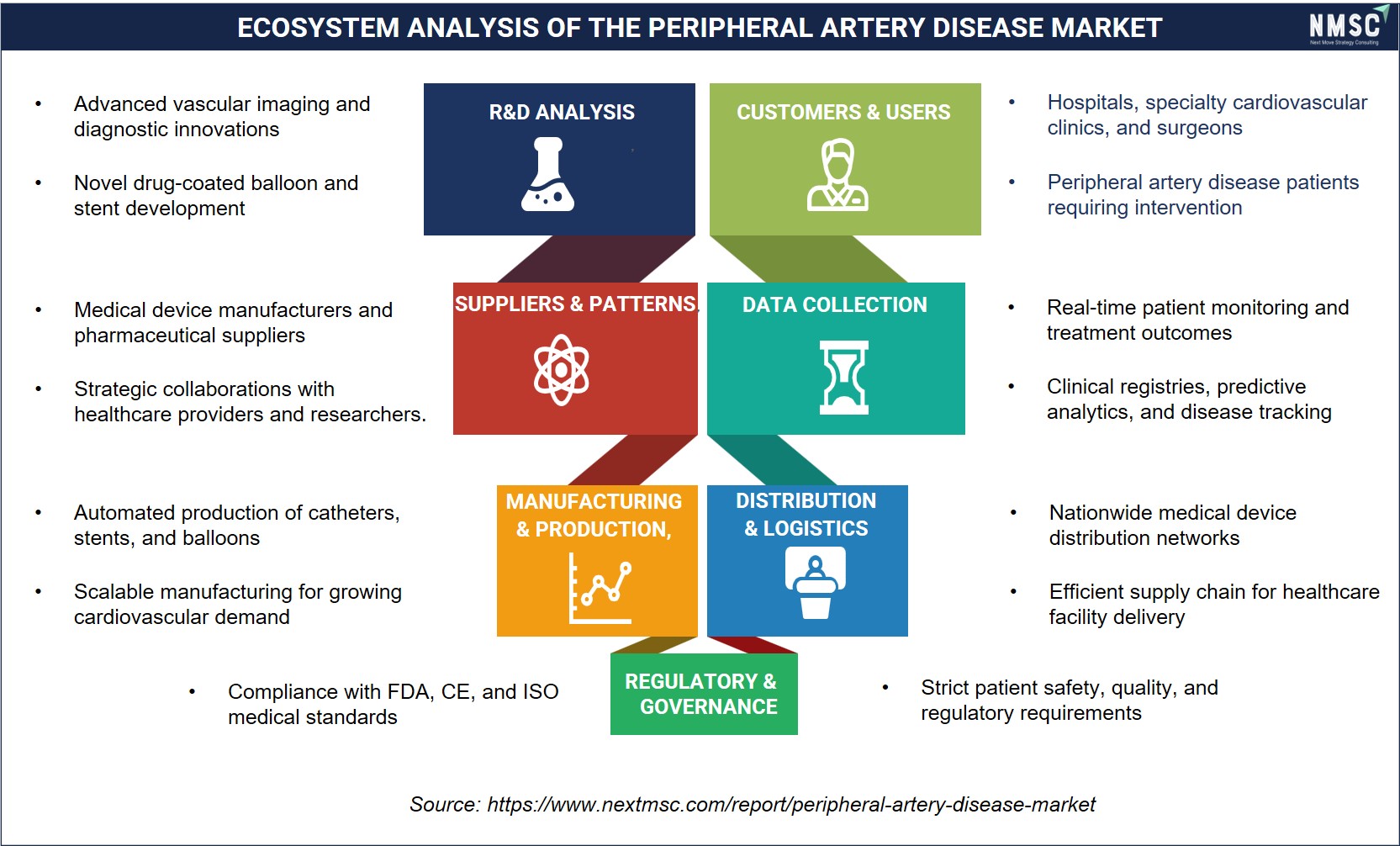
The Peripheral Artery Disease (PAD) market ecosystem comprises a collaborative network of stakeholders involved in the development, production, distribution, and adoption of PAD therapies and devices. Research and development activities drive innovation in diagnostic and treatment technologies, while suppliers provide essential raw materials and components. Manufacturers transform these inputs into market-ready products, supported by efficient distribution and logistics networks. Data collection and clinical evidence generation help validate treatment outcomes, while regulatory bodies ensure safety and compliance. End users, including hospitals, cardiovascular clinics, surgeons, and PAD patients, drive demand and influence ongoing advancements in the market.
What Are the Key Market Drivers, Breakthroughs, and Investment Opportunities that Will Shape the Peripheral Artery Disease (PAD) Market in the Next Decade?
|
Drivers / Trends / Restraints |
(+/−) % Impact on CAGR Forecast |
Geographic Relevance |
Impact Timeline |
|
Rising Global PAD Prevalence Linked to Diabetes and Aging |
+1.8% |
Global (led by North America, Europe, APAC) |
2025–2035 |
|
Adoption of Drug-Coated Balloon and Drug-Eluting Stent Technologies |
+1.4% |
North America, Europe, Japan |
2025–2032 |
|
Expansion of Office-Based Labs and Ambulatory Surgery Centers |
+1.1% |
North America, Western Europe |
2026–2035 |
|
Increasing Clinical Adoption of Intravascular Lithotripsy (IVL) |
+0.9% |
Global |
2025–2030 |
|
Bioresorbable Scaffold Development and Regulatory Progression |
+0.7% |
Europe, North America, Japan |
2027–2035 |
|
Growth of AI-Guided Imaging and Procedural Planning Tools |
+0.6% |
North America, Europe, APAC |
2026–2035 |
|
Paclitaxel Safety Concerns and Regulatory Scrutiny |
−0.8% |
North America, Europe |
2025–2028 |
|
High Cost of Advanced Endovascular Devices |
−0.6% |
Emerging markets, SMB healthcare systems |
Ongoing |
|
Shortage of Trained Endovascular Interventionalists |
−0.5% |
MEA, LATAM, parts of APAC |
Ongoing |
|
Expansion into Emerging Markets (India, Brazil, SEA) |
+1.2% |
APAC, MEA, LATAM |
2026–2035 |
What Are the Growth Drivers of the Peripheral Artery Disease (PAD) Market?
How Is the Global Rise in Peripheral Artery Disease Prevalence Driving Demand Across the Peripheral Artery Disease (PAD) Market?
Peripheral artery disease affects an estimated 200 million individuals globally, according to data published by the World Health Organization (WHO). The International Diabetes Federation (IDF) reports that over 537 million adults live with diabetes worldwide, a primary risk factor for PAD, with projections indicating this number will exceed 643 million by 2030. NMSC's analysis indicates that this expanding disease burden is generating a structurally growing patient pool requiring endovascular and surgical PAD treatment across all geographies. The intersection of aging demographics, rising metabolic syndrome prevalence, and improving PAD diagnostic rates is directly sustaining long-term demand growth across the Peripheral Artery Disease (PAD) Market.
How Is the Clinical Adoption of Advanced Drug-Delivery Technologies Accelerating Growth in the Peripheral Artery Disease (PAD) Market?
The broad clinical adoption of drug-coated balloons and drug-eluting stents has fundamentally elevated the revenue per procedure in the Peripheral Artery Disease (PAD) Market compared to conventional balloon angioplasty. From our research, we found that the Society for Cardiovascular Angiography and Interventions (SCAI) and the Society for Vascular Surgery (SVS) have published updated clinical guidelines supporting DCB and DES use in femoropopliteal interventions based on landmark randomized controlled trial data. The growing body of real-world registry evidence from programs such as the Vascular Quality Initiative (VQI) is further reinforcing physician confidence in drug-delivery device utilization across a widening range of lesion complexity and anatomy classifications.
How Is the Expansion of Office-Based Laboratories Creating New Revenue Opportunities in the Peripheral Artery Disease (PAD) Market?
The rapid proliferation of office-based laboratories (OBLs) for peripheral vascular intervention is generating a structurally new and commercially significant care setting segment within the Peripheral Artery Disease (PAD) Market. According to CMS billing data analysis, OBL peripheral intervention volumes have grown substantially over the past five years as reimbursement policies support physician-owned facility models. Our findings suggest that OBLs create a distinct purchasing profile prioritizing compact, lower-cost, and high-efficiency device platforms which is influencing product development roadmaps at Medtronic, Boston Scientific, and regional device manufacturers seeking to capture this fast-growing channel.
What Are the Growth Inhibitors of the Peripheral Artery Disease (PAD) Market?
How Are Paclitaxel Safety Concerns and Regulatory Scrutiny Constraining the Peripheral Artery Disease (PAD) Market?
Paclitaxel-based device safety concerns, which emerged following a 2018 meta-analysis published in the Journal of the American Heart Association and subsequent FDA safety communications, remain a structural headwind for the DCB and DES segments of the Peripheral Artery Disease (PAD) Market. Although subsequent larger analyses and long-term randomized trial data have largely refuted the mortality signal, physician confidence in the paclitaxel category has not fully recovered in all markets. The FDA's Device Updates and Safety Communications relating to paclitaxel-coated devices continue to inform clinical practice guidelines and physician prescribing behavior, particularly in community hospital and primary care endovascular settings globally.
How Does the High Cost of Advanced Endovascular Technologies Restrict Adoption in Emerging Peripheral Artery Disease (PAD) Markets?
The premium pricing of advanced endovascular devices including drug-coated balloons, drug-eluting stents, atherectomy systems, and intravascular lithotripsy platforms represents a significant adoption barrier in cost-sensitive healthcare systems across Southeast Asia, Latin America, sub-Saharan Africa, and parts of the Middle East. Based on our market evaluation, we observed that public health procurement budgets in these regions frequently favor lower-cost balloon-only or bare metal stent approaches, limiting revenue capture for advanced technology categories. Lack of universal reimbursement coverage for high-value PAD devices in emerging markets constrains the total addressable market that global manufacturers can profitably serve.
What Are the Growth Opportunities in the Peripheral Artery Disease (PAD) Market?
How Does Accelerating Asia-Pacific Healthcare Infrastructure Build-Out Create a Transformational Opportunity for the Peripheral Artery Disease (PAD) Market?
Asia-Pacific represents the most structurally compelling growth opportunity in the Peripheral Artery Disease (PAD) Market, driven by rapid expansion of tertiary hospital networks, catheterization laboratory capacity, and endovascular training programs across China, India, South Korea, and Southeast Asia. China's Healthy China 2030 national healthcare strategy, overseen by the National Health Commission, allocates significant investment to expanding cardiac and vascular intervention infrastructure in tier-two and tier-three cities. NMSC's assessment indicates that the rising prevalence of diabetes-related PAD in South and Southeast Asia driven by the IDF-documented diabetes burden in India, Indonesia, and the Philippines is generating a structurally expanding patient pool that will sustain multi-decade revenue growth for manufacturers with established Asia-Pacific commercial platforms.
How Does the Clinical Progression of Critical Limb-Threatening Ischemia (CLTI) Management Present Growth Opportunities in the Peripheral Artery Disease (PAD) Market?
Critical limb-threatening ischemia (CLTI) the most severe and limb-threatening manifestation of PAD represents an expanding and high-acuity revenue opportunity within the Peripheral Artery Disease (PAD) Market. The Society for Vascular Surgery (SVS) Global Vascular Guidelines on CLTI have elevated the evidence standard for infrapopliteal endovascular and surgical intervention, driving adoption of specialized below-the-knee devices. Our analysis shows that the CLTI population is growing due to rising diabetes prevalence, aging demographics, and improved referral pathways. Device categories benefiting most directly include infrapopliteal balloon catheters, drug-coated infrapopliteal platforms, bioresorbable scaffolds, and below-knee bypass grafts.
How Are Emerging AI and Digital Health Technologies Creating Long-Term Commercial Opportunities in the Peripheral Artery Disease (PAD) Market?
Artificial intelligence, advanced imaging analytics, and remote monitoring platforms are creating a new layer of commercial value in the Peripheral Artery Disease (PAD) Market by improving procedural outcomes, reducing complication rates, and enabling more precise patient selection for specific intervention strategies. Through our assessment, we found that AI-based lesion severity scoring tools integrated with non-invasive vascular laboratory equipment are being developed to optimize the triage of PAD patients to appropriate intervention pathways. Additionally, wearable hemodynamic monitoring platforms capable of tracking ankle-brachial index (ABI) fluctuations in real time represent an emerging category that could expand the chronic disease management scope of the broader PAD treatment ecosystem.
REGULATORY FRAMEWORK IMPACTING THE PERIPHERAL ARTERY DISEASE MARKET
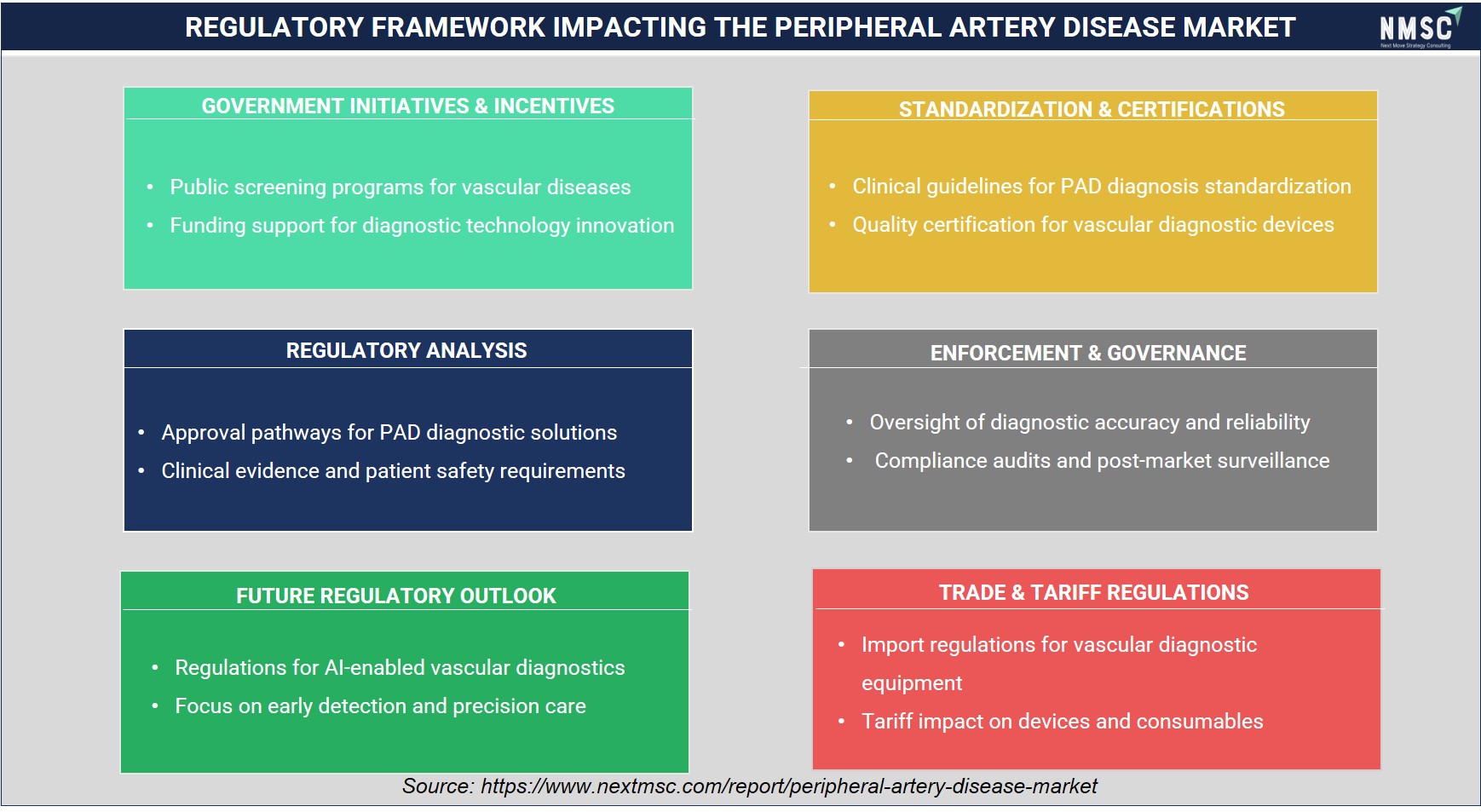
The regulatory framework governing the Peripheral Artery Disease (PAD) market plays a vital role in ensuring the safety, effectiveness, and quality of diagnostic and treatment solutions. Government initiatives support vascular disease screening programs and innovation funding, while regulatory agencies establish approval pathways and clinical evidence requirements. Standardization and certification guidelines promote diagnostic accuracy and product reliability. Ongoing compliance monitoring, post-market surveillance, and trade regulations influence market access and operational costs. Looking ahead, regulatory focus is expected to expand toward AI-enabled vascular diagnostics, early disease detection, and precision-based patient care.
How Is the Peripheral Artery Disease (PAD) Market Segmented in This Report, and What Are the Key Insights from the Segmentation Analysis?
How Does Product Type Segmentation Reveal the Technological Diversity of the Peripheral Artery Disease (PAD) Market?
|
Segment |
2025 (USD Bn) |
2035 (USD Bn) |
CAGR (%) |
|
Endovascular Devices |
3.4 |
6.5 |
7.4% |
|
Balloon Catheters |
0.9 |
1.7 |
7.3% |
|
Stents and Scaffolds |
1.1 |
2.1 |
7.4% |
|
Atherectomy Devices |
0.5 |
1.1 |
9.2% |
|
Thrombectomy Devices |
0.3 |
0.7 |
9.8% |
|
Embolic Protection Devices |
0.1 |
0.2 |
7.2% |
|
Guidewires and Catheters |
0.2 |
0.4 |
8.0% |
|
Access and Closure Devices |
0.2 |
0.2 |
5.2% |
|
Imaging Guidance |
0.1 |
0.1 |
5.5% |
|
Surgical Devices |
1.2 |
2.4 |
8.0% |
Based on our analysis of procedural volume and commercial adoption trends, we observed that the Peripheral Artery Disease (PAD) Market is structured across Endovascular Devices and Surgical Devices. Within endovascular devices, Stents and Scaffolds dominate due to the established clinical workflow of SFA stenting, while Atherectomy Devices are the fastest-growing sub-segment driven by adoption of orbital, directional, and laser atherectomy for complex and calcified lesions. Thrombectomy devices are experiencing accelerated adoption in the CLTI patient population. Surgical devices including bypass grafts and vascular patches maintain a stable revenue base particularly in aortoiliac and multilevel disease where endovascular options are less durable.
How Does Anatomical Segmentation Define Clinical and Commercial Priorities in the Peripheral Artery Disease (PAD) Market?
|
Segment |
2025 (USD Bn) |
2035 (USD Bn) |
CAGR (%) |
|
Femoropopliteal |
2.0 |
3.9 |
7.7% |
|
Aortoiliac |
1.1 |
2.0 |
6.9% |
|
Infrapopliteal |
0.8 |
1.8 |
9.4% |
|
Multilevel |
0.7 |
1.2 |
6.2% |
NMSC's analysis indicates that the Peripheral Artery Disease (PAD) Market is segmented by anatomy into Femoropopliteal, Aortoiliac, Infrapopliteal, and Multilevel disease. Femoropopliteal anatomy dominates commercial volumes, reflecting the highest absolute disease burden, the broadest range of approved device options, and the largest published evidence base. Aortoiliac anatomy represents a stable revenue contributor anchored by covered stent and aortic bifurcation stenting procedures. Infrapopliteal is the fastest-growing segment, driven by improved tibial vessel device portfolios, evolving CLTI guidelines, and expanding reimbursement. Multilevel disease, requiring staged or simultaneous intervention, drives above-average device utilization per procedure episode.
How Does Lesion Type Complexity Shape Technology Adoption and Revenue Within the Peripheral Artery Disease (PAD) Market?
|
Segment |
2025 (USD Bn) |
2035 (USD Bn) |
CAGR (%) |
|
De Novo |
2.3 |
4.5 |
7.7% |
|
Calcified |
0.8 |
2.0 |
10.7% |
|
Chronic Total Occlusion |
0.6 |
1.0 |
5.8% |
|
In Stent Restenosis |
0.4 |
0.7 |
6.4% |
|
Thrombotic |
0.3 |
0.4 |
3.2% |
|
Other Lesion Type |
0.2 |
0.3 |
4.5% |
From our assessment of clinical practice patterns and device utilization data, we found that the Peripheral Artery Disease (PAD) Market is segmented by lesion type into De Novo, Calcified, Chronic Total Occlusion, In Stent Restenosis, Thrombotic, and Other. De Novo lesions represent the largest volume category given their prevalence across newly diagnosed PAD patients. Calcified lesions are the fastest-growing category, driven by IVL adoption and orbital atherectomy utilization. Chronic total occlusions require specialized re-entry devices and crossing catheters. In stent restenosis lesions create a recurring intervention demand that disproportionately benefits drug-coated balloon utilization as the preferred stent-free treatment approach.
How Do Device Construct Categories Reflect the Technological Evolution of the Peripheral Artery Disease (PAD) Market?
|
Segment |
2025 (USD Bn) |
2035 (USD Bn) |
CAGR (%) |
|
Nitinol |
1.5 |
2.8 |
7.2% |
|
Uncoated |
1.1 |
1.9 |
6.3% |
|
Paclitaxel Coated |
0.7 |
1.4 |
8.1% |
|
Covered |
0.5 |
0.9 |
6.7% |
|
Limus Coated |
0.3 |
0.8 |
11.6% |
|
Bioresorbable |
0.2 |
0.6 |
12.9% |
|
Resorbable Magnesium |
0.1 |
0.3 |
13.0% |
|
Other Construct |
0.2 |
0.2 |
0.0% |
Based on our evaluation of material science adoption and device design trends, the Peripheral Artery Disease (PAD) Market is segmented by construct into Nitinol, Uncoated, Paclitaxel Coated, Covered, Limus Coated, Bioresorbable, Resorbable Magnesium, and Other constructs. Nitinol dominates as the standard material for self-expanding peripheral stents, offering optimal flexibility and kink resistance for the dynamic femoral artery environment. Paclitaxel-coated constructs remain commercially significant despite safety signal scrutiny, supported by long-term clinical evidence. Limus Coated and Bioresorbable constructs are the fastest-growing categories, representing next-generation drug delivery and scaffold technology with superior safety profiles currently advancing through global clinical registries and regulatory review processes.
How Is the Peripheral Artery Disease (PAD) Market Shifting Across Care Settings?
|
Segment |
2025 (USD Bn) |
2035 (USD Bn) |
CAGR (%) |
|
Hospital Inpatient |
2.4 |
4.2 |
6.4% |
|
Hospital Outpatient and Cath Lab |
1.2 |
2.5 |
8.5% |
|
Ambulatory Surgery Center |
0.6 |
1.4 |
9.8% |
|
Office Based Lab |
0.4 |
0.8 |
8.0% |
Our analysis indicates that the Peripheral Artery Disease (PAD) Market is segmented across Hospital Inpatient, Hospital Outpatient and Cath Lab, Ambulatory Surgery Center, and Office Based Lab settings. Hospital Inpatient continues to dominate for complex, high-acuity PAD interventions including aortoiliac reconstruction and multilevel disease treatment requiring post-procedure monitoring. Hospital Outpatient and Cath Lab settings are growing as hospitals expand dedicated peripheral vascular procedural capacity. Ambulatory Surgery Centers and Office Based Labs are the fastest-growing settings, benefiting from favorable reimbursement economics, technological miniaturization enabling lower-complexity same-day procedures, and strong physician preference for practice-based endovascular program ownership.
How Do Sales Channel Dynamics Shape Competitive Strategy in the Peripheral Artery Disease (PAD) Market?
|
Segment |
2025 (USD Bn) |
2035 (USD Bn) |
CAGR (%) |
|
Direct Sales |
2.8 |
5.3 |
7.4% |
|
Distributors |
1.2 |
2.2 |
6.3% |
|
Tender |
0.4 |
0.9 |
9.4% |
|
OEM |
0.2 |
0.5 |
10.7% |
Through our market assessment, we observed that the Peripheral Artery Disease (PAD) Market is distributed through Direct Sales, Distributors, Tender, and OEM channels. Direct Sales dominate as large device manufacturers maintain dedicated vascular specialist sales organizations serving major hospital accounts, academic medical centers, and catheterization laboratory networks with clinical application support and procedural training programs. Distributor channels are important in markets where manufacturers lack direct commercial infrastructure, particularly in Southeast Asia, Middle East, and Latin America. The Tender channel is significant in European public health systems and government hospital procurement. OEM is the fastest-growing channel driven by platform integration of PAD devices with imaging and navigation systems.
Regional Outlook
Geographic Performance Snapshot
|
Region |
2025 (USD Bn) |
2035 (USD Bn) |
CAGR (%) |
Key Driver |
|
North America |
1.8 |
3.2 |
6.6% |
High PAD prevalence, advanced endovascular infrastructure, strong CMS reimbursement |
|
Europe |
1.2 |
2.2 |
6.9% |
Aging population, expanding DCB/DES adoption, robust national reimbursement |
|
Asia-Pacific |
0.9 |
2.0 |
9.3% |
Rising PAD burden, rapid cath lab expansion, government healthcare investment |
|
Middle East & Africa |
0.3 |
0.7 |
10.0% |
Healthcare infrastructure build-out, Vision 2030 programs, rising chronic disease burden |
|
Latin America |
0.4 |
0.8 |
8.0% |
Growing healthcare expenditure, urbanization, expanding endovascular training programs |
North America Peripheral Artery Disease (PAD) Market
North America is the global leader in the Peripheral Artery Disease (PAD) Market, accounting for USD 1.8 billion in 2025 and forecast to reach USD 3.2 billion by 2035 at a CAGR of 6.6%. The region benefits from the highest global PAD prevalence, an estimated 8 to 10 million U.S. patients based on CDC vascular disease statistics, the most advanced catheterization laboratory infrastructure, and robust CMS reimbursement frameworks. Strong physician training ecosystems, a dense concentration of leading device manufacturers, and active real-world evidence programs through initiatives such as the Vascular Quality Initiative (VQI) underpin sustained market leadership throughout the forecast period.
U.S. Peripheral Artery Disease (PAD) Market
Based on our engagements with the North American vascular device landscape, the United States is the single largest country market in the Peripheral Artery Disease (PAD) Market, representing over 75% of regional revenue in 2025. The U.S. market is anchored by exceptionally high PAD prevalence, the world's highest concentration of endovascular interventionalists, the most expansive portfolio of FDA-approved peripheral vascular devices, and comprehensive CMS and commercial insurance reimbursement for endovascular and surgical PAD procedures. The FDA's comprehensive 510(k) and PMA review pathways support continuous device innovation cycles, while the National Heart, Lung, and Blood Institute (NHLBI) funds ongoing PAD epidemiology and treatment outcome research driving evidence-based clinical practice evolution.
Canada Peripheral Artery Disease (PAD) Market
Through our analysis, we found that Canada represents approximately 17% of North American Peripheral Artery Disease (PAD) Market revenue, supported by a well-developed provincial healthcare infrastructure and publicly funded hospital catheterization laboratory networks. Canadian vascular surgery and interventional cardiology societies align closely with U.S. and European clinical practice guidelines for PAD management, supporting adoption of advanced endovascular technologies. Health Canada's Medical Device Directorate governs device market entry, with regulatory harmonization initiatives with the FDA reducing approval timeline disparities. Growing PAD awareness campaigns and improved referral pathways from primary care to vascular specialists are expanding the diagnosed and treated patient population.
Mexico Peripheral Artery Disease (PAD) Market
From our assessment, Mexico is the fastest-growing market within North America in the Peripheral Artery Disease (PAD) Market, driven by a rapidly expanding middle class with growing access to private and social security healthcare, rising PAD disease burden linked to one of the world's highest diabetes prevalence rates, and increasing catheterization laboratory capacity in major metropolitan areas. COFEPRIS, Mexico's federal health regulatory agency, governs medical device registration. Distributor-led commercial models dominate as multinational manufacturers expand indirect coverage of tier-two Mexican hospital markets. Strategic public-private healthcare investment under national health reform programs is incrementally improving PAD diagnostic and treatment access.
Europe Peripheral Artery Disease (PAD) Market
Europe is the second-largest region in the Peripheral Artery Disease (PAD) Market, contributing USD 1.2 billion in 2025 and forecast to reach USD 2.2 billion by 2035 at a CAGR of 6.9%. Europe's mature vascular intervention infrastructure, comprehensive national reimbursement systems, and the broad clinical adoption of DCB and DES technologies underpin steady market growth. The EU Medical Devices Regulation (MDR 2017/745), with its elevated clinical evidence requirements, is reshaping product approval timelines and prompting consolidation among smaller European device manufacturers. The European Society of Cardiology (ESC) and European Society for Vascular Surgery (ESVS) guidelines provide the clinical framework driving technology adoption across the region.
U.K. Peripheral Artery Disease (PAD) Market
Based on our engagements with the UK vascular device market, the United Kingdom is one of the largest individual country markets in European peripheral vascular intervention, supported by a well-established NHS vascular service network and a robust private healthcare sector. The National Institute for Health and Care Excellence (NICE) provides technology assessment frameworks that influence NHS commissioning decisions for new PAD devices. Post-Brexit, the UK operates a separate MHRA regulatory pathway under the UK Medical Device Regulations, creating a distinct registration requirement for manufacturers. The NHS Long Term Plan's commitment to reducing cardiovascular disease mortality is supporting investment in PAD diagnostic and treatment capacity.
Germany Peripheral Artery Disease (PAD) Market
Through our analysis, we observed that Germany is the largest individual European market for PAD intervention devices, anchored by a world-class vascular surgery and interventional radiology infrastructure, the highest density of catheterization laboratories per capita in Europe, and comprehensive statutory health insurance coverage for peripheral vascular procedures. The Federal Joint Committee (G-BA) governs reimbursement decisions, and the German Institute for Medical Documentation and Information (DIMDI) maintains device registry oversight. German academic medical centers, including Charité Berlin and University Hospital Leipzig, are leading sites for PAD clinical trial enrollment, giving Germany disproportionate influence over European evidence generation and clinical guideline development.
France Peripheral Artery Disease (PAD) Market
From our assessment, France is the second-largest European PAD device market, driven by a comprehensive universal healthcare system, strong academic vascular medicine centers, and government-funded hospital modernization programs under France 2030. The Haute Autorité de Santé (HAS) evaluates medical device reimbursement through a structured assessment process aligned with EU MDR compliance requirements. NMSC's analysis indicates that French vascular surgeons and interventional radiologists are strong adopters of minimally invasive endovascular approaches, creating sustained demand for DCB, DES, and atherectomy device categories. Regulatory enforcement by the ANSM (Agence Nationale de Sécurité du Médicament) maintains rigorous post-market surveillance standards.
Italy Peripheral Artery Disease (PAD) Market
According to our evaluation, Italy represents a mid-tier European market in the Peripheral Artery Disease (PAD) Market, with strong adoption of endovascular peripheral intervention driven by a high cardiovascular disease burden, a well-established network of hospital cath labs in northern industrial regions, and national health service coverage for PAD procedures. The Istituto Superiore di Sanità (ISS) provides clinical practice oversight and epidemiological monitoring. Italy's National Recovery and Resilience Plan (PNRR) includes investments in hospital digital infrastructure and diagnostic capacity that will indirectly support PAD patient identification and referral to intervention. Northern regions including Lombardia and Emilia-Romagna demonstrate the highest adoption of advanced endovascular PAD technologies.
Spain Peripheral Artery Disease (PAD) Market
Based on our market evaluation, Spain demonstrates steady growth in the Peripheral Artery Disease (PAD) Market, supported by a universal public healthcare system, a well-trained vascular surgery and interventional radiology workforce, and government investment in hospital technology modernization under the National Health System's equipment renewal programs. The Spanish Agency of Medicines and Medical Devices (AEMPS) oversees regulatory compliance under EU MDR. Our assessment indicates that Spain's high diabetes prevalence one of the highest in Europe per IDF data is driving an expanding PAD patient population requiring intervention. Major academic centers in Madrid, Barcelona, and Valencia are active participants in European PAD clinical registries and multicenter trials.
Sweden Peripheral Artery Disease (PAD) Market
Through our analysis, Sweden is one of the most advanced PAD device markets in Scandinavia, supported by a highly digitized national healthcare system, comprehensive cardiovascular disease prevention programs, and well-established national quality registers including the Swedish Vascular Registry (Swedvasc). Sweden's Medical Products Agency (Läkemedelsverket) ensures rigorous regulatory oversight aligned with EU MDR requirements. Swedish academic hospitals are active contributors to European PAD research and clinical guideline development. The country's aging population and high diabetes awareness rates support sustained demand for advanced PAD intervention technologies across the forecast period.
Denmark Peripheral Artery Disease (PAD) Market
From our assessment, Denmark operates one of the most integrated vascular care systems in Europe within the Peripheral Artery Disease (PAD) Market context, characterized by centralized hospital catheterization laboratory networks, comprehensive national patient registries, and strong public health investment in cardiovascular disease management. The Danish Medicines Agency regulates device market access. Denmark's DESI top-ranking digital health infrastructure enables population-level PAD disease monitoring and outcomes tracking. Danish vascular surgery centers are recognized for high endovascular intervention quality, with strong adoption of advanced DCB and IVUS-guided stenting platforms supported by national DRG reimbursement frameworks.
Finland Peripheral Artery Disease (PAD) Market
Based on our engagements with Nordic healthcare market data, Finland represents a smaller but clinically sophisticated market in the Peripheral Artery Disease (PAD) Market. Finland's national hospital district network provides universal access to vascular surgical and interventional services. The Finnish Medicines Agency (Fimea) provides regulatory oversight under EU MDR. Finland's high prevalence of smoking-related cardiovascular disease and aging demographic profile create a defined patient population requiring PAD intervention. The country's commitment to digital health records and national quality registry participation including the Finnish Hospital Discharge Register supports evidence-based device adoption decisions across vascular surgery departments.
Netherlands Peripheral Artery Disease (PAD) Market
Through our analysis, the Netherlands is a commercially active market in the European Peripheral Artery Disease (PAD) Market, with strong hospital catheterization laboratory infrastructure, a well-developed vascular surgery training ecosystem, and comprehensive statutory health insurance coverage through Zorgverzekeringswet (Zvw). The Dutch Healthcare Authority (NZa) regulates healthcare tariffs including vascular intervention reimbursement. Dutch academic medical centers including Amsterdam UMC and Erasmus MC are active participants in European multicenter PAD trials. NMSC's assessment indicates that the Netherlands also serves as a distribution and logistics hub for medical device importation into continental Europe, supporting efficient supply chain access for PAD device manufacturers.
Rest of Europe Peripheral Artery Disease (PAD) Market
The Rest of Europe encompassing Poland, Belgium, Switzerland, Austria, Portugal, Czech Republic, Norway, and other European nations collectively represents a growing segment of the Peripheral Artery Disease (PAD) Market. Poland and the Czech Republic are emerging as Central and Eastern European PAD device adoption leaders, driven by post-EU accession healthcare infrastructure modernization. Switzerland hosts major cardiovascular medical technology companies and operates under the Swiss Medical Devices Ordinance (MDO), which is being aligned with EU MDR. Belgium, home to EU institutions and major academic medical centers, demonstrates strong endovascular PAD adoption, particularly in complex multilevel disease management.
Asia-Pacific Peripheral Artery Disease (PAD) Market
Asia-Pacific is the fastest-growing major region in the Peripheral Artery Disease (PAD) Market, advancing from USD 0.9 billion in 2025 to USD 2.0 billion by 2035 at a CAGR of 9.3%. The region's growth is driven by a rapidly expanding PAD disease burden linked to the world's highest absolute diabetes patient populations, massive healthcare infrastructure investment programs in China and India, improving physician training and endovascular skill development, and accelerating regulatory modernization enabling faster global device market access. Countries including South Korea, Japan, Australia, and Taiwan represent mature market segments, while China, India, Indonesia, Vietnam, and Malaysia offer high-growth developmentopportunities.
China Peripheral Artery Disease (PAD) Market
Based on our engagements with the China vascular device market, China is the largest and fastest-growing national market in Asia-Pacific for the Peripheral Artery Disease (PAD) Market, driven by the world's largest absolute PAD patient population, rapid expansion of catheterization laboratory capacity in tier-one through tier-three cities under the Healthy China 2030 program, and strong domestic medical device manufacturing incentives. The National Medical Products Administration (NMPA) governs device registration and has accelerated approval pathways for innovative medical devices. Domestic manufacturers including Shanghai MicroPort and Zylox-Tonbridge are gaining market share in lower-cost device categories, while global manufacturers compete on advanced technology platforms in major urban hospital markets.
India Peripheral Artery Disease (PAD) Market
Through our analysis, India is one of the fastest-growing national markets in the Peripheral Artery Disease (PAD) Market within Asia-Pacific, driven by the IDF-documented world's second-largest diabetes patient population, which is a primary PAD risk factor. The Central Drugs Standard Control Organisation (CDSCO) regulates medical device market access under the Medical Devices Rules 2017. Our findings suggest that government initiatives under Ayushman Bharat the world's largest government-funded health insurance program are expanding access to surgical and endovascular PAD treatment for lower-income populations. Multinational device manufacturers are investing in India-specific commercial infrastructure and manufacturing partnerships, while domestic players such as Meril Life Sciences are gaining regulatory approvals for peripheral intervention devices.
Japan Peripheral Artery Disease (PAD) Market
From our assessment, Japan is the most mature PAD device market in Asia-Pacific and the third-largest nationally, supported by an advanced healthcare system, universal insurance coverage for endovascular peripheral procedures, and a highly skilled interventional cardiology and peripheral intervention workforce. The Pharmaceuticals and Medical Devices Agency (PMDA) governs device approval, with Japan historically participating in global pivotal trials through Japanese sub-studies that inform domestic regulatory review. NMSC's analysis indicates that aging demographics Japan has the world's oldest population — are driving sustained PAD demand. Domestic companies including Terumo Corporation and Asahi Intecc are globally recognized leaders in guidewire and catheter innovation for peripheral vascular intervention.
South Korea Peripheral Artery Disease (PAD) Market
Based on our evaluation, South Korea demonstrates strong PAD device market maturity, supported by one of Asia's most advanced hospital infrastructure networks, high catheterization laboratory density, and comprehensive National Health Insurance (NHI) coverage for endovascular PAD procedures. The Ministry of Food and Drug Safety (MFDS) governs medical device regulatory review. South Korean academic medical centers are active participants in multinational PAD clinical trials. Our assessment indicates that the country's high prevalence of metabolic syndrome and diabetes-related PAD, alongside an advanced physician training ecosystem in endovascular intervention, creates sustained high-value demand for DCB, DES, and atherectomy technologies.
Taiwan Peripheral Artery Disease (PAD) Market
Through our analysis, Taiwan's Peripheral Artery Disease (PAD) Market is concentrated in metropolitan hospital catheterization laboratories servicing a population with high cardiovascular and diabetic vascular disease prevalence. The Taiwan Food and Drug Administration (TFDA) provides medical device regulatory oversight. Taiwan's National Health Insurance (NHI system provides comprehensive reimbursement for peripheral vascular procedures, supporting high intervention rates relative to population size. Major academic centers including National Taiwan University Hospital and Chang Gung Memorial Hospital are regional centers of excellence for complex PAD intervention, supporting advanced device adoption including IVUS-guided stenting and drug-coated platforms for femoropopliteal and infrapopliteal anatomy.
Indonesia Peripheral Artery Disease (PAD) Market
Based on our engagements with Southeast Asian market data, Indonesia is among the fastest-growing PAD device markets in the region, driven by a large population of over 275 million, the IDF-documented world's fifth-largest diabetes patient population, and government investment in hospital capacity expansion under the National Health Development Strategy. BPOM (Badan Pengawas Obat dan Makanan) governs medical device market authorization. The Jaminan Kesehatan Nasional (JKN) national health insurance program is progressively expanding coverage for catheterization-based cardiovascular and vascular procedures. Distributor-led commercial models dominate, with multinational manufacturers increasingly investing in in-country medical education and training programs.
Vietnam Peripheral Artery Disease (PAD) Market
From our assessment, Vietnam is an emerging and high-growth market in the Peripheral Artery Disease (PAD) Market within Southeast Asia, supported by rapid GDP growth, government healthcare infrastructure investment under the National Health Strategy 2030, and rising PAD disease burden linked to lifestyle changes, smoking prevalence, and growing diabetes rates. The Drug Administration of Vietnam (DAV) under the Ministry of Health regulates medical device registration. Vietnam's major teaching hospitals in Hanoi and Ho Chi Minh City are developing endovascular vascular intervention capabilities, and the country is experiencing increased catheterization laboratory installation. Global manufacturers are partnering with domestic distributors to expand market access.
Australia Peripheral Artery Disease (PAD) Market
Through our analysis, Australia is the most mature PAD device market in Oceania and among the most commercially advanced in Asia-Pacific, characterized by strong adoption of advanced endovascular technologies across public and private hospital networks. The Therapeutic Goods Administration (TGA) governs medical device regulatory approval, with harmonized pathways aligned with EU MDR and U.S. FDA standards. Medicare Benefits Schedule (MBS) reimbursement frameworks support peripheral vascular intervention procedures in both public and private healthcare settings. Australian vascular surgery and interventional radiology societies align closely with international guidelines, supporting robust adoption of advanced endovascular technologies including DCB, DES, IVL, and atherectomy platforms across the country's hospital network.
Rest of APAC Peripheral Artery Disease (PAD) Market
Our findings suggest that the Rest of APAC segment, including Thailand, New Zealand, Bangladesh, Philippines, Malaysia, and other markets, collectively represents a growing share of the Peripheral Artery Disease (PAD) Market. New Zealand's large commercial dairy and agricultural population faces growing cardiovascular disease prevalence, creating incremental demand for peripheral vascular devices. Thailand's expanding private hospital networks and government healthcare modernization are supporting adoption. The Philippines and Bangladesh represent nascent but rapidly evolving markets where rising diabetes prevalence and expanding hospital infrastructure are creating the foundation for future PAD device market growth, primarily driven by public hospital procurement and development bank-funded healthcare capacity expansion.
Middle East & Africa (MEA) Peripheral Artery Disease (PAD) Market
The MEA Peripheral Artery Disease (PAD) Market is projected at USD 0.3 billion in 2025 and is one of the fastest-growing regional markets at a CAGR of 10.0%, driven by healthcare infrastructure build-out under Saudi Arabia's Vision 2030 and UAE national development strategies, rising chronic disease prevalence linked to diabetes and metabolic syndrome across the GCC and sub-Saharan Africa, and improving access to advanced endovascular technologies through government and private healthcare investment. Based on NMSC's research, we found that MEA PAD demand is concentrated in high-income GCC states and select emerging market economies where tertiary hospital catheterization laboratory capacity is being established. Distributor-led commercial models dominate outside the GCC, with government tender procurement representing the primary market entry mechanism for peripheral vascular device manufacturers in African and Middle Eastern markets.
Saudi Arabia Peripheral Artery Disease (PAD) Market
Through our analysis, Saudi Arabia's Peripheral Artery Disease (PAD) Market represents the largest individual country market within the MEA region, driven by Vision 2030 healthcare infrastructure investment, high diabetes and cardiovascular disease prevalence, and the development of specialized tertiary and quaternary hospital networks with advanced catheterization laboratory capacity. The Saudi Food and Drug Authority (SFDA) governs medical device registration and market access. Large-scale government investments through the Ministry of Health and the King Abdullah International Medical Research Center (KAIMRC) are expanding the country's vascular intervention capacity. Premium device adoption in Saudi Arabia is concentrated in government-funded tertiary hospitals and high-end private healthcare facilities in Riyadh, Jeddah, and Dammam.
UAE Peripheral Artery Disease (PAD) Market
From our assessment, the UAE Peripheral Artery Disease (PAD) Market is a high-growth GCC market driven by aggressive healthcare infrastructure expansion under national development strategies, a large expatriate population with elevated cardiovascular risk profiles, and strong government investment in state-of-the-art hospital catheterization laboratory infrastructure in Abu Dhabi, Dubai, and Sharjah. The Ministry of Health and Prevention (MOHAP) and the Department of Health-Abu Dhabi (DoH) regulate healthcare delivery and device procurement. The UAE's medical free zone framework, centered around Dubai Healthcare City, is attracting international medical device manufacturers and supporting regional distribution hub operations. High per-capita healthcare expenditure enables rapid adoption of premium endovascular technologies including DCB, DES, IVL, and AI-guided intervention platforms.
Egypt Peripheral Artery Disease (PAD) Market
Based on our market evaluation, Egypt's Peripheral Artery Disease (span style="color:#000000">PAD) Market is an emerging but structurally significant opportunity within North Africa, driven by the region's largest population, high diabetes prevalence, and government healthcare modernization programs under Egypt Vision 2030. The Egyptian Drug Authority (EDA) regulates medical device registration. Public hospital infrastructure development through the Ministry of Health is creating new catheterization laboratory capacity. Distributor-led commercial models dominate as multinational manufacturers build indirect market coverage. The Egyptian military healthcare system and university hospital networks represent the primary sites for advanced endovascular PAD intervention adoption in the near to medium term.
Israel Peripheral Artery Disease (PAD) Market
According to our evaluation, Israel's Peripheral Artery Disease (PAD) Market is a technologically advanced market supported by a globally recognized medical device innovation ecosystem, universal National Health Insurance (NHI) coverage for endovascular procedures, and a high concentration of cardiovascular specialists. The Israeli Ministry of Health regulates healthcare delivery and device procurement through the medical device registry framework. Israeli medtech companies, including Medinol and IceCure Medical, contribute to both domestic and export demand for peripheral vascular devices. Israel's active participation in international PAD clinical trials and its integration of digital health and remote monitoring technologies into vascular care pathways are accelerating adoption of next-generation endovascular platforms.
Turkey Peripheral Artery Disease (span style="color:#000000">PAD) Market
Through NMSC's assessment, Turkey's Peripheral Artery Disease (PAD) Market represents a significant and growing opportunity in the broader MEA region, driven by a large population, rising cardiovascular and metabolic disease prevalence, and a well-developed private and public hospital infrastructure in Istanbul, Ankara, and Izmir. The Turkish Medicines and Medical Devices Agency (TITCK) regulates device market access under Turkey's medical device regulations aligned with EU MDR frameworks. The Turkish government's Health Transformation Program supports hospital modernization including catheterization laboratory expansion. Turkish Society of Cardiovascular Surgery and interventional cardiology organizations drive clinical guideline adoption that supports advanced endovascular technology utilization. The country's strategic geographic position as a medical tourism destination is also creating demand for premium PAD intervention technologies.
Nigeria Peripheral Artery Disease (PAD) Market
Based on our engagements, Nigeria's Peripheral Artery Disease (PAD) Market is a nascent market with significant long-term potential, driven by Africa's largest population, a high and growing cardiovascular disease burden, and expanding tertiary hospital infrastructure in Lagos, Abuja, and other major cities. The National Agency for Food and Drug Administration and Control (NAFDAC) regulates medical device registration. Government healthcare investment through the National Health Insurance Scheme (NHIS) is improving access to vascular intervention. However, limited catheterization laboratory capacity and a shortage of trained interventional specialists currently constrain market growth. Distributor-led models and government tender procurement are the primary market entry mechanisms for global PAD device manufacturers in Nigeria.
South Africa Peripheral Artery Disease (PAD) Market
From our assessment, South Africa is the most mature PAD device market in sub-Saharan Africa, driven by Johannesburg's status as the continent's financial and healthcare capital, a well-established private hospital sector including Netcare and Mediclinic networks, and growing public sector healthcare capacity. The South African Health Products Regulatory Authority (SAHPRA) governs medical device registration. South Africa's dual burden of communicable and non-communicable diseases, including diabetes and hypertension as primary PAD risk factors, is expanding the vascular intervention patient population. Major academic centers including Groote Schuur Hospital are recognized for complex peripheral vascular surgical and endovascular expertise.
Rest of MEA Peripheral Artery Disease (PAD) Market
The Rest of Middle East and Africa encompassing Kuwait, Qatar, Bahrain, Oman, Jordan, Morocco, Kenya, Ghana, Ethiopia, and other nations collectively represents a growing segment of the Peripheral Artery Disease (PAD) Market. GCC nations outside Saudi Arabia and UAE are investing in national hospital networks and medical device procurement aligned with national health strategies. Kenya is Sub-Saharan Africa's fastest-growing digital health and medical technology market. Morocco serves as a North African manufacturing and distribution hub for European medical device companies seeking MEA market access. Jordan's advanced private hospital sector and medical tourism destination status create demand for sophisticated PAD intervention capabilities.
Latin America Peripheral Artery Disease (PAD) Market
Latin America is a growing region in the Peripheral Artery Disease (PAD) Market, advancing from USD 0.4 billion in 2025 to USD 0.8 billion by 2035 at a CAGR of 8.0%. Brazil and Mexico collectively account for approximately 65% of regional revenue. Growing healthcare expenditure, expanding catheterization laboratory capacity in major urban centers, rising PAD disease burden driven by diabetes and metabolic syndrome, and improving physician training in endovascular intervention are the primary growth drivers. Regulatory harmonization initiatives under Pan American Health Organization (PAHO) guidance are progressively improving medical device market access timelines across the region throughout the forecast period.
Brazil Peripheral Artery Disease (PAD) Market
Based on our engagements with the Brazilian healthcare market, Brazil is the largest PAD device market in Latin America, accounting for approximately 38% of regional revenue in 2025. The Brazilian Health Regulatory Agency (ANVISA) governs medical device registration under Resolução RDC frameworks. IDF data identifies Brazil as having the largest absolute diabetes patient population in Latin America, driving a substantial and growing PAD disease burden. Major private hospital groups including Hospital Sírio-Libanês and Hospital Albert Einstein, alongside the SUS public health network, represent the primary device procurement landscape. Distributor partnerships dominate multinational manufacturer commercial access given the complexity of Brazil's import and regulatory compliance requirements.
Argentina Peripheral Artery Disease (PAD) Market
Through our analysis, Argentina is the second-largest PAD device market in Latin America, supported by a well-trained medical specialist workforce, a strong tradition of academic clinical research, and a private healthcare sector with relatively high interventional cardiology and vascular surgery capabilities. The National Administration of Drugs, Food and Medical Technology (ANMAT) governs device registration. Economic volatility and currency devaluation create purchasing power constraints that affect procurement of premium-priced advanced endovascular devices, encouraging adoption of lower-cost alternatives. Buenos Aires hosts the majority of Argentina's advanced PAD intervention capacity, with growing cath lab penetration in Córdoba and Rosario.
Chile Peripheral Artery Disease (PAD) Market
From our assessment, Chile represents a small but commercially stable PAD device market, benefiting from one of Latin America's strongest and most stable economies, high healthcare expenditure per capita, and a well-organized public-private healthcare system. The Institute of Public Health (ISP) governs medical device registration through a registration and authorization process. Chile's comprehensive FONASA public health insurance and ISAPRE private insurance systems provide coverage for cardiovascular and vascular procedures. High rates of metabolic syndrome and an aging demographic profile are expanding the diagnosed PAD patient population. All major multinational PAD device manufacturers serve the Chilean market through authorized distributor networks.
Colombia Peripheral Artery Disease (PAD) Market
Based on our market evaluation, Colombia is among the fastest-growing PAD device markets in Latin America, supported by Bogotá's emergence as a regional healthcare and medical education hub, a growing private hospital and outpatient cath lab sector, and government investment in healthcare access under the national health insurance system. The National Institute of Food and Drug Surveillance (INVIMA) governs medical device registration. Our assessment indicates that Colombia's rising rates of hypertension and type 2 diabetes primary PAD risk factors are expanding the intervention-requiring patient population. Leading hospitals including Fundación Cardio Infantil and Clínica Shaio serve as centers of endovascular PAD excellence with advanced device adoption.
Rest of LATAM Peripheral Artery Disease (PAD) Market
The Rest of Latin America comprising Peru, Ecuador, Uruguay, Bolivia, Paraguay, Costa Rica, Panama, Venezuela, and Caribbean nations collectively represents a smaller but growing component of the Peripheral Artery Disease (PAD) Market. Peru and Ecuador are experiencing early-stage endovascular PAD adoption growth, driven by expanding private hospital networks in Lima and Guayaquil. Uruguay has a proportionally high healthcare expenditure and a well-developed medical device regulatory framework aligned with Mercosur medical device guidelines. Panama serves as a regional distribution and logistics hub for medical devices entering Central American markets. Costa Rica's well-developed private hospital sector and medical tourism industry create demand for advanced vascular intervention technologies.
Competitive Landscape
|
Key Takeaways |
Details |
|
Market Structure |
The Peripheral Artery Disease (PAD) Market features moderately concentrated competition. The top five players Medtronic, Boston Scientific, Abbott, Becton Dickinson, and Terumo collectively hold approximately 55% of global revenue. The remaining share is contested by a diversified mid-tier and regional player base spanning endovascular specialists, surgical device companies, and imaging guidance firms. |
|
Innovation Focus |
Innovation is concentrated in drug-coated balloon (DCB) formulation optimization, next-generation drug-eluting stent platforms, intravascular lithotripsy (IVL) for calcified lesions, bioresorbable scaffold development, IVUS-guided procedural planning, and artificial intelligence-enabled guidewire navigation for chronic total occlusion (CTO) crossing. |
|
M&A Activity |
Strategic acquisitions remain the primary growth lever as large-cap device companies expand peripheral vascular portfolios. Notable recent activity includes acquisitions targeting atherectomy platforms, thrombectomy systems, IVL technology, and imaging guidance capabilities. Private equity is active in funding mid-tier endovascular companies positioned for strategic sale to major OEMs. |
How Do Companies Compete in the Peripheral Artery Disease (PAD) Market?
The Peripheral Artery Disease (PAD) Market is characterized by moderately concentrated competition among a tiered ecosystem of global large-cap device manufacturers, mid-tier endovascular specialists, and regional distributors. Large-cap companies including Medtronic, Boston Scientific, and Abbott compete on breadth of peripheral vascular portfolio, direct clinical specialist sales force depth, evidence generation from landmark randomized controlled trials, and global regulatory approval infrastructure. Mid-tier specialists such as Penumbra, AngioDynamics, and Surmodics differentiate on focused product innovation in high-growth sub-segments including thrombectomy, atherectomy, and drug delivery technologies. Geographic expansion into Asia-Pacific and Latin America is a shared competitive priority, with companies investing in distributor network development, physician training programs, and local clinical evidence generation through real-world registry participation.
Which Kind of Companies Dominate the Peripheral Artery Disease (PAD) Market?
Three distinct categories of companies compete for leadership in the Peripheral Artery Disease (PAD) Market. First, global diversified medical device conglomerates including Medtronic, Boston Scientific, Abbott, and Becton Dickinson leverage comprehensive peripheral vascular portfolios spanning endovascular balloons, stents, atherectomy, thrombectomy, and imaging guidance along with integrated clinical education programs and substantial R&D investment capacity. Second, focused endovascular specialists such as Penumbra, AngioDynamics, Merit Medical, and Surmodics compete in high-growth sub-segments with differentiated technology platforms and strong clinical evidence programs. Third, regional and domestic manufacturers in China, India, and Japan including Shanghai MicroPort, Meril Life Sciences, Asahi Intecc, and Nipro Corporation are gaining market share in their respective home markets through regulatory momentum and cost-competitive positioning.
AI-Native Differentiation and Clinical Evidence Drive Market Success in the Peripheral Artery Disease (PAD) Market
Innovation differentiation in the Peripheral Artery Disease (PAD) Market is increasingly concentrated in three strategic dimensions. First, drug delivery optimization with limus-based coatings and novel polymer carriers advancing as safer paclitaxel alternatives is driving next-generation DCB and DES platform development at major manufacturers. Second, device-imaging integration combining peripheral IVUS guidance with intervention platforms is creating procedural value add that premium segment buyers are willing to pay for. Third, artificial intelligence incorporation into guidewire navigation for CTO crossing and automated lesion characterization represents the frontier of competitive differentiation, with early commercial programs from Terumo and Philips attracting significant physician and investor attention in the evolving Peripheral Artery Disease (PAD) Market.
Market Players to Opt for Merger and Acquisition Strategies to Expand Their Presence in the Peripheral Artery Disease (PAD) Market
Mergers and acquisitions are reshaping the competitive structure of the Peripheral Artery Disease (PAD) Market. Large-cap device manufacturers are actively acquiring specialized endovascular technology companies to fill peripheral portfolio gaps, particularly in atherectomy, thrombectomy, IVL, bioresorbable scaffold development, and AI-guided procedural tools. Private equity firms including Warburg Pincus and EQT are active in funding mid-tier vascular device companies positioning for strategic sale to major OEMs. NMSC's assessment indicates that consolidation around drug-coated technology platforms, tibial artery device specialists, and below-the-knee intervention program companies represents the highest-probability M&A activity within the Peripheral Artery Disease (PAD) Market in the 2025 to 2028 timeframe.
Key Market Players in the Peripheral Artery Disease (PAD) Market
-
Medtronic plc
-
Boston Scientific Corporation
-
Abbott Laboratories
-
Becton, Dickinson and Company
-
Terumo Corporation
-
Teleflex Incorporated
-
Koninklijke Philips N.V.
-
W. L. Gore & Associates, Inc.
-
Cook Medical LLC
-
Penumbra, Inc.
-
B. Braun SE
-
Cordis
-
Merit Medical Systems, Inc.
-
Getinge AB
-
AngioDynamics, Inc.
-
Shanghai MicroPort Endovascular MedTech Group Co., Ltd.
-
Nipro Corporation
-
Asahi Intecc Co., Ltd.
-
Meril Life Sciences Pvt. Ltd.
-
Surmodics, Inc.
What Are the Latest Developments in the Peripheral Artery Disease (PAD) Market?
|
Date |
Event |
|
Jan 2026 |
Boston Scientific initiated the limited market release of the SEISMIQ Intravascular Lithotripsy (IVL) System for severely calcified peripheral artery disease lesions. The launch expands treatment options in one of the fastest-growing PAD intervention segments. |
|
Jan 2025 |
Boston Scientific announced an agreement to acquire Bolt Medical, developer of an intravascular lithotripsy (IVL) platform specifically designed for the treatment of coronary and peripheral artery disease (PAD). The acquisition strengthens Boston Scientific's PAD calcium-modification portfolio. |
Expert Insights
 "As part of a larger, more diverse organization, with broad expertise and a core focus on improving patient outcomes, we are confident we will be able to further solidify IVL as the global standard of care for patients."
— Doug Godshall, President & CEO, Shockwave Medical
Comment made during the announcement of Johnson & Johnson's acquisition of Shockwave Medical, discussing the future adoption of Intravascular Lithotripsy (IVL) technology for treating calcified coronary and peripheral artery disease (PAD).
Market Interpretation
This statement highlights the growing shift in the Peripheral Artery Disease (PAD) market toward advanced minimally invasive therapies for heavily calcified arterial lesions. The CEO's emphasis on establishing IVL as a "global standard of care" reflects increasing physician adoption, strong clinical evidence, and rising investment in vessel preparation technologies. As PAD prevalence rises globally due to aging populations, diabetes, and cardiovascular risk factors, demand for innovative endovascular treatment solutions such as IVL is expected to accelerate, supporting long-term growth in the PAD intervention market.
What Are the Investment Opportunities in the Peripheral Artery Disease (PAD) Market?
Capital Inflows and Venture Activity
The Peripheral Artery Disease (PAD) Market continues to attract substantial private equity and institutional capital, with the most active investment concentrated in high-growth sub-segments. Endovascular thrombectomy, AI-guided procedural tools, IVL technology, and bioresorbable scaffold development programs represent the highest-conviction venture targets based on their projected CAGR outperformance relative to the overall market. The National Venture Capital Association (NVCA) data indicates that cardiovascular and vascular device categories have maintained consistent representation in U.S. medical device venture investment, and the rise of CLTI-focused clinical programs is attracting specialized healthcare investors seeking high-unmet-need device categories. Publicly traded vascular specialists including Penumbra and Surmodics also attract institutional investor interest tied to their R&D pipeline milestones.
Healthcare Infrastructure Investment
Healthcare infrastructure investment programs across Asia-Pacific, the Middle East, and Latin America represent the most structurally significant commercial expansion opportunity for Peripheral Artery Disease (PAD) Market participants. China's Healthy China 2030 national plan, Saudi Arabia's Vision 2030 hospital development program, India's Ayushman Bharat infrastructure expansion, and Brazil's SUS network modernization are collectively installing thousands of new cardiac and vascular catheterization laboratories that will generate multi-decade demand for PAD intervention devices. From our research, we found that manufacturers establishing early distributor relationships, physician training partnerships, and regulatory approvals in these infrastructure-growth markets are positioned to capture disproportionate first-mover revenue as catheterization volumes mature in tier-two and tier-three hospital settings.
ESG and Sustainability Considerations
Environmental, Social, and Governance (ESG) considerations are increasingly relevant to the Peripheral Artery Disease (PAD) Market investment thesis. Leading device manufacturers are responding to healthcare sustainability mandates by developing single-use, reduced-packaging endovascular platforms and investing in device reprocessing programs for select reusable components. Social impact considerations, including the role of vascular intervention in preventing limb amputation and improving quality of life in diabetic PAD patients, position the Peripheral Artery Disease (PAD) Market favorably within impact-focused healthcare investment mandates. Institutional investors applying ESG frameworks are increasingly evaluating device manufacturers on patient access commitments in emerging markets and workforce diversity in clinical trial enrollment programs across the global PAD pipeline.
Digital Transformation Enablement
Digital transformation is creating new commercial layers within the Peripheral Artery Disease (PAD) Market ecosystem. Remote hemodynamic monitoring platforms, AI-enabled PAD screening tools, and electronic vascular registry integrations are expanding the chronic disease management scope of PAD treatment programs beyond the catheterization laboratory. Wearable ankle-brachial index monitoring devices and telehealth-enabled vascular consultation platforms are reducing time-to-diagnosis and expanding the funnel of patients appropriately referred to endovascular or surgical intervention. Our assessment indicates that manufacturers integrating digital health platforms with their device portfolios will unlock recurring revenue streams from chronic disease management, supplementing traditional one-time device sale revenue with software-as-a-service and data analytics components.
Private Equity and Strategic M&A Activity
Private equity and strategic corporate investment are reshaping the Peripheral Artery Disease (PAD) Market's competitive structure through targeted acquisitions of differentiated technology platforms. Based on our analysis, healthcare-focused PE firms including EQT, Warburg Pincus, and TA Associates have demonstrated active interest in medical device sub-markets with strong secular growth drivers, recurring revenue characteristics, and defensible IP positions all of which the advanced endovascular segment of the PAD market possesses. Strategic acquirers including Medtronic, Boston Scientific, and Abbott maintain active corporate development programs targeting peripheral vascular portfolio expansion through acquisitions of atherectomy, IVL, bioresorbable scaffold, and AI-guided intervention technology companies valued in the USD 200 million to USD 2 billion transaction range.
Key Benefits for Stakeholders
For Clinicians and Healthcare Providers
Clinicians and healthcare providers gain a comprehensive, evidence-informed overview of the technological landscape across the Peripheral Artery Disease (PAD) Market, including detailed analysis of drug-coated balloons, drug-eluting stents, atherectomy systems, IVL platforms, bioresorbable scaffolds, and IVUS guidance tools. The report provides device-level insights that support formulary development, capital equipment evaluation, and clinical pathway design for PAD treatment programs across hospital, ambulatory, and office-based care settings. Segmentation by anatomy, lesion type, and care setting enables clinicians to benchmark their institution's device utilization patterns against global adoption trends and best practice guidelines from SVS, ESC, and SCAI.
For Medical Device Manufacturers
Medical device manufacturers gain actionable intelligence on white-space opportunities, competitive positioning gaps, and fastest-growing sub-segments within the Peripheral Artery Disease (PAD) Market. Anatomy and lesion type analysis reveals unmet clinical needs in infrapopliteal and calcified lesion categories where device performance remains suboptimal. Regional outlook and country-level insights identify geographic expansion priorities particularly Asia-Pacific and MEA with regulatory complexity and market maturity context. The competitive landscape section enables manufacturers to benchmark innovation focus, M&A strategy, and pricing model positioning against the leading 20 profiled companies, identifying differentiation opportunities in the evolving global peripheral vascular device market.
For Investors and Financial Analysts
Investors and financial analysts access a structured, data-rich assessment of the Peripheral Artery Disease (PAD) Market's growth trajectory, competitive dynamics, M&A pipeline, and segment-level revenue forecasts through 2035 at a CAGR of 6.8%. The growth catalyst and risk assessment matrix enables precise evaluation of upside and downside scenario factors. Detailed company profiles of all 20 covered players, combined with latest development tracking, provide an early-signal framework for identifying acquisition targets, emerging innovation leaders, and at-risk incumbents. Segment-level CAGR analysis including the 12.9% bioresorbable scaffold growth and 10.7% calcified lesion segment expansion highlights the highest-return investment themes within the Peripheral Artery Disease (PAD) Market.
For Government and Regulatory Bodies
Government agencies and regulatory bodies gain a structured analysis of how national healthcare infrastructure investments, reimbursement policy design, and medical device regulatory frameworks including FDA 510(k)/PMA, EU MDR, CDSCO, NMPA, and ANVISA processes are shaping the Peripheral Artery Disease (PAD) Market's development trajectory across different healthcare systems. Country-level insights provide evidence-based perspectives on how regulatory modernization and reimbursement expansion affect device adoption rates, patient access to advanced PAD treatment, and domestic medical device industry competitiveness. The report serves as a reference tool for health technology assessment processes, public procurement strategy, and national cardiovascular disease burden reduction program design.
Key Market Segments
By Product Type
-
Endovascular Devices
-
Balloon Catheters
-
Plain PTA Balloons
-
Drug Coated Balloons
-
Specialty Balloons
-
Cutting Balloons
-
Scoring Balloons
-
Lithotripsy Balloons
-
Other Balloon Catheters
-
-
-
Stents and Scaffolds
-
Bare Metal Stents
-
Drug Eluting Stents
-
Covered Stents
-
Bioresorbable Scaffolds
-
Retrievable Scaffolds
-
Other Stents and Scaffolds
-
-
Atherectomy Devices
-
Directional Atherectomy
-
Rotational Atherectomy
-
Orbital Atherectomy
-
Laser Atherectomy
-
Other Atherectomy Devices
-
-
Thrombectomy Devices
-
Aspiration Thrombectomy
-
Mechanical Thrombectomy
-
Other Thrombectomy Devices
-
-
Embolic Protection Devices
-
Guidewires and Catheters
-
Guidewires
-
Diagnostic Catheters
-
Support Catheters
-
Microcatheters
-
Other Guidewires and Catheters
-
-
Access and Closure Devices
-
Introducer Sheaths
-
Inflation Devices
-
Closure Devices
-
Hemostasis Valves
-
Other Access and Closure Devices
-
-
Imaging Guidance
-
IVUS Catheters
-
Other Imaging Guidance Devices
-
-
-
Surgical Devices
-
Bypass Grafts
-
Synthetic Grafts
-
Biological Grafts
-
Biosynthetic Grafts
-
-
Vascular Patches
-
Sutures
-
Reinforcement Rings
-
Other Surgical Devices
-
By Anatomy
-
Aortoiliac
-
Femoropopliteal
-
Infrapopliteal
-
Multilevel
By Lesion Type
-
De Novo
-
Chronic Total Occlusion
-
In Stent Restenosis
-
Calcified
-
Thrombotic
-
Other Lesion Type
By Construct
-
Uncoated
-
Paclitaxel Coated
-
Limus Coated
-
Nitinol
-
Covered
-
Bioresorbable
-
Resorbable Magnesium
-
Other Construct
By Care Setting
-
Hospital Inpatient
-
Hospital Outpatient and Cath Lab
-
Ambulatory Surgery Center
-
Office Based Lab
By Sales Channel
-
Direct Sales
-
Distributors
-
Tender
-
OEM
By Region
-
North America: U.S., Canada, and Mexico.
-
Europe: UK, Germany, France, Italy, Spain, Sweden, Denmark, Finland, the Netherlands, and the rest of Europe.
-
Asia Pacific: China, India, Japan, South Korea, Taiwan, Indonesia, Vietnam, Australia, Philippines, Malaysia and the rest of APAC.
-
Middle East & Africa (MEA): Saudi Arabia, UAE, Egypt, Israel, Turkey, Nigeria, South Africa, and the rest of MEA.
-
Latin America: Brazil, Argentina, Chile, Colombia, and the rest of LATAM.
Conclusion and Recommendations
Long-Term Outlook
The Peripheral Artery Disease (PAD) Market is entering a decade of sustained and structurally supported growth, advancing from USD 4.9 billion in 2026 to USD 8.9 billion by 2035 at a CAGR of 6.8%. This trajectory reflects three converging structural forces: an expanding global PAD disease burden driven by aging demographics and the diabetes epidemic, technological innovation unlocking treatment of increasingly complex lesion morphologies previously considered high-risk or unsuitable for endovascular intervention, and healthcare infrastructure build-out across Asia-Pacific and the Middle East creating entirely new patient access channels. NMSC's analysis indicates that the PAD device market will transition from a predominantly North America and Europe-centered commercial opportunity to a genuinely global revenue base over the forecast horizon.
Strategic Positioning Recommendations
Device manufacturers should prioritize infrapopliteal anatomy portfolio development the fastest-growing anatomical segment at 9.4% CAGR and calcified lesion technology platforms as the two highest-return investment priorities within the Peripheral Artery Disease (PAD) Market. Limus-based drug delivery constructs should be advanced ahead of paclitaxel-based platform refreshes given regulatory and physician preference trends. Ambulatory and OBL market channel strategies require dedicated product development and commercial execution as outpatient procedure migration accelerates. Asia-Pacific commercial infrastructure investment particularly in China, India, South Korea, and Southeast Asia should be treated as a strategic imperative rather than an incremental market expansion initiative given the scale of structural growth available in these geographies.
Investment Attractiveness
The Peripheral Artery Disease (PAD) Market represents a compelling investment environment with secular multi-decade growth drivers, high technological switching costs, recurring procedure-driven device utilization, and premium pricing power in advanced technology sub-segments. The highest-conviction investment themes include bioresorbable scaffolds at 12.9% CAGR, calcified lesion technologies at 10.7% CAGR, OBL sales channel at 10.7% CAGR, and Asia-Pacific regional expansion at 9.3% CAGR. Private equity investors should focus on mid-cap endovascular specialists with defensible IP positions in these high-growth sub-segments. Strategic corporate M&A activity targeting atherectomy, IVL, AI-guided navigation, and limus-based drug delivery companies is expected to remain highly active through the forecast period.
Market Shifts and Key Risks
The most significant structural market shift underway is the migration of PAD procedures from hospital inpatient to ambulatory and OBL settings, which is simultaneously expanding total procedure volumes while compressing per-procedure device bundling opportunities. Key risks for the Peripheral Artery Disease (PAD) Market include potential adverse paclitaxel safety data from ongoing post-market surveillance programs affecting the established DCB and DES revenue base, geopolitical supply chain disruptions affecting nitinol and specialty catheter raw material availability, reimbursement policy reversals in key markets including CMS OBL coverage changes, and competitive pricing pressure from domestic Asian manufacturers entering the global market with cost-competitive endovascular platforms.
Growth Pathways
Organizations seeking to maximize value from the Peripheral Artery Disease (PAD) Market should pursue a three-horizon strategic framework. In the near term from 2025 to 2027, prioritize OBL and ASC channel build-out, limus-based DCB platform regulatory approvals, and Asia-Pacific distributor network development to capture immediate growth opportunities. In the mid-term from 2027 to 2031, invest in bioresorbable scaffold clinical evidence generation, AI-guided procedural tool integration, and CLTI-dedicated infrapopliteal device portfolios to lead the next technology cycle. In the long term from 2031 to 2035, position for pan-anatomical digital procedural platforms integrating imaging guidance, AI navigation, and outcome-linked reimbursement programs as the Peripheral Artery Disease (PAD) Market evolves toward value-based care delivery models.
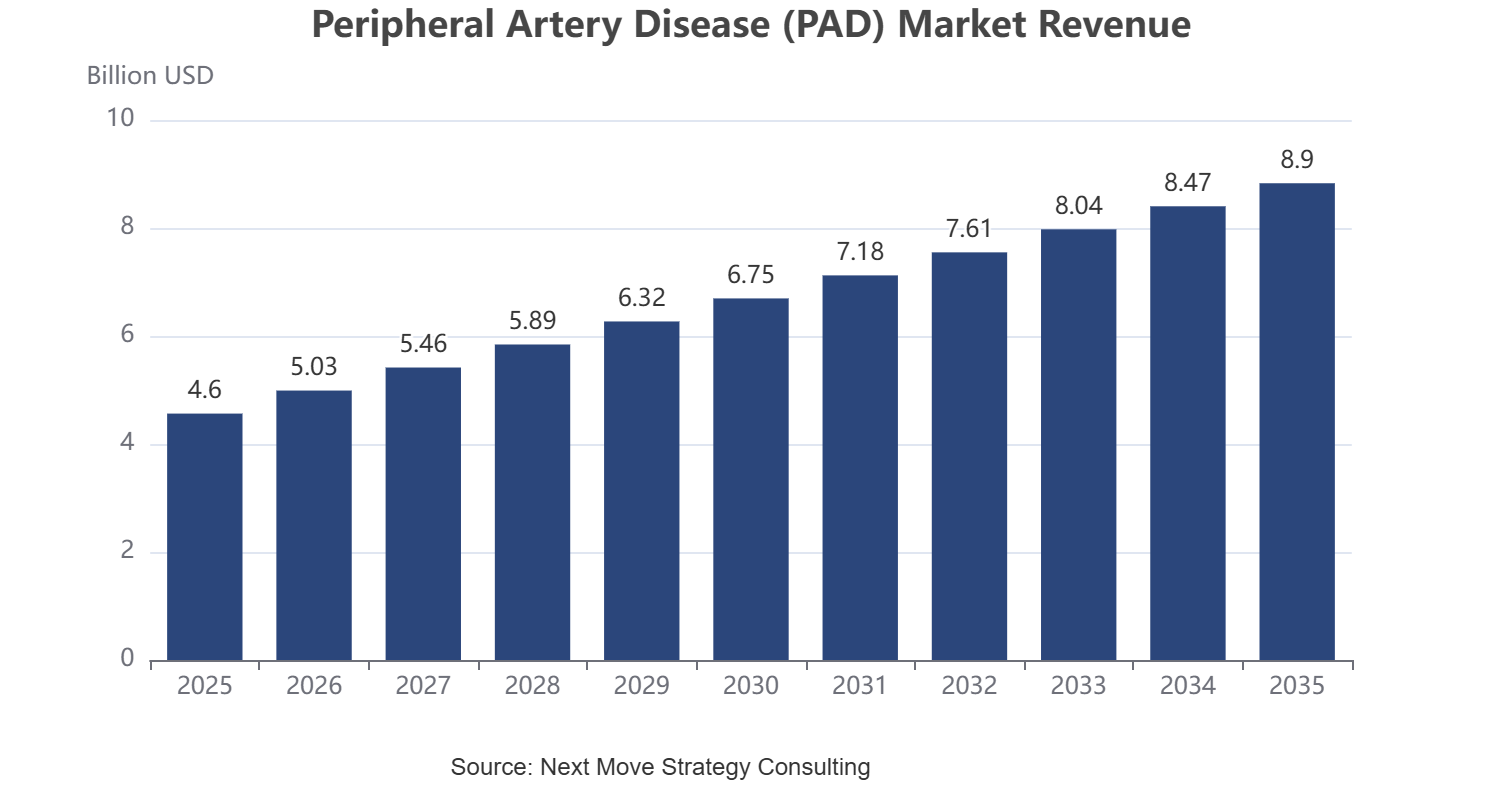
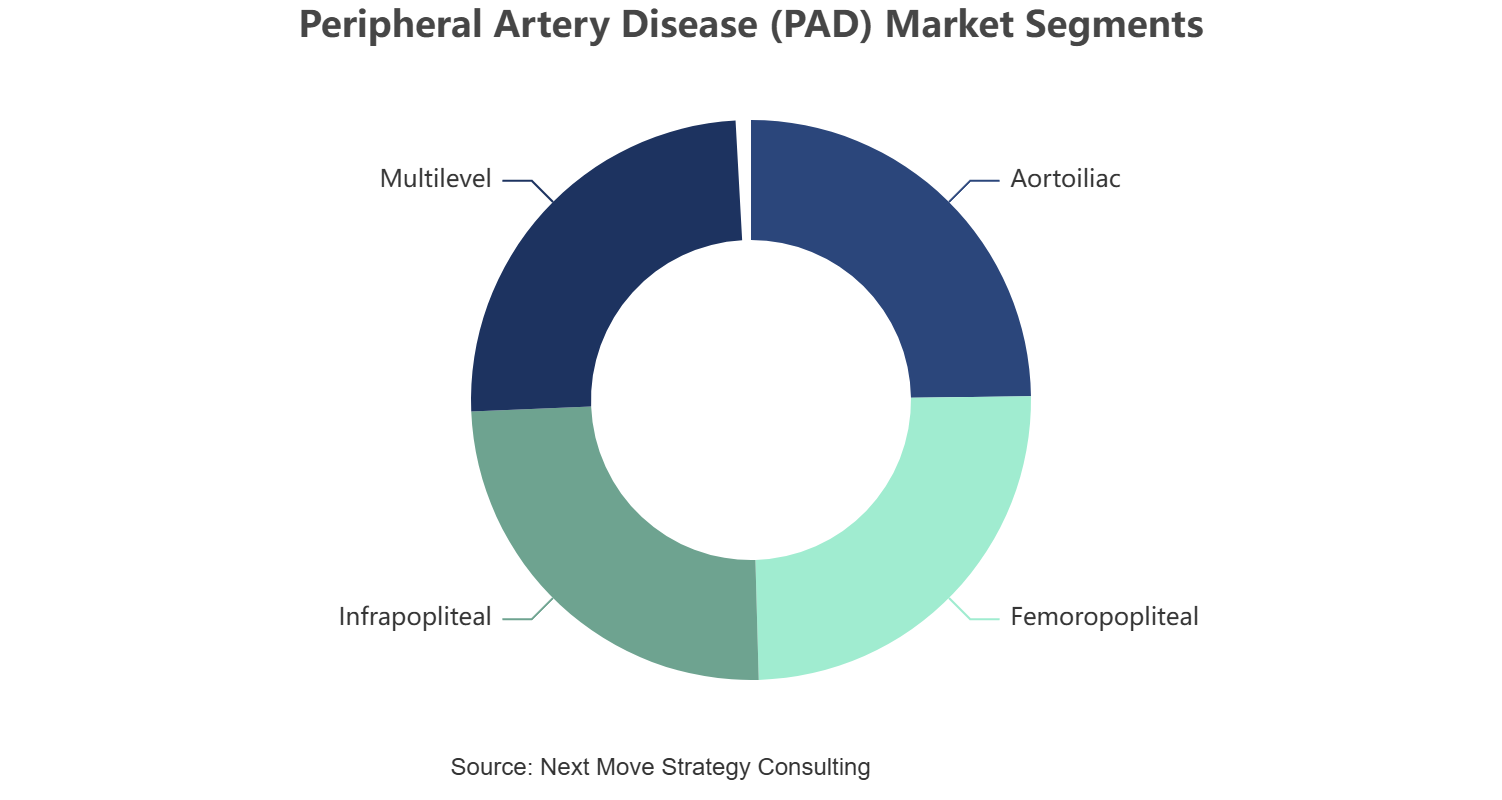
About the Author
 Liza Phukan
— Liza Phukan is Research Associate at Next Move Strategy Consulting, where she has covered emerging industries and market research across sectors for 3.5 years. Her work includes analyzing industry developments, validating market data, and developing structured business content from research findings. She uses secondary research and data-validation practices to turn complex market information into clear decision-useful market analysis for business audiences and support report development and B2B.
Liza Phukan
— Liza Phukan is Research Associate at Next Move Strategy Consulting, where she has covered emerging industries and market research across sectors for 3.5 years. Her work includes analyzing industry developments, validating market data, and developing structured business content from research findings. She uses secondary research and data-validation practices to turn complex market information into clear decision-useful market analysis for business audiences and support report development and B2B.
About the Reviewer
 Supradip Baul
— Supradip Baul is an accomplished business consultant and strategist with over a decade of rich experience in market intelligence, strategy, technology, and business transformation. His work has included rigorous qualitative and quantitative analysis across multiple industries, helping clients shape investment decisions and long-term roadmaps. Earlier in his career, he was associated with Gartner, where he contributed to industry-leading reports and market share analyses. He has worked with leading global companies and holds an MBA with a dual specialization in Marketing and Finance.
Supradip Baul
— Supradip Baul is an accomplished business consultant and strategist with over a decade of rich experience in market intelligence, strategy, technology, and business transformation. His work has included rigorous qualitative and quantitative analysis across multiple industries, helping clients shape investment decisions and long-term roadmaps. Earlier in his career, he was associated with Gartner, where he contributed to industry-leading reports and market share analyses. He has worked with leading global companies and holds an MBA with a dual specialization in Marketing and Finance.
At Next Move Strategy Consulting, we understand that insightful market research is the cornerstone of successful business decisions. That's why we employ a robust and multifaceted approach, combining various methodologies to deliver the most accurate and actionable data for our clients.

Research Landscape
We navigate the world of research with two primary approaches:
Qualitative Approach
Our qualitative research methodologies involve immersive techniques such as in-depth interviews, focus groups, and observational studies. By engaging directly with individuals and stakeholders, we uncover valuable insights that quantitative data alone may overlook.

Quantitative Research
In tandem with qualitative methodologies, NMSC leverages the power of Quantitative Research to provide a robust foundation of numerical insights. Through systematic data collection and analysis, we quantify patterns, preferences, and market trends, offering a comprehensive view of the business landscape.
Our quantitative research approach employs diverse tools, including surveys, experiments, and statistical modelling. These methodologies enable us to gather data from a large and representative sample, ensuring the statistical significance of our findings. By employing structured questionnaires and standardized data collection methods, we guarantee the reliability and validity of the information we present to our clients.
Quantitative research is particularly effective in measuring the prevalence of trends, assessing market size, and gauging the impact of various factors on consumer behavior. The numerical precision attained through this approach equips our clients with actionable insights, facilitating data-driven decision-making and strategy formulation.


Our Specialized Toolbox for Industry-Specific Market Research
We deploy a specialized arsenal of techniques tailored to meet your unique requirements. Here's a glimpse into our comprehensive toolbox:

Information Procurement
The stage entails acquiring market data or relevant information through various sources and methodologies.


Market Research Approach
We utilize both top-down and bottom-up approaches in market research analysis to achieve a comprehensive understanding of the market dynamics, leveraging the broad perspective of industry trends and macroeconomic factors alongside detailed insights from specific segments and individual companies.

Porters Five Forces Analysis
We conduct Porter's Five Forces analysis to evaluate the competitive landscape of an industry, providing us with insights into factors that affect profitability and strategic positioning.

SWOT Analysis

Forecasting
We utilize a forecasting model to predict future consumption by considering parameters like population, economics, regulations, market competition, drivers, constraints, technology, and pricing. We also employ statistical techniques such as multilinear regression, exponential smoothing, moving average, ARIMA, and Monte Carlo simulations for accurate predictions. In econometric forecasting, we analyzed short-term and long-term event impacts, attributing values based on regulatory frameworks, economic factors, and market events.





 Speak to Our Analyst