Bioelectronics Market Size, Share, Trends and Growth Analysis, By Product Type (Cardiac Rhythm Management Devices, Neurostimulation Devices, Cochlear and Auditory Implants, & Others), By Implantation Type (Implantable, Wearable Non-Invasive, and Hybrid), By Application and Indication (Cardiac Rhythm Disorders, Chronic Pain Management, Hearing Loss, & Others), By End User (Hospitals, Ambulatory Surgical Centers, & Others), and Region -- Global Industry Report and Forecast, 2026—2035
Industry: Healthcare | Publishing Date: August 10, 2026 | Last Updated: August 10, 2026 | No of Pages: N/A | No. of Tables: N/A | No. of Figures: N/A | Format: PDF | Report Code: HC5654
What Is the Bioelectronics Market Size?
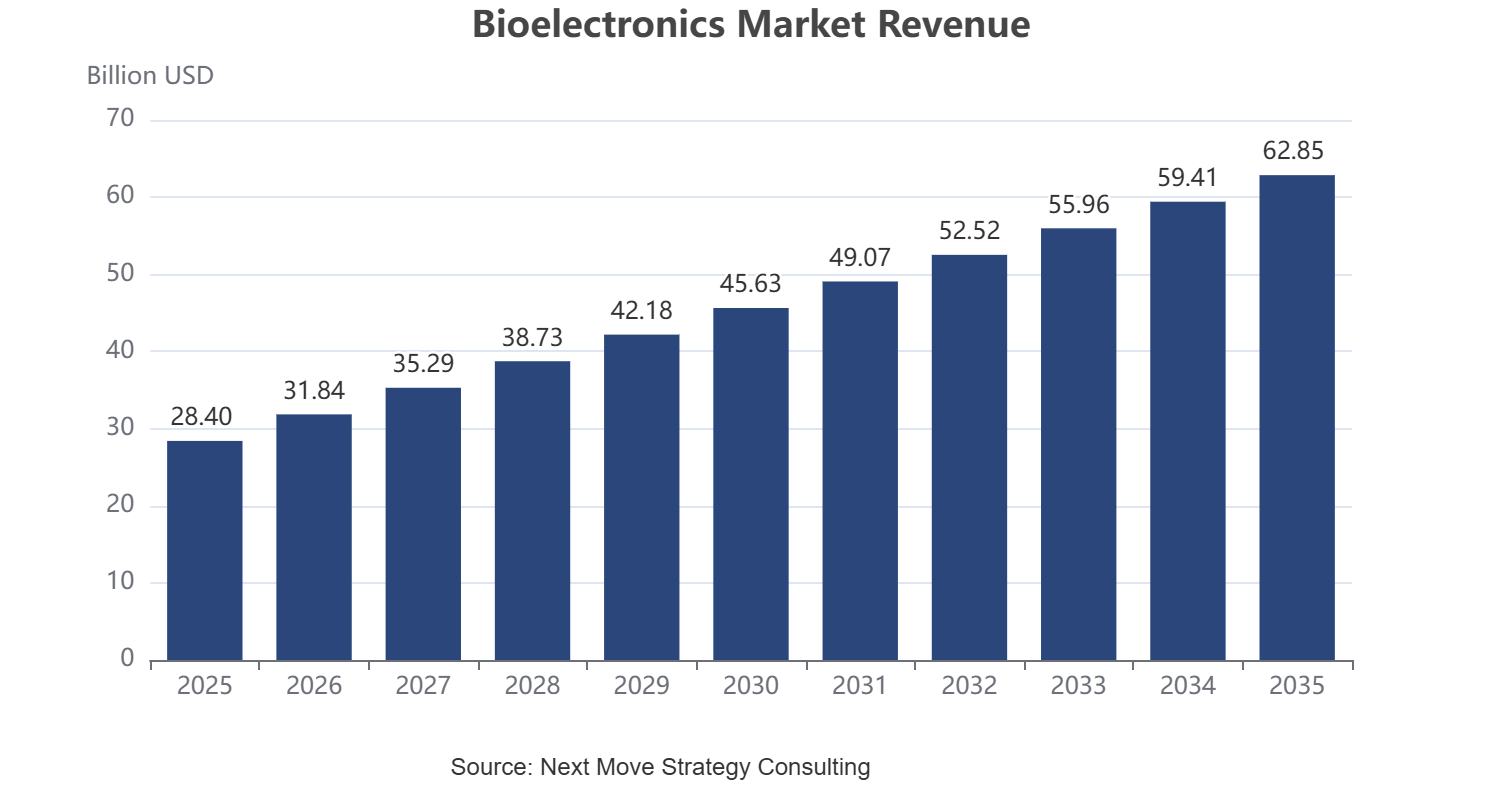
The global Bioelectronics Industry size was valued at USD 28.40 Billion in 2025 and is estimated at USD 30.65 Billion in 2026, forecast to reach USD 62.85 Billion by 2035, expanding at an 8.3% CAGR between 2026 and 2035. North America leads with approximately a 46% share, while Cardiac Rhythm Management Devices dominates all other product types with approximately a 40% share.
We observed that growth is broadest in bioelectronic medicine and brain-computer interface categories, with inflammatory disease treatment and paralysis rehabilitation applications recording the strongest structural gains through 2035.
|
Key Takeaways |
|
By Product Type: Cardiac Rhythm Management Devices held the largest share of approximately 40% (USD 11.36 billion) in 2025; Brain-Computer Interface Devices is the fastest-growing sub-segment at 17.2% CAGR from 2026-2035. |
|
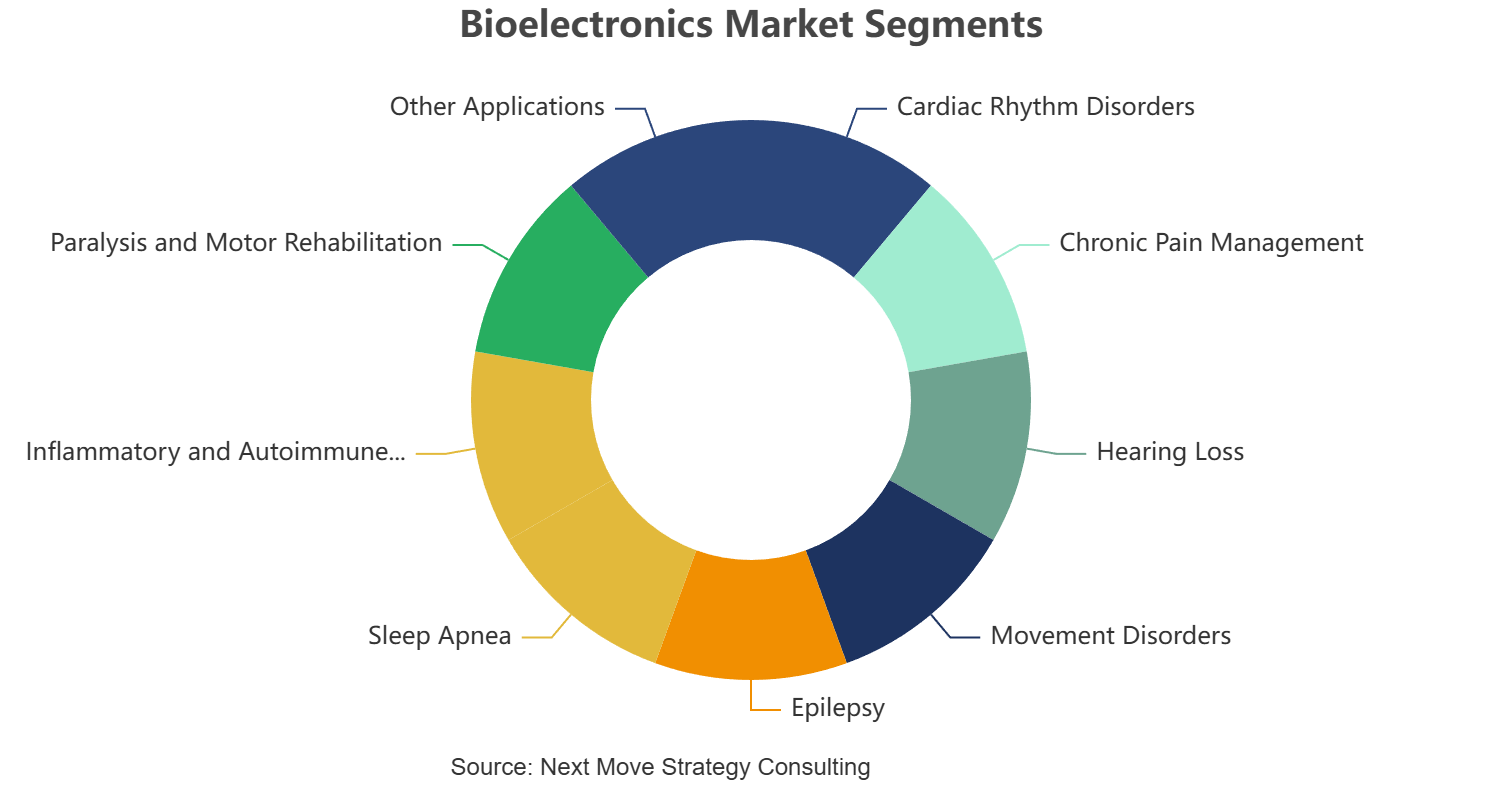
By Application and Indication: Cardiac Rhythm Disorders held the largest share of approximately 34% (USD 9.66 billion) in 2025; Paralysis and Motor Rehabilitation is the fastest-growing sub-segment at 17.7% CAGR from 2026-2035. |
|
By End User: Hospitals held the largest share of approximately 58% (USD 16.47 billion) in 2025; Home Care Settings is the fastest-growing sub-segment at 12.2% CAGR from 2026-2035. |
|
By Implantation Type: Implantable held the largest share of approximately 72% (USD 20.45 billion) in 2025; Hybrid is the fastest-growing sub-segment at 12.5% CAGR from 2026-2035. |
|
Dominant Region: North America dominated with approximately 46% revenue share (USD 13.06 billion) in 2025. |
|
Fastest-Growing Region: Asia-Pacific is expected to register the highest CAGR of 11.9% during 2026-2035. |
|
Dominant Country: The U.S. led with approximately USD 10.84 billion in 2025. |
|
Fastest-Growing Country: India is the fastest-growing country at approximately 14.5% CAGR from 2026-2035. |
Market Opportunity: The bioelectronics sector is expected to create an absolute dollar opportunity of USD 32.20 billion between 2026 and 2035, presenting significant investment potential across brain-computer interface and bioelectronic medicine platforms.
According to NMSC analysis, endovascular and minimally invasive implantation approaches are emerging as a distinct competitive lane within brain-computer interfaces, separate from open-craniotomy architectures, a shift that favors vendors capable of demonstrating lower-risk surgical pathways as a route to faster regulatory clearance through 2035.
Ecosystem Analysis of the Bioelectronics Market
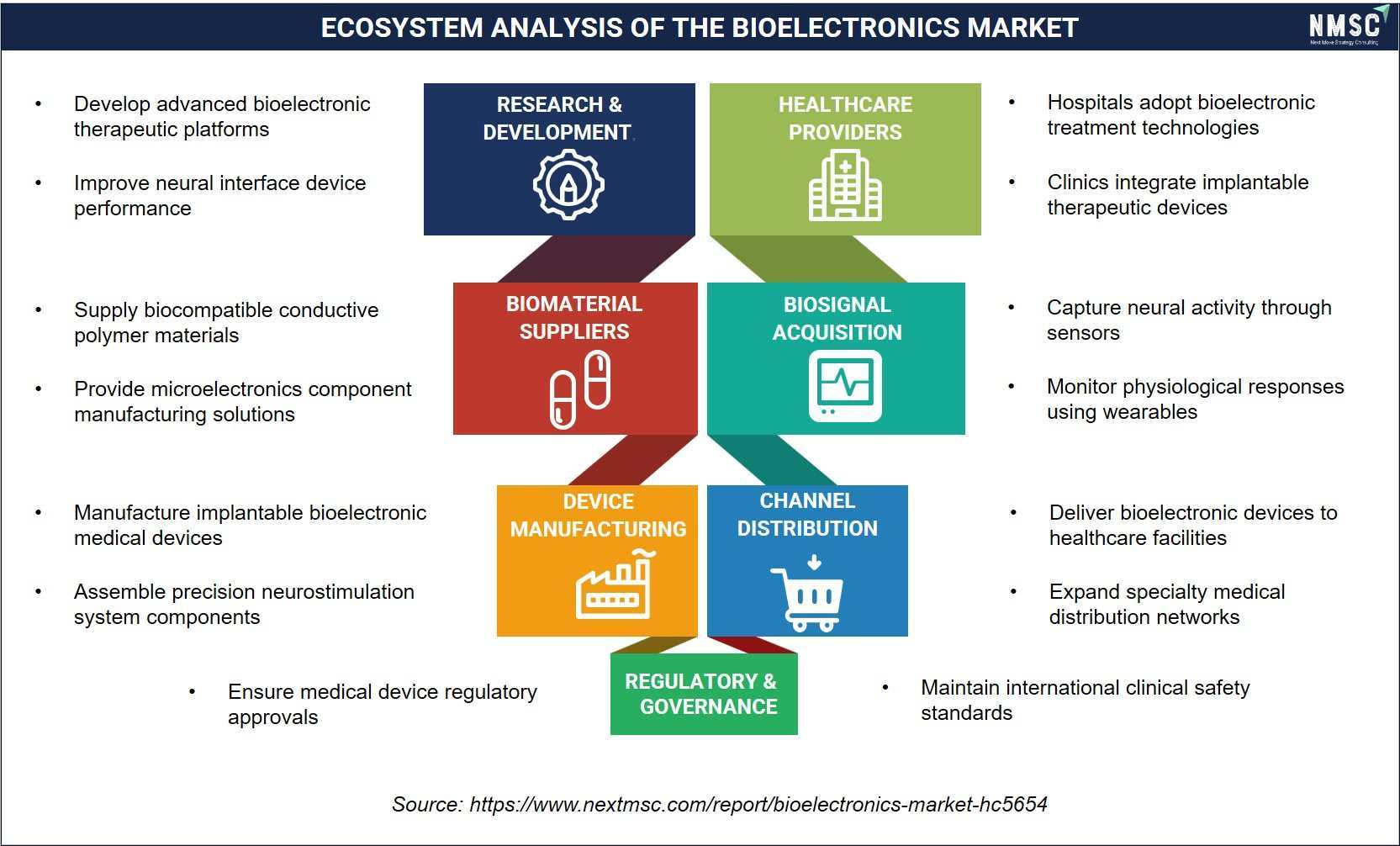
The above infographic presents an ecosystem analysis of the bioelectronics market, covering research and development, biomaterial suppliers, device manufacturing, biosignal acquisition, channel distribution, and regulatory governance. Advanced therapeutic platforms and neural interface devices are being developed, supported by biocompatible polymers and microelectronics suppliers. Implantable devices are further manufactured and integrated with neurostimulation components, while healthcare providers adopt these technologies for treatment. Looking ahead, we observed that regulatory approvals and clinical safety standards remain essential for ensuring market credibility and patient safety across the bioelectronics sector.
What Does the Bioelectronics Market Encompass?
The bioelectronics market encompasses the implantable, wearable, and hybrid devices that use electrical signals to monitor, stimulate, or modulate biological tissue and neural pathways for therapeutic purposes. Our assessment indicates that scope spans cardiac rhythm management devices, neurostimulation systems for pain and movement disorders, cochlear implants, emerging bioelectronic medicine platforms targeting inflammatory disease, and brain-computer interfaces, supplied to hospitals, specialty clinics, and home care settings worldwide.
Regulatory frameworks including the U.S. FDA's premarket approval and 510(k) clearance pathways continue to shape the pace at which novel bioelectronic architectures reach commercial availability. We observed that technology adoption is shifting toward minimally invasive implantation techniques, as vendors pursuing brain computer interface development increasingly favor endovascular and surface-array approaches over open-craniotomy procedures across the bioelectronics sector.
|
Parameters |
Details |
|
Market Size in 2025 |
USD 28.40 Billion |
|
Market Size in 2026 |
USD 30.65 Billion |
|
Revenue Forecast in 2035 |
USD 62.85 Billion |
|
Growth Rate |
CAGR of 8.3% from 2026 to 2035 |
|
Analysis Period |
2025-2035 |
|
Base Year Considered |
2025 |
|
Forecast Period |
2026-2035 |
|
Market Size Estimation |
Revenue (USD Billion) |
|
Companies Profiled |
20 |
|
Countries Covered |
38 |
|
Market Share |
Available for Top 10 Companies |
Key Emerging Trends
Based on research conducted by NMSC, we found that four structural trends are reshaping technology adoption, sourcing strategy, and stakeholder engagement across the industry.
How Is Endovascular Implantation Reshaping Brain-Computer Interface Development?
Vendors are increasingly pursuing catheter-based, endovascular implantation as an alternative to open-craniotomy brain-computer interface architectures. We observed that Synchron, Inc.'s Stentrode device, which reaches the brain through a blood vessel rather than open-skull surgery, illustrates how lower-risk procedural approaches are positioned to scale more readily across patient populations and potentially move faster through FDA premarket approval review than higher-electrode-count cortical implants.
Why Are Companies Racing Toward the First Implantable BCI Premarket Approval?
Multiple companies are simultaneously pursuing distinct regulatory pathways toward the first FDA premarket approval of a permanently implanted brain-computer interface. Our findings suggest that this competitive dynamic is accelerating clinical trial investment across implantable medical device categories, as Synchron, Inc.'s November 2025 USD 200 million Series D financing round, raised specifically to fund a 2026 pivotal trial, demonstrates how capital markets are backing distinct architectural bets on which approach clears regulatory review first.
How Is Bioelectronic Medicine Expanding Beyond Neurological Indications?
Bioelectronic medicine platforms are increasingly targeting inflammatory and autoimmune conditions rather than solely neurological or cardiac indications. We found that companies including SetPoint Medical Corporation and Galvani Bioelectronics Limited are developing vagus nerve stimulation platforms specifically for rheumatoid arthritis and related inflammatory disease, illustrating how electrical neuromodulation is expanding into disease categories traditionally treated exclusively with pharmaceuticals.
What Role Does Surface-Array Technology Play in Faster Regulatory Pathways?
Surface-array brain-computer interface architectures are achieving faster initial regulatory clearance than fully implanted alternatives by targeting narrower, shorter-duration clinical indications first. We observed that Precision Neuroscience Corporation's April 2025 FDA 510(k) clearance for intraoperative recording up to 30 days illustrates how a narrower initial indication can establish regulatory precedent ahead of broader, chronic-implant approval pathways pursued by competitors.
Growth Drivers and Restraints
Growth Catalyst and Risk Assessment Matrix
|
Factors |
Type |
(+/-) % Impact on CAGR |
Geographic Relevance |
Impact Timeline |
|
Aging population driving cardiac rhythm and hearing device demand |
Driver |
+2.1% |
North America, Europe |
2026-2035 |
|
Accelerating brain-computer interface clinical trial investment |
Driver |
+1.9% |
North America |
2026-2035 |
|
Expanding bioelectronic medicine applications in inflammatory disease |
Driver |
+1.6% |
North America, Europe |
2026-2035 |
|
Rising chronic pain and movement disorder neurostimulation adoption |
Driver |
+1.4% |
Global |
2026-2035 |
|
Growing hospital infrastructure investment in Asia-Pacific |
Driver |
+1.1% |
Asia-Pacific |
2026-2035 |
|
Increasing home care setting adoption of wearable neurostimulation |
Driver |
+0.8% |
North America, Europe |
2026-2032 |
|
Lengthy premarket approval timelines for novel implant architectures |
Restraint |
-1.2% |
Global |
2026-2035 |
|
High procedural and device costs limiting broader adoption |
Restraint |
-0.9% |
Global |
2026-2035 |
|
Limited reimbursement clarity for emerging bioelectronic medicine indications |
Restraint |
-0.7% |
North America, Europe |
2026-2032 |
What Is the Primary Growth Driver of the Bioelectronics Market?
The aging population driving cardiac rhythm and hearing device demand is the primary driver of the market. The National Institutes of Health continues to document rising prevalence of age-related cardiac arrhythmias and sensorineural hearing loss across the U.S. population. We observed that this demographic trend, reinforced by expanding neurostimulation indications for chronic pain, sustains baseline demand for both cardiac rhythm management devices and cochlear implants across hospital and specialty clinic end users.
How Is Brain-Computer Interface Investment Driving Bioelectronics Market Growth?
Accelerating brain-computer interface clinical trial investment is driving market growth as multiple architectures pursue distinct paths to FDA premarket approval. The FDA's 510(k) Premarket Notification Database continues to document expanding clearances for novel neural interface hardware. Our assessment indicates that this regulatory and capital momentum, exemplified by Synchron's 2025 financing round, is accelerating adoption timelines for brain-computer interface devices across North American research and clinical trial infrastructure.
What Is Restraining Bioelectronics Market Expansion?
Lengthy premarket approval timelines for novel implant architectures restrain commercial availability of next-generation bioelectronic devices. The FDA's premarket approval pathway continues to require multi-year clinical trial data before novel implantable devices reach broad commercial release. We found that smaller device developers face particular exposure, as extended trial timelines constrain their ability to reach revenue-generating commercial scale relative to larger, diversified medical device companies with existing regulatory affairs infrastructure.
Segmentation Analysis
Segment Sizing: By Product Type
|
Segment |
2025 (USD) |
2035 (USD) |
CAGR% (2026-2035) |
|
Cardiac Rhythm Management Devices |
USD 11.36 Billion |
USD 20.60 Billion |
6.8% |
|
Neurostimulation Devices |
USD 9.09 Billion |
USD 20.49 Billion |
9.5% |
|
Cochlear and Auditory Implants |
USD 3.41 Billion |
USD 6.61 Billion |
7.6% |
|
Bioelectronic Medicine Devices |
USD 2.27 Billion |
USD 7.50 Billion |
14.2% |
|
Brain-Computer Interface Devices |
USD 1.42 Billion |
USD 5.92 Billion |
17.2% |
|
Other Bioelectronic Devices |
USD 0.85 Billion |
USD 1.72 Billion |
8.1% |
|
Total |
USD 28.40 Billion |
USD 62.85 Billion |
8.3% |
Which Product Type Segment Dominates the Bioelectronics Market?
Cardiac Rhythm Management Devices led the market with USD 11.36 billion in 2025, supported by established cardiac rhythm management infrastructure and sustained pacemaker and defibrillator replacement demand. We observed that Brain-Computer Interface Devices is the fastest-growing product type, expanding at a 17.2% CAGR from 2026 to 2035, as multiple companies advance distinct architectures toward first regulatory approval.
Segment Sizing: By Application and Indication
|
Segment |
2025 (USD) |
2035 (USD) |
CAGR% (2026-2035) |
|
Cardiac Rhythm Disorders |
USD 9.66 Billion |
USD 17.22 Billion |
6.6% |
|
Chronic Pain Management |
USD 5.11 Billion |
USD 12.21 Billion |
10.2% |
|
Hearing Loss |
USD 3.41 Billion |
USD 6.50 Billion |
7.4% |
|
Movement Disorders |
USD 2.84 Billion |
USD 6.25 Billion |
9.2% |
|
Epilepsy |
USD 2.27 Billion |
USD 4.79 Billion |
8.7% |
|
Sleep Apnea |
USD 1.99 Billion |
USD 4.95 Billion |
10.7% |
|
Inflammatory and Autoimmune Disease |
USD 1.70 Billion |
USD 6.08 Billion |
15.2% |
|
Paralysis and Motor Rehabilitation |
USD 0.85 Billion |
USD 3.70 Billion |
17.7% |
|
Other Applications |
USD 0.57 Billion |
USD 1.15 Billion |
8.1% |
|
Total |
USD 28.40 Billion |
USD 62.85 Billion |
8.3% |
Which Application and Indication Segment Leads Bioelectronics Market Demand?
Cardiac Rhythm Disorders remained the dominant application, valued at USD 9.66 billion in 2025 on its established role as the largest indication category served by mature implantable device technology. Our findings suggest that Paralysis and Motor Rehabilitation is the fastest-growing application, registering a 17.7% CAGR from 2026 to 2035, as spinal cord stimulation and brain-computer interface platforms advance toward broader clinical availability.
Segment Sizing: By End User
|
Segment |
2025 (USD) |
2035 (USD) |
CAGR% (2026-2035) |
|
Hospitals |
USD 16.47 Billion |
USD 34.40 Billion |
8.5% |
|
Ambulatory Surgical Centers |
USD 5.68 Billion |
USD 13.32 Billion |
9.9% |
|
Specialty Clinics |
USD 3.41 Billion |
USD 7.54 Billion |
9.2% |
|
Home Care Settings |
USD 1.99 Billion |
USD 5.62 Billion |
12.2% |
|
Research Institutions |
USD 0.85 Billion |
USD 1.97 Billion |
9.7% |
|
Total |
USD 28.40 Billion |
USD 62.85 Billion |
8.3% |
Which End User Segment Is Most Widely Served in the Bioelectronics Sector?
Hospitals remained the dominant end user, reaching USD 16.47 billion in 2025 due to concentrated implantation procedures and post-operative monitoring infrastructure. Based on research conducted by NMSC, we found that Home Care Settings is the fastest-growing end user at a 12.2% CAGR from 2026 to 2035, reflecting rising adoption of wearable, non-invasive neurostimulation devices that support at-home chronic condition management.
Growth Opportunities
Our analysis shows that three forward-looking opportunities stand out for stakeholders positioning within the bioelectronics sector over the 2026-2035 forecast period.
How Can Minimally Invasive Implantation Unlock Value for Paralysis Patients?
Minimally invasive, endovascular implantation techniques present a whitespace opportunity for vendors serving paralysis patients seeking lower-risk brain-computer interface access. Vendors that commercialize catheter-based delivery methods stand to capture patient populations otherwise excluded from open-craniotomy procedures due to surgical risk tolerance or comorbidities.
Where Does Bioelectronic Medicine Create New Demand Among Autoimmune Disease Patients?
Autoimmune and inflammatory disease patients represent an underpenetrated opportunity for vagus nerve stimulation platforms offering an alternative to continuous pharmaceutical immunosuppression. Providers that develop clinically validated bioelectronic medicine devices can secure long-term treatment relationships with rheumatology and gastroenterology practices seeking non-pharmaceutical inflammatory disease management options.
How Can Wearable Neurostimulation Benefit Home Care Chronic Pain Management?
Chronic pain patients managing symptoms outside clinical settings create an opportunity for vendors offering wearable, non-invasive neurostimulation devices. Early movers that streamline digital therapeutics integration with wearable stimulation hardware can differentiate with payers and health systems pursuing reimbursement-eligible, at-home chronic pain management alternatives to implantable devices.
Regional Outlook
Geographic Performance Snapshot
|
Region |
2025 (USD) |
2035 (USD) |
CAGR% (2026-2035) |
Key Driver |
|
North America |
USD 13.06 Billion |
USD 26.95 Billion |
8.4% |
Established cardiac rhythm base and accelerating BCI clinical trial activity |
|
Europe |
USD 7.38 Billion |
USD 14.85 Billion |
8.1% |
Strong neurostimulation adoption and CE Mark-driven device approvals |
|
Asia-Pacific |
USD 5.68 Billion |
USD 15.63 Billion |
11.9% |
Expanding hospital infrastructure and rising cochlear implant adoption |
|
Middle East & Africa |
USD 1.42 Billion |
USD 3.46 Billion |
10.4% |
Growing healthcare infrastructure investment and specialty clinic expansion |
|
Latin America |
USD 0.85 Billion |
USD 1.96 Billion |
9.7% |
Rising cardiac and neurostimulation device adoption across regional hospitals |
|
Total |
USD 28.40 Billion |
USD 62.85 Billion |
8.3% |
-- |
North America Bioelectronics Market Outlook
North America leads the bioelectronics market with an established base of cardiac rhythm management infrastructure and the highest concentration of active brain-computer interface clinical trials globally. We observed that Synchron, Inc. and Neuralink Corp.'s parallel regulatory pursuits sustain demand for both mature implantable devices and next-generation neural interfaces. Technology adoption remains most advanced, with minimally invasive implantation techniques driving demand across the region's largest research hospital networks.
Europe Bioelectronics Market Outlook
Europe's bioelectronics market reflects a mature, CE Mark-driven landscape shaped by established neurostimulation and cardiac rhythm device manufacturers. Our findings suggest that hospitals across Germany, France, and the UK are accelerating adoption of bioelectronic medicine platforms for inflammatory disease. Technology adoption favors clinically validated implantable devices, supported by regional manufacturers including BIOTRONIK SE & Co. KG investing in next-generation cardiac and neurostimulation technology.
Asia-Pacific Bioelectronics Market Outlook
Asia-Pacific is the fastest-growing bioelectronics market region, propelled by expanding hospital infrastructure and rising cochlear implant adoption across China and India. We found that regulatory frameworks remain less harmonized than in North America, giving device makers flexibility to scale distribution rapidly. Technology adoption is accelerating as regional hospitals expand neurostimulation and cardiac rhythm management capacity to serve growing patient populations.
Middle East & Africa Bioelectronics Market Outlook
The bioelectronics market in Middle East & Africa is expanding as Gulf Cooperation Council economies invest in healthcare infrastructure and specialty clinic development. Our analysis shows that Saudi Arabia and the UAE are attracting bioelectronics investment tied to national healthcare modernization programs. Regulatory influence remains developing, while technology adoption is gradually shifting toward advanced cardiac and neurostimulation devices as regional hospitals expand specialty care capacity.
Latin America Bioelectronics Market Outlook
Latin America's bioelectronics market is supported by rising cardiac and neurostimulation device adoption across Brazil and Argentina. We observed that regulatory frameworks are less stringent than in North America or Europe, though multinational device makers operating locally are introducing standardized clinical specifications. Technology adoption remains centered on established cardiac rhythm management devices, with competitive intensity increasing as regional distributors partner with global manufacturers.
U.S. Bioelectronics Market
Based on our estimates, the U.S. market was valued at approximately USD 10.84 billion in 2025 and is projected to reach USD 20.44 billion by 2035, growing at a 7.3% CAGR. Demand is anchored by extensive cardiac rhythm management infrastructure and the largest concentration of active brain-computer interface clinical trials. Technology penetration favors minimally invasive implantation techniques, and competitive intensity remains high among established and emerging vendors serving national hospital and research accounts.
Canada Bioelectronics Market
The market in Canada reached roughly USD 1.44 billion in 2025 and is forecast to hit USD 2.64 billion by 2035 at a 7.0% CAGR. Demand structure mirrors U.S. clinical adoption patterns, with growing hospital interest in neurostimulation and cochlear implant technology. Technology penetration is rising as hospitals request advanced implantable devices, with competitive intensity moderate given reliance on device supply from U.S.-based and multinational vendors.
UK Bioelectronics Market
As per our estimate, the UK market stood at about USD 1.40 billion in 2025, advancing toward USD 2.54 billion by 2035 at a 6.8% CAGR. Demand is driven by established cardiac rhythm management and cochlear implant programs within the National Health Service. Regulatory influence from UK medical device requirements is notable, technology penetration favors clinically validated implantable devices, and competitive intensity remains steady among domestic and multinational vendors.
Germany Bioelectronics Market
According to our analysis, Germany's Bioelectronics Market was valued at near USD 1.77 billion in 2025 and is set to reach USD 3.37 billion by 2035, expanding at a 7.4% CAGR. Demand structure benefits from Germany's strong domestic cardiac and neurostimulation device manufacturing base led by BIOTRONIK SE & Co. KG. Regulatory influence from European medical device requirements shapes procurement specifications, while technology penetration favors advanced implantable systems among leading hospitals.
France Bioelectronics Market
Based on our estimates, France's market reached approximately USD 0.96 billion in 2025, projected to climb to USD 1.71 billion by 2035 at a 6.6% CAGR. Demand is supported by France's established neurostimulation and cardiac rhythm management infrastructure. Regulatory influence from national medical device requirements is notable, and competitive intensity remains moderate given the concentration of regional distributors serving domestic hospital accounts.
China Bioelectronics Market
The market in China stood at roughly USD 1.59 billion in 2025 and is forecast to reach USD 4.41 billion by 2035, registering a 12.0% CAGR. Demand is fueled by expanding domestic hospital infrastructure and a growing base of cardiac rhythm management and cochlear implant procedures. Regulatory influence is increasing gradually, technology penetration is accelerating through domestic manufacturing capacity, and competitive intensity remains elevated among multinational and regional device makers.
India Bioelectronics Market
As per our estimate, India's market was valued at about USD 0.74 billion in 2025, projected to reach USD 2.50 billion by 2035 at a 14.5% CAGR, the fastest among covered countries. Demand structure reflects rising cardiac disease prevalence and expanding hospital infrastructure investment. Regulatory influence remains developing, while technology penetration is rising quickly as global device makers localize distribution to serve India's growing patient base.
Japan Bioelectronics Market
According to our analysis, Japan's market reached close to USD 1.14 billion in 2025 and is expected to hit USD 2.47 billion by 2035, growing at a 9.0% CAGR. Demand is supported by Japan's established cardiac rhythm management and hearing implant infrastructure serving an aging population. Regulatory influence is well established, technology penetration is advanced, and competitive intensity remains high among long-standing domestic and multinational device makers.
South Korea Bioelectronics Market
Based on our estimates, South Korea's market stood at approximately USD 0.57 billion in 2025, forecast to reach USD 1.40 billion by 2035 at a 10.5% CAGR. Demand structure benefits from the country's advanced hospital infrastructure and rising neurostimulation device adoption. Technology penetration is high, with domestic hospitals adopting advanced implantable systems, and competitive intensity remains pronounced amid rapid clinical adoption cycles.
Australia Bioelectronics Market
The bioelectronics market in Australia reached about USD 0.34 billion in 2025 and is projected to reach USD 0.79 billion by 2035, expanding at a 9.8% CAGR. Demand is supported by strong cochlear implant adoption, reflecting the country's role as home to Cochlear Limited, alongside growing cardiac rhythm management infrastructure. Regulatory influence stems from national therapeutic goods guidance, while technology penetration favors advanced implantable devices amid moderate competitive intensity.
UAE Bioelectronics Market
As per our estimate, the UAE Bioelectronics Market was valued at near USD 0.40 billion in 2025, projected to reach USD 0.92 billion by 2035 at a 9.8% CAGR. Demand structure is shaped by the UAE's role as a regional healthcare infrastructure and specialty clinic hub. Regulatory influence remains moderate, technology penetration is improving through advanced cardiac and neurostimulation device adoption, and competitive intensity is rising as vendors expand regional service portfolios.
Saudi Arabia Bioelectronics Market
According to our analysis, Saudi Arabia's market reached roughly USD 0.37 billion in 2025 and is expected to hit USD 0.87 billion by 2035, growing at a 10.0% CAGR. Demand is driven by Vision 2030-linked healthcare infrastructure investment and expanding specialty clinic development. Regulatory influence is developing under national health guidelines, and technology penetration is advancing as domestic and multinational device makers scale supply.
South Africa Bioelectronics Market
Based on our estimates, South Africa's market stood at about USD 0.14 billion in 2025, forecast to reach USD 0.29 billion by 2035 at an 8.2% CAGR. Demand structure reflects a developing hospital and specialty clinic infrastructure serving regional Southern African markets. Regulatory influence remains moderate, technology penetration is gradually improving, and competitive intensity is limited given reliance on device supply from international vendors.
Brazil Bioelectronics Market
The market in Brazil reached approximately USD 0.36 billion in 2025 and is projected to reach USD 0.79 billion by 2035, registering a 9.2% CAGR. Demand is underpinned by Brazil's large domestic hospital network and expanding cardiac rhythm management adoption. Regulatory influence stems from national health regulatory requirements, technology penetration favors established implantable devices, and competitive intensity remains moderate among regional distributors.
Argentina Bioelectronics Market
Argentina's market was valued near USD 0.13 billion in 2025, projected to reach USD 0.26 billion by 2035 at an 8.0% CAGR. Demand structure is supported by steady cardiac and neurostimulation device adoption despite macroeconomic volatility. Regulatory influence remains limited, technology penetration is modest, and competitive intensity is centered on a small number of regional distributors serving domestic hospitals.
Regulatory Framework Impacting the Bioelectronics Market
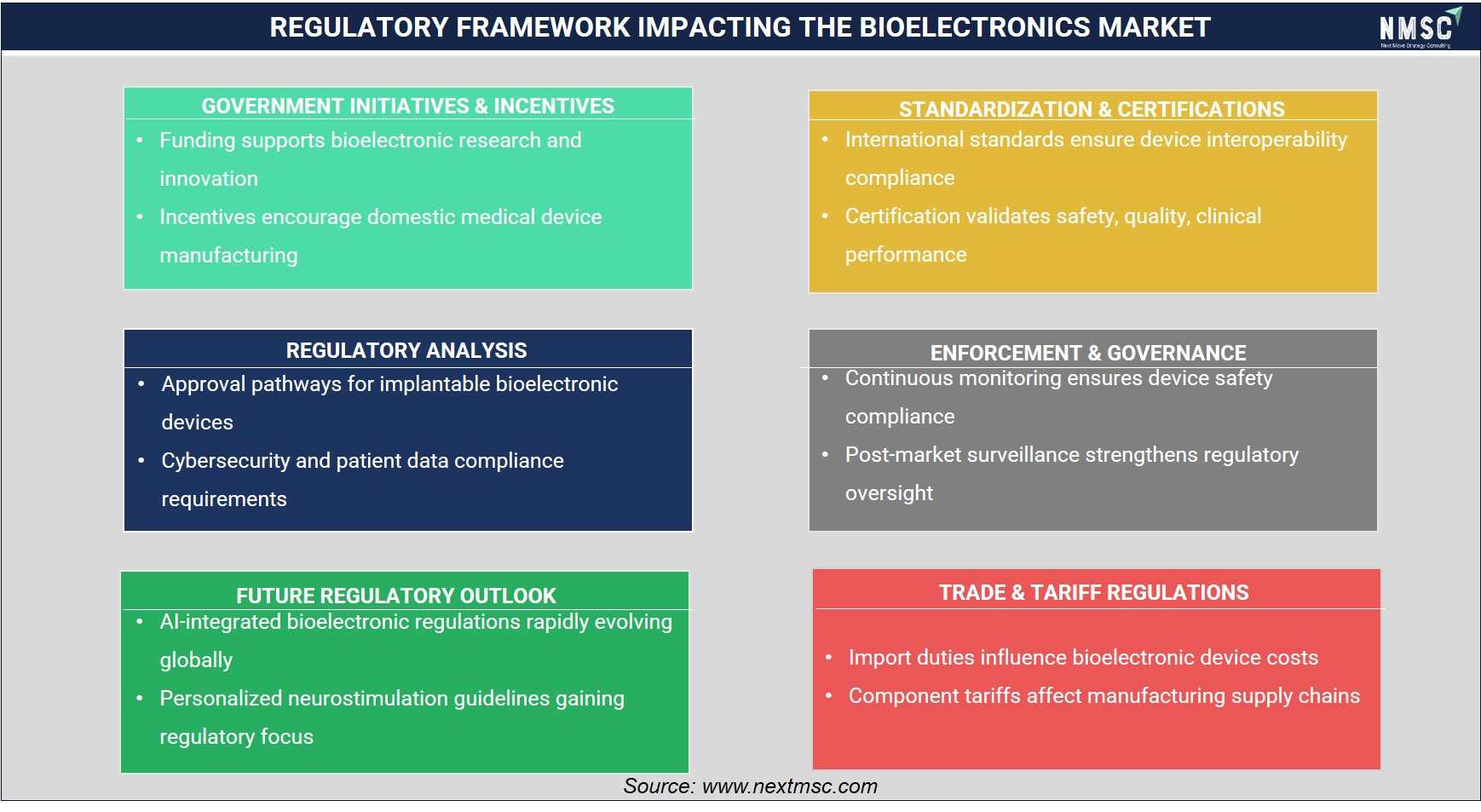
The above infographic presents a regulatory framework impacting the bioelectronics market, wherein government funding and manufacturing incentives are supporting R&D and domestic production. Regulatory approval pathways and cybersecurity requirements govern device deployment, with international standards ensuring safety and interoperability. Post-market surveillance and continuous monitoring strengthen governance, while evolving guidelines are focusing on personalized neurostimulation and AI integration. Looking ahead, we observed that trade and tariff regulations on components continue to influence manufacturing costs and global supply chain dynamics across the sector.
Competitive Landscape
We observed that the bioelectronics market features a moderately consolidated competitive landscape, with diversified medical device majors competing alongside specialized neurostimulation and brain-computer interface companies on regulatory clearance depth, procedural risk profile, and clinical indication breadth.
|
Key Takeaways |
Details |
|
Market Structure |
Moderately consolidated; the top companies profiled in this report collectively account for a majority of global bioelectronics revenue, while numerous specialized brain-computer interface and bioelectronic medicine ventures serve emerging indication categories. |
|
Innovation Focus |
Minimally invasive brain-computer interface architectures, bioelectronic medicine for inflammatory disease, and wearable neurostimulation dominate current innovation pipelines across leading companies. |
|
M&A Activity |
Capital-intensive clinical trial financing rather than large-scale acquisitions, exemplified by Synchron, Inc.'s USD 200 million Series D round dedicated to pivotal trial funding. |
How Do Companies Compete in the Bioelectronics Market?
Companies compete primarily on regulatory clearance depth, procedural risk profile, and clinical indication breadth across the industry. Diversified medical device majors such as Medtronic plc and Abbott Laboratories leverage broad cardiac and neurostimulation portfolios to serve hospital systems globally, while specialized brain-computer interface companies such as Synchron, Inc. and Neuralink Corp. compete on architectural approach and speed toward first regulatory approval in an emerging category.
Which Competitive Archetypes Dominate the Bioelectronics Market?
Two archetypes dominate the market: diversified medical device majors offering established, broad-indication implantable portfolios, and specialized ventures pursuing narrow, high-innovation categories such as brain-computer interfaces or bioelectronic medicine. Medtronic plc and Boston Scientific Corporation exemplify the diversified archetype through combined cardiac and neurostimulation offerings, while Synchron, Inc. and SetPoint Medical Corporation exemplify the specialist archetype pursuing single-category clinical and regulatory breakthroughs.
How Are Companies Differentiating Through Innovation in the Bioelectronics Market?
Innovation and differentiation strategy increasingly center on procedural risk reduction and regulatory pathway speed. Synchron's endovascular Stentrode approach and Precision Neuroscience Corporation's narrower initial FDA clearance both illustrate how companies are differentiating on the path to market rather than solely on device performance. Our analysis shows that companies unable to articulate a credible, differentiated regulatory strategy risk falling behind competitors advancing toward first-mover commercial approval.
What M&A and Expansion Activity Is Shaping the Bioelectronics Market?
Large clinical trial financing rounds continue to shape competitive positioning within the industry more than acquisitions at this stage of market development for emerging categories. Synchron's November 2025 Series D round illustrates how capital markets are funding distinct architectural bets toward regulatory approval. These moves illustrate how specialized companies pursue clinical validation and geographic trial expansion across hospital, research, and home care customer segments.
Key Market Players
Our assessment indicates that the following 20 companies are actively shaping device innovation, regulatory clearance strategy, and go-to-market approach within the global bioelectronics market.
-
Medtronic plc
-
Abbott Laboratories
-
Boston Scientific Corporation
-
LivaNova PLC
-
Cochlear Limited
-
Sonova Holding AG
-
BIOTRONIK SE & Co. KG
-
Nevro Corp.
-
Axonics, Inc.
-
Inspire Medical Systems, Inc.
-
NeuroPace, Inc.
-
SetPoint Medical Corporation
-
Galvani Bioelectronics Limited
-
electroCore, Inc.
-
Cala Health, Inc.
-
Synchron, Inc.
-
ONWARD Medical N.V.
-
Envoy Medical, Inc.
-
Neuralink Corp.
-
Precision Neuroscience Corporation
Latest Developments
We found that recent regulatory and clinical trial announcements within the bioelectronics market are concentrated on brain-computer interface development, reflecting the industry's most active area of innovation and capital investment.
|
Date |
Event |
|
September 2025 |
Medtronic received FDA approval for Altaviva, an implantable tibial neuromodulation device for urge urinary incontinence. The launch expands its neuromodulation portfolio and strengthens its position in implantable bioelectronic therapies for bladder dysfunction |
|
Innovation Focus |
Minimally invasive brain-computer interface architectures, bioelectronic medicine for inflammatory disease, and wearable neurostimulation dominate current innovation pipelines across leading companies. |
|
February 2025 |
Medtronic received FDA approval for BrainSense Adaptive DBS technology, enabling closed-loop real-time neural sensing and stimulation adjustment for Parkinson's disease patients. It marks the world's first commercially available adaptive bioelectronic brain-computer interface system. |
|
January 2025 |
ONWARD Medical announced the first commercial sales of its ARC-EX System following the U.S. FDA's De Novo authorization in December 2024. The first systems were purchased by UW Medicine and Next Steps Chicago, making ARC-EX the first FDA-authorized non-invasive spinal cord stimulation technology designed to improve hand strength and sensation in people with chronic spinal cord injury. |
Expert Insights
 "Medtronic is the only company in the world to offer an adaptive DBS system that dynamically adjusts therapy in real time. This new era in Parkinson's care represents more than a decade of intentional innovation—ushering in personalized neuromodulation at scale that responds to a patient's changing needs, equipping clinicians with unparalleled insights, and setting a new standard for DBS therapy."
- Brett Wall, Executive Vice President and President of the Medtronic Neuroscience Portfolio
Statement made during the announcement of the U.S. FDA approval for Medtronic's BrainSense Adaptive Deep Brain Stimulation.
Market Interpretation
The statement reflects the evolution of the Bioelectronics Market toward closed-loop, intelligent neuromodulation systems capable of delivering personalized therapy through continuous physiological monitoring and real-time response. NMSC's analysis indicates that advances in adaptive neurostimulation, brain-computer interface (BCI) technologies, and sensing-enabled implantable devices are accelerating the transition from conventional fixed-output therapies to data-driven bioelectronic interventions. Our findings suggest that the commercialization of adaptive deep brain stimulation platforms will strengthen innovation across neurological disorder management, expand the adoption of precision bioelectronic medicine, and reinforce the long-term growth potential of the global Bioelectronics Market.
Investment Opportunities
What Capital Inflows Are Targeting the Bioelectronics Market?
Capital inflows into the bioelectronics market are increasingly directed toward brain-computer interface pivotal trial financing and bioelectronic medicine clinical development. Synchron, Inc.'s USD 200 million Series D round illustrates continued private capital deployment toward next-generation neural interface technology. We observed that investors favor companies demonstrating credible regulatory pathways and clinical safety data, viewing trial milestone achievement as a proxy for long-term commercial viability.
How Is Infrastructure Investment Supporting Bioelectronics Market Delivery?
Infrastructure investment is expanding hospital and specialty clinic capacity across Asia-Pacific, particularly in China and India, to serve rising cardiac and neurostimulation device demand. Our findings suggest that manufacturers are investing in cochlear implant production and distribution capacity to improve supply consistency across hearing and neurostimulation device categories supporting growing regional hospital procurement volumes.
What ESG Considerations Are Shaping Bioelectronics Investment Decisions?
Environmental, social, and governance considerations increasingly factor into investment decisions, with equitable access to advanced implantable devices and long-term patient safety monitoring as key criteria. We found that investors increasingly favor companies with documented post-market surveillance frameworks, treating long-term device safety transparency as a governance indicator alongside affordability considerations for underserved patient populations.
Key Benefits for Stakeholders
How Does This Report Benefit Enterprise and Industry Leaders?
Enterprise and industry leaders gain access to validated segmentation, competitive benchmarking, and regional demand forecasts that support sourcing and technology-investment decisions across the bioelectronics industry. Our analysis shows that detailed product type, application, and end-user breakdowns help procurement and clinical technology teams align vendor selection with regulatory and performance requirements.
How Does This Report Benefit Investors and Financial Analysts?
Investors and financial analysts benefit from consistent, single-point market size and CAGR estimates that support valuation and capital-allocation decisions across the bioelectronics supply chain. We observed that the report's regional and segment-level growth differentials help identify which device makers are best positioned to capture above-market growth in brain-computer interface and bioelectronic medicine categories through 2035.
How Does This Report Benefit Technology Vendors and Product Teams?
Technology vendors and product teams gain insight into emerging requirements, including minimally invasive implantation, bioelectronic medicine indication expansion, and wearable neurostimulation design, that are reshaping the industry. Our findings suggest that this analysis helps R&D teams prioritize development roadmaps around regulatory pathway strategy and clinical indication breadth increasingly required in hospital and research procurement.
Key Market Segments
By Product Type
-
Cardiac Rhythm Management Devices
-
Neurostimulation Devices
-
Cochlear and Auditory Implants
-
Bioelectronic Medicine Devices
-
Brain-Computer Interface Devices
-
Other Bioelectronic Devices
By Implantation Type
-
Implantable
-
Wearable Non-Invasive
-
Hybrid
By Application and Indication
-
Cardiac Rhythm Disorders
-
Chronic Pain Management
-
Hearing Loss
-
Movement Disorders
-
Epilepsy
-
Sleep Apnea
-
Inflammatory and Autoimmune Disease
-
Paralysis and Motor Rehabilitation
-
Other Applications
By End User
-
Hospitals
-
Ambulatory Surgical Centers
-
Specialty Clinics
-
Home Care Settings
-
Research Institutions
By Region
-
North America: U.S., Canada, Mexico
-
Europe: UK, Germany, France, Italy, Spain, Sweden, Denmark, Finland, Netherlands, Rest of Europe
-
Asia-Pacific: China, India, Japan, South Korea, Taiwan, Indonesia, Vietnam, Australia,Philippines, Malaysia, Rest of APAC
-
Middle East & Africa: Saudi Arabia, UAE, Egypt, Israel, Turkey, Nigeria, South Africa, Rest of MEA
-
Latin America: Brazil, Argentina, Chile, Colombia, Rest of LATAM
Conclusion and Recommendations
What Is the Long-Term Outlook for the Bioelectronics Market?
The long-term outlook for the market remains positive, with global revenue projected to grow from USD 28.40 Billion in 2025 to USD 62.85 Billion by 2035 at an 8.3% CAGR. We observed that aging-population-driven cardiac and hearing device demand, accelerating brain-computer interface development, and expanding bioelectronic medicine applications will continue underpinning growth across hospital, specialty clinic, and home care customer segments through the forecast period.
What Strategic Positioning Should Bioelectronics Companies Pursue?
Companies should prioritize minimally invasive implantation architectures and credible regulatory pathway strategy while pursuing clinical trial milestone execution to secure long-term investor and hospital confidence. Our assessment indicates that companies investing early in procedural risk reduction and bioelectronic medicine indication expansion will be best positioned to capture premium valuation within the bioelectronics market.
How Attractive Is the Bioelectronics Market for New Investment?
The bioelectronics industry presents an attractive investment case, supported by a USD 32.20 billion absolute dollar opportunity between 2026 and 2035 and above-average growth in brain-computer interface and bioelectronic medicine categories. We found that investment attractiveness is highest for companies combining established commercial device revenue with credible next-generation platform development, positioning them to serve both mature and emerging bioelectronics customer segments simultaneously.
What Market Shifts and Key Risks Should Stakeholders Monitor?
Stakeholders should monitor lengthy premarket approval timelines, high procedural and device costs, and limited reimbursement clarity for emerging bioelectronic medicine indications as key risks to the bioelectronics market. Our analysis shows that companies unable to secure timely regulatory clearance risk losing competitive position to rivals with faster, lower-risk architectural approaches, particularly within the brain-computer interface category where multiple companies are racing toward first approval.
What Are the Key Growth Pathways for the Bioelectronics Market?
Key growth pathways include expanding minimally invasive brain-computer interface architectures, scaling bioelectronic medicine platforms for inflammatory disease, and deepening penetration into home care neurostimulation categories. NMSC's analysis indicates that companies pursuing these pathways while maintaining regulatory clearance momentum will be best positioned to capture the market's projected growth through 2035.
About the Author
 Mayurima Roy
— Mayurima Roy is Research Analyst at Next Move Strategy Consulting, where she has spent 4 years working across the firm's full industry coverage rather than a single fixed vertical. Her work centers on structured research, ongoing trend tracking, competitive assessment, and insight-led content development, translating complex market data into clear, decision-ready narratives that support informed client decision-making across diverse global industries, market sectors, and world regions every day.
Mayurima Roy
— Mayurima Roy is Research Analyst at Next Move Strategy Consulting, where she has spent 4 years working across the firm's full industry coverage rather than a single fixed vertical. Her work centers on structured research, ongoing trend tracking, competitive assessment, and insight-led content development, translating complex market data into clear, decision-ready narratives that support informed client decision-making across diverse global industries, market sectors, and world regions every day.
About the Reviewer
 Supradip Baul
— Supradip Baul is an accomplished business consultant and strategist with over a decade of rich experience in market intelligence, strategy, technology, and business transformation. His work has included rigorous qualitative and quantitative analysis across multiple industries, helping clients shape investment decisions and long-term roadmaps. Earlier in his career, he was associated with Gartner, where he contributed to industry-leading reports and market share analyses. He has worked with leading global companies and holds an MBA with a dual specialization in Marketing and Finance.
Supradip Baul
— Supradip Baul is an accomplished business consultant and strategist with over a decade of rich experience in market intelligence, strategy, technology, and business transformation. His work has included rigorous qualitative and quantitative analysis across multiple industries, helping clients shape investment decisions and long-term roadmaps. Earlier in his career, he was associated with Gartner, where he contributed to industry-leading reports and market share analyses. He has worked with leading global companies and holds an MBA with a dual specialization in Marketing and Finance.
At Next Move Strategy Consulting, we understand that insightful market research is the cornerstone of successful business decisions. That's why we employ a robust and multifaceted approach, combining various methodologies to deliver the most accurate and actionable data for our clients.

Research Landscape
We navigate the world of research with two primary approaches:
Qualitative Approach
Our qualitative research methodologies involve immersive techniques such as in-depth interviews, focus groups, and observational studies. By engaging directly with individuals and stakeholders, we uncover valuable insights that quantitative data alone may overlook.

Quantitative Research
In tandem with qualitative methodologies, NMSC leverages the power of Quantitative Research to provide a robust foundation of numerical insights. Through systematic data collection and analysis, we quantify patterns, preferences, and market trends, offering a comprehensive view of the business landscape.
Our quantitative research approach employs diverse tools, including surveys, experiments, and statistical modelling. These methodologies enable us to gather data from a large and representative sample, ensuring the statistical significance of our findings. By employing structured questionnaires and standardized data collection methods, we guarantee the reliability and validity of the information we present to our clients.
Quantitative research is particularly effective in measuring the prevalence of trends, assessing market size, and gauging the impact of various factors on consumer behavior. The numerical precision attained through this approach equips our clients with actionable insights, facilitating data-driven decision-making and strategy formulation.


Our Specialized Toolbox for Industry-Specific Market Research
We deploy a specialized arsenal of techniques tailored to meet your unique requirements. Here's a glimpse into our comprehensive toolbox:

Information Procurement
The stage entails acquiring market data or relevant information through various sources and methodologies.


Market Research Approach
We utilize both top-down and bottom-up approaches in market research analysis to achieve a comprehensive understanding of the market dynamics, leveraging the broad perspective of industry trends and macroeconomic factors alongside detailed insights from specific segments and individual companies.

Porters Five Forces Analysis
We conduct Porter's Five Forces analysis to evaluate the competitive landscape of an industry, providing us with insights into factors that affect profitability and strategic positioning.

SWOT Analysis

Forecasting
We utilize a forecasting model to predict future consumption by considering parameters like population, economics, regulations, market competition, drivers, constraints, technology, and pricing. We also employ statistical techniques such as multilinear regression, exponential smoothing, moving average, ARIMA, and Monte Carlo simulations for accurate predictions. In econometric forecasting, we analyzed short-term and long-term event impacts, attributing values based on regulatory frameworks, economic factors, and market events.





 Speak to Our Analyst