Personalized Medicine Market Size, Share, Trends and Growth Analysis, By Diagnostic Tests and Assays (Genomic Testing, Companion Diagnostics, and Molecular Pathology), By Instruments and Consumables, By Software and Data, By Services, By Therapy Area (Oncology, Rare and Genetic Diseases, Reproductive Health, and Others), By Customer Type, By Technology (NGS, PCR, Microarray and Others), By Revenue Model, By Distribution Channel, and Region – Global Industry Report and Forecast, 2026–2035
What Is the Personalized Medicine Market Size?
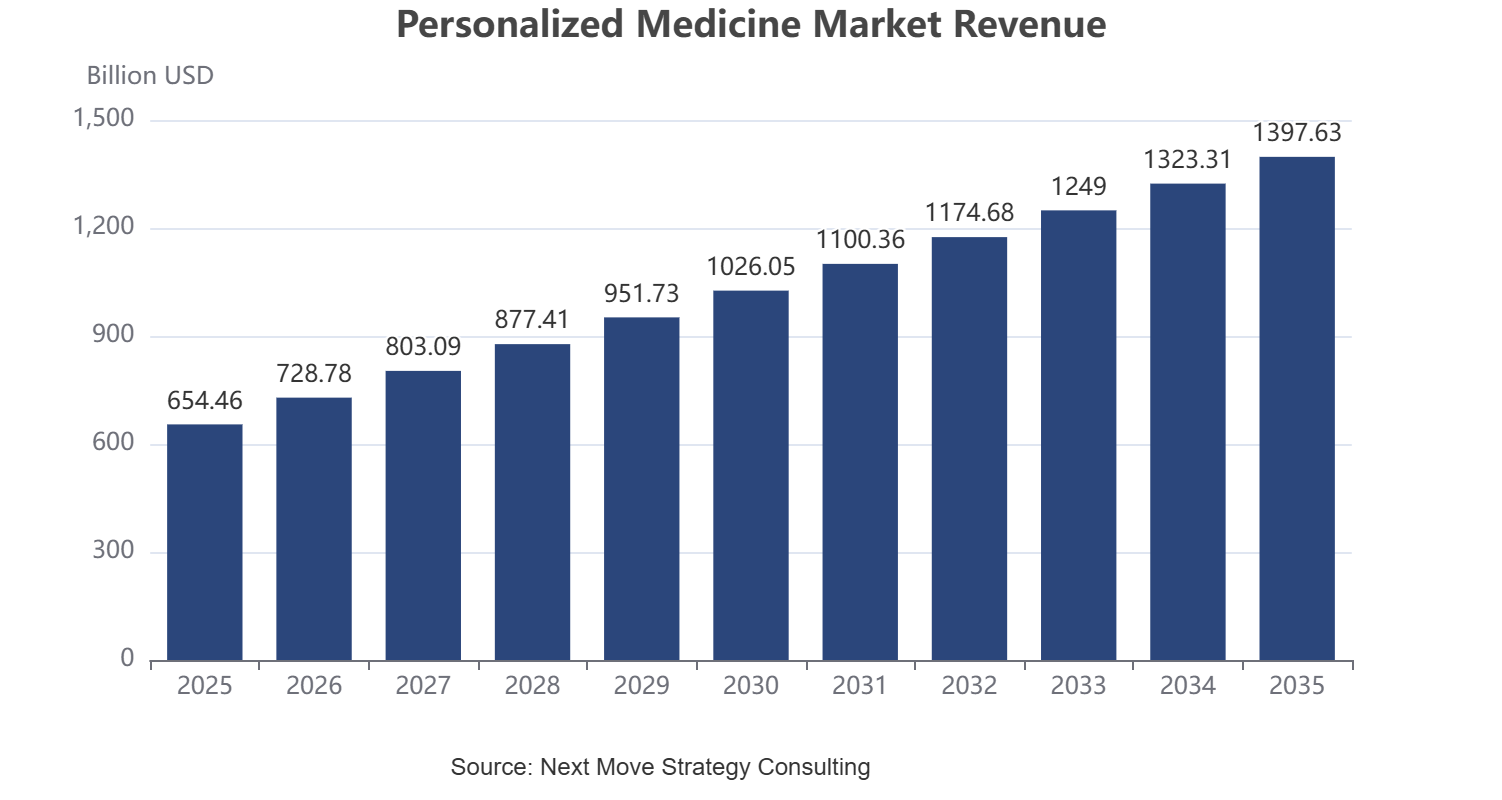
The global Personalized medicine market size was valued at USD 654.46 billion in 2025 and is estimated at USD 702.52 billion in 2026, forecast to reach USD 1,397.63 billion by 2035, expanding at a 7.88% CAGR between 2026 and 2035. North America leads with approximately 44% share, while Genomic Testing dominates all other diagnostic tests and assays with approximately 54% share.
We observed that growth is concentrated in companion diagnostics and AI-driven analytics, with oncology testing volume and next-generation sequencing adoption driving the dominant structural shifts through 2035.
|
Key Takeaways |
|
By Diagnostic Tests and Assays: Genomic Testing held the largest share of approximately 54% (USD 353.41 Billion) in 2025; Companion Diagnostics is the fastest-growing sub-segment at 9.9% CAGR from 2026–2035. |
|
By Instruments and Consumables: Sequencing Consumables held the largest share of approximately 24% (USD 157.07 Billion) in 2025; Assay Kits is the fastest-growing sub-segment at 9.7% CAGR from 2026–2035. |
|
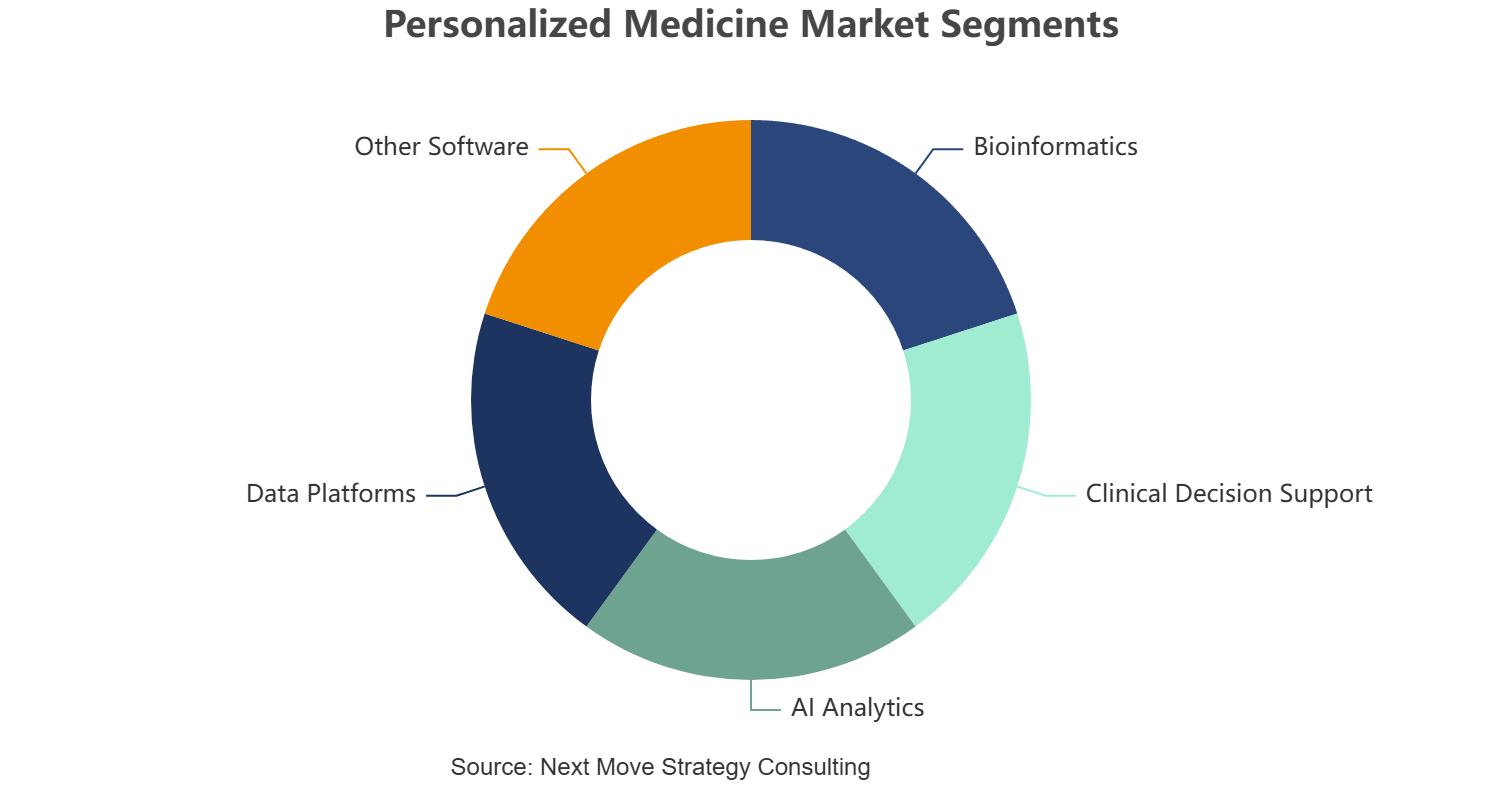
By Software and Data: Bioinformatics held the largest share of approximately 32% (USD 209.43 Billion) in 2025; AI Analytics is the fastest-growing sub-segment at 12.5% CAGR from 2026–2035. |
|
By Services: Clinical Testing held the largest share of approximately 41% (USD 268.33 Billion) in 2025; Trial Matching is the fastest-growing sub-segment at 10.1% CAGR from 2026–2035. |
|
By Therapy Area: Oncology held the largest share of approximately 47% (USD 307.60 Billion) in 2025; Cardiology is the fastest-growing sub-segment at 12.3% CAGR from 2026–2035. |
|
By Customer Type: Clinical Laboratories held the largest share of approximately 29% (USD 189.79 Billion) in 2025; Patients and Consumers is the fastest-growing sub-segment at 13.1% CAGR from 2026–2035. |
|
By Technology: NGS held the largest share of approximately 34% (USD 222.52 Billion) in 2025; AI and ML is the fastest-growing sub-segment at 19.0% CAGR from 2026–2035. |
|
By Revenue Model: Product Sales held the largest share of approximately 38% (USD 248.69 Billion) in 2025; Software Subscriptions is the fastest-growing sub-segment at 13.3% CAGR from 2026–2035. |
|
By Distribution Channel: Direct held the largest share of approximately 56% (USD 366.50 Billion) in 2025; Online is the fastest-growing sub-segment at 14.9% CAGR from 2026–2035. |
|
Dominant Region: North America dominated with approximately 44% revenue share (USD 287.96 Billion) in 2025. |
|
Fastest-Growing Region: Asia-Pacific is expected to register the highest CAGR of 10.6% during 2026–2035. |
|
Dominant Country: U.S. led with approximately USD 247.65 Billion in 2025. |
|
Fastest-Growing Country: India is the fastest-growing country at approximately 13.5% CAGR from 2026–2035. |
Market Opportunity: The Personalized medicine market is expected to create an absolute dollar opportunity of USD 695.11 billion between 2026 and 2035, presenting significant investment potential across companion diagnostics development and AI-enabled genomic analytics infrastructure.
According to Next Move Strategy Consulting analysis, diagnostic manufacturers are increasingly bundling genomic and epigenomic profiling into single liquid biopsy panels rather than offering narrower single-marker tests, a shift that favors vendors with broad regulatory-approved genomic footprints over smaller single-assay providers as oncologists demand more comprehensive tumor profiling from a single blood draw through 2035.
What Does the Personalized Medicine Market Encompass?
The Personalized medicine market encompasses the diagnostic tests, instruments, consumables, software, and services that enable clinicians to tailor treatment decisions to an individual patient's genomic, molecular, and clinical profile. Our assessment indicates that the scope spans genomic testing, companion diagnostics, and molecular pathology assays, supported by sequencing and PCR instrumentation, bioinformatics and AI analytics software, and clinical, pharma, and biomarker development services delivered to clinical laboratories, hospitals, pharmaceutical companies, and academic institutions worldwide.
The market has evolved from single-gene pharmacogenomic testing toward comprehensive genomic and epigenomic liquid biopsy panels capable of informing treatment decisions from a single blood draw, as regulatory bodies including the U.S. Food and Drug Administration expand companion diagnostic approvals tied to targeted therapies. We observed that technology adoption is shifting toward AI-powered analytics platforms that integrate multi-omic data to accelerate biomarker discovery and clinical interpretation. Next Move Strategy Consulting's analysis indicates that this convergence of expanded genomic coverage and AI-driven interpretation is redefining diagnostic procurement criteria across the market.
|
Field |
Details |
|
Market Size in 2025 |
USD 654.46 Billion |
|
Market Size in 2026 |
USD 702.52 Billion |
|
Revenue Forecast in 2035 |
USD 1,397.63 Billion |
|
Growth Rate |
CAGR of 7.88% from 2026 to 2035 |
|
Analysis Period |
2025–2035 |
|
Base Year Considered |
2025 |
|
Forecast Period |
2026–2035 |
|
Market Size Estimation |
USD Billion |
|
Companies Profiled |
20 |
|
Countries Covered |
33 |
|
Market Share |
Available for Top 10 Companies |
Key Emerging Trends
Based on research conducted by Next Move Strategy Consulting, we found that four structural trends are reshaping genomic coverage, AI integration, and companion diagnostic development across the industry.
How Is Expanded Genomic Footprint Transforming Liquid Biopsy Testing?
Diagnostic developers are introducing liquid biopsy panels with dramatically wider genomic coverage to replace narrower single-marker tests. We observed that Guardant Health secured FDA approval for its Guardant360 Liquid CDx panel, which assesses a 100-fold wider genomic footprint than its predecessor by integrating genomic and epigenomic insights from a single blood draw. Diagnostic manufacturers are expanding similar comprehensive panels to reduce the need for multiple sequential single-marker tests.
Why Is AI-Driven Multi-Omic Analysis Becoming Central to Precision Health?
Diagnostic and life sciences companies are increasingly integrating artificial intelligence across sequencing, proteomic, and clinical data to accelerate biomarker discovery and drug development. Our findings suggest that Illumina's BioInsight platform and Billion Cell Atlas apply AI to map biological pathways underlying major diseases, with pharmaceutical partners such as Merck leveraging the resulting data to train proprietary AI and machine learning foundation models. Life sciences companies are expanding similar multi-omic AI platforms to accelerate precision therapy development.
How Is Genomic Sequencing Expanding Beyond Oncology Into New Therapy Areas?
Sequencing and diagnostics companies are extending precision medicine applications beyond oncology into cardiology, neurology, and rheumatology, where clinical decisions have historically relied on symptoms and standard laboratory results. We observed that Illumina and Tempus AI announced a partnership to build evidence packages supporting comprehensive genomic profiling in these emerging specialties. Diagnostic and technology companies are expanding therapy area coverage as clinical evidence for genomic-guided treatment accumulates outside oncology.
What Role Does Companion Diagnostic Co-Development Play in Targeted Therapy Launches?
Companion diagnostic developers are increasingly co-developing tests alongside targeted therapies to secure simultaneous regulatory approval and ensure patient identification at launch. Our analysis shows that Guardant360 CDx received companion diagnostic approval to identify advanced breast cancer patients eligible for a targeted therapy from a major pharmaceutical partner. Diagnostic companies are expanding co-development partnerships with pharmaceutical sponsors to secure exclusive companion diagnostic positioning ahead of therapy launches.
Regulatory Framework Impacting the Personalized Medicine Market
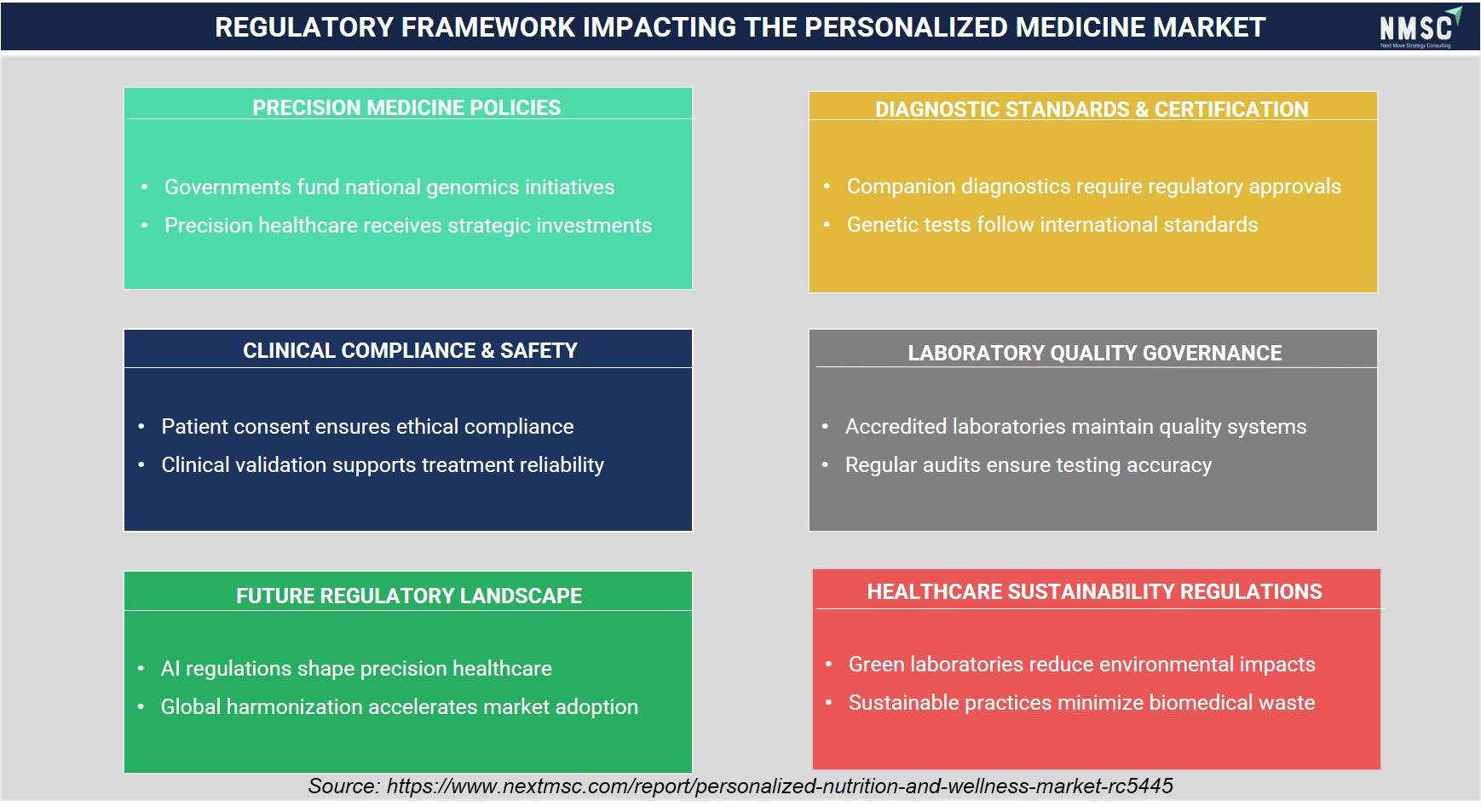
The regulatory landscape for the personalized medicine market is anchored by six critical pillars. Strategic government funding underpins precision medicine policies, while diagnostic standards mandate strict companion approvals. Clinical compliance and laboratory governance ensure treatment reliability and testing accuracy through rigorous audits and patient consent protocols. Looking ahead, the framework is rapidly evolving to integrate global AI regulations and healthcare sustainability mandates, specifically emphasizing green laboratory practices. This comprehensive structure ensures both ethical integrity and clinical validity across the sector.
Growth Drivers and Restraints
Growth Catalyst and Risk Assessment Matrix
|
Factors |
Type |
(+/−) % Impact on CAGR |
Geographic Relevance |
Impact Timeline |
|
Rising FDA approvals of companion diagnostics tied to targeted oncology therapies |
Driver |
+1.9% |
North America, Europe |
2026-2035 |
|
Expanding next-generation sequencing adoption across clinical laboratories |
Driver |
+1.6% |
Global |
2026-2035 |
|
Growing integration of AI and machine learning into genomic analytics platforms |
Driver |
+1.4% |
Global |
2026-2035 |
|
Rising cancer incidence increasing demand for precision oncology diagnostics |
Driver |
+1.3% |
Global |
2026-2035 |
|
Expanding government-backed national genomics and population sequencing initiatives |
Driver |
+1.1% |
Asia-Pacific, Europe |
2026-2033 |
|
Growing adoption of liquid biopsy as a non-invasive alternative to tissue biopsy |
Driver |
+1.0% |
Global |
2026-2035 |
|
Increasing sequencing applications extending beyond oncology into new specialties |
Driver |
+0.8% |
North America |
2026-2032 |
|
High cost of comprehensive genomic testing limiting broader patient access |
Restraint |
-1.2% |
Asia-Pacific, MEA, LATAM |
2026-2032 |
|
Reimbursement uncertainty for novel companion diagnostics in several markets |
Restraint |
-0.9% |
Global |
2026-2030 |
|
Data privacy and genomic data governance concerns limiting broader test uptake |
Restraint |
-0.6% |
Europe |
2026-2030 |
What Is the Primary Growth Driver of the Personalized Medicine Market?
Rising FDA approvals of companion diagnostics tied to targeted oncology therapies are the primary driver of the market. The U.S. Food and Drug Administration continues to expand its list of approved companion diagnostic indications, with newly approved tests transferring prior approved indications to broader, more comprehensive panels. We observed that this regulatory momentum, combined with growing oncologist reliance on biomarker-guided treatment selection, continues to anchor baseline diagnostic demand across developed and emerging Personalized medicine markets alike.
How Is Sequencing Capacity Expansion Driving Personalized Medicine Market Growth?
Expanding next-generation sequencing adoption across clinical laboratories is driving market growth by increasing testing volume and lowering per-sample sequencing costs. Illumina reported sequencing over 10 human genomes per minute across its platforms in 2025, reflecting the scale of clinical adoption underway. Our assessment indicates that this sequencing capacity growth, combined with new assays reaching the market and improving reimbursement decisions, is compressing procurement timelines for laboratories expanding sequencing-intensive testing menus.
What Is Restraining Personalized Medicine Market Expansion?
High cost of comprehensive genomic testing restrains broader patient access, particularly across emerging markets with limited diagnostic reimbursement infrastructure. The National Institutes of Health's National Human Genome Research Institute continues to document the persistent cost gap between comprehensive genomic panels and standard-of-care diagnostic alternatives. We found that this cost barrier disproportionately affects patients in Asia-Pacific, Middle East & Africa, and Latin America, where out-of-pocket diagnostic spending remains a larger share of total healthcare expenditure.
Segmentation Analysis
Segment Sizing: By Therapy Area
|
Segment |
2025 (USD) |
2035 (USD) |
CAGR% (2026–2035) |
|
Oncology |
USD 307.60 Billion |
USD 614.96 Billion |
7.2% |
|
Rare And Genetic Diseases |
USD 117.80 Billion |
USD 265.55 Billion |
8.5% |
|
Reproductive Health |
USD 65.45 Billion |
USD 125.79 Billion |
6.8% |
|
Pharmacogenomics |
USD 52.36 Billion |
USD 125.79 Billion |
9.2% |
|
Infectious Disease |
USD 39.27 Billion |
USD 83.86 Billion |
7.9% |
|
Transplant |
USD 26.18 Billion |
USD 55.91 Billion |
7.9% |
|
Neurology |
USD 19.63 Billion |
USD 55.91 Billion |
11.0% |
|
Cardiology |
USD 13.09 Billion |
USD 41.93 Billion |
12.3% |
|
Other |
USD 13.09 Billion |
USD 27.95 Billion |
7.9% |
|
Total |
USD 654.47 Billion |
USD 1397.65 Billion |
7.9% |
Which Therapy Area Segment Dominates the Personalized Medicine Market?
Oncology led the market with USD 307.60 billion in 2025, reflecting the therapy area's long-established role as the primary driver of genomic testing and companion diagnostic adoption. We observed that Cardiology is the fastest-growing therapy area, expanding at a 12.3% CAGR from 2026 to 2035, as sequencing and diagnostics companies extend evidence-based genomic profiling beyond oncology into cardiovascular risk stratification and treatment selection.
Segment Sizing: By Technology
|
Segment |
2025 (USD) |
2035 (USD) |
CAGR% (2026–2035) |
|
NGS |
USD 222.52 Billion |
USD 503.15 Billion |
8.5% |
|
PCR |
USD 137.44 Billion |
5.0% |
|
|
Microarray |
USD 58.90 Billion |
USD 83.86 Billion |
3.6% |
|
IHC |
USD 78.54 Billion |
USD 139.76 Billion |
5.9% |
|
ISH |
USD 45.81 Billion |
USD 69.88 Billion |
4.3% |
|
Mass Spectrometry |
USD 52.36 Billion |
USD 111.81 Billion |
7.9% |
|
AI and ML |
USD 39.27 Billion |
USD 223.62 Billion |
19.0% |
|
Other |
USD 19.63 Billion |
USD 41.93 Billion |
7.9% |
|
Total |
USD 654.47 Billion |
USD 1397.63 Billion |
7.9% |
Which Technology Segment Leads Personalized Medicine Market Demand?
NGS remained the leading technology segment within the market, valued at USD 222.52 billion in 2025, on sustained demand for comprehensive, high-throughput genomic profiling across clinical and pharma testing applications. Our findings suggest that AI and ML is the fastest-growing technology segment, registering a 19.0% CAGR from 2026 to 2035, as diagnostic and life sciences companies increasingly embed machine learning directly into genomic interpretation and biomarker discovery workflows.
Segment Sizing: By Customer Type
|
Segment |
2025 (USD) |
2035 (USD) |
CAGR% (2026–2035) |
|
Clinical Laboratories |
USD 189.79 Billion |
USD 363.38 Billion |
6.7% |
|
Hospitals |
USD 157.07 Billion |
USD 321.45 Billion |
7.4% |
|
Pharmaceutical and Biotech Companies |
USD 170.16 Billion |
USD 377.36 Billion |
8.3% |
|
Academic and Research Institutes |
USD 71.99 Billion |
USD 139.76 Billion |
6.9% |
|
Patients and Consumers |
USD 32.72 Billion |
USD 111.81 Billion |
13.1% |
|
Payers and Employers |
USD 19.63 Billion |
USD 55.91 Billion |
11.0% |
|
Other |
USD 13.09 Billion |
USD 27.95 Billion |
7.9% |
|
Total |
USD 654.45 Billion |
USD 1397.62 Billion |
7.9% |
Which Customer Type Segment Is Most Significant in the Personalized Medicine Market?
Clinical Laboratories remained the dominant customer type across the market, reaching USD 189.79 billion in 2025 due to their central role in processing genomic and molecular diagnostic testing volume. Based on research conducted by Next Move Strategy Consulting, we found that Patients and Consumers represent the fastest-growing customer category at a 13.1% CAGR from 2026 to 2035, reflecting rising direct-to-consumer and patient-initiated genomic testing demand.
Growth Opportunities
Our analysis shows that three forward-looking opportunities stand out for stakeholders positioning within the Personalized medicine market over the 2026-2035 forecast period.
How Can Expanded-Panel Liquid Biopsy Platforms Unlock Value for Oncology Providers?
Expanded-panel liquid biopsy platforms present a whitespace opportunity for diagnostic developers serving oncology providers seeking comprehensive tumor profiling from a single blood draw. Providers that commercialize combined genomic and epigenomic panels stand to capture recurring testing volume as oncologists increasingly favor unified liquid and tissue testing experiences over sequential single-marker tests.
Where Does AI-Driven Interpretation Create New Demand Among Pharma Partners?
Pharmaceutical and biotech companies represent an underpenetrated opportunity for vendors offering AI-powered multi-omic data platforms that accelerate biomarker discovery. Providers that develop large-scale biological atlases and foundation model training data can secure long-term partnerships with pharma sponsors, benefiting from recurring data licensing and collaborative drug discovery revenue.
How Can Non-Oncology Genomic Evidence Packages Benefit Sequencing Providers?
Cardiology, neurology, and rheumatology providers seeking genomic-guided treatment protocols create an opportunity for sequencing companies building dedicated clinical evidence packages. Early movers that establish comprehensive genomic profiling protocols outside oncology can differentiate with health systems pursuing precision medicine expansion beyond cancer care.
Porter's Five Forces Analysis of the Personalized Medicine Market
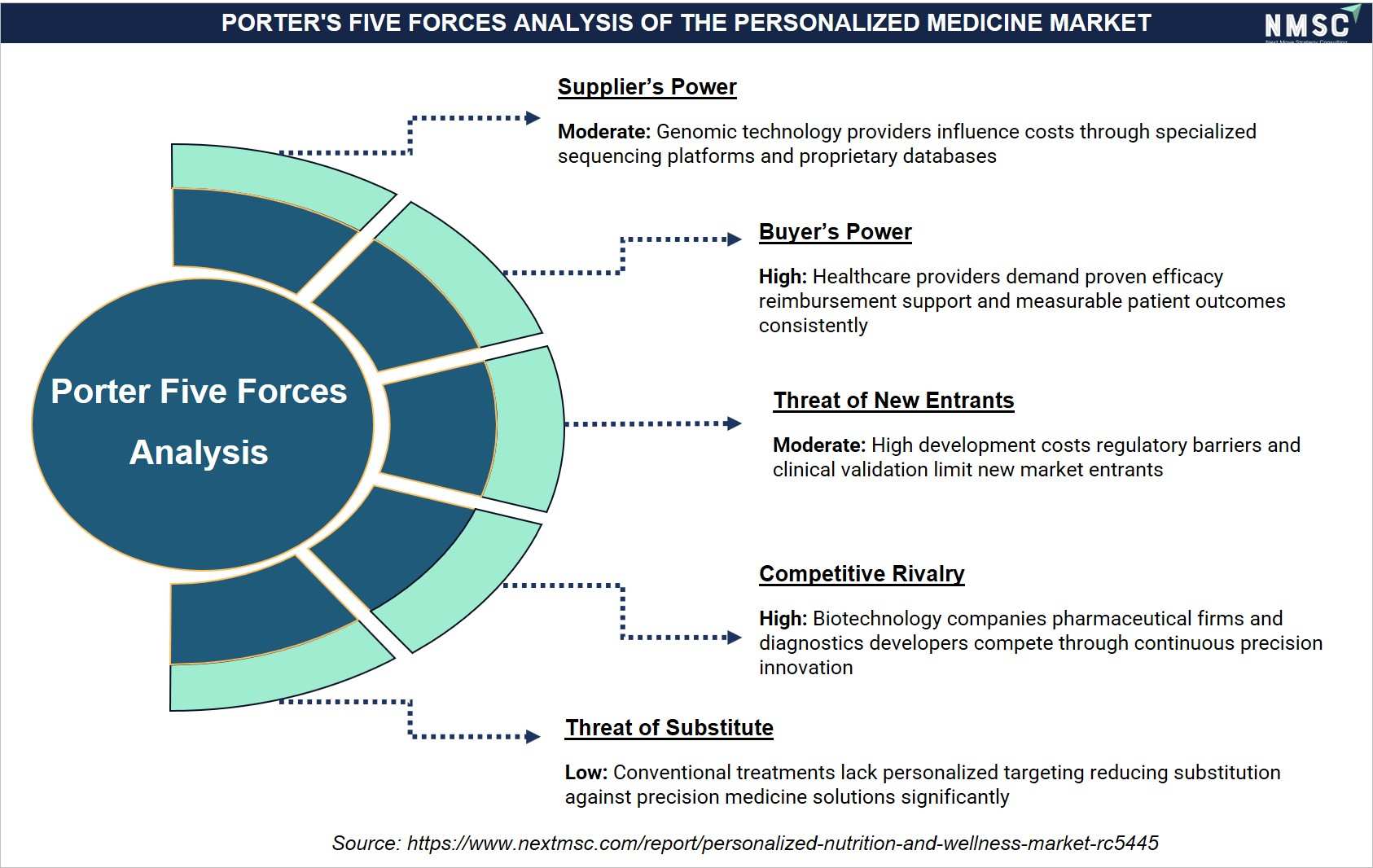
The personalized medicine market exhibits intense competitive rivalry driven by continuous precision innovation among biopharma and diagnostic developers. Buyer power remains high as healthcare providers strictly mandate proven clinical efficacy, measurable outcomes, and robust reimbursement support. Meanwhile, supplier power and the threat of new entrants sit at a moderate level, constrained by the industry's reliance on specialized genomic platforms and prohibitive regulatory and development costs. Ultimately, the threat of substitution is remarkably low, as conventional, broad-spectrum therapies structurally fail to replicate the targeted outcomes delivered by advanced precision medicine solutions.
Regional Outlook
Geographic Performance Snapshot
|
Region |
2025 (USD) |
2035 (USD) |
CAGR% (2026–2035) |
Key Driver |
|
North America |
USD 287.96 Billion |
USD 545.08 Billion |
6.6% |
Established reimbursement pathways and concentrated precision oncology diagnostics infrastructure |
|
Europe |
USD 170.16 Billion |
USD 335.43 Billion |
7.0% |
Expanding EMA-aligned companion diagnostics approvals and national genomics initiatives |
|
Asia-Pacific |
USD 137.44 Billion |
USD 377.36 Billion |
10.6% |
Rapid genomic testing capacity expansion and growing government-backed sequencing programs |
|
Middle East & Africa |
USD 32.72 Billion |
USD 83.86 Billion |
9.9% |
Growing specialty diagnostics infrastructure investment tied to national healthcare modernization |
|
Latin America |
USD 26.18 Billion |
USD 55.91 Billion |
7.9% |
Expanding oncology diagnostics adoption and growing private healthcare genomic testing access |
|
Total |
USD 654.46 Billion |
USD 1397.64 Billion |
7.9% |
– |
North America Personalized Medicine Market Outlook
North America leads the market with established reimbursement pathways and the largest concentration of precision oncology diagnostics infrastructure. We observed that the U.S. Food and Drug Administration's expanding companion diagnostic approval list sustains demand for comprehensive genomic testing among oncology providers. Technology adoption remains advanced, with AI-driven analytics and expanded liquid biopsy panels gaining share across the region's mature diagnostic testing ecosystem.
Europe Personalized Medicine Market Outlook
Europe's market reflects a maturing landscape shaped by expanding European Medicines Agency-aligned companion diagnostics approvals and national genomics initiatives. Our findings suggest that healthcare systems across the UK, Germany, and France are investing in population-scale sequencing programs to expand precision medicine access. Technology adoption favors providers with proven regulatory documentation, supported by growing government investment in genomic infrastructure.
Asia-Pacific Personalized Medicine Market Outlook
Asia-Pacific is the fastest-growing market region, propelled by rapid genomic testing capacity expansion and growing government-backed sequencing programs across China, India, and Japan. We found that regulatory frameworks remain less harmonized than in North America or Europe, giving diagnostic providers flexibility to scale rapidly across emerging testing markets. Technology adoption is accelerating as regional laboratories and hospitals expand sequencing infrastructure.
Middle East & Africa Personalized Medicine Market Outlook
The market in Middle East & Africa is expanding as Gulf Cooperation Council economies invest in specialty diagnostics infrastructure tied to national healthcare modernization programs. Our analysis shows that Saudi Arabia and the UAE are attracting genomic testing investment linked to broader healthcare digitalization strategy. Regulatory influence remains moderate, while technology adoption is gradually shifting toward imported diagnostic platforms as regional hospitals expand precision oncology capability.
Latin America Personalized Medicine Market Outlook
Latin America's Personalized medicine market is supported by expanding oncology diagnostics adoption and growing private healthcare genomic testing access across Brazil and Argentina. We observed that regulatory frameworks remain less developed than in North America or Europe, though national health systems are gradually strengthening diagnostic reimbursement pathways. Technology adoption remains centered on oncology testing, with competitive intensity increasing as global diagnostic companies expand regional distribution partnerships.
U.S. Personalized Medicine Market
Based on our estimates, the U.S. market was valued at approximately USD 247.65 billion in 2025 and is projected to reach USD 457.87 billion by 2035, growing at a 6.3% CAGR. Demand is anchored by the largest concentration of FDA-approved companion diagnostics and established oncology testing infrastructure. Technology penetration favors AI-integrated genomic platforms, and competitive intensity remains high among established diagnostic vendors serving major academic medical centers and community oncology practices.
Canada Personalized Medicine Market
The market in Canada reached roughly USD 28.80 billion in 2025 and is forecast to hit USD 59.96 billion by 2035 at a 7.6% CAGR. Demand structure mirrors U.S. companion diagnostics and genomic testing adoption patterns, while Canadian provincial health systems increasingly integrate genomic testing into oncology care pathways. Technology penetration is rising as laboratories request AI-enabled interpretation tools, with competitive intensity moderate given reliance on cross-border diagnostic vendors.
UK Personalized Medicine Market
As per our estimate, the UK market stood at about USD 35.73 billion in 2025, advancing toward USD 67.09 billion by 2035 at a 6.5% CAGR. Demand is driven by the National Health Service's genomic medicine service and growing companion diagnostic adoption among UK oncology providers. Regulatory influence from national health authority guidance is notable, and technology adoption favors vendors with proven population-scale sequencing program experience.
Germany Personalized Medicine Market
According to our analysis, Germany's market reached close to USD 40.84 billion in 2025 and is expected to hit USD 77.15 billion by 2035, growing at a 6.6% CAGR. Demand is supported by Germany's large pharmaceutical research base and expanding companion diagnostics co-development activity. Regulatory influence is well established under EMA guidance, technology penetration is advancing, and competitive intensity remains high among diagnostic vendors serving German pharma and clinical laboratory customers.
France Personalized Medicine Market
Based on our estimates, France's market reached approximately USD 25.52 billion in 2025, projected to climb to USD 46.96 billion by 2035 at a 6.3% CAGR. Demand is supported by France's growing national genomic medicine plan and expanding oncology testing adoption. Regulatory influence from European Medicines Agency and national health authority rules is notable, and competitive intensity remains moderate given reliance on established European and global diagnostic vendors.
China Personalized Medicine Market
The market in China stood at roughly USD 42.61 billion in 2025 and is forecast to reach USD 124.53 billion by 2035, registering an 11.3% CAGR. Demand is fueled by China's expanding domestic genomic testing manufacturing base and growing government-backed precision oncology programs. Regulatory influence is increasing gradually under national health authority oversight, technology penetration is accelerating, and competitive intensity remains elevated among domestic and international diagnostic vendors.
India Personalized Medicine Market
As per our estimate, India's market was valued at about USD 23.36 billion in 2025, projected to reach USD 83.02 billion by 2035 at a 13.5% CAGR, the fastest among covered countries. Demand structure reflects rapidly expanding genomic testing capacity and growing oncology diagnostic adoption across major urban hospital networks. Regulatory influence remains developing, while technology penetration is rising quickly as vendors localize sequencing infrastructure to serve India's expanding patient base.
Japan Personalized Medicine Market
According to our analysis, Japan's market reached close to USD 26.11 billion in 2025 and is expected to hit USD 56.60 billion by 2035, growing at an 8.0% CAGR. Demand is supported by Japan's advanced companion diagnostics regulatory pathway and expanding domestic sequencing partnerships. Regulatory influence is well established, technology penetration is advanced among domestic diagnostic providers, and competitive intensity remains moderate given a mix of domestic and international vendors.
South Korea Personalized Medicine Market
Based on our estimates, South Korea's market stood at approximately USD 15.12 billion in 2025, forecast to reach USD 37.74 billion by 2035 at a 9.6% CAGR. Demand structure benefits from the country's advanced genomic research infrastructure and growing precision oncology adoption. Technology penetration is high, with domestic laboratories piloting AI-integrated diagnostic platforms, and competitive intensity remains pronounced amid rapid vendor innovation cycles.
Australia Personalized Medicine Market
The Personalized medicine market in Australia reached about USD 9.62 billion in 2025 and is projected to reach USD 22.64 billion by 2035, expanding at an 8.9% CAGR. Demand is supported by Australia's established genomic research base and growing national genomics health initiatives. Regulatory influence stems from Therapeutic Goods Administration guidance, while technology adoption favors platforms supporting population-scale sequencing amid rising competitive intensity.
UAE Personalized Medicine Market
As per our estimate, the UAE market was valued near USD 8.83 billion in 2025, projected to reach USD 20.96 billion by 2035 at a 9.0% CAGR. Demand structure is shaped by the UAE's role as a regional precision health and genomics investment hub. Regulatory influence remains moderate, technology penetration is improving through imported diagnostic platforms, and competitive intensity is rising as regional hospitals expand precision oncology capability to serve Gulf markets.
Saudi Arabia Personalized Medicine Market
According to our analysis, Saudi Arabia's market reached roughly USD 9.49 billion in 2025 and is expected to hit USD 26.00 billion by 2035, growing at a 10.6% CAGR. Demand is driven by national healthcare modernization investment and expanding genomic testing infrastructure under Vision 2030 initiatives. Regulatory influence is developing under national health ministry guidelines, and technology penetration is advancing as domestic hospitals scale precision diagnostics deployments.
South Africa Personalized Medicine Market
Based on our estimates, South Africa's market stood at about USD 4.58 billion in 2025, forecast to reach USD 10.90 billion by 2035 at a 9.1% CAGR. Demand structure reflects a developing specialty diagnostics infrastructure program addressing limited precision oncology testing capacity across the national hospital network. Regulatory influence remains moderate, technology penetration is gradually improving, and competitive intensity is limited given reliance on imported diagnostic platforms from Europe and North America.
Brazil Personalized Medicine Market
The market in Brazil reached approximately USD 12.30 billion in 2025 and is projected to reach USD 25.16 billion by 2035, registering a 7.4% CAGR. Demand is underpinned by Brazil's expanding private healthcare oncology testing base and growing genomic diagnostics adoption. Regulatory influence stems from national health regulatory agency oversight, technology penetration favors oncology-focused testing platforms, and competitive intensity remains moderate among regional and global diagnostic vendors.
Argentina Personalized Medicine Market
As per our estimate, Argentina's market was valued near USD 4.71 billion in 2025, projected to reach USD 10.62 billion by 2035 at an 8.5% CAGR. Demand structure is supported by steady oncology diagnostics and genomic testing adoption despite macroeconomic volatility. Regulatory influence remains limited, technology penetration is modest, and competitive intensity is centered on a small number of regional distributors serving domestic hospital networks.
Competitive Landscape
We observed that the Personalized medicine market features a moderately consolidated competitive landscape, with diversified life sciences instrumentation companies competing alongside specialized oncology diagnostics vendors on genomic coverage breadth, regulatory approval depth, and AI analytics capability.
Key Takeaways
|
Dimension |
Description |
|
Market Structure |
Moderately consolidated; a group of diversified life sciences instrumentation companies and specialized oncology diagnostics vendors account for the majority of global Personalized medicine market revenue. |
|
Innovation Focus |
Expanded genomic and epigenomic panel coverage, AI-driven multi-omic analytics, and companion diagnostic co-development dominate current innovation pipelines across leading Personalized medicine vendors. |
|
M&A Activity |
Selective acquisition activity focused on expanding genomic and diagnostic capability, exemplified by Guardant Health's acquisition of blood test technology to strengthen its liquid biopsy portfolio. |
How Do Companies Compete in the Personalized Medicine Market?
Companies compete primarily on genomic coverage breadth, regulatory approval depth, and AI-driven interpretation capability across the industry. Diversified instrumentation providers such as Illumina and Thermo Fisher Scientific leverage broad sequencing platform installed bases to serve pharma and clinical laboratory customers, while specialized oncology diagnostics vendors such as Guardant Health and Tempus AI compete on comprehensive liquid biopsy and multi-omic data platform depth.
Which Competitive Archetypes Dominate the Personalized Medicine Market?
Two archetypes dominate the market: diversified life sciences instrumentation companies offering broad sequencing and analytics platforms, and specialized oncology diagnostics vendors focused on companion diagnostic and liquid biopsy depth. Illumina exemplifies the diversified archetype through its BioInsight and Billion Cell Atlas platforms, while Guardant Health and Foundation Medicine exemplify the specialized archetype through dedicated oncology testing portfolios.
How Are Companies Differentiating Through Innovation in Personalized Medicine?
Innovation and differentiation strategy increasingly center on expanded genomic footprint and AI-integrated interpretation. Guardant Health's 100-fold wider genomic footprint liquid biopsy panel and Illumina's AI-powered BioInsight platform both reflect a shift toward comprehensive, technology-enabled diagnostic offerings. Our analysis shows that vendors unable to demonstrate expanded genomic coverage risk exclusion from oncology testing request-for-proposal shortlists.
What M&A and Expansion Activity Is Shaping the Personalized Medicine Market?
Mergers, acquisitions, and geographic expansion continue to consolidate genomic and diagnostic capabilities within the industry. Guardant Health's acquisition of blood test technology to expand its liquid biopsy portfolio and Illumina's partnership with Tempus AI to extend genomic sequencing beyond oncology both illustrate how established vendors pursue capability expansion and new therapy area coverage.
Key Market Players
Our assessment indicates that the following 20 companies are actively shaping genomic coverage breadth, AI analytics capability, and companion diagnostic development within the global Personalized medicine market.
-
Thermo Fisher Scientific Inc.
-
Illumina, Inc.
-
QIAGEN N.V.
-
Agilent Technologies, Inc.
-
Abbott Laboratories
-
Bio-Rad Laboratories, Inc.
-
Exact Sciences Corporation
-
Natera, Inc.
-
Guardant Health, Inc.
-
Myriad Genetics, Inc.
-
Tempus AI, Inc.
-
BGI Genomics Co., Ltd.
-
NeoGenomics, Inc.
-
Foundation Medicine, Inc.
-
Caris Life Sciences, Inc.
-
Veracyte, Inc.
-
GeneDx Holdings Corp.
-
CareDx, Inc.
-
Adaptive Biotechnologies Corporation
-
SOPHiA GENETICS SA
Latest Developments
We found that recent developments within the Personalized medicine market are concentrated on expanded genomic panel approvals and AI-integrated multi-omic platforms, reflecting the industry's broader shift toward comprehensive, technology-enabled diagnostics.
|
Date |
Event |
|
January 2026 |
Illumina unveiled its Billion Cell Atlas at the J.P. Morgan Healthcare Conference, using AI to map biological pathways behind major diseases, with Merck confirmed as a partner leveraging the Atlas to train proprietary AI and machine learning foundation models. |
Expert Insights
 “The future of health and wellness is becoming more personalized and informed by data. By combining Bioniq's personalized supplement technology with Pro2col and the power of our global distributor network, we are expanding our ability to deliver personalized wellness at global scale.”
— Stephan Gratziani, CEO, Herbalife
Statement made during the March 2026 announcement of Herbalife's planned acquisition of Bioniq, a health-tech company offering personalized supplements based on blood test data.
Market Interpretation:
This statement emphasizes the industry's aggressive pivot away from "one-size-fits-all" vitamins toward highly individualized, data-backed nutritional regimens. The integration of blood-biomarker data into mass-market distribution networks highlights a major consolidation trend where legacy nutraceutical giants are acquiring specialized tech startups. This convergence signals that personalized medicine and targeted nutrition are no longer niche, premium concepts, but are scaling to meet global, mainstream consumer demand.
Investment Opportunities
What Capital Inflows Are Targeting the Personalized Medicine Market?
Capital inflows into the Personalized medicine market are increasingly directed toward expanded genomic panel development and AI-powered multi-omic analytics platforms. Guardant Health's continued revenue growth guidance for 2026, projecting between 27% and 30% year-over-year growth, reflects sustained investor confidence in expanded liquid biopsy adoption. We observed that investors favor vendors demonstrating validated regulatory approvals, viewing companion diagnostic breadth as a proxy for long-term pharma partnership retention.
How Is Infrastructure Investment Supporting Personalized Medicine Market Scaling?
Infrastructure investment is expanding sequencing capacity and AI compute infrastructure to support growing genomic testing volumes. Illumina's BioInsight business unit and Billion Cell Atlas illustrate how instrumentation providers are investing in large-scale biological data infrastructure to accelerate drug discovery partnerships. Our findings suggest that this infrastructure expansion is critical to supporting the data processing demands of increasingly comprehensive genomic panels.
What ESG Considerations Are Shaping Personalized Medicine Investment Decisions?
Environmental, social, and governance considerations are relevant to investment decisions across the industry, with equitable genomic testing access and data privacy governance as key criteria. Illumina's Corporate Responsibility Report highlights continued efforts to expand equitable access to genomics across underserved populations and regions. We found that investors increasingly treat testing access equity and genomic data governance as governance indicators alongside diagnostic accuracy and regulatory compliance.
Key Benefits for Stakeholders
How Does This Report Benefit Enterprise and Industry Leaders?
Enterprise and industry leaders gain access to validated segmentation, competitive benchmarking, and regional demand forecasts that support diagnostic sourcing and portfolio decisions across the Personalized medicine industry. Our analysis shows that detailed therapy area, technology, and customer type breakdowns help procurement teams align specifications with clinical testing requirements while identifying underserved segments for portfolio expansion.
How Does This Report Benefit Investors and Financial Analysts?
Investors and financial analysts benefit from consistent, single-point market size and CAGR estimates that support valuation and capital-allocation decisions across the Personalized medicine supply chain. We observed that the report's regional and segment-level growth differentials help identify which diagnostic vendors are best positioned to capture above-market growth in Asia-Pacific and AI analytics categories through 2035.
How Does This Report Benefit Technology Vendors and Product Teams?
Technology vendors and product teams gain insight into emerging platform requirements, including expanded genomic panel coverage and AI-integrated interpretation, that are reshaping the industry. Our findings suggest that this analysis helps product teams prioritize development roadmaps around multi-omic data integration and companion diagnostic co-development increasingly required by pharmaceutical partnership processes.
Key Market Segments
By Diagnostic Tests and Assays
-
Genomic Testing
-
Germline Testing
-
Somatic Tumour Profiling
-
Liquid Biopsy
-
Minimal Residual Disease
-
Pharmacogenomics
-
-
Companion Diagnostics
-
Co-Developed CDx
-
Standalone CDx
-
Other CDx
-
-
Molecular Pathology
-
Immunohistochemistry
-
In Situ Hybridisation
-
Other Molecular Pathology
-
By Instruments and Consumables
-
Sequencing Instruments
-
Sequencing Consumables
-
PCR Instruments
-
PCR Consumables
-
Sample Prep Reagents
-
Assay Kits
-
Other Lab Tools
By Software and Data
-
Bioinformatics
-
Clinical Decision Support
-
AI Analytics
-
Data Platforms
-
Other Software
By Services
-
Clinical Testing
-
Pharma Services
-
Biomarker Development
-
Trial Matching
-
Data Interpretation
-
Other Services
By Therapy Area
-
Oncology
-
Rare And Genetic Diseases
-
Reproductive Health
-
Pharmacogenomics
-
Infectious Disease
-
Transplant
-
Neurology
-
Cardiology
-
Other
By Customer Type
-
Clinical Laboratories
-
Hospitals
-
Pharmaceutical and Biotech Companies
-
Academic and Research Institutes
-
Patients and Consumers
-
Payers and Employers
-
Other
By Technology
-
NGS
-
PCR
-
Microarray
-
IHC
-
ISH
-
Mass Spectrometry
-
AI and ML
-
Other
By Revenue Model
-
Product Sales
-
Service Fees
-
Software Subscriptions
-
Software Licensing
-
Leasing and Rental
-
Milestone and Royalty
-
Other
By Distribution Channel
-
Direct
-
Distributor and Reseller
-
Online
-
Other
By Region
-
North America: U.S., Canada, Mexico
-
Europe: UK, Germany, France, Italy, Spain, Sweden, Denmark, Finland, Netherlands, Rest of Europe
-
Asia-Pacific: China, India, Japan, South Korea, Taiwan, Indonesia, Vietnam, Australia, Philippines, Malaysia, Rest of APAC
-
Middle East & Africa: Saudi Arabia, UAE, Egypt, Israel, Turkey, Nigeria, South Africa, Rest of MEA
-
Latin America: Brazil, Argentina, Chile, Colombia, Rest of LATAM
Conclusion and Recommendations
What Is the Long-Term Outlook for the Personalized Medicine Market?
The long-term outlook for the market remains positive, with global revenue projected to more than double from USD 654.46 billion in 2025 to USD 1,397.63 billion by 2035 at a 7.88% CAGR. We observed that sustained companion diagnostic approvals, expanding sequencing capacity, and growing AI integration will continue underpinning demand across oncology, cardiology, and other therapy applications through the forecast period.
What Strategic Positioning Should Personalized Medicine Suppliers Pursue?
Suppliers should prioritize expanded genomic panel coverage and AI-integrated analytics capability while pursuing companion diagnostic co-development partnerships to secure long-term pharma contracts. Our assessment indicates that vendors investing early in multi-omic data infrastructure and therapy area expansion beyond oncology will be best positioned to capture premium pricing within the Personalized medicine market.
How Attractive Is the Personalized Medicine Market for New Investment?
The Personalized medicine industry presents an attractive investment case, supported by a USD 695.11 billion absolute dollar opportunity between 2026 and 2035 and above-average growth in Asia-Pacific and AI analytics categories. We found that investment attractiveness is highest for vendors combining validated regulatory approvals with scaled AI-driven interpretation capability.
What Market Shifts and Key Risks Should Stakeholders Monitor?
Stakeholders should monitor high testing costs limiting broader patient access, reimbursement uncertainty for novel companion diagnostics, and data privacy governance concerns as key risks to the Personalized medicine market. Our analysis shows that suppliers unable to demonstrate cost-effective, scalable testing solutions risk losing market share to competitors with proven reimbursement pathways.
What Are the Key Growth Pathways for the Personalized Medicine Market?
Key growth pathways include expanding comprehensive liquid biopsy panels, scaling AI-driven multi-omic analytics platforms, and deepening genomic sequencing applications beyond oncology into cardiology and neurology. Next Move Strategy Consulting's analysis indicates that suppliers pursuing these pathways while maintaining cost competitiveness in standard genomic testing categories will be best positioned to capture the Personalized medicine market's projected growth through 2035.
About the Author
 Liza Phukan is a content and market research professional with a strong focus on analyzing emerging industries, validating market data, and developing insightful business content. She is passionate about transforming complex information into clear, engaging, and well-structured research that supports strategic decision-making. Beyond her professional interests, she enjoys crocheting, gardening, reading, and exploring creative projects while continuously enhancing her research and writing skills.
About the Reviewer
 Supradip Baul is an accomplished business consultant and strategist with over a decade of rich experience in market intelligence, strategy, technology, and business transformation. His work has included rigorous qualitative and quantitative analysis across multiple industries, helping clients shape investment decisions and long-term roadmaps. Earlier in his career, he was associated with Gartner, where he contributed to industry-leading reports and market share analyses. He has worked with leading global companies and holds an MBA with a dual specialization in Marketing and Finance.
At Next Move Strategy Consulting, we understand that insightful market research is the cornerstone of successful business decisions. That's why we employ a robust and multifaceted approach, combining various methodologies to deliver the most accurate and actionable data for our clients.

Research Landscape
We navigate the world of research with two primary approaches:
Qualitative Approach
Our qualitative research methodologies involve immersive techniques such as in-depth interviews, focus groups, and observational studies. By engaging directly with individuals and stakeholders, we uncover valuable insights that quantitative data alone may overlook.

Quantitative Research
In tandem with qualitative methodologies, NMSC leverages the power of Quantitative Research to provide a robust foundation of numerical insights. Through systematic data collection and analysis, we quantify patterns, preferences, and market trends, offering a comprehensive view of the business landscape.
Our quantitative research approach employs diverse tools, including surveys, experiments, and statistical modelling. These methodologies enable us to gather data from a large and representative sample, ensuring the statistical significance of our findings. By employing structured questionnaires and standardized data collection methods, we guarantee the reliability and validity of the information we present to our clients.
Quantitative research is particularly effective in measuring the prevalence of trends, assessing market size, and gauging the impact of various factors on consumer behavior. The numerical precision attained through this approach equips our clients with actionable insights, facilitating data-driven decision-making and strategy formulation.


Our Specialized Toolbox for Industry-Specific Market Research
We deploy a specialized arsenal of techniques tailored to meet your unique requirements. Here's a glimpse into our comprehensive toolbox:

Information Procurement
The stage entails acquiring market data or relevant information through various sources and methodologies.


Market Research Approach
We utilize both top-down and bottom-up approaches in market research analysis to achieve a comprehensive understanding of the market dynamics, leveraging the broad perspective of industry trends and macroeconomic factors alongside detailed insights from specific segments and individual companies.

Porters Five Forces Analysis
We conduct Porter's Five Forces analysis to evaluate the competitive landscape of an industry, providing us with insights into factors that affect profitability and strategic positioning.

SWOT Analysis

Forecasting
We utilize a forecasting model to predict future consumption by considering parameters like population, economics, regulations, market competition, drivers, constraints, technology, and pricing. We also employ statistical techniques such as multilinear regression, exponential smoothing, moving average, ARIMA, and Monte Carlo simulations for accurate predictions. In econometric forecasting, we analyzed short-term and long-term event impacts, attributing values based on regulatory frameworks, economic factors, and market events.





 Speak to Our Analyst