Single-Deck Elevator Market By Type (Passenger Elevators, Freight Elevators, and Others), By Technology {Traction Elevators (Machine Room Traction, Machine Roomless Traction), Hydraulic Elevators}, By Service Lifecycle {New Installation, Maintenance, Modernization (Partial Modernization, Full Replacement, and Others)}, By Capacity, By Speed, and By Sales Channel (Direct OEM Sales, Authorized Dealer Sales, Contractor-Led Procurement), and Others – Global Analysis & Forecast, 2025–2035
Industry: Construction & Manufacturing | Publishing Date: August 24, 2026 | Last Updated: October 16, 2026 | No of Pages: N/A | No. of Tables: N/A | No. of Figures: N/A | Format: PDF | Report Code: CM4195
Industry Outlook
The Single-Deck Elevator Market size was valued at USD 72.82 billion in 2025, and is expected to be valued at USD 78.04 billion by the end of 2026. The industry is projected to grow, hitting USD 121.04 billion by 2035, with a CAGR of 5.81% between 2026 and 2035.
Single-Deck Elevator Market Size & Forecast
|
Parameters |
Details |
|
Market Size in 2026 |
USD 78.04 Billion |
|
Revenue Forecast in 2035 |
USD 121.04 Billion |
|
Growth Rate |
CAGR of 5.81% from 2026 to 2035 |
|
Analysis Period |
2025–2035 |
|
Base Year Considered |
2025 |
|
Forecast Period |
2026–2035 |
|
Market Size Estimation |
Billion (USD) |
|
Companies Profiled |
20 |
|
Countries Covered |
33 |
|
Market Share |
Available for 10 companies |
Based on NMSC’s primary research, the global Single-Deck Elevator market is witnessing steady growth, underpinned by sustained urbanisation, expanding mid-rise residential and commercial construction, and tightening safety and energy-efficiency requirements. Across a broad set of project evaluations spanning design review and planning stages, we observed that elevator selection is increasingly influenced by passenger flow performance, spatial optimisation, and long-term operating economics rather than upfront system cost alone. Advancements in smart control architectures, destination dispatch logic, regenerative drives, and connected monitoring are improving traffic handling, energy efficiency, and reliability across operating buildings.
Moreover, drawing on observations from operational audits and modernisation assessments conducted across a wide base of active buildings in North America, Europe, and Asia-Pacific, we noted that adoption dynamics vary by region and building lifecycle stage. In mature markets, replacement and upgrade activity is largely guided by compliance requirements, ageing infrastructure, and service continuity expectations, whereas high-growth regions remain driven by volume-led new installations linked to rapid urban expansion and mixed-use development. As a result, across regions, post-handover reviews show a growing preference for digitally connected elevators and long-term service models, as they improve transparency, uptime predictability, and lifecycle returns for building owners and operators.
What Are the Key Trends in the Single-Deck Elevator Industry?
How is Digitalisation Reshaping Service and Asset Management Models?
Across recent evaluations of elevator specifications, commissioning reviews, and service planning discussions, a clear shift has emerged in how single-deck lift systems are managed over their operating life. Digital connectivity and remote diagnostics are increasingly embedded as foundational system capabilities, not as optional enhancements. These technologies allow building owners and service providers to move away from reactive maintenance toward structured, condition-informed servicing, improving uptime predictability and reducing operational uncertainty.
Moreover, elevators are now assessed based on their ability to support long-term monitoring, documentation, and service transparency rather than purely mechanical performance. As a result, digital readiness has become closely linked to service reliability and lifecycle value, reinforcing a broader transition toward service-led business models.
How is Modernisation Emerging as a Structural Industry Priority in Elevator Industry?
A growing portion of the conventional elevator installed base is operating within mature or ageing buildings, bringing modernisation considerations to the forefront of investment planning. Reviews of upgrade strategies indicate that building owners increasingly favour phased modernisation approaches that extend asset life, improve compliance, and minimise disruption, rather than full system replacement. This has elevated demand for modular upgrades, controller replacements, and safety enhancements that can be executed within existing structural constraints.
From a strategic standpoint, modernisation is no longer treated as a discretionary improvement but as a necessary intervention to manage regulatory exposure and operational risk. The ability to execute upgrades efficiently, with clear performance outcomes and predictable service continuity, is now a critical differentiator for suppliers operating in the market
How are Urban Development Patterns Influencing Product Positioning?
Urban densification and the continued expansion of mid-rise residential, commercial, and mixed-use developments have reinforced the relevance of elevator installation services as a default vertical mobility solution. Planning-stage assessments show that these building types prioritise space efficiency, installation simplicity, and regulatory familiarity-attributes that align strongly with single-deck configurations.
This trend has shaped product positioning toward standardised, adaptable systems that can be deployed consistently across diverse sites. Rather than pursuing complexity or bespoke engineering, market participants increasingly focus on reliability, repeatability, and ease of integration within constrained urban environments. As a result, single-deck elevators continue to play a structural role in urban development strategies.
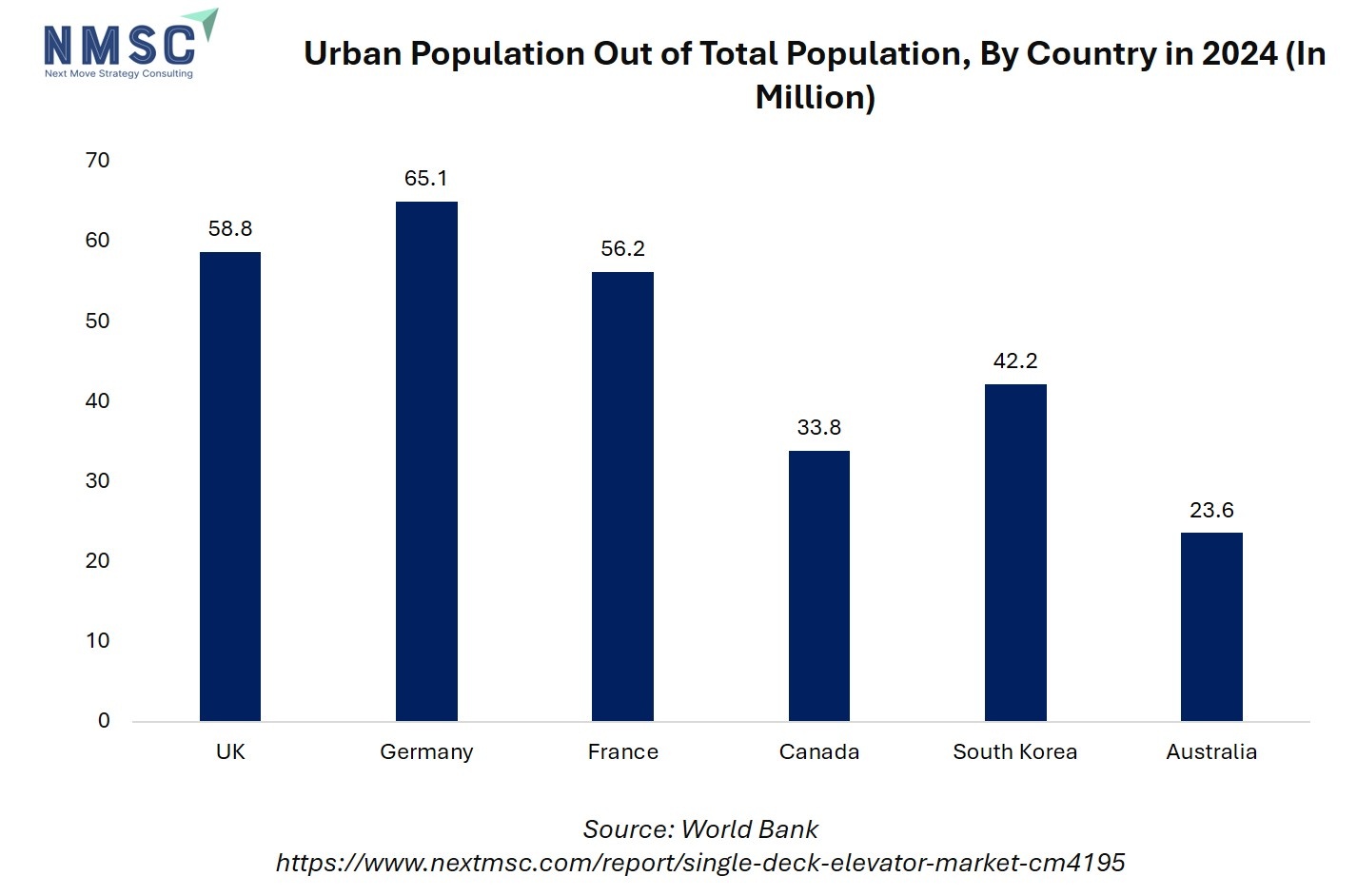
As urban populations continue to concentrate within dense, mid-rise cityscapes, single-deck elevators remain a pragmatic and enduring choice for scalable, space-efficient vertical mobility.
Ecosystem Analysis of Single-Deck Elevator Market
The image illustrates the key components and workflow of the Single-Deck Elevator ecosystem, highlighting their interconnections and operational roles.
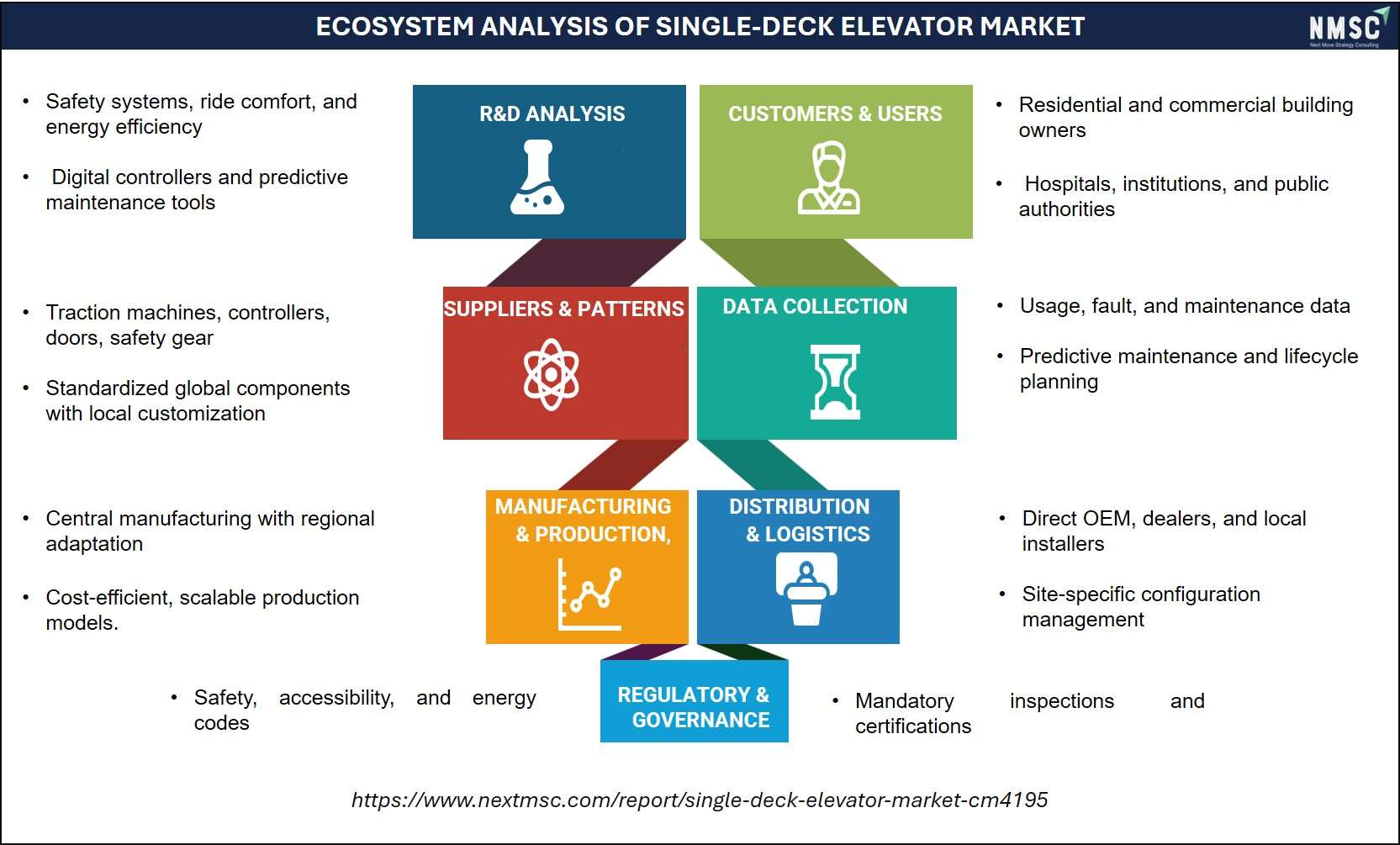
The infographic highlights the market as a lifecycle-driven ecosystem, where value creation extends beyond manufacturing into service delivery and regulatory compliance. Upstream activities emphasise safety, energy efficiency, and modular design, while standardized components and localized customization support both new installations and modernization. Downstream, building owners and institutional users prioritise reliability, compliance, and long-term cost control, supported by project-based distribution and strong service coordination. Together, regulatory oversight, preventive maintenance, and recurring service relationships position the market as a service-intensive, long-term infrastructure segment.
What are the Key Market Drivers, Breakthroughs, and Investment Opportunities that will Shape the Single-Deck Elevator Industry in the Next Decade?
Growth Catalyst & Risk Assessment Matrix
|
DRIVERS/TRENDS/RESTRAINTS |
(+/–) % IMPACT ON CAGR FORECAST |
GEOGRAPHIC RELEVANCE |
IMPACT TIMELINE |
|
Rising urbanisation and sustained mid-rise residential & commercial construction driving new elevator installations |
+1.0% |
Asia-Pacific core; steady demand in North America & Europe |
Short to medium term (1–3 years) |
|
Increasing adoption of smart controls, destination dispatch, and connected monitoring improving traffic efficiency and uptime |
+0.8% |
Global; strongest in Europe, Japan, South Korea, North America |
Medium term (2–4 years) |
|
Growing modernisation and replacement demand driven by ageing elevator stock and stricter safety & energy regulations |
+0.9% |
North America & Europe; emerging in APAC metros |
Short to medium term (1–3 years) |
|
Expansion of service-led and digital maintenance models enhancing lifecycle value and recurring revenues |
+0.7% |
Global; faster uptake in mature markets |
Medium term (2–4 years) |
|
High upfront installation costs and space constraints in retrofit projects limiting adoption |
-0.6% |
Global, particularly impacting older buildings in Europe & dense Asian cities |
Medium term (2–4 years) |
Based on our comprehensive evaluation of global vertical transportation trends, we observed that the Single-Deck Elevator market is experiencing steady growth, driven primarily by sustained urbanisation, expansion of mid-rise residential and commercial buildings, and tightening safety, accessibility, and energy-efficiency regulations. Insights gathered across planning, installation, and operational phases indicate that elevators are increasingly treated as long-term building infrastructure assets rather than standalone equipment purchases. Moreover, advancements in smart control systems, destination dispatch, connected monitoring, and energy-efficient drives are improving traffic handling, uptime reliability, and lifecycle cost visibility. However, our assessment also showed that high upfront installation costs and retrofit complexity continue to constrain adoption in cost-sensitive projects and space-limited buildings. At the same time, the growing shift toward digital service models and long-term maintenance agreements is creating new opportunities by improving cost predictability and operational transparency.
Growth Drivers:
How are Urbanisation and Mid-rise Construction Accelerating Demand for Single-deck Elevators?
Based on our interactions with real estate developers and project architects, involved in early planning and design stages, we observed that sustained urban population growth and densification continue to support construction of mid-rise residential, commercial, and mixed-use buildings. Within these profiles, the market remains the primary vertical mobility solution, as project specifications consistently prioritise space efficiency, capital discipline, and compliance with safety and accessibility requirements. Moreover, reviews of tender-stage designs indicate that these considerations align closely with single-deck configurations, particularly in developments seeking to balance density with manageable construction complexity.
Our assessment of active installation pipelines, informed by contractor bid activity, OEM order backlogs, and integrator deployment schedules, shows that demand is most visible in fast-growing urban centres. Feedback gathered during early occupancy and handover phases further indicates that building owners and facility managers place greater emphasis on predictable passenger flow, operational reliability, and lower lifecycle risk than on system complexity or maximum capacity. As a result, many projects continue to favour proven single-deck configurations, reinforcing their role as a structural component of urban expansion rather than a discretionary design choice, which overall impact the single-deck elevator market growth.
How are Smart Controls and Digital Technologies Driving Market Growth?
Based on our evaluation of installed single-deck elevator systems and completed modernisation projects—supported by post-handover performance reviews and maintenance records we observed that technological advancements are increasingly shaping both upgrade and procurement decisions in the market. Insights gathered from discussions with facility managers, service teams, and specification consultants during controller upgrades, dispatch retrofits, and connectivity-enabled modernisations indicate a growing preference for destination-based dispatch systems, adaptive control logic, and remote monitoring solutions. Furthermore, operational performance comparisons conducted before and after these upgrades demonstrated measurable improvements in passenger wait times, energy efficiency, and overall service reliability, reinforcing the value of digital and smart control technologies in driving market adoption.
Growth Inhibitor:
How are High Upfront Costs and Retrofit Complexity Limiting Single-deck Elevator Market Expansion?
Based on our assessment of procurement evaluations, feasibility studies, and delayed modernization projects, we observed that high upfront installation costs and retrofit constraints remain material inhibitors. Reviews of project feasibility documentation and site assessments indicate that ageing buildings frequently present structural limitations, restricted shaft space, and electrical compatibility issues, all of which elevate engineering complexity and total project cost. These challenges are particularly pronounced in dense urban environments, where construction disruption, permitting constraints, and limited installation flexibility further affect project viability.
Our review of deferred, phased, and cancelled upgrade initiatives, informed by contractor bids, owner budgeting cycles, and integrator feedback, shows that smaller property owners are disproportionately likely to postpone modernization decisions. Capital intensity, coupled with uncertainty around payback timelines, outweighs longer-term efficiency, safety, and reliability benefits at the point of decision-making. While lifecycle analyses frequently support modernization in principle, initial financial and technical barriers continue to delay execution, reinforcing the importance of flexible upgrade pathways and staged investment approaches in cost-sensitive segments of the Single-Deck Elevator market.
Growth Opportunity:
How are Service-led and Long-term Maintenance Models Creating New Opportunities?
Based on our assessment of installed single-deck elevator portfolios and long-term service contracts, supported by maintenance logs, service call data, and post-contract performance reviews, we observed that service-led business models are becoming a key growth lever in the Single-Deck Elevator market. Interactions with building owners, facility managers, and OEM service teams during contract renewals and maintenance scope expansions highlighted a clear shift toward multi-year, performance-based maintenance agreements and lifecycle service bundles. Operational evaluations comparing reactive maintenance models with predictive and condition-based service frameworks showed measurable improvements in uptime, fault response times, and total cost of ownership. The integration of remote diagnostics, predictive maintenance analytics, and parts lifecycle planning has further strengthened customer retention and recurring revenue streams for manufacturers and service providers, creating sustained single-deck elevator market opportunities beyond initial equipment installation.
Consumer Behaviour Analysis Impacting the Single-Deck Elevator Industry
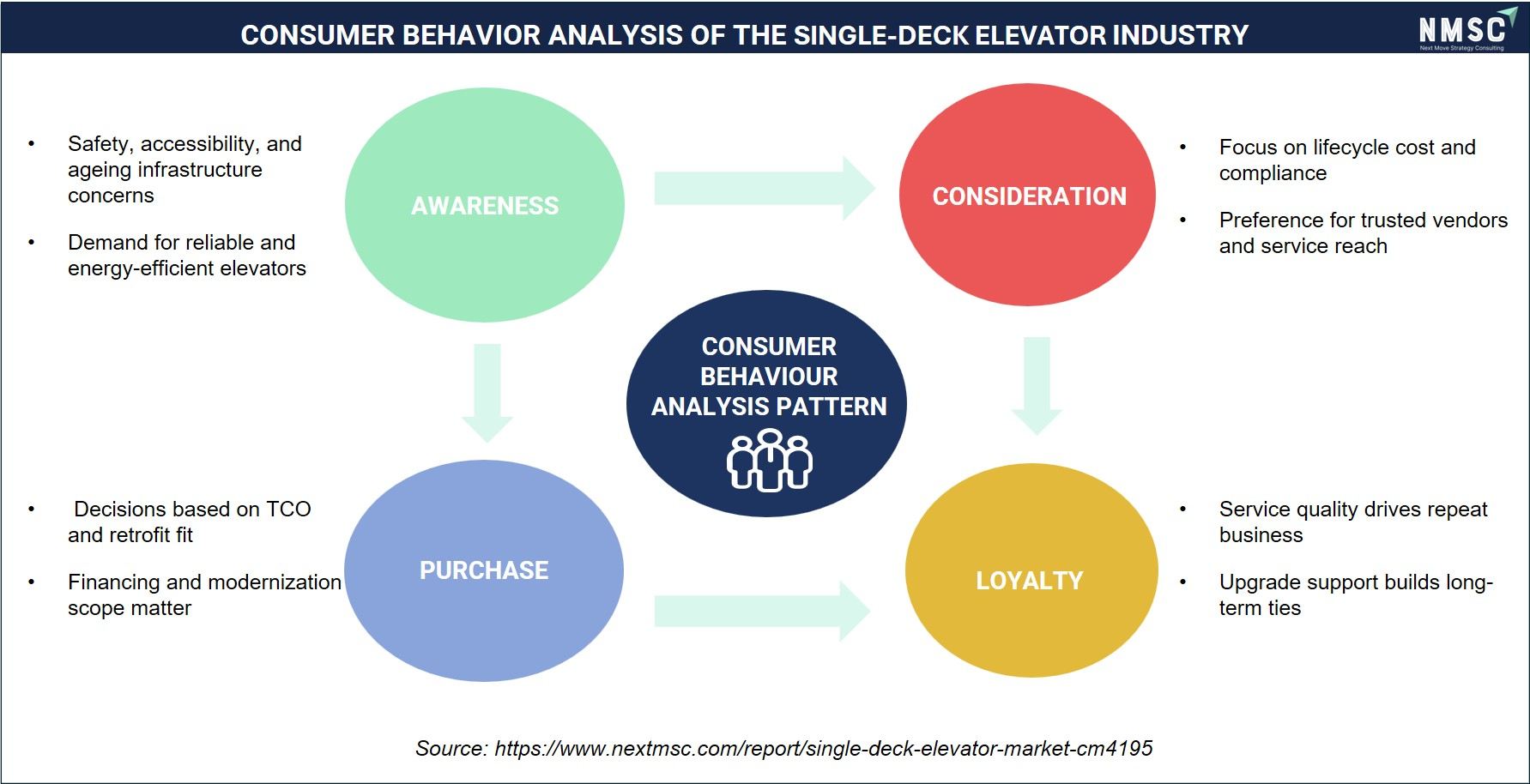
The Single-Deck Elevator market is shaped by pragmatic, risk-aware buying behavior, where purchasing decisions are driven less by innovation novelty and more by safety assurance, regulatory compliance, and long-term operational reliability. Building owners, facility managers, and institutional buyers evaluate elevators as critical infrastructure assets, prioritizing lifecycle cost control, service continuity, and upgrade readiness over short-term cost advantages. As a result, trust in vendors, depth of service networks, and proven performance records play a central role in shaping demand across residential, commercial, and institutional applications.
How is the Single-deck Elevator Market Segmented in this Report, and What are the Key Insights From the Segmentation Analysis?
Market Highlights & Strategic Insights – Single-Deck Elevator Market:
|
Segment |
Key Takeaways |
|
Type |
Passenger elevators dominate due to widespread use in residential and commercial buildings, while freight elevators support industrial and logistics applications; other types serve specialised, lower-volume use cases. |
|
Technology |
Traction elevators lead adoption for their energy efficiency and suitability across mid- and high-rise buildings, while hydraulic elevators remain relevant in low-rise, cost-sensitive installations. |
|
Service Lifecycle |
Maintenance and modernization provide stable, recurring value driven by ageing installed bases, while new installations remain project-driven and cyclical. |
|
Capacity |
Lower and mid-capacity elevators form the bulk of installations aligned with residential and commercial needs; higher-capacity systems are concentrated in industrial and infrastructure environments. |
|
Speed |
Less than 1 m/s and 1–4 m/s dominate the speed segment due to prevalence in low- to mid-rise buildings, with high-speed systems deployed selectively in dense, vertical developments. |
|
Control System |
Conventional control systems maintain broad adoption due to cost and familiarity, while smart control systems gain traction where traffic optimisation and monitoring are required. |
|
Door Operation Mode |
Automatic doors are standard across most applications for safety and convenience, while manual doors persist in limited, low-usage or budget-constrained settings. |
|
Application |
Residential and commercial buildings account for the majority of demand, while industrial applications emphasise durability, load handling, and operational reliability. |
|
Pricing Tier |
Mid-range offerings represent the market core, balancing cost and performance; economy systems serve budget-driven projects, while premium systems address high-specification developments. |
|
Sales Channel |
Direct OEM sales dominate large and complex projects, authorized dealers support regional demand, and contractor-led procurement remains common in integrated construction and retrofit projects. |
By Type Insights
Which Elevator Types Drive Demand in the Single-deck Elevator Market?
Based on our analysis, the Single-Deck Elevator Market is segmented by type into passenger elevators, freight elevators, and other specialised elevators, each serving distinct mobility and load-handling requirements.
From our evaluation of deployment patterns, passenger elevators account for the dominant share of demand, supported by large-scale residential construction and widespread commercial building development where people movement forms the primary requirement. Freight elevators hold a structurally important position in industrial facilities, logistics centres, and mixed-use developments that require reliable material handling. Other specialised elevators serve selective demand in hospitals, hotels, and infrastructure assets where functional requirements and compliance considerations outweigh volume.
By Technology Insights
How does Traction Versus Hydraulic Technology Influence Adoption Patterns?
Based on our assessment, the Single-Deck Elevator Market is segmented by technology into traction elevators and hydraulic elevators, with traction systems further classified into machine-room and machine-room-less configurations. These technologies align with different building heights, load requirements, and space constraints.
From our technical evaluation, traction elevators account for the dominant share of installations due to higher energy efficiency, smoother ride quality, and suitability for mid-rise buildings. Machine-room-less traction systems hold strong preference as they optimise space utilisation and reduce construction complexity. Hydraulic elevators hold relevance in low-rise buildings and retrofit environments where structural flexibility and lower upfront cost remain priority considerations, though energy-efficiency requirements limit their deployment scope.
By Service Lifecycle Insights
How do Installation, Maintenance, and Modernization Define Market Value?
Based on our lifecycle analysis, the Single-Deck Elevator Market is segmented into new installations, maintenance, and modernization, with modernization divided into partial modernization and full elevator replacement. Partial modernization includes controller replacement, door system upgrades, drive system upgrades, and safety component upgrades.
From our review of operating assets, new installations account for the majority of volume demand in active construction environments. Maintenance services form the most stable and recurring revenue stream due to mandatory servicing requirements and long equipment lifecycles. Modernization serves as a key value driver in ageing building stock, with partial modernization preferred for cost efficiency and minimal disruption, while full replacement applies where compliance, performance, or reliability gaps reach critical thresholds.
By Application Insights
How do Residential, Commercial, and Industrial Applications Influence Demand Patterns?
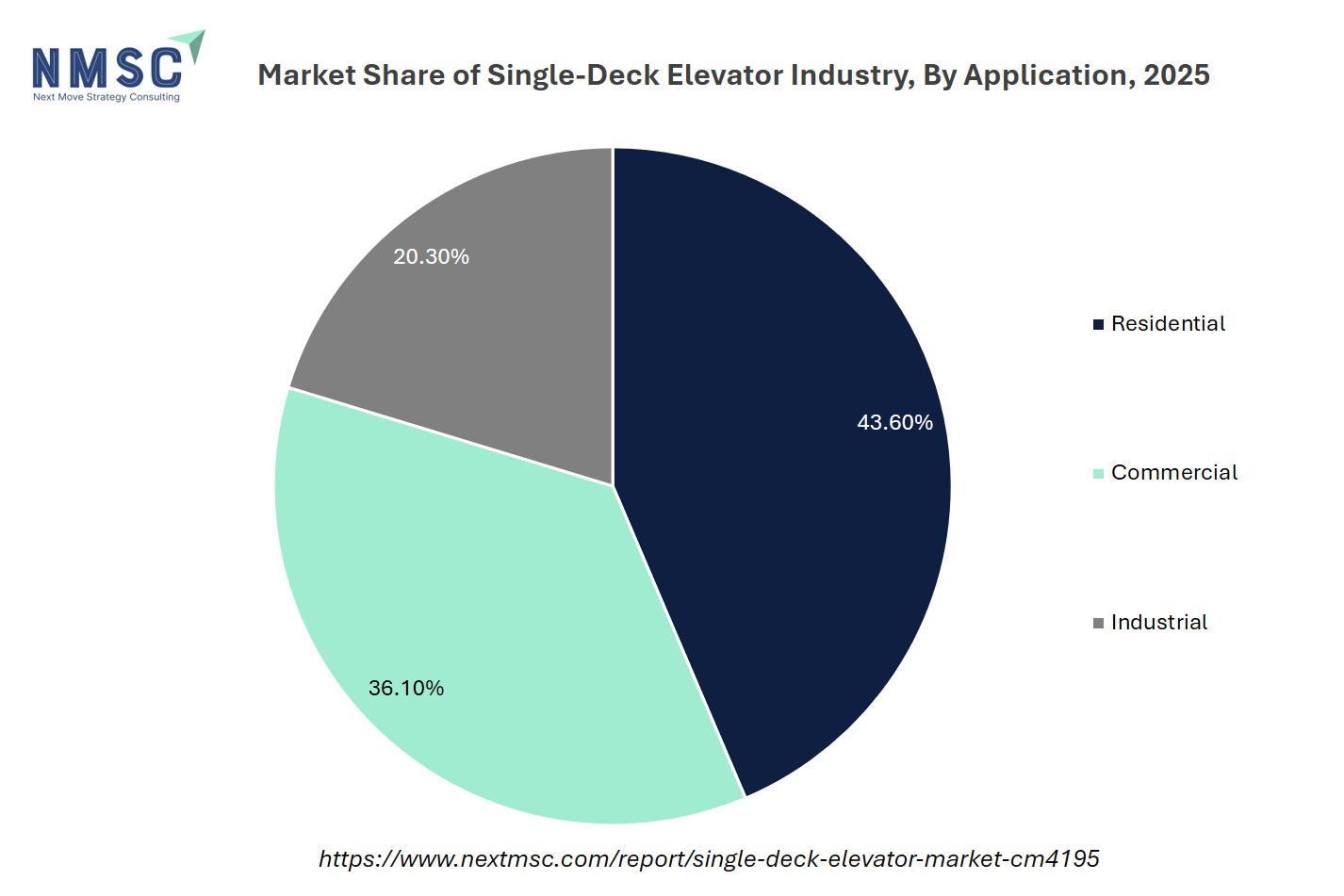
Based on our application-level analysis, the Single-Deck Elevator Market is segmented into residential, commercial, and industrial categories. Residential applications include low-rise, mid-rise, and high-rise buildings as well as individual homes. While, commercial applications span offices, retail centres, hospitality, healthcare facilities, transport hubs, and mixed-use developments, on the other hand industrial applications include manufacturing facilities, warehouses, and logistics centres.
From our evaluation of usage environments, residential buildings represent the largest application segment, supported by sustained urban housing demand and mid-rise apartment development. Commercial buildings follow, driven by requirements for passenger flow efficiency, uptime reliability, and regulatory compliance. Industrial applications account for a smaller but critical share, shaped by load-handling needs, durability expectations, and operational continuity requirements.
Regional Outlook:
Geographic Performance Snapshot:
|
Regions |
Key Takeaways |
|
North America |
North America represents a mature market for single-deck elevators, driven primarily by modernization and replacement demand across ageing residential and commercial building stock. Stringent safety, accessibility, and energy-efficiency regulations continue to support upgrades, while steady construction of mid-rise offices, healthcare facilities, and mixed-use developments sustains baseline installation volumes. Long-term maintenance contracts and digital service adoption are increasingly shaping vendor selection. |
|
Europe |
Europe demonstrates regulation-led and efficiency-focused adoption, supported by strong emphasis on building safety standards, sustainability mandates, and energy performance requirements. Demand is largely driven by modernization projects, particularly in residential housing and public infrastructure, while new installations remain steady in urban regeneration and mixed-use developments. Preference for compact, energy-efficient, and machine-room-less designs supports consistent market activity. |
|
Asia-Pacific |
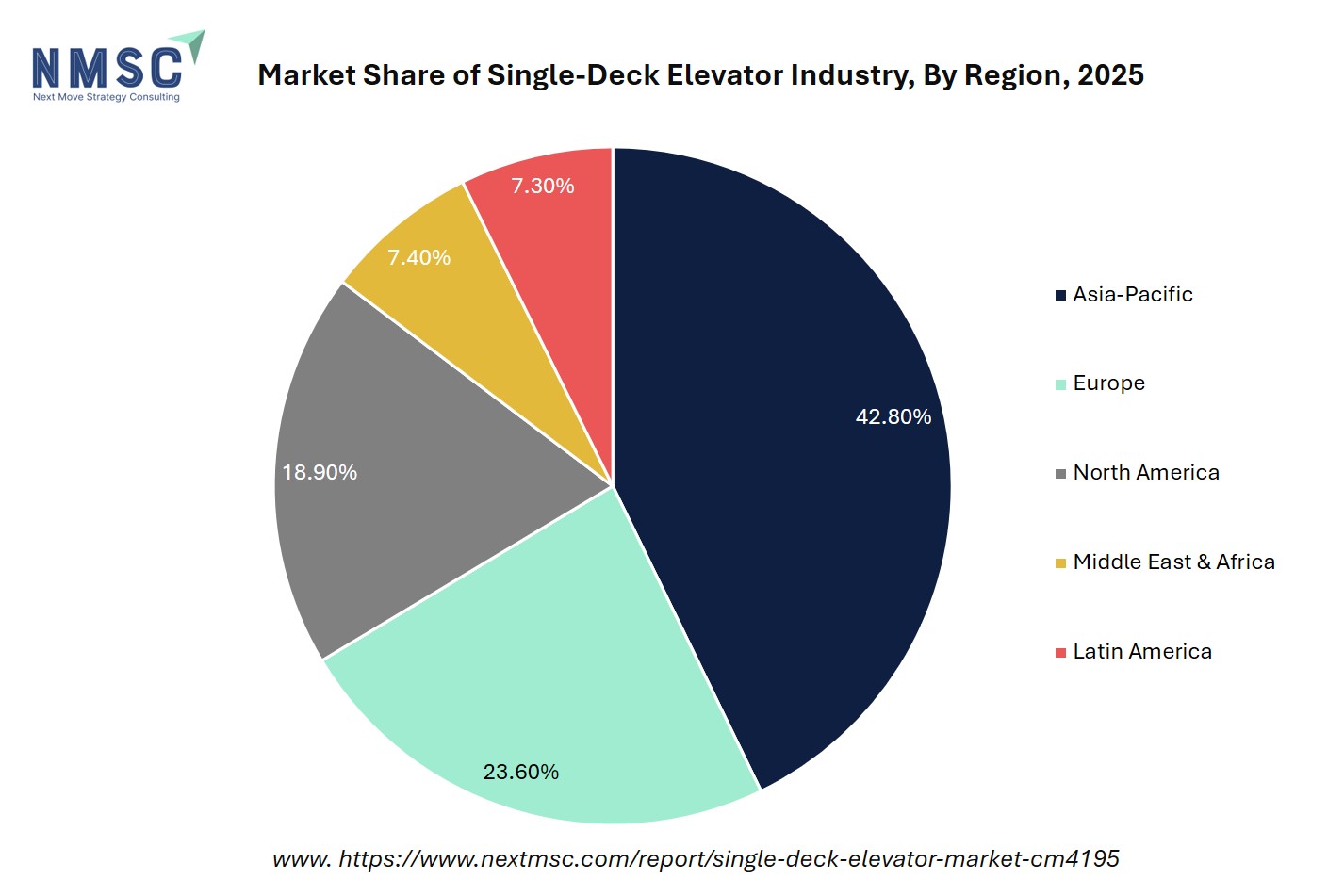
Asia-Pacific dominates global demand for single-deck elevators, supported by rapid urbanisation, large-scale residential construction, and expanding commercial infrastructure. High volumes of new installations in mid-rise buildings underpin market growth, while increasing regulatory oversight and rising expectations for safety and reliability are gradually driving uptake of modern control systems and connected service models. |
|
Rest of the World |
The Rest of the World shows steady but uneven growth, driven by urban development, public infrastructure investment, and gradual expansion of residential and commercial building stock. Demand is concentrated in cost-sensitive projects, where reliability and affordability are prioritised over advanced digital features. Over time, modernization activity and regulatory alignment are expected to support incremental market expansion. |
The Single-Deck Elevator Market is geographically studied across North America, Europe, Asia Pacific, and Rest of the World, and each region is further studied across countries.
Single-Deck Elevator Market in North America
North America represents a mature, operations-driven Single-Deck Elevator market where demand is shaped less by new construction surges and more by ongoing modernization cycles. Ageing residential and commercial building stock, combined with tightening accessibility, safety, and energy-efficiency requirements, continues to sustain upgrade activity. Mid-rise housing, healthcare facilities, and mixed-use developments remain core demand centres in North America. Buyers increasingly evaluate elevators as long-term infrastructure assets, prioritising reliability, lifecycle cost predictability, and service responsiveness. Digital monitoring and preventive maintenance are gaining traction as facility owners seek to reduce downtime and compliance risk. Thus, the region’s strong service culture and established integrator networks reinforce recurring revenue models and long-term vendor relationships boosting the overall growth of the market.
Single-Deck Elevator Market in the United States
Rather than being driven purely by new construction volumes, the U.S. Single-Deck Elevator market is increasingly shaped by how building owners manage ageing assets and operational risk. From our assessments, elevator investment decisions are now anchored in lifecycle cost control, service responsiveness, and compliance assurance, particularly across mid-rise residential, healthcare, and mixed-use properties. In U.S. modernisation activity has overtaken greenfield demand in several metro areas, with buyers prioritising machine-room-less designs, smart controllers, and predictive maintenance capabilities. Moreover, regulatory scrutiny around accessibility, safety, and energy efficiency continues to influence upgrade timing. As a result, vendor differentiation is shifting away from equipment specifications toward bundled service models, digital monitoring, and long-term performance guarantees.
Single-Deck Elevator Market in Canada
Canada’s Single-Deck Elevator market demonstrates steady, structurally sound growth, driven by urban expansion in metropolitan corridors and modernization of ageing building stock. The market’s evolution is closely tied to expanding distribution networks, cold-chain facilities, and removal of surface parking in favour of densification, prompting mid-rise residential and commercial elevator installs. Market demand is particularly strong in retail, institutional complexes, and healthcare infrastructure, where reliability and service continuity are core buying considerations. Moreover, Canadian buyers invest in higher-reliability systems with extended maintenance contracts, balancing fewer units per facility against long-term resilience. Provincial initiatives focused on worker safety and productivity improvements are gradually accelerating digital control system adoption and remote diagnostics. As such, Canada tilts toward pragmatic technology uptake, where operational readiness and compliance drive incremental rather than disruptive change.
Single-Deck Elevator Market in Europe
Europe’s Single-Deck Elevator market reflects a regulation-intensive, efficiency-led adoption profile, shaped by robust building codes, sustainability mandates, and a significant modernization backlog. Mature economies across Western Europe are upgrading ageing elevators to meet energy performance standards while integrating smart traffic management and remote monitoring solutions. Services such as predictive maintenance are gaining traction as facility owners seek cost-effective lifecycle management. Across Europe, the elevator industry continues to segment around traction systems and machine-room-less designs, aligning closely with urban retrofit priorities. Cross-regional variation persists, with Northern Europe emphasising ergonomic performance and Southern markets adopting flexible automation strategies. Institutional demand, particularly in healthcare and public buildings, reinforces safety compliance and redundancy. Sustainability initiatives under the European Green Deal further bolster demand for energy-efficient systems, positioning the region at the convergence of regulatory rigour and modernization-driven growth.
Single-Deck Elevator Market in the United Kingdom
The United Kingdom’s Single-Deck Elevator market is reshaped by urban regeneration, retrofit automation need, and labour availability challenges, encouraging adoption of higher efficiency and digital features. Post-Brexit policy frameworks have intensified focus on workplace safety, building compliance, and data transparency, with buyers favouring solutions that demonstrate clear lifecycle support and regulatory alignment, which is increasing the market demand. Large metropolitan hubs are embracing modern control systems and IoT-enabled maintenance platforms to enhance uptime and reduce energy costs. Integrator networks and scalable software stacks support mid-sized building portfolios, while lifecycle service agreements become central to procurement decisions. Despite economic headwinds, the UK market continues to prioritise robust vendor partnerships and transparent performance metrics. Developers and facilities managers increasingly consider integration complexity and total cost of ownership, balancing upfront investments with operational ROI.
Single-Deck Elevator Market in Germany
In Germany, adoption dynamics in the market are defined less by speed of deployment and more by technical rigor. Our observations shows that buyers place disproportionate weight on certifications, redundancy, and long-term system reliability, particularly in manufacturing-adjacent facilities and dense urban developments. Elevator systems are evaluated as safety-critical infrastructure, not auxiliary building components. This mindset favours traction-based systems with proven performance records, conservative upgrade cycles, and strong service backing. Digital features are adopted selectively, only where they demonstrably improve uptime or regulatory compliance. As a result, Germany supports fewer but higher-value deployments, reinforcing premium positioning for vendors capable of meeting stringent engineering and documentation standards.
Single-Deck Elevator Market in France
France’s Single-Deck Elevator market continues expanding steadily, with installation demand anchored in retail distribution, food logistics hubs, and growing urban housing stock. National regulations emphasise safety, environmental protection, and accessibility, prompting facility owners to prioritise energy-efficient lifts and integrated monitoring. Urban logistics growth and e-commerce expansion boost adoption in commercial spaces, while public infrastructure mandates reinforce the need for certified and interoperable solutions. Buyers increasingly favour vendors with robust local partnerships and strong integration support, particularly where uptime, data handling transparency, and workforce safety are crucial. Moreover, mid-rise residential projects and high-traffic commercial nodes have accelerated specification of smart control systems and predictive maintenance tools, reflecting the broader digitalization of building infrastructure.
Single-Deck Elevator Market in Italy
Italy’s Single-Deck Elevator market is shape largely by retrofit automation and logistics modernization in retail and consumer goods sectors. Government incentives focused on industrial modernization, energy efficiency, and seismic safety drive upgrades across ageing building portfolios. Also, fragmented warehouse and commercial infrastructure necessitates flexible, modular elevator solutions that can adapt to diverse site conditions, encouraging vendors that offer turnkey deployments and local integrator support. Moreover, residential revitalization projects in urban cores also contribute to steady installation volumes, while buyers emphasize affordability alongside performance reliability, which overall impact the market growth.
Single-Deck Elevator Market in Spain
Spain’s Single-Deck Elevator market has shown accelerating uptake, underpinned by e-commerce growth, rising property development in urban centers, and increased logistics complexity. Operators are investing in smart control systems and predictive maintenance tools to boost efficiency in high-volume residential and commercial buildings. In Spain energy cost awareness and operational expense pressures further stimulate modernization activity, especially where older elevators impose higher running costs. Price sensitivity among mid-tier developers drives preference for easy-to-deploy solutions that balance performance with cost control. Lastly, Vendors that combine affordability with seamless integration and robust after-sales support have achieved traction in mainstream segments, signalling growing maturity in Spain’s vertical transportation adoption.
Single-Deck Elevator Market in the Nordics
The Nordic countries, including Sweden, Finland, and Norway, reflect advanced, quality-driven adoption patterns, driven by high digital maturity, strong environmental credentials, and long-term system reliability expectations in the single-deck elevator market. Operators and facility managers in Sweden, Finland, and Norway place significant emphasis on safety, efficiency, and lifecycle transparency, making durable hardware and open software architectures strategic priorities. Sustainability mandates and aggressive energy-efficiency goals reinforce uptake of eco-certified systems and predictive maintenance frameworks. Buyers favour vendors that can demonstrate strong local partnerships, energy-efficient designs, and comprehensive lifecycle support. High trust in automation and a preference for premium solutions help secure high-value contracts, with Norwegian and Swedish urban redevelopment projects spotlighting cutting-edge elevator technologies.
Single-Deck Elevator Market in the Asia-Pacific
Asia-Pacific represents a highly active Single-Deck Elevator market shaped by sustained urban development, expanding residential construction, and ongoing investment in commercial and industrial infrastructure. Market demand is driven by the widespread construction of mid-rise housing, mixed-use developments, and institutional buildings, particularly in rapidly urbanising cities. Adoption patterns vary significantly across countries, reflecting differences in regulatory maturity, building standards, and cost sensitivity. In several markets, buyers prioritise affordability, installation flexibility, and service availability, while others emphasise reliability, safety compliance, and long-term performance. Moreover, modernisation activity is gradually increasing as installed bases age and regulatory oversight strengthens. Vendors that adapt system specifications, pricing structures, and service models to local project requirements are better positioned to build sustainable presence across the region and capture long-term demand across both new installations and an expanding modernisation pipeline
Single-Deck Elevator Market in China
China is a scale and growth leader in the Single-Deck Elevator market, supported by rapid urbanisation, infrastructure investment, and a vast installed base requiring modernization and service expansion. The country’s elevator market size is among the largest globally, driven by high-rise residential construction, transportation hubs, and commercial skyscrapers. Domestic OEMs and integrated supply chains enable competitive cost structures, while government programs supporting smart city initiatives encourage adoption of energy-efficient lifts with IoT connectivity. Thus, China’s modernization surge focused on safety, accessibility, and sustainability reinforces recurring service revenue from maintenance and upgrades. In conclusion, the growing integration of BIM and building management systems is becoming a standard specification, while escalating expectations around traffic management efficiency and energy performance are increasingly influencing the evolution of single-deck elevator products. .
Single-Deck Elevator Market in Japan
Japan’s Single-Deck Elevator market reflects stable, structurally driven growth influenced by labour shortages, ageing demographics, and a strong emphasis on safety and uptime performance. Urban centres such as Tokyo and Osaka witnesss consistent demand for elevators with advanced safety certifications, smooth ride quality, and long-term reliability, particularly in retail, healthcare, and residential mid-rise environments. Market growth is further supported by stringent local codes and seismic resilience criteria, shaping product specifications and service expectations. Operators prioritise extended service support, predictive maintenance, and brand trust, favouring premium OEMs capable of delivering robust lifecycle performance. These dynamics collectively support steady modernization investment and gradual adoption of smart dispatch and connectivity features.
Single-Deck Elevator Market in India
India’s Single-Deck Elevator market is best understood as a transition story rather than a mature adoption curve. Demand is expanding rapidly across mid-rise residential developments, transit-linked commercial hubs, and institutional buildings, driven by urbanisation and infrastructure investment. Unlike developed markets, buying decisions here balance performance aspirations with cost sensitivity and scalability. Our market interactions indicate strong preference for modular systems that can be upgraded over time, particularly as safety and energy regulations tighten. While service depth and digital monitoring are gaining relevance, upfront affordability remains decisive. Vendors that localise manufacturing, simplify installation, and offer flexible maintenance structures are scaling fastest in this high-velocity market.
Single-Deck Elevator Market in South Korea
South Korea is a highly developed market characterised by advanced automation readiness, rapid feature adoption, and integrated approaches to building infrastructure. High-volume distribution hubs in logistics, dense commercial districts, and transit-oriented developments demand elevator systems that deliver precision, safety, and operational continuity. Domestic electronics and technology firms contribute to vertically integrated ecosystems, enabling rapid deployment of smart controllers, energy-efficient drives, and predictive maintenance platforms. Market sophistication is reflected in strong uptake of analytics-enabled monitoring solutions and advanced control systems tailored for high-traffic environments. Partnerships between OEMs, software providers, and telecom operators accelerate feature rollout, reinforcing Korea’s position as a leader in elevator digitalisation.
Single-Deck Elevator Market in Taiwan
Taiwan’s Single-Deck Elevator market demonstrates robust technology affinity and early adoption of advanced vertical transportation systems, driven by high-value manufacturing, electronics clusters, and urban redevelopment projects. Facility managers emphasise interoperability, system reliability, and integration with building management platforms, particularly in industrial parks and logistics complexes. In the country pilot deployments involving robotics-enabled maintenance and remote diagnostics are commonly used to validate ROI, while local service presence and technical support are critical factors in procurement decisions. Taiwan’s tightly knit OEM and integrator networks facilitate rapid customisation, positioning the market for incremental expansion as digital features and analytics-driven services gain traction.
Single-Deck Elevator Market in Indonesia
Indonesia’s Single-Deck Elevator market is at an early but accelerating stage, shaped by rapid urbanisation, expanding city centres, and improving logistics and commercial infrastructure. Adoption is concentrated in major metropolitan distribution hubs, where elevators are specified to support mid-rise residential complexes, office buildings, and retail centres. Affordability, ease of deployment, and scalable maintenance frameworks are critical success factors in this cost-sensitive market, with many buyers opting for modular solutions that can be phased into broader building plans. Partnerships with local developers and system integrators are essential for market entry and sustained growth, especially as e-commerce and mixed-use developments proliferate across urban belts.
Single-Deck Elevator Market in Australia
Australia’s Single-Deck Elevator market exhibits above-average spend per facility and a strong focus on operational resilience and efficiency, largely driven by retail distribution, food logistics, and mining-adjacent supply chains. In Australia, hiigh labour costs and geographic dispersion encourage adoption of reliable elevator systems with robust service contracts and remote performance monitoring. Also, the market growth is underpinned by steady investment in commercial hubs, tourism infrastructure, and high-end residential projects. Buyers value professional system integration and lifecycle support, preferring bundled hardware-software-services offerings that deliver predictable uptime and performance optimisation. Lastly, premium solutions with advanced safety and energy-efficient features resonate strongly with Australian operators, enabling vendors to command higher value contracts and establish long-term, service-led partnerships in the market.
Single-Deck Elevator Market in Latin America
Latin America’s Single-Deck Elevator market is emerging with robust pockets of growth, led by Brazil and other urban markets where e-commerce expansion, real estate development, and rising labour costs increase demand for efficient vertical transport. Cost-sensitive buyers prioritise affordability and local support, integrating modular systems that balance performance with capital constraints. Retail and mixed-use developments in high-growth urban corridors drive new installations, while modernization projects in legacy infrastructures support lifecycle service revenues. Furthermore, local integrator partnerships and phased deployment models are enabling broader adoption, although economic volatility and import-related cost pressures remain key challenges. Vendors that align their commercial terms and service frameworks with regional market dynamics are better positioned to capture sustained, long-term demand. .
Single-Deck Elevator Market in the Middle East & Africa
The Single-Deck Elevator market in the Middle East & Africa follows a distinctly bifurcated trajectory. In the Gulf states, elevators are specified as part of premium, design-led developments, where performance, redundancy, and digital service integration are expected by default. High-rise hospitality, commercial, and transit projects drive demand for advanced control systems and long-term service agreements. In contrast, much of Africa remains at an early adoption stage, where affordability, robustness, and ease of maintenance dominate procurement decisions. Here, growth is incremental and tied closely to urban expansion. Vendors that apply region-specific strategies rather than uniform offerings are better positioned to capture long-term value.
Competitive Landscape
Competitive Dynamics & M&A Landscape:
|
Key Takeaways |
|
The Single-Deck Elevator market is characterised by the coexistence of large global OEMs and strong regional manufacturers. Multinational players leverage scale, standardized platforms, and extensive service networks to support long-term maintenance and modernization contracts, while regional and specialist companies compete through cost efficiency, local regulatory familiarity, and customised solutions for mid-rise residential, commercial, and institutional buildings. This dual structure enables broad market coverage across both mature retrofit-led markets and emerging new-installation environments. |
|
Competitive differentiation is increasingly shifting away from core elevator hardware toward lifecycle-oriented capabilities. Vendors are prioritising machine-room-less configurations, energy-efficient traction systems, and modular designs that simplify installation and future upgrades. Digital service offerings such as remote monitoring, condition-based maintenance, and compliance documentation support are becoming central to procurement decisions, particularly among institutional and commercial buyers seeking predictable uptime and operating costs. |
Which Companies Dominate the Single-Deck Elevator Industry and How do they Compete?
Based on our analysis, the Single-Deck Elevator market is shaped by a mix of global elevator OEMs and strong regional or specialist manufacturers, each competing across distinct building types and deployment contexts. Large multinational players such as Otis Worldwide Corporation, Schindler Holding Ltd., KONE Corporation, TK Elevator GmbH, and Mitsubishi Electric Corporation are most frequently selected for projects where regulatory compliance, safety certification, and long-term service continuity are critical. From our reviews of installation and modernization projects, these vendors are engaged in large residential portfolios, hospitals, commercial complexes, and infrastructure-linked developments that demand proven reliability and dense service coverage. Competition at this tier is driven less by lift hardware differentiation and more by installed-base scale, lifecycle management capability, and global service execution.
Market Dominated by Single-Deck Elevator Giants and Specialists
Alongside global leaders, the Single-Deck Elevator market is strongly influenced by regional and specialist manufacturers such as Hitachi, Ltd., Toshiba Elevator and Building Systems Corp., Fujitec Co., Ltd., Hyundai Elevator Co., Ltd., Orona S. Coop., KLEEMANN Hellas S.A., Canny Elevator Co., Ltd., IFE Elevators Co., Ltd., Johnson Lifts Private Limited, Savaria Corporation, SJEC Corporation, Cibes Lift Group AB, XIZI Elevator Co., Ltd., Suzhou Glarie Elevator Co., Ltd., and Zhejiang United Elevator Co., Ltd.. These players gain traction by offering cost-competitive systems, faster delivery cycles, and localized customization for mid-rise residential, institutional, and retrofit-heavy projects. From our interactions with developers and contractors, regional OEMs are preferred where familiarity with local codes, flexible configurations, and close on-site service support outweigh global brand scale.
Innovation and Adaptability Drive Market Success
Innovation in the Single-Deck Elevator market is increasingly centred on service intelligence and lifecycle optimisation rather than fundamental lifting technology. From our assessment of recent deployments, vendors are prioritising machine-room-less designs, energy-efficient traction systems, modular component platforms, and smart controllers to simplify installation and future upgrades. Digital capabilities such as remote monitoring, condition-based maintenance, and compliance documentation are becoming central to procurement decisions, particularly among institutional and commercial buyers seeking predictable uptime and operating cost control. Vendors that integrate elevators effectively with building management systems and offer transparent service frameworks are better positioned to secure long-term maintenance and modernization contracts.
Market Players to Opt for Merger & Acquisition Strategies to Expand their Presence
From our review of industry developments in 2025, strategic activity in the Single-Deck Elevator market has increasingly focused on strengthening service reach and lifecycle capabilities rather than expanding manufacturing capacity. In October 2025, Otis Worldwide Corporation acquired Schindler’s elevator business in South Korea, reinforcing its local service footprint, modernization capacity, and aftermarket depth in a regulation-intensive market. In parallel, KONE Corporation advanced a partnership-led strategy by expanding its collaboration with Microsoft to enhance cloud-based predictive maintenance and digital service platforms. Together, these developments reflect a broader industry shift toward service-centric ecosystems, installed-base monetization, and digitally enabled asset management as core competitive levers.
SWOT Analysis:
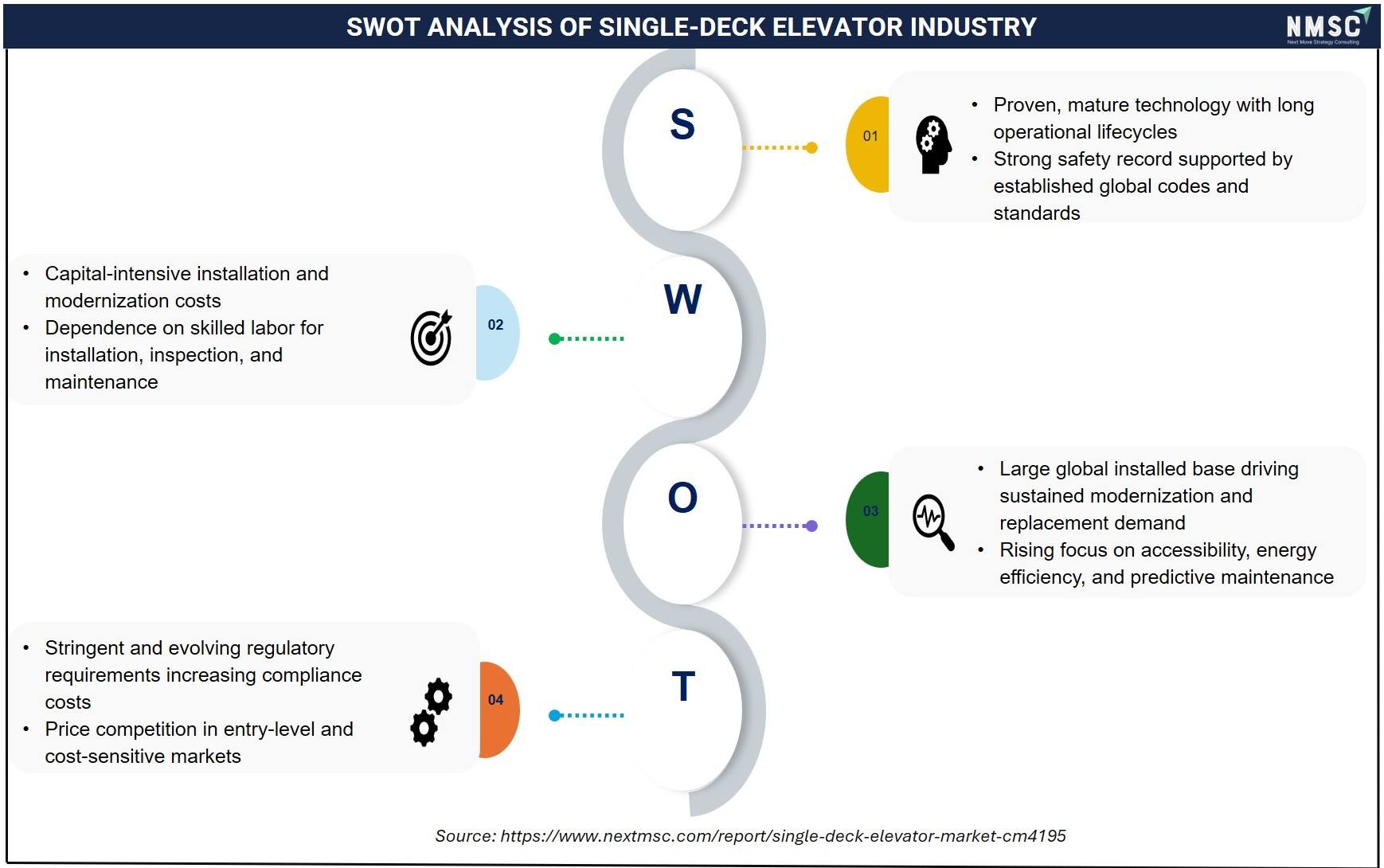
The infographic summarizes the Single-Deck Elevator market as a mature, safety-driven industry with long asset lifecycles and strong regulatory backing. While high installation costs and reliance on skilled labor remain key constraints, a large global installed base continues to support steady modernization and replacement demand. Moreover, growing focus on accessibility, energy efficiency, and predictive maintenance creates service-led growth opportunities, although evolving regulations and price competition in cost-sensitive segments remain persistent challenges.
List of Key Single-Deck Elevator Companies
-
Schindler Holding Ltd.
-
KONE Corporation
-
Mitsubishi Electric Corporation
-
Hitachi, Ltd.
-
Toshiba Elevator and Building Systems Corp.
-
Fujitec Co., Ltd.
-
Hyundai Elevator Co., Ltd.
-
Orona S. Coop.
-
KLEEMANN Hellas S.A.
-
Canny Elevator Co., Ltd.
-
IFE Elevators Co., Ltd.
-
Johnson Lifts Private Limited
-
Savaria Corporation
-
SJEC Corporation
-
Cibes Lift Group AB
-
XIZI Elevator Co., Ltd.
-
Suzhou Glarie Elevator Co., Ltd.
-
Zhejiang United Elevator Co., Ltd.
What are the Latest Key Industry Developments?
-
September 2025 - Mitsubishi Electric Building Solutions (MEBS) launched KEGMIL, a cloud-based digital maintenance platform, starting in Singapore with plans for a rapid Southeast Asian rollout. The platform integrates with Mitsubishi's "M's BRIDGE" remote monitoring system to digitize field service workflows, reducing maintenance report preparation time by 50% and worker assignment planning by 90% for single-deck and escalator portfolios.
-
September 2025 - KONE Corporation launched its "Rise" Strategy for 2025–2030, significantly expanding its digital partnership with Microsoft. The collaboration integrates Azure AI and Microsoft Power Platform to reduce service contract handling times by 33% and scale predictive maintenance across their global installed base.
-
July 2025 - Schindler Group entered a major regional service agreement with Accor in Asia. This partnership emphasizes the "servitization" trend, where elevator manufacturers act as long-term facility partners rather than just equipment providers, focusing on hospitality-specific uptime requirements.
What are the Key Factors Influencing Investment Analysis & Opportunities in the Single-deck Elevator Market?
Investment analysis in the Single-Deck Elevator market has increasingly been shaped by a shift in capital allocation toward service-led, lifecycle-oriented business models rather than pure new-installation growth. Based on our evaluation of recent strategic investments, selective acquisitions, and capital deployment patterns, we observed that investors and strategic buyers increasingly favour companies with large installed bases, long-term maintenance contracts, and predictable recurring service revenues. Businesses demonstrating strong modernization pipelines, standardized component platforms, and scalable service operations consistently attract greater strategic interest than those reliant on cyclical construction demand. Digital service capabilities—such as remote monitoring, condition-based maintenance, and compliance management—are emerging as important value enhancers, improving asset uptime and customer retention while extending revenue duration across elevator lifecycles.
We also identified growing investment focus on platforms that combine operational maturity with service extensibility, particularly in markets facing ageing building stock, tightening safety regulations, and rising operating costs. Strategic capital from OEMs, infrastructure operators, and real-estate–linked investors increasingly outweighs purely financial investment, as stakeholders seek control over installed-base economics and service ecosystems. For investors, the most attractive opportunities lie in companies that pair reliable single-deck elevator hardware with disciplined service execution, modernization expertise, and digital tools that improve lifecycle transparency. This combination supports resilient cash flows, lowers exposure to construction volatility, and positions suppliers to capture long-term value as elevators transition from discrete assets into continuously managed infrastructure systems.
Key Benefits for Stakeholders:
Next Move Strategy Consulting (NMSC) presents a comprehensive analysis of the Single-Deck Elevator market, covering historical developments from 2020 to 2025 and providing forward-looking forecasts through 2035. The study evaluates the market at global, regional, and country levels, delivering quantitative outlooks alongside qualitative insights into key growth drivers, adoption barriers, technology shifts, and investment trends across all major Single-Deck Elevator segments.
From our perspective, the Single-Deck Elevator market delivers sustained value across a broad stakeholder base by aligning long-lived infrastructure assets with service-led economics. Investors benefit from predictable cash flows driven by large installed bases, long-term maintenance contracts, and recurring modernization activity rather than reliance on cyclical new-installation demand. Building owners and facility operators gain operational reliability, regulatory compliance, and lifecycle cost control through dependable vertical transportation systems supported by preventive maintenance and digital service tools. OEMs, system integrators, and service partners benefit from extended asset lifecycles, modernization pipelines, and recurring aftermarket revenues tied to upgrades, compliance support, and performance optimization. By positioning elevators as continuously managed infrastructure rather than one-time capital equipment, the market creates durable value across the ecosystem while supporting long-term profitability, safety outcomes, and urban infrastructure resilience.
|
Parameters |
Details |
|
Customization Scope |
Free customization (equivalent to up to 80 analyst-working hours) after purchase. Addition or alteration to country, regional & segment scope. |
|
Pricing and Purchase Options |
Avail customized purchase options to meet your exact research needs. |
|
Approach |
In-depth primary and secondary research; proprietary databases; rigorous quality control and validation measures. |
|
Analytical Tools |
Porter's Five Forces, SWOT, value chain, and Harvey ball analysis to assess competitive intensity, stakeholder roles, and relative impact of key factors. |
Single-Deck Elevator Market Key Segments
By Type
-
Passenger Elevator
-
Freight Elevator
-
Others
By Technology
-
Traction Elevator
-
Machine Room Traction
-
Machine Roomless Traction
-
-
Hydraulic Elevator
-
Conventional Hydraulic
-
Hole-less Hydraulic
-
Roped Hydraulic
-
By Service Lifecycle
-
New Installation
-
Maintenance
-
Modernization
-
Partial Modernization
-
Controller Replacement
-
Door System Upgrade
-
Drive System Upgrade
-
Safety Component Upgrade
-
-
Full Elevator Replacement
-
By Capacity
-
Less than 1000 kg
-
1001-1500kg
-
1501 kg to 2500 kg
-
2501 kg to 4000 kg
-
More than 4000 kg
By Speed
-
Less than 1 m/s
-
1–4 m/s
-
More than 4 m/s
By Building Height
-
Low-Rise
-
Mid-Rise
-
High-Rise
-
Super-High-Rise
By Control System
-
Conventional Control System
-
Smart Control System
-
Destination Control System
-
Group Control System
-
Remote Monitoring Enabled Control
By Door Operation Mode
-
Automatic Doors
-
Manual Doors
By Door Opening Mechanism
-
Center Opening
-
Side Opening
-
Telescopic Opening
By Door Operator Technology
-
AC VVVF Door Operator
-
DC Door Operator
By Application
-
Residential
-
Low Rise Buildings up to 10 Floors
-
Mid Rise Buildings from 11 Floors to 30 Floors
-
High Rise Buildings above 30 Floors
-
Villas and Individual Homes
-
-
Commercial
-
Airports
-
Hotel and Hospitality Buildings
-
Leisure and Education Facilities
-
Marine and Port Facilities
-
Medical and Healthcare Buildings
-
Mixed Use Buildings
-
Retail and Shopping Centers
-
Public Transportation Hubs
-
Office Buildings
-
Low Rise up to 10 Floors
-
Mid Rise from 11 Floors to 30 Floors
-
High Rise above 30 Floors
-
-
-
Industrial
-
Manufacturing Facilities
-
Warehouses
-
Logistics Centers
-
By Pricing Tier
-
Economy Segment
-
Mid-Range Segment
-
Premium Segment
By Sales Channel
-
Direct Sales from OEM
-
Authorized Dealer Sales
-
Contractor Led Procurement
Geographical Breakdown
-
North America: U.S., Canada, and Mexico.
-
Europe: UK, Germany, France, Italy, Spain, Sweden, Denmark, Finland, the Netherlands, and the Rest of Europe.
-
Asia Pacific: China, India, Japan, South Korea, Taiwan, Indonesia, Vietnam, Australia, Philippines, Malaysia and the rest of APAC.
-
Middle East & Africa (MEA): Saudi Arabia, UAE, Egypt, Israel, Turkey, Nigeria, South Africa, and the rest of MEA.
-
Latin America: Brazil, Argentina, Chile, Colombia, and the rest of LATAM.
Conclusion & Recommendations
This report equips stakeholders, industry participants, investors, and consultants with actionable intelligence to capitalize on the structural transformation underway in the Single-Deck Elevator market. By combining rigorous data-driven analysis with proven strategic frameworks, NMSC’s Single-Deck Elevator Market Report serves as a critical decision-support resource for navigating a rapidly evolving automation landscape
The market is positioned for steady, structurally resilient expansion, supported by ageing building stock, tightening safety and accessibility regulations, and sustained demand for reliable vertical transportation across residential, commercial, and institutional buildings. Key strategic insights highlight the growing importance of service-centric operating models, lifecycle optimization, and digital service enablement, as these capabilities improve asset uptime, regulatory compliance, and long-term return on investment for building owners. Vendors that prioritise modular system designs, energy-efficient traction technologies, and predictive maintenance frameworks consistently demonstrate stronger customer retention and recurring service revenue generation.
For executives and investors, value creation increasingly depends on exposure to modernisation activity, installed-base expansion, and long-term maintenance contracts, rather than pure new-installation volume. Strategic focus on mid-rise residential developments, healthcare facilities, and mixed-use buildings enhances demand stability, while continued investment in service networks, digital diagnostics, and regional execution capability strengthens competitive positioning. Scalability, system reliability, and transparent lifecycle performance remain central to buyer confidence, enabling durable value creation across the global Single-Deck Elevator ecosystem.


About the Author
 Saista Faiyaz
— Saista Faiyaz is Research Associate at Next Move Strategy Consulting, where she has covered consumer markets and healthcare technologies for 3 years. Her work includes primary interview review, secondary-source validation, market sizing, and structured analysis of company and industry data. She supports research by comparing evidence across sources, organizing findings into market narratives, and documenting assumptions used in analysis. Her scope includes cross-market benchmarking, and reports.
Saista Faiyaz
— Saista Faiyaz is Research Associate at Next Move Strategy Consulting, where she has covered consumer markets and healthcare technologies for 3 years. Her work includes primary interview review, secondary-source validation, market sizing, and structured analysis of company and industry data. She supports research by comparing evidence across sources, organizing findings into market narratives, and documenting assumptions used in analysis. Her scope includes cross-market benchmarking, and reports.
About the Reviewer
 Supradip Baul
— Supradip Baul is an accomplished business consultant and strategist with over a decade of rich experience in market intelligence, strategy, technology, and business transformation. His work has included rigorous qualitative and quantitative analysis across multiple industries, helping clients shape investment decisions and long-term roadmaps. Earlier in his career, he was associated with Gartner, where he contributed to industry-leading reports and market share analyses. He has worked with leading global companies and holds an MBA with a dual specialization in Marketing and Finance.
Supradip Baul
— Supradip Baul is an accomplished business consultant and strategist with over a decade of rich experience in market intelligence, strategy, technology, and business transformation. His work has included rigorous qualitative and quantitative analysis across multiple industries, helping clients shape investment decisions and long-term roadmaps. Earlier in his career, he was associated with Gartner, where he contributed to industry-leading reports and market share analyses. He has worked with leading global companies and holds an MBA with a dual specialization in Marketing and Finance.
At Next Move Strategy Consulting, we understand that insightful market research is the cornerstone of successful business decisions. That's why we employ a robust and multifaceted approach, combining various methodologies to deliver the most accurate and actionable data for our clients.

Research Landscape
We navigate the world of research with two primary approaches:
Qualitative Approach
Our qualitative research methodologies involve immersive techniques such as in-depth interviews, focus groups, and observational studies. By engaging directly with individuals and stakeholders, we uncover valuable insights that quantitative data alone may overlook.

Quantitative Research
In tandem with qualitative methodologies, NMSC leverages the power of Quantitative Research to provide a robust foundation of numerical insights. Through systematic data collection and analysis, we quantify patterns, preferences, and market trends, offering a comprehensive view of the business landscape.
Our quantitative research approach employs diverse tools, including surveys, experiments, and statistical modelling. These methodologies enable us to gather data from a large and representative sample, ensuring the statistical significance of our findings. By employing structured questionnaires and standardized data collection methods, we guarantee the reliability and validity of the information we present to our clients.
Quantitative research is particularly effective in measuring the prevalence of trends, assessing market size, and gauging the impact of various factors on consumer behavior. The numerical precision attained through this approach equips our clients with actionable insights, facilitating data-driven decision-making and strategy formulation.


Our Specialized Toolbox for Industry-Specific Market Research
We deploy a specialized arsenal of techniques tailored to meet your unique requirements. Here's a glimpse into our comprehensive toolbox:

Information Procurement
The stage entails acquiring market data or relevant information through various sources and methodologies.


Market Research Approach
We utilize both top-down and bottom-up approaches in market research analysis to achieve a comprehensive understanding of the market dynamics, leveraging the broad perspective of industry trends and macroeconomic factors alongside detailed insights from specific segments and individual companies.

Porters Five Forces Analysis
We conduct Porter's Five Forces analysis to evaluate the competitive landscape of an industry, providing us with insights into factors that affect profitability and strategic positioning.

SWOT Analysis

Forecasting
We utilize a forecasting model to predict future consumption by considering parameters like population, economics, regulations, market competition, drivers, constraints, technology, and pricing. We also employ statistical techniques such as multilinear regression, exponential smoothing, moving average, ARIMA, and Monte Carlo simulations for accurate predictions. In econometric forecasting, we analyzed short-term and long-term event impacts, attributing values based on regulatory frameworks, economic factors, and market events.





 Speak to Our Analyst