Elevator Market By Type (Passenger Elevator, Freight Elevator and Others), By Technology (Traction and Hydraulic), By Service (New Installation, Maintenance and Modernization), By Capacity (Less than 1500 kg, 1500 to 2500 kg, 2501 to 4000 kg and More than 4000 kg), By Speed (Less than 1 M/S, Between 1 to 4 M/S and More than 5 M/S), By Deck Type (Single Deck and Double Deck), By Destination Control (Smart and Conventional), and Others – Global Opportunity Analysis and Industry Forecast, 2024–2030
Industry: Construction & Manufacturing | Latest Edition: July 30, 2026 | No of Pages: 728 | No. of Tables: 1230 | No. of Figures: 1211 | Format: PDF | Report Code: CM1409
Industry Outlook
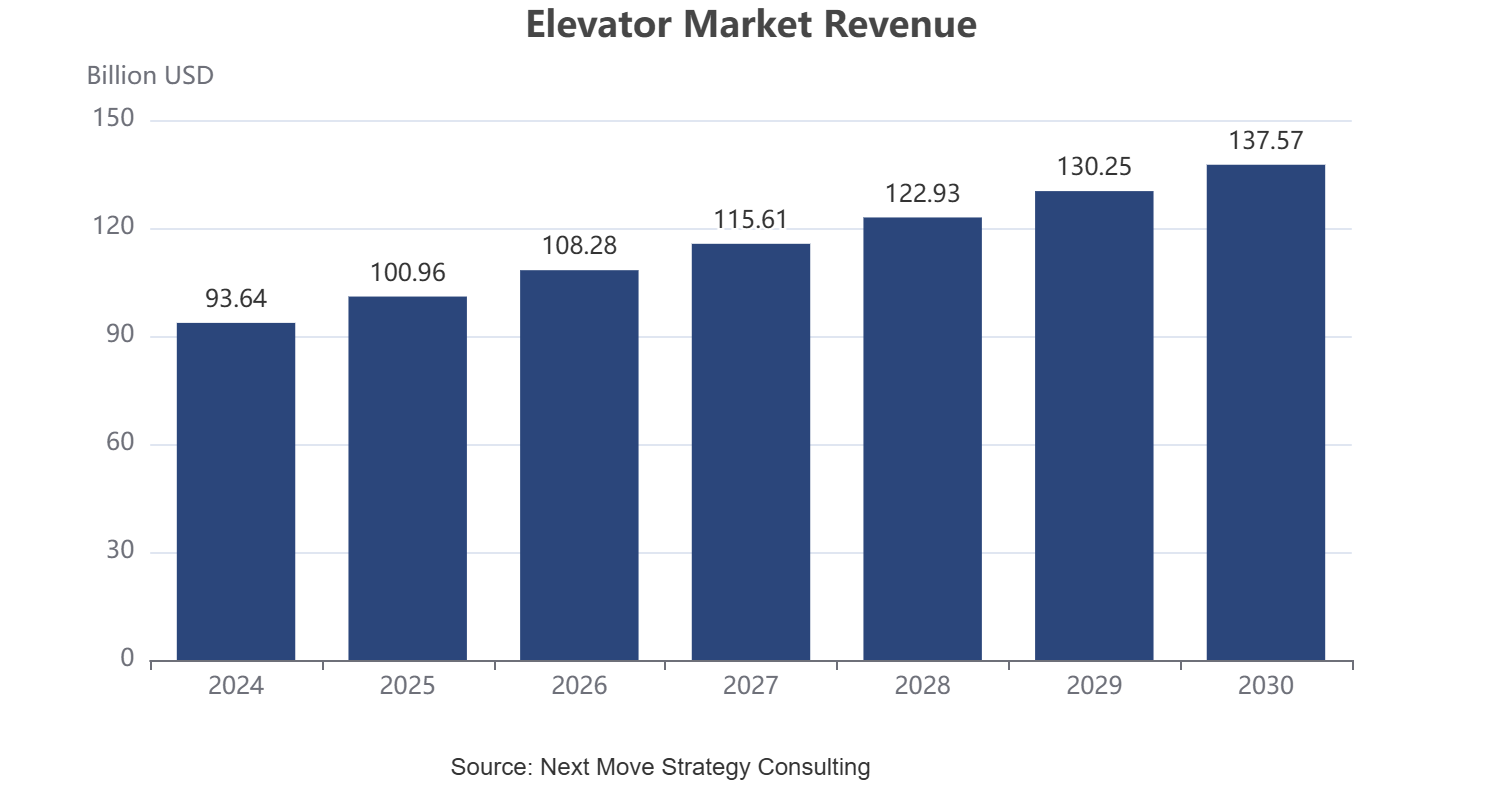
The global Elevator Market size was valued at USD 98.72 billion in 2024 and is expected to reach USD 108.13 billion by 2025. Looking ahead, the industry is projected to expand significantly, reaching USD 148.20 billion by 2030, registering a CAGR of 6.51% from 2025 to 2030. In terms of volume, the market recorded 830 thousand units in 2024, with forecasts indicating growth to 960 thousand units by 2025 and further to 1516 thousand units by 2030, reflecting a CAGR of 9.6% over the same period.
The market is a mature and stable sector, providing essential vertical transportation solutions across residential, commercial, and infrastructure projects. With over half of the global population living in urban areas, demand has surged for elevators in high-rise apartments, office towers, hotels, airports, and transit systems.
Leading players such as Otis, KONE, Schindler, TK Elevator, Mitsubishi Electric, and Fujitec dominate both equipment manufacturing and service markets worldwide. Elevator applications range from passenger and freight lifts to specialized solutions in parking garages and hospitals, with the industry increasingly adopting smart, connected systems for enhanced safety and operational efficiency through IoT monitoring and predictive maintenance.
Despite challenges such as aging infrastructure, the elevator market growth prospects remain strong, driven by urbanization, modernization, and the need for retrofitting as cities densify and existing fleets reach the end of their lifecycle.
What Are the Key Trends in the Elevator Market?
How is IoT Transforming Elevator Maintenance and Operations?
Elevator manufacturers are increasingly leveraging IoT and AI to enhance reliability and maximize uptime. In 2024, Otis reports that its Otis ONE cloud platform now connects over 1 million elevators globally, enabling real-time monitoring of equipment health. By continuously collecting sensor data, companies predict potential failures before they occur, with Otis noting that its connected elevators deliver “proactive, predictive, and transparent” maintenance alerts, improving service responsiveness.
The implications for manufacturers and building owners are clear: expanding IoT retrofits lower maintenance costs, support premium service contracts, and generate recurring revenue through service agreements. Overall, increased digitalization is reshaping elevator business models, shifting the focus from traditional product sales to service-oriented offerings.

The chart shows the percentage of organizations adopting AI in at least one function, rising sharply from 20% in 2017 to 78% in 2024, with notable acceleration after 2022. This growing adoption rate has direct implications for the elevator market share, where AI technologies drive enhancements in maintenance, energy efficiency, predictive diagnostics, and customer experience.
As more companies embrace AI, elevator manufacturers and service providers are increasingly integrating AI into smart elevators, offering features like real-time monitoring, optimized routing, and personalized controls, positions that align with the global trend toward intelligent, automated building solutions.
How is Elevator Modernisation Demand Driving Market Growth?
A growing number of ageing elevators are reaching the end of their operational life, driving a significant modernisation boom. Otis reports that its modernization orders rose 12.1% in 2024, with its backlog increasing 13%, reflecting strong demand for retrofit projects. Globally, an estimated 8 million elevators are currently in need of modernization, projected to reach 10 million by 2030. This trend is partly driven by regulatory requirements, as many governments now mandate updated safety and accessibility standards in older buildings.
Analysis indicates that service and refurbishment segments are growing faster than new installations, presenting a strategic opportunity for companies to expand modernisation offerings and financing programs. For instance, KONE reports that approximately 19% of its 2024 sales came from modernisation services. The actionable insight is clear: firms prioritise retrofit solutions, including upgrade packages and project financing, to capitalize on the substantial modernization market, which outpaces the mature new-installation segment.
How are Emerging Markets and Urbanization Shaping Elevator Products?
Rapid urbanization across Asia-Pacific, the Middle East, and other emerging regions is driving strong new elevator market demand. In May 2024, Mitsubishi Electric launched the NEXIEZ-Fit, a low-rise residential elevator designed for high-growth ASEAN and Middle East markets, addressing the need for affordable, fast-install solutions. These developments highlight how infrastructure growth in emerging cities, such as India’s planned smart cities and Gulf skyscraper projects, is fuelling elevator orders.
Companies are advised to tailor offerings for these regions by providing mid- to low-cost elevators with rapid installation and localized maintenance support. Actionable strategies include partnering with local contractors or establishing regional assembly plants, exemplified by Otis’s expansion of its Bengaluru factory, to effectively capture opportunities in these high-growth markets.
How Are Sustainability and Energy Efficiency Influencing Elevator Design?
Elevator designers are increasingly aligning with green-building initiatives, integrating energy-efficient and sustainable features into their products. Leading manufacturers now offer regenerative drives that recover energy during braking, reducing lift power consumption by up to 30%.
Schindler has pledged to achieve net-zero carbon operations by 2040, exemplifying this industry focus, while energy-saving technologies such as LED lighting, sleep modes, and smart dispatch systems are becoming standard, particularly in regions like the EU and Asia with stringent building codes. The actionable insight is clear: firms are investing in R&D for ultra-efficient elevators and highlighting lifecycle cost savings, a compelling value proposition for developers operating in cost-sensitive and environmentally regulated markets.
What Are the Key Market Drivers, Breakthroughs, and Investment Opportunities that will Shape the Elevator Market in the Next Decade?
Urban expansion and ageing infrastructure are driving the elevator market expansion, creating demand for both new installations and modernisation services. Rapid urbanisation is fuelling high-rise construction, while ageing elevator fleets are prompting widespread retrofitting and upgrades.
Technological innovations such as IoT and AI are transforming the industry, enabling predictive maintenance, remote monitoring, and improved operational efficiency. At the same time, high installation costs, economic fluctuations, and skilled labour shortages pose challenges in certain regions.
Companies address these constraints by adopting modular, cost-effective designs and easy-install solutions. Retrofit and service businesses present significant opportunities, as modernisation and smart-building technologies allow operators to offer data-driven maintenance contracts and enhanced service packages.
Overall, the elevator industry rewards firms that strategically balance new installations in emerging cities with upgrade programs in mature urban centers, leveraging connected and efficient elevator solutions to meet evolving infrastructure demands.
Growth Drivers:
What is Driving the Elevator Market Growth in Emerging Urban Regions?
The Asia-Pacific and Middle East regions are currently spearheading the majority of the global elevator market growth. This surge is driven by substantial urban infrastructure investments, which are generating strong demand for elevators in both residential projects and expanding metro networks.
For instance, in October 2024, Otis recently installed over 350 elevators and escalators across Tianjin Metro’s new Line 8 and Binhai B1 Line, strengthening its footprint across ten subway lines in the city. Market dynamics vary by region: in Asia, demand is propelled by affordable, mid-market solutions, whereas in the affluent Gulf states, there is a growing preference for premium, technologically advanced systems.
To capitalize on these fast-growing markets, global OEMs are increasingly exploring strategic local partnerships and regional manufacturing hubs, as evidenced by Otis’s facility expansion in Bengaluru, India, which enables quicker delivery, cost optimization, and closer alignment with local regulatory standards.

The chart displays the urban population (in millions) by country for 2024, highlighting Germany (65.1 million), UK (58.8 million), and France (56.2 million) as having the largest urban populations among the countries listed. These high levels of urbanization indicate significant concentrations of people in cities.
For the elevator market dynamics, this trend underscores robust demand for vertical transportation and smart building solutions, as densely populated urban centers require more high-rise buildings and efficient movement of people, driving growth and innovation in elevator technologies across these nations.
How is Urbanization Fueling Elevator Modernization Opportunities?
As global urban populations continue to rise, aging building infrastructure is creating a substantial wave of demand for elevator modernization. Industry estimates suggest that around 8 million elevators worldwide are currently due for upgrades, a number projected to surpass 10 million by 2030. This large-scale retrofit cycle has emerged as one of the strongest growth catalysts in the sector.
Otis, for instance, reported an 11.7% year-over-year increase in its modernization business in 2024, underscoring the growing emphasis on retrofitting existing installations. Moreover, tightening energy-efficiency and safety regulations, such as those outlined in the EU Green Deal, are compelling building owners to modernize systems to improve sustainability and regulatory compliance.
In response, leading OEMs are pivoting toward service-driven business models, focusing on converting installed bases into long-term maintenance and modernization contracts. KONE, for example, generated 41% of its total 2024 revenue from maintenance operations, reflecting the strategic value of recurring service income.
Additionally, manufacturers are introducing flexible financing and modular upgrade packages to make modernization more accessible, further reinforcing their market position amid the ongoing transition toward smarter, greener buildings.
Growth Inhibitors:
What Challenges Could Inhibit the Elevator Market Expansion?
Economic headwinds and rising costs remain key challenges that could restrain elevator market expansion. Slow growth in non-residential construction limit new elevator installations in office and industrial buildings, while elevated interest rates increase financing costs for large-scale projects, leading to potential delays in orders.
Additionally, supply chain constraints and shortages of skilled labour continue to disrupt production schedules and maintenance operations. These factors intensify pricing pressures, forcing manufacturers to balance profitability with affordability. The actionable takeaway is for companies to enhance operational efficiency through factory automation, digital project management, and the development of modular, cost-effective lift solutions to mitigate the impact of weaker demand.

The chart forecasts the global IoT market, projecting connected IoT devices to rise from 18.8 billion in 2024 to 36.5 billion by 2029. This strong upward trend highlights rapid global digitalization and the increasing integration of connected devices across sectors. As the volume of IoT-connected devices doubles within five years, industries, including smart homes, manufacturing, healthcare, and urban infrastructure, will see significant opportunities and challenges around connectivity, data management, security, and automation.
What Emerging Investment Opportunities Exist in the Elevator Market?
Aftermarket services and technology-driven segments present strong growth opportunities for the elevator industry. Expanding maintenance portfolios are generating steady, recurring revenue streams that continue to attract investor interest. At the same time, the rise of smart elevator solutions, such as predictive maintenance software and cloud-based analytics, is drawing significant venture capital, as IoT integration becomes an industry standard.
Infrastructure investment programs, particularly those tied to smart city and urban mobility initiatives, are also opening new funding channels through public-private partnerships for upgrading elevators in transit systems, airports, and other public facilities. Moreover, the sector’s relative resilience during economic downturns enhances its appeal for long-term investors.
Overall, digital service offerings and urban retrofit projects in fast-growing regions such as Asia and the Middle East represent prime investment areas, and companies strengthen their position by leveraging public funding and sustainability-focused grants to support modernization and innovation.
How Is the Elevator Market Report Segmented, and What are the Key Insights from the Segmentation Analysis?
By Type Insights
Which Elevator Type Leads Global Demand in 2025?
Based on type, the market is segmented into passenger elevators, freight elevators, and others.
The Passenger Elevator sub-segment dominates the market; passenger lifts account for the largest installed base and highest unit volumes globally because urban housing and commercial office stock drive the majority of new installs. Freight elevators and other specialty lifts are important in logistics, industry and niche verticals, but their unit counts and retrofit cycles are smaller. Providers should therefore prioritise passenger-oriented innovations (efficiency, destination dispatch, IoT) while maintaining targeted freight offerings for industrial and e-commerce customers.

By Technology Insights
Are Traction Systems or Hydraulic Systems Dominating Adoption?
Based on technology, the market is segmented by traction (machine room [MR] traction and machine roomless [MRL] traction) and hydraulic systems.
Traction systems (machine-room [MR] traction and machine-room-less [MRL] traction combined) dominate the market, with MRL traction increasingly the leading sub-type for mid- and high-rise installations due to smaller footprints and lower building-integration cost. Hydraulic elevators remain relevant for low-rise and heavy-load applications but represent a smaller share in urban high-density construction. Manufacturers should scale MRL production and supply chains while keeping hydraulic solutions for retrofit/industrial clients and markets with low-rise building stock.
By Service Insights
Is New Installation Driving the Elevator Market in 2025?
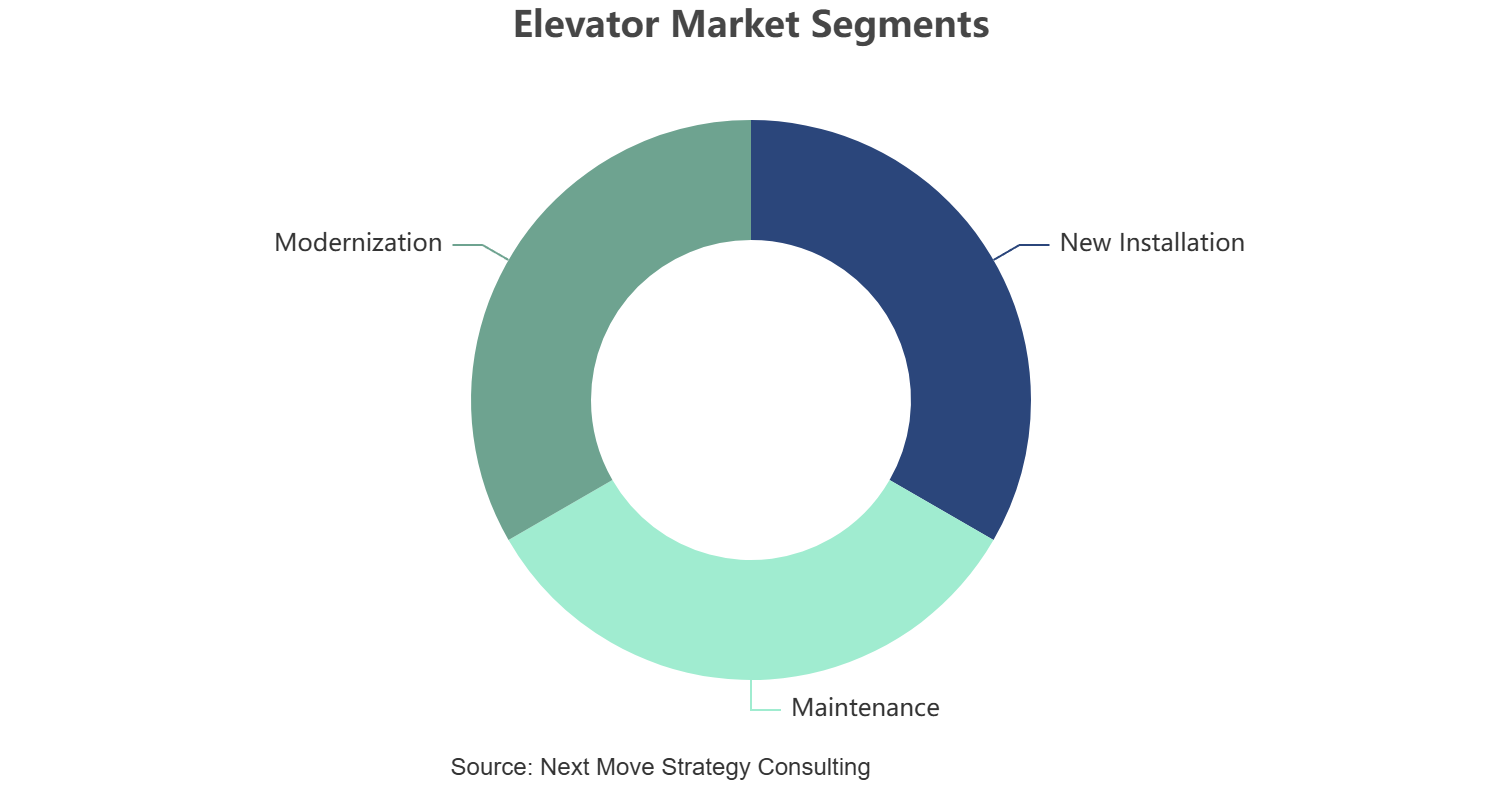
Based on service, the market is segmented into new installations, maintenance, and modernization services.
New installations dominate the service segment of the global elevator market, reflecting the ongoing expansion of urban infrastructure, high-rise residential projects, and commercial construction. These installations not only expand the installed base but also set the foundation for future maintenance and modernization contracts. Companies focusing on new installations leverage this growth by offering energy-efficient designs, advanced control systems, and modular configurations that reduce installation time and costs. Prioritizing new-build projects ensures visibility in emerging urban centers and strengthens long-term relationships with developers and building owners.
By Capacity Insights
Which Capacity Band Holds the Largest Share of Installations?
Based on capacity, the market is divided into less than 1500 kg, 1500 to 2500 kg, 2501 to 4000 kg, and more than 4000 kg.
Lifts with capacity of less than 1500 kg dominate unit shipments, as the majority of passenger elevators in residential and mid-rise commercial buildings fall into this band. Higher-capacity ranges (1500–2500 kg, 2501–4000 kg, >4000 kg) are critical for freight, logistics and specialized infrastructure but account for far fewer units. Product strategies should therefore prioritize compact, cost-efficient <1500 kg solutions for volume markets, and maintain configurable platforms to upsell to mid- and high-capacity requirements.
By Speed Insights
Which Speed Category is Most Common in New Installations?
Based on speed, the market is segmented into less than 1 m/s, between 1 to 4 m/s, and more than 5 m/s.
The 1 to 4 m/s category is the dominant speed segment for new installations, balancing ride comfort, traffic handling and cost across most commercial and residential high-rise buildings. Speeds below 1 m/s are typical in low-rise and home lifts, while >5 m/s applies only to super-tall and premium commercial towers. Firms should expand scalable drive systems that cover the 1–4 m/s band efficiently and offer modular high-speed options for premium projects to capture value without overengineering standard builds.
By Deck Type Insights
Single Deck or Double Deck — Which Rules the Elevator Market?
Based on deck type, the market is segmented into single deck and double deck elevators.
Single-deck elevators remain dominant by unit count because they serve the bulk of residential and standard commercial buildings and are simpler to specify, install and maintain. Double-deck units are important in ultra-high-traffic commercial nodes (major office towers, airports) where floor-space optimization and throughput justify complexity. Providers should keep single-deck platforms highly modular and cost-effective, while positioning double-deck systems as premium throughput solutions for large-scale urban infrastructure.
By Designation Control Insights
Are Smart Elevators Overtaking Conventional Controls?
Based on designation control, the market is segmented into either smart or conventional.
Conventional control systems still represent the majority of installed vertical transportation systems today, but smart (connected) elevators are the fastest growing sub-segment as building owners adopt IoT, AI dispatch and remote diagnostics. The dominant installed base remains conventional, yet retrofit and new-build specifications increasingly mandate connectivity for energy savings and uptime. OEMs should accelerate retrofit kits and cloud services to monetise the transition from conventional controls to smart platforms, converting legacy units into subscription revenue streams.
By Door Type Insights
Which Door Type is Most Widely Installed?
Based on door type, the market is segmented into automatic and manual.
Automatic doors dominate installations globally, especially for passenger, commercial, and public-access elevators, given safety, regulatory expectations and user convenience. Manual doors are limited to very small residential or industrial lifts where cost or simplicity is paramount. Given prevailing building codes and accessibility standards, manufacturers should standardise automatic door modules and safety interlocks, and offer simplified automatic packages for low-cost retrofit and residential applications.
By Application Insights
Which Application Sector Accounts for the Largest Unit Demand?
Based on application, the market is segmented into residential, commercial, and industrial sectors.
The Residential sub-segment (particularly mid- and high-rise apartment buildings) drives the largest unit volumes globally, reflecting massive urban housing development in APAC and LATAM. Commercial and infrastructure applications generate higher average ticket values but fewer units relative to residential. Industrial installations are essential for logistics but represent a smaller share of total units. Strategy: prioritise scalable residential product lines and retrofit solutions while maintaining bespoke commercial/infrastructure capabilities for higher-margin projects.
Regional Outlook
The elevator market trends is geographically studied across North America, Europe, Asia Pacific, Middle East & Africa, and Latin America and each region is further studied across countries.
The pie chart shows the regional elevator market share, with Asia Pacific dominating at 51%, followed by Europe at 26% and North America at 16%. Middle East & Africa and Latin America contribute much smaller shares at 3% and 4%, respectively. This distribution highlights Asia Pacific's leadership in elevator demand, driven by rapid urbanization, large-scale infrastructure projects, and high-rise construction activities, while Europe and North America remain important but secondary markets for elevator manufacturers and suppliers
Elevator Market in North America
North America’s market is mature and stable, supported by a large installed base and consistent modernization spending across commercial, residential, and public infrastructure. In the United States, demand is fuelled by retrofit cycles, commercial office upgrades, and growing compliance with safety and accessibility regulations.
Service contracts account for a significant share of near-term revenue, reflecting the emphasis on maintenance-driven profitability. New installations are closely tied to regional construction activity, particularly in urban centers experiencing mixed-use development. OEMs are increasingly exploring digitalized service solutions and energy-efficient modernization packages to sustain market growth and maintain high service margins.
Elevator Market in the United States
The U.S. market exhibits resilient growth, particularly in service operations and modernization projects, driven by stringent energy codes, accessibility standards, and retrofit requirements. OEMs report expanding maintenance portfolios with stable margins, reflecting a strategic focus on recurring revenue models. Modernization demand is strongest in aging office towers, multifamily residential buildings, and healthcare facilities, where safety, energy efficiency, and technology upgrades are key priorities.
New installations remain moderate but steady, concentrated in high-growth metropolitan areas. Manufacturers are also leveraging IoT-enabled solutions, predictive maintenance, and modular modernization packages to meet rising regulatory compliance demands and improve operational efficiency.
Elevator Market in Canada
Canada’s market is smaller in scale but remains stable, driven by modernization projects, accessibility retrofits, and urban residential upgrades. OEMs emphasize the importance of local service presence, with maintenance contracts forming a significant portion of revenue. Demand is concentrated in high-density urban centers such as Toronto, Vancouver, and Montreal, where aging residential and commercial stock requires energy-efficient and safety-compliant upgrades.
Provincial building codes and accessibility standards reinforce modernization priorities. Manufacturers are increasingly offering financing solutions, modular upgrade programs, and digital maintenance platforms to capture recurring revenue and expand market share while ensuring compliance with evolving regulations across multiple provinces.
Elevator Market in Europe
Europe’s market combines a mature installed base with strong regulatory pressure on energy efficiency, safety, and accessibility. Modernization has emerged as the primary growth driver, supported by government programs and building renovation initiatives. While service growth remains stable, new-equipment demand varies significantly across countries depending on construction cycles and public infrastructure investment.
Urban renewal projects, particularly in Western Europe, and retrofit programs for mid-rise and high-rise buildings are major revenue contributors. OEMs are increasingly focusing on predictive maintenance, IoT-enabled monitoring, and energy-efficient solutions to extend equipment life, reduce operating costs, and align with regional sustainability targets.
Elevator Market in the United Kingdom
The U.K. lift industry demonstrates stable service demand, driven by modernization and retrofit programs for aging office buildings, residential complexes, and public infrastructure. Certification requirements, safety audits, and compliance with building regulations underpin near-term investment in modernization. While new installations remain moderate, selective commercial projects in urban centers contribute to market expansion.
OEMs are prioritizing energy-efficient equipment, predictive maintenance, and accessibility upgrades, with an emphasis on recurring service revenue. Retrofitting older assets is increasingly seen as a cost-effective alternative to new installations, ensuring that building owners meet modern safety and sustainability standards while optimizing long-term operational efficiency.
Elevator Market in Germany
Germany’s market remains stable and profitable, characterized by a strong emphasis on specialized industrial projects, high-spec commercial developments, and public-sector installations. Safety and regulatory compliance are major drivers of modernization, creating recurring service revenue streams for OEMs. The mature installed base and strict energy-efficiency standards encourage retrofit and modernization activity across urban and suburban regions.
While new equipment demand is moderate, targeted projects in logistics, office, and residential buildings support incremental growth. Manufacturers are increasingly leveraging digital monitoring, predictive maintenance, and low-energy solutions to optimize performance, extend equipment life, and comply with Germany’s ambitious sustainability and building-code regulations.
Elevator Market in France
France blends urban renovation projects with selective new construction, particularly in metropolitan centers such as Paris, Lyon, and Marseille. Modernization and energy-efficiency initiatives remain central to market growth, driven by government policies and EU-mandated environmental regulations. Retrofit opportunities exist across high-rise residential, commercial, and public-sector buildings, where energy-efficient elevators, improved accessibility, and safety compliance are priorities.
Service contracts are increasingly becoming a key revenue source, as OEMs offer predictive maintenance, digital monitoring, and flexible modernization financing options. The combined effect of regulatory pressure, urban densification, and infrastructure renewal ensures consistent aftermarket demand while positioning France as a key market for sustainable elevator solutions.
Elevator Market in Spain
Spain’s market is aligned with broader Southern European trends, where modernization of aging urban infrastructure is the key growth driver. Retrofit programs targeting residential high-rises, hotels, and logistics hubs are complemented by selective new installations in commercial and public infrastructure projects. Urban tourism development and transportation projects also create niche opportunities for high-spec equipment.
OEMs are increasingly leveraging digital service platforms, predictive maintenance, and energy-efficient systems to enhance service reliability and compliance with evolving building standards. While the market is fragmented, strong demand for modernization ensures a sustainable aftermarket and recurring revenue opportunities across major metropolitan areas.
Elevator Market in Italy
Italy’s market is primarily modernization-driven, with growth fueled by restoration and retrofit of aging urban buildings, historical structures, and commercial facilities. The large installed base in older city centers such as Rome, Milan, and Florence presents significant modernization opportunities, particularly in energy efficiency, safety, and accessibility upgrades.
While new equipment installations are selective, driven by commercial development and urban redevelopment, aftermarket services dominate near-term revenue streams. OEMs are increasingly offering service contracts, modular modernization packages, and digital maintenance tools to capture recurring income, while complying with stringent safety standards and heritage preservation regulations, making Italy a stable yet specialized market in Europe.

Elevator Market in the Nordics
The Nordic market is advanced and sustainability-driven, with a strong focus on energy-efficient, low-carbon, and smart elevator solutions. Countries such as Sweden, Finland, and Norway lead in the adoption of digitalized maintenance and eco-efficient modernization systems. Service contracts represent a significant portion of revenue, supported by the region’s stringent environmental and safety standards.
OEMs such as KONE and Schindler emphasize lifecycle management and remote monitoring technologies to optimize performance and reduce downtime. Government-backed energy transition policies further accelerate modernization demand, ensuring that Nordic markets remain innovation testbeds for next-generation elevator technologies and sustainable vertical mobility solutions.
Elevator Market in the Asia-Pacific
Asia-Pacific remains the largest and most dynamic sector globally, driven by rapid urbanization, population growth, and infrastructure investments across emerging economies. While China’s slowdown has moderated new-equipment sales, modernization demand is accelerating as older urban buildings require upgrades for safety and energy efficiency. India, Southeast Asia, and Vietnam continue to record strong new installations linked to residential, commercial, and metro development projects.
OEMs are expanding local manufacturing, R&D, and service networks to capture regional growth. Increasing adoption of IoT-based systems, predictive maintenance, and smart city integration positions Asia-Pacific as the leading region for both scale and technological evolution.
Elevator Market in China
China remains the world’s largest market by installed base, with over 7 million units currently in operation. Although the 2024 property-sector slowdown tempered new-equipment sales, modernization demand is soaring as urban renewal programs target older residential and commercial buildings. Major OEMs, including KONE, Otis, and Hitachi, estimate millions of units are due for retrofit, creating vast aftermarket potential.
Government emphasis on energy-efficient retrofitting and digital infrastructure supports sustained service growth. OEMs are increasingly localizing production and leveraging AI-driven diagnostics to enhance service efficiency, while large-scale public transport and urban infrastructure projects maintain baseline installation activity.
Elevator Market in Japan
Japan’s market is highly mature and technologically sophisticated, driven by an aging infrastructure and stringent seismic, safety, and energy-efficiency standards. Modernization demand is steady, focusing on upgrading legacy systems in office, residential, and transport facilities. OEMs maintain deep service penetration, with digitalized maintenance and predictive diagnostics widely adopted.
Japan’s emphasis on accessibility, automation, and precision manufacturing ensures a steady flow of modernization and service revenue. While new installations are limited, replacement cycles are short, and the focus on sustainability, smart controls, and reliability continues to reinforce Japan’s leadership in high-quality vertical transportation systems.
Elevator Market in India
India represents the long-term growth engine of the global elevator industry, underpinned by rapid urbanization, rising middle-class housing demand, and expansive public infrastructure programs. Massive investments in metros, airports, and smart cities are driving robust new-equipment installations. At the same time, modernization opportunities are emerging as older buildings in Tier I and II cities approach retrofit age.
OEMs such as Otis and KONE are localizing production and expanding service networks to meet regional cost and regulatory demands. The government’s focus on affordable housing and sustainable building codes will further propel elevator demand and service growth through the next decade.
Elevator Market in South Korea
South Korea’s market is advanced and innovation-focused, driven by smart building technologies, AI-based predictive maintenance, and IoT integration. OEMs compete on system intelligence, reliability, and design, catering to high-density residential and commercial developments. Modernization demand is underpinned by energy-efficiency upgrades and regulatory safety standards.
The government’s emphasis on sustainable urban renewal supports retrofit programs, while strong digital adoption allows manufacturers to optimize service operations. Major players such as Otis and Hyundai Elevator continue to invest in automation, cloud-based analytics, and real-time monitoring, making South Korea one of the most technologically progressive elevator markets in the world .
Elevator Market in Taiwan
Taiwan’s market is moderately mature, supported by a dense urban environment and strong demand for modernization and safety upgrades across residential and commercial properties. With limited new-construction land availability, growth is largely driven by retrofit and replacement projects targeting aging mid-rise buildings in Taipei, Taichung, and Kaohsiung. Government regulations emphasizing accessibility, energy efficiency, and seismic resilience are accelerating modernization investments.
OEMs such as Mitsubishi Electric, Hitachi, and Toshiba maintain solid market positions through localized service operations and digital maintenance solutions. Increasing adoption of smart control systems and IoT-enabled diagnostics further enhances service efficiency and customer satisfaction.
Elevator Market in Indonesia
Indonesia’s market is expanding rapidly, supported by urbanization, commercial infrastructure projects, and public transit development in cities like Jakarta and Surabaya. New installations dominate market activity, with rising demand in residential towers, shopping centers, and transport hubs.
Government initiatives such as the relocation of Indonesia’s capital to Nusantara are expected to significantly boost elevator demand over the coming decade. OEMs are focusing on local partnerships, service network expansion, and cost-effective mid-market solutions to capture growth. Additionally, modernization opportunities are emerging as older assets in metropolitan regions require upgrades to meet evolving safety and energy-efficiency standards.
Elevator Market in Australia
Australia’s market is characterized by a mix of new installations and modernization projects concentrated in metropolitan centers such as Sydney, Melbourne, and Brisbane. Modernization spending is strong across commercial offices and residential complexes, driven by energy regulations and aging infrastructure. Service contracts and safety retrofits contribute significantly to recurring revenue streams.
OEMs emphasize digital maintenance, sustainability, and lifecycle cost optimization through remote monitoring and predictive diagnostics. Government incentives for green building certifications further encourage modernization activity, while population growth and urban expansion sustain moderate new-installation demand, making Australia a balanced market for both growth and service stability.
Elevator Market in Latin America
Latin America’s market is fragmented but holds long-term potential, with growth largely driven by infrastructure, retail, hospitality, and airport projects. Urbanization in Brazil, Mexico, and Colombia supports both new installations and modernization activity. Economic variability and construction cycles influence near-term demand, but aftermarket opportunities remain stable as OEMs expand regional service coverage.
Global manufacturers are pursuing acquisitions and partnerships to strengthen local presence and improve maintenance reliability. Sustainability initiatives and modernization programs targeting public buildings and transport networks are expected to gradually boost recurring service revenues and stabilize market performance across the region.
Elevator Market in the Middle East & Africa
The Middle East and Africa market is bifurcated between mega-projects in the Gulf and modernization opportunities in established urban centers. Massive construction initiatives, such as Saudi Arabia’s NEOM, UAE smart cities, and large-scale infrastructure developments, are driving robust new-equipment demand.
In parallel, modernization and maintenance services are gaining traction in older buildings across North Africa and Sub-Saharan regions. OEMs are focusing on localized manufacturing, strategic partnerships, and sustainability compliance to align with regional goals. Government investments in tourism, transport, and real estate ensure strong long-term growth potential across both new installation and aftermarket segments.
Competitive Landscape
Which Companies Dominate the Elevator Industry and How do they Compete?
The market is characterized by a concentrated structure dominated by a few multinational leaders alongside numerous regional and local firms. Major players such as Otis, KONE, Schindler, TK Elevator, Mitsubishi Electric, and Hitachi collectively command a significant share of global new equipment and maintenance markets.
These companies maintain extensive service portfolios, underscoring the importance of scale and long-term customer relationships in sustaining competitive advantage. Competition occurs across both geographic and niche dimensions, with global giants frequently vying for large infrastructure contracts while regional specialists, such as Canny in China and Orona in Spain, cater to localized markets.
The industry’s oligopolistic nature means market share gains are typically achieved through superior technology, innovation in digital services, and the ability to secure large service contracts. Ultimately, scale, reliability, and an expansive service network remain decisive differentiators, as customers increasingly prioritize vendors capable of providing rapid, consistent support across multiple regions.

Market Dominated by Elevator Giants and Specialists
The elevator market landscape comprises a mix of global technology leaders and specialized regional players. Major OEMs such as Otis and KONE leverage their extensive product portfolios, spanning passenger and freight elevators as well as escalators, alongside comprehensive service contracts to maintain market dominance. In contrast, niche companies tend to focus on specific segments, such as home elevators or heavy-duty freight lifts.
The global leaders differentiate themselves through service breadth, innovation, and advanced technological features, including IoT-enabled systems and award-winning designs; Otis, for instance, has been recognized as a top employer and recipient of multiple design honours in 2024.
Meanwhile, regional firms continue to succeed in localized markets, such as Xizi Otis in China and Atlas Elevator in Turkey, by capitalizing on strong domestic networks and tailored offerings. Across all markets, competition is increasingly centered on service quality, reliability, and digital capabilities rather than pricing alone, as safety and uptime remain critical priorities for customers.
Innovation and Adaptability Drive the Elevator Market Success
In recent years, evolving strategies have begun reshaping competition within the industry. Leading companies are accelerating investment in digital platforms, smart technologies, and data-driven service solutions. Systems such as Otis’s IoT-based Otis ONE and KONE’s intelligent maintenance tools exemplify this shift toward connected, predictive service models.
Mitsubishi Electric has also introduced innovative products like its NEXIEZ-Fit elevator, designed specifically for fast-growing residential markets. Strategic collaborations are becoming another key differentiator. Otis, for example, is partnering in robotics integration projects, while TK Elevator has launched fully digitalized parts warehouses to streamline operations.
Flexibility and responsiveness have also proven essential; many OEMs demonstrated agility by rapidly adjusting production and service models during shifting demand cycles. Overall, the latest competitive strategies emphasize IoT-enabled services, sustainability credentials, and modular, efficient design, initiatives that deliver both operational advantages and new recurring revenue streams through predictive maintenance and long-term service contracts.
Market Players to Opt for Merger & Acquisition Strategies to Expand Their Presence
Mergers and acquisitions have emerged as a key strategy for growth and market consolidation in the global elevator sector. Recent transactions underscore this trend, such as Otis’s acquisition of Jardine Schindler Lifts in Taiwan to strengthen its service base across the Asia-Pacific region. KONE has also been active in this space, completing numerous service-focused acquisitions in Europe to expand its maintenance network and customer reach.
These deals enable major OEMs to rapidly enhance market presence, increase installed base coverage, and capture recurring revenue opportunities. Industry observers anticipate continued consolidation, with potential acquisitions aimed at reinforcing positions in fast-growing regions such as China and South America.
Looking ahead, M&A activity is likely to extend beyond traditional lift installers to include technology firms specializing in IoT, analytics, and software integration, as digital capabilities become central to competitive advantage. The actionable takeaway for investors and industry participants is to monitor acquisition trends closely, as partnerships and buyouts remain one of the fastest routes to scale and service diversification in this evolving market.
Key Players
-
Otis Worldwide Corporation
-
Schindler Holding AG
-
KONE Oyj
-
TK Elevator GmbH
-
Mitsubishi Electric Corporation
-
Hitachi, Ltd.
-
Toshiba Elevator & Building Systems
-
Hyundai Elevator Co., Ltd.
-
Fujitec Co., Ltd.
-
Orona S. Coop.
-
Guangzhou Guangri Elevator Industry
-
Savaria Corporation
-
CANNY ELEVATOR Co., Ltd.
-
Johnson Lifts Pvt. Ltd.
-
SJEC Corporation
-
Stannah Lifts Holdings Ltd
-
Cibes Lift Group
-
Alimak Group AB
-
KLEEMANN Hellas S.A
-
IFE Elevators Co., Ltd.
What are the Latest Key Industry Developments?
-
September 2025- TK Elevator inaugurated a USD 93 million R&D and production hub in Esslingen, Germany, dedicated to its new EOX elevator platform and serving as a digital spare parts center, underscoring the industry’s focus on innovation and efficient operations.
-
May 2025 – Otis Elevator Company secured a contract with Australia's NSW Land & Housing Corporation to modernize elevators across social housing properties, improving safety, accessibility, and energy efficiency.
-
January 2025 – KONE Corporation introduced the MiniSpace DX elevator at Melbourne Square's BLVD Tower in Australia, marking the country's first deployment of its digitally connected high-rise elevator platform.
-
April 2025 – Schindler Group launched the Schindler 5000 machine-room-less elevator in North America, offering enhanced digital connectivity, energy efficiency, and flexible applications for low- and mid-rise buildings.
What are the Key Factors Influencing Investment Analysis & Opportunities in the Elevator Market?
Elevator companies present steady, infrastructure-linked investment opportunities, underpinned by urbanization trends and large-scale government projects that create reliable demand pipelines. Funding for urban development inevitably includes vertical transportation systems such as elevators and escalators, providing a consistent market for OEMs.
Service contracts contribute to revenue stability, with recurring maintenance and modernization income forming a significant portion of overall sales, which appeals to equity investors seeking predictable cash flows. The sector’s relative resilience and low volatility make leading players attractive for long-term portfolios. Emerging markets, particularly in Asia, offer strong investment potential as expanding building portfolios and urban infrastructure projects promise high returns.
Additionally, the shift toward smart, energy-efficient, and green buildings channels capital into modernization and retrofit projects, supported by ESG-focused investment funds. Overall, while growth is moderate, the combination of high-margin services, technological innovation, and infrastructure demand positions the elevator industry as a compelling option for infrastructure and growth-oriented investors.
Key Benefits for Stakeholders:
Next Move Strategy Consulting (NMSC) presents a comprehensive analysis of the Elevator Market, covering historical trends from 2020 through 2024 and offering detailed forecasts through 2030. Our study examines the market at regional and country levels, providing quantitative projections and insights into key growth drivers, challenges, and investment opportunities across all major Elevator segments.
Elevators deliver value across multiple stakeholders. Investors benefit from exposure to a stable, infrastructure-linked market, where equipment sales and service contracts generate long-term recurring revenues that are moderately growing and relatively resilient to economic cycles.
The sector’s focus on safety, regulation, and modernization ensures persistent demand. Building owners and managers gain operational advantages through predictive maintenance, which improves uptime and reduces operating costs, while smart elevator features, such as contactless operation and energy-efficient modes, enhance user experience and lower utility expenses, regulatory incentives, including green building certifications, further reward investments in efficient, sustainable elevators.
Occupants and visitors also enjoy safer, faster, and more accessible vertical transport. Overall, the industry’s emphasis on innovation, efficiency, and sustainability drives value creation for both investors, through stable returns, and end-users, through improved and environmentally friendly elevator services.
In terms of volume, the elevator market recorded 830 thousand units in 2024, with forecasts indicating growth to 960 thousand units by 2025 and further to 1516 thousand units by 2030, reflecting a CAGR of 9.6% over the same period.
Report Scope
|
Parameters |
Details |
|
Market Size in 2025 |
USD 108.13 Billion |
|
Revenue Forecast in 2030 |
USD 148.20 Billion |
|
Growth Rate |
CAGR of 6.51% from 2025 to 2030 |
|
Market Volume in 2025 |
960 thousand Units |
|
Volume Forecast in 2030 |
1516 thousand Units |
|
Growth Rate |
CAGR of 14.5% from 2025 to 2030 |
|
Analysis Period |
2024–2030 |
|
Base Year Considered |
2024 |
|
Forecast Period |
2025–2030 |
|
Market Size Estimation |
Billion (USD) |
|
Growth Factors |
|
|
Companies Profiled |
20 |
|
Countries Covered |
33 |
|
Market Share |
Available for 10 companies |
|
Customization Scope |
Free customization (equivalent to up to 80 analyst-working hours) after purchase. Addition or alteration to country, regional & segment scope. |
|
Pricing and Purchase Options |
Avail customized purchase options to meet your exact research needs. |
|
Approach |
In-depth primary and secondary research; proprietary databases; rigorous quality control and validation measures. |
|
Analytical Tools |
Porter's Five Forces, SWOT, value chain, and Harvey ball analysis to assess competitive intensity, stakeholder roles, and relative impact of key factors. |
Elevator Market Key Segments
By Type
-
Passenger Elevator
-
Freight Elevator
-
Others
By Technology
-
Traction
-
Machine Room (MR) Traction
-
Machine Roomless (MRL) Traction
-
-
Hydraulic
By Service
-
New Installation
-
Maintenance
-
Modernization
By Capacity
-
Less than 1500 kg
-
1500 to 2500 kg
-
2501 to 4000 kg
-
More than 4000 kg
By Speed
-
Less than 1 m/s
-
Between 1 to 4 m/s
-
More than 5 m/s
By Deck Type
-
Single Deck
-
Double Deck
By Designation Control
-
Smart
-
Conventional
By Door Type
-
Automatic
-
Manual
By Application
-
Residential
-
Low Rise: up to 10 floors
-
Mid Rise: 11–30 floors
-
High Rise: above 30 floors
-
Villa/Home
-
-
Commercial
-
Airport
-
Hotel & Hospitality
-
Leisure & Education
-
Marine & Port Facilities
-
Medical & Healthcare
-
Multiuse Buildings (Mixed-Use)
-
Retail & Shopping Centers
-
Public Transportation Hubs
-
Office Buildings
-
Low Rise: up to 10 floors
-
Mid Rise: 11–30 floors
-
High Rise: above 30 floors
-
-
-
Industrial
Geographical Breakdown
-
North America: U.S., Canada, and Mexico.
-
Europe: U.K., Germany, France, Italy, Spain, Sweden, Denmark, Finland, Netherlands, and rest of Europe.
-
Asia Pacific: China, India, Japan, South Korea, Taiwan, Indonesia, Vietnam, Australia, Philippines, Malaysia and rest of APAC.
-
Middle East & Africa (MEA): Saudi Arabia, UAE, Egypt, Israel, Turkey, Nigeria, South Africa, and rest of MEA.
-
Latin America: Brazil, Argentina, Chile, Colombia, and rest of LATAM.
Conclusion & Recommendations
Our report equips stakeholders, industry participants, investors, and consultants with actionable intelligence to capitalize on the transformative elevator market potential. By combining robust data-driven analysis with strategic frameworks, NMSC’s Market Report serves as an indispensable resource for navigating the evolving landscape.
In conclusion, the market remains robust and dynamic, driven by urbanization, infrastructure renewal, and the ongoing need for modernization. Leading players maintain dominance through scale, technological innovation, and service excellence, while high-margin opportunities continue to emerge in retrofit and predictive-maintenance segments.
Sustainability and smart-building trends are increasingly influencing product roadmaps, shaping the next generation of energy-efficient and connected elevators. For executives and investors, the strategic focus should be on service-led growth, technology leadership, and targeted geographic expansion.
Companies are advised to enhance predictive-maintenance offerings and retrofit solutions, particularly for ageing building stock in mature markets, while pursuing opportunities in fast-growing regions across Asia-Pacific and the Middle East. Investment in R&D, selective acquisitions in emerging technologies, and development of IoT-enabled platforms will help secure long-term competitive advantage.
With stable cash flows, alignment with urban development initiatives, and integration of green technologies, the sector offers attractive prospects for both operational and financial stakeholders, enabling them to capitalize on a steady-growth, infrastructure-linked industry.
About the Author
 Ridip Gogoi
— Ridip Gogoi is a Research Associate at Next Move Strategy Consulting, where he supports cross-vertical market research and analysis across multiple industry sectors, with four years of experience. His work includes market analysis, data validation, secondary research, and insight development, helping structure evidence into clear findings for business and strategy decisions. He contributes to research quality checks and reporting, with a focus on consistency, source review, and clarity accuracy.
Ridip Gogoi
— Ridip Gogoi is a Research Associate at Next Move Strategy Consulting, where he supports cross-vertical market research and analysis across multiple industry sectors, with four years of experience. His work includes market analysis, data validation, secondary research, and insight development, helping structure evidence into clear findings for business and strategy decisions. He contributes to research quality checks and reporting, with a focus on consistency, source review, and clarity accuracy.
About the Reviewer
 Supradip Baul
— Supradip Baul is an accomplished business consultant and strategist with over a decade of rich experience in market intelligence, strategy, technology, and business transformation. His work has included rigorous qualitative and quantitative analysis across multiple industries, helping clients shape investment decisions and long-term roadmaps. Earlier in his career, he was associated with Gartner, where he contributed to industry-leading reports and market share analyses. He has worked with leading global companies and holds an MBA with a dual specialization in Marketing and Finance.
Supradip Baul
— Supradip Baul is an accomplished business consultant and strategist with over a decade of rich experience in market intelligence, strategy, technology, and business transformation. His work has included rigorous qualitative and quantitative analysis across multiple industries, helping clients shape investment decisions and long-term roadmaps. Earlier in his career, he was associated with Gartner, where he contributed to industry-leading reports and market share analyses. He has worked with leading global companies and holds an MBA with a dual specialization in Marketing and Finance.
At Next Move Strategy Consulting, we understand that insightful market research is the cornerstone of successful business decisions. That's why we employ a robust and multifaceted approach, combining various methodologies to deliver the most accurate and actionable data for our clients.

Research Landscape
We navigate the world of research with two primary approaches:
Qualitative Approach
Our qualitative research methodologies involve immersive techniques such as in-depth interviews, focus groups, and observational studies. By engaging directly with individuals and stakeholders, we uncover valuable insights that quantitative data alone may overlook.

Quantitative Research
In tandem with qualitative methodologies, NMSC leverages the power of Quantitative Research to provide a robust foundation of numerical insights. Through systematic data collection and analysis, we quantify patterns, preferences, and market trends, offering a comprehensive view of the business landscape.
Our quantitative research approach employs diverse tools, including surveys, experiments, and statistical modelling. These methodologies enable us to gather data from a large and representative sample, ensuring the statistical significance of our findings. By employing structured questionnaires and standardized data collection methods, we guarantee the reliability and validity of the information we present to our clients.
Quantitative research is particularly effective in measuring the prevalence of trends, assessing market size, and gauging the impact of various factors on consumer behavior. The numerical precision attained through this approach equips our clients with actionable insights, facilitating data-driven decision-making and strategy formulation.


Our Specialized Toolbox for Industry-Specific Market Research
We deploy a specialized arsenal of techniques tailored to meet your unique requirements. Here's a glimpse into our comprehensive toolbox:

Information Procurement
The stage entails acquiring market data or relevant information through various sources and methodologies.


Market Research Approach
We utilize both top-down and bottom-up approaches in market research analysis to achieve a comprehensive understanding of the market dynamics, leveraging the broad perspective of industry trends and macroeconomic factors alongside detailed insights from specific segments and individual companies.

Porters Five Forces Analysis
We conduct Porter's Five Forces analysis to evaluate the competitive landscape of an industry, providing us with insights into factors that affect profitability and strategic positioning.

SWOT Analysis

Forecasting
We utilize a forecasting model to predict future consumption by considering parameters like population, economics, regulations, market competition, drivers, constraints, technology, and pricing. We also employ statistical techniques such as multilinear regression, exponential smoothing, moving average, ARIMA, and Monte Carlo simulations for accurate predictions. In econometric forecasting, we analyzed short-term and long-term event impacts, attributing values based on regulatory frameworks, economic factors, and market events.





 Speak to Our Analyst