Skin Care Products Market Size, Share, Growth & Forecast By Product Type (Face Care – Cleansers, Moisturizers, Treatments, Masks, Eye Care, Lip Care, Toners; Body Care – Body Moisturizers, Treatments, Exfoliants; Hand and Foot Care; Sun Care – Sunscreen, After Sun, Self Tanning; Sets and Bundles), By Form (Cream and Lotion, Serum, Gel, Oil, Balm and Stick, Mask, Foam and Mousse, Spray and Mist, Wipe and Pad, Powder), — Global Analysis 2025–2035
Industry: Retail and Consumer | Latest Edition: September 30, 2026 | No of Pages: 649 | No. of Tables: 863 | No. of Figures: 856 | Format: PDF | Report Code: RC378
What Is the Skin Care Products Market Size?
The global Skin Care Products Market was valued at USD 148.6 billion in 2025 and is expected to reach USD 156.3 billion in 2026. Underpinned by rising consumer awareness of skin health, growing adoption of multi-step skincare routines, and expanding male grooming adoption, the market is projected to reach USD 246.8 billion by 2035, advancing at a CAGR of 5.2% from 2026 to 2035. Key growth drivers include the proliferation of clean-label and dermatologist-endorsed formulations, the expansion of e-commerce as a primary distribution channel, growing demand for sun protection products driven by rising skin cancer awareness, and the premiumization of mass-market offerings through masstige positioning strategies.
|
Parameters |
Details |
|
Market Size in 2025 |
USD 148.6 Billion |
|
Market Size in 2026 |
USD 156.3 Billion |
|
Revenue Forecast in 2035 |
USD 246.8 Billion |
|
Growth Rate |
CAGR of 5.2% from 2026 to 2035 |
|
Analysis Period |
2025–2035 |
|
Base Year Considered |
2025 |
|
Forecast Period |
2026–2035 |
|
Market Size Estimation |
USD Billion |
|
Companies Profiled |
20 |
|
Countries Covered |
33 |
|
Market Share |
Top 10 |
Skin Care Products Market Overview
What Is the Skin Care Products Market?
The Skin Care Products Market encompasses a broad range of topical formulations designed to protect, cleanse, moisturize, treat, and enhance the appearance of human skin. The market spans face care, body care, hand and foot care, sun care, and ancillary product categories including toners, eye care, and lip care. Based on NMSC's research, we found that the market represents one of the largest and most innovation-driven segments within the global beauty and personal care industry, with product innovation continuously reshaping consumer demand profiles.
How Has the Skin Care Products Market Evolved?
The Skin Care Products Market has undergone significant structural transformation over the past decade. The first phase was characterized by basic moisturization and sun protection as primary functional benefits. The second phase introduced active ingredient science, including retinoids, niacinamide, and hyaluronic acid, to mass-market product lines. Our analysis shows that the current phase is defined by skin microbiome research, biotech-derived ingredients, and personalized skincare formulations powered by AI-driven diagnostics and dermatology-grade clinical testing. This evolution is elevating consumer expectations and enabling premium pricing across multiple distribution channels.
How Do Regulations Influence the Skin Care Products Market?
Regulatory frameworks significantly shape the Skin Care Products Market by establishing ingredient safety standards, labeling requirements, and claims substantiation protocols. The U.S. Food and Drug Administration (FDA) regulates over-the-counter (OTC) skin care products under the Federal Food, Drug, and Cosmetic Act. The European Union's Regulation (EC) No. 1223/2009 on Cosmetic Products governs formulation standards, restricted substances, and safety assessments across EU member states. NMSC's analysis indicates that tightening restrictions on certain synthetic preservatives, fragrances, and microplastics are compelling manufacturers to reformulate products and invest in natural ingredient alternatives.
How Is Technology Adoption Expanding Across the Skin Care Products Market?
Technology adoption across the Skin Care Products Market is accelerating through the integration of AI-powered skin analysis, augmented reality (AR) try-on tools, and personalized recommendation engines. Smart beauty devices that pair with skincare regimens are expanding consumer engagement across both premium and masstige tiers. Our market assessment observed that biotechnology-derived ingredients, including bio-fermented actives, lab-grown retinol, and microbiome-optimized formulations, are attracting R&D investment from both heritage brands and emerging clean beauty startups, creating durable competitive differentiation and supporting premium pricing strategies.
|
Key takeaways |
|
By Product Type, Face Care held the largest share of the Skin Care Products Market at USD 74.3 billion in 2025, driven by intensive consumer focus on facial aesthetics and the proliferation of multi-step AM/PM facial skincare routines globally. |
|
By Product Type, Sun Care is the fastest-growing segment in the Skin Care Products Market, projected to grow at a CAGR of 6.8% from 2026 to 2035, advancing from USD 14.2 billion in 2025 to approximately USD 26.9 billion by 2035, propelled by rising UV-awareness campaigns and expanding sunscreen regulations. |
|
By Form, Cream and Lotion dominated the Skin Care Products Market with a value of USD 51.4 billion in 2025, supported by broad consumer familiarity, versatile applications, and cost-efficient large-scale manufacturing. |
|
By Form, Serum is the fastest-growing category, expected to register a CAGR of 7.1% from 2026 to 2035, driven by premiumization trends, higher concentrations of active ingredients, and increasing demand for targeted skincare solutions. |
|
By Function, Hydrate represented the largest share of the Skin Care Products Market, accounting for approximately 28% of total revenue in 2025, supported by universal demand for moisturization across all demographic groups. |
|
By Function, Anti-Aging is the fastest-growing segment, projected to expand at a CAGR of 7.4% from 2026 to 2035, driven by aging populations, preventive skincare adoption among younger consumers, and increased availability of retinoid- and peptide-based formulations. |
|
By Price Tier, Mass Market dominated the Skin Care Products Market at approximately USD 68.4 billion in 2025, supported by affordability, extensive retail availability, and strong penetration across emerging and developed economies. |
|
By Price Tier, Luxury is the fastest-growing segment, anticipated to grow at a CAGR of 6.9% from 2026 to 2035, fueled by demand for premium formulations, biotech-derived ingredients, and prestige skincare brands. |
|
By Distribution Channel, Offline Retail accounted for the largest share of the Skin Care Products Market in 2025, with Mass Retail generating USD 39.2 billion, supported by consumer preference for physical product evaluation and immediate purchase decisions. |
|
By Distribution Channel, Online Brand Sites are the fastest-growing segment, expected to register a CAGR of 9.4% from 2026 to 2035, reflecting the expansion of direct-to-consumer (DTC) business models and personalized digital shopping experiences. |
|
By Consumer Gender, Women represented the largest customer segment, accounting for approximately 63% of total Skin Care Products Market revenue in 2025, driven by higher product usage frequency and broader category engagement. |
|
By Consumer Age, Adults dominated the Skin Care Products Market at USD 139.8 billion in 2025, representing the largest and most commercially active consumer demographic across all skincare categories. |
|
By Region, Asia-Pacific held the largest share of the Skin Care Products Market with USD 59.4 billion in 2025, and is projected to reach USD 96.7 billion by 2035 at a CAGR of 5.1%, supported by K-beauty and J-beauty influence, China's premium skincare growth, and rising disposable incomes in India. |
|
By Region, Middle East & Africa is the fastest-growing regional market, expected to expand at a CAGR of 7.2% from 2026 to 2035, increasing from USD 8.6 billion in 2025 to USD 17.1 billion by 2035, driven by favorable demographics, rising incomes, and retail modernization. |
|
By Country, China remained the largest national market, representing approximately 37% of Asia-Pacific Skin Care Products Market revenue in 2025, supported by strong prestige skincare demand and a highly developed e-commerce ecosystem. |
|
By Country, India is the fastest-growing national market within Asia-Pacific, projected to register a CAGR of 9.2% from 2026 to 2035, driven by a young consumer base, expanding modern retail infrastructure, and increasing adoption of dermatologist-recommended skincare products. |
Key Emerging Trends in the Skin Care Products Market
How Is the Clean Beauty Movement Reshaping Formulation Standards in the Skin Care Products Market?
Clean beauty has evolved from a niche positioning into a mainstream formulation expectation that is fundamentally restructuring the Skin Care Products Market. Through NMSC's assessment, we found that consumers are increasingly demanding products free from parabens, sulfates, synthetic dyes, and microplastics. The EU Cosmetics Regulation has restricted over 1,300 chemicals, and similar frameworks are emerging in the U.S., Canada, and South Korea. Brands such as Caudalie, Ilia Beauty, and REN Clean Skincare have demonstrated that clean formulations command premium pricing and higher repurchase rates, compelling legacy players to accelerate reformulation programs across their core product portfolios.
How Is the Personalization Trend Transforming Consumer Engagement in the Skin Care Products Market?
Personalized skincare is emerging as a structurally significant innovation layer within the Skin Care Products Market, driven by AI-powered skin diagnostics, at-home testing kits, and dermatology-grade consultation tools. Procter & Gamble's Opté Precision Skincare System and L'Oréal's Perso device illustrate how technology is enabling real-time, individualized formulation recommendations at scale. Our findings suggest that direct-to-consumer personalization platforms, including Curology and Function of Beauty, are capturing premium-priced market share by delivering clinically tailored formulations that mass-market products cannot replicate, creating a durable differentiation moat through proprietary consumer data and prescription-grade ingredient access.
How Is the Science-Backed Skincare Trend Driving Premiumization in the Skin Care Products Market?
Science-backed, dermatologist-recommended skincare is one of the most consequential commercial trends reshaping the Skin Care Products Market's premium and masstige segments. Active ingredients including retinol, niacinamide, hyaluronic acid, peptides, and AHAs/BHAs have migrated from prescription dermatology into mass consumer channels. Our analysis shows that brands positioned with clinical evidence, including CeraVe (dermatologist-developed), La Roche-Posay, and Paula's Choice, have consistently outpaced broader category growth rates as consumers prioritize demonstrable efficacy over cosmetic aesthetics. This trend is simultaneously expanding the addressable market for medical-grade skincare and compressing price distinctions between premium and masstige tiers.
How Is the Rise of Male Grooming Expanding the Addressable Market in the Skin Care Products Market?
Male consumer participation in skincare is one of the most structurally underappreciated growth opportunities in the Skin Care Products Market. Based on our market evaluation, we noticed that men's skincare is advancing at a CAGR of approximately 6.9% from 2026 to 2035 globally, fueled by shifting gender norms, growing awareness of skin cancer risk, and targeted product launches by both specialist brands such as Kiehl's Men and Bulldog Skincare, as well as mainstream heritage players including Beiersdorf's NIVEA Men and L'Oréal's Men Expert lines. Asia-Pacific, particularly South Korea, Japan, and China, represents the most commercially advanced market for male skincare adoption.
What Are the Key Market Drivers, Breakthroughs, and Investment Opportunities that Will Shape the Skin Care Products Market Industry in the Next Decade?
|
Drivers / Trends / Restraints |
(+/-) % Impact on CAGR Forecast |
Geographic Relevance |
Impact Timeline |
|
Rising Skin Health Awareness |
+1.2% |
Global (led by North America, APAC) |
2025–2035 |
|
Premiumization of Skincare Portfolios |
+0.9% |
APAC, North America, Europe |
2025–2032 |
|
E-commerce Channel Expansion |
+0.8% |
Global (all regions) |
2025–2030 |
|
Male Grooming Adoption |
+0.6% |
APAC, North America, Europe |
2026–2035 |
|
Science-Backed Formulation Demand |
+0.7% |
North America, Europe, Australia |
2025–2035 |
|
Sun Care Regulatory Mandates |
+0.5% |
Europe, North America, MEA |
2026–2035 |
|
Retail Pricing Pressure from Private Label |
-0.6% |
North America, Europe |
Ongoing |
|
Raw Material Cost Inflation |
-0.4% |
Global |
2025–2028 |
|
Ingredient Safety Regulation Complexity |
-0.5% |
Europe, North America, APAC |
Ongoing |
|
Clean Beauty and Sustainability Opportunities |
+0.7% |
Global |
2026–2035 |
|
Emerging Market Premiumization |
+0.9% |
MEA, Latin America, APAC |
2026–2035 |
What Are the Growth Drivers of the Skin Care Products Market Demand?
How Is Rising Global Awareness of Skin Health and Dermatological Conditions Driving the Skin Care Products Market?
Expanding consumer awareness of skin health, UV damage, and dermatological conditions is a primary structural driver of the Skin Care Products Market growth. The World Health Organization (WHO) reports that skin conditions affect approximately 1.8 billion people globally at any given time, representing one of the largest unmet health burdens worldwide. Awareness campaigns around melanoma and non-melanoma skin cancer are driving demand for high-SPF sunscreens and daily photo-protection products across all age demographics. Our assessment indicates that dermatologist recommendation has become a powerful consumer trust signal, creating sustained demand for clinically tested moisturizers, barrier repair formulations, and acne care products across both prescription and over-the-counter channels.
How Is the Rapid Expansion of E-commerce Channels Fueling Growth in the Skin Care Products Market?
E-commerce has emerged as a transformative distribution channel for the Skin Care Products Market, enabling brands to bypass traditional retail intermediaries and reach consumers directly at scale. The U.S. Census Bureau reports that e-commerce retail sales have grown consistently as a share of total retail, with beauty and personal care representing one of the highest-converting online categories. Brand-direct-to-consumer platforms, online marketplaces, and social commerce (live-streaming beauty sales on platforms such as TikTok Shop and Douyin in China) are enabling discovery-driven purchasing behavior that was previously limited to in-store environments, accelerating trial rates for emerging brands and new product formats across global markets.
How Is Demographic Expansion Including Aging Populations and Growing Middle Classes Sustaining Long-Term Demand in the Skin Care Products Market?
Demographic trends provide durable structural demand tailwinds for the Skin Care Products Market across multiple segments. The United Nations Department of Economic and Social Affairs projects that the global population aged 60 and above will reach 2.1 billion by 2050, creating a sustained and growing consumer base for anti-aging, firming, and skin barrier restoration products. Simultaneously, rapidly expanding middle-class populations in Asia-Pacific, Latin America, and MEA are transitioning from basic personal hygiene to sophisticated skincare routines, driving volume expansion in moisturizers, toners, and sun care across emerging market retail networks.
Consumer Behavior Analysis of the Skin Care Products Market
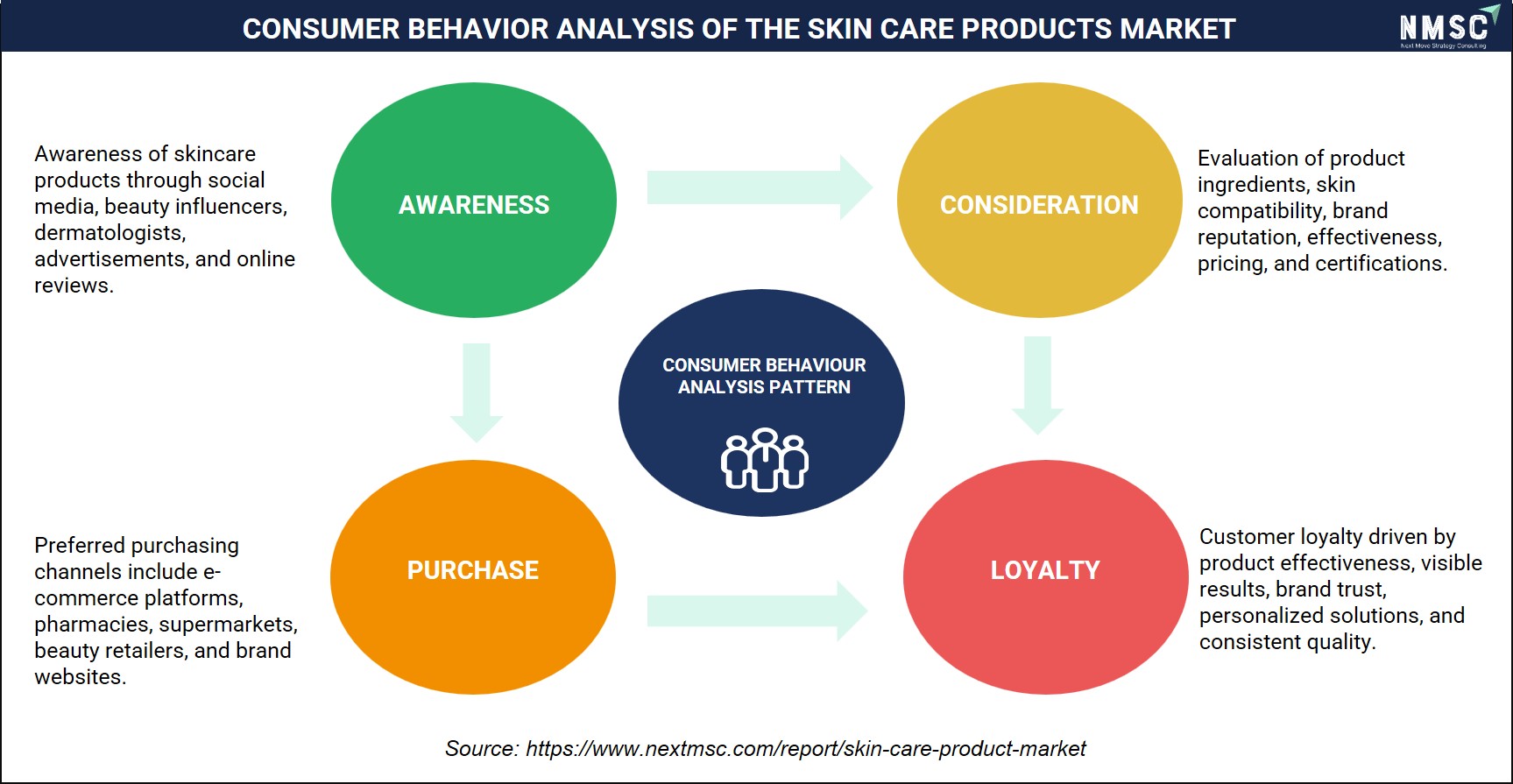
Consumer behavior in the Skin Care Products Market follows a journey from awareness to loyalty. Awareness is shaped by social media, beauty influencers, dermatologists, digital advertising, and online reviews. During the consideration stage, consumers evaluate product ingredients, skin compatibility, effectiveness, brand reputation, certifications, and pricing. Purchase decisions are increasingly influenced by e-commerce platforms, pharmacies, supermarkets, beauty retailers, and brand websites that offer convenience and product variety. Customer loyalty is driven by visible results, consistent product quality, personalized skincare solutions, brand trust, and positive user experiences, encouraging repeat purchases and long-term engagement with preferred skincare brands.
What Are the Growth Inhibitors of the Skin Care Products Market Trends?
How Does Raw Material Cost Inflation and Supply Chain Volatility Constrain the Skin Care Products Market?
Raw material cost inflation represents a meaningful structural headwind for the Skin Care Products Market, particularly for mass-market manufacturers operating on constrained margin structures. Key ingredients including plant-derived emollients, essential oils, silicones, and specialty actives such as hyaluronic acid and retinol are subject to supply chain disruption, commodity price volatility, and geographic concentration risk. The U.S. Bureau of Labor Statistics' Producer Price Index for pharmaceutical preparations and related products reflects persistent input cost pressures that manufacturers in adjacent categories similarly face. These cost dynamics compress margins for mass-tier brands and complicate the clean-label reformulation commitments required to meet evolving regulatory standards.
How Does the Complexity of Ingredient Safety Regulations Across Jurisdictions Constrain the Skin Care Products Market?
Regulatory divergence across jurisdictions creates significant operational complexity and product reformulation costs for global participants in the Skin Care Products Market. The European Commission maintains a restricted substances list under Regulation (EC) No. 1223/2009 that restricts or bans ingredients permitted in other markets, including certain UV filters, preservatives, and colorants. The U.S. Modernization of Cosmetics Regulation Act (MoCRA) of 2022 introduced mandatory facility registration, safety substantiation, and adverse event reporting requirements that increase compliance investment for smaller brands. These regulatory divergences create market segmentation challenges and impede the development of truly global product formulations, adding cost and complexity to international go-to-market strategies.
What Are the Growth Opportunities in the Skin Care Products Market?
How Does the Clean Beauty and Sustainable Packaging Trend Create a Multi-Dimensional Growth Opportunity in the Skin Care Products Market?
Clean beauty and sustainable packaging represent converging commercial opportunities that are reshaping brand strategy and product development investment in the Skin Care Products Market. The European Commission's Sustainable Product Initiative and Green Deal commitments are mandating recyclable and refillable packaging across cosmetics by 2030, creating both compliance requirements and brand differentiation levers. From our research, we found that brands with verifiable sustainability credentials command measurable price premiums and attract the fastest-growing consumer cohorts, particularly Gen Z and Millennial buyers who prioritize environmental credentials alongside product efficacy in their purchase decision hierarchies. This creates structured investment opportunities in bio-based packaging, refillable systems, and ingredient traceability technology.
How Does the Emerging Market Premiumization Wave Present a Structural Growth Opportunity for the Skin Care Products Market?
Premiumization across emerging markets in Asia-Pacific, Latin America, and the Middle East represents a multi-decade structural growth opportunity for the Skin Care Products Market. India's beauty and personal care market is governed in part by the Bureau of Indian Standards (BIS) and the Central Drugs Standard Control Organisation (CDSCO), whose evolving regulatory frameworks are supporting the introduction of clinically validated premium products to a consumer base with rapidly rising aspirational spending power. Brazil's ANVISA (National Health Surveillance Agency) has created one of Latin America's most rigorous cosmetics safety frameworks, building consumer trust in premium formulations. Our assessment indicates that localized product development for emerging markets, including skin-tone appropriate foundations and indigenous botanical ingredient formulations, will represent the highest-return premiumization strategy over the 2026–2035 forecast period.
How Does the Expansion of Professional and Clinical Skincare Channels Create an Incremental Revenue Opportunity in the Skin Care Products Market?
Professional and clinical distribution channels represent an increasingly important and high-margin growth vector within the Skin Care Products Market. Dermatologist-recommended and aesthetician-dispensed skincare brands, including SkinCeuticals (L'Oréal), Obagi Medical, and Galderma's Cetaphil and Restylane-adjacent products, command significant price premiums over comparable mass-market formulations. The U.S. Department of Health and Human Services reports growing dermatology visit volumes driven by teledermatology expansion and rising consumer demand for skin cancer screening and cosmetic consultation services. This trend is creating a pipeline of clinically endorsed product recommendations that flow into consumer retail purchasing decisions, amplifying demand for medical-grade skincare across both prescription and OTC channels.
How Is the Skin Care Products Market Segmented in This Report, and What Are the Key Insights from the Segmentation Analysis?
How Does Product Type Segmentation Reveal the Structural Composition of the Skin Care Products Market?
|
Product Type Segment |
2025 (USD Bn) |
2035 (USD Bn) |
CAGR (%) |
|
Face Care |
74.3 |
120.8 |
5.0% |
|
Body Care |
26.8 |
43.1 |
4.9% |
|
Sun Care |
14.2 |
26.9 |
6.6% |
|
Hand and Foot Care |
10.4 |
16.2 |
4.5% |
|
Other Skin Care / Sets and Bundles |
22.9 |
39.8 |
5.7% |
Based on our analysis of consumer skincare routines and product innovation pipelines, the Skin Care Products Market is segmented by product type into Face Care, Body Care, Sun Care, Hand and Foot Care, and Other Skin Care including Sets and Bundles. Face Care dominates with cleansers encompassing foaming, oil and balm, micellar water, and wipe formats serving as the first step in most skincare regimens, while moisturizers including day creams, night creams, gel moisturizers, and facial oils address the broadest consumer base. Treatments such as serums, ampoules, peels, and spot treatments represent the fastest-growing face care sub-categories, driven by consumer demand for targeted active ingredient delivery beyond basic hydration. Masks including sheet, wash-off, and sleeping formats maintain strong momentum, particularly in Asia-Pacific, while eye care, lip care, and toner and mist segments complete the comprehensive facial skincare portfolio that defines this dominant category.
How Does Form-Based Segmentation Capture Product Format Innovation Trends in the Skin Care Products Market?
|
Form Segment |
2025 (USD Bn) |
2035 (USD Bn) |
CAGR (%) |
|
Cream and Lotion |
51.4 |
80.6 |
4.6% |
|
Serum |
22.8 |
43.2 |
7.1% |
|
Gel |
16.4 |
26.8 |
5.0% |
|
Oil |
12.2 |
20.8 |
5.5% |
|
Balm and Stick |
9.6 |
15.2 |
4.7% |
|
Mask |
10.8 |
17.2 |
4.8% |
|
Foam and Mousse |
8.6 |
13.1 |
4.3% |
|
Spray and Mist |
6.4 |
11.9 |
6.4% |
|
Wipe and Pad |
5.2 |
8.6 |
5.2% |
|
Powder |
3.2 |
5.4 |
5.4% |
|
Other |
2 |
4 |
7.2% |
Through NMSC's assessment, we observed that the Skin Care Products Market's form-based segmentation reflects the broadening texture and application format innovation landscape within the industry. Cream and lotion formats retain dominance due to universal consumer familiarity, manufacturing cost efficiency, and suitability across all product categories from cleansers to moisturizers and treatments. Serums are the fastest-growing form, reflecting premiumization momentum and consumer preference for lightweight, high-potency delivery systems. Gels are witnessing strong adoption in acne care and oily skin treatment products across Asia-Pacific and younger consumer segments, while facial oils have expanded beyond luxury positioning into mainstream hydration regimens. Spray and mist formats are emerging as a high-growth segment driven by toner mists, mineral water sprays, and SPF setting sprays that deliver multi-functional benefits in a highly portable, application-convenient format.
How Does Functional Segmentation Reflect Evolving Consumer Skincare Priorities in the Skin Care Products Market?
|
Function Segment |
2025 (USD Bn) |
2035 (USD Bn) |
CAGR (%) |
|
Hydrate |
41.6 |
65.8 |
4.7% |
|
Protect |
19.8 |
36.4 |
6.3% |
|
Treat |
18.4 |
31.8 |
5.6% |
|
Cleanse |
22.6 |
35.8 |
4.7% |
|
Anti-Aging |
14.2 |
28.6 |
7.4% |
|
Brighten |
8.6 |
15.4 |
6.0% |
|
Acne Care |
7.4 |
12.8 |
5.6% |
|
Exfoliate |
6.2 |
10.4 |
5.3% |
|
Soothe |
5.4 |
9.2 |
5.5% |
|
Firming |
4.2 |
7.6 |
6.1% |
|
Other |
0.2 |
3 |
31.1% |
Our analysis of consumer skincare need states reveals that functional segmentation within the Skin Care Products Market spans cleansing, hydration, treatment, protection, exfoliation, soothing, brightening, anti-aging, acne care, and firming, with hydration maintaining the largest revenue share as the foundational benefit across all age groups. Protection, driven primarily by sun care and barrier function products, is the second-fastest-growing functional category due to rising awareness of UV-induced skin aging and skin cancer risk. Anti-aging is the fastest-growing function overall, fueled by both aging demographics and the preventive skincare trend among consumers in their mid-20s and 30s who are proactively adopting retinoids, peptides, and collagen-stimulating actives. Brightening is witnessing elevated growth particularly in Asia-Pacific markets where skin tone evenness is a primary consumer purchasing driver.
How Does Price Tier Segmentation Capture the Premiumization Dynamics of the Skin Care Products Market?
|
Price Tier Segment |
2025 (USD Bn) |
2035 (USD Bn) |
CAGR (%) |
|
Mass |
68.4 |
103.6 |
4.2% |
|
Masstige |
38.2 |
63.8 |
5.3% |
|
Premium |
26.6 |
47.2 |
5.9% |
|
Luxury |
15.4 |
32.2 |
7.6% |
Based on our market evaluation, we noticed that the price tier landscape of the Skin Care Products Market reflects a structured premiumization trend across all geographic markets, with mass tier retaining volume leadership while luxury and premium tiers outpace overall category growth rates. Mass-tier products maintain dominance through wide distribution in mass retail, pharmacy, and online marketplace channels, supported by high-velocity brands including NIVEA, Cetaphil, and Vaseline. Masstige, representing the fastest-growing actionable volume tier, encompasses brands such as CeraVe, Neutrogena, and Olay that combine clinical positioning with accessible price points. Premium tier growth is driven by prestige department store and specialty beauty channel expansion, while luxury skincare, encompassing brands such as La Mer, Sisley, and SK-II, commands the highest CAGR underpinned by aspirational affluent consumer demand particularly in APAC and MEA.
How Are Distribution Channel Dynamics Reshaping Go-to-Market Strategies in the Skin Care Products Market?
|
Distribution Channel Segment |
2025 (USD Bn) |
2035 (USD Bn) |
CAGR (%) |
|
Offline – Mass Retail |
39.2 |
57.8 |
3.9% |
|
Offline – Specialty Beauty |
18.6 |
30.4 |
5.1% |
|
Offline – Pharmacy and Drugstore |
16.4 |
25.8 |
4.6% |
|
Offline – Department Store |
10.2 |
15.2 |
4.1% |
|
Offline – Professional and Clinic |
6.4 |
12.4 |
6.9% |
|
Offline – Direct Selling |
5.8 |
8.2 |
3.5% |
|
Offline – Travel Retail |
4.6 |
8.6 |
6.5% |
|
Online – Brand Site |
12.8 |
31.6 |
9.4% |
|
Online – Marketplace |
24.2 |
45.8 |
6.6% |
|
Online – Retailer Site |
10.4 |
11 |
0.6% |
NMSC's analysis indicates that the distribution channel landscape for the Skin Care Products Market is undergoing a structural shift toward online, direct-to-consumer, and professional clinic channels, while traditional mass retail and department store channels face modest volume pressure from digital competition. Mass retail retains the largest single-channel revenue share due to high consumer traffic and broad product range accessibility, but specialty beauty channels, including Sephora, Ulta Beauty, and Douglas, are gaining share through curated assortments, expert-guided discovery, and loyalty program mechanics. Online marketplaces, particularly Amazon, Tmall, and Lazada, dominate e-commerce volume due to consumer convenience, competitive pricing, and breadth of emerging brand access. Brand-direct sites are the fastest-growing channel as brands invest in proprietary e-commerce platforms that enable personalization, subscription models, and loyalty programs that third-party retailers cannot replicate.
How Does Consumer Gender Segmentation Reflect Evolving Usage Patterns in the Skin Care Products Market?
|
Consumer Gender Segment |
2025 (USD Bn) |
2035 (USD Bn) |
CAGR (%) |
|
Women |
93.6 |
148.2 |
4.7% |
|
Men |
28.4 |
52.2 |
6.3% |
|
Unisex |
26.6 |
46.4 |
5.7% |
From our research, we found that the Women segment continues to dominate the Skin Care Products Market consumer base, driven by higher product category engagement, multi-step routine adoption, and broader product usage frequency across face care, body care, and sun care. The Men's segment represents the most structurally important growth opportunity in the market, advancing at a CAGR of 6.3% as awareness of skin cancer prevention, anti-aging, and daily SPF protection expands male skincare participation globally. South Korea, China, and Japan lead global male skincare adoption rates, while North America and Europe are witnessing rapid acceleration in men's facial moisturizer, cleanser, and serum consumption. Unisex and gender-neutral product positioning is expanding as younger consumers reject binary product categories, creating a distinct and growing segment particularly in premium and masstige price tiers.
How Does Consumer Age Group Segmentation Capture Generational Skincare Demand Patterns in the Skin Care Products Market?
|
Consumer Age Segment |
2025 (USD Bn) |
2035 (USD Bn) |
CAGR (%) |
|
Baby and Child |
8.8 |
13.6 |
4.5% |
|
Adult |
139.8 |
233.2 |
5.2% |
Our assessment indicates that the Adult consumer segment overwhelmingly dominates the Skin Care Products Market, constituting approximately 94% of total market value in 2025, encompassing millennials, Gen X, baby boomers, and seniors who collectively drive demand across cleansers, moisturizers, treatments, anti-aging formulations, and sun protection products. The Baby and Child segment, while smaller in absolute revenue, commands significant per-unit price premiums due to parental willingness to invest in sensitive-skin, clinically tested formulations with dermatologist-endorsed safety profiles. Baby and child skincare is also one of the most highly regulated sub-segments globally, with the FDA, EU Cosmetics Regulation, and equivalent national frameworks imposing stricter ingredient restrictions for products intended for infant and pediatric use. Growth in the baby and child segment is closely tied to birth rates in emerging markets, where increasing parental awareness of pediatric skin health is driving premiumization.
Regional Outlook
Geographic Performance Snapshot
|
Region |
2025 (USD Bn) |
2035 (USD Bn) |
CAGR (%) |
Key Driver |
|
Asia-Pacific |
59.4 |
96.7 |
5.1% |
K-beauty, China premium, India middle class |
|
North America |
38.2 |
60.4 |
4.7% |
Premium skincare, DTC e-commerce, male grooming |
|
Europe |
28.6 |
44.8 |
4.6% |
Clean beauty, regulatory compliance, mature channels |
|
Middle East & Africa |
8.6 |
17.1 |
7.2% |
Young demographics, premium aspirations, e-commerce |
|
Latin America |
13.8 |
27.8 |
7.2% |
Brazil premiumization, social commerce, sun care |
North America Skin Care Products Market
North America is the second-largest region in the Skin Care Products Market, valued at USD 38.2 billion in 2025 and projected to reach USD 60.4 billion by 2035 at a CAGR of 4.7%. The region benefits from one of the world's highest per-capita skincare spending rates, mature direct-to-consumer e-commerce infrastructure, and a robust specialty beauty retail ecosystem led by Sephora and Ulta Beauty. Regulatory oversight under the FDA and the 2022 MoCRA framework is elevating ingredient transparency standards. Based on our engagements in the market, we observed that the premiumization of mass-market brands and expansion of men's skincare are the primary growth levers across the North American region.
U.S. Skin Care Products Market
Based on our engagements with North American market participants, the United States represents over 82% of North American Skin Care Products Market revenue and is the world's second-largest national skincare market. Consumer demand is driven by dermatologist recommendation, active ingredient education on platforms like TikTok and Instagram, and the rapid growth of Korean and Japanese-inspired multi-step routine adoption. The FDA's MoCRA enforcement is raising ingredient safety documentation requirements. U.S. online marketplace dominance through Amazon and brand-direct channels is reshaping go-to-market strategies, with DTC brands commanding higher margins through subscription and personalization models.
Canada Skin Care Products Market
Through our analysis of Canadian market dynamics, Canada's Skin Care Products Market represents approximately 11% of North American revenue. Canadian consumers demonstrate strong preference for clean-label and dermatologist-endorsed formulations, with natural health product regulations administered by Health Canada governing cosmetic and OTC skin care claims. The Canadian skin care market benefits from high per-capita incomes, bilingual consumer engagement requirements, and growing Indigenous botanical ingredient innovation. E-commerce adoption has accelerated significantly, with Shopify-powered DTC brands headquartered in Canada gaining international distribution leverage.
Mexico Skin Care Products Market
According to evaluation of the Mexican market, Mexico is the fastest-growing North American market for skin care products. COFEPRIS (Federal Commission for Protection Against Sanitary Risk) regulates cosmetic safety and labeling, and alignment with NOM standards is mandatory for market entry. Mexico's large young population, growing middle class, and rapid social commerce adoption through platforms including Facebook Marketplace and TikTok Shop are driving affordable skincare demand. Sun care and body moisturizer categories perform strongly given Mexico's tropical and subtropical climate. International brands are expanding retail presence through Walmart Mexico, Farmacias Guadalajara, and specialty beauty chains.
Europe Skin Care Products Market
Europe accounts for USD 28.6 billion in the Skin Care Products Market in 2025 and is projected to reach USD 44.8 billion by 2035 at a CAGR of 4.6%. The European market is defined by one of the world's strictest cosmetic regulatory environments under Regulation (EC) No. 1223/2009, which simultaneously elevates product safety standards and creates barriers to ingredient innovation observed in less regulated markets. Clean beauty, sustainable packaging, and clinically substantiated claims are structural demand drivers across the region. Our analysis shows that specialty beauty retailers including Douglas, Marionnaud, and Boots serve as critical discovery channels for emerging skincare brands entering European markets.
UK Skin Care Products Market
Based on our engagements in the British market, the United Kingdom is Europe's largest individual skin care market, representing approximately 22% of European revenue. Post-Brexit, the UK Cosmetics Regulation mirrors EU standards while the MHRA administers domestic enforcement. British consumers demonstrate strong affinity for pharmacy-positioned skincare brands, with Boots and Superdrug serving as primary discovery and repeat-purchase channels. The rise of Korean beauty retail through platforms such as Stylevana and dedicated K-beauty physical retail is a notable growth catalyst. London's status as a global beauty hub attracts new brand launches, and UK social media skincare communities exert significant global trend influence.
Germany Skin Care Products Market
Through our analysis, Germany is Europe's second-largest skin care market, driven by a strong pharmacy and drugstore distribution culture and high consumer preference for dermatologically tested, hypoallergenic formulations. German consumers exhibit high brand loyalty and strong preference for locally produced, clinically verified products. Beiersdorf, headquartered in Hamburg, holds dominant share across multiple skin care categories with NIVEA and Eucerin brands. The Federal Institute for Risk Assessment (BfR) advises on cosmetic ingredient safety, and Germany's consumer advocacy culture creates a high-accountability environment for ingredient claims substantiation. DM and Rossmann drugstore chains serve as critical mass-market distribution partners.
France Skin Care Products Market
From our assessment of the French market, France is the third-largest European skin care market and the global capital of prestige and luxury skincare innovation. LVMH, L'Oréal, and LVMH-affiliated brands including Guerlain, Givenchy Beauty, and Fresh maintain France as the epicenter of global prestige skincare R&D and brand building. The ANSM (National Agency for Medicines and Health Products Safety) governs cosmetics safety, and the CNIL enforces GDPR compliance for digital beauty retail. French pharmacy (pharmacie) culture remains a powerful distribution channel for dermatologically endorsed skincare including brands such as Vichy, La Roche-Posay, and Avène, which command trusted medical authority positioning.
Italy Skin Care Products Market
According to evaluation of Italy's market, Italy combines strong prestige skincare heritage with growing mass and masstige category expansion. The Italian cosmetics industry, governed by the Italian Cosmetic Regulation aligned with EU Regulation 1223/2009, enforces strict safety and labeling standards. Italian consumers demonstrate high engagement with luxury skincare and sophisticated ingredient education. Farmacia and parafarmacia channels serve as high-trust skincare distribution environments for both prescription-adjacent and premium OTC products. Domestic brands including Comfort Zone and Davines are gaining international export momentum while serving as premium anchors in the Italian domestic market.
Spain Skin Care Products Market
Based on our market evaluation, Spain demonstrates consistent growth in the Skin Care Products Market supported by a warm climate that drives year-round sun care consumption and body skincare demand. The AEMPS (Spanish Agency for Medicines and Medical Devices) administers cosmetics regulation aligned with EU frameworks. Spanish consumers show strong affinity for pharmacy-endorsed skincare brands, and the farmacia channel holds significant market authority. E-commerce growth is accelerating through platforms including El Corte Inglés online and Amazon Spain. Domestic brands including Germaine de Capuccini and Instituto Español hold meaningful market share alongside international competitors.
Sweden Skin Care Products Market
Through our analysis, Sweden's Skin Care Products Market is characterized by high consumer awareness of clean beauty, sustainability, and minimalist skincare routines. The Swedish IMY (Integritetsskyddsmyndigheten) enforces GDPR compliance for digital beauty commerce, and Swedish consumers demonstrate strong preference for certified organic, cruelty-free, and recyclable-packaged skincare. ICA, Apoteket, and Kicks beauty chain serve as primary retail channels. Swedish brand innovation, exemplified by FOREO's technology-driven skincare devices and ACO skincare's pharmacy positioning, reflects the market's appetite for clinical efficacy combined with clean formulation credentials across both face and body care categories.
Denmark Skin Care Products Market
From our assessment of the Danish market, Denmark's Skin Care Products Market reflects high per-capita spending on premium and organic skincare, underpinned by strong environmental consciousness and regulatory alignment with EU Cosmetics Regulation. The Danish Medicines Agency oversees cosmetics safety enforcement. Danish consumers demonstrate above-average adoption of bioactive, science-backed skincare and show strong brand loyalty to domestically certified organic and natural formulations. Matas, the leading Danish health and beauty retailer, serves as the primary discovery and repurchase channel. Nordic clean beauty brands including Rudolph Care and Merumaya gain competitive traction in this sustainability-forward market environment.
Finland Skin Care Products Market
According to evaluation, Finland's Skin Care Products Market combines rigorous consumer safety expectations with strong demand for functional, climate-adapted skin care formulations. Finnish consumers require products optimized for extreme winter dryness and UV sensitivity in Nordic daylight conditions. Fimea (Finnish Medicines Agency) administers cosmetics regulation, and Finnish consumer advocacy for transparency in ingredient labeling is high. The cooperative retail model through S Group and K Group chains provides wide mass-market distribution. Finnish pharmaceutical-grade skincare brands hold strong domestic trust and are increasingly expanding into export markets through Nordic distribution partnerships.
Netherlands Skin Care Products Market
Based on our engagements, the Netherlands Skin Care Products Market is supported by a highly digitally literate consumer base and one of Europe's highest e-commerce penetration rates. The Autoriteit Persoonsgegevens enforces GDPR compliance for Dutch digital beauty retailers, and clean-label and sustainable skincare commands a growing premium. Dutch pharmacy chains including Kruidvat and Etos serve as primary mass-market skin care distribution channels alongside Ici Paris XL specialty beauty stores. The Netherlands also serves as a strategic European hub for beauty brand logistics and digital marketing operations, with Amsterdam hosting regional headquarters of several global beauty multinationals.
Rest of Europe Skin Care Products Market
Through our analysis, the Rest of Europe segment encompasses Poland, Belgium, Austria, Switzerland, Portugal, Greece, the Czech Republic, Romania, and other Central and Eastern European markets, collectively contributing a meaningful and growing share of European skin care revenue. These markets are in earlier stages of premium skincare adoption compared to Western European counterparts, creating strong growth runway for masstige and premium segment expansion. E-commerce is the primary growth driver across Central and Eastern European markets where specialty beauty retail infrastructure is less developed. Regulatory alignment with EU Cosmetics Regulation is progressively harmonizing product standards across the broader European region.
Asia-Pacific Skin Care Products Market
Asia-Pacific is the largest regional market for skin care products globally, accounting for USD 59.4 billion in 2025 and projected to reach USD 96.7 billion by 2035 at a CAGR of 5.1%. The region is anchored by the world's most sophisticated skincare consumption culture in South Korea and Japan, the world's largest single national skincare market in China, and the fastest-growing emerging market in India. K-beauty's global cultural influence continues to drive multi-step routine adoption across APAC and beyond. NMSC's analysis indicates that social commerce through platforms including WeChat, Douyin, Xiaohongshu, and TikTok is reshaping brand discovery and driving impulse purchase behavior across the region.
China Skin Care Products Market
Based on our engagements with APAC market participants, China is the world's largest and most dynamic Skin Care Products Market nationally, representing approximately 37% of Asia-Pacific revenue in 2025. The National Medical Products Administration (NMPA) governs cosmetic registration requirements, including mandatory animal testing exemptions introduced in 2021 for ordinary cosmetics, enabling international brands to accelerate market entry. China's prestige skincare market is driven by ultra-high-net-worth and upper-middle-class consumer demand for international luxury brands alongside rapidly growing domestic champions including Proya, Winona, and Florasis. Livestream commerce on Douyin and Taobao Live generates billions in annual skincare sales.
India Skin Care Products Market
Through our analysis, India is the fastest-growing national Skin Care Products Market in Asia-Pacific at a CAGR of 9.2% from 2026 to 2035. The Central Drugs Standard Control Organisation (CDSCO) and BIS regulate cosmetics safety and labeling standards, and the regulatory landscape is evolving to accommodate premium imported formulations. India's 1.4 billion-person consumer base, of which a large and growing cohort represents the aspirational middle class, is driving demand for fairness, brightening, anti-pollution, and sun protection products. E-commerce through Nykaa, Amazon India, and Flipkart is democratizing access to international and domestic premium skincare brands across Tier 2 and Tier 3 cities.
Japan Skin Care Products Market
From our assessment, Japan is one of the world's most sophisticated and innovation-intensive Skin Care Products Markets, with consumers demonstrating exceptionally high product engagement, multi-step routine discipline, and preference for sensory-premium formulations. The Pharmaceuticals and Medical Devices Agency (PMDA) and Ministry of Health, Labour and Welfare (MHLW) regulate cosmetics under the Act on Securing Quality, Efficacy and Safety of Pharmaceutical and Medical Device Products. Japanese domestic brands including Shiseido, Kao, and Kose set global standards in texture innovation, fermentation-derived ingredients, and product efficacy substantiation. Retail through convenience stores, department store beauty floors, and pharmacy chains provides broad market coverage.
South Korea Skin Care Products Market
According to evaluation of South Korea's market, South Korea is the global epicenter of skincare innovation and cultural trend-setting, wielding disproportionate global influence over the Skin Care Products Market through K-beauty's continued international expansion. The Ministry of Food and Drug Safety (MFDS) regulates cosmetics under the Cosmetics Act, which has been progressively updated to align with international safety standards while supporting export-oriented innovation. Korean skincare brands including Amorepacific, LG H&H, COSRX, and Innisfree occupy leadership positions across functional skincare, sheet mask, and serum categories globally. E-commerce through Naver Smart Store and Coupang drives domestic distribution.
Taiwan Skin Care Products Market
Based on our engagements, Taiwan's Skin Care Products Market benefits from a highly beauty-aware consumer base and a sophisticated cosmetics retail ecosystem. The Taiwan Food and Drug Administration (TFDA) administers cosmetics safety under the Cosmetics Hygiene and Safety Act. Taiwan serves as an important export testing ground for K-beauty and J-beauty brands expanding into Mandarin-speaking markets. Domestic brands including Dr.Wu and My Scheming have built strong market positions in dermatological skincare and sheet mask categories. Department stores including SOGO and Far Eastern serve as primary premium distribution channels alongside a robust online market on Shopee and momo Shopping.
Indonesia Skin Care Products Market
Through our analysis, Indonesia represents one of the largest and fastest-growing emerging market opportunities in the Skin Care Products Market, supported by a population exceeding 275 million with a rapidly growing middle class. The National Agency of Drug and Food Control (BPOM) regulates cosmetics safety and Halal certification requirements are significant market considerations for product compliance. Local brands including Wardah (Halal-certified) hold strong consumer trust, while international brands invest heavily in localized formulation and Halal ingredient sourcing strategies. E-commerce through Tokopedia, Shopee, and TikTok Shop Indonesia is the fastest-growing distribution channel, particularly among urban millennials and Gen Z consumers.
Vietnam Skin Care Products Market
From our assessment, Vietnam's Skin Care Products Market is advancing rapidly driven by a young, beauty-conscious population and strong social media influence on purchasing decisions. The Drug Administration of Vietnam (DAV) under the Ministry of Health regulates cosmetics imports and registrations. Vietnamese consumers show strong preference for skin brightening, sun protection, and lightweight moisturizer formulations adapted to the tropical climate. Korean and Japanese brands dominate prestige positioning through flagship beauty stores in Ho Chi Minh City and Hanoi, while domestic brands are gaining share through social commerce and influencer-driven marketing. Rapid modern retail expansion is creating new shelf space for premium international brands.
Australia Skin Care Products Market
According to evaluation, Australia's Skin Care Products Market is one of the world's most advanced sun care markets globally, reflecting the country's exceptionally high UV radiation levels and among the highest melanoma incidence rates worldwide. The Therapeutic Goods Administration (TGA) regulates sunscreen products as therapeutic goods, imposing rigorous efficacy testing requirements that differentiate Australian SPF standards globally. Australian brands including Invisible Zinc, Cancer Council Australia sunscreens, and Jurlique (with natural botanical positioning) hold strong domestic credibility. The Australian Competition and Consumer Commission (ACCC) enforces cosmetics labeling and claims substantiation, supporting consumer trust in evidence-backed product positioning.
Philippines Skin Care Products Market
Based on our engagements, the Philippines Skin Care Products Market is driven by a young consumer demographic with strong engagement in skin brightening, whitening, and UV protection categories reflecting tropical climate conditions and cultural aesthetics preferences. The Food and Drug Administration Philippines (FDA Philippines) under Republic Act 9711 regulates cosmetics safety and labeling. Social media platforms including Facebook, TikTok, and Instagram are the primary brand discovery channels for Filipino beauty consumers. Local brands including Belo Medical Group's consumer products and Human Nature hold significant mass-market share alongside established international players. E-commerce through Lazada, Shopee, and TikTok Shop Philippines is rapidly displacing traditional sari-sari store distribution for premium skincare.
Malaysia Skin Care Products Market
Through our analysis, Malaysia's Skin Care Products Market benefits from a multi-ethnic consumer landscape with diverse skincare needs, strong Halal compliance requirements, and growing aspirational premium spending among urban Malaysian consumers. The National Pharmaceutical Regulatory Agency (NPRA) under the Ministry of Health administers cosmetics notification and safety requirements. Halal-certified skincare is a structurally important category given Malaysia's Muslim-majority demographic. Domestic brands including Safi (Halal) and Mille hold meaningful market share. Guardian Health and Beauty and Watson's are the primary pharmacy and specialty beauty distribution partners for international skincare brands across Malaysian retail environments.
Rest of APAC Skin Care Products Market
From our assessment, the Rest of APAC segment encompasses Thailand, Myanmar, Cambodia, Sri Lanka, New Zealand, Pakistan, Bangladesh, and other smaller Asia-Pacific markets, collectively representing a growing volume opportunity in the Skin Care Products Market. Thailand's Bangkok is an important regional beauty hub with sophisticated consumer demand for K-beauty and J-beauty products. New Zealand's market closely mirrors Australian regulatory standards under the Australia New Zealand Therapeutic Products Agency framework. Collectively, these markets are in early-to-mid stages of organized retail and e-commerce skincare market development, presenting long-term premiumization runway as consumer income levels and modern retail infrastructure expand.
Middle East & Africa (MEA) Skin Care Products Market
The Middle East & Africa is the fastest-growing major region in the Skin Care Products Market alongside Latin America, advancing at a CAGR of 7.2% from 2026 to 2035 and projected to reach USD 17.1 billion by 2035 from USD 8.6 billion in 2025. MEA's growth is underpinned by young and rapidly growing consumer demographics, rising disposable incomes particularly in Gulf Cooperation Council (GCC) nations, strong cultural investment in skincare, and rapid modern retail and e-commerce channel development. Halal skincare is structurally important across the Muslim-majority MEA population, and international brands are increasingly incorporating Halal certification into regional product strategies.
Saudi Arabia Skin Care Products Market
Based on our engagements with MEA market participants, Saudi Arabia is the Gulf region's largest Skin Care Products Market, benefiting from Vision 2030-driven retail modernization, high per-capita incomes, and intense consumer interest in beauty and personal care. The Saudi Food and Drug Authority (SFDA) governs cosmetics safety and registration. Luxury and premium skincare brands are experiencing accelerated demand growth supported by Saudi Arabia's expanding modern retail infrastructure, including mega malls and specialty beauty stores such as Sephora KSA and FACES. Social media beauty influencer culture is particularly powerful in the Saudi market, driving discovery and trial of international and regional skincare brands through Instagram and TikTok platforms.
UAE Skin Care Products Market
Through our analysis, the UAE is the most internationally diverse and retail-sophisticated Skin Care Products Market in the MEA region, attracting global skincare brand regional headquarters and flagship store launches. The UAE Ministry of Health and Prevention and the Dubai Municipality regulate cosmetics safety. Dubai's status as a global beauty and retail hub, supported by the Dubai Shopping Festival and robust travel retail infrastructure at Dubai International Airport, creates unique dual revenue streams from resident consumers and international tourist purchasing. The UAE's multicultural consumer base creates demand for diverse skincare formulations addressing varying skin tones, concerns, and cultural preferences across resident and expatriate demographics.
Egypt Skin Care Products Market
According to evaluation, Egypt is North Africa's largest Skin Care Products Market, supported by a population of over 100 million with a growing urban middle class and high cultural investment in beauty and skincare. The Egyptian Drug Authority (EDA) administers cosmetics import notification requirements. Mass-tier body moisturizers, whitening creams, and sun protection products are the highest-volume categories in the Egyptian market. International brands including NIVEA and Vaseline dominate mass retail, while Lebanese and regional Arab beauty brands hold significant presence in mid-market channels. E-commerce is growing rapidly through Jumia Egypt and Amazon.eg, creating access points for premium international skincare brands.
Israel Skin Care Products Market
From our assessment, Israel's Skin Care Products Market is one of the MEA region's most sophisticated, characterized by high per-capita skincare spending, strong scientific and medical R&D heritage, and consumer preference for clinically validated formulations. Israel's Ministry of Health regulates cosmetics under Cosmetics Law 5770-2010. Israeli cosmetic science heritage, including Dead Sea mineral-derived ingredients and biotech-developed actives from companies including AHAVA and Obagi Israel, commands premium positioning globally. The Israeli market is notable for high consumer awareness of active ingredient science, driven by a culture of medical and scientific literacy that extends into consumer skincare decision-making.
Turkey Skin Care Products Market
Based on our engagements, Turkey's Skin Care Products Market is one of the MEA region's most dynamic, positioned at the intersection of European regulatory standards and growing Middle Eastern consumer aspiration. The Turkish Medicines and Medical Devices Agency (TITCK) administers cosmetics regulation aligned with EU Cosmetics Regulation. Turkish consumers demonstrate strong preference for natural and botanical ingredient formulations, and domestic brands including Farmasi and Ipek Yolu have built significant market positions. Turkey's growing e-commerce sector through Trendyol and Hepsiburada is driving rapid online skincare category expansion, particularly among Gen Z and millennial consumers in major urban centers.
Nigeria Skin Care Products Market
Through our analysis, Nigeria is Sub-Saharan Africa's largest Skin Care Products Market share, underpinned by a population of over 220 million with high cultural emphasis on skincare and complexion management. The National Agency for Food and Drug Administration and Control (NAFDAC) regulates cosmetics safety and has intensified enforcement against counterfeit and adulterated skincare products. Skin brightening and body lotion categories dominate volume, while growing middle-class aspirations are driving penetration of international premium brands. E-commerce through Jumia Nigeria and social commerce via Instagram and WhatsApp Commerce are the fastest-growing distribution channels for premium skincare.
South Africa Skin Care Products Market
According to evaluation, South Africa is the most mature and retail-sophisticated Skin Care Products Market in Sub-Saharan Africa, with a well-established modern retail infrastructure and a diverse consumer base spanning multiple skin types, tones, and income levels. The South African Health Products Regulatory Authority (SAHPRA) administers cosmetics safety under the Foodstuffs, Cosmetics and Disinfectants Act. Dischem and Clicks pharmacy chains serve as the primary mass-market skin care distribution channels. The South African market features a sophisticated middle market for dermatologically endorsed mass skincare and growing luxury skincare penetration in Johannesburg, Cape Town, and Durban metropolitan consumer segments.
Rest of MEA Skin Care Products Market
From our assessment, the Rest of MEA encompasses Kuwait, Qatar, Bahrain, Oman, Jordan, Morocco, Algeria, Tunisia, Kenya, Ethiopia, Ghana, Tanzania, and other developing African markets, collectively representing an early-stage but structurally important growth opportunity in the Skin Care Products Market. Gulf states including Kuwait and Qatar demonstrate premium skincare demand consistent with Saudi Arabia and UAE markets, while North African markets including Morocco and Algeria show growing middle-class skincare adoption. East African markets including Kenya and Ethiopia represent long-term frontier opportunities as modern retail infrastructure and middle-class formation accelerate.
Latin America Skin Care Products Market
Latin America is the joint-fastest-growing major region in the Skin Care Products Market alongside MEA, advancing at a CAGR of 7.2% from 2026 to 2035 and projected to reach USD 27.8 billion by 2035 from USD 13.8 billion in 2025. Brazil is the dominant national market and one of the global leaders in sun care consumption. Social commerce, direct selling heritage (Natura, Avon), and growing e-commerce infrastructure are reshaping distribution dynamics. Our findings suggest that the Latin American market is entering a sustained premiumization phase supported by rising middle-class aspirational spending and expanding specialty beauty retail presence in major cities.
Brazil Skin Care Products Market
Based on our engagements with Latin American market participants, Brazil is both the dominant national market in Latin America and one of the world's top five skin care markets by revenue, driven by intense cultural investment in beauty, the world's second-highest per-capita sunscreen usage rate after Australia, and a vibrant domestic beauty industry ecosystem. ANVISA (National Health Surveillance Agency) administers one of Latin America's most rigorous cosmetics safety regulatory frameworks. Natura, Boticário, and Avon are dominant domestic players, while international brands compete for premium market share. Direct selling remains a uniquely important distribution model in Brazil for skincare product access in interior and semi-urban markets.
Argentina Skin Care Products Market
Through our analysis, Argentina's Skin Care Products Market operates within a challenging macroeconomic environment of currency volatility and inflation that creates persistent purchasing power pressure on consumer skincare spending. ANMAT (National Administration of Medicines, Food and Medical Technology) regulates cosmetics safety and labeling. Despite economic headwinds, Argentine consumers maintain strong cultural investment in beauty and skincare, supporting resilient demand for moisturizers, sun protection, and body care products. Premium and masstige brand penetration is more concentrated in Buenos Aires and Córdoba metropolitan markets, while mass-tier products maintain volume dominance across broader geographic distribution networks.
Chile Skin Care Products Market
According to evaluation, Chile's Skin Care Products Market benefits from one of Latin America's highest per-capita income levels and a consumer base with strong preference for clinically validated, dermatologically tested skincare formulations. The Instituto de Salud Pública (ISP) de Chile regulates cosmetics safety and labeling standards under Chilean consumer protection legislation. Chilean consumers demonstrate above-average sun care product usage rates due to high UV radiation levels from Andean altitude exposure. Modern retail through Falabella, Ripley, and Farmacia Cruz Verde provides broad product access, while growing e-commerce adoption is expanding premium skincare discovery and purchase convenience.
Colombia Skin Care Products Market
From our assessment, Colombia's Skin Care Products Market is advancing steadily supported by a young population of over 52 million, growing urban middle class, and strong cultural emphasis on personal appearance and skincare. INVIMA (National Institute for Food and Drug Surveillance) regulates cosmetics safety and registration. Colombian consumers demonstrate strong demand for skin brightening, body moisturization, and sun protection products appropriate for tropical and high-altitude climate conditions. E-commerce is rapidly expanding through Rappi, Falabella Colombia, and Amazon Colombia, creating growing digital purchase channels for both domestic and international premium skincare brands.
Rest of LATAM Skin Care Products Market
Based on our engagements, the Rest of LATAM encompasses Peru, Ecuador, Venezuela, Uruguay, Paraguay, Bolivia, Central American nations, and Caribbean markets, collectively representing a growing but structurally fragmented market opportunity in the Skin Care Products Market. Peru and Ecuador are among the most dynamically growing smaller LATAM markets, with expanding urban middle classes and improving modern retail infrastructure. Direct selling through Yanbal, Unique, and JAFRA remains an important distribution model across rural and semi-urban LATAM markets where modern retail penetration is limited. E-commerce and social commerce are rapidly becoming the primary growth channels for premium skincare brand access across the Rest of LATAM region.
Competitive Landscape
Competitive Dynamics and M&A Landscape
|
Key Takeaways |
Details |
|
Market Structure |
The Skin Care Products Market features multi-tiered competition among global beauty conglomerates (L'Oréal, Unilever, Estée Lauder, P&G), dermatology-specialized players (Galderma, Pierre Fabre), and high-growth regional champions (Amorepacific, Natura), each competing on distinct brand heritage, ingredient science, and distribution model advantages. |
|
Innovation Focus |
Innovation in the Skin Care Products Market centers on biotechnology-derived active ingredients, personalized AI-driven skincare solutions, clean and sustainable formulations, microbiome science, and advanced sun protection technologies including novel UV filter systems and invisible-finish SPF delivery formats. |
|
M&A Activity |
Strategic M&A is reshaping the competitive map of the Skin Care Products Market, with L'Oréal, Estée Lauder, and Unilever pursuing bolt-on acquisitions of high-growth dermatology and clean beauty brands. Private equity investment in direct-to-consumer skincare brands has intensified, with platforms such as Tatcha, Charlotte Tilbury, and Dr. Barbara Sturm acquired by strategic buyers at premium valuations reflecting brand equity and DTC margin structures. |
How Do Companies Compete in the Skin Care Products Market?
The Skin Care Products Market is characterized by multi-tiered competition across brand heritage, ingredient science, distribution reach, and digital marketing investment. Global beauty conglomerates including L'Oréal, Unilever, Estée Lauder, and P&G compete on the breadth of their brand portfolios spanning mass to luxury price tiers, combined with substantial R&D investment in ingredient innovation and global distribution network advantages. Dermatology-specialized players including Galderma and Pierre Fabre compete on clinical credibility, pharmacy channel strength, and dermatologist endorsement. Regional champions including Amorepacific, Shiseido, and Natura compete on cultural relevance, local ingredient heritage, and strong home-market distribution dominance that provides sustainable competitive moats.
Which Kind of Companies Dominate the Skin Care Products Market?
Three distinct categories of companies dominate the Skin Care Products Market. First, global beauty conglomerates including L'Oréal, Unilever, Estée Lauder, P&G, Beiersdorf, and LVMH leverage multi-brand portfolio scale, global manufacturing infrastructure, and cross-category consumer reach to maintain dominant revenue positions. Second, dermatology and pharmaceutical heritage players including Galderma, Pierre Fabre, Johnson & Johnson's Kenvue, and Rohto Pharmaceutical compete on clinical formulation credentials and pharmacy distribution authority. Third, regional champions with strong cultural positioning, including Amorepacific, Shiseido, Kao, KOSÉ, and Natura, dominate home markets and exercise growing international influence through K-beauty, J-beauty, and Brazilian beauty export momentum.
AI-Native Differentiation and Open Standards Drive Market Success in the Skin Care Products Market
Innovation leadership in the Skin Care Products Market is increasingly differentiated by ingredient science transparency, AI-powered personalization capabilities, and sustainability credentials that align with evolving consumer and regulatory expectations. Brands that successfully embed dermatologist-validated ingredient storytelling into digital consumer touchpoints, particularly through social commerce and DTC platforms, achieve superior customer acquisition economics and higher repurchase rates. Open-standard engagement with ingredient safety databases, including the EU Cosmetics Regulation Annex publications and INCI ingredient nomenclature, is differentiating transparent brands from legacy players whose proprietary ingredient opacity creates growing consumer trust vulnerabilities.
Market Players to Opt for Merger and Acquisition Strategies to Expand Their Presence in the Skin Care Products Market
Mergers and acquisitions are a primary strategic instrument for capability and market access expansion in the Skin Care Products Market. L'Oréal's acquisition of Aesop from Natura Cosméticos in 2023 exemplified the multi-billion-dollar premium attached to sustainability-positioned prestige skincare assets. Estée Lauder Companies' acquisition history including La Mer, Origins, and Dr. Jart+ demonstrates a consistent strategy of acquiring cultural-authority skincare brands with strong direct-to-consumer positioning. Private equity firms including Carlyle Group and L Catterton remain active in acquiring high-growth, category-defining skincare brands, particularly in the clean beauty, clinical skincare, and men's grooming sub-segments that represent the highest structural growth trajectories within the broader market.
Key Market Players in the Skin Care Products Market
-
L'Oréal S.A.
-
Unilever PLC
-
The Estée Lauder Companies Inc.
-
The Procter & Gamble Company
-
Beiersdorf AG
-
Shiseido Company, Limited
-
Kao Corporation
-
LVMH Moët Hennessy Louis Vuitton SE
-
Kenvue Inc.
-
Colgate-Palmolive Company
-
LG Household & Health Care Ltd.
-
Amorepacific Corporation
-
Galderma Group AG
-
KOSÉ Corporation
-
Pierre Fabre Laboratories
-
Coty Inc.
-
Natura Cosméticos S.A.
-
L'OCCITANE Group
-
Mary Kay Inc.
-
Rohto Pharmaceutical Co., Ltd.
What Are the Latest Developments in the Skin Care Products Market Industry?
|
Date |
Event |
|
Mar 2026 |
L'Oréal S.A. expanded partnership with NVIDIA to create an AI-powered skincare and beauty discovery engine capable of predicting ingredient and molecule performance for faster skincare formulation development. |
|
Mar 2026 |
The Estée Lauder Companies Inc. acquired the remaining 51% stake in Indian luxury Ayurvedic skincare brand Forest Essentials, taking full ownership and strengthening its premium skincare portfolio. |
|
Jun 2025 |
L'Oréal S.A. acquired a majority stake in Medik8, a premium clinical skincare brand, strengthening its dermocosmetics and science-backed skincare portfolio. |
Expert Insights
 “Our 4,000 researchers around the world are committed to creating ever more sophisticated and personalised beauty routines that support health and wellness.”
— Barbara Lavernos, Deputy Chief Executive Officer, Research, Innovation & Technology, L'Oréal (2024)
Statement published in L'Oréal's 2024 Research & Innovation Annual Report, Beauty Born from Science, discussing the company's global R&D efforts and the role of scientific innovation in developing next-generation beauty and skincare solutions.
Market Interpretation
The statement reflects one of the most significant innovation trends in the Skin Care Products Market: the shift toward personalized skincare solutions supported by advanced scientific research, artificial intelligence, skin diagnostics, and consumer data analytics. Rather than relying on standardized skincare regimens, manufacturers are increasingly developing tailored skincare routines based on individual skin characteristics, environmental conditions, and wellness needs. This trend is accelerating investments in precision skincare, AI-powered skin analysis, and customized formulations, positioning personalization as a key driver of future product innovation and market differentiation within the global skincare industry.
What Are the Investment Opportunities in the Skin Care Products Market?
Capital Inflows and Venture Activity
The Skin Care Products Market continues to attract robust private and institutional capital across the full venture and private equity investment spectrum. The skincare DTC category has been among the most active sectors for beauty venture investment, with high-profile funding rounds for brands including Glossier, Goop, and Drunk Elephant preceding strategic exits to L'Oréal and Shiseido, respectively. Our analysis shows that cleantech-positioned skincare brands, AI-powered personalized skincare platforms, and microbiome science companies are among the highest-priority investment categories for beauty-sector venture capital funds in the 2025–2028 period. The National Venture Capital Association (NVCA) has documented sustained health and beauty sector investment activity as part of broader consumer technology and science-backed consumer goods investment theses.
Infrastructure Investment
Skin care product manufacturing infrastructure investment is accelerating across Asia-Pacific and North America as brands pursue supply chain resilience, near-shoring, and sustainable manufacturing certification. Green chemistry manufacturing investment is growing as brands seek to align with the EU Green Deal and U.S. Environmental Protection Agency (EPA) green chemistry guidelines, which are increasingly referenced in enterprise ESG procurement frameworks. NMSC's analysis indicates that biotechnology ingredient manufacturing capacity investment, particularly for fermentation-derived actives, lab-grown retinol, and biosynthetic hyaluronic acid, represents a structurally important infrastructure investment theme tied to clean beauty supply chain security and premium ingredient cost reduction.
ESG and Sustainable Formulation Investment
ESG-aligned investment in the Skin Care Products Market focuses on three primary dimensions: sustainable ingredient sourcing and Rainforest Alliance or RSPO certifications for palm-derived ingredients; sustainable and recyclable packaging investment aligned with the European Commission's Packaging and Packaging Waste Regulation; and carbon-neutral manufacturing operations. Institutional investors in the beauty sector, including dedicated ESG-focused consumer goods funds, are increasingly applying ESG scoring criteria to skincare brand portfolio assessments. Brands with verifiable ESG credentials are commanding measurable valuation premiums in M&A transactions, creating a direct financial incentive for sustainability investment programs across the Skin Care Products Market competitive landscape.
Digital Transformation and Personalization Technology
Digital transformation investment in the Skin Care Products Market encompasses AI-powered skin diagnostics, augmented reality virtual try-on tools, personalized subscription platforms, and social commerce infrastructure. L'Oréal's Technology Incubator has filed over 500 patent applications related to digital beauty technology, reflecting the scale of R&D investment flowing into digital consumer engagement tools. Our assessment indicates that brands investing in first-party consumer data capture through AI skin analysis apps and personalization quizzes are building durable competitive advantages through consumer data moats that generate ongoing formulation personalization insights, reduce customer acquisition costs, and increase lifetime value metrics compared to non-personalized mass distribution strategies.
Private Equity and Strategic M&A Activity
Private equity investment in the Skin Care Products Market has intensified around clean beauty brands, clinical skincare platforms, men's grooming companies, and direct-to-consumer subscription models. L Catterton, the world's largest consumer-focused private equity firm, has been among the most active investors in prestige and premium skincare globally, with a portfolio spanning Aesop (pre-acquisition), Charlotte Tilbury, and Skin Inc. Vista Equity Partners and Advent International have similarly deployed capital into beauty technology and skincare services companies. Our findings suggest that the highest-return M&A targets in the 2026–2030 period will be positioned in sun care innovation, microbiome skincare science, and AI-personalized skincare platforms with demonstrable DTC retention economics.
Price Point Analysis of the Skin Care Products Market
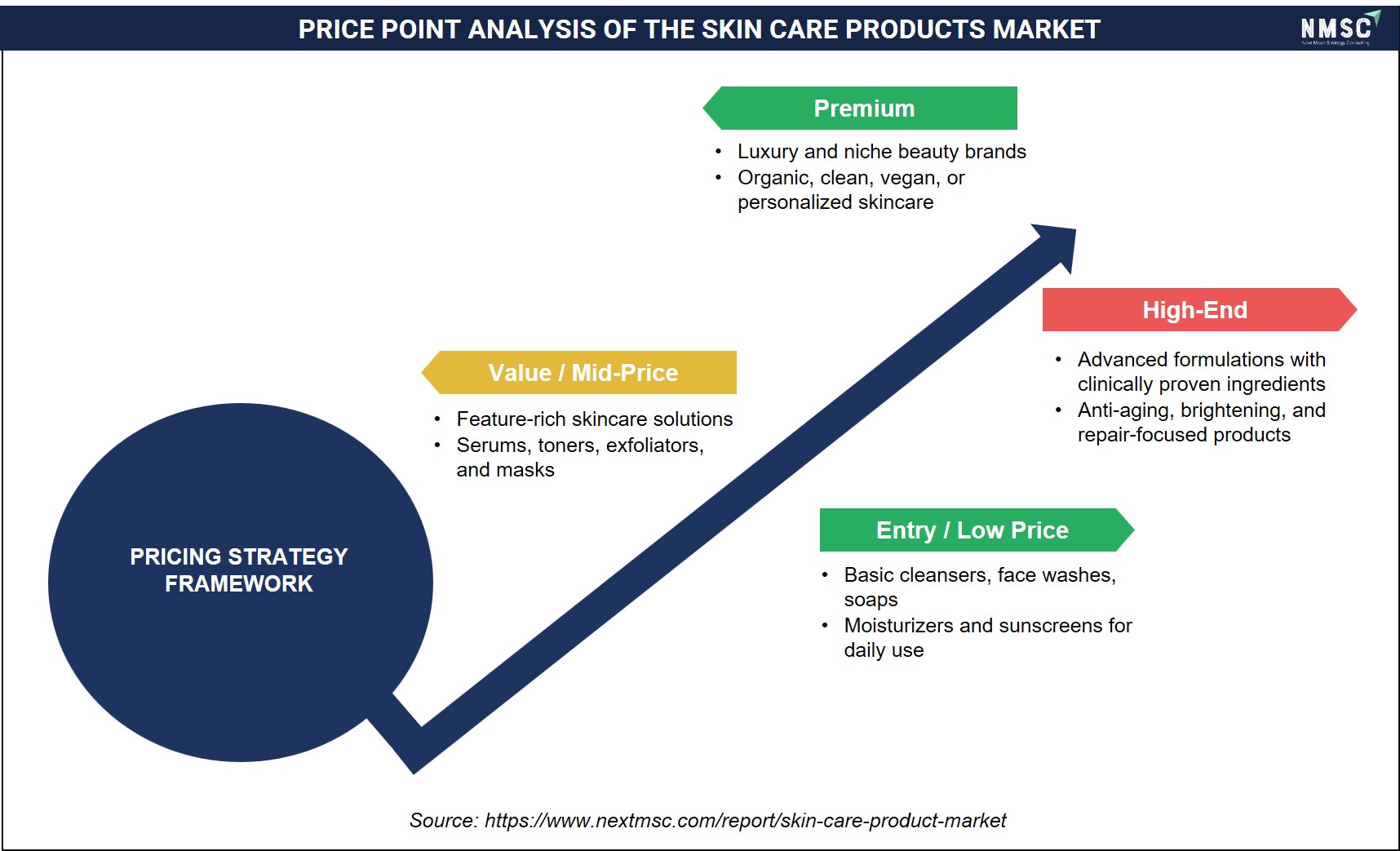
The Skin Care Products Market is segmented across multiple price tiers catering to diverse consumer preferences and spending capacities. Entry-level products include basic cleansers, moisturizers, sunscreens, and face washes designed for daily skincare needs at affordable prices. The value and mid-price segment offers feature-rich products such as serums, toners, exfoliators, and masks that balance efficacy and affordability. High-end products focus on advanced formulations with clinically proven ingredients targeting anti-aging, brightening, and skin repair. The premium segment comprises luxury, organic, clean-label, vegan, and personalized skincare solutions that emphasize exclusivity, superior ingredients, and brand prestige.
Key Benefits for Stakeholders
For Brand Owners and Consumer Products Companies
Brand owners and consumer products companies gain comprehensive, vendor-neutral insights into the Skin Care Products Market, including quantitative revenue sizing across all product types, forms, functional categories, price tiers, distribution channels, and geographic markets. This intelligence supports portfolio strategy planning, new market entry prioritization, whitespace opportunity identification, and multi-year product development roadmap alignment. NMSC's competitive landscape analysis enables commercial teams to benchmark pricing architecture, assess distribution channel mix efficiency, and evaluate build-versus-acquire decisions for category expansion with analytical precision.
For Investors and Financial Analysts
Investors and financial analysts access a structured, data-rich assessment of the Skin Care Products Market's growth trajectory, competitive dynamics, M&A pipeline, and segment-level revenue forecasts through 2035. CAGR analysis by product type, form, function, price tier, distribution channel, consumer gender, consumer age, and geographic region enables precise portfolio construction and comparable company valuation modeling. Detailed coverage of all 20 profiled companies combined with latest development tracking provides an early-signal framework for identifying acquisition targets, market share gainers, and at-risk incumbents within the global skin care competitive landscape.
For Retailers and Distributors
Retailers and distributors gain actionable intelligence on emerging category growth trends, fastest-growing sub-segments, and geographic market expansion opportunities within the Skin Care Products Market. Distribution channel analysis identifies the competitive dynamics between mass retail, specialty beauty, pharmacy, professional clinic, and online channels, enabling retailers to optimize category space allocation and private label development strategies. Regional and country-level analysis provides the granular market maturity, regulatory environment, and competitive intensity data required for effective geographic market entry and assortment localization decisions across developed and emerging retail markets.
For Government and Regulatory Bodies
Government agencies and regulatory bodies gain a structured analysis of how national cosmetics safety frameworks, including the FDA's MoCRA, EU Cosmetics Regulation, NMPA China, and equivalent national regulations, are influencing competitive dynamics, innovation investment, and market structure within the Skin Care Products Market. Country-level insights provide policymakers with evidence-based perspectives on how regulatory design choices affect domestic industry competitiveness, international brand market entry, and consumer safety outcomes. The sustainable formulation and packaging analysis offers direct relevance to national sustainability policy development programs in Europe, North America, and Asia-Pacific.
Key Market Segments
By Product Type
-
Face Care
-
Cleansers
-
Foaming Cleansers
-
Oil and Balm Cleansers
-
Micellar Waters and Wipes
-
-
Moisturizers
-
Day Creams
-
Night Creams
-
Gel Moisturizers
-
Facial Oils
-
-
Treatments
-
Serums
-
Ampoules and Boosters
-
Peels and Exfoliants
-
Spot Treatments
-
-
Masks
-
Sheet Masks
-
Wash-Off Masks
-
Sleeping Masks
-
-
Eye Care
-
Lip Care
-
Toners and Mists
-
-
Body Care
-
Body Moisturizers
-
Body Treatments
-
Body Exfoliants
-
-
Hand and Foot Care
-
Hand Care
-
Foot Care
-
-
Sun Care
-
Sunscreen
-
After Sun
-
Self Tanning
-
-
Other Skin Care
-
Sets and Bundles
-
Residual and Bundled Products
-
By Form
-
Cream and Lotion
-
Serum
-
Gel
-
Oil
-
Balm and Stick
-
Mask
-
Foam and Mousse
-
Spray and Mist
-
Wipe and Pad
-
Powder
-
Other
By Function
-
Cleanse
-
Hydrate
-
Treat
-
Protect
-
Exfoliate
-
Soothe
-
Brighten
-
Anti-Aging
-
Acne Care
-
Firming
-
Other
By Price Tier
-
Mass
-
Masstige
-
Premium
-
Luxury
By Distribution Channel
-
Offline
-
Mass Retail
-
Specialty Beauty
-
Pharmacy and Drugstore
-
Department Store
-
Professional and Clinic
-
Direct Selling
-
Travel Retail
-
Other Offline
-
-
Online
-
Brand Site
-
Marketplace
-
Retailer Site
-
By Consumer Gender
-
Women
-
Men
-
Unisex
By Consumer Age Group
-
Baby and Child
-
Adult
By Region
-
North America: U.S., Canada, and Mexico.
-
Europe: UK, Germany, France, Italy, Spain, Sweden, Denmark, Finland, the Netherlands, and the rest of Europe.
-
Asia Pacific: China, India, Japan, South Korea, Taiwan, Indonesia, Vietnam, Australia, Philippines, Malaysia and the rest of APAC.
-
Middle East & Africa (MEA): Saudi Arabia, UAE, Egypt, Israel, Turkey, Nigeria, South Africa, and the rest of MEA.
-
Latin America: Brazil, Argentina, Chile, Colombia, and the rest of LATAM.
Conclusion and Recommendations
Long-Term Outlook
The Skin Care Products Market is entering a sustained growth period through 2035, driven by converging demographic, regulatory, and innovation forces that are simultaneously expanding the consumer addressable market and elevating per-unit product value. The market is forecast to grow from USD 156.3 billion in 2026 to USD 246.8 billion by 2035 at a CAGR of 5.2%. Our assessment further indicates that this growth reflects both volume expansion in emerging markets where skin care adoption is in early stages of premiumization, and value expansion in developed markets where ingredient science innovation and clinical positioning are supporting sustained average selling price increases across premium and luxury tiers.
Strategic Positioning Recommendations
Brand owners should prioritize clinical substantiation as a core brand positioning investment, embedding dermatologist partnerships, clinical trial data, and ingredient transparency into brand communication strategies across all price tiers. Sun care represents the highest-growth adjacent category opportunity for brands currently focused on facial skincare, given both regulatory tailwinds and demographic demand expansion. Brands without a credible ESG and clean formulation narrative face growing consumer and regulatory risk exposure. Investment in direct-to-consumer digital channels, particularly AI-powered personalization platforms and subscription models, will be the most durable competitive differentiation lever over the 2026–2030 period.
Investment Attractiveness
The Skin Care Products Market represents an exceptionally attractive long-duration investment environment given stable and growing secular demand drivers, strong brand loyalty dynamics, and clear premiumization pathways across all major geographic markets. Our findings suggest that the highest-conviction investment themes include anti-aging functional products (7.4% CAGR), luxury price tier (7.6% CAGR), men's skincare (6.3% CAGR), online brand-direct distribution channels (9.4% CAGR), and MEA and Latin America regional market expansion (7.2% CAGR each). Strategic acquirers should prioritize clean beauty platforms, clinical skincare brands with DTC subscription economics, and AI-personalization technology companies as the highest-value M&A targets.
Market Shifts and Key Risks
The most significant market shift underway is the migration from mass-market commodity skincare toward science-backed, clinically positioned formulations across all price tiers, which benefits brands with genuine ingredient innovation over heritage volume players relying primarily on distribution scale. Key risks for the Skin Care Products Market include accelerating ingredient safety regulatory restrictions that may disrupt established formulation architectures, macroeconomic consumer spending pressure in key markets including China reducing prestige skincare growth rates, private label penetration compressing mass-market brand margins, and counterfeit product circulation in developing markets undermining brand equity and consumer safety standards.
Growth Pathways
Organizations seeking to maximize value from the Skin Care Products Market should pursue a three-horizon growth strategy. In the near term (2025–2027), prioritize digital commerce channel infrastructure investment, AI skin analysis tool deployment, and sun care category expansion to capture highest-CAGR segment tailwinds. In the mid-term (2027–2031), invest in biotechnology ingredient manufacturing capabilities, sustainable packaging transition programs, and emerging market premiumization strategies across MEA and Southeast Asia. In the long term (2031–2035), position for demographic-driven anti-aging category leadership as global aging population growth creates structurally expanding demand for clinically validated skin regeneration and barrier restoration solutions within the Skin Care Products Market.
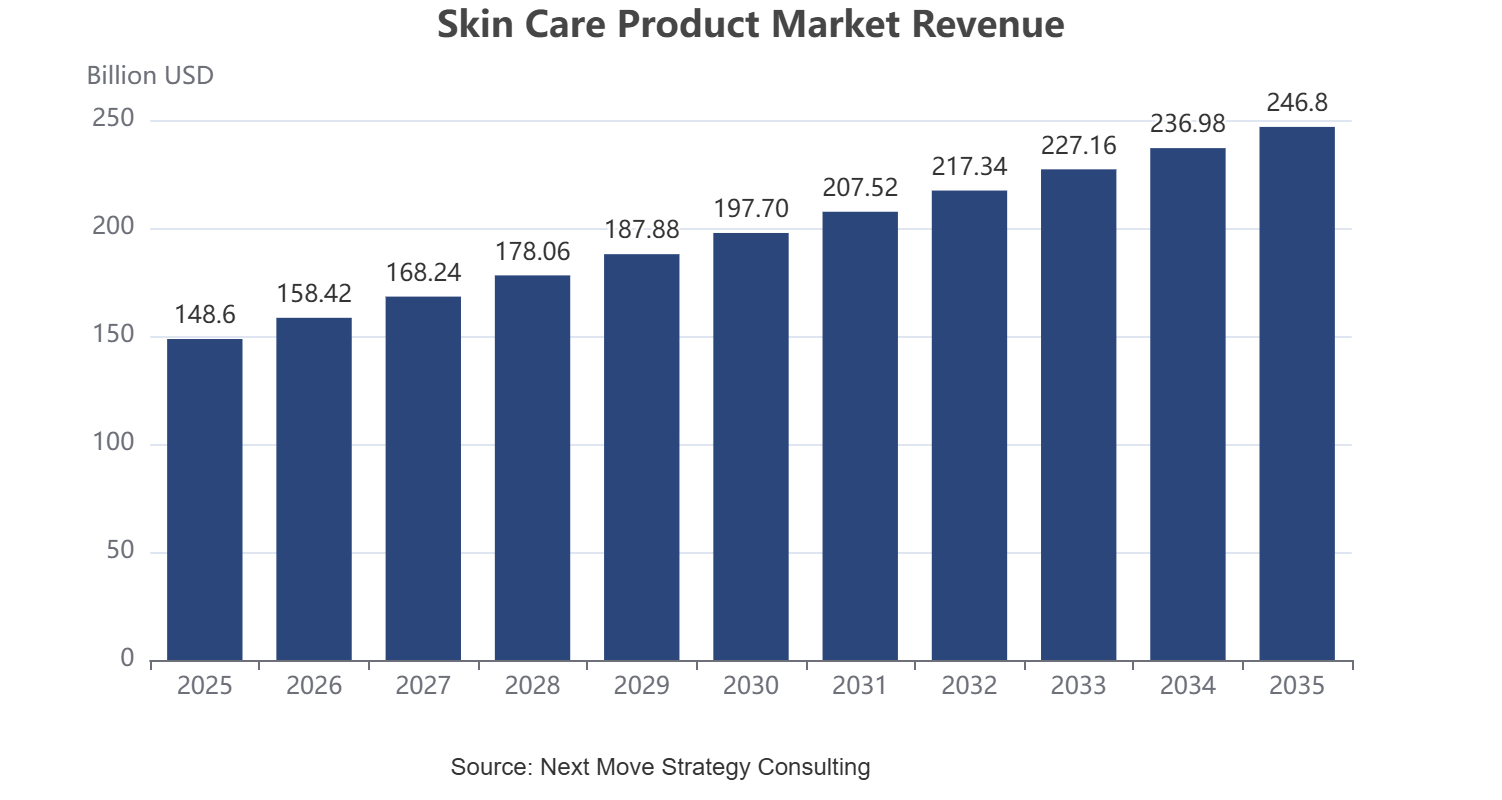
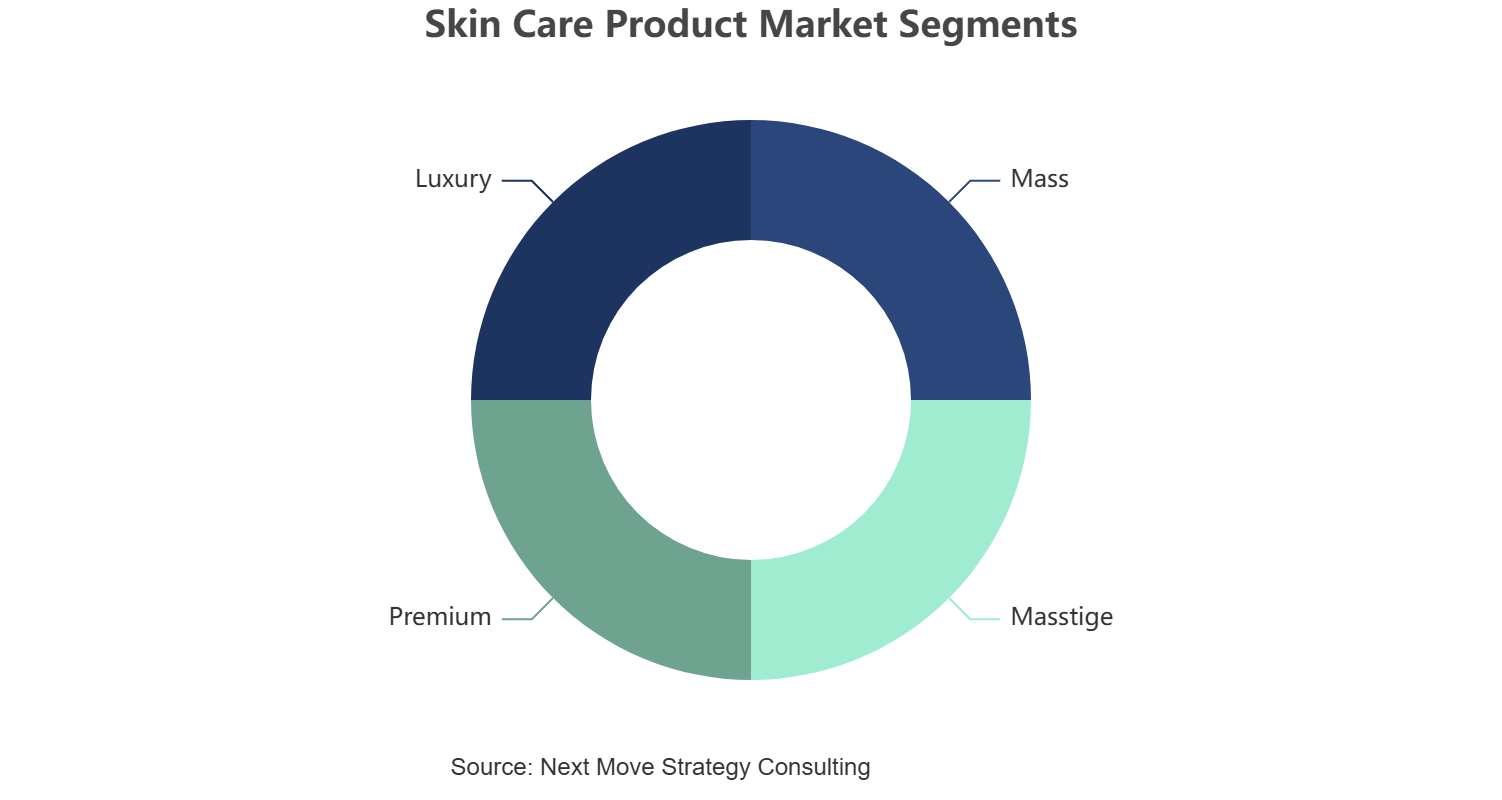
About the Author
 Mihul Sharma
— Mihul Sharma is Research Associate at Next Move Strategy Consulting, where he has covered technology, industrial, and healthcare markets for 3 years. His work applies structured business research, market analysis, and secondary-source review to assess market trends, competitive developments, and growth opportunities. He supports report development by fully synthesizing industry data, company information, and market signals into concise findings for strategy and investment-focused research teams.
Mihul Sharma
— Mihul Sharma is Research Associate at Next Move Strategy Consulting, where he has covered technology, industrial, and healthcare markets for 3 years. His work applies structured business research, market analysis, and secondary-source review to assess market trends, competitive developments, and growth opportunities. He supports report development by fully synthesizing industry data, company information, and market signals into concise findings for strategy and investment-focused research teams.
About the Reviewer
 Supradip Baul
— Supradip Baul is an accomplished business consultant and strategist with over a decade of rich experience in market intelligence, strategy, technology, and business transformation. His work has included rigorous qualitative and quantitative analysis across multiple industries, helping clients shape investment decisions and long-term roadmaps. Earlier in his career, he was associated with Gartner, where he contributed to industry-leading reports and market share analyses. He has worked with leading global companies and holds an MBA with a dual specialization in Marketing and Finance.
Supradip Baul
— Supradip Baul is an accomplished business consultant and strategist with over a decade of rich experience in market intelligence, strategy, technology, and business transformation. His work has included rigorous qualitative and quantitative analysis across multiple industries, helping clients shape investment decisions and long-term roadmaps. Earlier in his career, he was associated with Gartner, where he contributed to industry-leading reports and market share analyses. He has worked with leading global companies and holds an MBA with a dual specialization in Marketing and Finance.
At Next Move Strategy Consulting, we understand that insightful market research is the cornerstone of successful business decisions. That's why we employ a robust and multifaceted approach, combining various methodologies to deliver the most accurate and actionable data for our clients.

Research Landscape
We navigate the world of research with two primary approaches:
Qualitative Approach
Our qualitative research methodologies involve immersive techniques such as in-depth interviews, focus groups, and observational studies. By engaging directly with individuals and stakeholders, we uncover valuable insights that quantitative data alone may overlook.

Quantitative Research
In tandem with qualitative methodologies, NMSC leverages the power of Quantitative Research to provide a robust foundation of numerical insights. Through systematic data collection and analysis, we quantify patterns, preferences, and market trends, offering a comprehensive view of the business landscape.
Our quantitative research approach employs diverse tools, including surveys, experiments, and statistical modelling. These methodologies enable us to gather data from a large and representative sample, ensuring the statistical significance of our findings. By employing structured questionnaires and standardized data collection methods, we guarantee the reliability and validity of the information we present to our clients.
Quantitative research is particularly effective in measuring the prevalence of trends, assessing market size, and gauging the impact of various factors on consumer behavior. The numerical precision attained through this approach equips our clients with actionable insights, facilitating data-driven decision-making and strategy formulation.


Our Specialized Toolbox for Industry-Specific Market Research
We deploy a specialized arsenal of techniques tailored to meet your unique requirements. Here's a glimpse into our comprehensive toolbox:

Information Procurement
The stage entails acquiring market data or relevant information through various sources and methodologies.


Market Research Approach
We utilize both top-down and bottom-up approaches in market research analysis to achieve a comprehensive understanding of the market dynamics, leveraging the broad perspective of industry trends and macroeconomic factors alongside detailed insights from specific segments and individual companies.

Porters Five Forces Analysis
We conduct Porter's Five Forces analysis to evaluate the competitive landscape of an industry, providing us with insights into factors that affect profitability and strategic positioning.

SWOT Analysis

Forecasting
We utilize a forecasting model to predict future consumption by considering parameters like population, economics, regulations, market competition, drivers, constraints, technology, and pricing. We also employ statistical techniques such as multilinear regression, exponential smoothing, moving average, ARIMA, and Monte Carlo simulations for accurate predictions. In econometric forecasting, we analyzed short-term and long-term event impacts, attributing values based on regulatory frameworks, economic factors, and market events.





 Speak to Our Analyst