Smart Sports Equipment Market By Product Type (Balls, Golf Stick, Hockey Stick, Rackets & Bats, and Others), By Distribution Channel (Speciality Stores, Franchise stores, and Online Stores), By End-User (Men and Women) – Global Analysis & Forecast, 2025–2030
Industry Outlook
The global Smart Sports Equipment Market size was valued at USD 4.84 billion in 2024 and is expected to reach USD 5.39 billion by 2025. Looking ahead, the industry is projected to expand significantly, reaching USD 9.2 billion by 2030, registering a CAGR of 11.3% from 2025 to 2030.
The equipment industry today sits at the intersection of miniaturized sensors, ubiquitous connectivity, and advanced analytics, bridging consumer wearables, connected gym machines, team-grade tracking systems, and sensor-embedded traditional equipment. Companies now sell hardware plus software subscriptions, and professional teams, gyms and everyday athletes all use the same technological building blocks to capture motion, biometrics and contextual data. That shift has turned many manufacturers into systems providers where they deliver devices, cloud pipelines and coach-facing dashboards rather than standalone products. This platformization is reshaping purchasing decisions and vendor relationships across both elite sport and mass-market fitness.
Applications and use cases are broad and growing, where personalized training and performance optimisation, automated technique and form feedback, injury risk monitoring and rehab support, tactical and load-management analytics for teams, and enhanced fan and broadcast experiences via augmented data feeds. The near-term outlook points to tighter integration with AI and AR interfaces, including athletic-focused smart glasses, deeper partnerships between equipment makers and health/medical providers, and a continued move toward recurring revenue through software and analytics services, even as interoperability, data governance and privacy become central industry constraints. Adoption by leagues and pro clubs is accelerating these use cases and steering product roadmaps.
Additionally, rising disposable incomes significantly boost the smart sports equipment industry by increasing consumers’ ability to spend on premium, technology-integrated fitness products. Higher income levels encourage greater investment in connected gear such as smart rackets, balls, and wearables that track performance and health metrics, reflecting a shift toward lifestyle-focused fitness consumption driven by technological convenience and growing health awareness.

This chart demonstrates that countries like the U.S., Luxembourg, and Switzerland have high gross disposable per capita income, which directly supports robust growth in the smart sports equipment market. With greater disposable income, consumers in these regions are better positioned to afford premium, technology-driven sports products, fueling demand for innovations such as smart wearables and connected gear. Higher purchasing power in these economies accelerates market expansion, adoption rates, and the introduction of advanced fitness technologies.
What Are the Key Trends in the Smart Sports Equipment Industry?
How Is the Smart Sports Equipment Market Being Transformed by AI and Real-Time Analytics?
AI and real-time analytics are shifting connected sports devices from passive recorders to active decision systems. Sports-analytics markets tied to equipment and services were already valued in the low billions in 2024 and are expanding rapidly, driven by demand for automated coaching, broadcast enhancement and personalised training. In practice this means connected treadmills, wearables and stadium camera systems now feed models that flag injury risk, suggest recovery loads, or produce instant visualisations for fans, turning devices into subscription pipelines rather than one-off hardware buys. Vendors are therefore treating on-device sensing and cloud ML as a single product, where they build lightweight edge models to reduce latency and use federated or privacy-aware pipelines so clubs and consumers share richer datasets.

The chart shows a strong rise in organisations adopting AI between 2017 and 2024, which directly accelerates the smart sports equipment market growth. Increased AI usage enables sports equipment manufacturers to embed advanced functionalities, such as AI-driven analytics and real-time performance feedback, making products smarter and more appealing. As more organisations leverage AI in product development and operations, innovation in smart sports gear intensifies, expanding market opportunities and consumer adoption.
Will Smart Sports Equipment Become Regulated Medical or Clinical Tools, and What Does That Mean for Makers?
As sensors grow more precise, the line between performance wearables and regulated digital health tools is blurring. Regulators and health agencies now track sensor-based devices closely and lists of authorised sensor-driven health devices keep expanding, which affects how products are validated and marketed. That trend matters because equipment that claims medical or diagnostic value face higher bar for clinical evidence, privacy controls and data governance; meanwhile, the commercial opportunity to serve rehab clinics and remote monitoring programs is large. Companies therefore map routes to compliance early, separate consumer features from clinically validated features, invest in clinical studies or partnerships with healthcare providers, and consider modular architectures that let teams buy an athlete performance product and clinics license the medically classified module. This dual-track approach preserves consumer speed-to-market while opening higher-margin institutional channels as device accuracy and regulatory clarity improve.
How Is League and Team Adoption of Player-Tracking Reshaping Product Roadmaps in the Smart Sports Equipment Market Trends?
Leaguewide rollouts of optical and wearable tracking is converting bespoke team pilots into baseline expectations. Leagues are installing stadium-level tracking and broadcasters/teams expect synchronised feeds, which raises the bar for reliability, latency and standard formats. Some analyses also show player-tracking is a fast-growing segment within sports tech, driven by competitive advantage and fan productisation of data. For equipment vendors this means building products that integrate cleanly into league pipelines and offering services, like calibration, QA, and federation-grade SLAs, that teams pay for.
Are Smart Textiles and Sensor Miniaturisation Ready to Change How Equipment Is Designed and Sold?
Advances in smart textiles and smaller, lower-power sensors are moving sensing into clothing and equipment surfaces, creating seamless data capture and better user comfort; studies showed smart textiles growing strongly and attracting investment from sports and healthcare segments. For manufacturers this trend implies a shift from bolt-on sensors to integrated design partnerships with textile and semiconductor suppliers, where design cycles include washability, sensor durability and supply-chain testing.
What Are the Key Market Drivers, Breakthroughs, and Investment Opportunities That Will Shape the Smart Sports Equipment Industry in the Next Decade?
The smart sports equipment market is being propelled by broader consumer adoption of wearables and the professionalisation of athlete monitoring. Wrist-worn devices and embedded sensors are now common training tools for individuals and performance teams, creating an installed base that manufacturers monetise with analytics and services. At the same time, regulators and health authorities are treating high-accuracy sensor systems as medical or clinical adjacent, raising validation and privacy expectations; the FDA’s Digital Health Center of Excellence and guidance on digital health technologies underline that companies need stronger evidence and governance for clinical claims. Meanwhile, persistent concerns about sports injuries make validated monitoring attractive to clinics and teams, expanding addressable markets beyond recreational users.
Higher health expenditure positively impacts the market by encouraging investment in preventive healthcare and wellness technologies, including advanced fitness tracking devices. As spending on healthcare rises, there is an increased focus on monitoring personal health metrics, driving demand for IoT-enabled sports gear that offers real-time data, personalized training, and enhanced injury prevention. This shift fosters a more health-conscious consumer base, accelerating the market’s adoption of technology-driven fitness solutions.

The above chart illustrates that countries with higher healthcare expenditure, such as Denmark, Germany, and the UK, are likely to see greater adoption of wearable sports technology. Increased health spending reflects a societal emphasis on wellness and preventive care, which supports demand for advanced, data-driven fitness products. Such environments promote innovation and integration of smart technologies in sports equipment, accelerating market growth and consumer adoption.
Growth Drivers:
How Will Rising Wearable Penetration and Sustained Shipments Continue to Drive Smart Sports Equipment Demand?
Wider ownership of wearables means more consumers feed behaviour and health signals into sports ecosystems, creating cross-sell opportunities for smart equipment makers and subscription services. This steady install base lowers customer acquisition friction for adjacent products, such as, connected rackets, smart textiles, bike computers and improves ML models via larger datasets. For companies, they interoperable APIs and frictionless onboarding so that wearable users instantly link to equipment ecosystems, that increases lifetime value and creates recurring analytics revenue while the market continues to add millions of sensor nodes.
How Will Demand for Injury Prevention and Clinical-Grade Monitoring Accelerate Market Uptake?
Rising awareness of sports injuries and rehabilitation emphasis is shifting purchases toward devices that deliver clinically actionable insights. As sensors improve, clinics and pro teams increasingly seek validated tools for load management and concussion monitoring. Practically, equipment makers who fund or partner on clinical studies, align with FDA digital-health guidance, and separate consumer features from medically-validated modules unlock higher-margin institutional buyers and justify subscription pricing tied to outcomes and compliance.
Growth Inhibitors:
What Manufacturing and User-Experience Challenges Could Restrain the Smart Sports Equipment Market Expansion?
The market faces challenges related to product durability, usability, and sensor accuracy in real-world conditions. Many devices struggle with battery limitations, waterproofing, or discomfort during long-term wear, factors that affect user satisfaction and repeat adoption. Moreover, inconsistent data accuracy across brands creates scepticism among consumers and coaches. Manufacturers, therefore, prioritise ergonomic design, robust testing, and standardized data protocols to ensure reliability. Simplifying device calibration and reducing maintenance needs further improve adoption. Ultimately, companies that combine technical precision with user comfort overcome these restraints and strengthen long-term customer trust.
How Can Sustainability and Eco-Design Unlock the Next Wave of Opportunities in Smart Sports Equipment?
The most promising opportunity lies in integrating eco-design and sustainable materials into smart sports equipment. As consumers become more environmentally conscious, demand is growing for durable, repairable, and recyclable products without compromising performance or technology. Companies that invest in circular manufacturing, such as modular sensors, replaceable batteries, or biodegradable components, differentiate themselves in a crowded market. This approach not only aligns with global sustainability goals but also reduces lifecycle costs and regulatory risks. By embedding environmental responsibility into innovation, brands appeal to both performance-focused and eco-aware consumers, turning sustainability into a long-term competitive advantage.
How Is the Smart Sports Equipment Market Segmented in This Report, and What Are the Key Insights from the Segmentation Analysis?
By Product Type Insights
Is Smart Sports Equipment Evolving with Diverse Product Segments in 2025?
Based on product type, the market is segmented into Balls, Golf Stick, Hockey Stick, Rackets & Bats, and others.
Smart balls are embedded with sensors that track performance metrics such as speed, spin, trajectory, and impact force. These innovations help athletes analyse their gameplay and make data-driven improvements. Popular in sports like soccer, basketball, and football, smart balls offer real-time feedback and insights through connected apps. This enhances training and performance for both amateur and professional athletes. As the demand for data-driven training increases, the market for smart balls is expected to grow significantly.
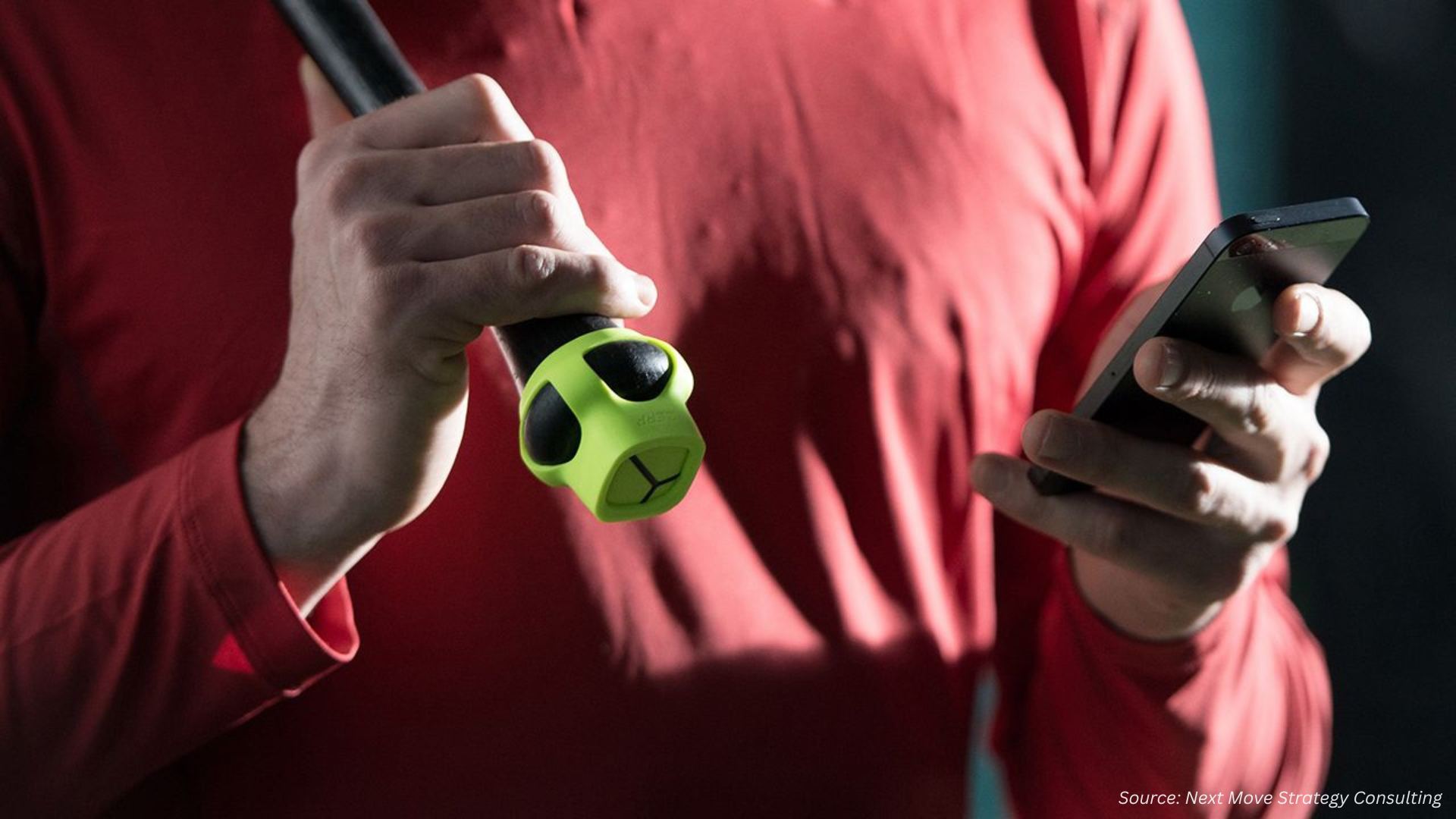
Smart golf sticks use technology to help players improve their skills and game strategy. These clubs have sensors that measure swing speed, angle, and impact location, providing golfers with detailed analytics to refine their technique. Connected apps let users track their progress over time, making it easier to spot areas for improvement. As golf embraces technology, smart golf clubs are becoming more popular among both recreational and competitive players looking to boost their performance.
On the other hand, smart rackets and bats are designed with embedded sensors that capture data on swing speed, ball impact, and stroke accuracy. This information helps athletes in sports like tennis, badminton, and baseball to refine their techniques and strategies. The adoption of smart rackets and bats is increasing as players recognise the value of real-time feedback in improving performance.
By Distribution Channel Insights
Is Smart Sports Equipment Distribution Shifting Towards Specialized and Online Channels in 2025?
On the basis of distribution channel, the market is segmented into specialty stores, franchise stores, and online stores.
Franchise stores have historically dominated the smart sports equipment market share due to their extensive reach and strong brand presence. These outlets offer customers the opportunity to assess products physically, receive personalized assistance, and access comprehensive after-sales support, enhancing the overall purchasing experience. The wide distribution network of franchise stores ensures that smart sports equipment is readily available in various locations, catering to a broad customer base. However, as consumer preferences evolve, there is a growing emphasis on specialized and online channels to meet the demand for personalized and convenient shopping experiences.
Specialty stores, on the other hand, are experiencing significant growth in the smart sports equipment industry, driven by their focus on niche, high-tech products that cater to specific athletic needs. These stores provide expert advice and support, enhancing the shopping experience for consumers seeking personalized fitness solutions. The increasing demand for advanced sports gear, particularly among younger consumers, further boosts the popularity of specialty stores. As consumers become more knowledgeable and discerning, specialty stores are well-positioned to offer tailored products and services that meet the evolving needs of the market.
Online stores are rapidly gaining traction in the market, offering consumers the convenience of shopping from home and accessing a wide range of products. The growth of e-commerce platforms has made it easier for consumers to compare products, read reviews, and make informed purchasing decisions. Additionally, online stores provide competitive pricing and exclusive online-only deals, attracting price-sensitive customers. The increasing penetration of the internet and mobile devices further supports the growth of online retail channels, making them a significant component of the smart sports equipment distribution landscape.

By End-User Insights
Which Routes of Administration Are Driving the Smart Sports Equipment Market in 2025?
On the basis of end-user, the market is segmented into men and women.
Men remain a major consumer segment in the market, driven by high participation in both professional and recreational sports. Products such as smart balls, connected rackets, and wearable performance trackers are popular among male athletes who prioritize performance optimization, competitive training, and data-driven insights. Men’s adoption is also influenced by interest in technology-integrated gear for fitness and team sports. Companies targeting this segment focus on high-performance features, durability, and advanced analytics to meet expectations, while bundling products with apps that track metrics like strength, speed, and endurance.
Women, on the other hand, are an increasingly important end-user segment, reflecting rising participation in sports, fitness, and wellness activities worldwide. Female consumers prioritize comfort, ergonomics, design aesthetics, and wearable convenience in smart sports equipment. There is also a growing interest in health-monitoring features, such as heart rate tracking, calorie tracking, and personalized coaching. Manufacturers cater to this segment by offering gender-specific products, adjustable sizing, and stylish design options. Additionally, integrating social and community features within apps enhances engagement and loyalty among female users, making this segment a key growth driver.
Regional Outlook
The smart sports equipment industry is geographically studied across North America, Europe, Asia Pacific, Middle East & Africa, and Latin America and each region is further studied across countries.
Smart Sports Equipment Market in North America
North America remains a dominant force in the market, driven by a robust sports culture and high technology adoption rates. This dominance is fueled by widespread use of wearable devices, performance analytics platforms, and a strong emphasis on data-driven sports training. The integration of AI and IoT technologies into sports gear enhances performance monitoring and injury prevention, aligning with the region's focus on health and fitness. The U.S. also benefits from a well-established infrastructure for sports and technology, making it an ideal market for smart sports equipment.
Smart Sports Equipment Market in the United States
In the U.S., the market is experiencing significant growth, particularly in the Southeast and Midwest regions. Factors contributing to this expansion include the increasing adoption of fitness technologies, rising health consciousness among consumers, and the growing popularity of data-driven training methods. The integration of AI and IoT in sports equipment allows athletes to monitor their performance in real-time, leading to more personalized training regimens. This trend is supported by a strong retail presence, both online and in physical stores, facilitating widespread access to smart sports products.
Smart Sports Equipment Market in Canada
Canada's market is characterized by a growing interest in winter sports and outdoor activities. The adoption of smart gear in sports like hockey and skiing is on the rise, driven by advancements in sensor technology and AI analytics. Canadian consumers are increasingly seeking products that offer performance insights and injury prevention features. The government's support for innovation and technology in sports further bolsters market growth. As the demand for connected sports equipment grows, companies are focusing on developing products tailored to the unique needs of Canadian athletes.
Smart Sports Equipment Market in Europe
Europe exhibits a diverse landscape in the market, with varying adoption rates across countries. Western and Northern European nations, such as Germany and the Nordics, lead in integrating AI and IoT technologies into sports gear, driven by strong economies and a culture of innovation. The emphasis on health and fitness, coupled with high disposable incomes, supports the demand for advanced sports equipment. However, Southern and Eastern European countries are witnessing slower adoption, influenced by economic factors and varying levels of technological infrastructure. Nonetheless, the overall trend points towards increasing integration of smart technologies in sports across the continent.
Smart Sports Equipment Market in the United Kingdom
The United Kingdom's market is experiencing steady growth, fueled by a strong sports culture and a growing emphasis on health and wellness. The adoption of AI-powered fitness devices and performance analytics platforms is gaining traction among both amateur and professional athletes. The UK's focus on sports science and research supports the development and integration of advanced technologies into sports equipment. Additionally, the government's initiatives to promote physical activity and sports participation contribute to the market's expansion, positioning the UK as a key player in the European smart sports equipment sector.
Smart Sports Equipment Market in Germany
Germany stands out in Europe for its technological advancements and strong manufacturing capabilities, making it a significant player in the smart sports equipment market. The country's emphasis on precision engineering and innovation drives the development of high-quality smart sports gear. German consumers are increasingly adopting AI-powered devices that offer real-time performance tracking and personalized training insights. The integration of these technologies aligns with Germany's broader focus on digital transformation and Industry 4.0, positioning the country at the forefront of smart sports equipment adoption in Europe.
Smart Sports Equipment Market in France
France's smart sports equipment market is influenced by a rich sporting heritage and a growing interest in fitness technologies. The adoption of connected sports gear is rising, particularly in urban areas where access to advanced products is more prevalent. French consumers are showing interest in devices that offer detailed performance analytics and health monitoring features. The government's support for sports initiatives and innovation fosters an environment conducive to the growth of the market. As the demand for personalized training solutions increases, companies are focusing on developing products that cater to the specific needs of French athletes.
Smart Sports Equipment Market in Italy
Italy's market is characterized by a strong passion for sports and a growing interest in fitness technologies. The adoption of smart gear is gaining momentum, particularly in sports like cycling, football, and tennis. Italian consumers are increasingly seeking products that offer performance insights and injury prevention features. The integration of AI and IoT technologies into sports equipment aligns with Italy's focus on innovation and design excellence. As the market evolves, companies are focusing on developing stylish and functional smart sports products that resonate with Italian athletes.
Smart Sports Equipment Market in Spain
Spain's market is experiencing gradual growth, driven by a strong sports culture and increasing health consciousness among consumers. The adoption of connected sports gear is on the rise, particularly in urban areas where access to advanced products is more widespread. Spanish consumers are showing interest in devices that offer real-time performance tracking and personalized training insights. The government's initiatives to promote physical activity and sports participation contribute to the market's expansion. As the demand for smart sports equipment grows, companies are focusing on developing products that cater to the unique needs of Spanish athletes.
Smart Sports Equipment Market in the Nordics
The Nordic countries, including Sweden, Norway, and Denmark, are at the forefront of adopting smart sports equipment, driven by a strong emphasis on health, fitness, and technological innovation. The integration of AI and IoT technologies into sports gear is prevalent, with consumers seeking products that offer detailed performance analytics and injury prevention features. The region's high disposable incomes and tech-savvy population support the demand for advanced sports equipment. Additionally, the government's focus on promoting physical activity and sports participation contributes to the market's growth, positioning the Nordics as leaders in the European smart sports equipment sector.
Smart Sports Equipment Market in the Asia-Pacific
The Asia-Pacific region is witnessing rapid growth in the smart sports equipment market demand, fueled by increasing disposable incomes, technological advancements, and a rising interest in health and fitness. Countries like China, Japan, India, and South Korea are at the forefront of this expansion, driven by a growing middle class and urbanization. The adoption of AI and IoT technologies in sports gear is gaining traction, with consumers seeking products that offer personalized training insights and performance analytics. The region's diverse sports culture and emphasis on innovation create a dynamic market for smart sports equipment.
Smart Sports Equipment Market in China
China's market is experiencing significant growth, driven by a large population, increasing urbanization, and a growing interest in health and fitness. The government's initiatives to promote sports participation and the integration of AI and IoT technologies into sports gear are key factors contributing to this expansion. Chinese consumers are increasingly adopting connected sports devices that offer real-time performance tracking and personalized training insights. The country's strong manufacturing capabilities also support the production and availability of smart sports equipment, positioning China as a major player in the global market.
Smart Sports Equipment Market in Japan
Japan's market is characterized by a high level of technological sophistication and a strong sports culture. The adoption of AI-powered devices and performance analytics platforms is gaining momentum among both amateur and professional athletes. Japanese consumers are seeking products that offer detailed performance insights and injury prevention features. The integration of smart technologies into sports gear aligns with Japan's focus on innovation and precision engineering. Additionally, the government's support for sports initiatives and physical activity promotion contributes to the market's growth, positioning Japan as a leader in the Asia-Pacific region.
Smart Sports Equipment Market in India
India's market is experiencing rapid growth, driven by a young population, increasing health consciousness, and a rising interest in fitness activities. The adoption of connected sports gear is on the rise, particularly among urban consumers seeking personalized training solutions. Companies are focusing on developing affordable and accessible smart sports products to cater to the diverse needs of Indian athletes. The government's initiatives to promote sports participation and the expansion of retail and e-commerce platforms further support the market's growth, making India a key emerging market in the global smart sports equipment sector.
Smart Sports Equipment Market in South Korea
South Korea's market is characterized by a tech-savvy population and a strong emphasis on health and fitness. The adoption of AI and IoT technologies in sports gear is prevalent, with consumers seeking products that offer real-time performance tracking and personalized training insights. The country's advanced technological infrastructure supports the development and availability of smart sports equipment. Additionally, the government's focus on promoting physical activity and sports participation contributes to the market's expansion, positioning South Korea as a significant player in the Asia-Pacific region.
Smart Sports Equipment Market in Taiwan
Taiwan's smart sports equipment market is influenced by a growing interest in health and fitness and a strong technological landscape. The adoption of connected sports gear is gaining momentum, driven by advancements in sensor technology and AI analytics. Taiwanese consumers are increasingly seeking products that offer performance insights and injury prevention features. The country's focus on innovation and research and development supports the growth of the market. As the demand for personalized training solutions increases, companies are focusing on developing products that cater to the unique needs of Taiwanese athletes.
Smart Sports Equipment Market in Indonesia
Indonesia's market is in the early stages of development but shows promising growth potential. The rising middle class, increasing urbanization, and growing interest in health and fitness are key factors driving this expansion. The adoption of connected sports gear is gaining traction among urban consumers seeking personalized training solutions. Companies are focusing on developing affordable and accessible smart sports products to cater to the diverse needs of Indonesian athletes. The government's initiatives to promote sports participation and the expansion of retail and e-commerce platforms further support the market's growth.
Smart Sports Equipment Market in Australia
Australia's market is characterized by a strong sports culture and a growing emphasis on health and fitness. The adoption of AI-powered devices and performance analytics platforms is gaining popularity among athletes and fitness enthusiasts. Australian consumers are seeking products that offer detailed performance insights and injury prevention features. The country's advanced technological infrastructure supports the development and availability of smart sports equipment. Additionally, the government's support for sports initiatives and physical activity promotion contributes to the market's growth, positioning Australia as a significant player in the Asia-Pacific region.
Smart Sports Equipment Market in Latin America
Latin America's market is experiencing gradual growth, driven by increasing health consciousness and a rising interest in fitness activities. Countries like Brazil and Mexico are at the forefront of this expansion, with urban consumers adopting connected sports gear that offers personalized training solutions. The adoption of AI and IoT technologies in sports equipment is gaining momentum, with consumers seeking products that provide real-time performance tracking and performance analytics. The region's diverse sports culture and emphasis on wellness create a dynamic market for smart sports equipment.
Smart Sports Equipment Market in the Middle East & Africa
The Middle East & Africa (MEA) region is experiencing significant growth in the smart sports equipment market demand. This growth is driven by increasing health awareness, urbanization, and government initiatives promoting fitness and sports participation. Countries like the UAE and Saudi Arabia are investing in sports infrastructure and wellness programs, fostering a conducive environment for the adoption of smart sports technologies. Additionally, the rise of e-commerce platforms is enhancing accessibility to smart sports equipment across urban and semi-urban areas.
Competitive Landscape
Which Companies Dominate the Smart Sports Equipment Industry and How Do They Compete?
The smart sports equipment industry is led by companies like Garmin Ltd., Technogym S.p.A., and Peloton Interactive, each employing distinct strategies to maintain a competitive edge. Garmin focuses on integrating advanced GPS and health-tracking features into wearables, catering to athletes and outdoor enthusiasts. Technogym emphasises luxury fitness equipment with digital connectivity, targeting high-end gyms and wellness centers. Peloton has revolutionised home fitness by combining hardware with a subscription-based content model, fostering a strong community of users. Other notable players include Polar Electro, Suunto, WHOOP, and Oura Health, each specializing in specific niches like heart rate monitoring, sleep tracking, and performance analytics. These companies compete by differentiating their products through technology integration, user experience, and targeting specific market segments.
Market Dominated by Smart Sports Equipment Giants and Specialists
The smart sports equipment market share is characterized by a blend of industry giants and specialized firms, each carving out niches to cater to diverse consumer needs. Companies like Garmin and Technogym dominate the high-end segment, offering premium products with advanced features. Garmin's extensive product line appeals to a broad audience, from casual fitness enthusiasts to professional athletes, while Technogym's focus on luxury fitness solutions attracts a more affluent clientele. Peloton has established a strong presence in the home fitness market, leveraging its subscription-based model to build a loyal user base. Specialized companies such as Polar Electro, Suunto, and WHOOP focus on specific aspects of fitness, like heart rate monitoring, outdoor sports, and recovery analytics, respectively. These specialists collaborate with professional sports teams to provide tailored solutions. The competition among these players is shaping the market by driving innovation and pushing the boundaries of what smart sports equipment offer.
Innovation And Adaptability Drive Market Success
Innovation and adaptability are crucial for success in the rapidly evolving smart sports equipment market. Garmin continues to enhance its product offerings by integrating advanced sensors and expanding its ecosystem to include cycling, swimming, and multisport functionalities. Technogym has embraced digital transformation by developing AI-powered fitness equipment and virtual training platforms, allowing users to access personalized workouts remotely. Similarly, Peloton's introduction of the Repowered resale platform exemplifies its adaptability, catering to the growing demand for sustainable and cost-effective fitness solutions. Companies like Catapult and KINEXON SPORTS provide specialized analytics tools for professional teams, enhancing performance evaluation. STATSports Group Ltd. and Zebra Technologies Corp. offer solutions for tracking player movements and equipment, respectively, in team sports. Also, Playermaker Ltd. focuses on foot movement data for soccer players, while Riddell's smart helmets prioritize player safety. These innovations reflect the industry's commitment to enhancing user experience and performance through technological advancements.
Market Players to Opt for Merger & Acquisition Strategies to Expand Their Presence
To strengthen their positions in the competitive smart sports equipment market trends, several companies have pursued merger and acquisition strategies. In 2024, Oura Health Oy secured USD 900 million in a Series E funding round led by Fidelity, raising its valuation to USD 11 billion. The funds are intended to enhance AI and product development, expand global distribution, and innovate health features. This strategic move underscores Oura's commitment to growth and innovation in the wearable health technology sector. Similarly, Peloton Interactive has launched Repowered, a resale platform for used Peloton bikes and fitness equipment. This initiative aims to capture demand in the secondhand market and expand Peloton's reach to a broader audience. By facilitating the sale of pre-owned equipment, Peloton enhances its sustainability efforts and provides cost-effective options for consumers. These strategic acquisitions and initiatives highlight the industry's focus on expanding market presence and adapting to evolving consumer preference.
List of Key Smart Sports Equipment Companies
-
Garmin Ltd.
-
Technogym S.p.A.
-
Johnson Health Tech. Co., Ltd. (Matrix Fitness)
-
Peloton Interactive, Inc.
-
Polar Electro
-
Suunto
-
WHOOP
-
Oura Health Oy
-
KINEXON SPORTS
-
STATSports Group Ltd.
-
Zebra
-
Riddell
-
Babolat
What Are the Latest Key Industry Developments?
-
October 2025- Oura Health raised over USD 900 million in a Series E funding round, valuing the company at USD 11 billion. The funds will accelerate global expansion and product development, reflecting strong investor confidence in Oura's AI-enhanced wearable technology.
-
September 2025- Garmin introduced the Venu 4, featuring enhanced sleep tracking, a built-in flashlight, and daily personalized workout suggestions. This launch strengthens Garmin's position in the premium smartwatch segment, offering advanced health monitoring capabilities to a broader audience.
-
July 2025- Peloton launched Repowered, a resale platform for pre-owned equipment, initially in select U.S. cities. The platform offers sellers 70% of the sale price and provides buyers with discounted activation fees, promoting sustainability and expanding Peloton's market reach.
-
May 2025- WHOOP launched the 5.0 and MG devices, offering features like ECG heart screening, blood pressure insights, and a 14-day battery life. These advancements cater to users seeking comprehensive health data and enhance WHOOP's competitive edge in the wearable market.
-
March 2024- At IHRSA 2024, Technogym launched the Checkup, an AI-driven health assessment tool that evaluates physical and cognitive conditions to prescribe personalized fitness programs. This innovation enhances user engagement and positions Technogym at the forefront of personalized fitness solutions.
What Are the Key Factors Influencing Investment Analysis & Opportunities in the Smart Sports Equipment Market?
The smart sports equipment market is attracting strong investor interest due to rising consumer demand for connected, data-driven fitness solutions and rapid technological advancements. Investment trends indicate growing funding in AI-enabled wearables, IoT-integrated devices, and performance analytics platforms. Venture capital and strategic partnerships are increasingly directed toward companies that offer personalised training solutions or integrate health monitoring with fitness equipment.
Geographically, investment hotspots include North America, Europe, and Asia-Pacific. North America continues to attract funding due to a tech-savvy consumer base and an established ecosystem for digital fitness products. Europe is favoured for its mature fitness infrastructure and wellness-focused markets, while Asia-Pacific draws investments thanks to rapid urbanization, expanding sports infrastructure, and rising adoption of connected fitness solutions. These trends highlight opportunities for market entrants and incumbents to leverage technology, partnerships, and regional growth dynamics.
Key Benefits for Stakeholders:
Next Move Strategy Consulting (NMSC) presents a comprehensive analysis of the smart sports equipment market trends, covering historical trends from 2020 through 2024 and offering detailed forecasts through 2030. Our study examines the market at regional and country levels, providing quantitative projections and insights into key growth drivers, challenges, and investment opportunities across all major smart sports equipment segments.
The smart sports equipment industry offers significant benefits to a wide range of stakeholders. Investors gain opportunities through high-growth potential, driven by technological innovations, subscription-based models, and the expanding adoption of connected fitness devices. Customers benefit from personalized, data-driven insights that enhance performance, recovery, and overall health, while also accessing convenient home or gym-based solutions. Fitness centers and sports teams optimize training, monitor athlete performance, and reduce injury risks through advanced analytics and wearable technology. Additionally, technology providers and startups benefit from partnerships and collaboration opportunities, while policymakers and wellness advocates leverage the industry to promote healthier lifestyles, creating a mutually reinforcing ecosystem that drives growth and innovation.
Report Scope:
|
Parameters |
Details |
|
Market Size in 2025 |
USD 5.39 Billion |
|
Revenue Forecast in 2030 |
USD 9.2 Billion |
|
Growth Rate |
CAGR of 11.3% from 2025 to 2030 |
|
Analysis Period |
2024–2030 |
|
Base Year Considered |
2024 |
|
Forecast Period |
2025–2030 |
|
Market Size Estimation |
Billion (USD) |
|
Growth Factors |
|
|
Companies Profiled |
15 |
|
Countries Covered |
33 |
|
Market Share |
Available for 10 companies |
|
Customization Scope |
Free customization (equivalent to up to 80 analyst-working hours) after purchase. Addition or alteration to country, regional & segment scope. |
|
Pricing and Purchase Options |
Avail customized purchase options to meet your exact research needs. |
|
Approach |
In-depth primary and secondary research; proprietary databases; rigorous quality control and validation measures. |
|
Analytical Tools |
Porter's Five Forces, SWOT, value chain, and Harvey ball analysis to assess competitive intensity, stakeholder roles, and relative impact of key factors. |
Key Market Segments
By Product Type
-
Balls
-
Golf Stick
-
Hockey Stick
-
Rackets & Bats
-
Others
By Distribution Channel
-
Speciality Stores
-
Franchise stores
-
Online Stores
By End-User
-
Men
-
Women
Geographical Breakdown
-
North America: U.S., Canada, and Mexico.
-
Europe: U.K., Germany, France, Italy, Spain, Sweden, Denmark, Finland, Netherlands, and rest of Europe.
-
Asia Pacific: China, India, Japan, South Korea, Taiwan, Indonesia, Vietnam, Australia, Philippines, Malaysia and rest of APAC.
-
Middle East & Africa (MEA): Saudi Arabia, UAE, Egypt, Israel, Turkey, Nigeria, South Africa, and rest of MEA.
-
Latin America: Brazil, Argentina, Chile, Colombia, and rest of LATAM
Conclusion & Recommendations
Our report equips stakeholders, industry participants, investors, and consultants with actionable intelligence to capitalize on smart sports equipment’s transformative potential. By combining robust data-driven analysis with strategic frameworks, NMSC’s Smart Sports Equipment Market Report serves as an indispensable resource for navigating the evolving landscape.
The smart sports equipment industry is poised for sustained growth, driven by technological innovation, increasing consumer focus on health, and the adoption of connected fitness solutions. Companies that leverage AI, IoT, and advanced analytics to offer personalized experiences lead the market. Strategic takeaways include the importance of targeting niche segments, forming strategic partnerships, and investing in digital ecosystems to enhance user engagement and retention. For executives and investors, the future outlook suggests focusing on regions with rising adoption of smart fitness technology, exploring mergers or partnerships to expand market presence, and prioritizing innovation in wearable devices and performance analytics. By aligning investment and business strategies with evolving consumer preferences, stakeholders capture significant growth opportunities in this dynamic market.


About the Author
 Mayurima Roy is Research Analyst at Next Move Strategy Consulting, where she has spent 4 years working across the firm's full industry coverage rather than a single fixed vertical. Her work centers on structured research, ongoing trend tracking, competitive assessment, and insight-led content development, translating complex market data into clear, decision-ready narratives that support informed client decision-making across diverse global industries, market sectors, and world regions every day.
About the Reviewer
 Supradip Baul is an accomplished business consultant and strategist with over a decade of rich experience in market intelligence, strategy, technology, and business transformation. His work has included rigorous qualitative and quantitative analysis across multiple industries, helping clients shape investment decisions and long-term roadmaps. Earlier in his career, he was associated with Gartner, where he contributed to industry-leading reports and market share analyses. He has worked with leading global companies and holds an MBA with a dual specialization in Marketing and Finance.
At Next Move Strategy Consulting, we understand that insightful market research is the cornerstone of successful business decisions. That's why we employ a robust and multifaceted approach, combining various methodologies to deliver the most accurate and actionable data for our clients.

Research Landscape
We navigate the world of research with two primary approaches:
Qualitative Approach
Our qualitative research methodologies involve immersive techniques such as in-depth interviews, focus groups, and observational studies. By engaging directly with individuals and stakeholders, we uncover valuable insights that quantitative data alone may overlook.

Quantitative Research
In tandem with qualitative methodologies, NMSC leverages the power of Quantitative Research to provide a robust foundation of numerical insights. Through systematic data collection and analysis, we quantify patterns, preferences, and market trends, offering a comprehensive view of the business landscape.
Our quantitative research approach employs diverse tools, including surveys, experiments, and statistical modelling. These methodologies enable us to gather data from a large and representative sample, ensuring the statistical significance of our findings. By employing structured questionnaires and standardized data collection methods, we guarantee the reliability and validity of the information we present to our clients.
Quantitative research is particularly effective in measuring the prevalence of trends, assessing market size, and gauging the impact of various factors on consumer behavior. The numerical precision attained through this approach equips our clients with actionable insights, facilitating data-driven decision-making and strategy formulation.


Our Specialized Toolbox for Industry-Specific Market Research
We deploy a specialized arsenal of techniques tailored to meet your unique requirements. Here's a glimpse into our comprehensive toolbox:

Information Procurement
The stage entails acquiring market data or relevant information through various sources and methodologies.


Market Research Approach
We utilize both top-down and bottom-up approaches in market research analysis to achieve a comprehensive understanding of the market dynamics, leveraging the broad perspective of industry trends and macroeconomic factors alongside detailed insights from specific segments and individual companies.

Porters Five Forces Analysis
We conduct Porter's Five Forces analysis to evaluate the competitive landscape of an industry, providing us with insights into factors that affect profitability and strategic positioning.

SWOT Analysis

Forecasting
We utilize a forecasting model to predict future consumption by considering parameters like population, economics, regulations, market competition, drivers, constraints, technology, and pricing. We also employ statistical techniques such as multilinear regression, exponential smoothing, moving average, ARIMA, and Monte Carlo simulations for accurate predictions. In econometric forecasting, we analyzed short-term and long-term event impacts, attributing values based on regulatory frameworks, economic factors, and market events.





 Speak to Our Analyst