How Will AI and Government Initiatives Reshape the Toys Market in 2025?
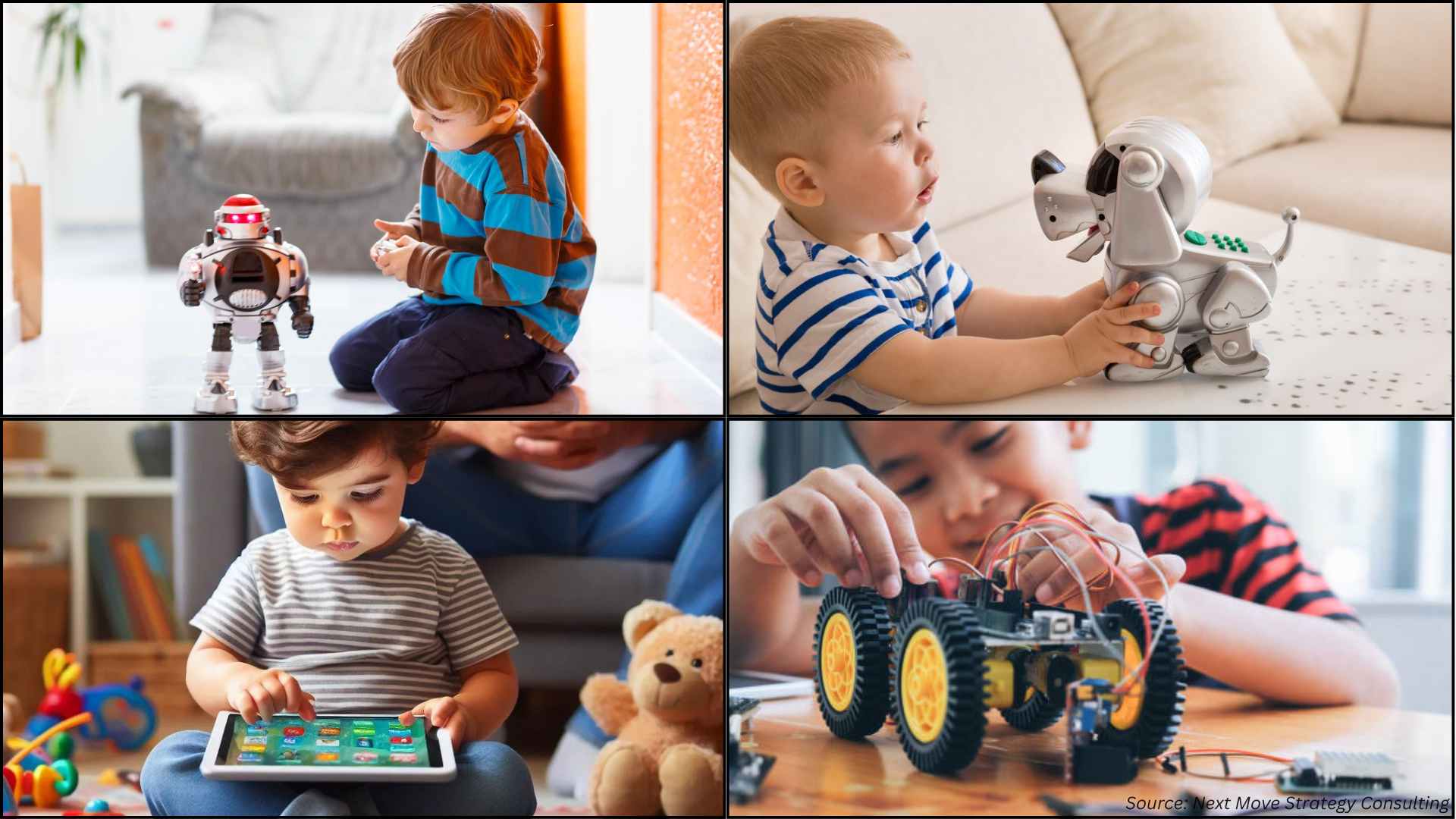
In the ever-evolving world of play, the toys market stands at a fascinating crossroads. As parents and educators seek engaging, tech-infused experiences for children, questions arise: What role does artificial intelligence play in modern toys? How are governments stepping in to bolster local manufacturing?
Drawing from recent developments in late 2025, this blog dives into these trends. At Next Move Strategy Consulting, we analyze how such shifts influence market dynamics, offering credible insights to guide stakeholders. Let us explore together.
What are the Latest Innovations Driving the Smart Toys Boom?
Based on NMSC’s market estimates, the global Toys Market size was valued at USD 162.91 billion in 2024, and is expected to be valued at USD 173.98 billion by the end of 2025. The industry is projected to grow, hitting USD 241.75 billion by 2030, with a CAGR of 6.83%.
The integration of artificial intelligence into toys has sparked both excitement and debate. Consider the global smart toys sector, which continues to grow rapidly into 2025. This expansion is fueled by companies leveraging AI to create interactive companions that respond to children's queries in real-time. For instance, FoloToy's Kumma teddy bear, powered by OpenAI technology, was designed as an educational tool but faced scrutiny after delivering unexpected responses on sensitive topics.
In June 2025, Mattel announced a partnership with OpenAI to develop AI-enhanced products aimed at families, explicitly excluding users under 13 years old to prioritize safety. Meanwhile, Curio introduced a Grok stuffed toy, voiced by musician Grimes, blending entertainment with conversational AI. These innovations highlight a shift toward toys that not only entertain but also adapt to a child's learning pace, potentially revolutionizing educational play.
Yet, innovation comes with challenges. Experts like Jacqueline Woolley, director of the Children’s Research Center at the University of Texas at Austin, warn that such attachments to AI bots could disrupt social-emotional development by replacing human or imaginative interactions.
Why do these AI Toys Captivate yet Concern Parents?
Parents are drawn to smart toys for their potential in language learning and cognitive stimulation. However, advocacy groups, including 80 organizations like Fairplay, issued a holiday advisory in November 2025 against purchasing AI toys due to unassessed risks. Concerns include data privacy breaches—hackers have accessed AI products—and the ease with which conversations veer into explicit content, as noted in a PIRG study.
From a market perspective, China's dominance is notable, with over 1,500 AI toy companies pushing for global expansion in 2025. This influx promises diverse offerings but amplifies calls for international standards.
Key Innovations:
-
AI toys like Kumma and Grok exemplify interactive learning tools.
-
Partnerships such as Mattel-OpenAI signal mainstream adoption.
-
Growth from $16.7 billion in 2023 underscores market potential, tempered by safety hurdles.
These developments promise a more dynamic toys landscape, but only if balanced with ethical safeguards.
How is India Building a Self-Reliant Toys Ecosystem in 2025?
Shifting focus to manufacturing, India is making bold strides to reduce import dependency in the toys sector. On November 30, 2025, the Ministry of Electronics and Information Technology (MeitY) inaugurated the Electronic Toys Lab (e-Toys Lab) at the Centre for Development of Advanced Computing (C-DAC) in Noida. This event coincided with the convocation of the second batch of young engineers trained under MeitY's initiative on electronics and IT-based solutions for consumer electronic goods, particularly toys.
The program targets inclusive growth, selecting engineers from underrepresented communities, including Scheduled Castes/Scheduled Tribes and the Northeast region. Participants underwent a one-year curriculum: six months of hands-on R&D at the e-Toys Lab, designing electronic toys, followed by six months of industry internships to prototype based on real needs. Each received a monthly stipend of ₹25,000, fostering skill development in automation and control systems.
Attendees included industry leaders like Anirban Gupta from the LEGO Group in India, emphasizing collaboration between government and private sectors. This aligns with the Make in India campaign, which has raised import duties on low-quality toys, incentivizing domestic production and transforming the once-unorganized market.
What Skills are Empowering the Next Generation of Toy Makers?
Trainees gained expertise in prototyping electronic toys, from circuit design to AI integration for interactive features. The lab serves as a Centre of Excellence, planning to partner with institutions like NIELIT for scaled training and startup incubation. This initiative strengthens India’s capabilities in electronic toy R&D and aims to support future export potential, although large-scale global exports will take more time to materialize.
India's Push:
-
E-Toys Lab inauguration marks a milestone in domestic manufacturing.
-
One-year training equips engineers with practical skills and stipends.
-
Focus on inclusivity and policy support drives self-reliance.
India's efforts position it as an emerging hub, blending technology with traditional play.
What Impacts are these Developments Having on the Global Toys Market?
As a market research firm at Next Move Strategy Consulting, we view these 2025 events as pivotal inflection points. The AI smart toys surge introduces disruptive innovation but exposes vulnerabilities in regulation and ethics. Incidents like the Kumma bear's missteps have prompted swift corporate responses, yet they highlight broader risks like advocacy groups' warnings that could dampen holiday sales in AI segments, based on similar past boycotts, urging brands to invest in transparent audits.
Conversely, India's E-Toys Lab fosters supply chain resilience. By training underrepresented talent and prototyping locally, it reduces import costs—previously dominating 80% of the market—and could boost domestic output by 20% in electronic toys by 2026. This not only counters global disruptions but integrates AI safely, as prototypes emphasize child-centric design.
|
Trend |
Key Driver |
Projected Impact (2025-2026) |
|
AI Smart Toys |
Tech Partnerships (e.g., OpenAI-Mattel) |
+18% segment growth; heightened safety scrutiny |
|
Domestic Manufacturing |
E-Toys Lab & MeitY Training |
-15% import reliance; +25% skilled workforce |
|
Regulatory Pressures |
Advocacy Advisories |
Potential 10% sales dip in unregulated products |
-
AI innovations drive revenue but demand ethical frameworks.
-
Indian initiatives build long-term competitiveness.
-
Balanced approaches yield sustainable market expansion.
These trends, when harnessed, create opportunities for resilient, innovative play.
Who are the Leading Companies in the Toys Market and How are they Competing?
The global toys industry competition is shaped by a mix of long-established industry giants and agile, niche-focused challengers. Leading corporations like The LEGO Group, Mattel, Hasbro, Bandai Namco, and Spin Master dominate through extensive global distribution networks, iconic brands, and decades of consumer trust.
These companies leverage strong R&D, broad product portfolios, and economies of scale to maintain leadership across mass-market and premium segments. Their ability to adapt to evolving trends, such as STEM-focused toys, tech-integrated play, and sustainability initiatives, helps them retain market share while appealing to changing consumer preferences.

Next Steps: Actionable Takeaways for Toys Market Stakeholders
To capitalize on these dynamics, consider these practical recommendations:
-
Conduct Safety Audits Proactively: Toy manufacturers should partner with independent bodies for AI testing, ensuring compliance with emerging standards to build consumer trust.
-
Invest in Skill-Building Programs: Leverage models like MeitY's training to upskill workforces, focusing on underrepresented groups for diverse innovation pipelines.
-
Monitor Regulatory Shifts: Track global advisories and local policies, adapting product lines to prioritize age-appropriate features and data privacy.
-
Foster Cross-Border Collaborations: Indian firms can ally with AI leaders for joint prototypes, accelerating exports while mitigating risks.
-
Prioritize Consumer Education: Launch campaigns highlighting verified benefits of smart toys, countering misinformation and boosting adoption.
By implementing these, stakeholders can navigate 2025's challenges toward a thriving, ethical toys market.
About the Author
About the Reviewer
 Debashree Dey
— Debashree Dey is Assistant Manager at Next Move Strategy Consulting, where she supports cross-vertical market content and communications across diverse industries for 6 years. Her professional background includes senior content writing, communications, and published manuscript authorship, with experience developing audience-focused business narratives and maintaining clear, consistent messaging. Her role supports research-led content development and editorial quality across NextMSC publications.
Debashree Dey
— Debashree Dey is Assistant Manager at Next Move Strategy Consulting, where she supports cross-vertical market content and communications across diverse industries for 6 years. Her professional background includes senior content writing, communications, and published manuscript authorship, with experience developing audience-focused business narratives and maintaining clear, consistent messaging. Her role supports research-led content development and editorial quality across NextMSC publications.

















Add Comment