Travel Insurance Market By Age Group (Generation X, Millennials, & Others), By Income Level (Low, Middle, & High-Income), By Coverage Type (Medical & Health, Trip Protection Coverage, & Others), By Distributional Channel (Bancassurance, Airline & Travel Booking Platforms, & Others), By Underwriting (Standard Underwriting, Simplified Issue, & Others), By End-User (Leisure & Holiday, Business, Pilgrimage & Religious Travelers, & Others) – Global Analysis & Forecast, 2026–2035
Industry: BFSI | Lastest Edition: June 23, 2026 | No of Pages: 664 | No. of Tables: 948 | No. of Figures: 934 | Format: PDF | Report Code : BF74
Industry Outlook
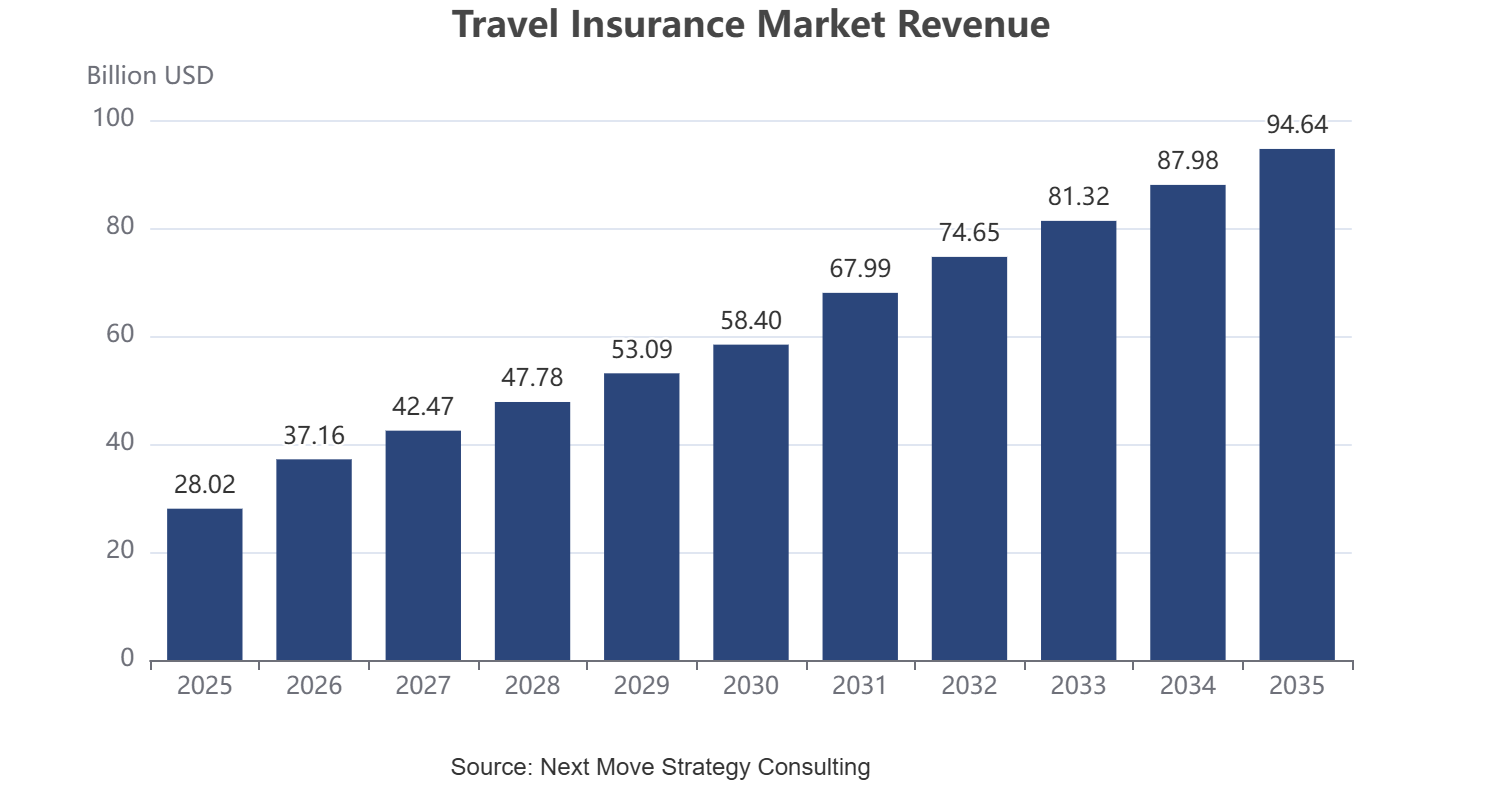
The Travel Insurance Market size was valued at USD 28.02 billion in 2025, and is expected to be valued at USD 34.64 billion by the end of 2026. The industry is projected to grow, hitting USD 94.64 billion by 2035, with a CAGR of 11.82% between 2026 and 2035.
Travel Insurance Market Size & Forecast
|
Parameters |
Details |
|
Market Size in 2026 |
USD 34.64 billion |
|
Revenue Forecast in 2035 |
USD 94.64 billion |
|
Growth Rate |
CAGR of 11.82% from 2026 to 2035 |
|
Analysis Period |
2025–2035 |
|
Base Year Considered |
2025 |
|
Forecast Period |
2026–2035 |
|
Market Size Estimation |
Billion (USD) |
|
Companies Profiled |
20 |
|
Countries Covered |
33 |
|
Market Share |
Available for 10 companies |
We observed that the industry is currently positioned at a strong inflection point driven by the rebound in international travel and rising risk awareness among travellers. From our analysis of insurer strategies and distribution models, we noticed that travel insurance is no longer limited to trip cancellation or medical emergencies but now spans comprehensive, end-to-end protection, including baggage loss, real-time assistance, and digital claims services. Further, embedded distribution through airlines, OTAs, and fintech platforms is significantly enhancing accessibility, while AI-driven underwriting and automation are improving efficiency and customer experience across key use cases.
Looking ahead, the market’s growth trajectory is shaped by deeper digital integration and increasing demand for personalised, flexible coverage solutions. Also, modular insurance design, on-demand policies, and real-time claims processing are becoming standard expectations rather than optional features. The rising adoption among millennials, business travelers, and digital nomads further accelerates penetration, while insurers investing in ecosystem partnerships and technology-led platforms are better positioned to capture long-term value, as travel insurance evolves into a proactive, always-on component of global mobility and risk management
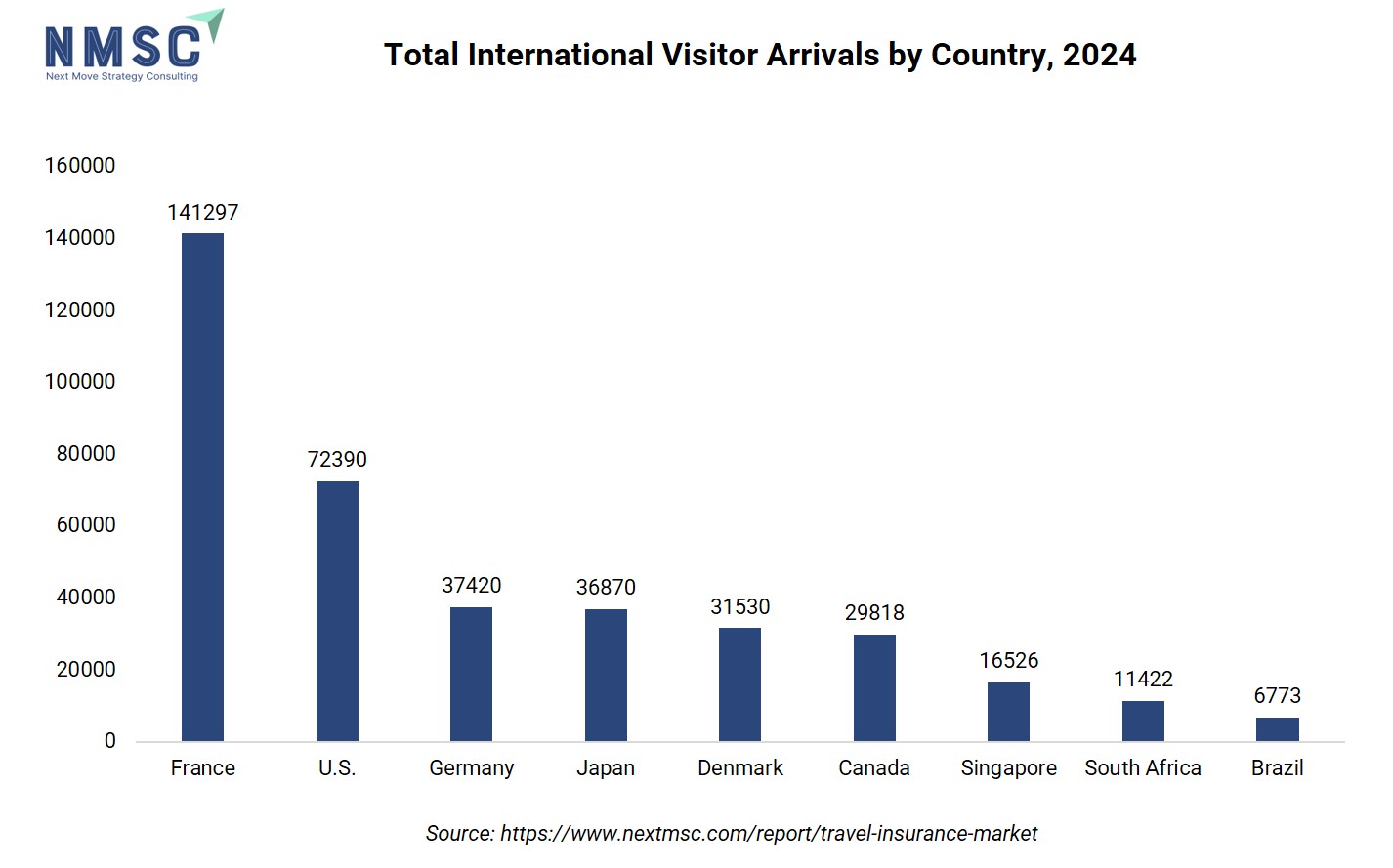
The infographic highlights international tourist arrivals across key countries in 2024, with destinations such as France leading at 141,297 arrivals, followed by the United States, Germany, and Japan, while emerging travel flows are also visible in markets like South Africa, Brazil, and Singapore. Based on our analysis, we noticed that this distribution reflects strong global mobility and diversified travel corridors, which directly support the expansion of the travel insurance market by increasing exposure to cross-border risks such as medical emergencies, trip disruptions, and baggage loss. Higher arrival volumes in developed destinations drive demand for comprehensive and premium insurance plans, while rising traffic in emerging markets contributes to broader penetration of basic and mid-tier coverage. Overall, the data underscores sustained international travel momentum, reinforcing consistent demand growth and product diversification within the global travel insurance industry.
Ecosystem Analysis of the Travel Insurance Market
The infographic below represents the industry ecosystem of the travel insurance market, which functions through an ecosystem of insurers, digital distributors, assistance providers, and regulators, enabling cross-border coverage delivery.
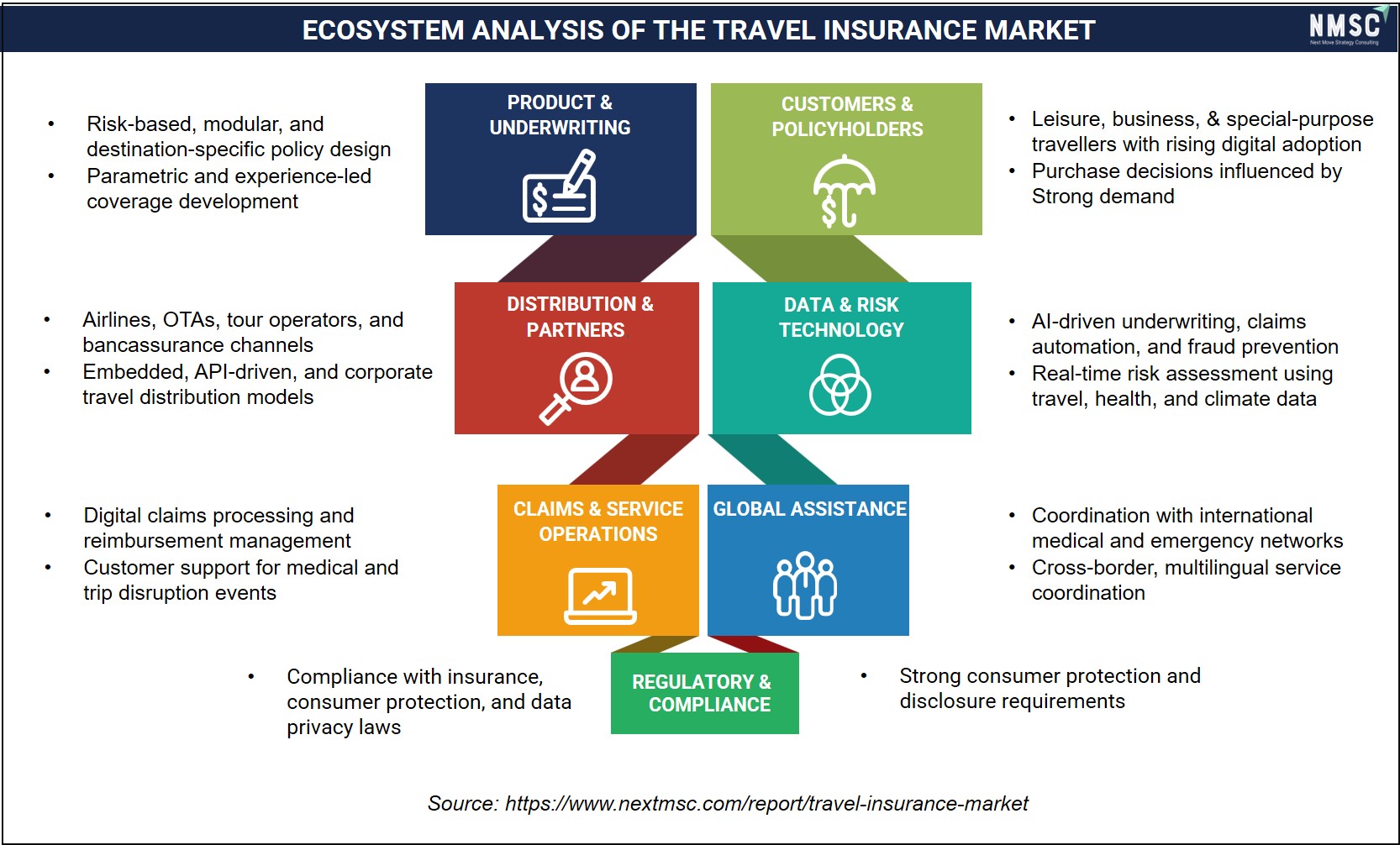
The above infographic demonstrates that value creation in the travel insurance market is increasingly driven by ecosystem integration and operational agility. Data and risk technology enable smarter underwriting and proactive risk management, while distribution partnerships embed insurance directly into booking journeys. At the same time, efficient claims operations and global assistance networks ensure service continuity and customer satisfaction. Regulatory oversight underpins trust and compliance across regions. Collectively, this interconnected ecosystem reinforces the shift toward personalised, flexible, and digitally enabled insurance solutions, positioning travel insurance as a critical enabler of resilient and seamless global mobility rather than a reactive safety net.
What Are the Key Trends in the Travel Insurance Industry?
How is Digital Claims Automation Improving Customer Experience?
Digital claims automation is materially improving service delivery and reshaping customer expectations within the travel insurance market. Through our evaluation of claims operations frameworks, we observed that AI-enabled verification systems, automated document validation, and mobile-first claim submission interfaces are collectively reducing settlement timelines and minimizing operational bottlenecks. Engagement with claims processing teams further suggests that real-time or near-real-time processing capabilities are particularly valued by international travellers, who prioritize speed, transparency, and reduced administrative burden during travel disruptions. Further, automation is also strengthening fraud detection mechanisms and improving the consistency and accuracy of claim adjudication outcomes. Consequently, insurers are progressively transitioning from manual, delay-prone workflows toward integrated, technology-driven claims ecosystems. This evolution is enhancing customer trust, improving service reliability, and contributing to stronger long-term retention, which in turn supports growth in net written premiums across digitally engaged policyholder segments across digitally engaged policyholder segments.
How Are Modular and Personalised Policies Changing Consumer Expectations?
Modular and personalised travel insurance offerings are reshaping consumer expectations toward greater flexibility and control, as travellers are increasingly preferring coverage structures where they select specific components such as medical protection, trip cancellation, baggage loss, or adventure sports add-ons. This modular approach improves perceived value by reducing unnecessary coverage and making policies more relevant to different travel needs and profiles. Personalisation is also being supported through digital policy builders and AI-based recommendation tools that help guide coverage selection based on user behaviour and trip context. As a result, we noticed that insurers are gradually shifting away from standardised products toward more adaptive, user-centric offerings that align more closely with evolving travel patterns and risk preferences.
How is Rising Risk Awareness Influencing Travel Insurance Uptake?
Our assessment indicates that rising awareness of travel-related risks is a key factor supporting stronger adoption of travel insurance globally. Increasing exposure to medical emergencies, trip disruptions, and geopolitical uncertainties has shifted traveller perception of insurance from an optional add-on to an essential part of trip planning. Recent global travel disruptions have further reinforced the value of financial protection during unforeseen events, particularly where cross-border mobility is involved. We observed that both leisure and business travellers are placing greater emphasis on risk coverage at the planning stage, rather than after booking decisions are finalized. This shift in behaviour is gradually widening insurance penetration across diverse demographic groups and travel segments. Overall, it is strengthening baseline demand and positioning travel insurance as a more integrated and essential component of modern travel planning rather than a discretionary purchase.
What Are the Key Market Drivers, Breakthroughs, And Investment Opportunities That Will Shape the Travel Insurance Market in the Next Decade?
Growth Catalyst & Risk Assessment Matrix
|
DRIVERS/TRENDS |
(+/-) % IMPACT ON CAGR FORECAST |
GEOGRAPHIC RELEVANCE |
IMPACT TIMELINE |
|
Rising global travel demand broadening the travel insurance customer base |
+3.40% |
Global (North America, Europe, Asia-Pacific, Middle East) |
Short to Medium term (2–5 years) |
|
Digitalization enabling seamless purchase and higher conversion rates |
+3.15% |
Global, strongest in North America, Europe, China, India, Southeast Asia |
Short to Medium term (2–5 years) |
|
AI-driven underwriting, automation, and real-time claims processing improving personalization, efficiency, and customer retention |
+2.65% |
Developed markets (U.S., Europe, Japan), expanding in Asia-Pacific |
Medium term (3–6 years) |
|
Complex claims processes and low consumer awareness limiting adoption |
-2.90% |
Global, more pronounced in emerging economies (Asia, Africa, Latin America) |
Medium to Long term (3–7 years) |
The travel insurance market is evolving at the intersection of strong global travel recovery and rising awareness of financial and medical risks associated with travel. NMSC’s evaluation indicates that increasing international and domestic mobility, along with sustained leisure and business travel growth, is expanding the core customer base, with millennials, digital nomads, and corporate travelers driving higher adoption due to digital-first behaviour. Additionally, digitalisation and embedded insurance models are reshaping distribution, as insurers integrate policies into airline, OTA, and fintech platforms, improving accessibility, conversion, and real-time purchase at checkout. However, complex claims processes and uneven consumer awareness, particularly in emerging economies, continue to restrain adoption. Looking ahead, embedded ecosystem integration serves as a key opportunity, enabling seamless, platform-driven insurance delivery and accelerating future market expansion.
Growth Drivers:
How is Rising Global Travel Demand Accelerating the Travel Insurance Market?
NMSC’s analysis indicates that rising international and domestic travel volumes are a foundational growth driver reshaping the travel insurance market demand. Through traveller behaviour assessment, we observed that increasing cross-border mobility, sustained recovery in leisure tourism, and expanding business travel activity are collectively broadening the addressable customer base. At the same time, insurance is progressively being integrated into core trip planning, shifting from an optional add-on to a default component of travel purchases. High-frequency travel segments, including millennials, digital nomads, and corporate professionals, are contributing disproportionately to adoption due to higher travel regularity and digital-first purchasing behaviour. In response, insurers are embedding coverage within OTAs, airline booking ecosystems, and travel platforms, effectively integrating protection into the transaction layer itself. This structural transformation is reinforcing sustained market expansion by accelerating embedded insurance penetration and strengthening real-time, platform-led distribution models across the global travel ecosystem.
How is Digitalisation Adoption Driving the Travel Insurance Market Expansion?
Our analysis indicates that digital transformation is accelerating the travel insurance market through digital distribution models, automation, and mobile-first engagement frameworks. Based on our evaluation, we noticed that insurers are increasingly integrating policies directly into airline booking systems, OTAs, and fintech ecosystems, enabling frictionless purchase at the point of transaction. This integration is improving conversion rates, expanding accessibility for international travellers, and strengthening real-time decision-making at checkout. APIs, AI-enabled underwriting, and automated claims processing are becoming core operational standards across leading providers. Additionally, digital-first insurers are demonstrating stronger customer retention driven by faster claims settlement cycles and more personalised policy structuring. This ongoing shift is redefining travel insurance as a digitally integrated service within the broader digital travel value chain rather than a standalone financial product.
Growth Inhibitor:
How are Complex Claims Processes and Low Awareness Limiting Market Penetration?
Our market research suggests that despite strong growth momentum, the travel insurance market continues to face structural constraints stemming from complex claims processing and uneven consumer awareness levels. Policyholders perceive claims workflows as time-intensive and difficult to navigate, particularly in cross-border travel scenarios where verification requirements are more stringent. Documentation burdens, coupled with extended validation timelines, negatively impact user satisfaction and reduce the likelihood of repeat purchases. Furthermore, an inconsistent understanding of policy terms among travelers contributes to claim disputes, coverage underutilization, and mistrust in settlement outcomes. Additionally, awareness gaps remain more pronounced in emerging economies, where insurance penetration and product familiarity are still evolving. Collectively, this interplay of procedural complexity and limited awareness continues to restrain broader market adoption, even as insurers advance product innovation and digital distribution capabilities.
Growth Opportunity:
How is Embedded Ecosystem Integration Creating New Growth Opportunities?
Embedded insurance ecosystems represent one of the most significant growth in the travel insurance market opportunities. Based on our evaluation of distribution strategies across airlines and online travel agencies, we observed that integrating insurance directly into booking workflows materially increases policy uptake rates while enhancing overall customer convenience. Travelers are increasingly gravitating toward bundled, frictionless experiences where coverage is seamlessly presented at the point of air ticketing, accommodation booking, or travel planning, reducing decision friction and improving conversion outcomes. Industry analysis further suggests rising demand for API-enabled insurance infrastructure that supports real-time policy issuance, dynamic pricing, and context-aware coverage aligned with trip parameters. This integration is not only expanding revenue opportunities for insurers, reflected in rising gross written premiums, but also strengthening platform stickiness and customer loyalty for travel intermediaries. Collectively, this ecosystem-led distribution model is reshaping insurance economics and unlocking scalable, platform-driven growth across global travel networks.
Consumer Behaviour Analysis of the Travel Insurance Market:
The infographic highlights the key stages of the consumer journey in the travel insurance market, from awareness to long-term engagement.
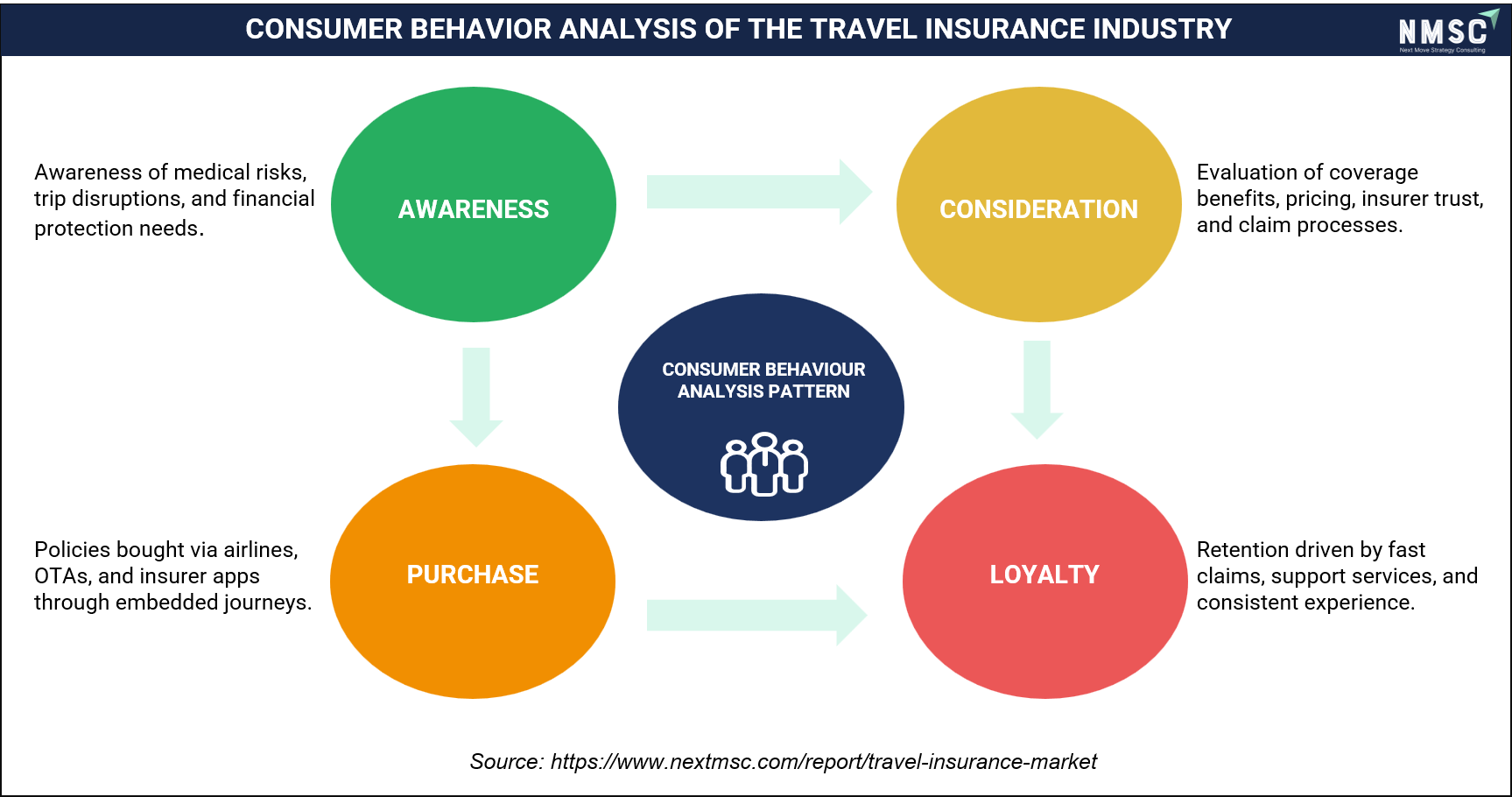
The chart shows that consumer behaviour is increasingly shaped by convenience, transparency, and digital integration. We observe that awareness is expanding beyond basic protection, while consideration is becoming more comparison-driven. Embedded purchase channels are simplifying access, and loyalty is closely linked to service quality and claims experience. This evolving behaviour is pushing insurers toward customer-centric, technology-enabled models, strengthening market growth and competitive differentiation
How is the Travel Insurance Industry segmented in this report, and what are the key insights from the segmentation analysis?
Market Highlights & Strategic Insights – Travel Insurance Market:
|
Segments |
Key Takeaways |
|
Age Group |
Millennials dominate with a 32.1% share, primarily due to high travel frequency, digital booking behaviour, and preference for embedded insurance solutions. Other segments, including Generation X, Baby Boomers, Gen Z, and seniors, collectively ensure balanced demand across leisure, medical, and long-haul travel coverage needs. |
|
Traveler Structure |
Family travelers lead the market, supported by strong adoption of bundled policies that cover multiple members under unified protection. Solo, couple, and group travelers form the remaining base, reflecting increasing personalisation of travel styles and varied insurance requirements across trip formats. |
|
Days of Coverage |
Single-trip insurance dominates the market, as most travelers prefer short-term, journey-specific protection aligned with occasional travel. Multi-trip policies account for the remainder, driven mainly by frequent business travelers and repeat international flyers seeking continuous annual coverage. |
|
Distribution Channel |
Airline and travel booking platforms lead with a 25.7% share, strengthened by embedded insurance at the point of ticket purchase and seamless digital integration. Remaining channels such as aggregators, direct insurers, bancassurance, and travel agents collectively support omnichannel distribution reach. |
|
Value Tier |
Basic and economy plans dominate, driven by affordability and essential coverage demand among price-sensitive travelers. Standard, premium, and elite tiers collectively cater to higher-income users seeking expanded benefits, higher limits, and enhanced service experiences. |
|
End-User |
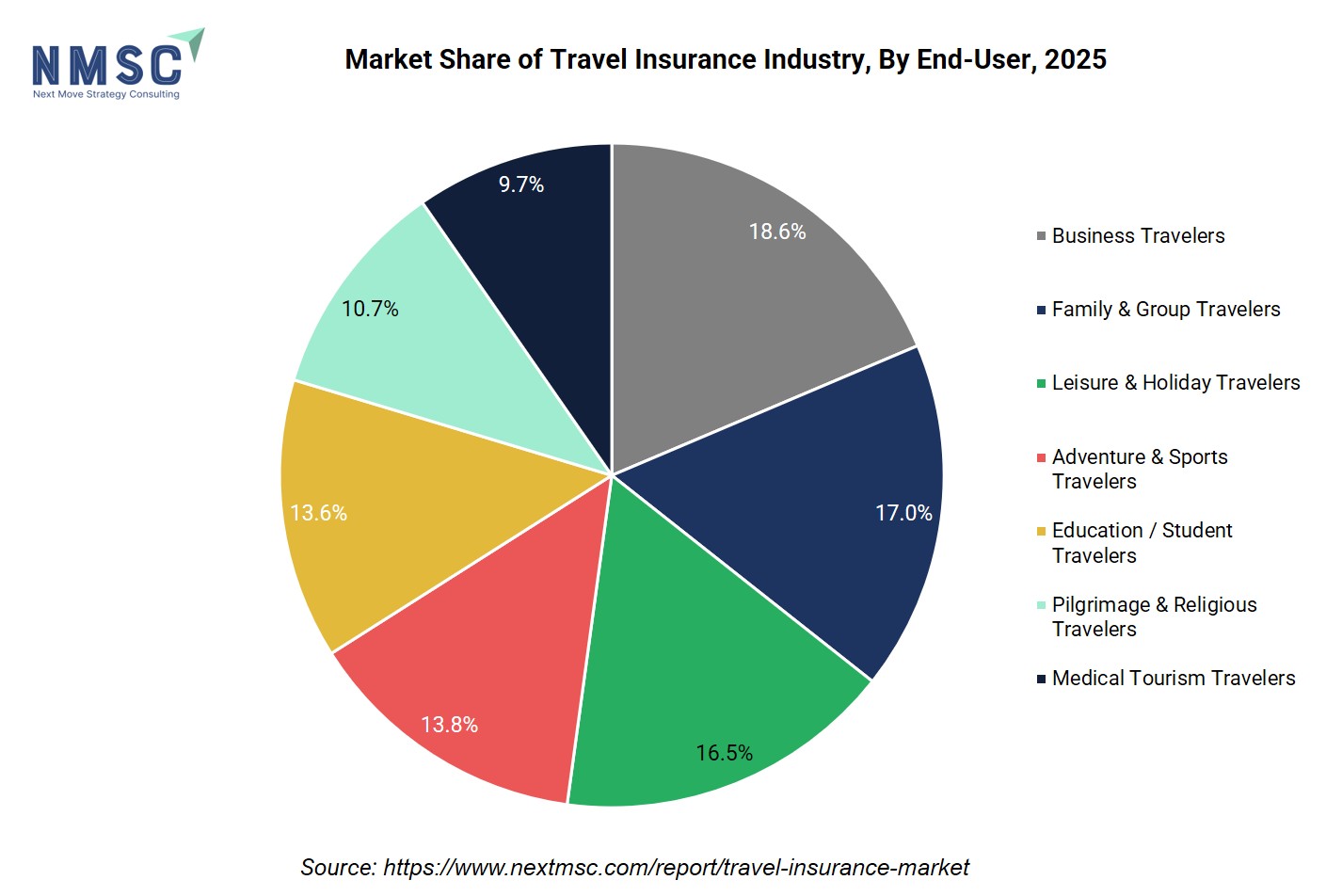
Business travelers lead with an 18.6% share due to frequent international mobility and structured corporate coverage policies. Other segments, including leisure, family, education, adventure, medical tourism, and pilgrimage, collectively reflect diverse travel motivations and evolving risk protection needs. |
By Income Level Insights
Is Income Level Driving Uneven Adoption in the Travel Insurance Market?
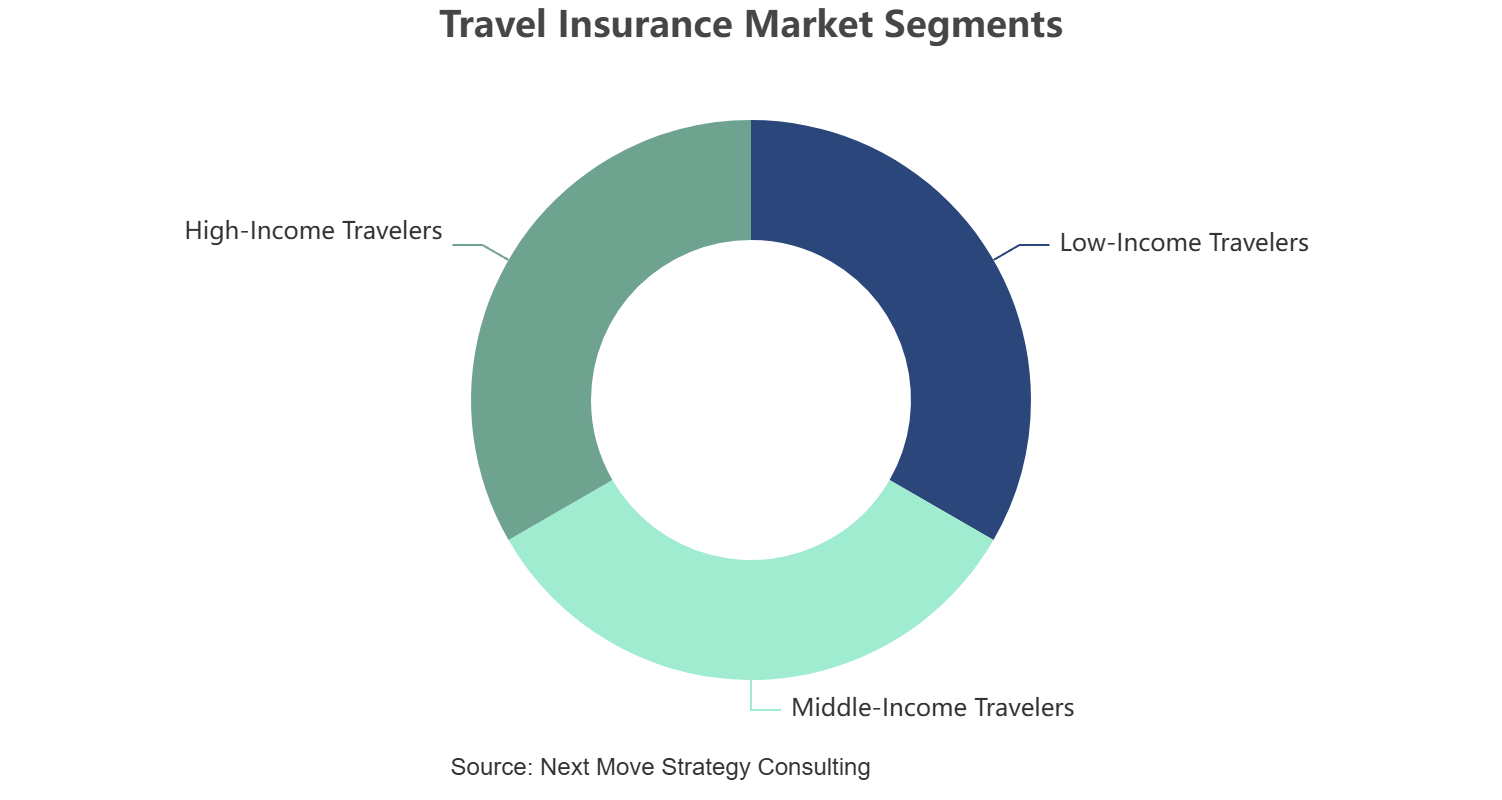
Based on income level, the travel protection market is segmented into low-income travelers, middle-income travelers, and high-income travelers.
Based on our research of income-based adoption patterns, we found that the travel insurance market is primarily anchored by middle-income travelers, who act as the structural volume driver due to their large base, rising travel participation, and balanced affordability-driven purchasing behaviour. High-income travelers, while slightly smaller in share, contribute disproportionately to revenue through premium, high-coverage, and frequent-travel policies, making them a key value driver for insurers. In contrast, low-income travelers remain underpenetrated due to cost sensitivity, though digital bundling and regulatory requirements are gradually improving access. Overall, the market is shaped by a dual-engine structure of volume-led middle-income adoption and value-led high-income contribution, with low-income segments representing long-term expansion potential.
By Coverage Type Insights
Is Coverage Type Evolution Driving Value Concentration in the Travel Insurance Market?
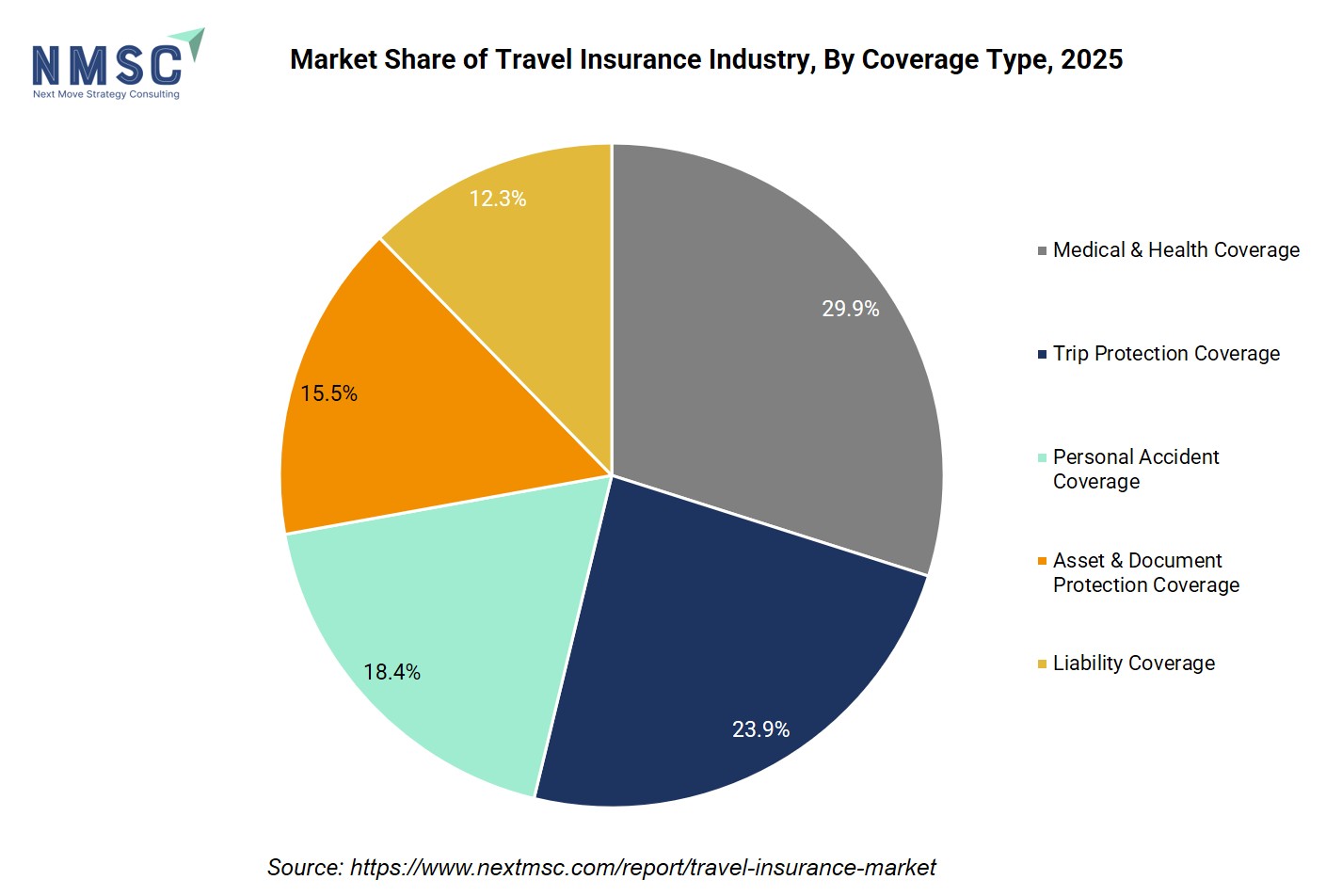
On the basis of coverage type, the tourism insurance market is segmented into medical & health coverage, trip protection coverage, asset & document protection coverage, personal accident coverage, and liability coverage.
We observed that medical & health coverage continues to anchor the market due to its non-discretionary nature and universal relevance across traveler segments. Trip protection coverage is emerging as the second strongest pillar, supported by rising prepaid travel and increasing disruption risks in global mobility networks. Our analysis suggests that personal accident and asset protection segments are growing steadily as travelers seek broader financial security beyond core medical risks. Liability coverage remains niche but essential in specific jurisdictions. Overall, the market reflects a layered protection structure where essential medical coverage drives baseline demand, while trip-related and supplementary protections are expanding in response to more complex, digital, and disruption-prone travel behaviour.
By Geographic Scope Insights
Is Geographic Mobility Reshaping Demand Patterns in the Travel Insurance Market?
On the basis of geographic scope, the travel insurance market is segmented into domestic travel and international travel.
Based on our research, we found that international travel continues to dominate the travel risk insurance market due to higher risk exposure, regulatory compliance requirements, and greater dependency on comprehensive protection during cross-border movement. Furthermore, medical emergencies, trip disruptions, and higher travel costs significantly increase insurance uptake in international journeys. In contrast, domestic travel is expanding steadily, supported by digital integration, affordability improvements, and growing awareness of short-trip protection benefits. Overall, we observed a dual-structure market where international travel acts as the primary value and revenue driver, while domestic travel provides a strong volume base, collectively reinforcing sustained market expansion in the global travel insurance ecosystem.
By Underwriting Insights
How is Underwriting Transformation Reshaping Risk Selection in the Travel Insurance Market?
Based on underwriting, the travel insurance market is bifurcated into standard underwriting, simplified issue, fully underwritten, and guaranteed issue.
Standard underwriting remains the backbone of the market due to its scalability, balanced risk evaluation, and suitability for mass-market distribution. Our market evidence suggests that fully underwritten policies play a critical role in serving high-risk and high-value travelers, ensuring precise risk pricing and tailored coverage. At the same time, simplified issue models are expanding rapidly, driven by digitalization and embedded insurance ecosystems that prioritize speed and frictionless onboarding. Guaranteed issue, while limited in scale, ensures inclusivity for higher-risk traveler groups. Overall, we noticed a dual transformation where traditional risk assessment frameworks are being complemented by digital-first, simplified models to meet evolving traveler expectations and distribution efficiencies.
By End-User Insights
Is End-User Diversification Reshaping Demand Dynamics in the Travel Insurance Market?
Based on end-user, the travel insurance market is segmented into leisure & holiday travelers, business travelers, education / student travelers, pilgrimage & religious travelers, adventure & sports travelers, medical tourism travelers, and family & group travelers.
Our research indicates that business travelers emerge as the leading segment due to frequent international mobility, corporate risk policies, and structured insurance adoption within enterprise travel programs. Family and group travelers closely follow, driven by demand for bundled protection and rising global leisure travel. We further noticed that leisure travelers and adventure-based segments are expanding steadily, supported by experiential tourism and digital booking ecosystems. Education and medical tourism segments provide stable, structurally supported demand due to regulatory and healthcare-driven requirements, while pilgrimage travel remains niche but consistent. Overall, we found a diversified demand landscape where corporate and family travel anchor volume and value, while specialized segments enhance market depth and long-term growth resilience.
Regional Outlook:
Geographic Performance Snapshot:
|
Regions |
Key Takeaways |
|
North America |
North America holds a 26% share, driven by a mature travel ecosystem, high insurance penetration, and strong outbound travel activity. The region benefits from robust corporate travel recovery and advanced digital insurance distribution channels that enhance accessibility and policy adoption. |
|
Europe |
Europe’s Travel Insurance Market is supported by mandatory travel insurance requirements for Schengen travel and strong cross-border mobility. High frequency of leisure travel and demand for comprehensive coverage continue to sustain steady market expansion across the region. |
|
Asia‑Pacific |
Asia-Pacific leads with a 40.3% share, driven by rapid growth in middle-class travel, expanding outbound tourism, and increasing awareness of medical and financial risks abroad. Strong digital insurance adoption and mobile-first distribution significantly enhance market penetration. |
|
Middle East and Africa |
MEA’s market growth is supported by rising outbound travel, expatriate mobility, and visa-linked insurance requirements. Increasing demand for medical and trip protection coverage is gradually strengthening market adoption across key countries. |
|
Latin America |
Latin America accounts for a 3.4% share, reflecting an emerging but fast-developing market. Growth is supported by improving air connectivity, rising international travel participation, and increasing awareness of travel-related risk protection. |
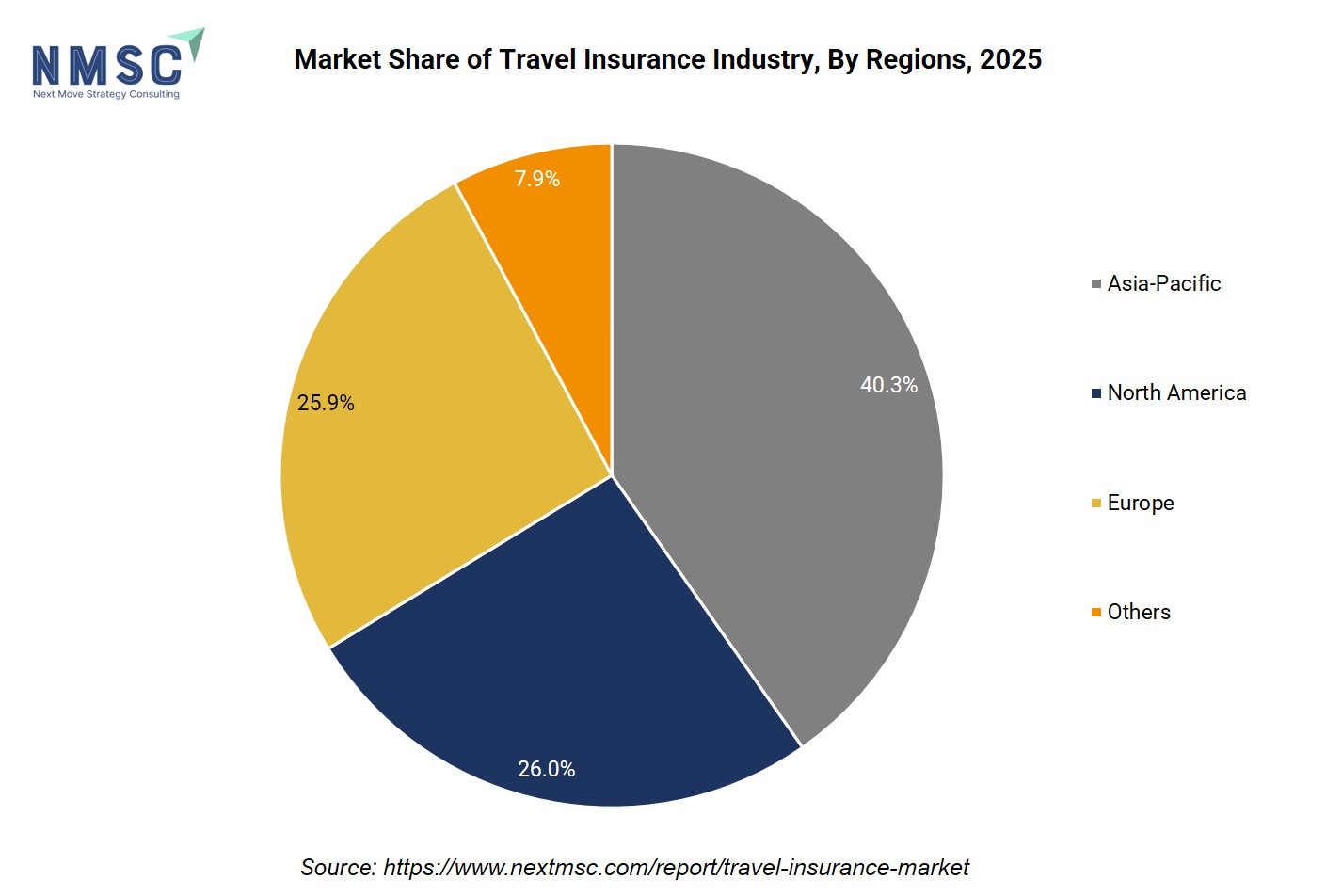
The Travel Insurance Market is geographically studied across North America, Europe, Asia Pacific, the Middle East & Africa, and Latin America, and each region is further studied across countries.
Travel Insurance Market in North America
Based on our assessment of mature insurance ecosystems, we found that North America holds a 26% share of the global travel insurance market, supported by high outbound travel intensity, strong digital insurance adoption, and deep integration of travel protection into airline and OTA ecosystems. OECD’s 2025 insurance report highlights that advanced economies, including the U.S. and Canada, maintain higher-than-average insurance penetration levels driven by financial risk awareness and digital financial services adoption. The region further benefits from corporate travel recovery, premium leisure travel, and high reliance on medical evacuation coverage due to expensive overseas healthcare systems. Insurers are increasingly using AI-driven underwriting and embedded distribution models. Overall, North America represents a highly competitive yet stable market where product innovation and digital claims automation define growth leadership.
Travel Insurance Market in the United States
The United States dominates North America with an 82% share, driven by large-scale outbound tourism and high insurance awareness. According to the U.S. Travel Insurance Association in 2025, we found that U.S. travellers spent USD 5.56 billion on travel insurance in 2024, reflecting strong penetration across leisure and business segments. Consumer preferences in the market are skewed toward comprehensive coverage structures, including trip cancellation, CFAR options, and emergency medical protection, particularly for international travel. We observed that digital-first distribution through online travel agencies, airline booking platforms, and fintech applications is further accelerating adoption by improving accessibility at the point of purchase. Overall, the U.S. market is characterised by a high degree of product sophistication, where competitive differentiation is increasingly driven by faster claims settlement, deeper customisation, and advanced embedded insurance integration within digital travel ecosystems.
Travel Insurance Market in Canada
Our analysis indicates that Canada’s travel insurance market is supported by strong international travel participation and heightened awareness of medical risks abroad. As an advanced economy with relatively high insurance penetration, Canada demonstrates steady and mature adoption patterns compared to global averages. We observed that Canadian travelers place particular emphasis on medical evacuation, hospitalisation, and trip cancellation coverage, driven by the high cost of healthcare services outside the country and reliance on domestic healthcare systems. Distribution is increasingly concentrated through bancassurance networks and digital aggregator platforms, which are improving accessibility and comparison-based purchasing. Canada, therefore, represents a stable, high-value segment where insurers tend to compete on comprehensive coverage depth, service reliability, and streamlined digital policy servicing rather than aggressive price-led differentiation.
Travel Insurance Market in Europe
We found that Europe accounts for approximately 25.9% of the global travel insurance market, supported by strong intra-regional mobility and regulatory frameworks such as Schengen visa insurance requirements. The region demonstrates high penetration levels, particularly across advanced economies, where insurance demand is closely tied to frequent cross-border travel and elevated risk awareness. Further, Europe also benefits from high leisure travel activity, extensive airline connectivity, and increasing integration of embedded insurance within online booking platforms, which is improving accessibility at the point of purchase. From a structural standpoint, Europe represents a mature but innovation-oriented market, where insurers are increasingly focusing on real-time claims processing capabilities, sustainability-linked travel insurance offerings, and API-driven distribution models that enhance scalability and platform integration across digital travel ecosystems.
Travel Insurance Market in the United Kingdom
In the UK, travel insurance demand is supported by a strong recovery in both international leisure and business travel segments. UK travelers demonstrate relatively high adoption rates, largely driven by awareness of overseas healthcare costs and consistent cross-border travel activity. Digital distribution plays a central role in this market, with comparison platforms and embedded airline partnerships significantly influencing purchase behaviour and improving policy accessibility. The UK is also characterised by a highly competitive insurance landscape, where differentiation increasingly depends on flexible policy customization, faster claims processing, and enhanced coverage options such as CFAR protection. Overall, the market reflects a digitally mature environment where insurers compete on service efficiency and product adaptability rather than basic coverage availability.
Travel Insurance Market in Germany
Based on our assessment of structured insurance adoption behaviour, we observed that Germany leads the European travel insurance market with an estimated 26% share, supported by high outbound travel frequency and strong financial risk awareness. OECD suggests that advanced European economies maintain stable insurance penetration levels, underpinned by both regulatory frameworks and consistent consumer demand patterns. We observe that German travelers typically prioritize core coverage elements such as medical protection, baggage loss, and trip cancellation insurance, reflecting a more structured and risk-conscious approach to travel planning. The market is also characterised by disciplined purchasing behaviour, with a preference for clarity and comprehensive coverage terms. From a structural standpoint, Germany represents a stable and highly organised market environment where insurers compete primarily on transparency, product reliability, and the strength of integrated bancassurance distribution channels.
Travel Insurance Market in France
The France market demonstrates a balanced mix of leisure-driven demand and gradually expanding digital insurance penetration. Outbound travel spending and cross-border mobility within the EU have shown steady recovery through 2025, supporting consistent growth in insurance uptake. We observed that French travelers increasingly prefer bundled policy structures that combine medical coverage, trip cancellation, and travel delay protection, particularly for intra-European and transatlantic trips. Digital distribution through airline booking systems and online comparison platforms is gaining traction, although traditional travel agencies continue to play a meaningful role in policy sales. From a market standpoint, insurers are placing greater emphasis on simplifying policy structures and improving claims transparency to strengthen consumer trust. Overall, France represents a moderately mature yet evolving market, where rising expectations around flexibility and digital servicing are gradually reshaping competitive dynamics.
Travel Insurance Market in Italy
Italy’s travel insurance market is characterised by strong leisure travel demand and pronounced seasonal outbound tourism patterns. We noticed continued growth in outbound trips, particularly within Europe, which is supporting steady insurance adoption across key traveler segments. Italian consumers typically prioritize affordability and bundled coverage, opting for basic medical and trip protection plans integrated within travel bookings. Digital penetration is gradually increasing, especially through online travel agencies, although price sensitivity remains a defining feature of purchase behaviour. In response, insurers are introducing more modular and cost-effective products tailored to short-haul and budget-oriented travel needs. Overall, Italy represents a price-driven but expanding market where embedded insurance models and simplified offerings are playing a critical role in improving penetration and strengthening customer engagement.
Travel Insurance Market in Spain
Based on our analysis of tourism-intensive economies, we observed that Spain, accounting for approximately 9.6% of the European travel insurance market, benefits from strong outbound leisure travel and deep integration within EU mobility networks. International travel participation remained robust through 2025, supporting consistent insurance demand across key traveler segments. We observed that Spanish travelers are increasingly adopting flexible travel protection solutions, particularly for short- and medium-duration trips where convenience and price sensitivity are key considerations. Digital distribution channels, including online travel agencies and airline platforms, are gaining traction and enabling broader adoption of embedded insurance at the point of booking. In parallel, insurers are focusing on improving accessibility through simplified underwriting processes and mobile-based policy management tools. Overall, Spain represents a steadily evolving digital-first market where convenience, affordability, and integrated booking experiences are central to driving insurance uptake.
Travel Insurance Market in the Nordics
The Nordic region, including Sweden, Denmark, and Finland, represents a smaller but high-value segment within the European travel insurance market. The region benefits from strong outbound travel frequency, supported by high disposable incomes and a well-established culture of international mobility. We observed that travelers in these markets tend to prioritize premium insurance products with comprehensive coverage, including medical, trip cancellation, and personal liability protection. Digital maturity is notably high, with widespread reliance on mobile platforms and comparison tools for policy selection and purchase. Insurers in the Nordics primarily compete on service quality, speed of claims processing, and seamless digital integration rather than price. Overall, the region reflects a technologically advanced market where expectations around transparency, responsiveness, and premium service standards are significantly elevated compared to global benchmarks.
Travel Insurance Market in the Asia-Pacific
Asia-Pacific’s travel insurance market is supported by rapid expansion in middle-class travel, rising outbound tourism, and strong digital adoption across key economies. The region continues to represent the fastest-growing outbound travel market as of 2025, reinforcing sustained demand for travel protection products. We observed that mobile-first insurance platforms and embedded distribution through online travel agencies are transforming how policies are purchased and managed, particularly among digitally active consumers. Demand for medical coverage remains especially strong, given the wide variation in healthcare costs across international destinations. Overall, Asia-Pacific represents the most dynamic growth engine in the global market, where scalability, localisation strategies, and deep integration within digital travel ecosystems are critical for insurers seeking to capture expanding demand.
Travel Insurance Market in China
China’s travel insurance market remains closely tied to the recovery of outbound tourism and the gradual rise in risk awareness among travellers. Our analysis shows that a strong rebound in international travel has been observed following the reopening of cross-border routes. Chinese travellers are increasingly visiting high-cost destinations such as Europe and North America, where exposure to medical emergencies and trip disruptions is comparatively higher. Longer travel distances and extended itineraries further elevate these risk exposures, strengthening the need for comprehensive coverage solutions. Although overall penetration remains at a developing stage, the scale of outbound travel means that even incremental improvements in insurance adoption translate into meaningful market expansion, positioning China as a key growth driver in the global travel insurance landscape.
Travel Insurance Market in Japan
Japan’s travel insurance market is strongly influenced by an ageing population and cautious travel behaviour. Our research findings indicate a steady recovery in outbound travel, with older travellers accounting for a significant share of international trips. Geography further amplifies risk, as most travel involves long-haul flights, increasing exposure to medical emergencies and trip interruptions. Japanese consumers exhibit high risk awareness and consistently prefer comprehensive insurance policies, particularly those emphasizing medical coverage and evacuation services. As outbound travel stabilizes and demographic ageing continues, these geographic and behavioural dynamics underpin sustained, reliable demand for travel insurance, positioning Japan as a mature market with consistent uptake driven by both necessity and risk-conscious consumer behaviour.
Travel Insurance Market in India
Our assessment of India’s travel insurance market is experiencing rapid expansion, supported by rising outbound travel and the steady growth of a middle-class traveler base. Data from the Ministry of Tourism highlights a continued increase in international trips by Indian residents, reflecting broader access to global travel. We observed that long-haul travel to regions such as Europe, North America, and Southeast Asia is increasing exposure to medical emergencies and trip disruptions, thereby strengthening the need for insurance coverage. While price sensitivity remains a key consideration, improving awareness of travel-related risks and visa-linked insurance requirements is supporting higher adoption rates. As international travel becomes more accessible across income segments, travel insurance is increasingly viewed as a practical and necessary component of trip planning rather than an optional add-on, indicating gradual market maturation and evolving consumer risk awareness.
Travel Insurance Market in South Korea
South Korea’s travel insurance market is experiencing strong growth momentum, supported by high outbound travel frequency and advanced digital adoption. We noticed that Korean travelers are highly comfortable purchasing insurance through mobile platforms and airline booking channels, which is significantly improving market penetration. The combination of digitally engaged consumers, consistent international mobility, and the widespread availability of bundled insurance options continues to strengthen adoption across key traveler segments. Overall, South Korea represents a digitally driven, high-potential market where convenient, embedded travel protection is becoming an increasingly standard component of routine travel planning.
Travel Insurance Market in Taiwan
Taiwan accounts for approximately 1.5% of the regional travel insurance market, supported by a strong insurance culture and steady outbound travel patterns. Government tourism data reflects consistent international travel by Taiwanese residents, primarily to East Asia and long-haul destinations, where reliance on air travel increases exposure to medical emergencies and trip disruptions. We found that Taiwanese travelers show a clear preference for comprehensive policy structures, particularly those with strong medical coverage components. As outbound leisure travel remains a central activity, these geographic and behavioural factors continue to support stable and predictable demand. Overall, Taiwan represents a mature market characterised by consistent uptake, driven by high-risk awareness and well-established insurance adoption practices.
Travel Insurance Market in Indonesia
Indonesia’s travel insurance market is evolving rapidly, supported by rising outbound travel among the expanding middle-class population. Our research data reflects steady growth in international departures as income levels improve and access to global travel increases. Geographic factors further amplify the relevance of insurance, as long-distance travel and limited overseas healthcare coverage elevate exposure to medical risks and trip disruptions. While overall penetration remains lower compared to developed markets, we observe that digital platforms and airline partnerships are playing a key role in accelerating adoption by improving accessibility at the point of booking. As participation in international travel continues to broaden, growth in Indonesia is increasingly volume-led, driven by a larger base of first-time and price-sensitive travelers rather than higher premium intensity.
Travel Insurance Market in Australia
Australia’s travel insurance market is shaped by geographic isolation and long-haul outbound travel patterns. We noticed that international travel from Australia inherently involves extended journeys, which significantly increases exposure to medical emergencies, trip disruptions, and logistical uncertainties. Moreover, our analysis points to a strong recovery in outbound travel, further reinforcing the relevance of travel insurance across key traveler segments. High overseas healthcare costs and the risks associated with long-distance travel continue to drive demand for comprehensive coverage. As a result, travel insurance is widely perceived as an essential component of trip planning rather than an optional add-on. Overall, Australia represents a resilient and mature market with consistently high penetration and a well-established culture of proactive travel risk management.
Travel Insurance Market in Latin America
Our regional assessment across Latin America indicates that travel insurance growth is being supported by rising outbound travel and expanding digital access. Increasing international mobility, driven by improving income levels, is elevating exposure to medical emergencies and trip cancellations, particularly for long-haul travel to North America and Europe. While overall market penetration remains in a developing phase, we observed that improving consumer awareness and the rapid expansion of mobile-enabled insurance distribution are steadily supporting adoption. Digital channels, including airline partnerships and online booking platforms, are making coverage more accessible at the point of purchase. Collectively, these structural and behavioural factors position Latin America as a high-potential growth region, where travel insurance is becoming a more recognised and increasingly integrated component of responsible international travel planning.
Travel Insurance Market in the Middle East & Africa
The travel insurance growth in the Middle East and Africa is primarily supported by rising outbound expatriate travel and regulatory requirements. Increasing international mobility from Gulf countries and select African markets is strengthening demand, with geography and visa-linked insurance mandates, particularly for travel to Europe, playing a key role in driving adoption. While overall market penetration remains relatively low, these structural drivers are gradually improving awareness and encouraging first-time policy purchases. We noticed that compliance requirements, combined with growing exposure to international travel risks, are reinforcing the relevance of insurance across both business and leisure segments. Overall, the region presents a developing but high-potential market where travel insurance is becoming an increasingly important component of compliant and risk-conscious international travel.
Regulatory Framework Impacting the Travel Insurance Market
The infographic outlines the regulatory structure shaping the travel insurance market, covering policy mandates, compliance systems, and evolving digital governance frameworks.
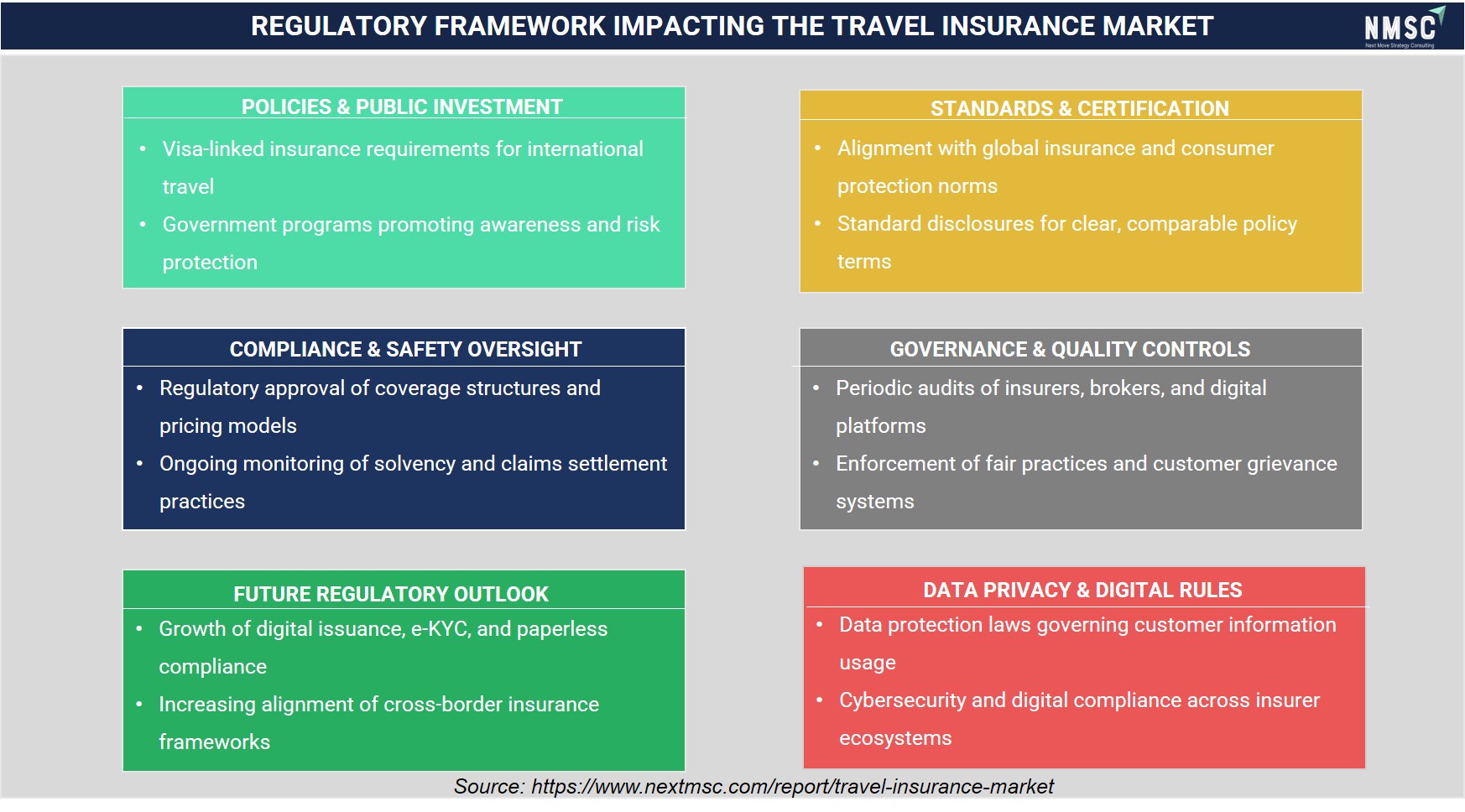
Overall, the infographic highlights that regulation is a core enabler of trust, transparency, and market expansion. We observed mandatory insurance requirements and standardised disclosures are strengthening adoption, while regulatory oversight ensures financial stability and fair claims practices. At the same time, the shift toward digital compliance, data privacy, and cross-border regulatory alignment is supporting seamless integration with modern travel ecosystems. These evolving frameworks are not only protecting consumers but also enabling insurers to innovate, scale distribution, and deliver more reliable, technology-driven insurance solutions across global markets
COMPETITIVE LANDSCAPE
Competitive Dynamics & M&A Landscape:
|
Key Takeaways |
|
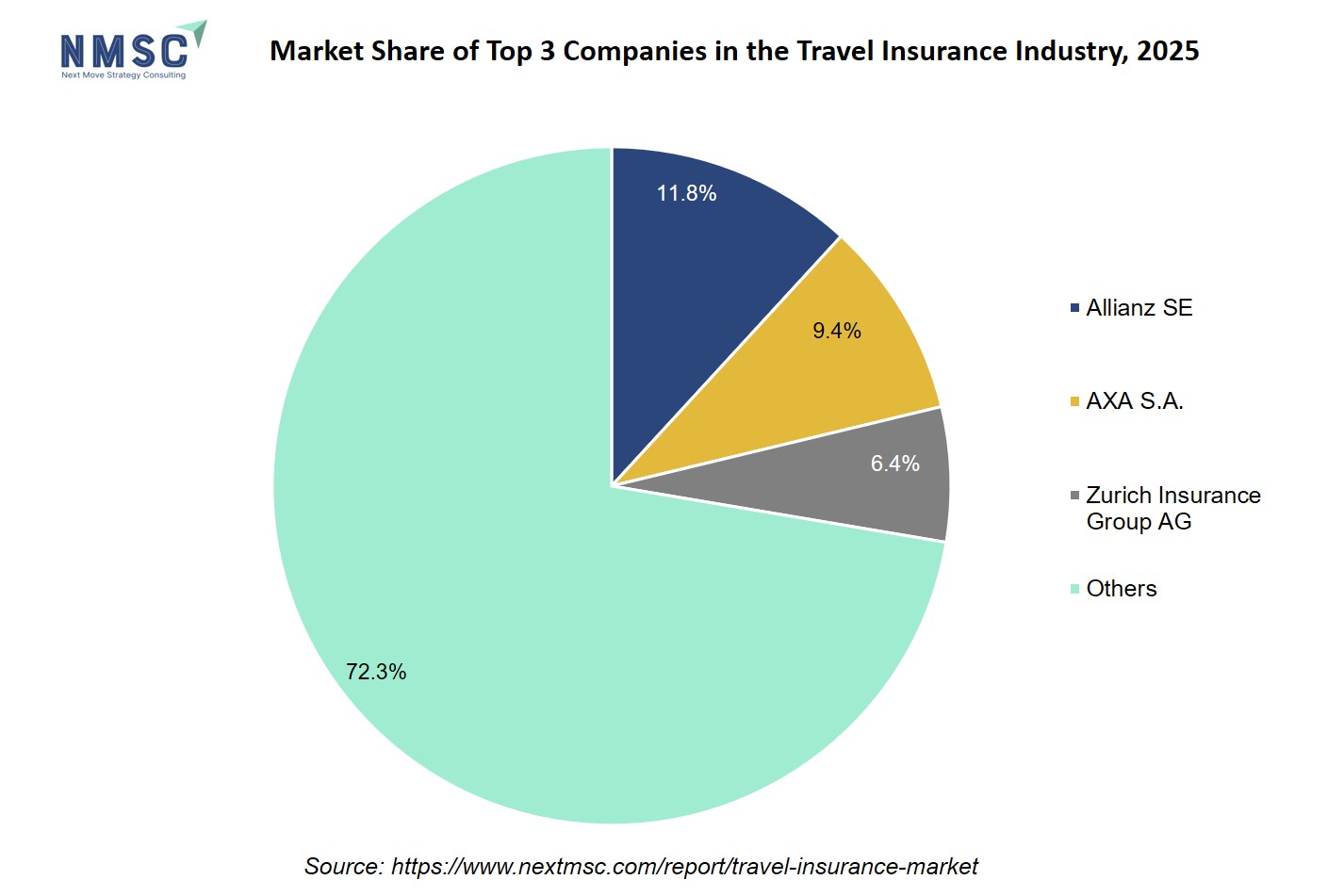
Our analysis indicates that the global travel insurance market operates within a layered competitive structure where multinational insurers such as Allianz, AXA, and Zurich Insurance Group leverage scale, global assistance networks, and brand trust to dominate mature markets, while niche and specialist providers target high-growth traveler segments with tailored offerings and agile distribution models. |
|
Competitive differentiation is increasingly shaped by digital innovation, with leading players including Chubb Limited and QBE Insurance Group investing in app-based claims processing, AI-enabled underwriting, modular policy structures, and embedded insurance models integrated into airlines, OTAs, and financial ecosystems. |
|
Regional competitive intensity varies significantly, with Europe and North America led by established global insurers such as Assicurazioni Generali and Aviva, while Asia-Pacific remains more fragmented and growth-oriented, supported by regional leaders like MS&AD Insurance Group and Sompo Holdings leveraging bancassurance and mobile-first ecosystems. |
|
Industry analysis suggests that mergers and acquisitions are emerging as a key strategic lever, with players such as Zurich Insurance Group pursuing acquisitions and partnerships to expand global reach and digital capabilities, enabling insurers to scale operations, strengthen distribution networks, and enhance end-to-end customer engagement across the travel insurance value chain. |
Which Companies Dominate the Travel Insurance Industry and How Do They Compete?
Based on our competitive benchmarking, we found that the market is led by globally diversified insurers such as Allianz, AXA, Zurich Insurance Group, Chubb Limited, and Assicurazioni Generali, which compete through scale, global assistance networks, and integrated travel ecosystems. These players differentiate through embedded insurance, API-based distribution, and premium service offerings. For instance, Allianz expanded its global assistance capabilities and digital servicing infrastructure in 2025 to strengthen customer engagement across travel touchpoints. Mid-tier and specialty providers such as Berkshire Hathaway and Travel Insured International focus on niche segments, including high-value travelers and customizable plans. Overall, competition is increasingly defined by service responsiveness, customisation depth, and real-time policy management capabilities.
Market Dominated by Travel Insurance Giants and Specialists
Industry analysis suggests that the competitive landscape is shaped by a dual structure where multinational insurers dominate global distribution while niche specialists address specific traveler segments. Companies such as MS&AD Insurance Group, Tokio Marine Holdings, and Sompo Holdings maintain strong regional leadership in Asia through bancassurance and corporate travel channels, while firms like CAA Club Group focus on travel assistance and membership-driven insurance ecosystems. This dual structure enables broad market coverage while fostering specialization across demographics, geographies, and travel use cases.
Innovation and Adaptability Drive Market Success
Innovation remains a primary competitive lever in the travel insurance market, with insurers accelerating the integration of AI, automation, and mobile-first engagement models. We observed that companies such as Chubb Limited and AXIS Capital are advancing digital claims processing capabilities and real-time assistance tools to reduce friction and enhance customer experience. Similarly, QBE Insurance Group has introduced platform enhancements focused on faster claims settlement and more personalised policy structuring. Our evaluation also points to increasing use of predictive analytics and embedded APIs to deliver context-aware coverage aligned with traveler behaviour and trip parameters. Overall, adaptability in product design and digital infrastructure is emerging as a decisive factor in sustaining competitive advantage in an increasingly platform-driven and customer-centric market.
Market Players to Opt for Merger & Acquisition Strategies to Expand Their Presence
Our research suggests that mergers, acquisitions, and strategic partnerships are playing a critical role in expanding geographic reach and strengthening service capabilities. Based on our assessment, we found that Zurich Insurance Group has actively pursued expansion strategies through acquisitions and partnerships to enhance its global travel insurance footprint. Zurich completed strategic integration initiatives to scale its travel insurance offerings across multiple regions, reinforcing its global positioning. Similarly, The Manufacturers Life Insurance Company and Beneva are leveraging partnerships and ecosystem collaborations to strengthen regional presence. Overall, consolidation and ecosystem integration are enabling insurers to achieve scale efficiencies, expand distribution networks, and enhance end-to-end customer engagement across the travel lifecycle.
List of Key Travel Insurance Companies
-
AXA S.A.
-
Zurich Insurance Group AG
-
Chubb Limited
-
The Manufacturers Life Insurance Company (Manulife)
-
Berkshire Hathaway Inc.
-
Crum & Forster Insurance Group
-
MS&AD Insurance Group Holdings, Inc.
-
Tokio Marine HCC
-
Sompo Holdings, Inc.
-
QBE Insurance Group Limited
-
C. V. Starr & Co., Inc
-
Beneva Inc.
-
Admiral Group plc
-
AXIS Capital Holdings Limited
-
TuGo Insurance Inc.
-
CAA Club Group Inc.
-
Blue Cross Blue Shield Global Solutions
WHAT ARE THE LATEST KEY INDUSTRY DEVELOPMENTS?
-
January 2026- Xponentia Capital acquired a minority stake in ASEGO Global Assistance, a travel services and insurance provider, signalling growing investment interest in travel insurance and digital assistance solutions.
-
December 2025- Chubb has partnered with Gother to launch an all-in-one travel services platform integrated with embedded travel insurance, strengthening the shift toward unified digital travel ecosystems.
-
October 2025- Chubb has launched Travel Pro, a digital-first travel insurance solution designed to address common travel disruptions such as flight delays, baggage issues, weather-related cancellations, and medical emergencies.
-
June 2025- Zurich Insurance Group (Hong Kong) has partnered with Hong Kong Airlines to launch a one-stop integrated airline and travel insurance service, marking a significant step toward embedded insurance distribution in the aviation ecosystem.
-
May 2025- AXA has introduced a new range of travel insurance plans tailored specifically for travellers visiting the European Schengen Area. These offerings are designed to meet visa compliance requirements while providing scalable coverage options across single-trip and multi-trip needs.
-
April 2025- AXA has launched Travel Eye Platinum, a next-generation corporate travel protection solution designed to enhance safety, visibility, and risk management for business travelers. The offering integrates real-time travel alerts, location-based risk monitoring, and coordinated assistance services.
-
April 2025- MSIG launched TravelEasy Flex, a cost-effective travel insurance solution designed with a high degree of customisation.
Expert Insights

“As travel costs continue to rise, it’s more important than ever for travellers to protect their booking from circumstances out of their control.”
- Meitav Harpaz, CEO of Pattern
Statement made during the announcement of Pattern Insurance’s partnership with WeTravel to expand embedded travel insurance offerings in 2024.
Market Interpretation
The statement underscores the growing consumer demand for financial protection amid increasing travel expenditures, flight disruptions, and geopolitical uncertainties. Rising international travel costs, coupled with higher risks associated with cancellations, medical emergencies, and baggage disruptions, are encouraging travelers to prioritize insurance coverage during trip bookings. This trend is driving insurers and travel platforms to strengthen embedded travel insurance partnerships and introduce flexible, digitally accessible coverage options tailored to evolving traveler concerns.
WHAT ARE THE KEY FACTORS INFLUENCING INVESTMENT ANALYSIS & OPPORTUNITIES IN THE TRAVEL INSURANCE MARKET?
Our analysis of investment patterns indicates that capital allocation in the travel insurance market is increasingly directed toward digital-first platforms, embedded insurance models, and insurtech-led distribution ecosystems. Investors are prioritizing companies that integrate seamlessly with airlines, online travel agencies, and fintech platforms, enabling real-time policy issuance and contextual coverage at the point of booking. We further observed strong interest in businesses leveraging AI-driven underwriting, automated claims processing, and mobile-first engagement, as these capabilities directly enhance scalability and customer retention. Strategic funding is also flowing into firms offering modular and on-demand insurance, reflecting a broader shift toward flexible, traveler-centric protection models.
Valuation premiums are being assigned to insurers and insurtech players that demonstrate ecosystem integration, data-driven personalisation, and global assistance capabilities. We found Asia-Pacific emerging as a key investment hotspot due to rapid digital adoption and expanding outbound travel, while mature markets are attracting capital for innovation-led transformation and consolidation strategies. Investors are increasingly backing partnerships and platform-based models that enable recurring revenue streams and deeper customer engagement, positioning travel insurance as a critical component of the broader digital travel value chain.
Key Benefits for Stakeholders:
Next Move Strategy Consulting (NMSC) presents a comprehensive analysis of the travel insurance market, covering historical trends from 2020 through 2025 and offering detailed forecasts through 2035. Our study examines the market at regional and country levels, providing quantitative projections and insights into key growth drivers, challenges, and investment opportunities across all major travel insurance segments.
The travel insurance market delivers differentiated value across stakeholders through a combination of financial protection, ecosystem integration, and regulatory alignment. Investors benefit from scalable, asset-light models driven by digital distribution, recurring premium flows, and expanding embedded insurance opportunities within the travel value chain. Customers gain practical advantages through flexible, personalised coverage, real-time assistance, and reduced financial exposure to disruptions, enhancing confidence and continuity in travel planning. Policymakers, in turn, benefit from improved consumer protection frameworks, reduced public healthcare burden from uninsured travelers abroad, and greater compliance with visa-linked insurance mandates. This multi-stakeholder alignment strengthens market resilience while creating a foundation for sustainable, technology-driven growth.
|
Parameters |
Details |
|
Customization Scope |
Free customization (equivalent to up to 80 analyst-working hours) after purchase. Addition or alteration to country, regional & segment scope. |
|
Pricing and Purchase Options |
Avail customized purchase options to meet your exact research needs. |
|
Approach |
In-depth primary and secondary research; proprietary databases; rigorous quality control and validation measures. |
|
Analytical Tools |
Porter's Five Forces, SWOT, value chain, and Harvey ball analysis to assess competitive intensity, stakeholder roles, and relative impact of key factors. |
Key Market Segments
By Age Group
-
Generation Z (18–24 years)
-
Millennials (25–40 years)
-
Generation X (41–56 years)
-
Baby Boomers (57–75 years)
-
Senior Travelers (Above 75 years)
By Income Level
-
Low-Income Travelers
-
Middle-Income Travelers
-
High-Income Travelers
By Traveler Structure
-
Solo Travelers
-
Couple Travelers
-
Family Travelers
-
Group Travelers
By Coverage Type
-
Medical & Health Coverage
-
Emergency Medical Treatment
-
Hospitalization
-
Medical Evacuation & Repatriation
-
-
Trip Protection Coverage
-
Trip Cancellation
-
Trip Interruption
-
Trip Delay
-
Missed Connections
-
-
Asset & Document Protection Coverage
-
Baggage & Personal Belongings
-
Loss of Travel Documents
-
-
Personal Accident Coverage
-
Accidental Death & Dismemberment (AD&D)
-
Permanent / Temporary Disability
-
-
Liability Coverage
-
Personal Liability
-
Legal Expenses Abroad
-
By Days Of Coverage
-
Single-Trip Insurance
-
Short Duration (1–7 days)
-
Medium Duration (8–30 days)
-
Long Duration (31–90 days)
-
Extended Duration (91–180 days)
-
-
Multi-Trip Insurance
-
Annual Multi-Trip
-
Frequent Business Travel Plans
-
By Geographic Scope
-
Domestic Travel
-
International Travel
By Distributional Channel
-
Direct Sales by Insurance Companies
-
Bancassurance (Banks & NBFCs)
-
Airline & Travel Booking Platforms
-
Online Insurance Aggregators & Comparison Websites
-
Travel Agents & Tour Operators
By Sales Model
-
Standalone Travel Insurance
-
Bundled Travel Insurance
By Underwriting
-
Standard Underwriting
-
Simplified Issue
-
Fully Underwritten
-
Guaranteed Issue
By Pricing Mechanism
-
Age-Based Pricing
-
Destination-Based Pricing
-
Duration-Based Pricing
-
Risk-Based Pricing
By Policy Delivery Mode
-
Online
-
Offline
-
Hybrid
By Value Tier
-
Basic/Economy Plans
-
Standard Plans
-
Premium Plans
-
Elite/Platinum Plans
By End-User
-
Leisure & Holiday Travelers
-
Business Travelers
-
Education / Student Travelers
-
Pilgrimage & Religious Travelers
-
Adventure & Sports Travelers
-
Medical Tourism Travelers
-
Family & Group Travelers
Geographical Breakdown
-
North America: U.S., Canada, and Mexico.
-
Europe: UK, Germany, France, Italy, Spain, Sweden, Denmark, Finland, the Netherlands, and rest of Europe.
-
Asia Pacific: China, India, Japan, South Korea, Taiwan, Indonesia, Vietnam, Australia, Philippines, Malaysia and the rest of APAC.
-
Middle East & Africa (MEA): Saudi Arabia, UAE, Egypt, Israel, Turkey, Nigeria, South Africa, and the rest of MEA.
-
Latin America: Brazil, Argentina, Chile, Colombia, and the rest of LATAM.
Conclusion & Recommendations
Our report equips stakeholders, industry participants, investors, and consultants with actionable intelligence to capitalize on travel insurance’s transformative potential. By combining robust data-driven analysis with strategic frameworks, NMSC’s travel insurance market report serves as an indispensable resource for navigating the evolving landscape.
The travel insurance market is transitioning from a transactional safeguard to an integrated, experience-driven service embedded across the travel lifecycle. Insurers that align product design with real-time traveler needs, through modular coverage, digital claims automation, and ecosystem partnerships, are best positioned to capture long-term value. We found that competitive advantage is increasingly defined by platform integration, data-driven personalization, and the ability to deliver proactive assistance rather than reactive reimbursement. As travel becomes more dynamic and globally interconnected, the role of insurance is expanding into a continuous support function that enhances resilience, trust, and traveler confidence.
Threfore, executives should prioritize digital infrastructure, embedded distribution, and agile product innovation to remain competitive in a rapidly evolving ecosystem. Investors should focus on scalable, technology-enabled business models that demonstrate strong integration capabilities and recurring engagement. Policymakers, meanwhile, can strengthen market development by encouraging transparent regulatory frameworks and supporting interoperability across cross-border insurance systems. Collectively, these actions will enable stakeholders to unlock sustainable growth while reinforcing travel insurance as a critical enabler of safe, seamless, and resilient global mobility.
About the Author
 Mayurima Roy is a research analyst delivering data-driven insights that support strategic planning and market understanding. She combines analytical rigor with strong content development skills, translating complex information into clear, actionable narratives for diverse audiences. Her work includes structured research, trend tracking, competitive assessment, and insight-led content creation that supports informed decision-making. Curious and detail-oriented by nature, she continually deepens her understanding of evolving markets while pursuing creative interests such as crafting and video creation.
About the Reviewer
 Supradip Baul is an accomplished business consultant and strategist with over a decade of rich experience in market intelligence, strategy, technology, and business transformation. His work has included rigorous qualitative and quantitative analysis across multiple industries, helping clients shape investment decisions and long-term roadmaps. Earlier in his career, he was associated with Gartner, where he contributed to industry-leading reports and market share analyses. He has worked with leading global companies and holds an MBA with a dual specialization in Marketing and Finance.
At Next Move Strategy Consulting, we understand that insightful market research is the cornerstone of successful business decisions. That's why we employ a robust and multifaceted approach, combining various methodologies to deliver the most accurate and actionable data for our clients.

Research Landscape
We navigate the world of research with two primary approaches:
Qualitative Approach
Our qualitative research methodologies involve immersive techniques such as in-depth interviews, focus groups, and observational studies. By engaging directly with individuals and stakeholders, we uncover valuable insights that quantitative data alone may overlook.

Quantitative Research
In tandem with qualitative methodologies, NMSC leverages the power of Quantitative Research to provide a robust foundation of numerical insights. Through systematic data collection and analysis, we quantify patterns, preferences, and market trends, offering a comprehensive view of the business landscape.
Our quantitative research approach employs diverse tools, including surveys, experiments, and statistical modelling. These methodologies enable us to gather data from a large and representative sample, ensuring the statistical significance of our findings. By employing structured questionnaires and standardized data collection methods, we guarantee the reliability and validity of the information we present to our clients.
Quantitative research is particularly effective in measuring the prevalence of trends, assessing market size, and gauging the impact of various factors on consumer behavior. The numerical precision attained through this approach equips our clients with actionable insights, facilitating data-driven decision-making and strategy formulation.


Our Specialized Toolbox for Industry-Specific Market Research
We deploy a specialized arsenal of techniques tailored to meet your unique requirements. Here's a glimpse into our comprehensive toolbox:

Information Procurement
The stage entails acquiring market data or relevant information through various sources and methodologies.


Market Research Approach
We utilize both top-down and bottom-up approaches in market research analysis to achieve a comprehensive understanding of the market dynamics, leveraging the broad perspective of industry trends and macroeconomic factors alongside detailed insights from specific segments and individual companies.

Porters Five Forces Analysis
We conduct Porter's Five Forces analysis to evaluate the competitive landscape of an industry, providing us with insights into factors that affect profitability and strategic positioning.

SWOT Analysis

Forecasting
We utilize a forecasting model to predict future consumption by considering parameters like population, economics, regulations, market competition, drivers, constraints, technology, and pricing. We also employ statistical techniques such as multilinear regression, exponential smoothing, moving average, ARIMA, and Monte Carlo simulations for accurate predictions. In econometric forecasting, we analyzed short-term and long-term event impacts, attributing values based on regulatory frameworks, economic factors, and market events.





 Speak to Our Analyst