5 Types of Wearables Changing How Field Workers Communicate on the Job
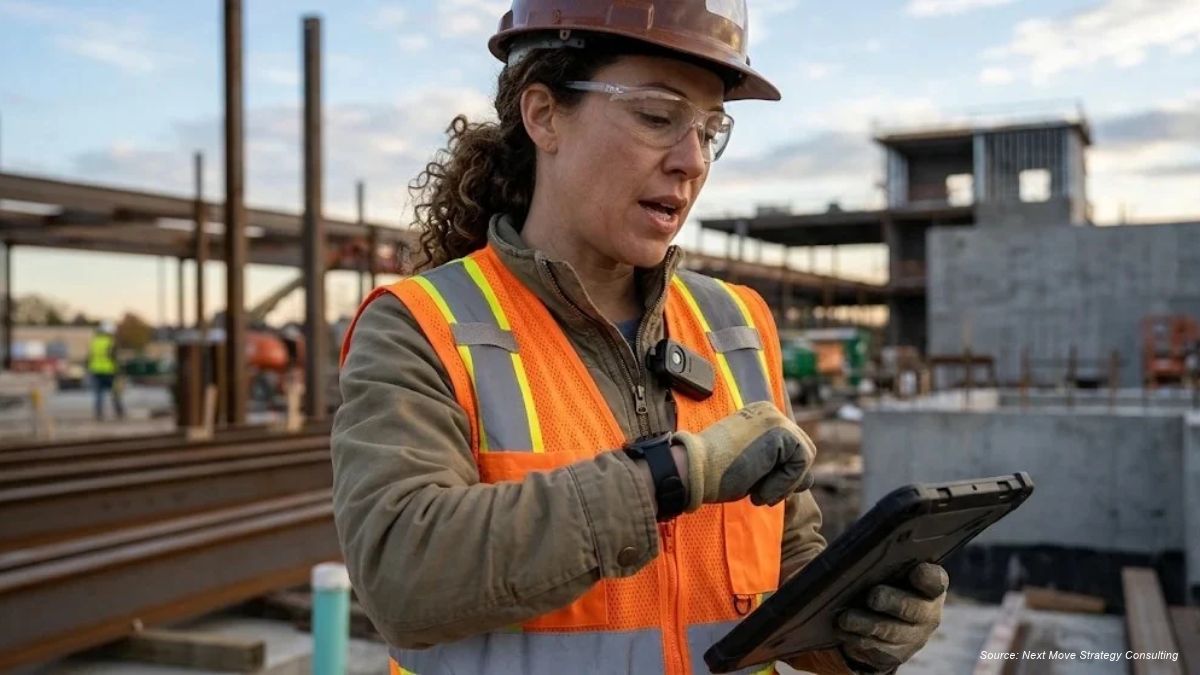
A huge 84% of employees see room for improvement in the way their company keeps frontline staff informed.
For crews on rooftops, in trenches, or behind the wheel, the causes are familiar: phones that demand two free hands, noise that swallows instructions, coverage that drops between sites, and updates that arrive after the work has moved on.
Wearables attack those problems from a different angle. They put voice, alerts, and visuals on the body, so a message can land while the work continues.
As wearable computing matures, five device types stand out for field teams, and each one fixes a different piece of the communication puzzle.
Why Field Communication Breaks Down
Most communication tools were designed for people sitting still. Field crews work in the opposite conditions, and the cracks tend to show up in the same places:
-
Busy hands. Gloves, tools, and ladders make a touchscreen a poor fit.
-
Noise. Engines, saws, and traffic bury spoken instructions.
-
Distance. Crews spread across a site, a route, or several counties.
-
Delay. A missed call can turn into a wasted trip or a repeated job.
So what should a device do to earn a place on a worker's body? Three tests can help. It should work without pulling attention from the task, deliver a message that gets understood the first time, and stay connected wherever the job happens to be. The five wearables below pass those tests in different ways, and many crews may end up combining two or three of them.
Body-Worn Push-to-Talk Radios
The two-way radio is the oldest wearable on the job site, and it has changed more than its shape suggests. Push-to-talk over cellular models connect through LTE and Wi-Fi instead of local repeaters, so range depends on network coverage more than antenna height.
Business radios from Peak PTT, for example, run on nationwide LTE with optional Wi-Fi and pair that reach with GPS location updates and multiple talk groups. Clipped to a vest and paired with a lapel microphone or earpiece, the radio becomes something a worker wears instead of carries.
This form factor tends to fit:
-
Dispersed crews in towing, snow plowing, or public works
-
Dispatch-heavy operations that need instant one-to-many voice
-
Moments where a single button press beats unlocking a phone
The trade-off is that only one person talks at a time, which suits short instructions more than long conversations.
Smart Glasses
If a radio carries voice, smart glasses carry sight. A head-mounted camera and display let a remote expert see what the technician sees and send back a diagram, a checklist, or a spoken walkthrough.
The category is scaling fast, with roughly 13.6 million units on IDC's shipment forecast for 2026. Consumer models dominate that count, yet the scale could make rugged work versions lighter and cheaper over time.
TotalEnergies offers a field example. At its refineries, RealWear headsets tied into Microsoft Teams put schematics and live expert calls in front of maintenance crews, as UC Today reports, leaving both hands on the equipment.
Smart glasses can make sense when:
-
Expert knowledge sits far from the job
-
Tasks are complex and infrequent
-
Travel time is the biggest cost of a repair
Comfort and battery life still vary, so a trial run helps.
Smartwatches
Some messages need no voice at all. A smartwatch turns communication into a glance and a tap, which helps when a worker is mid-task or facing a customer. A vibration on the wrist is hard to miss in loud surroundings, and a preset reply can confirm receipt in a second. Among smart wearables, the watch is also the one most people already know how to use.
A recent example comes from Samsung's Pyeongtaek site in South Korea, where a heat stress system built with the Ministry of Employment and Labor runs on LTE Galaxy Watches. Once conditions turn risky, the watch doubles as a direct line from supervisor to worker, carrying heat warnings and rest recommendations, according to Wareable.
Could the same channel carry a schedule change or a hazard notice? In principle, yes, and that flexibility is the appeal.
Connected Hard Hats
The hard hat is the one item every site worker already puts on, which makes it a natural host for electronics. Connected versions add sensors, and some models go further with a camera, microphones, and two-way voice. The result is a channel built for one-to-many alerts.
The Uptown Dubai tower served as a test bed, with contractor Besix fitting hard hats with WakeCap sensors. Site-wide evacuation notices, restricted-zone alerts, and an emergency call option were all part of the setup, BuiltWorlds reported.
Worth knowing: Trust decides adoption. A helmet that logs location can read as surveillance to the crew wearing it, so explaining what gets collected, and why, may matter as much as the hardware.
Connected hard hats may suit large, crowded sites best, where reaching everyone at once matters more than a private conversation.
Wireless Team Headsets
Some jobs need a real conversation, and a loud machine makes that hard. Wireless team headsets combine hearing protection with an always-open voice link, so a whole crew can hold a conversation without pressing anything. The effect is closer to standing side by side than to trading radio calls.
One sewer mapping operation described by headset maker Sonetics shows the difference. Coordination between the vac truck and a contract camera team once depended on cellphones, and missed calls meant backtracking. A headset handed to the camera team at the start of each shift closed that gap.
Headsets tend to fit when:
-
A small crew works close together
-
Machine noise is constant
-
Hands and eyes need to stay on equipment
They are short-range by design, so many crews pair them with a radio for the link back to dispatch.
Matching the Device to the Job
No single wearable covers every situation, so it helps to start from the problem and work back to the gadget.
|
If the main problem is |
Consider starting with |
|
Crews spread over a wide area |
Body-worn PTT radio |
|
Expertise far from the site |
Smart glasses |
|
Alerts missed in the noise |
Smartwatch |
|
Site-wide emergencies |
Connected hard hat |
|
Talking over loud machines |
Team headsets |
A short pilot with one crew, run over a few working weeks, can reveal more than a spec sheet. If a device lasts a full shift on one charge, fits under existing PPE, and gets worn without reminders, it may be worth scaling.
It also pays to ask how these connected devices will feed the dispatch, safety, and work order systems already in place, because a message that never reaches the back office only solves half the problem.
Keeping Every Crew Member Within Reach
Field communication rarely fails for lack of technology. It fails when the technology asks a worker to stop, look down, or shout. The five wearables covered here take different routes around that problem: a radio for instant voice, glasses for shared sight, a watch for silent alerts, a hard hat for site-wide warnings, and headsets for open conversation.
None of them needs to arrive all at once. A team can begin with its most frequent breakdown, test one device against it, and add a second layer if the first one sticks. In the end, the wearable that helps most may be the one a crew forgets it is wearing, because the message got through and the work never paused.
About the Author
 Sanyukta Deb
— Sanyukta Deb is Digital Marketing Team Lead at Next Move Strategy Consulting, where she has led content strategy and technical SEO for the firm's B2B market research publications for over 2 years. Her editorial process translates NextMSC's primary and secondary research — spanning technology, industrial, and consumer sectors — into commercial narratives, backed by search-intent, keyword, and competitive analysis. She brings 5 years of overall experience in digital marketing and content strategy.
About the Reviewer
 Debashree Dey
— Debashree Dey is Assistant Manager at Next Move Strategy Consulting, where she supports cross-vertical market content and communications across diverse industries for 6 years. Her professional background includes senior content writing, communications, and published manuscript authorship, with experience developing audience-focused business narratives and maintaining clear, consistent messaging. Her role supports research-led content development and editorial quality across NextMSC publications.















Add Comment