7 Powerful Aircraft Flight Control System Market Trends
Introduction
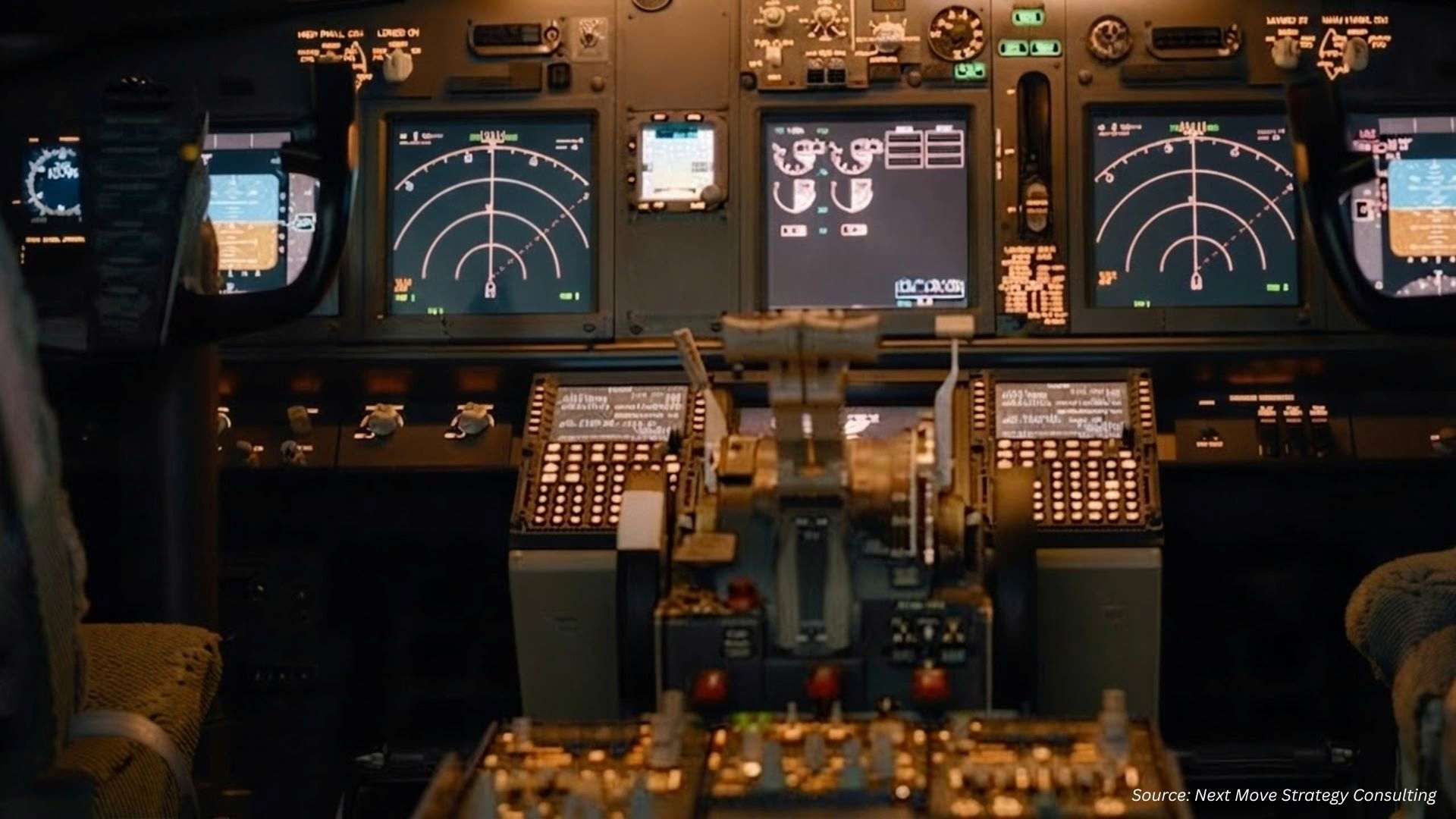
Aviation is entering one of its most consequential technological eras, and the aircraft flight control system market sits at the very center of this transformation. From advanced fly-by-wire architectures to AI-driven autonomous flight management, the systems that govern how aircraft respond to pilot commands and environmental conditions are evolving at a pace that is reshaping procurement strategies, regulatory frameworks, and competitive dynamics across the global aerospace industry.
The scale of this shift is substantial. According to Next Move Strategy Consulting (NMSC), the global Aircraft Flight Control System Market is projected to reach USD 34.56 billion by 2030, registering a compound annual growth rate (CAGR) of 8.3% from 2025 to 2030. This trajectory reflects not only the sustained expansion of commercial and military aviation but also the accelerating integration of digital, AI-powered, and autonomous technologies into flight control architectures—a convergence that is redefining what these systems must deliver and who will lead the market in delivering them.
For More Information: Download FREE Sample on Aircraft Flight Control System Market Report
Digitalization, Autonomy, and Regulatory Convergence: Forces Reshaping the Aircraft Flight Control System Market
The 2026 FAA-EASA Safety Conference: A Watershed Moment for Flight Control Technology
In June 2026, the Federal Aviation Administration (FAA) and the European Union Aviation Safety Agency (EASA) convened their annual International Aviation Safety Conference in Chantilly, Virginia, under the theme "Safety Together: Innovation, Integration and Trust." The event brought together approximately 400 senior aviation professionals from regulators, manufacturers, airlines, and associations worldwide, and produced a landmark joint pledge with direct implications for the aircraft flight control system market.
The FAA and EASA committed to accelerating the safe integration of automated flightdeck technologies, streamlining approval processes for advanced aviation technologies, modernizing aircrew training for automated environments, and enhancing information sharing on emerging safety risks—including cyber threats and GPS/GNSS interference. FAA Administrator Bryan Bedford stated: "This is one of the most innovative moments in aviation, not just for America but also for our international partners. Sharing information and fostering conversations about safety allow us to strengthen our international partnerships and ensure aviation systems evolve safely and efficiently."
The conference's outsized focus on digitalization and artificial intelligence—with American leaders celebrating machine learning and agentic technologies as solutions for air traffic control challenges—signals a clear regulatory direction: the future of flight control is digital, data-driven, and increasingly autonomous.
L3Harris FAA Airspace Surveillance Contract: Modernizing the Infrastructure of Flight Control
On July 1, 2026, L3Harris Technologies received a Federal Aviation Administration contract to upgrade and continue to operate the nation's aircraft tracking network through 2045. The contract involves upgrading more than 700 ground stations to provide real-time, satellite-based flight positioning data to air traffic controllers nationwide, while deploying advanced security to protect critical airspace data and expanding surveillance capabilities to track emerging entrants in the National Airspace System.
This contract represents a direct, long-term investment in the infrastructure that underpins modern flight control systems—ensuring that as aircraft become more automated and autonomous, the ground-based systems that monitor and manage them evolve in parallel. L3Harris operates the largest terrestrial air traffic surveillance network in the world, integrating thousands of data sources and delivering information to hundreds of FAA and government facilities through a 24/7 network operations center.
Autonomous Flight Validation: Redefining What Flight Control Systems Must Deliver
In September 2025, Joby Aviation completed a landmark demonstration of its Superpilot autonomous flight technology as part of the Resolute Force Pacific (REFORPAC) exercise, a Department-Level Exercise led by Pacific Air Forces (PACAF). The exercise logged more than 7,000 miles of autonomous operations across more than 40 flight hours, with flights managed from ground control stations more than 3,000 miles away at Andersen Air Force Base in Guam.
The demonstration validated that autonomous flight control systems can execute complex, real-world missions—including rapid cargo deliveries, hub-and-spoke logistics, inter-island transport, and intelligence, surveillance and reconnaissance (ISR) profiles—across all classes of airspace and under both visual and instrument flight rules. The U.S. Department of Defense requested USD 9.4 billion in its FY2026 budget to advance autonomous and hybrid aircraft, underscoring the scale of institutional commitment to next-generation flight control capabilities. Building on this momentum, Joby Aviation announced in August 2026 the acquisition of Resonant Sciences to further scale its defense business.
NMSC Strategic Perspective: What These Developments Mean for the Market
From Next Move Strategy Consulting's analytical standpoint, the convergence of regulatory alignment (FAA-EASA cooperation), autonomous flight validation (Joby's REFORPAC demonstration), and infrastructure modernization (L3Harris FAA contract) represents a structural inflection point for the aircraft flight control system market. These are not isolated events; they are mutually reinforcing signals that the market is transitioning from incremental improvement to systemic transformation.
The integration of AI and machine learning into flight control architectures is no longer a speculative future scenario—it is an active procurement and regulatory priority. For market participants, this means that investment in digital fly-by-wire systems, AI-enabled flight control computers, and cybersecurity-hardened avionics will be the primary drivers of competitive differentiation through 2030. NMSC identifies AI integration as the most significant future opportunity for the aircraft flight control system market, enabling real-time data analysis, dynamic decision-making, predictive maintenance, and reduced human error across both commercial and military aviation sectors.
Section Summary:
The aircraft flight control system market is being reshaped by three concurrent forces: regulatory convergence between the FAA and EASA around digital and autonomous aviation, validated demonstrations of autonomous flight control in defense applications, and large-scale infrastructure modernization contracts.
-
The 2026 FAA-EASA joint pledge explicitly commits both agencies to accelerating automated flightdeck technology integration and streamlining certification pathways for advanced aviation technologies.
-
The L3Harris FAA contract (July 2026) to upgrade 700+ ground stations through 2045 signals long-term institutional investment in the infrastructure supporting advanced flight control systems.
-
Joby Aviation's REFORPAC exercise logged 7,000+ autonomous miles, validating the operational readiness of next-generation autonomous flight control architectures.
-
NMSC identifies AI integration and digital fly-by-wire adoption as the primary market opportunity drivers through 2030.
Industry Impact Analysis
Military Expansion: The Dominant Growth Engine
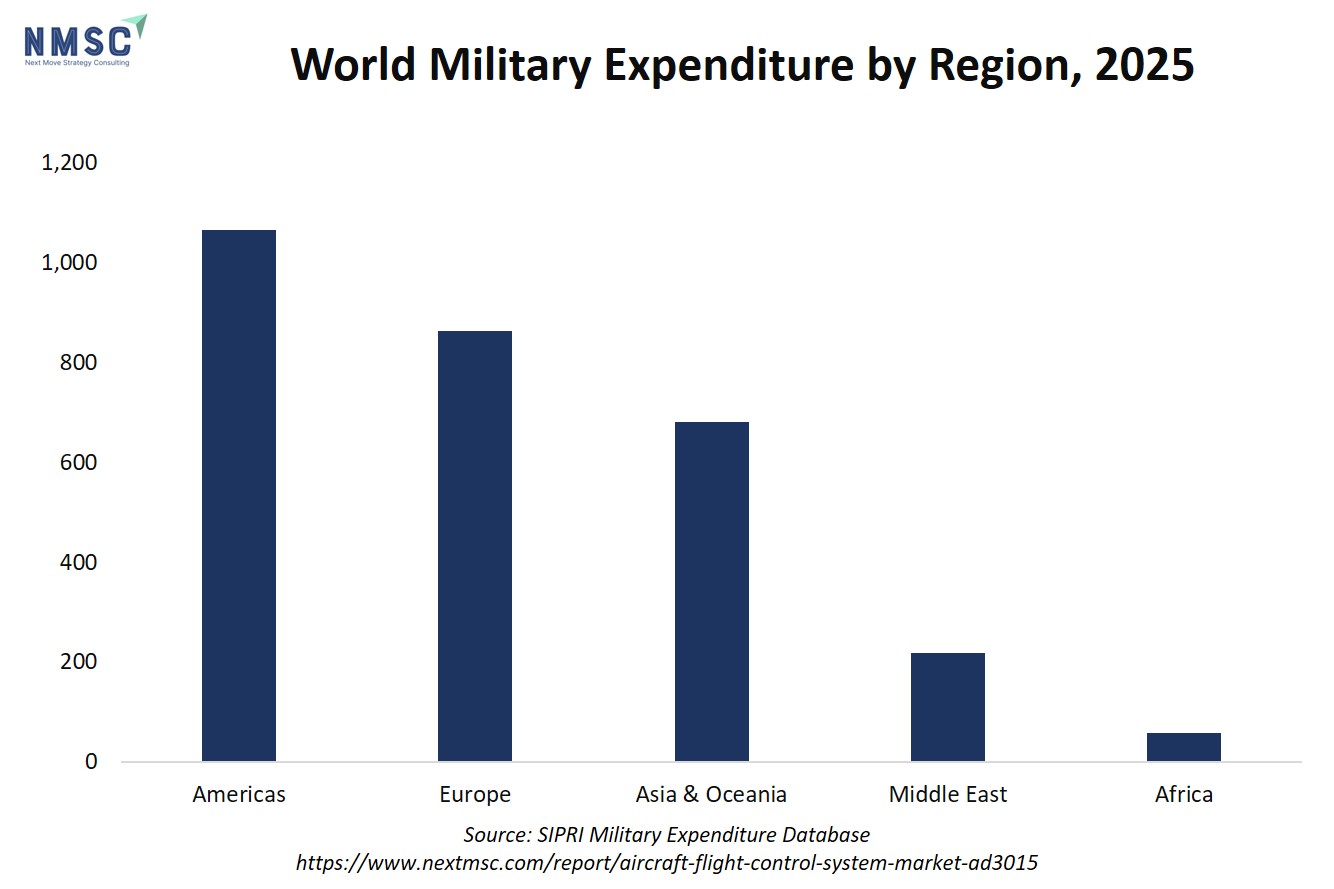
The expansion of the global military sector remains the most powerful structural driver of the aircraft flight control system market. According to the World Bank Group, global military spending rose from USD 1.86 trillion in 2019 to USD 2.39 trillion in 2023, representing a 28.5% increase over four years. Within this context, the United States alone saw military expenditure grow by 24.7%, from USD 734.34 billion in 2019 to USD 916.01 billion in 2023, creating substantial procurement opportunities for advanced flight control system suppliers.
This sustained increase in defense budgets is directly translating into demand for advanced flight control systems. In February 2026, Boeing announced a contract award from the U.S. Air Force valued at more than USD 400 million to modernize the flight deck of military aircraft. In June 2026, Lockheed Martin received a USD 2.2 billion contract for F-35 jet maintenance—a program that relies on some of the most sophisticated fly-by-wire flight control architectures in operational service. In August 2024, BAE Systems introduced an upgrade program for fly-by-wire flight control computers installed on F-15EX Eagle II and F/A-18E/F Super Hornet fighter jets, enhancing computational strength and cybersecurity measures.
Commercial Aviation Recovery and Fleet Expansion
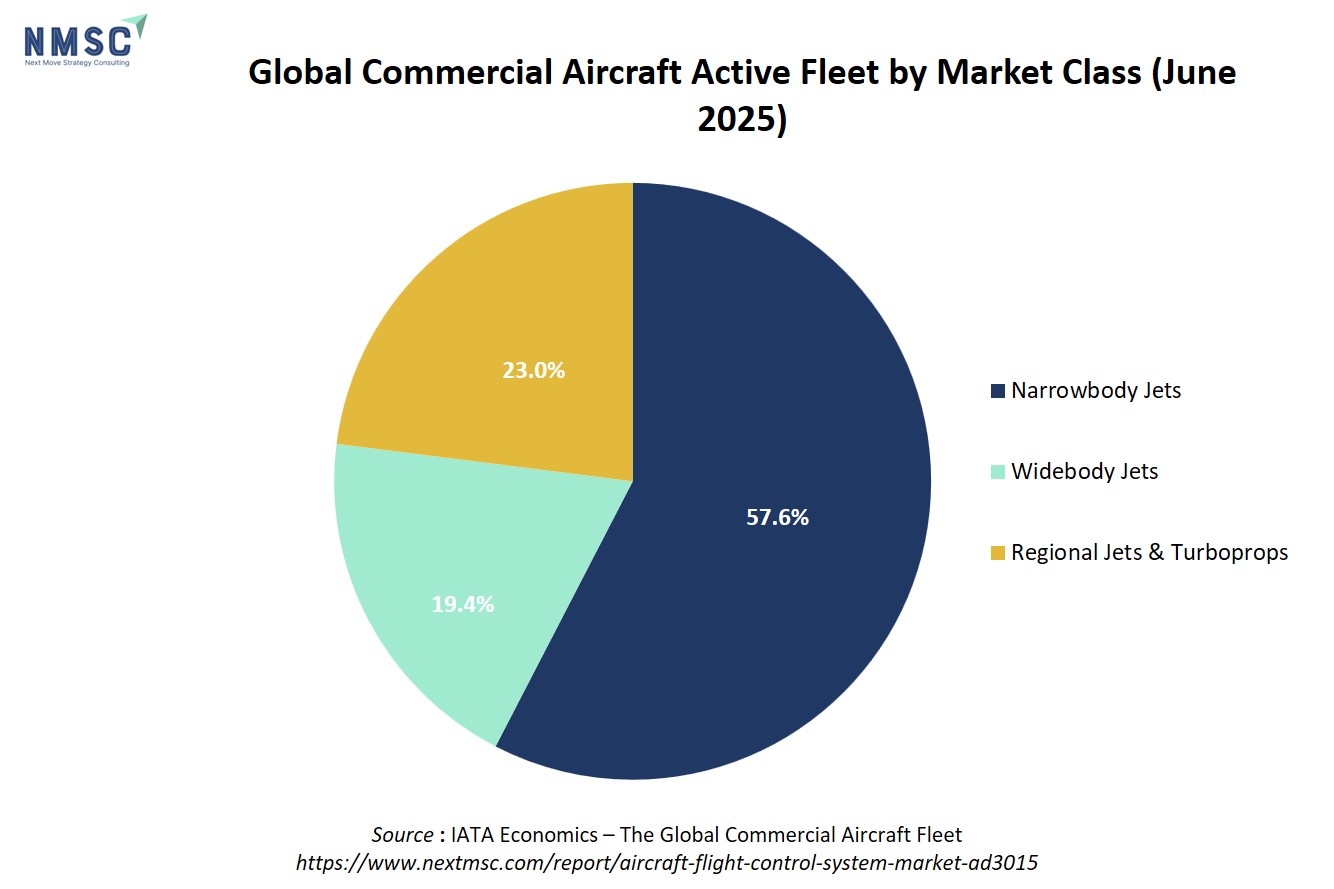
The International Civil Aviation Organization (ICAO) projects that air transport demand will increase at an average annual rate of 4.3% over the next two decades, sustaining long-term commercial aviation investment in flight control technology. This sustained growth trajectory is driving airlines and aircraft manufacturers to invest in next-generation flight control systems that deliver enhanced operational efficiency, improved safety margins, and reduced maintenance costs.
According to data from the International Air Transport Association (IATA), global air cargo demand experienced significant expansion in July 2024, surging by 13.6% year-on-year. This momentum was heavily driven by carriers in the Asia-Pacific region, who recorded a robust 17.6% expansion in cargo traffic over the same period. The rapid growth of air cargo operations is placing particular pressure on flight control system reliability and precision, as cargo aircraft operate on demanding schedules with high utilization rates. The Airbus Global Market Forecast projects passenger traffic to grow at 3.9% annually, supported by global GDP growth of 2.6%, with the global fleet expected to expand significantly by 2045.
Cybersecurity: The Critical Constraint
As flight control systems become increasingly digital and networked, cybersecurity has emerged as a significant market constraint. The FAA and EASA's 2026 joint pledge explicitly identified cyber threats as an emerging safety risk requiring enhanced information sharing and coordination. The digitalization of flight control architectures—while enabling significant performance improvements—also creates new attack surfaces that must be addressed through robust security frameworks.
The FAA's FY2026 budget request of USD 22.0 billion for investment in the National Airspace System includes provisions for cybersecurity modernization, reflecting the regulatory community's recognition that digital flight control systems require commensurate digital security infrastructure.
Section Summary:
The aircraft flight control system market is being driven by military spending growth, commercial aviation fleet expansion, and air cargo demand, while cybersecurity risks represent the primary structural constraint.
-
Global military spending grew 28.5% from 2019 to 2023, per the World Bank, directly fueling demand for advanced military flight control systems.
-
ICAO projects 4.3% annual growth in air transport demand, sustaining long-term commercial aviation investment in flight control technology.
-
IATA data shows Asia-Pacific air cargo traffic grew 17.6% in July 2024, creating strong regional demand for precision flight control systems.
-
Cybersecurity is the primary market restraint, with both the FAA and EASA committing to enhanced coordination on cyber threats to aviation systems in their 2026 joint pledge.
Pros and Cons of Recent Market Developments
|
Recent Development |
Pros |
Cons |
|
FAA-EASA 2026 Joint Safety Pledge |
Harmonized certification pathways reduce time-to-market for new flight control technologies; enhanced regulatory clarity for manufacturers and operators |
Increased compliance requirements may raise development costs for smaller suppliers and new market entrants |
|
Autonomous Flight Control Validation (Joby REFORPAC) |
Validates commercial and defense viability of autonomous flight control; opens new DoD procurement channels worth billions |
Regulatory certification for fully autonomous systems remains complex, time-consuming, and jurisdiction-specific |
|
L3Harris FAA Airspace Surveillance Contract (2026) |
Modernized ground infrastructure supports advanced flight control integration; long-term revenue visibility for system suppliers through 2045 |
Concentration of critical infrastructure contracts with select vendors may limit competitive dynamics in the supply chain |
|
Military Spending Growth (World Bank: +28.5%, 2019–2023) |
Sustained, large-scale demand for advanced military flight control systems; significant procurement programs across multiple platforms |
Geopolitical volatility creates procurement uncertainty; defense budget cycles can be unpredictable and subject to political shifts |
|
AI Integration into Flight Control Architectures |
Enables predictive maintenance, real-time decision-making, and reduced human error; improves operational efficiency across commercial and military platforms |
Cybersecurity vulnerabilities increase with greater digital connectivity; AI certification standards for aviation are still evolving |
|
Digital Fly-by-Wire Adoption |
Significant weight reduction, improved fuel efficiency, and enhanced safety margins; enables envelope protection and advanced autopilot functions |
High upfront development and certification costs; legacy aircraft retrofit complexity increases program risk and timeline |
Key Data & Statistics
Table 1: Key Industry Developments Impacting the Aircraft Flight Control System Market (2024–2026)
|
Date |
Organization |
Development |
Market Significance |
|
August 2024 |
BAE Systems |
Launched fly-by-wire flight control computer upgrade program for F-15EX Eagle II and F/A-18E/F Super Hornet |
Enhanced computational strength and cybersecurity for military FBW systems; signals sustained retrofit demand |
|
September 2025 |
Joby Aviation / U.S. DoD (PACAF) |
Completed REFORPAC autonomous flight exercise: 7,000+ miles, 40+ flight hours using Superpilot technology |
First large-scale operational validation of autonomous flight control in a defense exercise; opens DoD procurement pathway |
|
February 2026 |
Boeing / U.S. Air Force |
USD 400M+ contract for military flight deck modernization |
Significant investment in advanced military flight control architecture; validates sustained defense procurement |
|
June 2026 |
Lockheed Martin / U.S. DoD |
USD 2.2B F-35 maintenance contract |
Sustained investment in advanced fly-by-wire military aircraft systems; long-term revenue for FBW suppliers |
|
June 2026 |
FAA & EASA |
Joint pledge at 2026 International Aviation Safety Conference (Chantilly, Virginia) |
Commitment to accelerate automated flightdeck technology integration and harmonize certification pathways globally |
|
July 2026 |
L3Harris / FAA |
FAA contract to upgrade 700+ ground stations through 2045 |
Long-term modernization of airspace surveillance infrastructure; enables advanced flight control system integration |
|
August 2026 |
Joby Aviation |
Acquisition of Resonant Sciences to scale defense business |
Signals accelerating consolidation in autonomous flight control technology sector |
Future Outlook & Forecast
NMSC Market Forecast: A USD 34.56 Billion Opportunity by 2030
According to Next Move Strategy Consulting, the global aircraft flight control system market is projected to grow from USD 21.38 billion in 2024 to USD 34.56 billion by 2030, at a CAGR of 8.3%. This growth trajectory is underpinned by three structural drivers: the continued expansion of the global military sector, the sustained growth of commercial aviation, and the accelerating integration of AI and autonomous technologies into flight control architectures.
North America is expected to maintain its dominant position throughout the forecast period, driven by robust defense spending and a large commercial aviation fleet. IATA projects that Canadian air transport alone will witness a growth rate of 51% by 2037, further reinforcing North America's long-term demand for advanced flight control systems.
The Asia-Pacific region is projected to deliver the strongest growth rate, supported by rapidly expanding air cargo operations and significant investments in next-generation avionics. Japan's 2024 initiative for next-generation hydrogen and hybrid-electric powered passenger aircraft exemplifies the region's commitment to advanced aviation technology, which will require sophisticated flight control systems capable of managing novel propulsion architectures.
The AI and Autonomy Imperative
The trajectory of the aircraft flight control system market through 2030 will be defined by the pace of AI and autonomous technology adoption. The U.S. Department of Defense's FY2026 budget request of USD 9.4 billion for autonomous and hybrid aircraft development signals the scale of institutional commitment to this transition. As Joby Aviation's REFORPAC demonstration has shown, the technology is no longer theoretical—it is operationally validated and actively informing next-generation U.S. defense procurement.
For commercial aviation, the FAA and EASA's 2026 joint commitment to accelerate automated flightdeck technology integration and modernize aircrew training for automated environments will create a regulatory framework that supports—rather than constrains—the adoption of advanced flight control systems. The ICAO's projection of 4.3% annual growth in air transport demand provides the commercial foundation for sustained investment in these capabilities.
Infrastructure Modernization as a Long-Term Market Catalyst
The L3Harris FAA contract to upgrade more than 700 ground stations through 2045 represents a long-term infrastructure investment that will enable the full potential of advanced flight control systems to be realized. As aircraft become more autonomous and digitally connected, the ground-based surveillance and communication infrastructure must evolve in parallel. This creates a sustained demand for integrated flight control solutions that can interface seamlessly with modernized airspace management systems—a demand that will persist well beyond the current forecast period.
Section Summary:
The aircraft flight control system market is on a clear growth trajectory toward USD 34.56 billion by 2030, driven by military spending, commercial aviation expansion, and AI/autonomous technology adoption.
-
NMSC projects a CAGR of 8.3% from 2025 to 2030, with the market reaching USD 34.56 billion by 2030.
-
North America will maintain market dominance; Asia-Pacific will deliver the strongest regional growth rate, supported by air cargo expansion and next-generation avionics investment.
-
The U.S. DoD's USD 9.4 billion FY2026 budget request for autonomous aircraft signals sustained, large-scale defense-sector demand for advanced flight control systems.
-
FAA-EASA regulatory alignment and the L3Harris airspace modernization contract will accelerate the adoption and integration of advanced flight control technologies through 2045.
Next Steps for Stakeholders
For C-Level Executives and Aerospace Manufacturers:
-
Prioritize investment in digital fly-by-wire and AI-enabled flight control computer development, as these technology segments are positioned to capture the largest share of market growth through 2030.
-
Engage proactively with FAA and EASA certification processes for automated flightdeck technologies, leveraging the streamlined approval pathways committed to in the 2026 joint pledge.
-
Develop robust cybersecurity frameworks for flight control systems, as regulatory scrutiny of digital aviation security is intensifying on both sides of the Atlantic and is now an explicit FAA-EASA cooperation priority.
For Defense Contractors and System Integrators:
-
Position for upcoming U.S. DoD autonomous aircraft procurement programs, building on the operational validation demonstrated in the REFORPAC exercise and the DoD's USD 9.4 billion FY2026 autonomous aircraft budget.
-
Pursue retrofit and upgrade opportunities in existing military fleets, following the model established by BAE Systems' F-15EX and F/A-18 fly-by-wire upgrade program.
-
Monitor the evolution of the FAA's NextGen program and associated infrastructure modernization contracts for integration and subcontracting opportunities.
For Investors and Financial Institutions:
-
The aircraft flight control system market's 8.3% CAGR through 2030 represents a compelling risk-adjusted growth opportunity within the broader aerospace and defense sector.
-
Focus on companies with demonstrated capabilities in digital fly-by-wire systems, AI-enabled avionics, and cybersecurity-hardened flight control architectures—the three technology pillars most aligned with current regulatory and procurement priorities.
-
Monitor Asia-Pacific market developments, particularly in air cargo and next-generation avionics, as the region is expected to deliver above-average growth rates driven by IATA-documented cargo traffic expansion.
For Airlines and Commercial Operators:
-
Evaluate retrofit opportunities for existing fleets to incorporate advanced flight control technologies that improve fuel efficiency, safety margins, and maintenance predictability.
-
Engage with OEM partners on line-fit options for new aircraft orders that incorporate the latest digital fly-by-wire and AI-assisted flight control capabilities.
-
Develop internal competencies in avionics cybersecurity, as the increasing digitalization of flight control systems creates new operational risk dimensions that are now subject to explicit FAA-EASA regulatory attention.
Conclusion
The aircraft flight control system market stands at a pivotal juncture. The convergence of regulatory alignment between the FAA and EASA, validated autonomous flight demonstrations, large-scale infrastructure modernization, and sustained military and commercial aviation investment is creating a market environment of exceptional opportunity and structural complexity. With the global market projected to reach USD 34.56 billion by 2030 at a CAGR of 8.3%, according to Next Move Strategy Consulting, the strategic imperative for aerospace stakeholders is clear: invest in digital, AI-enabled, and cybersecurity-hardened flight control capabilities now, or risk being displaced by competitors who do.
The aircraft flight control system market is not merely growing—it is transforming. The organizations that recognize this distinction and align their investment, development, and regulatory engagement strategies accordingly will be best positioned to capture the value that this transformation will generate over the coming decade.
About the Author
 Sanyukta Deb
— Sanyukta Deb is Digital Marketing Team Lead at Next Move Strategy Consulting, where she has led content strategy and technical SEO for the firm's B2B market research publications for over 2 years. Her editorial process translates NextMSC's primary and secondary research — spanning technology, industrial, and consumer sectors — into commercial narratives, backed by search-intent, keyword, and competitive analysis. She brings 5 years of overall experience in digital marketing and content strategy.
Sanyukta Deb
— Sanyukta Deb is Digital Marketing Team Lead at Next Move Strategy Consulting, where she has led content strategy and technical SEO for the firm's B2B market research publications for over 2 years. Her editorial process translates NextMSC's primary and secondary research — spanning technology, industrial, and consumer sectors — into commercial narratives, backed by search-intent, keyword, and competitive analysis. She brings 5 years of overall experience in digital marketing and content strategy.
About the Reviewer
 Debashree Dey
— Debashree Dey is Assistant Manager at Next Move Strategy Consulting, where she supports cross-vertical market content and communications across diverse industries for 6 years. Her professional background includes senior content writing, communications, and published manuscript authorship, with experience developing audience-focused business narratives and maintaining clear, consistent messaging. Her role supports research-led content development and editorial quality across NextMSC publications.
Debashree Dey
— Debashree Dey is Assistant Manager at Next Move Strategy Consulting, where she supports cross-vertical market content and communications across diverse industries for 6 years. Her professional background includes senior content writing, communications, and published manuscript authorship, with experience developing audience-focused business narratives and maintaining clear, consistent messaging. Her role supports research-led content development and editorial quality across NextMSC publications.

















Add Comment