7 Powerful CBRN Defense Trends Reshaping Global Security in 2026
Introduction
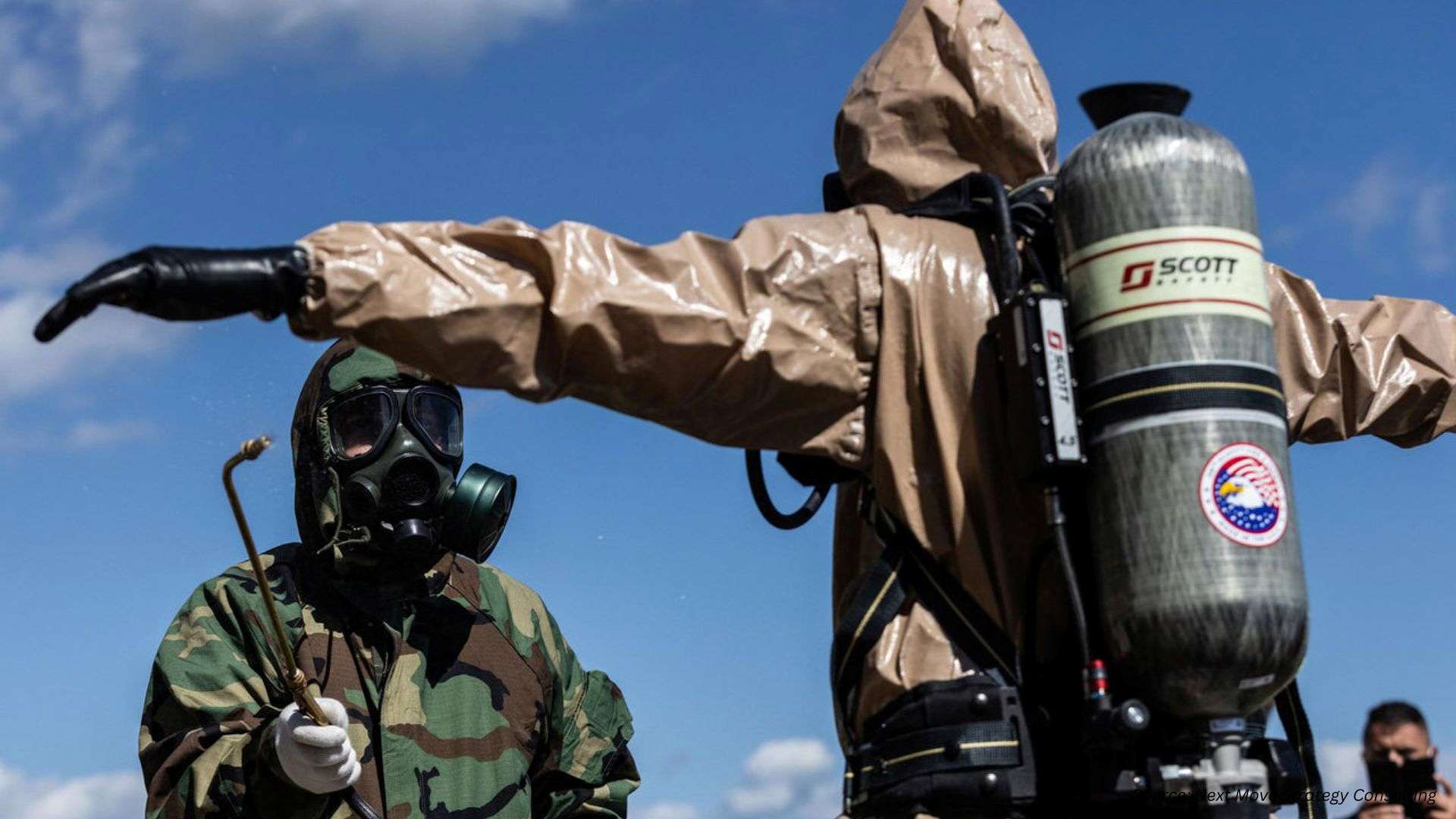
The threat of chemical, biological, radiological, and nuclear (CBRN) attacks has never been more operationally relevant than it is in 2026. From drone-delivered irritant agents on the Ukrainian battlefield to the proliferation of dual-use biotechnologies accessible to non-state actors, the global security environment is compelling governments, defense ministries, and allied military structures to fundamentally rethink how they detect, protect against, and respond to CBRN threats. The CBRN defense market is the institutional and commercial response to this escalating threat landscape — and it is growing with urgency.
This market growth is not driven by abstract threat assessments — it is being shaped by real-world events, institutional policy shifts, and technology investments that are redefining the competitive and strategic landscape of the CBRN defense industry. For C-suite executives, institutional investors, and defense procurement officials, understanding these forces is a strategic imperative.
For More Information – Download FREE Sample on CBRN Defense Market Report
From Brno to Camp Dawson: The Events Redefining the CBRN Defense Market in 2026
SCOUT 26: The U.S. Military's Most Ambitious CBRN Technology Field Experiment
In March 2026, the Joint Science and Technology Office (JSTO) of the Defense Threat Reduction Agency (DTRA) hosted the Science & Technology CBRN-Capability Operational User Trial 2026 — known as SCOUT 26 — at Camp Dawson, West Virginia. From March 20 to 26, more than 100 members of the Joint Forces, leading scientists, and industry experts converged to test and evaluate cutting-edge technologies in realistic, peer-threat scenarios.
SCOUT 26 was structured around three operational pillars: large-scale field scenarios testing 18 advanced prototypes in real-world settings — including a simulated drone dropping an unknown chemical on a supply point, radiological hazards used to block movement, and a complex CBRN attack on a mock U.S. port; a focused battlefield medicine experiment in which 15 specialists from the Naval Research Laboratory developed a PCR-based diagnostic test for a new biothreat in under 10 hours; and a "Concepts Crucible" in which warfighters provided direct feedback on 16 early-stage technologies, including a chip-based scent-detection system and a "BioDome" concept for generating real-time medical countermeasures in the field.
"SCOUT 26 embodies our mandate to deliver capability at the speed of relevance," stated Dr. Robert Kristovich, Director of the Joint Science and Technology Office at DTRA. "What we witnessed here at Camp Dawson wasn't merely a test of technology, but a powerful demonstration of collaboration. By bringing warfighters, scientists, and industry partners together into this innovation ecosystem, we are not only de-risking future investments but are actively forging the tools that will ensure our nation's dominance and safety against any CBRN threat, anywhere in the world."
SCOUT 26 is commercially significant for the CBRN defense market because it directly accelerates the capability pipeline from laboratory concept to fielded military technology — compressing procurement timelines and generating actionable data that informs DoD investment decisions across detection, protection, decontamination, and medical countermeasure product categories.
NATO's JCBRN Defence COE Annual Conference 2025: "Rethinking CBRN Defence"
In October 2025, the NATO Joint CBRN Defence Centre of Excellence (JCBRN Defence COE) hosted its Annual Conference in Brno, Czech Republic, under the theme "Rethinking CBRN Defence." Representatives from 18 NATO member states and two partner nations gathered alongside experts from NATO bodies, academia, and national armed forces — with four Ukrainian officers participating in person, representing the Support Forces Command of the Armed Forces of Ukraine.
The Conference's most consequential strategic finding was that CBRN defence can no longer function as a standalone specialty — it must be embedded across operational planning and capability development in multi-domain, AI-driven, and hybrid warfare environments. Lessons from the Ukrainian battlefield — including the use of irritant agents delivered via UAVs, strikes near nuclear power plants, and disinformation campaigns about "dirty bombs" — were presented as evidence that the CBRN threat environment has fundamentally expanded in both method and impact.
James Stokes, Director of Nuclear Policy at NATO HQ International Staff, emphasized that since 2022, NATO's CBRN Defence Policy has been reframed as an integral element of the Alliance's defence posture — a structural shift that directly translates into sustained procurement demand for CBRN detection, protection, and decontamination systems across all 32 NATO member states.
The U.S. Army's 2025 CBR Training Policy Change: A Market Risk Signal
In June 2025, the U.S. Army revised Army Regulation 350-1 (Army Training and Leader Development), removing the mandatory requirement for commanders to conduct annual chemical, biological, and radiological (CBR) training for soldiers. A June 2026 analysis published in the U.S. Army Chemical Review warned that this policy change risks degrading soldier readiness, eroding institutional expertise within the Chemical Corps, and increasing vulnerability to emerging CBRN threats — including genetically engineered pathogens and drone-delivered chemical agents.
For the CBRN defense market, this policy shift carries a dual commercial implication: it creates near-term demand for advanced simulation and training systems that can deliver CBRN readiness more efficiently than traditional annual drills, while simultaneously signaling a potential gap in institutional preparedness that may drive future corrective procurement investment.
NMSC Strategic Perspective: The Convergence of Threat and Technology
Next Move Strategy Consulting's analysis of the global CBRN defense market identifies the convergence of three structural forces as the primary driver of sustained market growth through 2030: the escalating global security environment characterized by geopolitical tensions, regional conflicts, and terrorism; continuous advancements in detection, protection, and decontamination technologies; and strong government investment in CBRN defense infrastructure across North America, Europe, and Asia-Pacific.
NMSC's assessment further highlights that the integration of AI into CBRN detection and decision-support systems — as demonstrated at SCOUT 26 and discussed at the JCBRN Defence COE Annual Conference 2025 — is creating a new generation of faster, more precise, and more interoperable CBRN defense capabilities. Companies including Smiths Detection, which has partnered with RiskAware to develop the UrbanAware CBRN threat intelligence system integrating real-time data and analytics, are at the forefront of this technological transition. The development of advanced medical countermeasures — including Scorpius BioLogics' pilot program with the U.S. Army to produce monoclonal antibodies targeting nerve agents — represents a significant and growing commercial opportunity within the broader CBRN defense market.
Section Summary: The CBRN defense market is being reshaped by a convergence of real-world operational events, institutional policy shifts, and technology investment cycles that are simultaneously expanding the threat landscape and accelerating the commercial demand for next-generation CBRN defense capabilities.
Key Takeaways:
-
SCOUT 26 (March 2026) tested 18 advanced CBRN prototypes in realistic peer-threat scenarios, directly accelerating the DoD capability pipeline from laboratory concept to fielded military technology.
-
NATO's JCBRN Defence COE Annual Conference 2025 reframed CBRN defence as a multi-domain, AI-integrated operational imperative — a structural shift that drives sustained procurement demand across all 32 NATO member states.
-
The U.S. Army's 2025 CBR training policy change creates near-term demand for advanced simulation and training systems while signaling a potential institutional readiness gap that may drive future corrective procurement.
-
AI integration into CBRN detection and decision-support systems is creating a new generation of faster, more precise capabilities, with companies such as Smiths Detection and Scorpius BioLogics leading commercial innovation.
Industry Impact Analysis
The FY2026 U.S. Defense Budget: CBRN Defense Funding Under Pressure
The U.S. government's FY2026 budget request reveals a nuanced and strategically important picture for the CBRN defense market. Total U.S. federal biodefense spending requests for FY2026 amount to USD 27.02 billion across all agencies. Within this total, the CBRN Defense category specifically received a USD 2.404 billion request for FY2026 — an increase from USD 2.215 billion enacted in FY2025, reflecting a recovery in CBRN-specific investment after a period of contraction.
The Department of Defense's Chemical and Biological Defense Program (CBDP) received a FY2026 budget request of USD 1.41 billion for biodefense programs — a USD 34 million increase from FY2025 enacted funding. The CBDP continues to make sustained investments in pathogen-agnostic detection capabilities, rapid diagnostics, and medical countermeasures — all of which represent direct commercial demand for CBRN defense technology suppliers.
However, the broader biodefense budget picture reveals structural risks: the Defense Threat Reduction Agency (DTRA) faces a 23% cumulative budget cut compared to FY2023 actual funding, and the Cooperative Threat Reduction (CTR) program faces a 33% cumulative cut — reductions that affect global CBRN threat reduction programs and may increase the long-term risk environment that drives CBRN defense demand.
NATO's 5% GDP Defense Spending Target: A Structural Demand Catalyst
In 2025, all NATO Allies met or exceeded the pre-summit target of investing at least 2% of GDP in defence — a historic milestone that represents a structural shift in European and transatlantic defense spending. More significantly, NATO Allies agreed on an increased defense spending target of 5% of GDP — comprising 3.5% for core defense and 1.5% for defense-related infrastructure — a commitment that will drive sustained multi-year procurement investment across all CBRN defense product categories.
For the CBRN defense market, this NATO spending commitment is a structural demand catalyst of the first order. European NATO members — including Germany, Finland, the Netherlands, and Sweden — are actively investing in CBRN defense capabilities, with Germany's Bundeswehr CBRN Defence Command and Finland's national CBRN defense programs representing significant procurement pipelines for detection systems, protective wearables, and decontamination equipment.
The Ukraine Conflict: A Real-World CBRN Technology Stress Test
The ongoing conflict in Ukraine has provided the most operationally significant real-world data on CBRN threats in decades. Ukrainian and NATO representatives at the JCBRN Defence COE Annual Conference 2025 documented the use of irritant agents delivered via grenades and UAVs to force troops from defensive positions, strikes near nuclear power plants creating mass evacuation risks, and the use of CBRN-related disinformation to create panic and divert military resources.
These battlefield realities are directly informing NATO procurement priorities, accelerating demand for drone-based CBRN detection systems, advanced personal protective equipment, field-deployable decontamination units, and rapid diagnostic tools that can operate without reaching back to continental U.S. laboratory infrastructure.
Asia-Pacific: Rising Defense Budgets Drive Regional CBRN Investment
Asia-Pacific is witnessing a significant surge in CBRN defense investments, driven by escalating regional security concerns and rising defense budgets in China, India, Japan, and South Korea. India's procurement of 223 ACADA (Automatic Chemical Agent Detection and Alarm) systems and the Defence Research and Development Organisation's (DRDO) active development of indigenous CBRN defense technologies represent direct market demand for detection and monitoring systems in the region.
Key Takeaways:
-
The U.S. FY2026 CBRN Defense budget request of USD 2.404 billion represents a recovery from FY2025 contraction, with the CBDP receiving USD 1.41 billion for biodefense programs — a USD 34 million increase.
-
NATO's 5% GDP defense spending target, agreed in 2025, is a structural demand catalyst that will drive sustained multi-year CBRN defense procurement across all 32 Alliance member states.
-
Battlefield lessons from Ukraine — including drone-delivered chemical agents and strikes near nuclear facilities — are directly accelerating NATO procurement of drone-based detection systems, advanced PPE, and field-deployable diagnostics.
-
Asia-Pacific's rising defense budgets, led by India, China, Japan, and South Korea, are creating a rapidly expanding regional CBRN defense procurement market.
U.S. Federal Biodefense Spending by Category — FY2023 to FY2026 (USD Billion)
|
Category |
FY2023 Actual |
FY2024 Actual |
FY2025 Enacted |
FY2026 Requested |
|
Medical Countermeasures |
8.923 |
11.515 |
11.960 |
11.784 |
|
Public Health Preparedness |
8.319 |
7.389 |
7.380 |
5.024 |
|
CBRN Defense |
2.747 |
2.694 |
2.215 |
2.404 |
|
Domestic Health Capacity |
2.087 |
2.921 |
2.910 |
1.937 |
|
Enabling Research |
2.143 |
2.013 |
2.111 |
2.061 |
|
Agricultural Security |
1.477 |
1.483 |
1.483 |
1.426 |
|
Global Health Security |
1.487 |
0.957 |
0.949 |
0.678 |
|
Early Warning |
0.867 |
0.852 |
0.789 |
0.927 |
|
PPE |
0.217 |
0.286 |
0.220 |
0.206 |
Future Outlook & Forecast
The CBRN Defense Market Is Entering a Period of Technology-Driven Structural Expansion
According to Next Move Strategy Consulting's proprietary research, the global CBRN defense market is projected to grow from USD 18.76 billion in 2025 to USD 24.87 billion by 2030, advancing at a CAGR of 5.8% from 2025 to 2030. This growth trajectory is underpinned by four highest-conviction structural themes that NMSC identifies for the forecast period:
1. AI-Integrated Detection & Monitoring Systems — The Technology Frontier: The integration of artificial intelligence into CBRN detection platforms is the most consequential technology trend in the market. AI-enabled systems can process multi-sensor data streams in real time, identify threat signatures faster than human operators, and integrate with command-and-control platforms to accelerate decision-making. The JCBRN Defence COE Annual Conference 2025 identified AI as "a foundational element of military transformation" in the CBRN domain, with NATO's Defence Innovation Accelerator for the North Atlantic (DIANA) serving as a mechanism to bridge the innovation gap.
2. Medical Countermeasures — The Fastest-Growing Commercial Opportunity: The development and deployment of advanced medical countermeasures (MCMs) — including prophylactics, therapeutics, and rapid diagnostic tools — represents the most significant commercial growth opportunity within the CBRN defense market. The FY2026 U.S. biodefense budget requests USD 11.784 billion for medical countermeasures, sustaining the category's position as the largest single component of federal biodefense investment. SCOUT 26's battlefield medicine experiment — demonstrating the feasibility of developing a PCR-based diagnostic test for a new biothreat in under 10 hours — points toward a future in which field-deployable MCM development becomes a standard military capability.
3. Training & Simulation Systems — A Policy-Driven Growth Segment: The U.S. Army's 2025 removal of mandatory annual CBR training requirements, combined with NATO's doctrine modernization imperative, is creating structural demand for advanced simulation and training systems that can deliver CBRN readiness more efficiently, more frequently, and at lower cost than traditional field exercises. Companies including Argon Electronics — a specialist in CBRN training simulation systems — are positioned to benefit from this structural demand shift.
4. Asia-Pacific — The Fastest-Growing Regional Market: Asia-Pacific is identified by NMSC as the fastest-growing regional market in the CBRN defense sector, driven by escalating security concerns in the INDOPACOM region — explicitly cited as a strategic focus of SCOUT 26 — and rising defense budgets across China, India, Japan, South Korea, and Australia. India's DRDO-led indigenous CBRN technology development program and its procurement of advanced detection systems represent a growing domestic market that is also creating export opportunities for allied defense technology suppliers.
The Dual-Use Technology Risk Will Sustain Long-Term Market Demand
The JCBRN Defence COE Annual Conference 2025 identified the dual-use nature of AI and biotechnology as a persistent and growing risk: while AI enhances CBRN detection and predictive modeling, it may also enable manipulation of biological data or misuse by state and non-state actors. This dual-use risk dynamic — where the same technologies that enable CBRN defense also lower the barrier to CBRN threat development — creates a self-reinforcing demand cycle for the CBRN defense market that will sustain investment well beyond the 2030 forecast horizon.
Section Summary: The global CBRN defense market is forecast to grow from USD 18.76 billion in 2025 to USD 24.87 billion by 2030 at a CAGR of 5.8%, driven by AI-integrated detection technology, medical countermeasure investment, training system demand, and Asia-Pacific regional expansion. The dual-use technology risk dynamic creates a self-reinforcing demand cycle that will sustain market growth beyond the forecast period.
Key Takeaways:
-
The global CBRN defense market is projected to reach USD 24.87 billion by 2030, growing at a CAGR of 5.8% from 2025 to 2030, per NMSC's proprietary research.
-
AI-integrated detection and monitoring systems represent the most consequential technology frontier, with NATO's DIANA initiative actively bridging the gap between emerging AI capabilities and operational CBRN requirements.
-
The U.S. FY2026 biodefense budget requests USD 11.784 billion for medical countermeasures — sustaining the category as the largest component of federal biodefense investment and the most significant commercial opportunity in the CBRN defense market.
-
Asia-Pacific is the fastest-growing regional market, with INDOPACOM security concerns, India's indigenous CBRN technology program, and rising regional defense budgets driving sustained procurement demand.
Next Steps for Stakeholders
For Defense Technology Manufacturers and Prime Contractors:
Prioritize R&D investment in AI-integrated CBRN detection platforms, field-deployable rapid diagnostic systems, and drone-based sensor technologies — the three product categories most directly validated by SCOUT 26 and the JCBRN Defence COE Annual Conference 2025. Develop interoperable system architectures that meet NATO standardization requirements to access the multi-year procurement pipeline created by the Alliance's 5% GDP defense spending commitment. Evaluate partnership opportunities with the Medical CBRN Defense Consortium and BARDA to position in the medical countermeasures segment, which commands the largest share of U.S. federal biodefense investment.
For Training and Simulation System Providers:
The U.S. Army's 2025 removal of mandatory annual CBR training requirements, combined with NATO's doctrine modernization imperative, creates a structural commercial opportunity for advanced CBRN simulation and training systems. Develop product offerings that can deliver measurable readiness outcomes at lower cost and higher frequency than traditional field exercises, and position these capabilities as the technology-driven solution to the institutional readiness gap created by the policy change.
For Institutional Investors and Private Equity:
The CBRN defense market offers a compelling combination of sovereign demand certainty — driven by NATO spending commitments and U.S. federal budget allocations — and technology-driven growth in AI detection, medical countermeasures, and simulation systems. The highest-conviction investment themes include specialty CBRN detection technology companies with AI integration capabilities, medical countermeasure developers with DoD and BARDA program relationships, and training simulation system providers positioned to benefit from the U.S. Army's 2025 policy shift. Evaluate geopolitical risk exposure carefully — companies with significant revenue concentration in DTRA and CTR programs face headwinds from cumulative budget cuts of 23% and 33% respectively.
For Government Procurement Officials and Defense Ministries:
Accelerate the integration of AI-enabled CBRN detection and decision-support systems into operational procurement programs, using SCOUT 26's actionable data as a technology readiness reference. Reassess the U.S. Army's 2025 CBR training policy change in light of the operational lessons documented from Ukraine, and evaluate whether advanced simulation systems can adequately substitute for the readiness outcomes previously delivered by mandatory annual field training. Align national CBRN defense procurement strategies with NATO's evolving doctrine — particularly the JCBRN Defence COE's forthcoming 2026 study on CBRN defence on the modern battlefield.
Conclusion
The global CBRN defense market is at a defining strategic moment. The convergence of SCOUT 26's technology validation, NATO's "Rethinking CBRN Defence" doctrine modernization, the U.S. Army's 2025 training policy shift, and the FY2026 federal budget's sustained investment in CBDP and medical countermeasures has created a market environment defined by both structural demand certainty and technology-driven transformation.
According to Next Move Strategy Consulting's proprietary analysis, the global CBRN defense market is projected to grow from USD 18.76 billion in 2025 to USD 24.87 billion by 2030 at a CAGR of 5.8% — a trajectory underpinned by NATO's historic 5% GDP defense spending commitment, Asia-Pacific's rapidly expanding defense budgets, and the accelerating integration of AI into CBRN detection, protection, and medical countermeasure systems. For defense technology manufacturers, institutional investors, and government procurement officials, the strategic imperative is clear: the organizations that invest in AI-integrated detection capabilities, field-deployable medical countermeasures, and interoperable NATO-standard CBRN systems today will define the competitive hierarchy of the global CBRN defense market in 2030 and beyond.
About the Author
 Sanyukta Deb
— Sanyukta Deb is Digital Marketing Team Lead at Next Move Strategy Consulting, where she has led content strategy and technical SEO for the firm's B2B market research publications for over 2 years. Her editorial process translates NextMSC's primary and secondary research — spanning technology, industrial, and consumer sectors — into commercial narratives, backed by search-intent, keyword, and competitive analysis. She brings 5 years of overall experience in digital marketing and content strategy.
Sanyukta Deb
— Sanyukta Deb is Digital Marketing Team Lead at Next Move Strategy Consulting, where she has led content strategy and technical SEO for the firm's B2B market research publications for over 2 years. Her editorial process translates NextMSC's primary and secondary research — spanning technology, industrial, and consumer sectors — into commercial narratives, backed by search-intent, keyword, and competitive analysis. She brings 5 years of overall experience in digital marketing and content strategy.
About the Reviewer
 Debashree Dey
— Debashree Dey is Assistant Manager at Next Move Strategy Consulting, where she supports cross-vertical market content and communications across diverse industries for 6 years. Her professional background includes senior content writing, communications, and published manuscript authorship, with experience developing audience-focused business narratives and maintaining clear, consistent messaging. Her role supports research-led content development and editorial quality across NextMSC publications.
Debashree Dey
— Debashree Dey is Assistant Manager at Next Move Strategy Consulting, where she supports cross-vertical market content and communications across diverse industries for 6 years. Her professional background includes senior content writing, communications, and published manuscript authorship, with experience developing audience-focused business narratives and maintaining clear, consistent messaging. Her role supports research-led content development and editorial quality across NextMSC publications.
















Add Comment