Activated Carbon in 2026: PFAS Removal & Supply Shift
Introduction: Activated Carbon Gains Strategic Importance
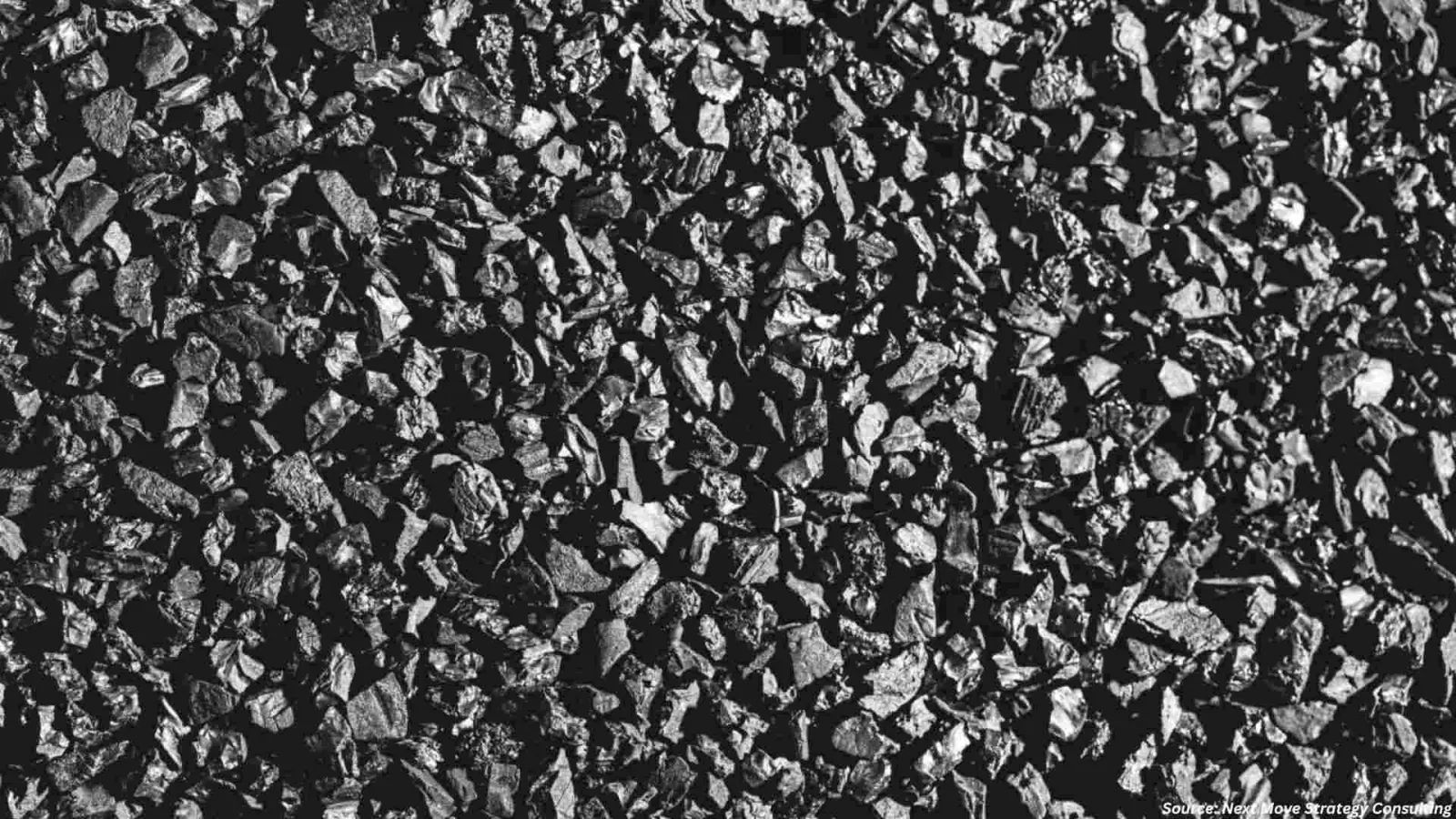
Activated carbon has emerged as a critical material in 2026, particularly in water purification and environmental remediation. Growing concerns around per- and polyfluoroalkyl substances (PFAS), often called “forever chemicals,” are driving widespread adoption of advanced filtration technologies. At the same time, domestic production initiatives are gaining traction to address supply shortages and reduce reliance on imports.
The Activated Carbon Industry is evolving into a strategically important segment where regulatory compliance, sustainability, and supply chain resilience are becoming central to growth.
Activated Carbon for PFAS Removal: A Proven Water Treatment Solution
PFAS contamination is one of the most pressing global water quality challenges. These synthetic chemicals persist in the environment and have been linked to serious health risks, including cancer and immune system effects.
Activated carbon has proven to be one of the most effective and commercially viable solutions for PFAS removal. It is widely used in municipal water systems, industrial treatment, and environmental remediation projects.
Key Developments
-
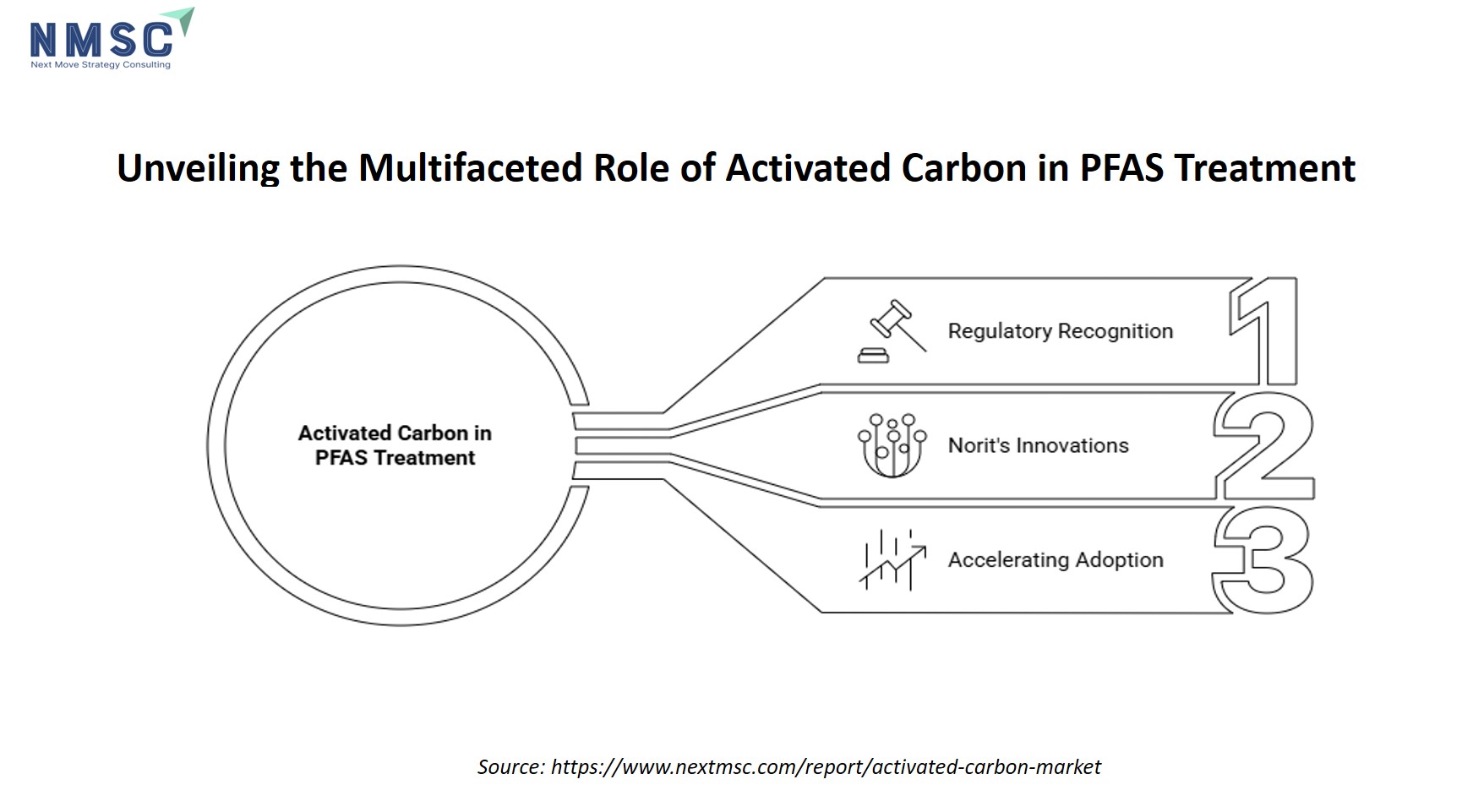
Activated carbon is recognized as a Best Available Technology under U.S. regulatory frameworks for PFAS treatment.
-
Norit is advancing PFAS treatment through granular activated carbon (GAC), powdered activated carbon (PAC), and reactivation services.
-
Increasing regulatory limits in the U.S. and Europe are accelerating adoption.
How Activated Carbon Removes PFAS
|
Feature |
Benefit |
|
High surface area |
Enables effective adsorption |
|
Optimised pore structure |
Enhances PFAS capture |
|
Surface interactions |
Supports binding of PFAS molecules |
Regulatory frameworks in the U.S. and Europe are accelerating the adoption of activated carbon, positioning it as a compliance-driven solution across municipal and industrial water systems, as observed by Next Move Strategy Consulting, where increasing regulatory stringency is directly translating into sustained demand for proven water treatment technologies.
Regulatory Push Accelerating Activated Carbon Demand
Governments are enforcing strict PFAS limits, making advanced treatment solutions essential.
United States
-
The Environmental Protection Agency (EPA) has set limits as low as 4 ng/L for PFOA and PFOS.
-
The regulation is expected to protect approximately 100 million people.
Europe
-
Total PFAS limits capped at 500 ng/L, with stricter thresholds for specific compounds.
-
Additional requirements will drive adoption of advanced treatment systems across wastewater facilities.
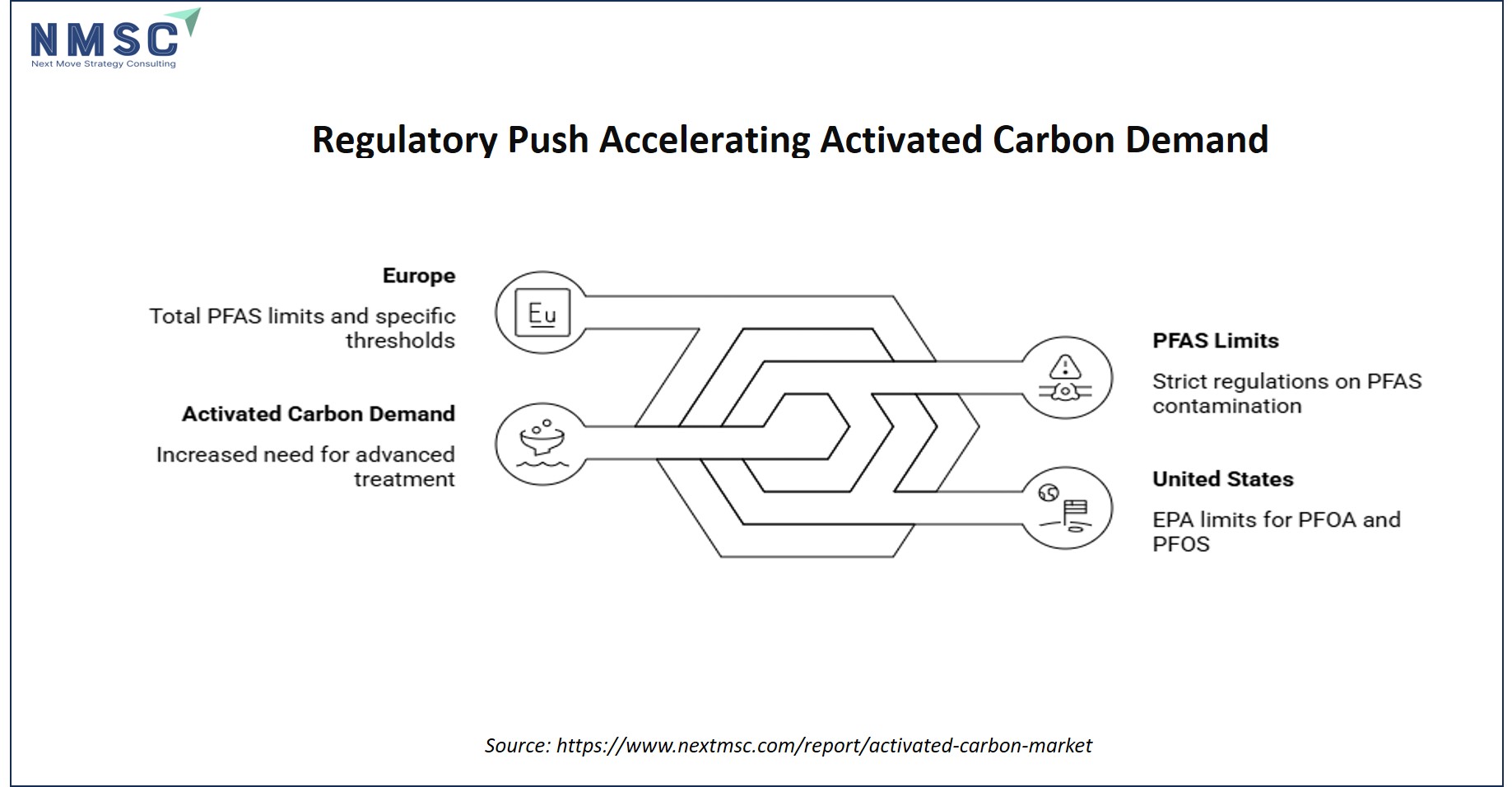
Tightening global regulations are transforming activated carbon from an optional treatment method into a mandatory infrastructure component for water utilities, according to insights from Next Move Strategy Consulting, where regulatory enforcement is increasingly driving long-term infrastructure investments in water treatment systems.
Domestic Activated Carbon Production: Addressing Supply Gaps
A significant shift in 2026 is the expansion of domestic activated carbon manufacturing, particularly in the United States.
Key Highlights
-
BioEnergy Development Inc. is deploying a production module in Montana with 3,000 tons per year capacity.
-
A four-unit system is projected to scale output to 12,000 tons annually.
-
Production uses U.S. wood waste and agricultural residues, supporting sustainability goals.
The initiative directly addresses supply challenges, as a large share of global activated carbon production is concentrated in the Asia-Pacific region.
Why Domestic Production Matters
-
Reduces reliance on international suppliers
-
Improves supply reliability for regulated industries
-
Supports long-term infrastructure planning
Localized production is expected to strengthen supply chain resilience while enabling faster response to regulatory-driven demand in water treatment markets, as highlighted by Next Move Strategy Consulting, where regional manufacturing is increasingly viewed as a strategic lever for mitigating supply risks and ensuring consistent material availability.
Sustainability and Circular Economy in Activated Carbon
Sustainability is becoming central to activated carbon applications, particularly through reactivation processes.
Key Trends
-
Thermal reactivation enables reuse of spent activated carbon
-
Lifecycle costs are reduced by 20–40%
-
Waste generation and landfill dependency are minimized
A notable development is Norit’s demonstration of 99.98% PFAS destruction efficiency during reactivation, ensuring both environmental safety and performance recovery.
Lifecycle Approach
|
Stage |
Focus Area |
|
Production |
Renewable raw materials |
|
Usage |
Effective PFAS removal |
|
Reactivation |
Reuse and contaminant destruction |
Circular economy models are redefining cost structures and sustainability benchmarks, making reactivation a critical component of long-term activated carbon strategies, as emphasized by Next Move Strategy Consulting, where lifecycle optimization and resource efficiency are becoming key drivers of competitive advantage in the activated carbon market.
According to Next Move Strategy Consulting: Industry Impact
According to Next Move Strategy Consulting, recent developments in activated carbon highlight a structural shift in the industry:
-
Regulatory enforcement is driving consistent demand growth
-
PFAS treatment is emerging as a primary application segment
-
Domestic production is reducing supply vulnerabilities
-
Circular systems are improving cost efficiency and sustainability
These factors collectively indicate that activated carbon is becoming a foundational technology in modern environmental infrastructure.

Next Steps: Actionable Takeaways
1. Align with PFAS regulations: Prepare for stricter compliance requirements in water treatment systems.
2. Invest in activated carbon solutions: Adopt proven technologies such as GAC and PAC for effective PFAS removal.
3. Explore domestic sourcing: Reduce supply risks by engaging with regional producers.
4. Adopt reactivation strategies: Improve sustainability and reduce operational costs through reuse systems.
5. Monitor regulatory updates: Stay ahead of evolving standards in both U.S. and European markets.
Conclusion
Activated carbon is playing a central role in addressing one of the most urgent environmental challenges of 2026. With tightening PFAS regulations, expanding domestic production, and the adoption of circular economy practices, the industry is undergoing a significant transformation. As regulatory and sustainability pressures continue to rise, activated carbon will remain a key enabler of safe and reliable water treatment solutions.
The future of activated carbon will be defined by its ability to combine regulatory compliance, sustainable lifecycle management, and reliable supply systems.
About the Author
 Sanyukta Deb
— Sanyukta Deb is Digital Marketing Team Lead at Next Move Strategy Consulting, where she has led content strategy and technical SEO for the firm's B2B market research publications for over 2 years. Her editorial process translates NextMSC's primary and secondary research — spanning technology, industrial, and consumer sectors — into commercial narratives, backed by search-intent, keyword, and competitive analysis. She brings 5 years of overall experience in digital marketing and content strategy.
Sanyukta Deb
— Sanyukta Deb is Digital Marketing Team Lead at Next Move Strategy Consulting, where she has led content strategy and technical SEO for the firm's B2B market research publications for over 2 years. Her editorial process translates NextMSC's primary and secondary research — spanning technology, industrial, and consumer sectors — into commercial narratives, backed by search-intent, keyword, and competitive analysis. She brings 5 years of overall experience in digital marketing and content strategy.
About the Reviewer
 Debashree Dey
— Debashree Dey is Assistant Manager at Next Move Strategy Consulting, where she supports cross-vertical market content and communications across diverse industries for 6 years. Her professional background includes senior content writing, communications, and published manuscript authorship, with experience developing audience-focused business narratives and maintaining clear, consistent messaging. Her role supports research-led content development and editorial quality across NextMSC publications.
Debashree Dey
— Debashree Dey is Assistant Manager at Next Move Strategy Consulting, where she supports cross-vertical market content and communications across diverse industries for 6 years. Her professional background includes senior content writing, communications, and published manuscript authorship, with experience developing audience-focused business narratives and maintaining clear, consistent messaging. Her role supports research-led content development and editorial quality across NextMSC publications.


















Add Comment