How P&G Unilever Henkel Nirma and Reckitt Are Redefining the Fabric Care Industry

As per the NMSC analysis, the global Fabric Care Market is set to maintain steady growth momentum, with the market size expected to reach around USD 185.84 billion by 2030. Valued at approximately USD 127.26 billion in 2024, the industry is projected to rise to USD 140.37 billion by 2025, reflecting a healthy CAGR of 5.77%. This growth is being driven by the rapid proliferation of e-commerce platforms, shifting consumer preferences toward premium and sustainable laundry solutions, and rising disposable incomes across both developed and emerging economies.
The increasing adoption of eco-friendly detergents, refill-on-demand models, and high-efficiency formulations is reshaping consumer habits globally. At the same time, the surge in demand for on-demand, technology-enabled laundry services, spanning households, residential complexes, hospitality chains, healthcare facilities, and institutional laundries, is opening fresh opportunities for the industry.
Curious about the Fabric Care Market? Grab a FREE Sample
With innovation in bio-based enzymes, water-saving technologies, and digitalized laundry ecosystems, the global fabric care sector is set to evolve into a smarter, more sustainable, and performance-driven market by the end of the decade.
Global Fabric Care Market Overview
The global fabric care market trends is undergoing a profound transformation, shaped by rising sustainability imperatives, evolving textile innovations, and shifting consumer lifestyles. Growing awareness of water scarcity, microplastic pollution, and carbon footprints is pushing brands to reimagine formulations with concentrated, water-efficient, and microplastic-free solutions. At the same time, the global popularity of performance apparel, luxury fabrics, and fast-fashion cycles has created demand for specialized products that safeguard elasticity, softness, and colour vibrancy across diverse fabric types.
Retail evolution is further amplifying market reach, with e-commerce, subscription models, and omni-channel strategies democratizing access to premium and niche fabric care products worldwide. Governments and international regulators are reinforcing the transition with stricter norms on chemical usage, eco-friendly packaging, and appliance efficiency.
Simultaneously, the surge of digital content, DIY laundry “care hacks,” and influencer-led education campaigns is shaping consumer preferences toward smarter, greener laundry practices. Global FMCG leaders and agile innovators are leading the charge with bio-based enzymes, biodegradable surfactants, refill stations, and closed-loop packaging solutions. As sustainability converges with convenience and performance, the fabric care market demand is poised to redefine everyday laundry as a technologically advanced, environmentally conscious, and preimmunized ritual across households worldwide.
Several major companies dominating the global fabric care industry include Procter & Gamble, Unilever Ltd, Henkel, Colgate-Palmolive, Church & Dwight, Kao Corporation, Reckitt Benckiser, Nirma, The Clorox Company, and Lion Corporation, among others. These players are at the forefront of innovation, developing eco-conscious formulations, enzyme-rich detergents, and sustainable packaging solutions to meet the diverse needs of global consumers.
With advancements ranging from AI-powered laundry solutions and smart dosing systems to concentrated solid formats and refill-on-demand models, they are redefining convenience and sustainability in laundry care. By investing heavily in green chemistry, biodegradable surfactants, and water-efficient solutions, these companies are tackling global challenges such as water scarcity, microplastic pollution, and carbon emissions.
Their robust R&D pipelines, coupled with expansive distribution networks spanning mature and emerging economies, enable them to balance premium performance with affordability. Together, these global leaders are steering the fabric care market expansion toward its next evolution, where everyday laundry becomes a high-performance, sustainable, and technology-driven experience.
HIGHLIGHTS OF UNILEVER LIMITED
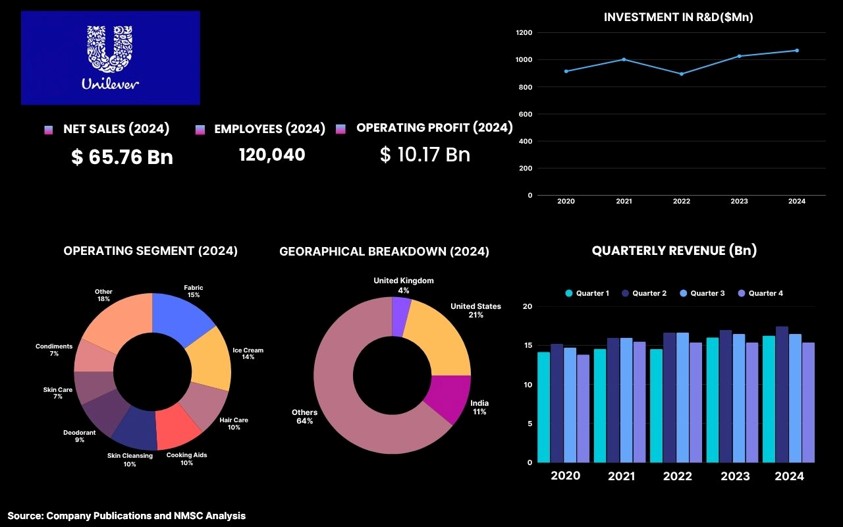
Unilever Ltd., headquartered in London, United Kingdom, is one of the world’s foremost consumer goods companies with a legacy of more than 90 years in the home and personal care sector and operations spanning over 190 countries. In the global fabric care sector, Unilever has built a strong leadership position by combining scale, innovation, and deep local relevance.
Its iconic brands such as Surf Excel/Omo, Comfort, Sunlight, and Persil cater to both premium and value segments, offering advanced stain-removal, fragrance-enhancing, and eco-friendly laundry solutions tailored to diverse consumer needs. Through these brands, Unilever addresses households across developed and emerging markets alike, ranging from performance-driven urban consumers to price-conscious families in growth economies.
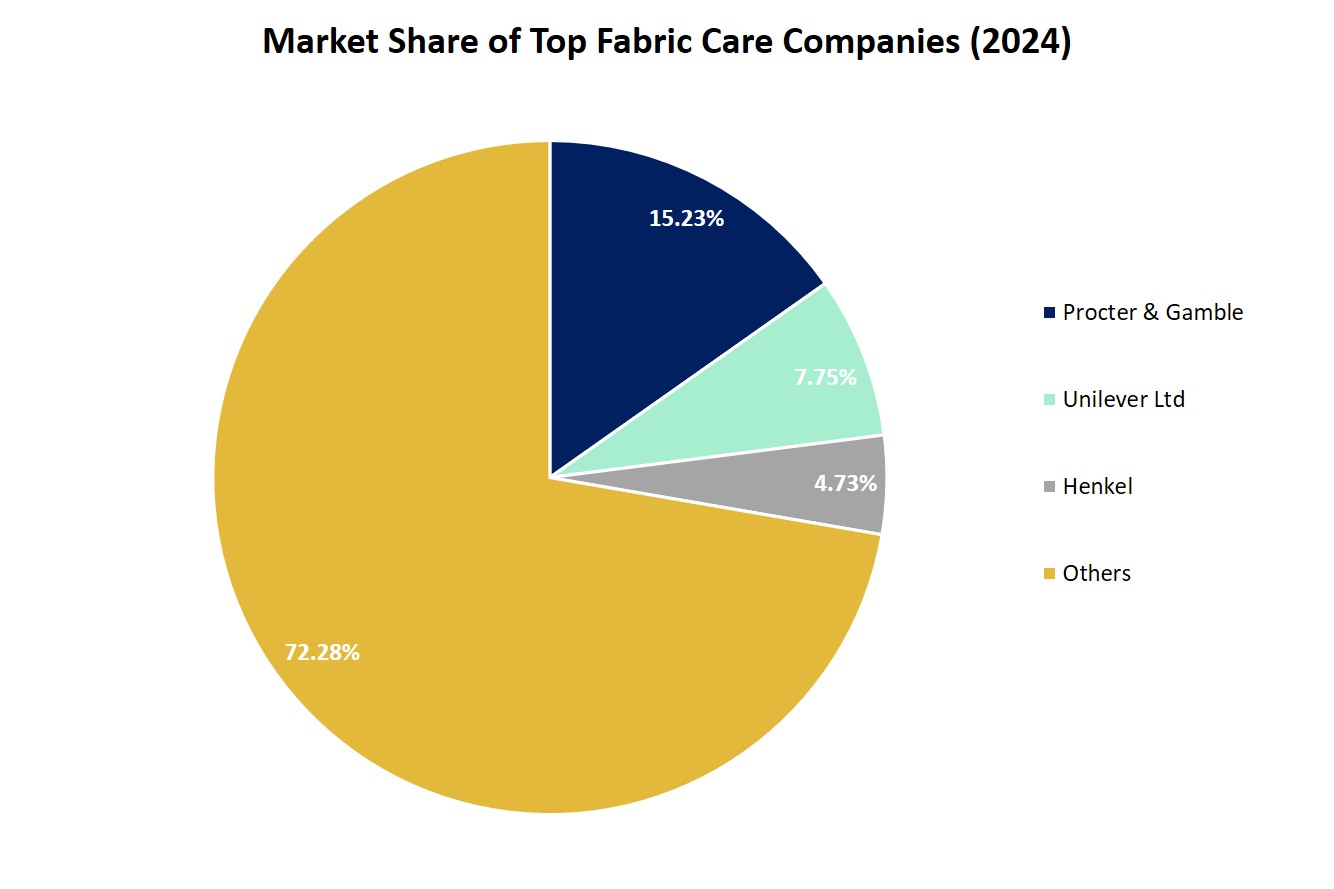
With a global market share of around 15% in fabric care, Unilever continues to reinforce its competitive edge through sustained investments in biotechnology-driven detergents, cold-wash solutions, and recyclable packaging. Its “Clean Future” strategy, focused on decarbonizing formulations and reducing plastic use, highlights its commitment to sustainability and environmental stewardship.
Leveraging digital platforms, direct-to-consumer models, and data-led innovations, Unilever is redefining how laundry solutions are delivered and experienced. By combining purpose-driven growth with global reach, Unilever remains a powerful force shaping the next generation of fabric care worldwide.
HIGHLIGHTS OF PROCTER & GAMBLE
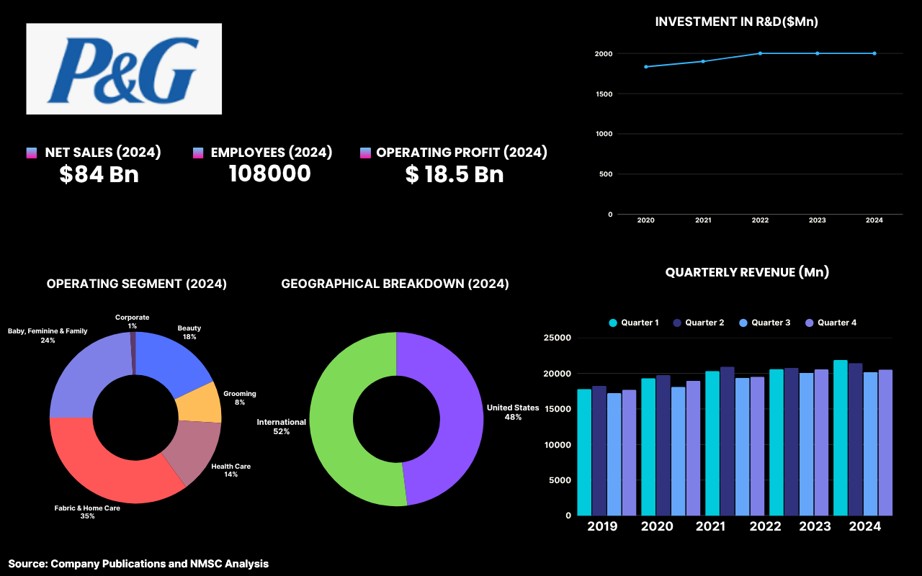
Procter & Gamble (P&G), headquartered in Cincinnati, Ohio, is a global leader in consumer goods with a legacy spanning over 180 years and operations in more than 70 countries. In the global fabric care market, P&G has established itself as the undisputed leader, leveraging its unmatched portfolio, deep consumer insights, and expansive distribution networks. Its flagship brands Ariel and Tide dominate premium and mass-market segments respectively, recognized worldwide for advanced stain-removal, fabric protection, and water-efficient formulations.
These brands, along with Downy/Lenor fabric conditioners and Gain, enable P&G to address diverse consumer needs across regions, from performance-driven urban households to cost-sensitive emerging markets. With a global market share of over 25%, P&G continues to shape the future of fabric care through sustainability, innovation, and digitalized laundry solutions.
HIGHLIGHTS OF NIRMA
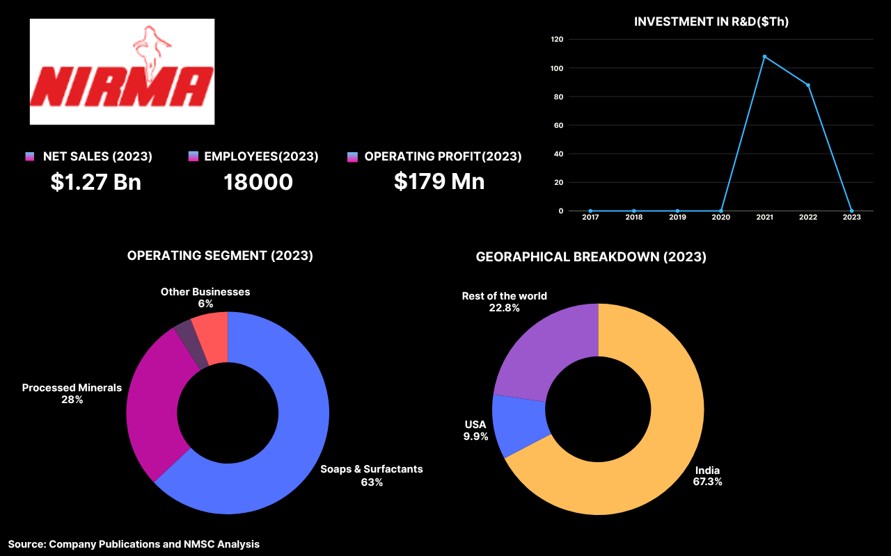
Nirma, founded in 1969 by Karsanbhai Patel, is one of most iconic homegrown FMCG companies that has extended its presence into the global fabric care market through its strong value-driven positioning. Headquartered in Ahmedabad, Gujarat, Nirma first revolutionized India’s detergent industry by offering high-quality washing powders at affordable prices, a model that later helped the company expand its relevance in price-sensitive international markets.
Today, Nirma caters to consumers in South Asia, Africa, and parts of the Middle East with a portfolio that includes Nirma Detergent Washing Powder, Nirma Advance, Nirma Ultra, Excel Liquid Detergent, and Excel Fabric Conditioner. By leveraging its cost-leadership strategy, scalable manufacturing base, and competitive pricing, Nirma appeals to households seeking effective yet affordable fabric care solutions.
With ongoing investments in enzyme-based cold-wash powders, eco-friendly surfactants, and plant-derived liquids, the company is gradually adapting to global sustainability trends. Though not as dominant globally as multinational giants, Nirma retains a niche presence by targeting value-conscious segments across emerging markets, reinforcing its legacy as a challenger brand in the global fabric care landscape.
HIGHLIGHTS OF HENKEL
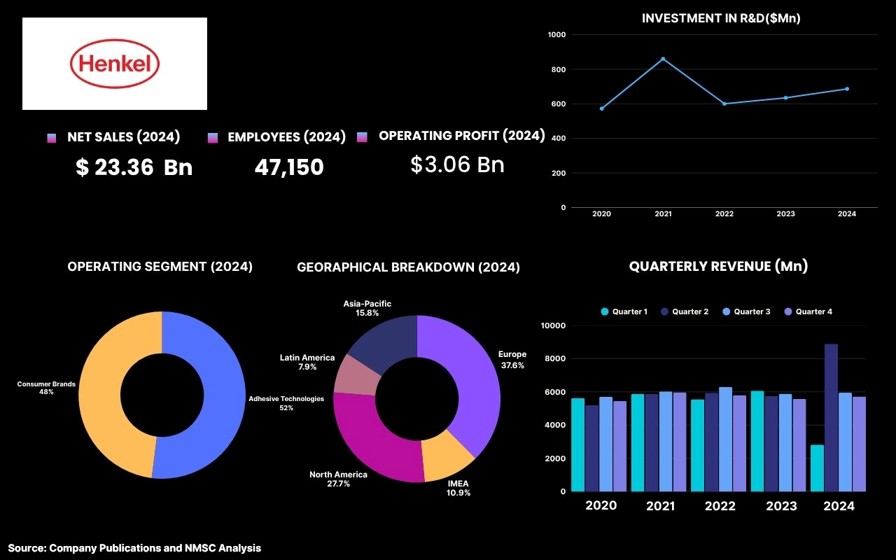
Henkel, founded in 1876 by Fritz Henkel, is a globally renowned consumer goods and industrial company that has built a strong presence in the international fabric care market through its innovation-led and sustainability-focused approach. Headquartered in Düsseldorf, Germany, Henkel has been a pioneer in laundry and home care, beginning with its first detergent based on sodium silicate.
Over the decades, the company expanded worldwide, offering high-performance and trusted brands such as Persil, Purex, Pril, and Bref, along with premium solutions like Persil ProClean and eco-optimized lines under the Love Nature brand. Today, Henkel operates across Europe, North America, Latin America, Asia-Pacific, and the Middle East, addressing both premium and mass-market segments with a balance of quality, innovation, and affordability.
By leveraging its extensive R&D capabilities, advanced enzyme technologies, and sustainability commitments, Henkel continues to shape the future of fabric protection solutions. The company has invested heavily in concentrated liquid detergents, biodegradable ingredients, and recyclable packaging, aligning with its 2030+ Sustainability Ambition Framework. This positions Henkel as a global leader that not only delivers cleaning efficiency but also drives sustainable transformation in the worldwide fabric care market growth.
HIGHLIGHTS OF RECKITT BENCKISER
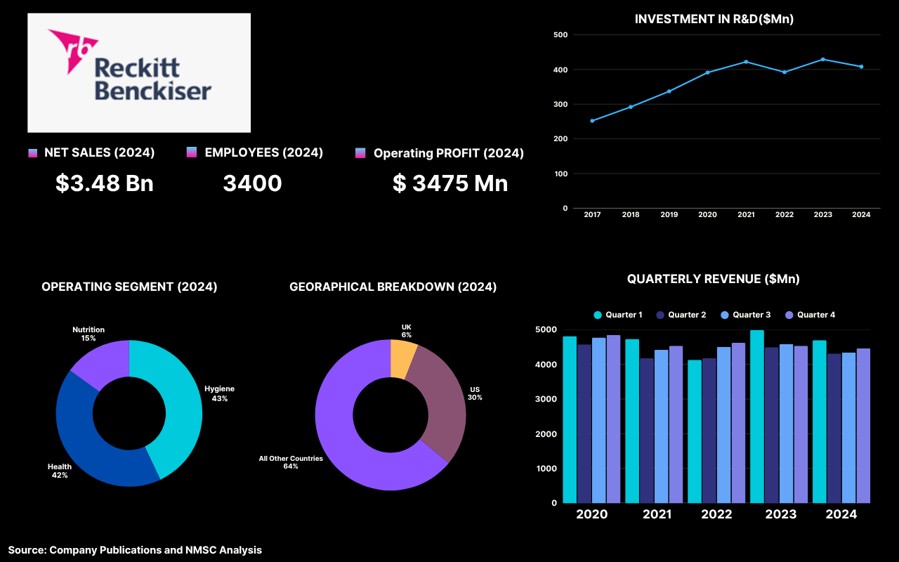
Reckitt Benckiser, headquartered in Slough, United Kingdom, has carved a significant position in the global fabric care market through its flagship stain-removal brand Vanish, which holds a leading share in the worldwide fabric-treatment category and consistently outperforms traditional laundry detergents in driving premiumization and value growth.
By continuously advancing the Vanish Oxi-Action portfolio with science-backed innovations addressing consumers’ needs for colour protection, brightness, and powerful stain removal, Reckitt has successfully transformed fabric treatment from a niche add-on into an indispensable part of the laundry routine across diverse geographies. The brand’s wide product formats, including powders, liquids, gels, and pre-treatment sprays, enable Reckitt to adapt to varying consumer preferences and washing practices across Europe, Asia, Latin America, and the Middle East.
Reckitt’s global dominance in fabric care is further reinforced by the strategic integration of complementary innovations, such as Woolite, designed specifically for delicate fabrics and dark garments. Through targeted investments in R&D, omnichannel distribution, and consumer education campaigns, the company has driven higher awareness of specialized fabric care while deepening brand loyalty.
Its proactive sustainability agenda—featuring eco-optimized formulas, recyclable packaging, and reduced water-use solutions—aligns with shifting consumer expectations, enhancing its competitive edge against rivals like Unilever, P&G, and Henkel. By combining its scientific expertise, expansive global footprint, and marketing excellence, Reckitt Benckiser has solidified its role as one of the world’s most influential players in the premium stain-removal and fabric-treatment segments, reinforcing its reputation as a global leader in advanced fabric care solutions.
Summary of Global Fabric Care Market
The global fabric care market is experiencing a dynamic transformation, driven by shifting consumer expectations around sustainability, convenience, and premium performance. Traditional powder detergents are giving way to innovative formats such as concentrated liquids, pods, sheets, and fabric conditioners, reflecting a growing preference for multifunctional, high-efficiency solutions tailored to diverse textile types and lifestyles.
Advances in green chemistry, bio-enzymes, and digitalized laundry technologies, combined with the rapid growth of e-commerce, subscription models, and omni-channel retail, are reshaping how products are delivered and consumed worldwide. Sustainability has become central, with strong focus on eco-friendly packaging, biodegradable surfactants, and water-efficient solutions. While mature markets emphasize premiumization and smart laundry systems, emerging economies are fueling volume growth, making the global fabric care market increasingly innovative, sustainable, and consumer-centric.
About the Author
 Tushmi Dutta
— Tushmi Dutta is a focused researcher specializing in detailed analysis and insight-driven research across diverse business landscapes. She supports strategic initiatives through structured data interpretation, thorough validation, and clear communication of findings that aid informed decision-making. With a strong interest in writing, she enjoys presenting research insights in an engaging and accessible manner. Beyond work, she enjoys traveling, reading, painting, and continuously learning new skills that contribute to her creative and professional growth.
Tushmi Dutta
— Tushmi Dutta is a focused researcher specializing in detailed analysis and insight-driven research across diverse business landscapes. She supports strategic initiatives through structured data interpretation, thorough validation, and clear communication of findings that aid informed decision-making. With a strong interest in writing, she enjoys presenting research insights in an engaging and accessible manner. Beyond work, she enjoys traveling, reading, painting, and continuously learning new skills that contribute to her creative and professional growth.
About the Reviewer
 Supradip Baul
— Supradip Baul is an accomplished business consultant and strategist with over a decade of rich experience in market intelligence, strategy, technology, and business transformation. His work has included rigorous qualitative and quantitative analysis across multiple industries, helping clients shape investment decisions and long-term roadmaps. Earlier in his career, he was associated with Gartner, where he contributed to industry-leading reports and market share analyses. He has worked with leading global companies and holds an MBA with a dual specialization in Marketing and Finance.
Supradip Baul
— Supradip Baul is an accomplished business consultant and strategist with over a decade of rich experience in market intelligence, strategy, technology, and business transformation. His work has included rigorous qualitative and quantitative analysis across multiple industries, helping clients shape investment decisions and long-term roadmaps. Earlier in his career, he was associated with Gartner, where he contributed to industry-leading reports and market share analyses. He has worked with leading global companies and holds an MBA with a dual specialization in Marketing and Finance.


















Add Comment