Aerospace Foam Innovation Race Led by Evonik Industries AG Saint-Gobain S.A., BASF SE, and Other Industry Leaders
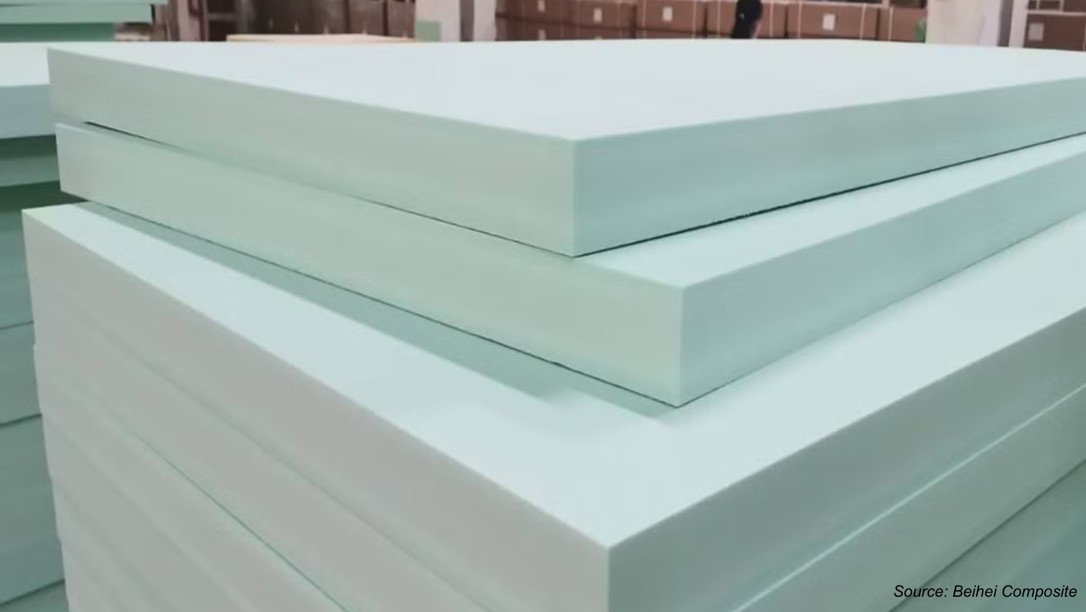
As per NMSC analysis, the Aerospace Foam Market is set to maintain strong growth momentum, with the market size expected to reach around USD 12.73 billion by 2035, marking a solid CAGR of 5.74%. Valued at USD 6.65 billion in 2025, the Aerospace Foam Market is projected to rise to USD 7.70 billion by the end of 2026.
The aerospace foam market is characterised by a complex balance between performance-driven material engineering and stringent certification requirements, positioning it as a highly specialised segment within the broader aerospace materials ecosystem. Market trends indicate that competitive intensity is increasingly shaped by the need for lightweighting, thermal insulation efficiency, flame retardancy, and durability under extreme operating conditions. Companies such as BASF SE, Evonik Industries AG, and DuPont are leveraging advanced polymer chemistry and global manufacturing capabilities to deliver high-performance foam solutions tailored for aircraft interiors and structural applications. At the same time, players like Saint-Gobain S.A. and Solvay SA are aligning their product portfolios with evolving aerospace safety standards and sustainability mandates. Our research further suggests that material certification cycles, long-term supplier relationships, and consistency in quality are emerging as critical differentiators, reinforcing supplier positioning across both commercial and defence aviation programs.
Aerospace Foam Market Overview
The aerospace foam market forms a critical segment of the broader aerospace materials industry, centred on lightweight, high-performance foam solutions used across aircraft interiors, insulation systems, seating, flooring, and structural components. Over time, aerospace foams have evolved from auxiliary cushioning materials to essential enablers of aircraft weight reduction, fuel efficiency, and passenger comfort. Market trends indicate that increasing aircraft production, fleet modernisation programs, and the growing emphasis on fuel efficiency are collectively reinforcing baseline demand across both commercial and military aviation sectors.
Our analysis further suggests that demand dynamics are increasingly shaped by the aviation industry’s decarbonisation agenda and operational cost optimisation strategies. The rising focus on reducing aircraft weight to improve fuel burn efficiency is accelerating the adoption of advanced foam materials, particularly in next-generation aircraft platforms. At the same time, increasing air passenger traffic, expanding low-cost carrier networks, and rising aircraft utilisation rates are supporting sustained demand for durable and lightweight cabin materials. In parallel, maintenance, repair, and overhaul (MRO) activities are contributing to steady replacement demand, although the market remains primarily driven by OEM production cycles.
Technological advancement is a defining characteristic of the aerospace foam market’s current evolution, as manufacturers are prioritising innovations in polymer formulations, fire-resistant properties, acoustic insulation, and recyclability to meet increasingly stringent aviation regulations and sustainability goals. Additionally, the development of multifunctional foams capable of delivering structural support alongside thermal and acoustic performance is repositioning these materials as integral components in aircraft design rather than passive fillers. Despite these growth drivers, we observed that the market continues to face structural challenges such as high certification costs, long product qualification timelines, and supply chain dependencies, all of which influence overall industry scalability and adoption rates.

Want Insights on the Aerospace Foam Market? Access a FREE Sample Instantly
Highlights of BASF SE

BASF SE is a Germany-based multinational chemical corporation headquartered in Germany. Founded in 1865, the company operates as the world’s largest chemical producer, with a diversified portfolio spanning chemicals, materials, industrial solutions, surface technologies, and performance products serving industries such as automotive, construction, and aerospace. Its core specialisation lies in advanced polymer chemistry, high-performance plastics, and material solutions that enable lightweighting, insulation, and durability. The aerospace foam market directly influences BASF’s materials segment, as demand for lightweight, flame-retardant, and high-performance foams aligns with its broader strategy of supplying advanced materials for aircraft interiors and structural applications.
Our analysis indicates that in 2025-2026, BASF advanced its global production and materials strategy through major capacity expansions and regional investments, including the commissioning of its large-scale Verbund site in Zhanjiang, China, and continued investments across Asia Pacific, North America, and Europe. The company also progressed with capacity expansion in the isocyanates value chain in Geismar, U.S., a key precursor for polyurethane foams widely used in high-performance applications. These developments strengthen BASF’s ability to supply advanced polymer and foam materials at scale, directly supporting aerospace demand for lightweight and thermally efficient components. As a result, BASF is reinforcing its supply chain resilience and positioning itself to capture long-term growth in aerospace foam applications.
Highlights of Evonik Industries AG

Evonik Industries AG is a Germany-based specialty chemicals company headquartered in Essen, North Rhine-Westphalia, Germany. Established in 2007, the company operates as one of the world’s leading specialty chemicals producers, with a strong focus on performance polymers, additives, and advanced material solutions serving industries such as automotive, healthcare, construction, and aerospace. Its core specialisation lies in high-performance polymers, lightweight composites, and functional additives designed to enhance durability, efficiency, and sustainability. The aerospace foam market directly influences Evonik’s advanced materials portfolio, as demand for lightweight, thermally stable, and high-strength foam and polymer solutions aligns with its capabilities in aerospace-grade materials and structural applications.
We observed that in 2026, Evonik has strengthened its position through continued innovation and capacity expansion in polymer and foam-related chemistries. The company expanded specialty amine production in Nanjing in 2026 to support polyurethane and epoxy applications, which are critical inputs for high-performance foam systems. At the same time, Evonik continues to advance aerospace-grade foam solutions such as ROHACELL, widely used in sandwich composite structures for aircraft components, including fuselage panels and control surfaces. These developments reinforce Evonik’s ability to supply advanced foam materials at scale, supporting growing aerospace demand for lightweight and durable structures, and strengthening its long-term competitive positioning in the aerospace foam market.
Highlights of Saint-Gobain S.A.

Saint-Gobain S.A. is a France-based multinational corporation headquartered in Courbevoie, Île-de-France, France. Founded in 1665, the company is a global leader in light and sustainable construction as well as high-performance materials, with operations spanning over 80 countries and a diversified portfolio across construction, mobility, industrial applications, and advanced materials. Its core specialisation includes performance polymers, ceramics, composites, and engineered materials designed for high-temperature resistance, insulation, and durability. The aerospace foam market directly influences Saint-Gobain’s performance materials segment, as demand for lightweight, flame-resistant, and thermally stable foam and polymer solutions aligns with its aerospace applications in cabin interiors, ducting systems, and structural components.
Our research indicates that the company continues to strengthen its aerospace materials positioning through ongoing innovation in composite structures and foam-based ducting solutions. Its aerospace division highlights the use of flame-retardant rigid foam in environmental control system (ECS) ducting, where lightweight, moldable foam structures are critical for insulation and air distribution efficiency in aircraft. Additionally, Saint-Gobain’s participation in Foam Expo North America 2026, where it is showcasing high-performance technical foam solutions and engaging directly with industry stakeholders, demonstrates its active involvement in advancing foam technologies and strengthening its presence across end-use markets. These developments indicate a sustained focus on high-performance polymer and foam integration within aerospace systems, reinforcing Saint-Gobain’s role as a key supplier of engineered materials and supporting its long-term positioning in the aerospace foam market through application-driven innovation and deep OEM integration.
Highlights of Syensqo SA

Syensqo SA is a Belgium-based specialty chemicals and advanced materials company headquartered in Brussels, Belgium. Established in 2023 following its spin-off from Solvay SA, the company focuses on high-performance polymers, composite materials, and specialty formulations serving industries such as aerospace, automotive, and electronics. Its core specialisation lies in advanced composites, structural polymers, and lightweight material systems designed to enhance mechanical performance and sustainability. The aerospace foam market directly influences Syensqo’s composite and polymer business, as demand for lightweight, high-strength, and thermally stable materials aligns closely with its aerospace-focused material portfolio and long-term innovation strategy.
NMSC’s analysis indicates that in 2026, Syensqo has strengthened its aerospace positioning through continued advancements in composite and lightweight material technologies rather than a single foam-specific launch. The company showcased high-performance and sustainable composite solutions at JEC World 2026, focusing on fast-curing prepregs, advanced resin systems, and recyclable materials that support aerospace manufacturing efficiency and weight reduction. Additionally, its Composite Materials segment recorded steady growth in 2025, supported by strong demand from civil aerospace programs. These developments highlight Syensqo’s strategic focus on lightweight composite systems, which are closely linked to foam-core structures in aerospace applications, thereby reinforcing its role in enabling next-generation aircraft design and strengthening its competitive positioning in the aerospace foam market.
Highlights of LTI Holdings, Inc.
LTI Holdings, Inc. is a United States-based materials and manufacturing company with operations and headquarters presence in California and Georgia, U.S. The company operates as part of Boyd Corporation’s broader ecosystem, focusing on engineered materials, thermal management systems, and advanced component solutions used across electronics, automotive, and aerospace applications. Its core specialisation includes rubber and polymer-based materials, thermal interface solutions, and precision-engineered components designed for high-reliability environments. The aerospace foam market influences LTI Holdings’ material solutions portfolio, as demand for lightweight, thermally efficient, and structurally adaptable materials aligns with its capabilities in engineered polymers and aerospace-grade component integration.
LTI Holdings’ influence on the aerospace foam market is best understood through its broader role in advanced materials and thermal management ecosystems. Industry data indicates that the company maintains active global supply chain operations, including ongoing shipments of engineered components and thermal systems through 2026, reflecting sustained engagement with high-performance material applications. Its capabilities in rubber processing, polymer component manufacturing, and thermal system integration position it as an important contributor to aerospace foam applications, particularly where foam materials are integrated into thermal insulation and lightweight structural assemblies. This integration-driven positioning supports long-term participation in aerospace programs, reinforcing the company’s role in enabling system-level performance rather than acting as a primary foam material innovator.
Summary of Aerospace Foam Market
The aerospace foam market demonstrates a relatively mature yet innovation-intensive structure, characterised by high entry barriers and continuous material advancements, positioning it as a specialised and performance-critical segment within the global aerospace supply chain. Our analysis indicates that demand is primarily driven by performance-led requirements rather than volume expansion alone, particularly as aircraft manufacturers prioritise weight reduction, safety compliance, and lifecycle efficiency. Leading material suppliers such as BASF SE, Evonik Industries AG, and DuPont maintain strong positioning through advanced material science capabilities, integrated production systems, and long-standing relationships with aerospace OEMs and Tier 1 suppliers.
From a competitive standpoint, the market is defined by continuous progress in high-performance polymers, fire-resistant formulations, and multifunctional material design. Industry analysis suggests that companies such as Saint-Gobain S.A., Solvay SA, and Syensqo SA are advancing capabilities in lightweight composites and specialty foams that meet increasingly stringent aviation safety and sustainability standards. This reflects a broader industry transition toward materials that not only reduce weight but also enhance acoustic insulation, thermal management, and environmental compliance across next-generation aircraft platforms.
In parallel, specialised manufacturers such as 3A Composites GmbH and LTI Holdings, Inc are strengthening their market presence through application-specific product development and close integration with aircraft interior and component suppliers. Our primary research suggests that competitive differentiation is increasingly shifting beyond material performance to include certification expertise, supply reliability, and the ability to support long product lifecycles. While the market benefits from strong alignment with long-term aerospace demand fundamentals, it remains influenced by aircraft production cycles, regulatory complexity, and raw material cost volatility. Overall, the aerospace foam market reflects strong technical expertise, established supplier credibility, and high trust driven by rigorous certification standards and critical end-use applications.
About the Author
 Mayurima Roy
— Mayurima Roy is Research Analyst at Next Move Strategy Consulting, where she has spent 4 years working across the firm's full industry coverage rather than a single fixed vertical. Her work centers on structured research, ongoing trend tracking, competitive assessment, and insight-led content development, translating complex market data into clear, decision-ready narratives that support informed client decision-making across diverse global industries, market sectors, and world regions every day.
Mayurima Roy
— Mayurima Roy is Research Analyst at Next Move Strategy Consulting, where she has spent 4 years working across the firm's full industry coverage rather than a single fixed vertical. Her work centers on structured research, ongoing trend tracking, competitive assessment, and insight-led content development, translating complex market data into clear, decision-ready narratives that support informed client decision-making across diverse global industries, market sectors, and world regions every day.
About the Reviewer
 Supradip Baul
— Supradip Baul is an accomplished business consultant and strategist with over a decade of rich experience in market intelligence, strategy, technology, and business transformation. His work has included rigorous qualitative and quantitative analysis across multiple industries, helping clients shape investment decisions and long-term roadmaps. Earlier in his career, he was associated with Gartner, where he contributed to industry-leading reports and market share analyses. He has worked with leading global companies and holds an MBA with a dual specialization in Marketing and Finance.
Supradip Baul
— Supradip Baul is an accomplished business consultant and strategist with over a decade of rich experience in market intelligence, strategy, technology, and business transformation. His work has included rigorous qualitative and quantitative analysis across multiple industries, helping clients shape investment decisions and long-term roadmaps. Earlier in his career, he was associated with Gartner, where he contributed to industry-leading reports and market share analyses. He has worked with leading global companies and holds an MBA with a dual specialization in Marketing and Finance.
















Add Comment