AI and Automation in Data Centers: Optimizing Operations and Performance
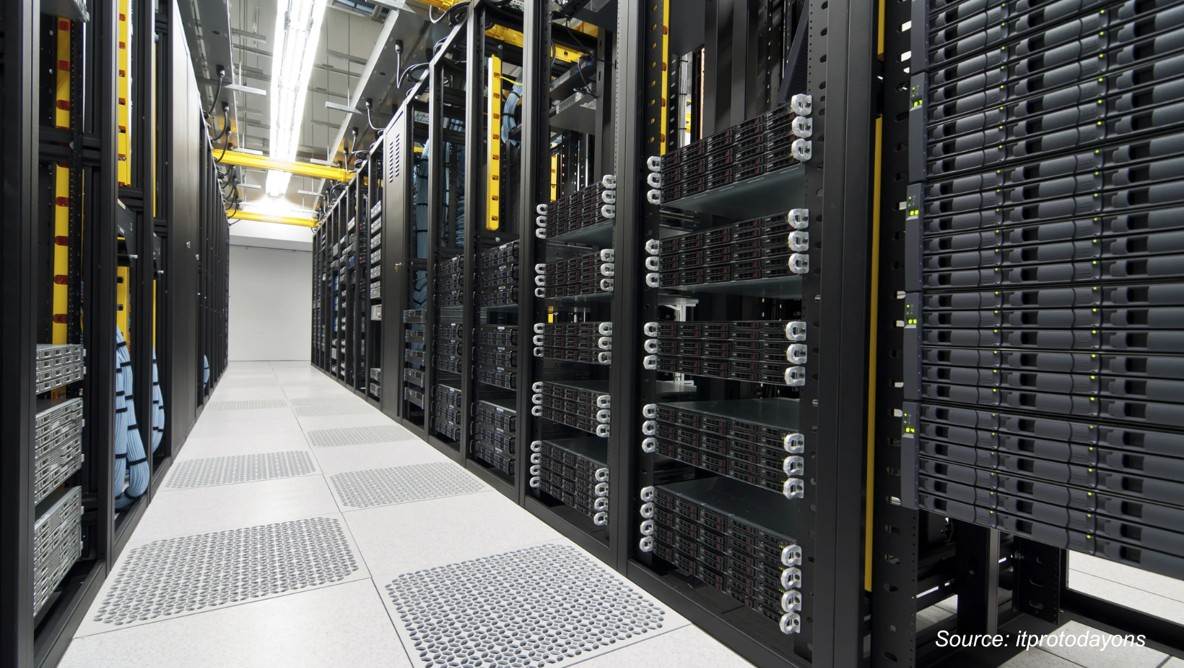
In the digital age, data centers are the backbone of the global economy, supporting everything from cloud computing to artificial intelligence (AI) applications. As data volumes surge and the demand for real-time processing intensifies, traditional data center management faces significant challenges. To address these, AI and automation have emerged as transformative forces, enabling data centers to operate more efficiently, reduce costs, and enhance performance. This blog delves into how AI and automation are reshaping data center operations, supported by real-world examples and the latest industry developments.
According to Next Move Strategy Consulting, the Data Center Market size was valued at USD 308.46 billion in 2024 and is expected to reach USD 364.59 billion by 2025. Looking ahead, the industry is projected to expand significantly, reaching USD 646.16 billion by 2030, registering a CAGR of 12.13% from 2025 to 2030.
Curious about the Data Center Market? Download Your FREE Sample Report Now
The integration of cutting-edge technologies, particularly AI and automation, has become pivotal in this expansion. These innovations are not only enhancing operational efficiency but also enabling data centers to meet the growing demands of modern applications. The convergence of AI and automation is transforming data centers into intelligent, self-optimizing entities capable of handling complex workloads with minimal human intervention.
Accelerating the Data Center Market: The Impact of AI and Automation
Driving Demand for Advanced Infrastructure with AI
Artificial intelligence applications, particularly those involving machine learning (ML) training, inference processing, and real-time analytics, have distinct computational requirements that differ markedly from traditional IT workloads. These AI tasks demand high parallel processing capabilities, substantial memory bandwidth, and low-latency data access to function efficiently.
To meet these demands, data centers are increasingly incorporating specialized hardware components such as Graphics Processing Units (GPUs) and Tensor Processing Units (TPUs). Unlike Central Processing Units (CPUs), which are optimized for sequential processing tasks, GPUs and TPUs are designed to handle the massive parallelism inherent in AI computations. This capability allows them to process large volumes of data simultaneously, significantly accelerating the training and inference processes of AI models.
In response to the escalating demand for AI processing capabilities, major technology companies are making substantial investments in AI-optimized data center infrastructure. For instance, Nvidia, a leading provider of AI hardware, has reported a significant surge in demand for its GPUs tailored for AI workloads. CEO Jensen Huang highlighted that the company is experiencing a substantial increase in AI demand globally, a trend that is expected to continue as AI applications proliferate across various industries. Similarly, Google has announced a USD 5.4 billion investment in Belgium to expand its AI infrastructure. This investment will enhance operations at the existing Saint-Ghislain site and develop a new campus in Farciennes. The initiative aims to bolster Belgium's position in the European AI and cloud computing sectors, with a focus on delivering large-scale computing capabilities powered by carbon-free energy.
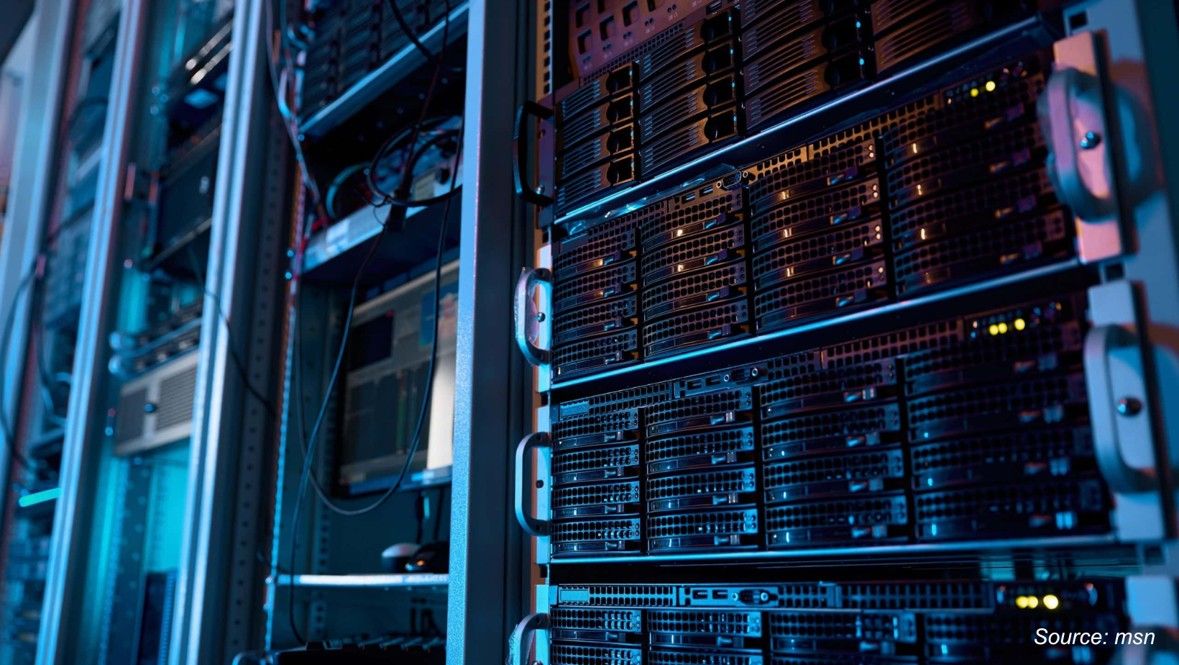
The Data Center Market is Enhancing Operational Efficiency Through Automation
Enhancing operational efficiency through automation has become a cornerstone of modern data center management, fundamentally redefining how large-scale facilities function in an era dominated by artificial intelligence, cloud computing, and edge technologies. Traditionally, data center operations required extensive manual oversight, from server provisioning and software patching to workload balancing and troubleshooting. As data centers grew in size and complexity, manual intervention became increasingly impractical, costly, and prone to human error. Automation addresses these challenges by enabling intelligent, self-regulating systems that perform repetitive and complex tasks with precision and speed, allowing human operators to focus on strategic decision-making rather than routine maintenance.
AI-powered automation platforms now handle an array of critical operational processes. These include automatically provisioning servers based on real-time demand, distributing workloads dynamically across clusters, and deploying updates and patches without downtime. Machine learning algorithms analyse performance metrics, network traffic, and system health to predict and resolve potential issues before they escalate into failures, a practice known as predictive maintenance. Similarly, robotic process automation (RPA) ensures that repetitive administrative and technical tasks, such as configuration management or backup scheduling, are executed flawlessly and consistently. The result is a data center ecosystem that operates continuously with minimal disruption, higher reliability, and optimal utilization of resources.
A striking real-world example of automation’s transformative power can be seen in Cisco’s introduction of the P200 chip, which revolutionizes how AI data centers manage network connectivity. As reported, the P200 chip consolidates 92 traditional networking chips into a single, energy-efficient unit, reducing power consumption by up to 65%. Beyond its hardware efficiency, the P200 leverages automation to synchronize massive volumes of data across globally distributed AI networks. This automation-driven synchronization minimizes latency, improves throughput, and simplifies the overall architecture of data center operations. By reducing manual configuration and network management complexity, Cisco has set a benchmark for how hardware innovation, powered by automation, can simultaneously enhance performance and sustainability.
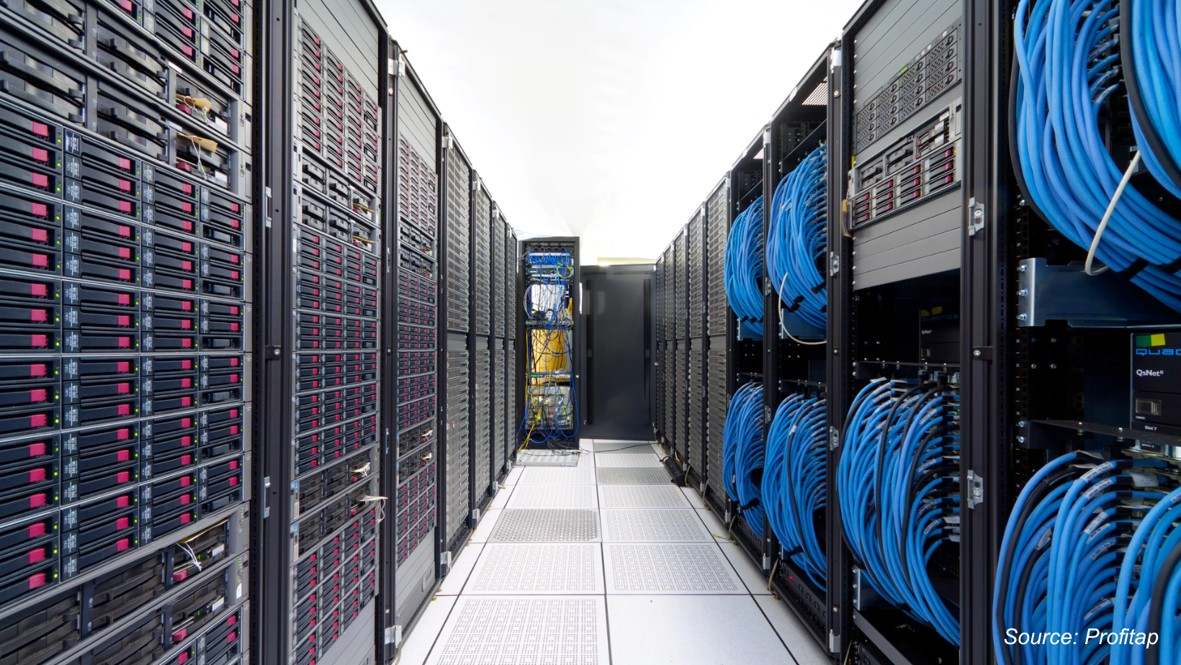
Driving Market Expansion through Advanced Data Center Solutions
Driving market expansion through advanced data center solutions represents one of the most profound shifts in today’s digital economy. The integration of artificial intelligence (AI) and automation into data center operations has transformed these facilities from passive storage hubs into dynamic engines of innovation, scalability, and efficiency. As businesses increasingly rely on cloud computing, AI-driven analytics, and real-time data processing, the demand for intelligent, high-performance, and resilient infrastructure continues to surge. This transformation is not merely technological, it’s strategic. The key to this expansion lies in intelligent resource management and automated operational control. AI algorithms continuously monitor system performance and workloads, reallocating resources such as compute power, memory, and bandwidth in real time based on changing demands. This dynamic optimization ensures that no server remains underutilized or overloaded, significantly improving overall efficiency.
Hyperscale operators such as Amazon Web Services (AWS), Microsoft Azure, and Google Cloud have been at the forefront of leveraging AI and automation to maintain seamless global operations. These cloud giants manage thousands of servers spread across hundreds of data centers worldwide, requiring near-flawless coordination and uptime. Through AI-driven orchestration, these companies automatically balance workloads between facilities based on real-time conditions such as network latency, energy availability, or localized demand spikes. For instance, AWS employs advanced automation to dynamically route workloads to the most efficient regions, optimizing energy consumption and cost-efficiency. Similarly, Microsoft Azure integrates AI into its data center management platform to enhance predictive maintenance and reduce energy waste, while Google Cloud’s AI tools continuously adjust cooling and resource allocation to achieve industry-leading operational efficiency. These innovations allow hyperscale operators to scale workloads rapidly without proportionally increasing human oversight or energy consumption, ensuring sustainable and profitable growth even as global data demands skyrocket.
In essence, AI and automation are not just optimizing how data centers operate, they are redefining what data centers are capable of. Through predictive intelligence, autonomous operation, and adaptive scalability, modern data centers are enabling the next phase of global digital expansion. The symbiotic relationship between AI technology and infrastructure innovation is creating a self-reinforcing growth cycle, where smarter operations lead to greater efficiency, which in turn unlocks new business opportunities and fuels continued investment. This evolution positions the data center industry as both the foundation and the accelerator of the world’s digital transformation.
AI and Automation Act as Catalysts for Data Center Growth
AI and automation are not just operational enhancements; they are strategic drivers of the global data center market. By enabling high-performance, scalable, and sustainable operations, these technologies are accelerating demand, reducing costs, and supporting the proliferation of AI, cloud computing, and real-time analytics. Enterprises and hyperscale providers that invest in AI-driven automation, energy optimization, and next-generation infrastructure are positioned to lead the market, ensuring operational excellence and resilience in an increasingly data-centric world. The future of the data center market is defined by intelligent, autonomous, and AI-ready facilities, creating a virtuous cycle where demand for advanced data centers continues to surge in tandem with AI and digital technology adoption.
About the Author
 Ridip Gogoi
— Ridip Gogoi is a Research Associate at Next Move Strategy Consulting, where he supports cross-vertical market research and analysis across multiple industry sectors, with four years of experience. His work includes market analysis, data validation, secondary research, and insight development, helping structure evidence into clear findings for business and strategy decisions. He contributes to research quality checks and reporting, with a focus on consistency, source review, and clarity accuracy.
Ridip Gogoi
— Ridip Gogoi is a Research Associate at Next Move Strategy Consulting, where he supports cross-vertical market research and analysis across multiple industry sectors, with four years of experience. His work includes market analysis, data validation, secondary research, and insight development, helping structure evidence into clear findings for business and strategy decisions. He contributes to research quality checks and reporting, with a focus on consistency, source review, and clarity accuracy.
About the Reviewer
 Supradip Baul
— Supradip Baul is an accomplished business consultant and strategist with over a decade of rich experience in market intelligence, strategy, technology, and business transformation. His work has included rigorous qualitative and quantitative analysis across multiple industries, helping clients shape investment decisions and long-term roadmaps. Earlier in his career, he was associated with Gartner, where he contributed to industry-leading reports and market share analyses. He has worked with leading global companies and holds an MBA with a dual specialization in Marketing and Finance.
Supradip Baul
— Supradip Baul is an accomplished business consultant and strategist with over a decade of rich experience in market intelligence, strategy, technology, and business transformation. His work has included rigorous qualitative and quantitative analysis across multiple industries, helping clients shape investment decisions and long-term roadmaps. Earlier in his career, he was associated with Gartner, where he contributed to industry-leading reports and market share analyses. He has worked with leading global companies and holds an MBA with a dual specialization in Marketing and Finance.

















Add Comment