Are Daikin Industries, Ltd., Midea Group, Haier, and Others Transforming the Future of the Room Air Conditioning (RAC) Market?
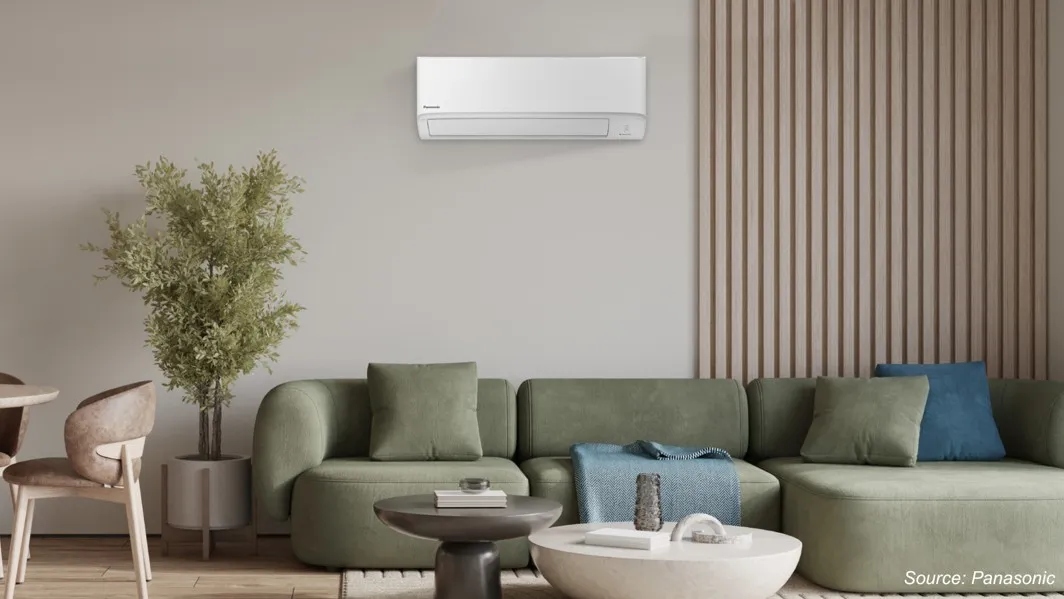
As per NMSC analysis, the industry is set to maintain strong growth momentum, with the market size expected to reach around USD 146.11 billion by 2035, marking a solid CAGR of 5.3%. Valued at USD 80.62 billion in 2025, the Room Air Conditioner (RAC) Market is projected to rise to 91.79 billion by 2026. In terms of volume, the market recorded 103 thousand units in 2025, with forecasts indicating growth to 120 thousand units by 2026 and further to 211 thousand units by 2035, reflecting a CAGR of 6.42% over the same period.
For an In-depth Analysis of the Room Air Conditioner Market (RAC) Industry, Try a FREE Sample
The Room Air Conditioner (RAC) market is characterised by a dynamic balance between scale-driven manufacturing and rapid product differentiation, making it one of the most innovation-focused segments within consumer appliances. Market trends indicate that competitive intensity is being shaped by shortened product lifecycles, frequent model upgrades, and increasing emphasis on design, noise reduction, and user-centric features. Companies such as Daikin Industries, Ltd., Midea Group, and LG Electronics are leveraging global supply chain optimisation and localised assembly to improve responsiveness to regional demand patterns. At the same time, players like Carrier and Trane Technologies plc are aligning their portfolios with stricter building efficiency standards and evolving installation practices. Industry evidence further suggests that after-sales service quality, installer networks, and brand reliability are emerging as critical differentiators, reinforcing long-term customer retention and repeat purchase behaviour across both mature and developing markets.
Room Air Conditioner Market (RAC) Market Overview
The Room Air Conditioner (RAC) market forms a core segment of the broader HVAC industry, centred on compact cooling solutions designed for individual rooms, including split, window, and portable systems. Over time, RACs have transitioned from discretionary appliances to essential household infrastructure, particularly in regions experiencing sustained temperature increases and urban expansion. Market trends indicate that rising urbanisation, improving housing standards, and increasing access to electricity are collectively reinforcing the baseline demand for room-level cooling solutions across both developed and emerging economies.
Our analysis further suggests that demand dynamics are increasingly shaped by climate variability and shifting consumer lifestyles. The growing frequency and intensity of heatwaves are accelerating first-time adoption while also encouraging multiple-unit ownership within households. At the same time, rising disposable incomes, expanding middle-class populations, and improved financing options are supporting deeper market penetration, particularly in high-growth regions such as the Asia-Pacific. In parallel, commercial applications such as small offices and retail spaces are contributing to incremental demand, although the market remains predominantly residential in nature.
Technological advancement is a defining characteristic of the RAC market’s current evolution. Manufacturers are prioritising energy efficiency, inverter-based systems, and environmentally compliant refrigerants in response to tightening regulatory standards and rising consumer awareness. Additionally, the integration of smart features, including IoT-enabled controls and AI-driven temperature optimisation, is repositioning RACs as connected, intelligent climate solutions rather than standalone appliances. Despite these growth drivers, we noticed that the market continues to face structural challenges such as price sensitivity in emerging economies, seasonal demand fluctuations, and supply chain volatility, all of which influence overall industry performance.

Highlights Of Daikin Industries, Ltd.

Daikin Industries, Ltd. is a Japan-based multinational headquartered in Osaka, specializing in heating, ventilation, air conditioning, and refrigeration (HVAC-R) systems, along with related chemicals and components. Founded in 1924, the company has established a global presence across more than 170 countries, with a strong focus on residential and commercial climate control technologies. Its core expertise lies in energy-efficient air conditioning systems, including inverter-based and split AC units. The Room Air Conditioner (RAC) Market plays a central role in Daikin’s portfolio, as residential cooling demand directly drives its product innovation, revenue mix, and global expansion strategy.
We found that in 2025, Daikin expanded its footprint through multiple strategic initiatives, including opening a new regional office in Chandigarh to strengthen distribution, service, and technical support across northern India, alongside continued investments in local manufacturing and R&D infrastructure. Additionally, the company advanced capacity expansion through new manufacturing facilities and R&D investments, including a planned R&D center in Haryana and a new production facility in Australia, aimed at enhancing localized supply chains and innovation capabilities. These developments are closely aligned with the RAC market’s growth, as they improve Daikin’s ability to meet rising residential cooling demand, strengthen regional responsiveness, and reinforce its competitive positioning in high-growth markets.
Highlights Of Midea Group Co., Ltd.

Midea Group Co., Ltd. is a China-based multinational home appliance and technology company headquartered in Beijiao, Shunde District, Foshan, Guangdong Province. Founded in 1968, the company has evolved into one of the world’s largest manufacturers of consumer appliances and HVAC systems, with operations spanning over 200 subsidiaries and multiple international markets. Its primary specialization lies in smart home solutions, air conditioning systems, and commercial technologies, with air conditioners forming a core revenue-generating segment. The Room Air Conditioner (RAC) Market is central to Midea’s business model, as sustained residential cooling demand directly influences its product development, global expansion, and manufacturing scale.
We observed that in 2025, Midea strengthened its position in the RAC market through innovation and global collaboration. The company showcased a comprehensive portfolio of energy-efficient RAC solutions, including R290-based systems, ECOMASTER smart solutions, and modular air conditioning units at C&R 2025 in Madrid, emphasizing low-carbon and intelligent cooling technologies.
Additionally, Midea deepened its collaboration with the Air-Conditioning, Heating, and Refrigeration Institute (AHRI) to advance global energy efficiency standards and streamline regulatory alignment for HVAC products. These developments align with evolving RAC market trends focused on sustainability, smart integration, and regulatory compliance, strengthening Midea’s technological leadership and enhancing its competitiveness across global residential air conditioning markets.
Highlights Of Gree Electric Appliances, Inc. of Zhuhai

Gree Electric Appliances, Inc. of Zhuhai is a China-based multinational home appliance manufacturer headquartered in Zhuhai, Guangdong Province. Founded in 1991, the company has developed into the world’s largest air-conditioner producer, with a strong presence across residential and commercial HVAC systems. Its primary specialization lies in the design, manufacturing, and distribution of air conditioning products, supported by vertically integrated operations and extensive research and development capabilities. The Room Air Conditioner (RAC) Market is central to Gree’s business, as sustained residential cooling demand directly influences its production volumes, technological innovation, and global market expansion.
Our research indicates that in 2025, Gree strengthened its innovation-led growth strategy through multiple product launches and technology showcases, including the introduction of advanced mini-split systems with high energy efficiency and inverter-driven performance, as well as new heat pump and R32-based solutions at global exhibitions such as the AHR Expo and Canton Fair. These developments align closely with evolving RAC market trends emphasizing energy efficiency, smart control, and environmentally compliant refrigerants.
By advancing product efficiency and expanding its global product portfolio, Gree enhances its competitiveness in residential cooling, supports international market penetration, and reinforces its strategic positioning as a technology-driven leader in the RAC market.
Highlights Of Haier Inc.

Haier Inc., operating under Haier Group Corporation, is a China-based multinational headquartered in Qingdao, Shandong Province. Founded in 1984, the company is a global leader in home appliances and smart home ecosystems, offering a broad portfolio that includes air conditioners, refrigerators, and connected consumer electronics. Its specialization lies in integrating IoT-enabled and energy-efficient appliances within a broader digital ecosystem strategy. The Room Air Conditioner (RAC) Market plays a critical role in Haier’s growth, as rising residential cooling demand directly influences its product innovation, global manufacturing footprint, and expansion across emerging and developed markets.
NMSC’s analysis indicates that in 2025, Haier strengthened its RAC-focused strategy through product innovation and regional expansion. The company launched its AI-enabled Gravity series air conditioners, featuring advanced climate personalization and predictive cooling technologies, aligning with increasing demand for smart and energy-efficient RAC systems. Additionally, Haier announced significant investment plans in India, including a USD 369 million expansion to build new manufacturing capacity and scale appliance production, including air conditioners. These developments reflect the evolving RAC market toward intelligent, localized solutions and enhanced capacity, reinforcing Haier’s competitive positioning, improving supply responsiveness, and supporting its long-term strategy to capture growth in high-demand residential cooling markets.
Highlights Of Mitsubishi Electric Corporation

Mitsubishi Electric Corporation is a Japan-based multinational electronics and electrical equipment company headquartered in Tokyo, Japan. Founded in 1921, the company operates across a wide portfolio, including factory automation, energy systems, semiconductors, and building technologies, with HVAC systems forming a key business segment. Its specialization lies in advanced air conditioning solutions such as ductless systems, heat pumps, and variable refrigerant flow (VRF) technologies, supported by strong engineering and R&D capabilities. The Room Air Conditioner (RAC) Market is integral to Mitsubishi Electric’s operations, as rising demand for residential cooling directly shapes its product development, technology roadmap, and regional expansion strategies.
In 2025-2026, we observed that Mitsubishi Electric strengthened its HVAC capabilities through both innovation and capacity expansion. The company showcased next-generation all-electric heat pump and air conditioning systems at AHR Expo 2026, emphasizing energy-efficient, climate-adaptive solutions aligned with evolving cooling needs. Additionally, it entered a joint venture with BITZER to develop advanced compressors for HVAC applications, enhancing efficiency and performance of future systems. The company also expanded manufacturing capacity with a new air conditioner and compressor plant in Chennai, improving localization and supply responsiveness in a high-growth RAC market.
These developments reinforce Mitsubishi Electric’s competitive positioning by strengthening innovation, supply chain control, and regional market penetration within the RAC market.
Highlights Of Carrier

Carrier Global Corporation is a U.S.-based multinational headquartered in Palm Beach Gardens, Florida, specializing in intelligent climate and energy solutions across heating, ventilation, air conditioning, and refrigeration systems. Founded on the legacy of Willis Carrier, the inventor of modern air conditioning, the company has built a strong global presence in residential and commercial HVAC segments. Its primary expertise lies in advanced cooling technologies, indoor air quality solutions, and energy-efficient systems. The Room Air Conditioner (RAC) Market plays a significant role in Carrier’s portfolio, as residential cooling demand directly influences its product innovation, revenue mix, and regional market strategies.
In 2025, we noticed that Carrier advanced its sustainability-led innovation strategy by launching its first Environmental Product Declaration (EPD) for residential HVAC systems in North America, providing transparent lifecycle data on emissions, energy use, and environmental impact. In parallel, the company-initiated field trials of battery-enabled HVAC systems designed to store and shift energy, supporting grid stability and renewable integration. These developments align closely with the evolving RAC market, where energy efficiency, decarbonization, and smart energy integration are becoming critical differentiators. As a result, Carrier is strengthening its positioning as a technology-driven and sustainability-focused leader, enhancing its long-term competitiveness in residential cooling solutions.
Summary of Room Air Conditioner Market (RAC) Market
The Room Air Conditioner (RAC) market reflects a high degree of industry maturity combined with ongoing technological transformation, positioning it as one of the most competitive segments within the global HVAC landscape. Our analysis indicates that the market is strongly driven by necessity-led demand, particularly in regions experiencing rising ambient temperatures and rapid urban expansion. Leading manufacturers such as Daikin Industries, Ltd., Midea Group, and Gree Electric Appliances Inc continue to dominate through scale, vertically integrated manufacturing, and extensive global distribution networks, while also setting benchmarks in cost efficiency and product innovation.
From a competitive standpoint, the RAC industry is defined by continuous advancements in energy efficiency, smart connectivity, and climate adaptability. Industry analysis suggests that companies such as Mitsubishi Electric Corporation, LG Electronics, and Samsung Electronics Co., Ltd are leveraging inverter technologies, AI-enabled climate control, and IoT integration to differentiate their offerings in an increasingly premium-oriented market. At the same time, legacy HVAC leaders, including Carrier and Trane Technologies plc, are strengthening their residential cooling portfolios while focusing on sustainability-driven innovation and regulatory compliance. This reflects a broader industry shift toward low-emission refrigerants and energy-optimised systems aligned with evolving environmental standards.
In parallel, diversified consumer electronics and appliance companies such as Haier and Panasonic Holdings Corporation are reinforcing their RAC presence through localised manufacturing, product customisation, and strong after-sales ecosystems. Our primary research suggests that competition is intensifying not only on pricing but also on lifecycle value, including durability, service networks, and smart ecosystem integration. While the industry benefits from structurally strong demand fundamentals, it remains sensitive to seasonal variability, input cost fluctuations, and regional demand cycles. Overall, the RAC market demonstrates strong experience and expertise through continuous product evolution, authoritativeness through the presence of globally established players, and trustworthiness driven by standardised efficiency norms and long-term consumer reliance on established brands.
About the Author
 Mayurima Roy
— Mayurima Roy is Research Analyst at Next Move Strategy Consulting, where she has spent 4 years working across the firm's full industry coverage rather than a single fixed vertical. Her work centers on structured research, ongoing trend tracking, competitive assessment, and insight-led content development, translating complex market data into clear, decision-ready narratives that support informed client decision-making across diverse global industries, market sectors, and world regions every day.
Mayurima Roy
— Mayurima Roy is Research Analyst at Next Move Strategy Consulting, where she has spent 4 years working across the firm's full industry coverage rather than a single fixed vertical. Her work centers on structured research, ongoing trend tracking, competitive assessment, and insight-led content development, translating complex market data into clear, decision-ready narratives that support informed client decision-making across diverse global industries, market sectors, and world regions every day.
About the Reviewer
 Supradip Baul
— Supradip Baul is an accomplished business consultant and strategist with over a decade of rich experience in market intelligence, strategy, technology, and business transformation. His work has included rigorous qualitative and quantitative analysis across multiple industries, helping clients shape investment decisions and long-term roadmaps. Earlier in his career, he was associated with Gartner, where he contributed to industry-leading reports and market share analyses. He has worked with leading global companies and holds an MBA with a dual specialization in Marketing and Finance.
Supradip Baul
— Supradip Baul is an accomplished business consultant and strategist with over a decade of rich experience in market intelligence, strategy, technology, and business transformation. His work has included rigorous qualitative and quantitative analysis across multiple industries, helping clients shape investment decisions and long-term roadmaps. Earlier in his career, he was associated with Gartner, where he contributed to industry-leading reports and market share analyses. He has worked with leading global companies and holds an MBA with a dual specialization in Marketing and Finance.
















Add Comment