Are Digital Twins the Next Must-Have Technology for Business?
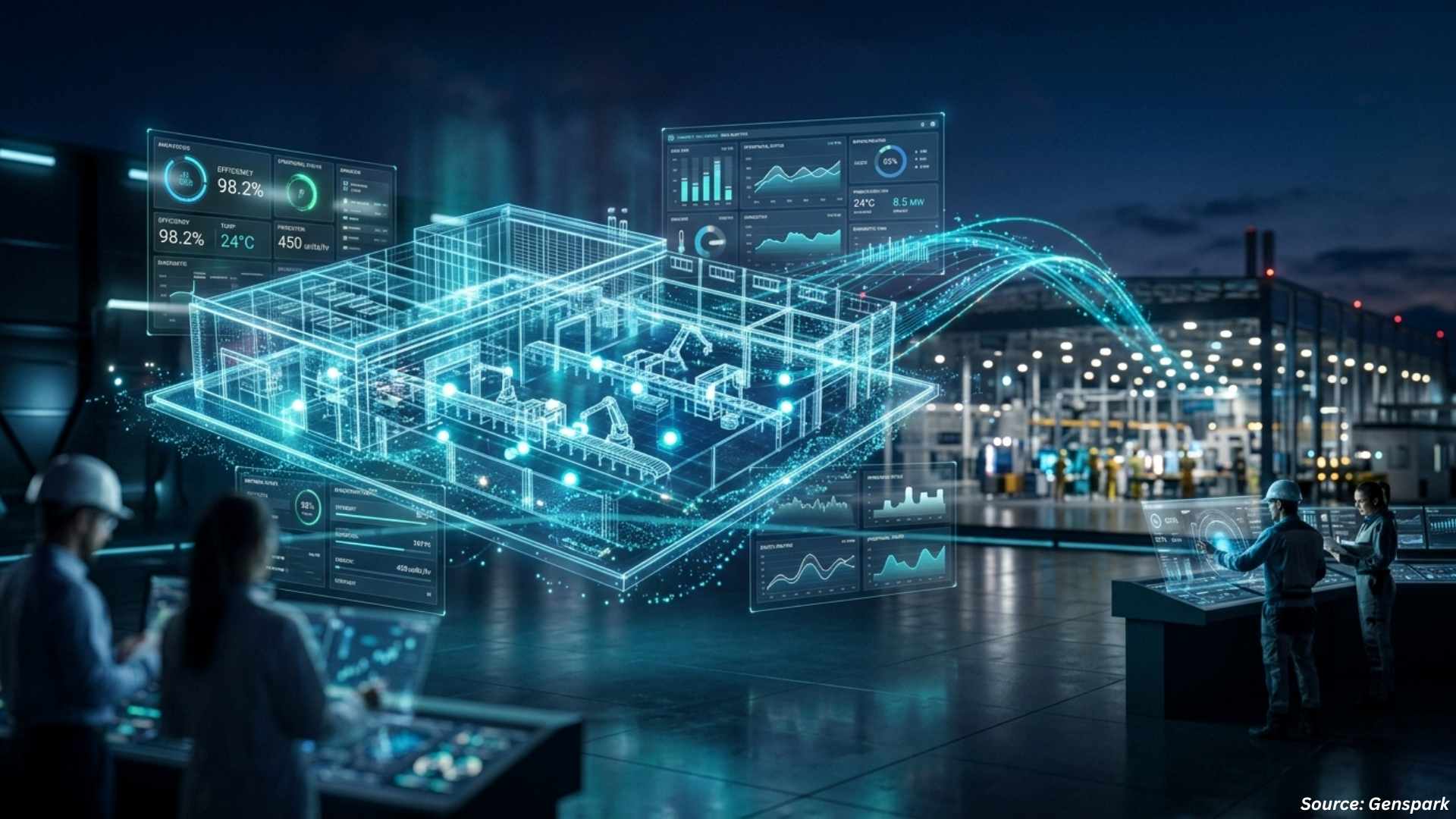
Digital twins-virtual representations of physical systems or processes—are evolving rapidly. In early 2026, we are witnessing a significant shift: this technology is moving from industrial simulation into the daily workflow of enterprise employees. As market analysts, we observe that the digital twin market is transitioning from a niche technical tool to an essential component of operational strategy.
How Is Digital Twin Technology Reshaping Industrial Infrastructure?
The telecommunications sector is currently utilizing digital twins to accelerate the transition to 6G networks. Nokia has recently launched its "Nokia RAN Digital Twin," built upon the NVIDIA Aerial Omniverse Digital Twin platform. This technology allows engineers to create physically accurate radio propagation environments, moving beyond traditional statistical approximations.
By integrating 3D maps, material data, and product-level modeling, this system allows operators to:
-
Simulate beamforming in dense urban areas to eliminate connectivity dead zones.
-
Test high-speed mobility scenarios, such as autonomous vehicles, in virtual environments.
-
Optimize infrastructure placement, which has the potential to save significant capital expenditure.
Impact on the Market
The integration of physics-based simulation with artificial intelligence signifies a maturation of the industrial digital twin market. By enabling the "train-simulate-deploy-optimize" lifecycle, this technology reduces the time from concept to live deployment. For the market, this implies a shift toward higher demand for precise, simulation-ready digital environments rather than simple 3D modeling.
Can a Digital Twin Manage Your Professional Daily Tasks?
Beyond industrial applications, the concept of the digital twin is entering the office environment. Read AI has introduced a new digital twin product, branded as "Ada," designed to act as a virtual colleague. Unlike traditional automated assistants, this tool is intended to function as an extension of the user by handling tasks such as:
-
Drafting and responding to work emails.
-
Scheduling meetings by pulling context from calendars, CRMs, and other integrated systems.
-
Acting on behalf of the user, provided the user gives approval for sensitive or high-stakes actions
Impact on the Market
The emergence of "personal" digital twins indicates that the market is broadening its definition of what constitutes a twin. We are seeing a move from "systems of record" to "systems of action," where the agent is capable of pushing tasks forward rather than merely pulling information. This shift suggests a potential surge in adoption within the productivity software sector, as companies look to automate routine communication workflows.
Summary Table: Two Perspectives on Digital Twins
|
Feature |
Nokia RAN Digital Twin |
Read AI Digital Twin (Ada) |
|
Primary Domain |
Telecommunications / Infrastructure |
Enterprise Productivity / Workflow |
|
Core Capability |
Physics-based radio simulation |
Autonomous email and meeting management |
|
Market Value |
Infrastructure cost reduction & 6G readiness |
Time efficiency & task automation |
Leading Key Companies
The global digital twin market features a diverse ecosystem of industry leaders, including Autodesk Inc., Accenture plc, Oracle Corporation, Robert Bosch, ANSYS Inc., Schneider Electric, Siemens AG, IBM Corporation, Rockwell Automation Inc., Bentley Systems, ABB Group, General Electric Co., Microsoft Corporation, Hitachi Ltd., and Dassault Systèmes SE. To maintain their competitive positioning, these organizations are actively pursuing strategic initiatives, such as targeted product launches and cross-industry collaborations on a global scale.
A prime example of this strategic focus is the October 2022 partnership between Microsoft and Capgemini, which introduced a cloud-native digital twin solution designed to help enterprises fundamentally transform their operations. By integrating Capgemini’s digital transformation expertise with Microsoft’s cloud infrastructure, this initiative underscores the escalating necessity for digital twin technology in driving operational efficiency, streamlining industrial processes, and fostering innovation across the global marketplace.

Next Move strategy Consulting’s Perspective
According to Next Move Strategy Consulting (NMSC), the rapid evolution of Digital Twins as a fundamental transition from passive 3D modeling to active, autonomous "agentic" execution. We observe that the market is breaking away from its traditional industrial silo; instead of merely serving as diagnostic tools for manufacturing and infrastructure, digital twins are increasingly acting as dynamic, real-time engines for organizational decision-making and administrative automation.
From a strategic standpoint, we categorize this shift as a movement toward a "Hybrid Twin" ecosystem where operational physical data converges with intelligent software agents. NMSC anticipates that firms capable of integrating these two domains—using high-fidelity simulation to inform autonomous actions—will secure a significant competitive advantage. We advise organizations to treat digital twins not as isolated IT projects, but as a core layer of enterprise intelligence that necessitates rigorous data governance and human-in-the-loop protocols.
What Are the Next Steps for Organizations?
As digital twins become more accessible and powerful, businesses should consider the following actions to stay competitive:
-
Audit Operational Bottlenecks: Identify areas in your production or administrative workflows where virtual simulation or agent-based automation could reduce manual trial-and-error.
-
Evaluate Integration Capabilities: Whether for industrial hardware or enterprise software, ensure that your existing data systems can integrate with these new digital twin platforms to maintain accuracy.
-
Prioritize Human-in-the-Loop Governance: As demonstrated by the requirement for "veto power" in personal digital twins, always maintain clear human oversight protocols for AI-driven actions.
-
Invest in Data Readiness: Digital twins are only as effective as the data they ingest. Ensure that your 3D maps, CRM data, and network specifications are current and high-resolution.
About the Author
 Prakhyat Chowdhury is a results-driven Market Analyst and data strategist specializing in business intelligence, trend forecasting, and performance-focused market growth. His competitive intelligence frameworks, and data-driven insights enhances strategic planning, operational efficiency, and organizational authority. Known for strong communication, analytical thinking, and multilingual proficiency, he delivers rigorous, objective-led solutions that support scalable business outcomes across industries with professionalism. He consistently aligns quantitative and qualitative analysis with global business goals.
About the Reviewer
 Sanyukta Deb is Digital Marketing Team Lead at Next Move Strategy Consulting, where she has led content strategy and technical SEO for the firm's B2B market research publications for over 2 years. Her editorial process translates NextMSC's primary and secondary research — spanning technology, industrial, and consumer sectors — into commercial narratives, backed by search-intent, keyword, and competitive analysis. She brings 5 years of overall experience in digital marketing and content strategy.
















Add Comment