Can Unmanned Surface Vehicles Replace Traditional Naval Systems?
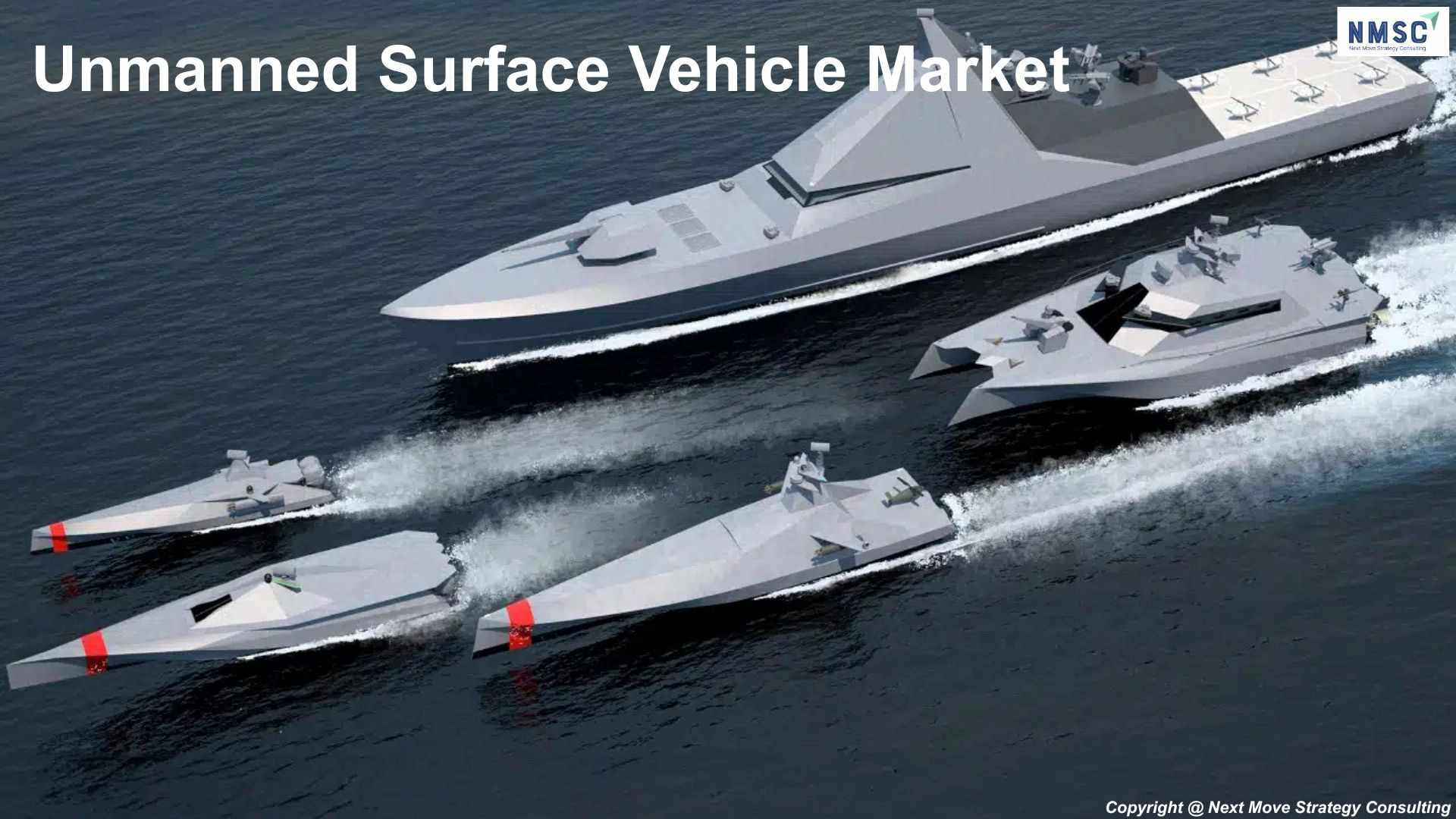
Introduction: Why Unmanned Surface Vehicles Matter in 2026
Unmanned Surface Vehicles (USVs) are rapidly transforming maritime operations, offering autonomous capabilities for defense, surveillance, and commercial applications. In 2026, the sector is witnessing strong momentum driven by cross-border collaborations, technological advancements, and increasing naval adoption.
From long-range autonomous navigation to strategic defense partnerships, USVs are evolving into mission-critical maritime assets.
The increasing adoption of autonomous maritime systems highlights a clear transition toward improved operational efficiency, reduced dependence on human intervention, and enhanced precision in mission execution across both naval and commercial sectors, as observed by Next Move Strategy Consulting.
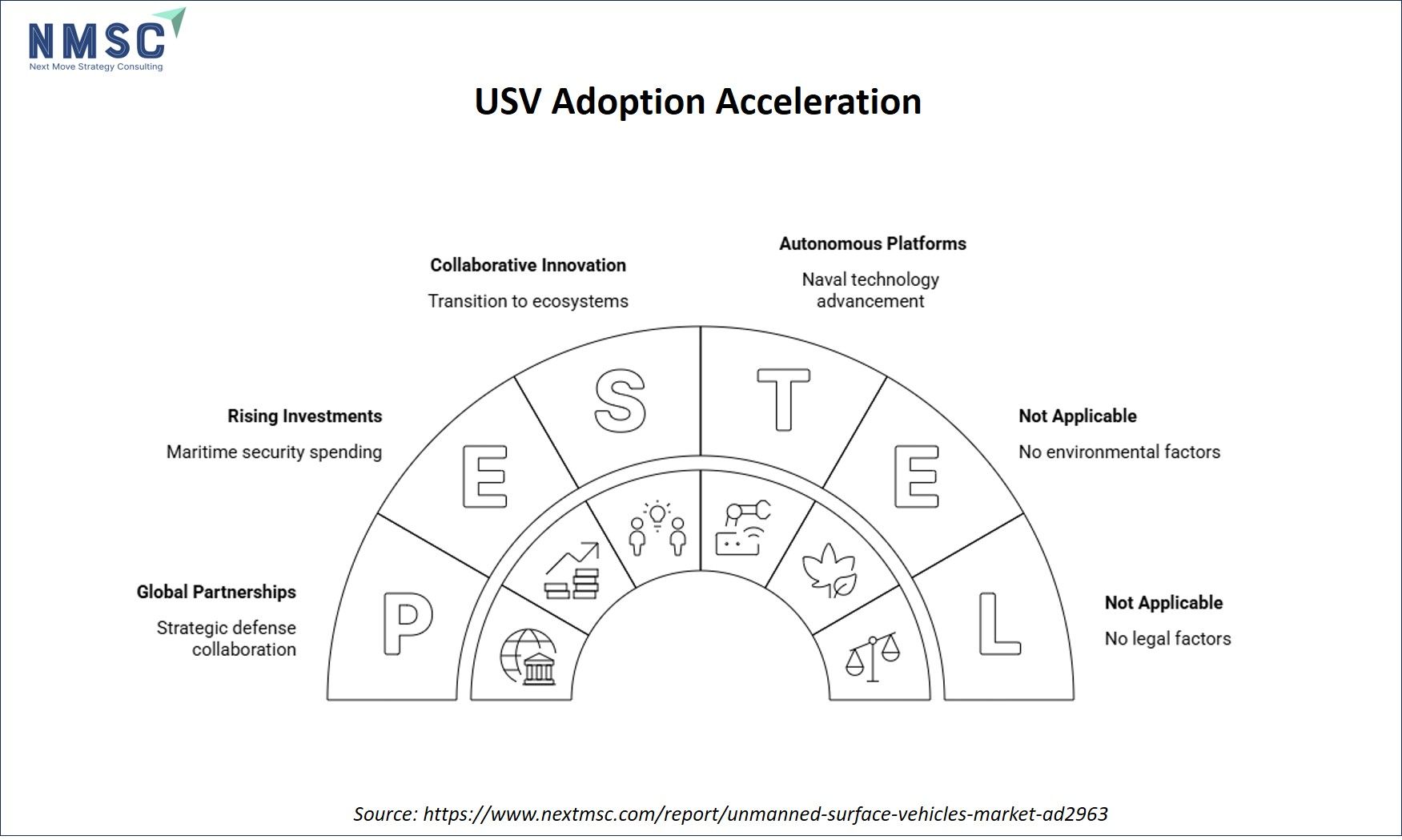
Global Partnerships Accelerating USV Adoption
A major development shaping the USV landscape is Türkiye’s unmanned surface vehicle securing a strategic partnership in Saudi Arabia, highlighting increasing global demand for autonomous naval platforms.
-
Designed for defense and surveillance operations
-
Reflects rising Middle East investments in maritime security
-
Demonstrates cross-border collaboration in defense technologies
This collaboration shows how nations are strengthening maritime capabilities while reducing reliance on conventional manned systems.
Insights from Next Move Strategy Consulting indicate that international collaborations are playing an increasingly important role in accelerating the commercialization and deployment of unmanned surface vehicles, while also reflecting a broader transition toward collaborative innovation ecosystems within the defense technology landscape.
Next-Generation USV Designs for Naval Modernization
In 2026, advanced unmanned surface vessel designs have been proposed to the Hellenic Navy, signaling the evolution of next-generation naval platforms.
Key highlights include:
-
Multi-mission operational capabilities
-
Modular architecture for flexibility
-
Integration of advanced surveillance and autonomous technologies
These developments highlight a transition toward adaptable systems capable of handling diverse naval missions.
Our observations indicate that we are seeing a clear shift toward navies prioritizing modular and scalable systems, as these approaches enable faster upgrades, improve cost efficiency, and strengthen the role of unmanned surface vehicles as strategic assets in modern fleets.
Autonomous Milestones: Long-Range USV Capabilities
A breakthrough achievement in autonomous maritime technology is Exail’s USV completing a 1,100 nautical mile autonomous transit across the Strait of Gibraltar, demonstrating real-world operational capability.
-
Recognized as a world-first autonomous transit
-
Validates long-endurance autonomous navigation
-
Operates effectively in complex maritime conditions
This milestone addresses a key industry challenge: ensuring reliability and safety in long-distance autonomous operations.
Analysis from Next Move Strategy Consulting suggests that demonstrated endurance in autonomous navigation is emerging as a key enabler for large-scale deployment of unmanned surface vehicles, as it strengthens stakeholder confidence and supports broader regulatory acceptance across global maritime markets.
Key Trends Shaping the USV Market in 2026
-
Growing Defense Investments in USVs: Governments are increasing investments in unmanned maritime systems to enhance surveillance and reduce operational risks.
-
Modular and Scalable System Design: USVs are being developed with flexible architectures to support multiple missions and upgrades.
-
Rapid Progress in Autonomous Navigation: Long-distance autonomous missions are proving the feasibility of USVs in real-world conditions.
-
Expansion Through Strategic Collaborations: Cross-border partnerships are accelerating innovation and adoption across regions.
The convergence of these trends indicates that USVs are transitioning into mainstream maritime solutions. The focus on autonomy and flexibility will define competitive advantage in the coming years.
Table: Key Developments in USVs (2025–2026)
|
Development Area |
Key Highlight |
|
Global Partnerships |
Türkiye USV partnership with Saudi Arabia |
|
Naval Modernization |
New USV designs proposed to Hellenic Navy |
|
Autonomous Innovation |
1,100 nautical mile autonomous transit by Exail |
Innovation across multiple regions demonstrates that the USV market is becoming highly competitive, with global players contributing to technological advancements.
According to Next Move Strategy Consulting: Industry Impact
According to Next Move Strategy Consulting, developments in unmanned surface vehicles are expected to accelerate the shift toward autonomous maritime ecosystems in 2026. The combination of successful long-range autonomous missions and increasing international defense collaborations suggests that USVs will become central to future naval operations. Additionally, the adoption of modular designs and multi-mission platforms will drive cost efficiency and operational flexibility. As technological maturity increases, regulatory frameworks are also expected to evolve, enabling broader commercial deployment beyond defense applications.
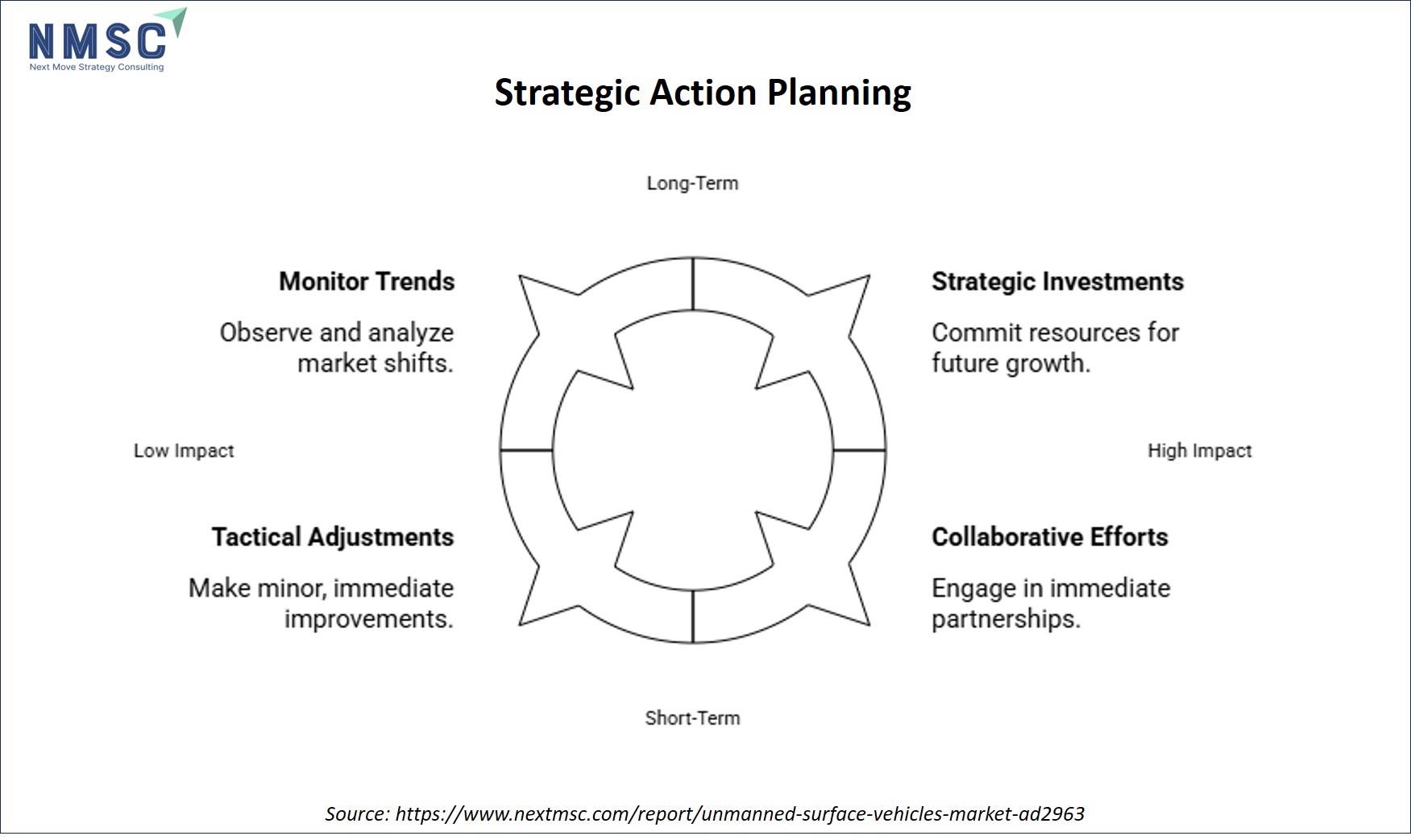
Next Steps: What Industry Stakeholders Should Do
-
Invest in Autonomous Technologies: Enhance navigation systems and operational reliability
-
Focus on Modular Platforms: Enable flexibility across multiple mission profiles
-
Build Strategic Alliances: Collaborate internationally to accelerate deployment
-
Prepare for Regulatory Changes: Align with emerging maritime autonomy standards
-
Track Defense Spending Trends: Identify opportunities in government procurement
Conclusion
In 2026, unmanned surface vehicles are no longer emerging technologies but essential components of modern maritime strategy. With strong global partnerships, advanced naval designs, and proven autonomous capabilities, the USV market is entering a phase of rapid expansion.
The continued evolution of autonomy and system flexibility will determine the future trajectory of this industry.
The pace of innovation and adoption suggests that USVs will play a pivotal role in shaping the next generation of maritime operations. Early investment and strategic positioning will be critical for long-term success.
About the Author
 Sanyukta Deb
— Sanyukta Deb is Digital Marketing Team Lead at Next Move Strategy Consulting, where she has led content strategy and technical SEO for the firm's B2B market research publications for over 2 years. Her editorial process translates NextMSC's primary and secondary research — spanning technology, industrial, and consumer sectors — into commercial narratives, backed by search-intent, keyword, and competitive analysis. She brings 5 years of overall experience in digital marketing and content strategy.
Sanyukta Deb
— Sanyukta Deb is Digital Marketing Team Lead at Next Move Strategy Consulting, where she has led content strategy and technical SEO for the firm's B2B market research publications for over 2 years. Her editorial process translates NextMSC's primary and secondary research — spanning technology, industrial, and consumer sectors — into commercial narratives, backed by search-intent, keyword, and competitive analysis. She brings 5 years of overall experience in digital marketing and content strategy.
About the Reviewer
 Debashree Dey
— Debashree Dey is Assistant Manager at Next Move Strategy Consulting, where she supports cross-vertical market content and communications across diverse industries for 6 years. Her professional background includes senior content writing, communications, and published manuscript authorship, with experience developing audience-focused business narratives and maintaining clear, consistent messaging. Her role supports research-led content development and editorial quality across NextMSC publications.
Debashree Dey
— Debashree Dey is Assistant Manager at Next Move Strategy Consulting, where she supports cross-vertical market content and communications across diverse industries for 6 years. Her professional background includes senior content writing, communications, and published manuscript authorship, with experience developing audience-focused business narratives and maintaining clear, consistent messaging. Her role supports research-led content development and editorial quality across NextMSC publications.















Add Comment