Centrifuge Market Trends in 2025: Balancing Innovation and Global Challenges
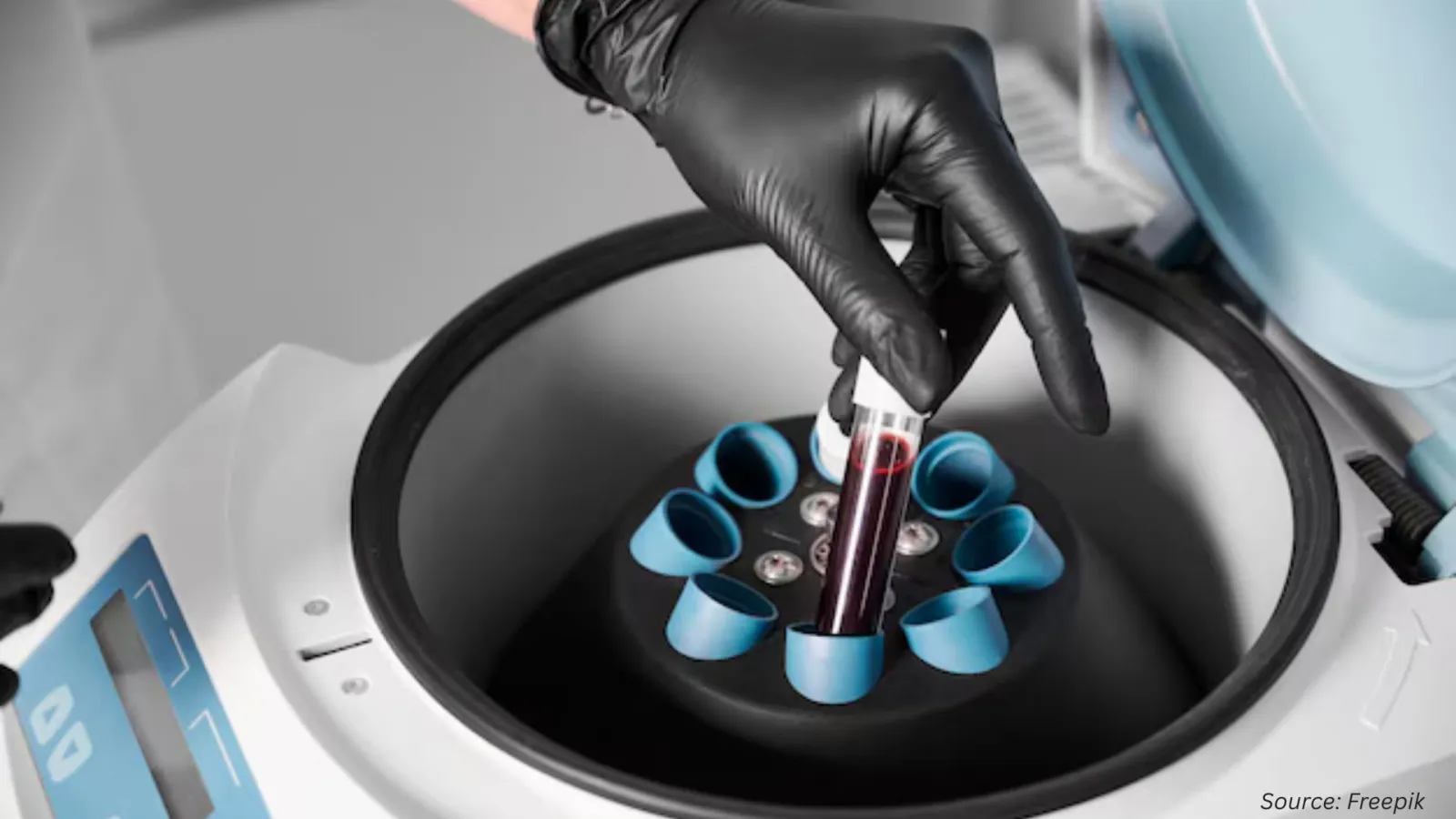
Centrifuges play a pivotal role across industries, from efficient cooling systems in manufacturing to precision enrichment processes in energy sectors. As we navigate 2025, the Centrifuge Market witnesses a fascinating duality: groundbreaking technological advancements on one front and significant disruptions from geopolitical events on another. These developments not only highlight the versatility of centrifuge technology but also underscore its vulnerability to external forces .
What New Centrifugal Chiller Innovation Is Revolutionizing Efficiency in the Industrial Centrifuge Market?
Imagine a cooling system that starts instantly without the hassle of oil pumps or routine maintenance sounds like a game-changer for factories and data centers, does it not? The "ETI-N" series employs a magnetic bearing compressor, which uses magnetic levitation to support the rotating shaft, creating an oil-free design. This eliminates the traditional lubrication oil system, preventing wear on sliding parts and removing the need for periodic oil replacements. As a result, maintenance requirements drop significantly, allowing operators to focus on productivity rather than upkeep.
Furthermore, the absence of an oil pump startup phase means the chiller achieves rapid activation, enhancing operational efficiency during peak demands. Available in compact models from 150 to 700 refrigeration tons where one refrigeration ton equals approximately 3.516 kilowatts this series integrates a built-in inverter as standard, simplifying transportation and installation.
Efficiency metrics stand out: the chiller boasts a rated Coefficient of Performance (COP) of 6.4, a measure of energy efficiency under Japanese Industrial Standards, and an Integrated Part Load Value (IPLV) of 9.1, which accounts for annual load variations and real-world conditions. Environmentally, it utilizes HFO-1233zd(E) refrigerant, which is non-flammable, non-ozone-depleting, and carries a Global Warming Potential (GWP) of 1 far superior to traditional options.
How Are Recent Geopolitical Events Disrupting Nuclear Centrifuges in the Global Market?
Shifting gears to a more tense arena, have you wondered how international conflicts ripple through high-stakes technologies like nuclear centrifuges?
Centrifuges, delicate machines that spin uranium hexafluoride gas at high speeds to enrich uranium for fuel or potential weapons, proved fragile in this scenario. Although the underground cascade hall housing these centrifuges was not directly struck, a power outage from the attack caused widespread issues. IAEA Director General Rafael Grossi assessed that the centrifuges were "severely damaged if not destroyed altogether," as sudden power loss can destabilize their finely balanced rotors, leading to collisions within cascades.
The above-ground Pilot Fuel Enrichment Plant (PFEP) at Natanz suffered complete destruction, including cascades enriching uranium to 60% purity near the 90% threshold for weapons-grade material. Electrical infrastructure damage exacerbated the underground impacts, halting operations and raising concerns over radiological and chemical contamination, though off-site radiation levels remained normal.
Elsewhere, four buildings at the Isfahan Nuclear Technology Centre were destroyed, affecting uranium conversion and metal production facilities. In contrast, the Fordo enrichment plant showed "very limited, if any, damage," and no impacts were noted at the Khondab heavy water reactor site.
This incident occurs amid broader tensions: Israel cited the strikes as preventive against Iran's alleged weaponization steps, while Iran maintains its program's peaceful intent. The IAEA's June 2025 resolution marked Iran's first non-compliance declaration in 20 years, tied to undeclared activities and breaches of the 2015 nuclear deal, abandoned by the U.S. in 2018.
For the centrifuge market, such events highlight supply chain vulnerabilities and the need for resilient designs in sensitive applications.
Key Players in the Centrifuge Industry
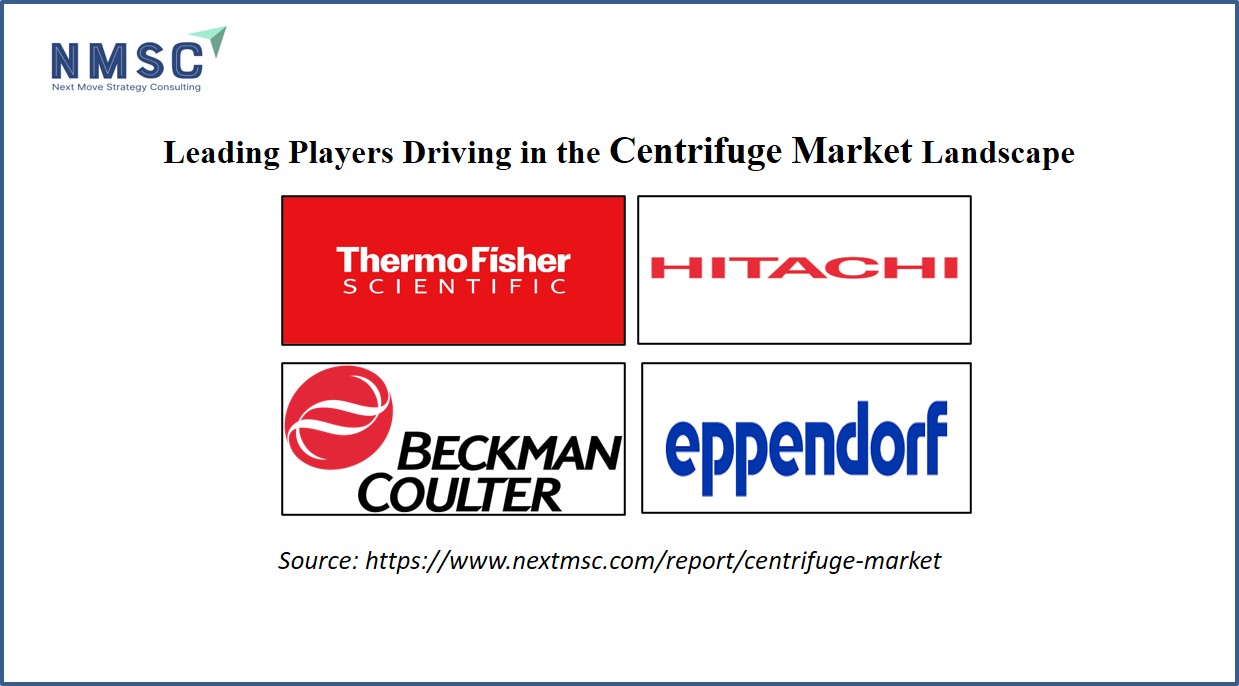
The centrifuge market features several prominent companies, including Thermo Fisher Scientific Inc., Eriez Manufacturing Co., Alfa Laval AB, Amar Equipments Pvt. Ltd., Beckman Coulter, Jas Enterprises, Boekel Scientific, Hitachi Ltd., Danaher Corporation, Eppendorf AG, and others. These industry participants continue to strengthen their competitive positions through strategies such as new product launches and other market-focused initiatives.
What Implications Do These Trends Hold for the Centrifuge Market's Future Growth?
Now, let us consider the bigger picture: how do these contrasting developments in industrial innovation and nuclear setbacks influence the overall centrifuge market trajectory.
On the industrial side, products like the "ETI-N" series contribute to market expansion by addressing energy efficiency and environmental regulations. The integration of low-GWP refrigerants aligns with global carbon reduction goals, potentially increasing demand for centrifugal chillers in sustainable building projects. Mitsubishi Heavy Industries' domestic leadership in this niche suggests a model for scalable production, fostering confidence among investors.
Conversely, disruptions in nuclear applications, such as the Natanz event, introduce uncertainty. Centrifuges for enrichment represent a specialized, high-value segment, but geopolitical risks could deter investments and accelerate shifts toward alternative energy technologies. The IAEA's monitoring role emphasizes the importance of compliance and safety, which may drive R&D into more robust, power-independent designs.
|
Trend |
Positive Driver |
Challenge |
|
Industrial Innovation |
Oil-free efficiency; |
Initial adoption costs |
|
Geopolitical |
Spurs resilient tech |
Operational halts; |
Overall, these trends position the centrifuge market for measured growth, projected to emphasize green tech while mitigating security risks.
In essence, the centrifuge market in 2025 balances opportunity with caution, urging stakeholders to prioritize innovation amid volatility.
-
Growth Opportunity: Enhanced COP and IPLV metrics support energy-efficient applications.
-
Risk Factor: Power vulnerabilities in centrifuges amplify geopolitical sensitivities.
-
Strategic Shift: Low-GWP adoption accelerates environmental compliance.
Next Move Strategy Consulting’s View
According to Next Move Strategy Consulting, the centrifuge market in late 2025 embodies a high-reward, high-uncertainty environment, with industrial and life-sciences segments surging by stringent energy-efficiency regulations and escalating biopharma capital expenditures, contrasted against nuclear-related supply chains grappling with inflated geopolitical risk premiums in the wake of the Natanz disruptions. Forward-thinking enterprises must execute a three-pronged strategy without delay: expedite the integration of oil-free magnetic-bearing technologies, exemplified by Mitsubishi Heavy Industries Thermal Systems’ ETI-N series, to realize 20–30% efficiency improvements; diversify sourcing for essential rotors and power systems to circumvent single-region dependencies; and commit to low-GWP refrigerant upgrades to fortify compliance with impending 2030–2040 environmental mandates. This disciplined approach not only safeguards profit margins but also enables market share expansion in a sector forecasted to surpass USD 27 billion by 2033.
Next Steps: Actionable Takeaways for Navigating the Centrifuge Market
To stay ahead in this dynamic landscape, consider these practical steps tailored for decision-makers in manufacturing, energy, and policy:
-
Evaluate Efficiency Upgrades: Assess your current systems for magnetic bearing options like the "ETI-N" to cut maintenance by up to 50% start with a pilot installation feasibility study.
-
Enhance Supply Chain Resilience: Diversify suppliers for critical components, incorporating backup power solutions to protect against disruptions similar to Natanz.
-
Prioritize Sustainability Audits: Conduct GWP analyses on refrigerants and enrichment processes, aiming for options with GWP under 10 to align with 2040 carbon goals.
-
Monitor Geopolitical Intelligence: Subscribe to IAEA updates and integrate risk assessments into procurement, ensuring compliance with non-proliferation standards.
-
Invest in R&D Partnerships: Collaborate with firms like Mitsubishi Heavy Industries for custom centrifuge adaptations, focusing on hybrid industrial-nuclear tech transfers where permissible.
By acting on these, you position your operations not just to weather trends but to lead them. What aspect of the centrifuge market intrigues you most—innovation or international implications? Share in the comments below.
About the Author
 Sanyukta Deb
— Sanyukta Deb is Digital Marketing Team Lead at Next Move Strategy Consulting, where she has led content strategy and technical SEO for the firm's B2B market research publications for over 2 years. Her editorial process translates NextMSC's primary and secondary research — spanning technology, industrial, and consumer sectors — into commercial narratives, backed by search-intent, keyword, and competitive analysis. She brings 5 years of overall experience in digital marketing and content strategy.
Sanyukta Deb
— Sanyukta Deb is Digital Marketing Team Lead at Next Move Strategy Consulting, where she has led content strategy and technical SEO for the firm's B2B market research publications for over 2 years. Her editorial process translates NextMSC's primary and secondary research — spanning technology, industrial, and consumer sectors — into commercial narratives, backed by search-intent, keyword, and competitive analysis. She brings 5 years of overall experience in digital marketing and content strategy.
About the Reviewer
 Debashree Dey
— Debashree Dey is Assistant Manager at Next Move Strategy Consulting, where she supports cross-vertical market content and communications across diverse industries for 6 years. Her professional background includes senior content writing, communications, and published manuscript authorship, with experience developing audience-focused business narratives and maintaining clear, consistent messaging. Her role supports research-led content development and editorial quality across NextMSC publications.
Debashree Dey
— Debashree Dey is Assistant Manager at Next Move Strategy Consulting, where she supports cross-vertical market content and communications across diverse industries for 6 years. Her professional background includes senior content writing, communications, and published manuscript authorship, with experience developing audience-focused business narratives and maintaining clear, consistent messaging. Her role supports research-led content development and editorial quality across NextMSC publications.


















Add Comment