Digital Transformation Redefining Infrastructure Development in the Asia-Pacific Construction Market

The Asia-Pacific construction market is undergoing a profound transformation as digital technologies redefine project execution, efficiency, and sustainability. NMSC analysis indicates that rising urbanisation, government infrastructure initiatives, and private-sector investments are accelerating the adoption of advanced solutions such as Building Information Modeling, Internet of Things, AI, and robotics. Industry insights suggest that these innovations are not only optimising design and construction workflows but also enhancing safety, cost control, and project timelines. As regional players increasingly embrace modular and prefabricated construction techniques, the APAC construction landscape is moving toward a smarter, more connected, and highly efficient future.
According to Next Move Strategy Consulting, the Asia-Pacific Construction Market size was valued at USD 6869.78 billion in 2025, and is expected to be valued at USD 7146.03 billion by the end of 2026. The industry is projected to grow, hitting USD 9557.14 billion by 2035, with a CAGR of 3.28% between 2026 and 2035.
In the Asia Pacific construction world, the phrase “digital transformation” has moved far beyond buzzword status, it’s now central to how megaprojects, cities, and smart infrastructure get built. Across the region, firms are harnessing data, cloud platforms, AI, IoT, and next gen modeling tools to drive efficiency, cut overruns, improve safety, and unlock entirely new ways of working.
Curious about the Asia-Pacific Construction Market? Download Your FREE Sample Report Now
Industry data shows this isn’t theoretical anymore, as APAC construction companies are now using an average of 6.2 digital technologies, up from 5.2 just a year earlier, and firms that adopt just one more technology often see measurable revenue gains and significant operational improvements.
In modern construction, technology is indispensable, reshaping workflows and driving transformation
Digital tools are revolutionising construction workflows from the earliest design stages through to operations and maintenance:
-
More tech, better results: Research shows that integrating additional digital tools leads to faster project delivery, higher margins, and improved coordination between teams.
-
AI adoption is on the rise: Around 30% of APAC construction firms are currently trialling or using AI, and another 39% plan to adopt it soon, for scheduling, risk analysis, and optimisation.
-
Cloud & mobile platforms are now core operational systems, enabling real time communication between remote offices, job sites, subcontractors, and suppliers.
We therefore found that companies embracing multiple digital tools are better equipped to stay competitive and complete complex projects on schedule.
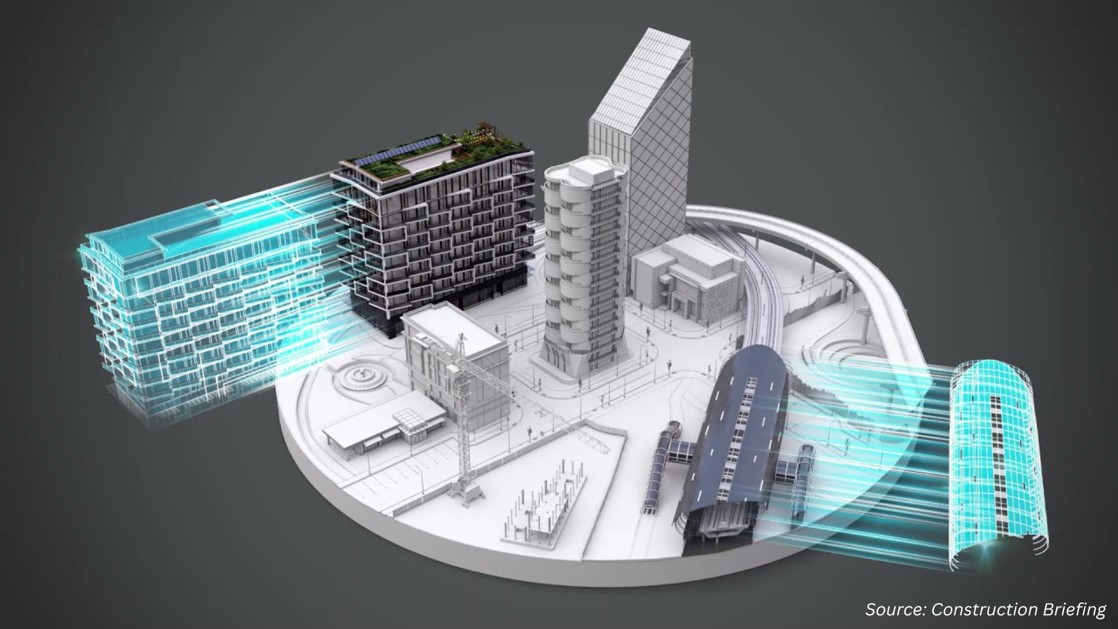
BIM- The Digital Backbone of Modern Projects Driving Smarter, More Efficient Construction
Technical evaluation shows that Building Information Modeling is no longer just a 3D design tool but a central driver of digital transformation in construction projects.
-
Countries like Singapore, South Korea, and China have mandated BIM for major public infrastructure projects, which is helping shift the industry from traditional blueprints to fully integrated digital models.
-
BIM streamlines project planning and coordination, reduces costly rework, and improves communication between architects, engineers, and builders.
-
Outcome-based BIM approaches use data from early planning, including sustainability goals, to guide decisions from day one and help teams manage cost, quality, and environmental targets simultaneously.
This means that firms that effectively use BIM detect design clashes earlier, optimise schedules with linked cost data, and transition models into digital twins for real time monitoring. This translates to more predictable and resilient infrastructure outcomes across the region.
AI IoT and smart technology are bringing construction to life with smarter connected workflows
Traditional construction is no longer purely analogue, as intelligence is now embedded throughout modern projects:
-
IoT sensors are increasingly installed on heavy machinery and within building structures to continuously monitor vibration, temperature, moisture, and equipment health. These real-time insights enable predictive maintenance, trigger safety alerts, and help optimise resource allocation across sites.
-
AI systems analyse the massive streams of data generated by these sensors to forecast potential delays, optimise workforce deployment, and assess project risks well before they occur.
Together, AI and IoT are closing the gap between planning and reality, empowered by connectivity and analytics that inform smarter decisions on the fly.
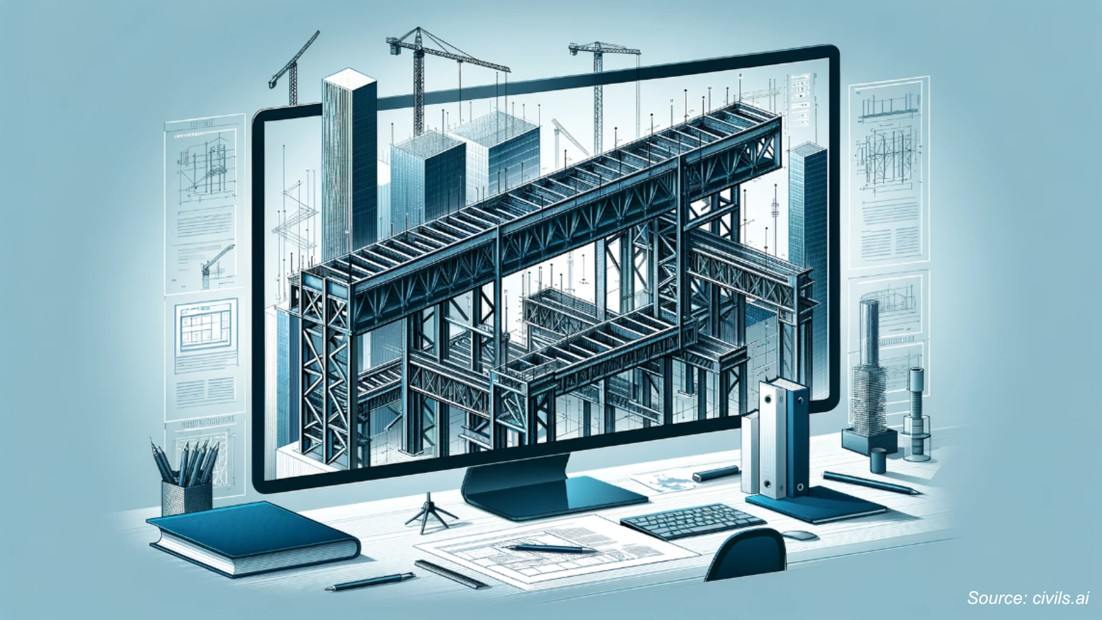
Real APAC Examples Showing How Digital Technology is Transforming Construction
-
Singapore is at the forefront of digital transformation in construction
Based on our country-level analysis, we observed that Singapore’s construction sector emerges as one of the most digitally advanced in APAC, with firms leveraging an average of more than seven technologies and dedicating nearly 28% of their budgets to technology investments. This strong digital adoption correlates with faster project delivery, improved financial performance, and a significant reduction in safety incidents. The transformation is largely driven by government-led initiatives such as the Built Environment Industry Transformation Map, which encourages standardised digital practices, widespread BIM adoption, and integrated project delivery approaches.
-
India is accelerating the adoption of digital tools across construction operations
We analysed that Indian construction companies rank among the most proactive in the APAC region, actively leveraging technologies such as data analytics (66%), construction wearables (61%), and prefabrication or modular construction methods (57%) to improve project outcomes. Many firms are also exploring AI, drones, and 3D printing to future-proof their delivery pipelines. This digital transformation is primarily aimed at addressing rising material and labor costs, enhancing operational efficiency, and strengthening client relationships.
-
The Philippines is adopting a tech forward mindset in construction
Based on the latest industry developments, construction and infrastructure stakeholders in the Philippines are increasingly aligning with regional digital transformation trends, such as IoT enabled smart infrastructure and digital twin technologies that enable real time monitoring and analytics.
These examples demonstrate that digital transformation is not confined to developed countries but is also driving significant changes in construction practices across emerging markets.
How the Digital Shift is Transforming Construction to be Faster, Safer, and Smarter
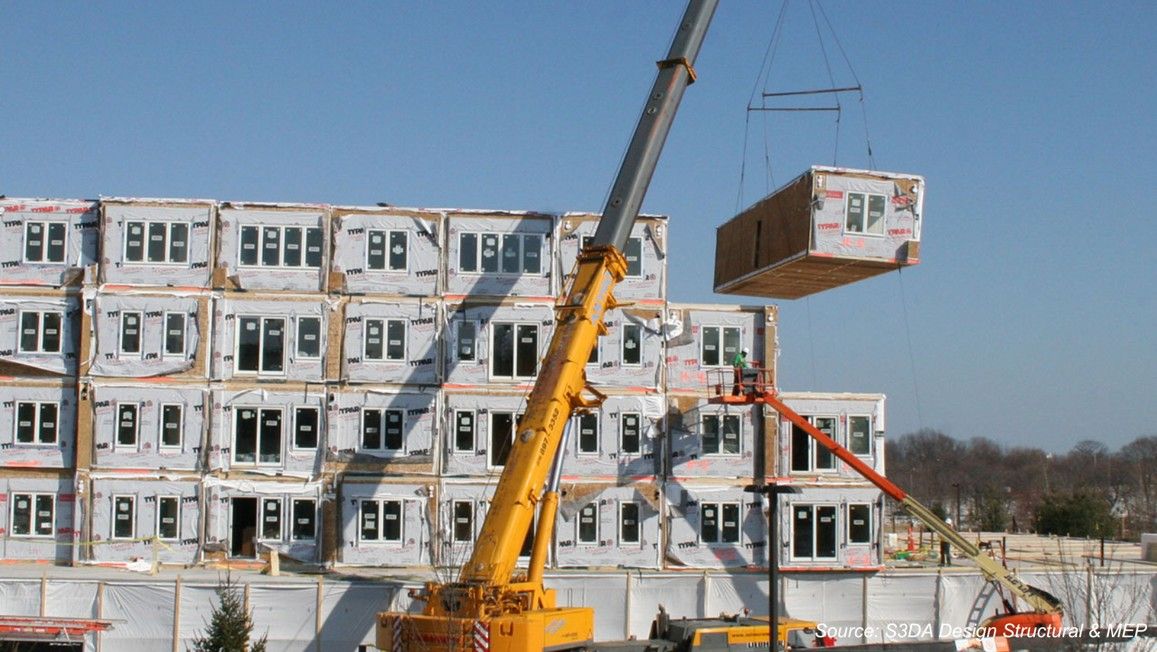
Based on our market assessment, we analysed that digital transformation is fundamentally reshaping construction workflows across the APAC region, driving measurable improvements in project speed and efficiency. Techniques such as modular and prefabricated construction, supported by advanced digital planning tools, enable faster project delivery, reduce delays, and accelerate the completion of large-scale infrastructure developments. At the same time, real-time monitoring through IoT sensors, wearables, and integrated management platforms enhances workplace safety and regulatory compliance, allowing construction teams to detect hazards early, minimise incidents, and maintain adherence to both local and international standards.
Industry evidence further suggests that the adoption of AI and data analytics strengthens decision-making capabilities. Predictive insights derived from operational data allow project managers to anticipate delays, optimise resource allocation, and mitigate risks before they materialise, improving overall project outcomes. In parallel, digital planning and real-time monitoring reduce cost overruns, optimise workforce and equipment deployment, and minimise material waste. Collectively, these benefits highlight that embracing digital tools is not merely a technological upgrade but a strategic imperative that enables construction firms to execute projects faster, safer, smarter, and more efficiently in an increasingly competitive APAC market.
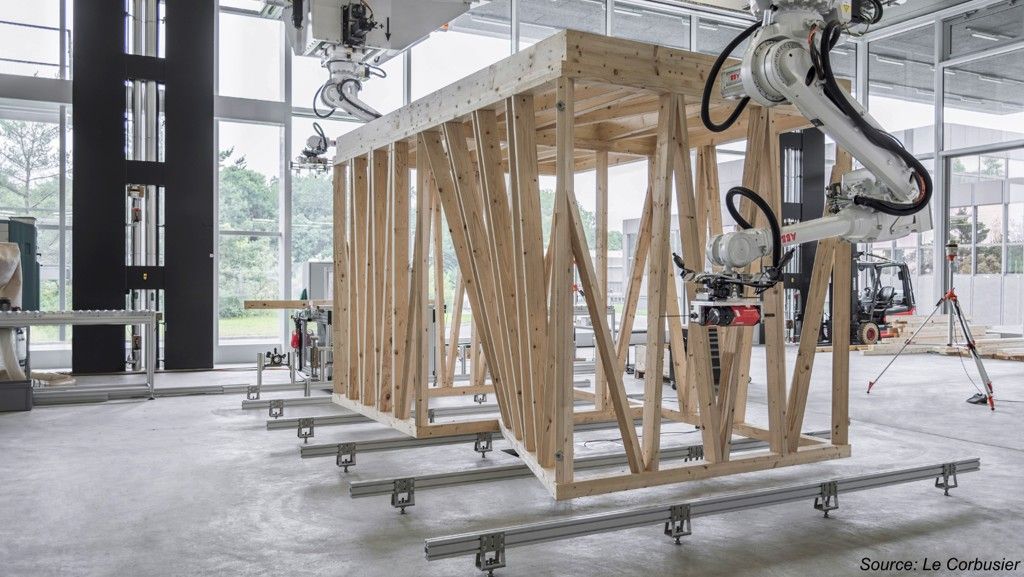
Embracing Digital Solutions Determines Success in Modern Construction
Across APAC, construction leaders are therefore increasingly treating technology not merely as a support function, but as a strategic driver of growth, resilience, and innovation. Tools such as BIM, now mandated in many government projects, AI for predictive risk management, and IoT for real-time site monitoring are collectively transforming the way infrastructure is planned, executed, and maintained at scale.
We further observed that for all stakeholders, including government agencies, contractors, consultants, and investors, the imperative is clear, where integrating digital solutions is no longer optional. Firms that strategically adopt these technologies are better positioned to deliver complex projects efficiently, mitigate risks proactively, and secure a competitive edge in a rapidly evolving APAC construction landscape.
About the Author
 Mayurima Roy
— Mayurima Roy is Research Analyst at Next Move Strategy Consulting, where she has spent 4 years working across the firm's full industry coverage rather than a single fixed vertical. Her work centers on structured research, ongoing trend tracking, competitive assessment, and insight-led content development, translating complex market data into clear, decision-ready narratives that support informed client decision-making across diverse global industries, market sectors, and world regions every day.
Mayurima Roy
— Mayurima Roy is Research Analyst at Next Move Strategy Consulting, where she has spent 4 years working across the firm's full industry coverage rather than a single fixed vertical. Her work centers on structured research, ongoing trend tracking, competitive assessment, and insight-led content development, translating complex market data into clear, decision-ready narratives that support informed client decision-making across diverse global industries, market sectors, and world regions every day.
About the Reviewer
 Supradip Baul
— Supradip Baul is an accomplished business consultant and strategist with over a decade of rich experience in market intelligence, strategy, technology, and business transformation. His work has included rigorous qualitative and quantitative analysis across multiple industries, helping clients shape investment decisions and long-term roadmaps. Earlier in his career, he was associated with Gartner, where he contributed to industry-leading reports and market share analyses. He has worked with leading global companies and holds an MBA with a dual specialization in Marketing and Finance.
Supradip Baul
— Supradip Baul is an accomplished business consultant and strategist with over a decade of rich experience in market intelligence, strategy, technology, and business transformation. His work has included rigorous qualitative and quantitative analysis across multiple industries, helping clients shape investment decisions and long-term roadmaps. Earlier in his career, he was associated with Gartner, where he contributed to industry-leading reports and market share analyses. He has worked with leading global companies and holds an MBA with a dual specialization in Marketing and Finance.
















Add Comment