Digital Twin Governance: Building Trust, Intelligence, and Control in AI-Driven Enterprises

Digital twin governance is rapidly emerging as a critical priority as enterprises deploy AI-powered simulations to mirror real-world operations. With organizations increasingly relying on real-time insights, governance frameworks ensure that these digital replicas remain accurate, secure, and actionable.
Recent 2026 developments from Kyndryl and Trinity highlight how governance is evolving alongside innovation. These advancements demonstrate that digital twins are no longer just visualization tools—they are becoming decision engines that require structured oversight.
What Is Digital Twin Governance?
Digital twin governance refers to the policies, processes, and controls that ensure digital twins operate reliably, ethically, and securely. It includes:
-
Data accuracy and validation
-
Model transparency and explainability
-
Security and access controls
-
Continuous monitoring and updates
Table: Key Components of Digital Twin Governance
|
Component |
Description |
Example in Practice |
|
Data Validation |
Ensures accuracy of input data |
Filtering inconsistent workplace data |
|
Model Oversight |
Monitors AI model behavior |
Reviewing simulation outputs |
|
Access Control |
Restricts unauthorized use |
Role-based dashboards |
|
Performance Monitoring |
Tracks system efficiency |
Real-time alerts and dashboards |
Analysis from Next Move Strategy Consulting indicates that digital twin governance is shifting from a technical requirement to a strategic necessity. Organizations that embed governance early are better positioned to scale AI-driven decision systems without compromising trust or compliance.
AI-Powered Digital Twins Are Redefining Workplace Intelligence
In 2025, Kyndryl introduced an AI-powered digital twin platform designed to enhance workplace operations and decision-making.
Key Highlights from Kyndryl’s Launch:
-
The platform creates a virtual representation of workplace environments to simulate real-world conditions.
-
It integrates AI to analyze operational data and optimize performance.
-
The solution helps organizations predict outcomes and improve efficiency across IT and business functions.
Table: Capabilities of Kyndryl’s Digital Twin Platform
|
Capability |
Function |
Business Benefit |
|
Simulation Modeling |
Replicates workplace environments |
Better planning and forecasting |
|
AI Analytics |
Processes operational data |
Improved decision-making |
|
Predictive Insights |
Anticipates future scenarios |
Reduced operational risks |
This development underscores the growing importance of governance, as AI-driven simulations must remain aligned with real-world dynamics.
Insights from Next Move Strategy Consulting signifies that the integration of AI into workplace digital twins introduces new governance challenges, particularly around data integrity and decision accountability. Enterprises must ensure that simulation outputs are auditable and aligned with business objectives.
Always-On Intelligence: A New Governance Challenge
Trinity’s 2026 launch of InsightsEDGE demonstrates the next phase of digital twin evolution—continuous intelligence powered by generative AI.
Key Highlights from Trinity’s Innovation:
-
InsightsEDGE combines digital twins with generative AI to deliver always-on intelligence.
-
It enables real-time decision-making for life sciences commercial teams.
-
The platform provides dynamic insights based on continuously updated data models.
Table: Trinity Insights EDGE Functional Overview
|
Feature |
Description |
Governance Implication |
|
Generative AI Integration |
Produces adaptive insights |
Requires model validation |
|
Real-Time Updates |
Continuously refreshes data |
Needs constant monitoring |
|
Commercial Intelligence |
Supports decision-making |
Demands accountability frameworks |
This shift toward continuous intelligence increases the need for governance frameworks that can operate in real time.
Our observations at NMSC indicates that always-on intelligence requires adaptive governance models. Static policies are no longer sufficient; organizations must implement continuous monitoring systems to ensure accuracy, compliance, and ethical AI usage.
Core Pillars of Digital Twin Governance
To effectively manage digital twins, organizations must focus on four foundational pillars: These pillars are critical as digital twins become central to enterprise decision-making.
Analysis from Next Move Strategy Consulting signifies a structured governance framework helps organizations move from experimentation to enterprise-scale deployment. Without it, digital twins risk becoming fragmented and unreliable tools.
Benefits of Strong Digital Twin Governance
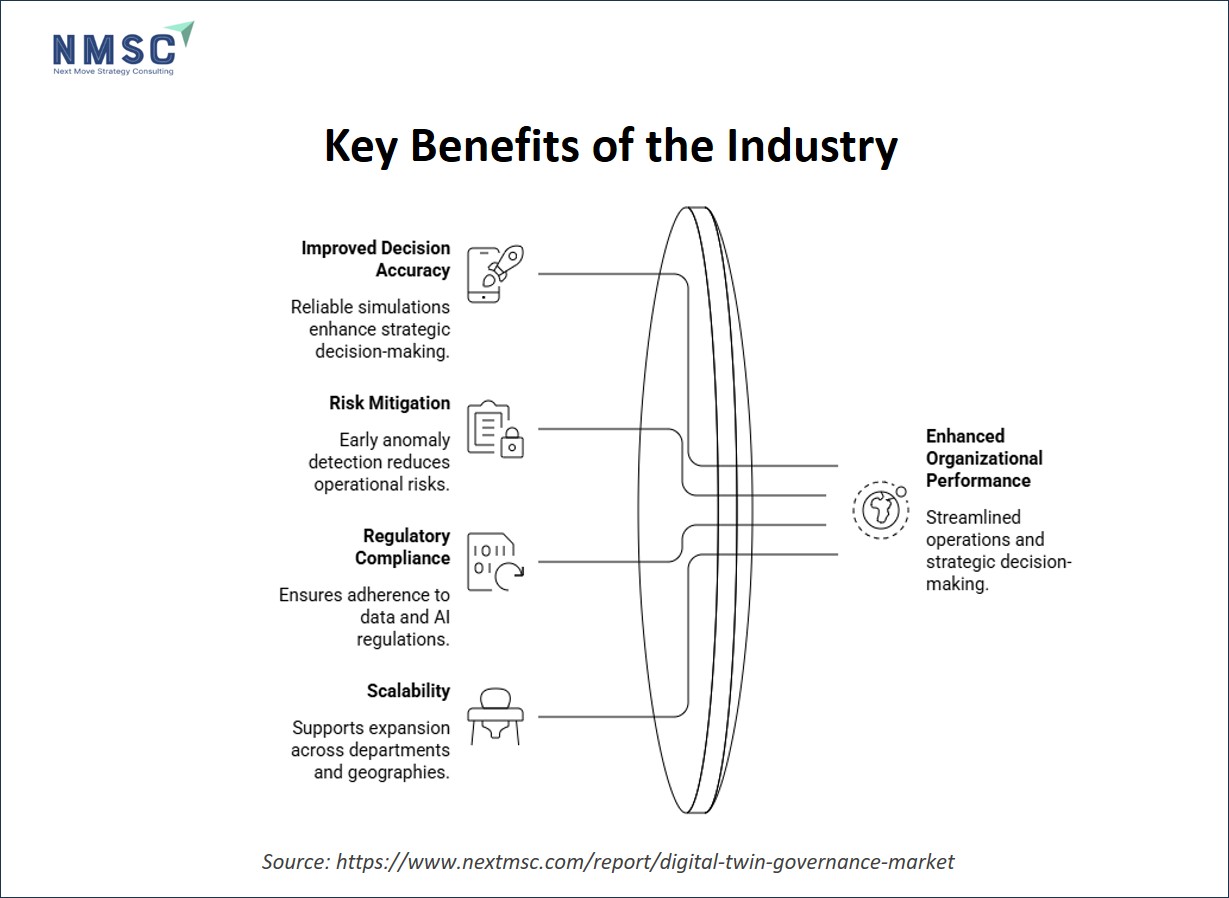
When governance is implemented effectively, organizations can unlock several advantages:
-
Improved Decision Accuracy: Reliable simulations lead to better outcomes
-
Risk Mitigation: Early detection of anomalies reduces operational risks
-
Regulatory Compliance: Ensures adherence to data and AI regulations
-
Scalability: Supports expansion across departments and geographies
Both Kyndryl and Trinity demonstrate how governance enables scalability and trust in AI-driven environments.
We have observed that governance is a key enabler of ROI in digital twin investments. Organizations that prioritize governance frameworks see faster adoption and more consistent business value.
Key Players
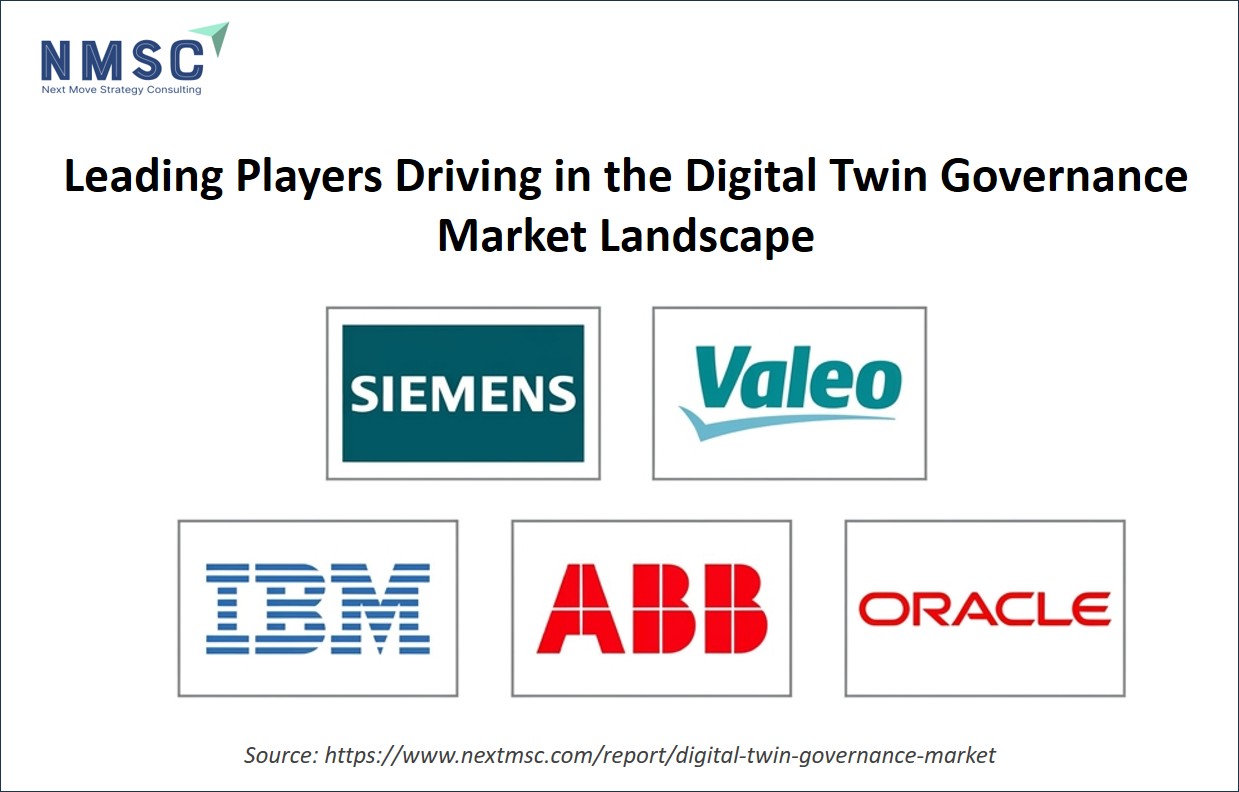
Various market players operating in the digital twin governance industry are Siemens AG, Valeo SA, IBM Corporation, ABB Ltd., Oracle Corporation, Honeywell International Inc., WSP Global Inc., Rockwell Automation, Inc., Ansys, Inc., Autodesk, Inc. and others. These market players continue to adopt market development strategies including partnerships to maintain their dominance in the market.
For instance, in January 2024, Valeo partnered with Applied Intuition to launch a digital twin platform focused on advanced driver-assistance systems (ADAS) sensor simulation. This collaboration aims to help automotive original equipment manufacturers (OEMs) accelerate the introduction of safe and reliable ADAS features into the market.
Also, in March 2023, WSP partnered with Amazon Web Services (AWS) to introduce digital twins for infrastructure projects highlights the need for effective digital solutions governance. This initiative promotes responsible data management and collaboration, enabling governments and the private sector to optimize assets for more resilient and sustainable infrastructure solutions.
According to Next Move Strategy Consulting: Industry Impact
The recent launches by Kyndryl and Trinity signal a broader shift in the digital twin ecosystem:
-
Digital twins are evolving into decision intelligence platforms
-
Generative AI integration is driving real-time, adaptive insights
-
Governance is becoming a core differentiator for enterprise adoption
These trends indicate that governance will play a defining role in the next phase of digital transformation.
Our observations at Next Move Strategy Consulting indicates, the convergence of AI and digital twins is reshaping enterprise architecture. Governance frameworks will determine which organizations successfully operationalize these technologies at scale.
Challenges in Digital Twin Governance
Despite its benefits, implementing governance is not without challenges:
-
Complex Data Integration: Multiple data sources can create inconsistencies
-
AI Transparency Issues: Black-box models reduce explainability
-
High Implementation Costs: Requires investment in tools and expertise
-
Regulatory Uncertainty: Evolving AI regulations create compliance risks
These challenges highlight the need for a structured and proactive governance strategy.
Analysis from Next Move Strategy Consulting suggests organizations must adopt a phased approach to governance, starting with high-impact use cases. This reduces complexity while building internal capabilities for long-term scalability.
Conclusion
Digital Twin Governance is no longer optional. As demonstrated by Kyndryl and Trinity, the integration of AI and real-time intelligence is transforming digital twins into mission-critical systems.
Organizations that prioritize governance will not only enhance trust and compliance but also unlock the full potential of AI-driven decision-making. In this evolving landscape, governance is the foundation that turns innovation into sustainable competitive advantage.
We have seen that the future of digital twins will be defined by governance maturity. Enterprises that invest in robust frameworks today will lead the next wave of intelligent, data-driven transformation.
Next Steps: Actionable Takeaways
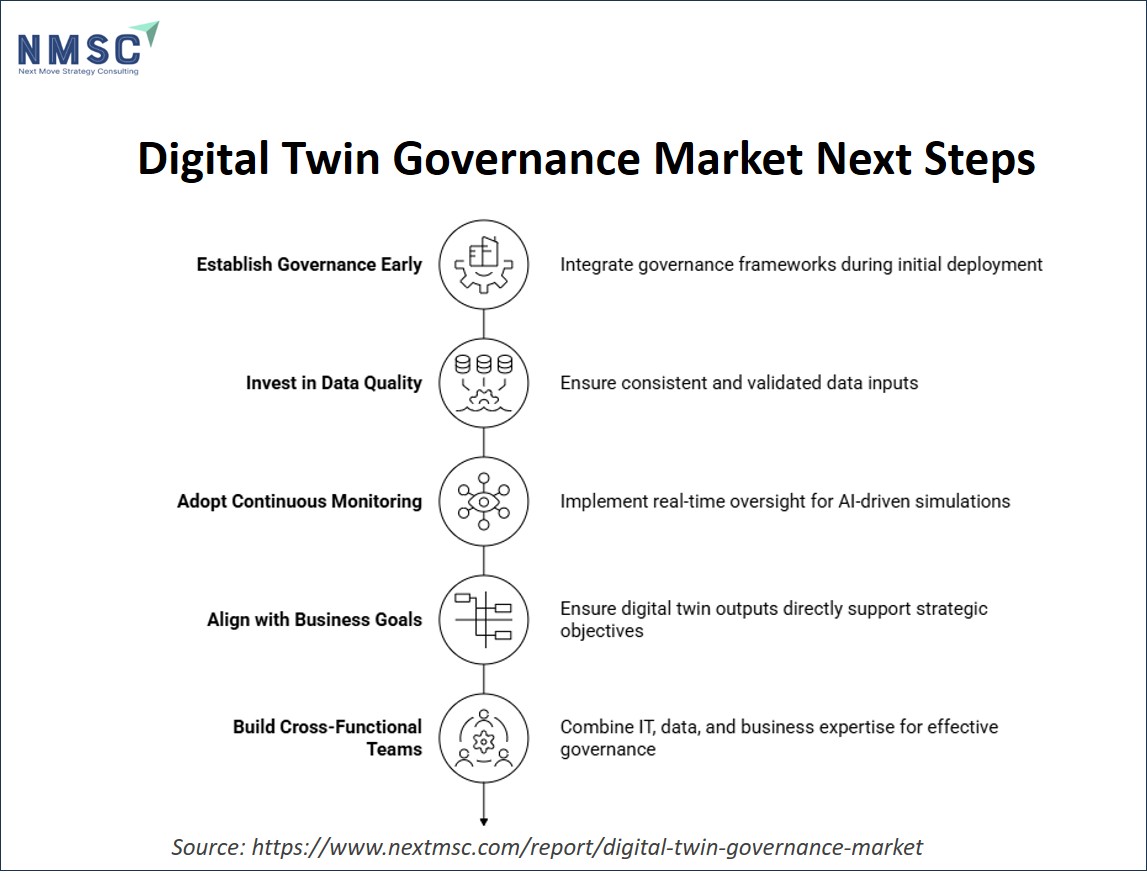
1. Establish Governance Early: Integrate governance frameworks during the initial deployment of digital twins
2. Invest in Data Quality: Ensure consistent and validated data inputs across systems
3. Adopt Continuous Monitoring: Implement real-time oversight for AI-driven simulations
4. Align with Business Goals: Ensure digital twin outputs directly support strategic objectives
5. Build Cross-Functional Teams: Combine IT, data, and business expertise for effective governance
About the Author
 Sanyukta Deb
— Sanyukta Deb is Digital Marketing Team Lead at Next Move Strategy Consulting, where she has led content strategy and technical SEO for the firm's B2B market research publications for over 2 years. Her editorial process translates NextMSC's primary and secondary research — spanning technology, industrial, and consumer sectors — into commercial narratives, backed by search-intent, keyword, and competitive analysis. She brings 5 years of overall experience in digital marketing and content strategy.
Sanyukta Deb
— Sanyukta Deb is Digital Marketing Team Lead at Next Move Strategy Consulting, where she has led content strategy and technical SEO for the firm's B2B market research publications for over 2 years. Her editorial process translates NextMSC's primary and secondary research — spanning technology, industrial, and consumer sectors — into commercial narratives, backed by search-intent, keyword, and competitive analysis. She brings 5 years of overall experience in digital marketing and content strategy.
About the Reviewer
 Debashree Dey
— Debashree Dey is Assistant Manager at Next Move Strategy Consulting, where she supports cross-vertical market content and communications across diverse industries for 6 years. Her professional background includes senior content writing, communications, and published manuscript authorship, with experience developing audience-focused business narratives and maintaining clear, consistent messaging. Her role supports research-led content development and editorial quality across NextMSC publications.
Debashree Dey
— Debashree Dey is Assistant Manager at Next Move Strategy Consulting, where she supports cross-vertical market content and communications across diverse industries for 6 years. Her professional background includes senior content writing, communications, and published manuscript authorship, with experience developing audience-focused business narratives and maintaining clear, consistent messaging. Her role supports research-led content development and editorial quality across NextMSC publications.















Add Comment