Electronic Data Capture Market Statistics, Trends & Forecasts
Introduction
The global clinical research ecosystem is undergoing one of its most consequential technological transformations in decades. At the center of this shift is the Electronic Data Capture Market — a sector that has evolved from a paper-replacement utility into the foundational intelligence layer of modern clinical development. As pharmaceutical sponsors, contract research organizations (CROs), and regulatory authorities converge on the imperative for real-time, auditable, and interoperable clinical data, EDC platforms are no longer optional infrastructure — they are strategic assets.
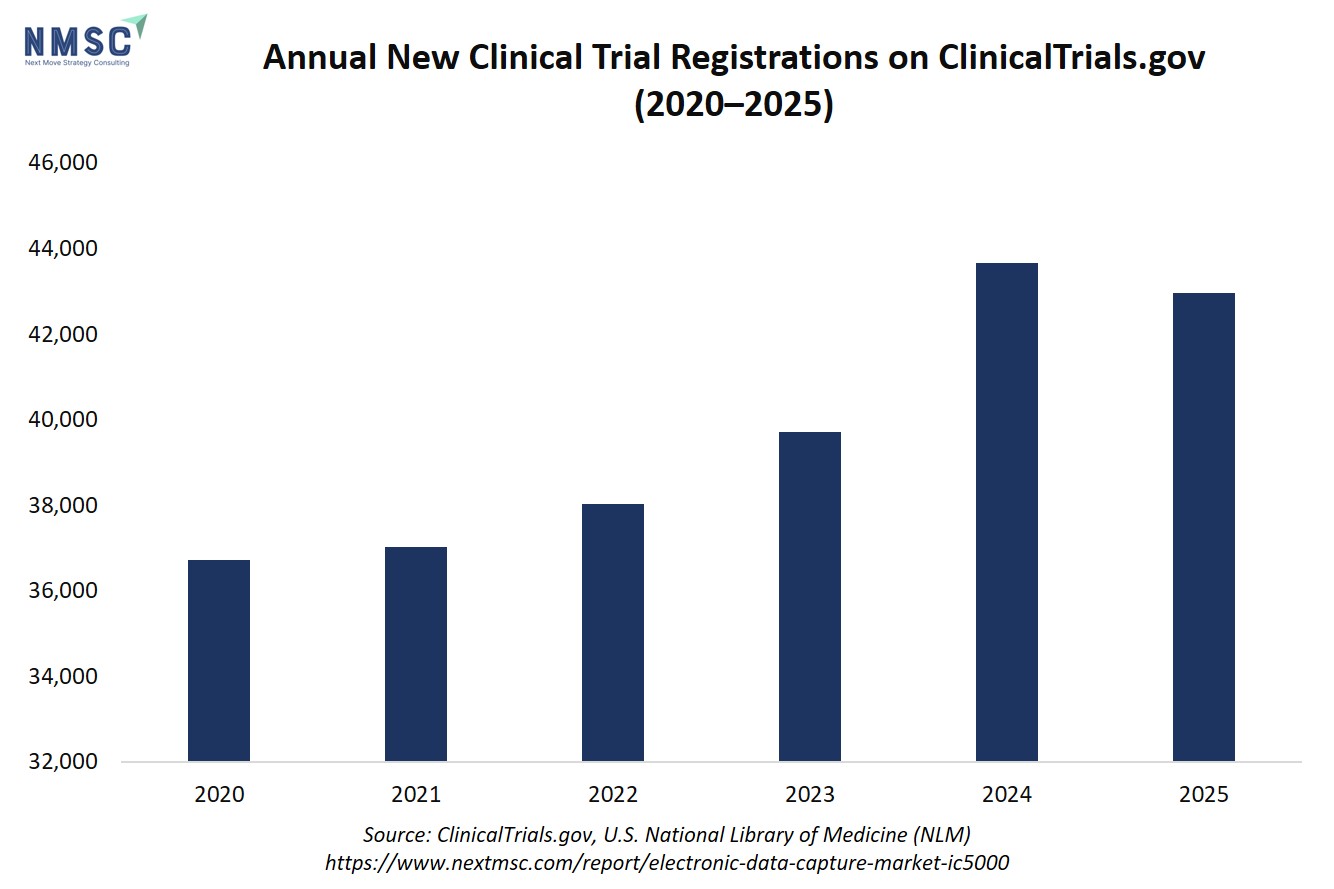
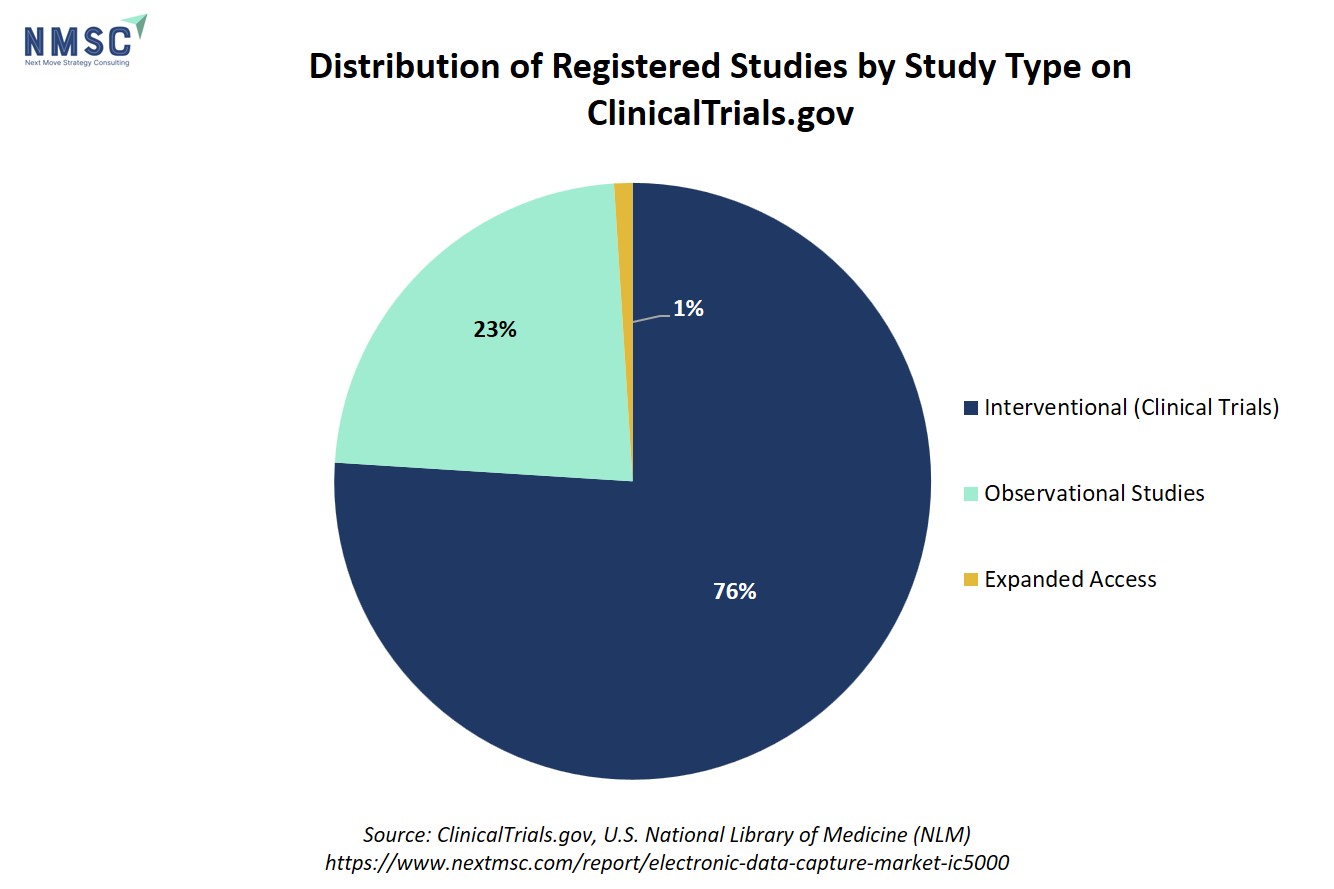
The urgency of this transformation is underscored by the sheer scale of global clinical trial activity. According to the U.S. National Library of Medicine's ClinicalTrials.gov registry, over 490,000 clinical studies had been registered globally as of early 2025, reflecting a compound increase of more than 20% over a five-year period. Against this backdrop of accelerating trial complexity, the electronic data capture market is positioned at the intersection of regulatory mandate, technological innovation, and pharmaceutical R&D investment — making it one of the most strategically significant segments within the broader life sciences technology landscape.
For More Information: Download FREE Sample on Electronic Data Capture Market Report
AI-Driven Innovation and Regulatory Convergence Are Redefining the Electronic Data Capture Landscape
Oracle's Landmark EDC Enhancement Sets a New Industry Benchmark
On August 27, 2025, Oracle Corporation announced significant advancements to its Electronic Data Capture solution, Oracle Clinical One Data Collection — a development that sent a clear signal across the global clinical research community about the direction of the industry.
The enhancements introduced three transformative capabilities. First, Oracle deployed an AI-enabled Clinical Connector enabling seamless, bidirectional interoperability between Oracle Health and third-party Electronic Health Record (EHR) systems and the EDC platform — eliminating the manual data transcription burden that has historically compromised data accuracy and slowed trial timelines. Second, the update introduced comprehensive site and subject-level document management, allowing clinical site staff to upload contextual data — including scanned laboratory results via mobile devices — directly into the EDC system alongside structured eCRF data. Third, Oracle integrated end-to-end safety reporting capabilities using the ICH E2B(R3) standard, enabling sites to report serious adverse events (SAEs) directly within the EDC workflow and transmit them to Oracle Safety One Argus and other safety solutions without duplicative data entry.
"In today's complex clinical trial landscape, interoperability and streamlined data flow are paramount," said Deepu Joseph, Global Head of DM and Country Head India at Excelya, commenting on the Oracle release. "Oracle's focus on agnostic EHR-EDC integration and complete safety reporting within Clinical One Data Collection increases operational efficiency for sites and sponsors."
This announcement was followed in February 2026 by Medidata (Dassault Systèmes) launching Medidata AI Study Build — a generative AI capability that configures Rave EDC and eCOA systems directly from study protocols, reducing study start-up times by automating traditionally manual database design tasks that previously required 10 to 12 weeks of configuration effort. In January 2026, Oracle had also launched the Oracle Life Sciences AI Data Platform, a generative AI-enabled solution unifying customer, third-party, and over 129 million de-identified longitudinal EHR records to accelerate R&D, clinical trial safety monitoring, and commercialization workflows.
ICH E6(R3) Adoption Reshapes Compliance Requirements for EDC Platforms
Simultaneously, a landmark regulatory development is reshaping the compliance architecture of the electronic data capture market. The International Council for Harmonisation (ICH) finalized its E6(R3) Good Clinical Practice (GCP) guidelines on January 6, 2025 — the most comprehensive revision to the GCP framework in nearly three decades. The U.S. Food and Drug Administration (FDA) issued its adopting guidance in September 2025, and the UK's Medicines and Healthcare products Regulatory Agency (MHRA) gave E6(R3) legal effect in April 2026.
The E6(R3) revision introduces a risk-proportionate, technology-agnostic framework that explicitly accommodates decentralized clinical trial (DCT) methodologies, electronic source data, and remote monitoring — all of which place heightened demands on EDC platform capabilities. The guidelines reinforce requirements for electronic audit trails, data integrity controls, and system validation, directly elevating the compliance bar for EDC vendors and their customers globally. For sponsors running concurrent trials across North America, Europe, and Asia Pacific, the convergence of FDA, EMA, and ICH frameworks under E6(R3) is incentivizing investment in globally pre-validated, cloud-native EDC platforms that reduce country-specific customization burdens.
NMSC Strategic Perspective: Interpreting the Market Shift
According to Next Move Strategy Consulting's analysis of the electronic data capture market, the convergence of AI-native platform innovation and regulatory harmonization under ICH E6(R3) represents a structural inflection point — not merely an incremental product cycle. NMSC's research indicates that EDC platforms are transitioning from standalone data collection tools into foundational components of end-to-end clinical data management infrastructure. The embedding of generative AI into study build workflows, as demonstrated by both Oracle and Medidata, is compressing study start-up timelines that historically consumed disproportionate operational budgets. Simultaneously, the E6(R3) framework's explicit accommodation of decentralized trial elements is expanding the total addressable market for EDC software by enabling patient-centric data collection paradigms — including electronic patient-reported outcomes (ePRO), wearable device data feeds, and remote monitoring integrations — to be formally incorporated into validated EDC environments. NMSC's assessment further indicates that vendors capable of delivering AI-driven query management, risk-based monitoring automation, and CDISC-compliant open architecture integration are winning a disproportionate share of competitive enterprise evaluations, as sponsors seek to reduce vendor fragmentation and improve operational efficiency across their clinical development portfolios.
Section Summary
The electronic data capture market is being reshaped by two simultaneous forces: AI-native platform innovation from leading vendors and the regulatory mandate created by ICH E6(R3) adoption across major health authority jurisdictions. Oracle's August 2025 EDC enhancement and Medidata's February 2026 AI Study Build launch represent the industry's most significant product milestones in recent memory, while E6(R3)'s finalization is compelling sponsors to upgrade legacy systems to meet new compliance standards.
Key Takeaways:
-
Oracle's Clinical One Data Collection now offers AI-enabled EHR interoperability, mobile document capture, and integrated SAE reporting — setting a new baseline for enterprise EDC capability.
-
Medidata AI Study Build reduces EDC configuration timelines from 10–12 weeks to significantly shorter durations through generative AI automation.
-
ICH E6(R3), finalized January 2025 and adopted by the FDA in September 2025, is the most significant GCP revision in nearly 30 years and directly elevates EDC compliance requirements globally.
-
NMSC's analysis identifies AI-native differentiation and open integration architecture as the primary competitive differentiators in the current enterprise EDC evaluation cycle.
Industry Impact Analysis
Impact on Pharmaceutical and Biotechnology Sponsors
For large pharmaceutical and biotechnology sponsors, the current wave of EDC innovation and regulatory change is simultaneously an operational opportunity and a compliance imperative. The FDA's sustained commitment to biomedical research — with federal funding exceeding USD 48 billion in fiscal year 2024 according to the U.S. National Institutes of Health (NIH) — sustains a high-volume clinical trial pipeline that demands scalable, validated EDC infrastructure. The FDA's Center for Drug Evaluation and Research (CDER) reported approval of 55 novel drugs in 2023, each representing completed clinical programs supported by validated data management systems, underscoring the direct link between EDC platform performance and drug development velocity.
The integration of AI-powered query management and risk-based monitoring (RBM) into EDC platforms is particularly consequential for large sponsors. Platforms such as Oracle Clinical One and IQVIA's Axiom EDC leverage AI algorithms to flag data discrepancies in real time, reducing manual data cleaning cycles that historically consumed 15 to 25% of total clinical operations budgets, according to NMSC's research. For sponsors managing portfolios of five or more simultaneous trials, this efficiency gain translates into material reductions in time-to-database-lock and, ultimately, faster regulatory submission timelines.
Impact on Contract Research Organizations
CROs represent the second-largest buyer segment in the electronic data capture market, accounting for approximately USD 540 million in 2025 according to NMSC's analysis. The current technology cycle is creating both opportunity and competitive pressure for CROs. Organizations that have standardized on AI-enabled, cloud-native EDC platforms are able to offer sponsors demonstrably faster study start-up timelines and lower data management costs — a meaningful differentiator in an increasingly competitive outsourcing market. Conversely, CROs operating legacy on-premise EDC systems face growing pressure from sponsors who mandate modern platform capabilities as a condition of contract award.
The Veeva Systems 2026 Clinical Data Trend Report highlights that risk-based data management theory needs to become operational reality, and that automated orchestration is becoming core to the clinical data management workflow — trends that directly influence CRO technology investment decisions.
Impact on Clinical Research Sites and Academic Institutions
For clinical investigative sites and academic research institutions, the current EDC landscape presents a dual challenge of capability and cost. The FDA's source data capture initiative — which aims to develop methods and tools to automate the flow of structured EHR data into external systems including EDC platforms — is creating a pathway for sites to reduce manual data entry burden. However, the implementation and validation costs associated with deploying compliant EDC systems — which can extend timelines by three to nine months and add six-figure cost burdens under 21 CFR Part 11 and Annex 11 requirements — remain a significant barrier for smaller academic sites, particularly in emerging markets.
Decentralized Clinical Trials: Expanding the EDC Addressable Market
The FDA's finalized guidance on Conducting Clinical Trials with Decentralized Elements (September 2024) has provided the regulatory clarity that sponsors and EDC vendors needed to accelerate DCT adoption at scale. EDC vendors are responding by integrating remote patient data entry modules, wearable device connectivity, and telemedicine data feeds directly into their platforms. This structural shift is materially expanding the total addressable market for EDC software by enabling data collection from patient homes, pharmacies, and remote monitoring devices — environments that were previously outside the scope of traditional EDC deployments.
Section Summary
The current wave of EDC innovation and regulatory change is creating differentiated impacts across the clinical research ecosystem. Large pharma sponsors are leveraging AI-enabled platforms to compress data management costs and accelerate regulatory submissions, while CROs face competitive pressure to modernize their technology stacks. The FDA's DCT guidance and E6(R3) adoption are collectively expanding the scope and addressable market of EDC platforms beyond traditional site-centric data collection.
Key Takeaways:
-
NIH federal biomedical research funding exceeded USD 48 billion in fiscal year 2024, sustaining a high-volume clinical trial pipeline that drives structural EDC demand.
-
AI-powered risk-based monitoring is reducing manual data cleaning cycles that historically consumed 15–25% of clinical operations budgets.
-
The FDA's finalized DCT guidance (September 2024) has provided the regulatory framework needed to accelerate decentralized trial adoption and expand the EDC addressable market.
-
CROs standardized on cloud-native, AI-enabled EDC platforms are gaining competitive advantage in sponsor outsourcing evaluations.
Pros and Cons of Recent Market Developments
|
Recent Development |
Pros |
Cons |
|
AI-Native EDC Platform Innovation (Oracle, Medidata) |
Compresses study start-up timelines; reduces manual data cleaning costs; improves real-time data quality and query resolution efficiency |
High implementation investment for AI-enabled platforms; requires sponsor and site staff retraining; legacy system migration complexity |
|
ICH E6(R3) GCP Guidelines Adoption (FDA, MHRA) |
Provides a globally harmonized, technology-agnostic compliance framework; accommodates DCT and electronic source data; reduces cross-jurisdictional customization burden |
Requires EDC platform re-validation and system updates; creates short-term compliance cost burden for sponsors and CROs; implementation timelines vary by jurisdiction |
|
FDA Decentralized Clinical Trial Guidance (Finalized 2024) |
Expands patient access and enrollment diversity; reduces site visit burden; enables data collection from wearables and remote monitoring devices |
Requires EDC platforms to integrate new data streams (ePRO, wearables); data privacy and security complexity increases; site staff capability gaps in DCT operations |
|
EHR-EDC Interoperability Integration |
Eliminates manual data transcription; improves data accuracy; accelerates source data verification; reduces site administrative burden |
Requires standardized EHR data formats; interoperability across heterogeneous EHR systems remains technically complex; data residency and GDPR compliance adds configuration overhead |
|
Cloud-Native EDC Deployment Expansion |
Superior scalability; real-time multi-site data synchronization; reduced infrastructure maintenance; faster system updates |
Data sovereignty requirements (GDPR, China DSL, India DPDPA) necessitate region-specific hosting; cybersecurity risks associated with cloud-hosted clinical data; internet connectivity dependency at remote sites |
|
Subscription-Based SaaS Commercial Models |
Budget predictability for sponsors and CROs; continuous platform updates included; lower upfront capital expenditure |
Long-term total cost of ownership may exceed perpetual license models for large portfolios; vendor lock-in risk; pricing escalation clauses in multi-year agreements |
Future Outlook & Forecast
NMSC Market Size and Growth Trajectory
According to Next Move Strategy Consulting's proprietary analysis, the global electronic data capture market was valued at USD 1.80 billion in 2025 and is projected to reach USD 1.97 billion in 2026. By 2035, the market is forecast to attain USD 4.50 billion, expanding at a compound annual growth rate (CAGR) of 9.6% from 2026 to 2035. This sustained expansion reflects the convergence of rising pharmaceutical R&D expenditure, increasing clinical trial complexity, expanding adoption of decentralized and hybrid trial models, and growing demand for integrated eClinical technology ecosystems.
Cloud and AI as the Dominant Growth Vectors
Cloud deployment is the most consequential structural trend shaping the electronic data capture market's growth trajectory. NMSC's analysis indicates that cloud EDC commanded approximately 60% of the market at USD 1.08 billion in 2025 and is projected to reach USD 3.08 billion by 2035 at an 11.0% CAGR — the fastest growth rate of any deployment segment. The transition from on-premise systems — which are projected to grow at only 5.2% CAGR — to cloud-native platforms is being accelerated by the operational demands of decentralized trials, multi-site global studies, and the need for real-time data access across geographically distributed research teams.
Artificial intelligence integration is the primary product differentiation axis for the 2026–2035 forecast period. Vendors that have natively embedded machine learning capabilities into core EDC workflows — rather than layering AI features onto legacy architectures — are demonstrating superior data quality outcomes and query resolution efficiency. NMSC's analysis identifies AI-powered risk-based monitoring integration as contributing a positive 0.9% impact on the market's CAGR forecast trajectory, with its influence concentrated in the medium-to-long term (2028–2035) as enterprise sponsors complete platform migrations and begin realizing AI-driven operational efficiencies at scale.
Asia-Pacific: The Highest-Conviction Geographic Growth Opportunity
Asia-Pacific is the fastest-growing regional market in the electronic data capture landscape, projected to expand at a CAGR of 12.0% from 2026 to 2035, reaching USD 900 million by 2035 from USD 288 million in 2025. This growth is driven by surging pharmaceutical R&D investment in China and India, government-backed clinical research incentives, and increasing global sponsor interest in accessing large patient populations and cost-effective research infrastructure. India's Central Drugs Standard Control Organisation (CDSCO) has streamlined clinical trial approval timelines under the New Drugs and Clinical Trials Rules 2019, catalyzing a significant rise in India-originated trials. China's 14th Five-Year Plan specifically supports biopharmaceutical development, creating regulatory and financial incentives for clinical data infrastructure investment.
Emerging Market Opportunities and Regulatory Modernization
The Middle East & Africa region, estimated at USD 108 million in 2025, is projected to reach USD 315 million by 2035 at an 11.3% CAGR — the second-fastest regional growth rate globally. Saudi Arabia's Vision 2030 healthcare investment commitments and the UAE's digital-first healthcare strategy are creating favorable conditions for EDC adoption at major hospital research centers. These emerging markets represent greenfield opportunities for EDC vendors willing to invest in localized deployment infrastructure and regulatory compliance capabilities.
CAGR Impact Matrix: Key Drivers and Restraints
|
Market Factor |
CAGR Impact |
Geographic Relevance |
Timeline |
|
Accelerating pharmaceutical R&D investment |
+1.8% |
North America, Europe, Asia-Pacific |
2026–2028 |
|
Regulatory mandates for data integrity (FDA, EMA, ICH) |
+1.5% |
Global |
2026–2035 |
|
Cloud platform adoption replacing on-premise systems |
+1.2% |
North America, Asia-Pacific |
2027–2030 |
|
Decentralized clinical trial adoption surge |
+1.1% |
Global |
2026–2029 |
|
AI-powered risk-based monitoring integration |
+0.9% |
North America, Europe |
2028–2035 |
|
Real-world data integration with EDC systems |
+0.7% |
North America, Europe |
2030–2035 |
|
High implementation and validation cost burden |
-0.8% |
Emerging Markets, SMEs |
2026–2027 |
|
Data privacy regulation complexity (GDPR, HIPAA) |
-0.6% |
Europe, North America |
Short to Medium Term |
|
Legacy system replacement resistance |
-0.5% |
Academic, Hospital Sites |
Short Term |
Section Summary
The electronic data capture market is entering a decade of sustained expansion, anchored by a USD 1.80 billion base in 2025 and a clear trajectory toward USD 4.50 billion by 2035. Cloud deployment and subscription-based commercial models are the fastest-growing segments, while Asia-Pacific represents the highest-conviction geographic growth opportunity. AI integration and regulatory harmonization under ICH E6(R3) are the primary structural forces shaping the competitive landscape through 2035.
Key Takeaways:
-
The global electronic data capture market is projected to grow from USD 1.80 billion in 2025 to USD 4.50 billion by 2035 at a CAGR of 9.6% (NMSC).
-
Cloud deployment commands 60% of the 2025 market and is projected to grow at 11.0% CAGR — the fastest of any deployment segment.
-
Asia-Pacific is the fastest-growing region at 12.0% CAGR, driven by China, India, and South Korea's expanding clinical research ecosystems.
-
Accelerating pharmaceutical R&D investment contributes the highest positive CAGR impact (+1.8%) among all identified market drivers.
Next Steps for Stakeholders
For Pharmaceutical and Biotechnology Sponsors:
Organizations should prioritize the migration of legacy on-premise EDC systems to cloud-native, AI-enabled platforms that are pre-validated for ICH E6(R3) compliance. Investment in EHR-EDC interoperability — as demonstrated by Oracle's August 2025 enhancement — should be evaluated as a near-term operational priority to reduce site data entry burden and improve source data verification efficiency. Sponsors running multi-regional trials should assess vendor capabilities for jurisdiction-specific data residency configurations to ensure compliance with GDPR, HIPAA, and emerging data localization requirements in Asia-Pacific markets.
For Contract Research Organizations:
CROs should conduct a structured assessment of their current EDC platform portfolio against the capability benchmarks established by leading enterprise vendors. Organizations that have not yet standardized on cloud-native, AI-enabled platforms risk competitive disadvantage in sponsor outsourcing evaluations where technology capability is an explicit selection criterion. Investment in managed data services capabilities — the fastest-growing EDC services segment at an 11.0% CAGR according to NMSC — represents a high-value revenue expansion opportunity for CROs seeking to deepen sponsor relationships beyond traditional study management.
For EDC Platform Vendors:
Vendors should prioritize investment in CDISC standards compliance, API-driven open architecture integration, and AI-native workflow automation as the primary product roadmap imperatives for the 2026–2028 period. Therapeutic area specialization — particularly in oncology adaptive trials, rare disease research, and medical device clinical investigations — offers a differentiated market positioning opportunity. Geographic expansion into Asia-Pacific and Middle East & Africa markets, either organically or through strategic acquisition of established regional vendors, should be evaluated as a medium-term growth lever given the superior CAGR profiles of these regions.
For Investors and Financial Analysts:
The electronic data capture market's recurring subscription revenue model, high customer switching costs, and durable demand generated by global clinical trial activity create an attractive investment profile. NMSC's analysis identifies cloud-based deployment, AI-enabled platforms, managed data services, and Asia-Pacific expansion as the highest-conviction investment themes for the 2026–2035 period. M&A activity among EDC, CTMS, ePRO, RTSM, and clinical analytics vendors should be closely monitored as platform convergence continues to reshape the competitive landscape and create acquisition opportunities at both the enterprise and mid-market levels.
For Regulatory Bodies and Policy Makers:
Regulatory agencies should continue to advance the harmonization of electronic data management standards across jurisdictions, building on the foundation established by ICH E6(R3). Guidance on EHR-EDC interoperability standards, AI-generated clinical data validation, and cross-border data transfer frameworks for multinational trials would materially reduce compliance complexity for sponsors and accelerate the adoption of modern EDC capabilities in emerging market research environments.
Conclusion
The electronic data capture market stands at a pivotal juncture defined by the convergence of AI-native platform innovation, landmark regulatory reform, and accelerating global clinical trial activity. Oracle's August 2025 EDC enhancement and Medidata's February 2026 AI Study Build launch have established new capability benchmarks that are reshaping sponsor and CRO procurement expectations. Simultaneously, the finalization and adoption of ICH E6(R3) across major health authority jurisdictions is compelling organizations to upgrade their EDC infrastructure to meet a more demanding and technology-forward compliance standard.
According to Next Move Strategy Consulting's analysis, the global electronic data capture market is projected to grow from USD 1.80 billion in 2025 to USD 4.50 billion by 2035 at a CAGR of 9.6% — a trajectory supported by rising pharmaceutical R&D investment, cloud platform adoption, decentralized trial expansion, and the structural demand generated by over 490,000 registered clinical studies globally. For C-level executives, investors, and clinical technology decision-makers, the strategic imperative is clear: organizations that invest in AI-enabled, cloud-native, and globally compliant EDC infrastructure today will be best positioned to capture the operational and competitive advantages that define clinical research leadership in the decade ahead.
About the Author
 Sanyukta Deb
— Sanyukta Deb is Digital Marketing Team Lead at Next Move Strategy Consulting, where she has led content strategy and technical SEO for the firm's B2B market research publications for over 2 years. Her editorial process translates NextMSC's primary and secondary research — spanning technology, industrial, and consumer sectors — into commercial narratives, backed by search-intent, keyword, and competitive analysis. She brings 5 years of overall experience in digital marketing and content strategy.
Sanyukta Deb
— Sanyukta Deb is Digital Marketing Team Lead at Next Move Strategy Consulting, where she has led content strategy and technical SEO for the firm's B2B market research publications for over 2 years. Her editorial process translates NextMSC's primary and secondary research — spanning technology, industrial, and consumer sectors — into commercial narratives, backed by search-intent, keyword, and competitive analysis. She brings 5 years of overall experience in digital marketing and content strategy.
About the Reviewer
 Debashree Dey
— Debashree Dey is Assistant Manager at Next Move Strategy Consulting, where she supports cross-vertical market content and communications across diverse industries for 6 years. Her professional background includes senior content writing, communications, and published manuscript authorship, with experience developing audience-focused business narratives and maintaining clear, consistent messaging. Her role supports research-led content development and editorial quality across NextMSC publications.
Debashree Dey
— Debashree Dey is Assistant Manager at Next Move Strategy Consulting, where she supports cross-vertical market content and communications across diverse industries for 6 years. Her professional background includes senior content writing, communications, and published manuscript authorship, with experience developing audience-focused business narratives and maintaining clear, consistent messaging. Her role supports research-led content development and editorial quality across NextMSC publications.


















Add Comment