Electronic Data Capture Market Size, Share, Growth & Forecast by EDC Software (Enterprise Platform [Global Multi-Study Platform, an Others], Mid-Market Platform, Open Source and Consortium Platform, Specialist Vertical Platform ,by Deployment (Cloud, Hybrid, On-Premise), by Commercial Model (Subscription, Term License, and Others), Buyer Type (Sponsors, CROs, and Others), by End User Industry (Pharma and Biotech, Medical Device and Diagnostics, and Others)– Global Analysis 2025–2035
Industry: ICT & Media | Publishing Date: July 7, 2026 | Last Updated: September 30, 2026 | No of Pages: N/A | No. of Tables: N/A | No. of Figures: N/A | Format: PDF | Report Code: IC5000
What Is the Electronic Data Capture Market Size?
The global Electronic Data Capture market was valued at USD 1.80 billion in 2025 and is expected to reach USD 1.97 billion in 2026. By 2035, the market is projected to attain USD 4.50 billion, expanding at a compound annual growth rate (CAGR) of 9.6% from 2026 to 2035. This robust growth is driven by the accelerating digitalization of clinical trials, rising pharmaceutical R&D expenditure, stringent regulatory mandates for data integrity, and increasing adoption of cloud-based Electronic Data Capture platforms across global research organizations.
|
Parameters |
Details |
|
Market Size in 2025 |
USD 1.80 Billion |
|
Market Size in 2026 |
USD 1.97 Billion |
|
Revenue Forecast in 2035 |
USD 4.50 Billion |
|
Growth Rate |
CAGR of 9.6% from 2026 to 2035 |
|
Analysis Period |
2025–2035 |
|
Base Year Considered |
2025 |
|
Forecast Period |
2026–2035 |
|
Market Size Estimation |
Billion USD |
|
Companies Profiled |
20 |
|
Countries Covered |
33 |
|
Market Share |
Top 10 |
Electronic Data Capture Market Overview
What Is the Electronic Data Capture Market?
Electronic Data Capture (EDC) is a technology-enabled approach to collecting, managing, and validating clinical trial data through electronic systems, replacing traditional paper-based case report forms. EDC platforms are designed to improve data accuracy, streamline clinical workflows, enhance auditability, and support compliance with global regulatory requirements including FDA 21 CFR Part 11 and EU Annex 11. Unlike paper-based data collection methods, we observed that modern EDC systems enable real-time data access, automated validation checks, and centralized monitoring capabilities, significantly improving operational efficiency across clinical research programs. The market serves pharmaceutical companies, biotechnology firms, contract research organizations (CROs), academic institutions, hospitals, and government-sponsored research initiatives globally.
How Has the Electronic Data Capture Market Evolved?
The Electronic Data Capture Market has evolved through multiple phases of clinical technology transformation. The initial phase focused on replacing paper-based data collection processes with basic electronic database systems designed to improve data accuracy and reduce administrative burden. The second phase introduced web-based EDC platforms that enabled centralized access, multi-site collaboration, and improved regulatory compliance. We analysed that the current phase is characterized by cloud-native, AI-enabled platforms capable of supporting decentralized clinical trials (DCTs), real-world evidence (RWE) generation, advanced analytics, and seamless integration with broader eClinical ecosystems. This evolution is driving the transition from standalone data capture systems toward unified clinical data management environments.
How Do Regulations Influence the Electronic Data Capture Market?
Regulatory frameworks play a fundamental role in shaping the Electronic Data Capture Market. Guidelines and regulations issued by organizations such as the U.S. Food and Drug Administration (FDA), the European Medicines Agency (EMA), and the International Council for Harmonisation (ICH) have reinforced the importance of electronic data management, traceability, and data integrity throughout the clinical development lifecycle. Regulations including FDA 21 CFR Part 11, ICH E6(R3) Good Clinical Practice guidelines, GDPR, and other regional data privacy requirements are driving demand for validated systems, audit trails, electronic signatures, and advanced security controls. We found that compliance requirements remain among the primary factors influencing sponsor and CRO investment decisions, accelerating migration from legacy systems toward modern cloud-based EDC platforms.
How Is Technology Adoption Expanding Across the Electronic Data Capture Market?
Technology adoption across the Electronic Data Capture Market is accelerating as sponsors and research organizations pursue greater operational efficiency, data quality, and trial agility. Cloud-based deployment models have become the preferred implementation approach, enabling scalable infrastructure, real-time collaboration, and centralized oversight across geographically distributed trial sites. At the same time, EDC vendors are increasingly embedding artificial intelligence, machine learning, natural language processing, and risk-based monitoring capabilities into their platforms to automate data review processes and reduce manual intervention. We further analysed that integration with electronic patient-reported outcomes (ePRO), clinical trial management systems (CTMS), electronic health records (EHR), and remote monitoring technologies is expanding the role of EDC platforms beyond data collection toward comprehensive clinical data lifecycle management.
|
Key Takeaways |
|
By EDC Software, Enterprise Platform held the largest revenue share at approximately USD 700 million in 2025, driven by widespread adoption of global multi-study platforms among large pharmaceutical sponsors managing complex, multi-regional clinical trials. |
|
Specialist Vertical Platform is the fastest-growing EDC software segment, projected to expand at a CAGR of 11.0% from 2026 to 2035, fueled by increasing demand for specialized solutions supporting medical device studies and academic research programs. |
|
By EDC Services, Implementation and Validation generated the largest revenue at approximately USD 200 million in 2025, as study build, database configuration, and validation activities remain essential during clinical trial startup phases. |
|
Managed Data Services represent the fastest-growing EDC services segment, projected to expand at a CAGR of 11.0% from 2026 to 2035, reflecting rising sponsor demand for outsourced data review, quality management, and operational support capabilities. |
|
By Deployment, Cloud Deployment commanded the largest market share at approximately USD 1.08 billion in 2025, supported by superior scalability, remote accessibility, and cost efficiency across global clinical research programs. |
|
Cloud Deployment is also the fastest-growing deployment model, projected to expand at a CAGR of 11.0% from 2026 to 2035, reflecting the continued transition toward cloud-native clinical data management platforms. |
|
By Commercial Model, Subscription-based Models held the largest revenue share at approximately USD 720 million in 2025, as pharmaceutical sponsors and CROs increasingly preferred predictable recurring licensing models for long-term clinical study portfolios. |
|
Subscription-based Models are also the fastest-growing commercial model, projected to expand at a CAGR of 11.0% from 2026 to 2035, supported by the growing adoption of SaaS-based Electronic Data Capture platforms. |
|
By Buyer Type, Sponsors accounted for the dominant market share at approximately USD 720 million in 2025, reflecting their role as the primary funding and decision-making organizations within global clinical research ecosystems. |
|
Academic and Hospitals represent a growing buyer segment, supported by expanding investigator-initiated studies, increasing regulatory requirements for electronic data capture, and continued digitalization of academic clinical research programs. |
|
By End-User Industry, Pharma and Biotech led the Electronic Data Capture Market at approximately USD 900 million in 2025, underpinned by extensive clinical trial activity and sustained investment in digital clinical research technologies. |
|
Medical Device and Diagnostics represent a significant end-user segment, driven by increasing regulatory scrutiny of device performance data, expanding post-market surveillance requirements, and broader adoption of electronic clinical data management systems under ISO 14155. |
|
North America held the largest regional share in the Electronic Data Capture Market at approximately USD 810 million in 2025, supported by a mature clinical research infrastructure, a strong concentration of global pharmaceutical sponsors, and a highly developed regulatory environment. |
|
Asia-Pacific is the fastest-growing region in the Electronic Data Capture Market, projected to expand at a CAGR of 12.0% from 2026 to 2035, driven by rising clinical trial activity across China, India, and South Korea, alongside increasing government investment in healthcare research infrastructure. |
|
The United States is the largest country market in the Electronic Data Capture Market, supported by the FDA's robust data integrity framework, extensive biopharmaceutical research activity, and the presence of leading clinical technology providers. |
|
India is among the fastest-growing country markets in the Electronic Data Capture Market, propelled by expanding CRO capabilities, government-supported clinical research initiatives, growing clinical trial volumes, and increasing adoption of digital clinical trial management technologies. |
Key Emerging Trends in Electronic Data Capture Market
How Is the Rise of Decentralized Clinical Trials Reshaping the Electronic Data Capture Ecosystem?
Decentralized clinical trials (DCTs) represent one of the most transformative forces acting upon the Electronic Data Capture market today. From our research, we found that EDC vendors are increasingly integrating remote patient data entry modules, wearable device connectivity, and telemedicine data feeds directly into their platforms to support site-less and hybrid trial models. Companies such as Medidata Solutions and Veeva Systems have introduced patient-facing EDC interfaces that extend data collection beyond traditional clinical sites, improving enrollment diversity and reducing data latency across decentralized study arms. This structural shift is materially expanding the total addressable market for EDC software.
How Are Artificial Intelligence and Machine Learning Capabilities Elevating EDC Platform Intelligence?
Artificial intelligence and machine learning capabilities are being deeply embedded into Electronic Data Capture systems, enabling automated anomaly detection, predictive query management, and risk-based monitoring (RBM) workflows. Based on NMSC's research, we found that platforms such as Oracle Clinical One and IQVIA's Axiom EDC leverage AI algorithms to flag data discrepancies in real time, reducing manual data cleaning cycles that historically consumed 15 to 25 percent of total clinical operations budgets. This AI-native differentiation is increasingly becoming a primary purchase criterion among large pharmaceutical sponsors evaluating next-generation EDC solutions.
How Is Regulatory Convergence Across Geographies Influencing Electronic Data Capture Standardization?
Regulatory convergence across the FDA, EMA, and ICH frameworks is driving standardization in how Electronic Data Capture systems are configured, validated, and audited. Our findings suggest that the increasing alignment between 21 CFR Part 11 in the United States, EU Annex 11, and ICH E6(R3) Good Clinical Practice guidelines is incentivizing EDC vendors to develop globally compliant, pre-validated platform offerings that reduce country-specific customization burdens. This regulatory harmonization trend is particularly influential for multinational sponsors running concurrent trials across North America, Europe, and Asia Pacific, where cross-jurisdictional data integrity requirements must be met simultaneously.
How Is the Integration of Real-World Data Streams Expanding the Scope of Electronic Data Capture Platforms?
The integration of real-world data (RWD) streams including electronic health records, patient registries, insurance claims databases, and digital health device outputs into Electronic Data Capture platforms is fundamentally expanding the scope of what these systems can capture and manage. Through NMSC's assessment, we found that vendors such as Clario and Signant Health are pioneering hybrid data models that combine eClinical trial data with real-world evidence feeds, enabling sponsors to conduct pragmatic trials and post-market surveillance studies within a unified EDC environment. This convergence is creating significant opportunities for EDC platform providers serving the life sciences sector.
Ecosystem Analysis of the Electronic Data Capture (EDC) Market
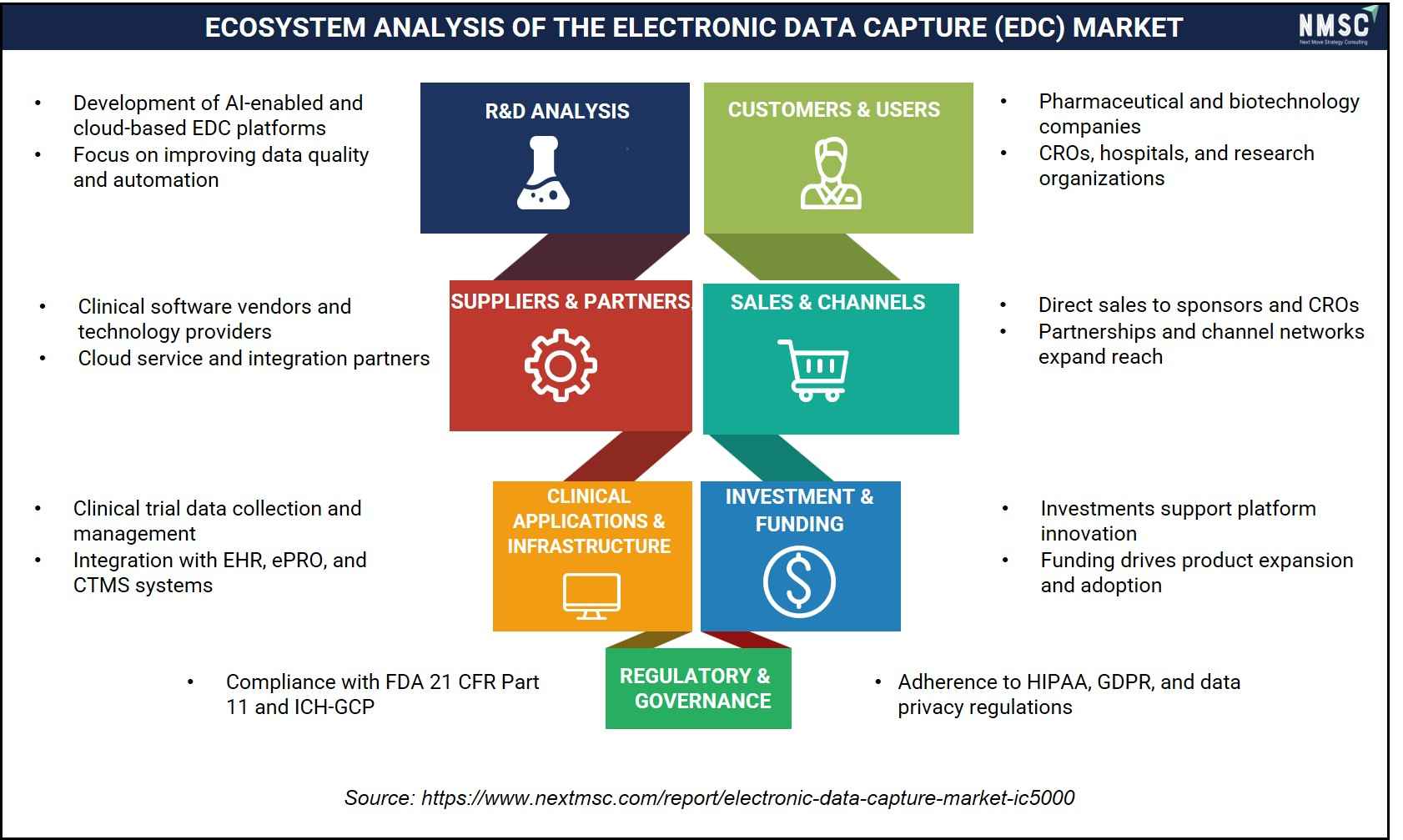
Based on our comprehensive assessment, we found that the Electronic Data Capture (EDC) Market is supported by a collaborative ecosystem comprising software developers, cloud providers, CROs, pharmaceutical companies, hospitals, and regulatory authorities. Continuous investments in data management technologies, interoperability, and compliance solutions enhance clinical trial efficiency. Moreover, growing demand for real-time, secure, and accurate data collection continues to strengthen market growth.
What Are the Key Market Drivers, Breakthroughs, and Investment Opportunities That Will Shape the Electronic Data Capture Industry in the Next Decade?
The Electronic Data Capture market is poised for sustained expansion over the next decade, shaped by a confluence of technology breakthroughs, regulatory imperatives, and strategic capital allocation. NMSC's analysis indicates that the transition to cloud-native platforms, the mainstreaming of decentralized trial methodologies, and the surge in global biopharmaceutical R&D expenditure will collectively generate new growth vectors across software, services, and deployment segments. The matrix below summarizes the key drivers, trends, and restraints and their projected impact on the market's CAGR forecast trajectory.
|
Drivers / Trends / Restraints |
(+/-) % Impact on CAGR Forecast |
Geographic Relevance |
Impact Timeline |
|
Accelerating pharmaceutical R&D investment globally |
+1.8% |
North America, Europe, Asia Pacific |
Short to Medium Term (2026–2028) |
|
Regulatory mandates for data integrity (FDA, EMA, ICH) |
+1.5% |
Global |
Immediate to Long Term (2026–2035) |
|
Cloud platform adoption replacing on-premise systems |
+1.2% |
North America, Asia Pacific |
Medium Term (2027–2030) |
|
AI-powered risk-based monitoring integration |
+0.9% |
North America, Europe |
Medium to Long Term (2028–2035) |
|
Decentralized clinical trial adoption surge |
+1.1% |
Global |
Short to Medium Term (2026–2029) |
|
Real-world data integration with EDC systems |
+0.7% |
North America, Europe |
Long Term (2030–2035) |
|
High implementation and validation cost burden |
-0.8% |
Emerging Markets, SMEs |
Short Term (2026–2027) |
|
Data privacy regulation complexity (GDPR, HIPAA) |
-0.6% |
Europe, North America |
Short to Medium Term |
|
Legacy system replacement resistance |
-0.5% |
Academic, Hospital Sites |
Short Term |
What Are the Growth Drivers of the Electronic Data Capture Market?
How Is the Surge in Global Clinical Trial Activity Accelerating Electronic Data Capture Demand?
The exponential rise in global clinical trial registrations is one of the most significant growth drivers for the Electronic Data Capture market. Based on data published by ClinicalTrials.gov, the U.S. National Library of Medicine's registry recorded over 490,000 registered clinical studies globally as of early 2025, reflecting a compound increase of more than 20% over a five-year period. This proliferation of trial activity directly correlates with rising demand for EDC systems capable of managing multi-site, multi-protocol, and cross-country data collection. From our assessment, sponsors and CROs running five or more simultaneous trials are primary drivers of enterprise EDC platform adoption globally.
How Are Regulatory Mandates for Electronic Records and Audit Trails Driving EDC Adoption?
Regulatory frameworks requiring electronic audit trails, access controls, and data traceability are compelling organizations to deploy validated Electronic Data Capture systems across all clinical trial phases. The FDA's 21 CFR Part 11 regulations mandate electronic record-keeping standards that are most efficiently met through purpose-built EDC platforms rather than manual or hybrid systems. Similarly, the EMA's Annex 11 guidance, along with ICH E6(R2) and the forthcoming E6(R3) revision, reinforces the need for electronic source data verification (eSDV). Our analysis shows that regulatory compliance remains among the top three procurement drivers cited by sponsors across North America and Europe.
How Is Increased Pharmaceutical and Biotech R&D Investment Expanding the Electronic Data Capture Market?
Global pharmaceutical and biotechnology R&D expenditure continues to expand, creating a strong structural tailwind for the Electronic Data Capture market. According to the U.S. National Institutes of Health (NIH), federal funding for biomedical research in the United States exceeded USD 48 billion in fiscal year 2024, representing a sustained commitment to clinical investigation that fuels EDC platform procurement. Additionally, the FDA's Center for Drug Evaluation and Research (CDER) reported approval of 55 novel drugs in 2023, each representing completed clinical trials supported by validated data management systems. This pipeline momentum sustains high EDC market demand.
What Are the Growth Inhibitors of the Electronic Data Capture Market?
How Do Implementation Complexity and Validation Costs Constrain Electronic Data Capture Market Penetration?
The substantial upfront investment required to implement and validate Electronic Data Capture systems presents a significant barrier, particularly for small and mid-sized academic research institutions and emerging market sponsors. System validation under 21 CFR Part 11 and Annex 11 requires comprehensive Installation Qualification (IQ), Operational Qualification (OQ), and Performance Qualification (PQ) protocols that can extend implementation timelines by three to nine months and add six-figure cost burdens. Through our market assessment, we observed that these friction points are particularly pronounced for hospital-based research sites in Latin America and Southeast Asia where internal IT and regulatory expertise remains limited.
How Do Data Privacy Regulations Create Compliance Complexity for Global Electronic Data Capture Deployments?
The evolving data privacy landscape, encompassing the European Union's General Data Protection Regulation (GDPR), the U.S. Health Insurance Portability and Accountability Act (HIPAA), and an emerging patchwork of national-level data localization laws across Asia Pacific and the Middle East, introduces material compliance complexity for Electronic Data Capture vendors and their customers. Cross-border data transfer restrictions imposed by GDPR Article 46 and equivalent frameworks require EDC platforms to implement jurisdiction-specific data residency configurations, increasing platform engineering costs and limiting the portability of unified global trial data architectures. This regulatory complexity constrains market growth, particularly in multi-regional trial designs.
What Are the Growth Opportunities in the Electronic Data Capture Market?
How Is the Expansion of Clinical Research Activity in Emerging Markets Creating New Opportunities for Electronic Data Capture Vendors?
Emerging markets across Asia Pacific, Latin America, and the Middle East are increasingly becoming epicenters of clinical trial activity, creating substantial greenfield opportunities for Electronic Data Capture vendors. India's Central Drugs Standard Control Organisation (CDSCO) has streamlined clinical trial approval timelines under the New Drugs and Clinical Trials Rules 2019, catalyzing a significant rise in India-originated trials. Similarly, China's National Medical Products Administration (NMPA) has implemented GCP alignment measures that create demand for internationally validated EDC platforms among local and multinational sponsors conducting regulatory submissions simultaneously with the FDA and EMA. Our assessment indicates these emerging markets represent the highest-growth geographic opportunity for EDC vendors over the 2026-2035 forecast period.
How Are Adaptive Trial Design and Master Protocol Frameworks Opening New Electronic Data Capture Revenue Streams?
Adaptive trial design methodologies and master protocol frameworks, including basket trials, umbrella trials, and platform trials, are creating new structural demand for advanced Electronic Data Capture capabilities. The FDA's Complex Innovative Trial Designs (CID) pilot program and its draft guidance on adaptive designs for clinical trials underscore the regulatory support for these methodologies. From our research, we found that adaptive designs require EDC systems capable of managing interim analysis datasets, dynamic randomization updates, and protocol amendment tracking in real time, features that command premium pricing and create significant upsell opportunities for enterprise EDC platform vendors serving oncology-focused sponsors.
How Does the Rise of Patient-Centric Data Collection Create New Opportunities for Electronic Data Capture Innovation?
Patient-centric data collection paradigms, including electronic patient-reported outcomes (ePRO), ecological momentary assessment (EMA), and remote wearable device data capture, are creating fertile innovation opportunities for the Electronic Data Capture market. The FDA's Patient-Focused Drug Development (PFDD) guidance series emphasizes the importance of capturing patient experience data directly from participants using validated electronic instruments. Based on NMSC's research, we found that vendors capable of integrating ePRO and sensor-generated data streams directly into their core EDC platforms are positioned to capture a disproportionate share of the growing decentralized trial market, particularly among sponsors conducting oncology, CNS, and rare disease studies.
How Is the Electronic Data Capture Market Segmented in This Report, and What Are the Key Insights from the Segmentation Analysis?
Which Electronic Data Capture Software Category Is Driving the Highest Market Revenue in 2025?
|
EDC Software Segment |
2025 (USD Mn) |
2035 (USD Mn) |
CAGR (%) |
|
Enterprise Platform |
700 |
1,700 |
9.3% |
|
Global Multi-Study Platform |
420 |
1,020 |
9.3% |
|
Integrated Clinical Data Platform |
280 |
680 |
9.3% |
|
Mid-Market Platform |
280 |
720 |
10.0% |
|
Commercial Cloud Platform |
190 |
490 |
10.0% |
|
Emerging Vendor Platform |
90 |
230 |
9.9% |
|
Open Source and Consortium Platform |
110 |
250 |
8.6% |
|
Specialist Vertical Platform |
130 |
370 |
11.0% |
|
Medical Device Trials |
80 |
230 |
11.1% |
|
Academic Research |
50 |
140 |
10.8% |
|
Other EDC Software |
40 |
110 |
10.6% |
NMSC's analysis indicates that the EDC Software segment encompasses Enterprise Platforms, Mid-Market Platforms, Open Source and Consortium Platforms, Specialist Vertical Platforms, and other software offerings that collectively form the core of the Electronic Data Capture technology stack. Enterprise Platforms, specifically Global Multi-Study Platforms used by large pharma sponsors, command the dominant revenue share at approximately USD 700 million in 2025, supported by their ability to manage concurrent studies across multiple therapeutic areas within a single validated environment. Mid-Market Platforms are the fastest growing sub-category as cloud-based commercial offerings lower the barrier of entry for emerging biotech firms. Open Source and Consortium Platforms, including OpenClinica, serve budget-sensitive academic and public health research communities. Specialist Vertical Platforms for Medical Device Trials and Academic Research are expanding at an 11% CAGR, driven by rising ISO 14155 compliance requirements and increased grant-funded research activity respectively.
How Are Implementation, Migration, and Managed Services Shaping the Electronic Data Capture Services Market?
|
EDC Services Segment |
2025 (USD Mn) |
2035 (USD Mn) |
CAGR (%) |
|
Implementation and Validation |
200 |
495 |
9.5% |
|
Study Build |
90 |
225 |
9.6% |
|
Database Design |
55 |
130 |
9.0% |
|
System Validation |
35 |
88 |
9.7% |
|
Integration Services |
20 |
52 |
10.0% |
|
Migration and Conversion |
80 |
180 |
8.5% |
|
Legacy Data Migration |
50 |
112 |
8.4% |
|
Study Migration |
30 |
68 |
8.5% |
|
Managed Support and Training |
160 |
390 |
9.3% |
|
User Training |
60 |
148 |
9.4% |
|
Technical Support |
65 |
155 |
9.1% |
|
Platform Administration |
35 |
87 |
9.5% |
|
Managed Data Services |
100 |
285 |
11.0% |
|
Data Review Support |
40 |
118 |
11.4% |
|
Data Quality Management |
35 |
100 |
11.1% |
|
Database Maintenance |
25 |
67 |
10.4% |
The EDC Services market encompasses Implementation and Validation, Migration and Conversion, Managed Support and Training, and Managed Data Services. Implementation and Validation is the dominant services category at USD 200 million in 2025, as every new study deployment requires study build, database design, and system validation activities before data collection can commence. Migration and Conversion services, while slower-growing, remain essential as organizations transition from legacy platforms such as Oracle InForm or paper-based systems. Managed Data Services represent the fastest growing services sub-segment at an estimated 11.0% CAGR, as sponsors increasingly outsource data review support and data quality management to specialized EDC service providers to reduce internal operational overhead.
Why Is Cloud Deployment Emerging as the Dominant Model in the Electronic Data Capture Market?
|
Deployment Segment |
2025 (USD Mn) |
2035 (USD Mn) |
CAGR (%) |
|
Cloud |
1,080 |
3,078 |
11.0% |
|
Hybrid |
450 |
972 |
8.0% |
|
On-Premise |
270 |
450 |
5.2% |
Deployment modality is a critical determinant of Electronic Data Capture platform performance, scalability, and total cost of ownership. Cloud deployment commands approximately 60% of the market at USD 1.08 billion in 2025 and is projected to reach USD 3.08 billion by 2035, reflecting a CAGR of 11.0%. Our analysis shows that cloud EDC systems offer superior multi-site data synchronization, reduced infrastructure maintenance requirements, and faster system updates compared to on-premise alternatives. Hybrid deployments, valued at USD 450 million in 2025, serve organizations requiring localized data residency for GDPR or national data sovereignty compliance while retaining cloud-based access for global trial oversight. On-premise deployments continue to decline in share, restricted to highly regulated government defense research environments and legacy-dependent academic medical centers.
How Do Subscription and Managed Service Models Compete for Dominance in the Electronic Data Capture Market?
|
Commercial Model Segment |
2025 (USD Mn) |
2035 (USD Mn) |
CAGR (%) |
|
Subscription |
720 |
2,025 |
11.0% |
|
Term License |
360 |
720 |
7.2% |
|
Per Study |
270 |
675 |
9.6% |
|
Managed Service |
360 |
900 |
9.6% |
|
Community and Support |
90 |
180 |
7.2% |
Commercial model selection is a key strategic differentiator within the Electronic Data Capture market, shaping vendor revenue predictability and customer retention dynamics. Subscription-based licensing is the dominant commercial model at USD 720 million in 2025, valued by sponsors and CROs for its budget predictability and access to continuous platform updates. Term License models, historically preferred by large pharmaceutical firms seeking perpetual platform ownership, are declining in relative share as cloud-native vendors migrate customers toward SaaS pricing structures. Per Study models remain popular among academic institutions and smaller biotech firms running episodic trial programs. Managed Service contracts are growing rapidly as organizations with limited internal IT capabilities outsource complete EDC operations to specialist providers. Community and Support models, tied primarily to open-source platforms, serve cost-sensitive research environments.
Who Are the Primary Buyers of Electronic Data Capture Solutions and How Is Purchasing Power Distributed?
|
Buyer Type Segment |
2025 (USD Mn) |
2035 (USD Mn) |
CAGR (%) |
|
Sponsors |
720 |
1,800 |
9.6% |
|
CROs |
540 |
1,350 |
9.6% |
|
Sites and Site Networks |
180 |
450 |
9.6% |
|
Academic and Hospitals |
216 |
540 |
9.6% |
|
Government and Public Health |
144 |
360 |
9.6% |
Buyer type segmentation within the Electronic Data Capture market reveals a diverse procurement ecosystem spanning commercial sponsors, contract research organizations, clinical sites, academic institutions, and public health agencies. Sponsors constitute the largest buyer category at USD 720 million in 2025, as pharmaceutical and biotech companies typically mandate standardized EDC platforms across their entire trial portfolios. CROs represent the second largest buyer group at USD 540 million, deploying EDC systems on behalf of multiple sponsor clients and frequently exerting significant platform standardization influence. Sites and Site Networks are an emerging buyer category as investigator-initiated trials and site-managed studies grow in prominence. Academic and Hospital buyers, estimated at USD 216 million, are expanding at an accelerating pace driven by National Institutes of Health (NIH) grant requirements for electronic data management compliance. Government and Public Health buyers are particularly prominent in infectious disease surveillance and post-pandemic public health research contexts.
How Is Demand Distributed Across End User Industries in the Electronic Data Capture Market?
|
End-User Industry Segment |
2025 (USD Mn) |
2035 (USD Mn) |
CAGR (%) |
|
Pharma and Biotech |
900 |
2,250 |
9.6% |
|
Medical Device and Diagnostics |
360 |
900 |
9.6% |
|
Academic and Hospital Research |
324 |
810 |
9.6% |
|
Government and Public Health Research |
216 |
540 |
9.6% |
End user industry segmentation of the Electronic Data Capture market underscores the central role of the pharmaceutical and biotechnology sector, which accounts for approximately half of total market revenue at USD 900 million in 2025. This dominance reflects the sector's high clinical trial volume, sophisticated regulatory requirements, and significant investment in eClinical infrastructure. The Medical Device and Diagnostics segment, estimated at USD 360 million, is experiencing accelerating growth as ISO 14155 clinical investigation standards and FDA's medical device clinical trial guidance increase electronic data collection requirements. Academic and Hospital Research buyers represent USD 324 million in 2025, supported by government grant programs that increasingly mandate electronic data management. Government and Public Health Research, at USD 216 million, is expanding as agencies conduct large-scale vaccination studies, epidemiological research, and post-approval pharmacovigilance programs using EDC platforms.
The Electronic Data Capture market demonstrates distinct growth dynamics across regional markets, shaped by regulatory maturity, clinical research infrastructure, pharmaceutical investment levels, and technology adoption rates. North America maintains its position as the leading regional market, while Asia Pacific presents the most compelling growth opportunity in the forecast period.
|
Region |
2025 Market Size (USD Mn) |
2035 Market Size (USD Mn) |
CAGR (%) |
Key Driver |
|
North America |
810 |
1,890 |
8.9% |
Mature clinical research ecosystem, pharmaceutical R&D leadership |
|
Europe |
486 |
1,125 |
8.7% |
Regulatory compliance mandates, digital trial adoption |
|
Asia-Pacific |
288 |
900 |
12.0% |
CRO expansion, rising clinical trial activity |
|
Middle East & Africa |
108 |
315 |
11.3% |
Healthcare modernization, research infrastructure investment |
|
Latin America |
108 |
270 |
9.6% |
Multinational trial growth, increasing cloud adoption |
North America Electronic Data Capture
Based on our engagements with industry stakeholders, North America is the dominant regional market for Electronic Data Capture, estimated at USD 810 million in 2025, accounting for approximately 45% of global revenue. The region benefits from the world's most concentrated biopharmaceutical ecosystem, a stringent and well-defined regulatory framework under FDA 21 CFR Part 11, and a deeply established clinical research infrastructure that spans thousands of investigative sites. Cloud-based EDC platforms have achieved widespread penetration, and risk-based monitoring adoption is among the highest globally. The region is expected to reach USD 1.89 billion by 2035 at a CAGR of 8.9%, maintaining its leadership throughout the forecast period.
U.S. Electronic Data Capture
Through our analysis, the United States Electronic Data Capture market represents the single largest country-level market globally, driven by the presence of major pharmaceutical headquarters including Pfizer, Johnson & Johnson, and Bristol-Myers Squibb. The FDA's comprehensive electronic records and audit trail requirements under 21 CFR Part 11 compel virtually all registered clinical trials to deploy validated EDC systems. Technology penetration is exceptionally high, with AI-enabled EDC platforms, decentralized trial support features, and integrated ePRO modules gaining significant adoption. Competitive intensity remains high, with all major global EDC vendors maintaining North American operations.
Canada Electronic Data Capture
From our assessment, the Canada Electronic Data Capture market is characterized by strong regulatory alignment with U.S. FDA standards under Health Canada's clinical trial guidance frameworks. Canadian academic medical centers, particularly those affiliated with the Canadian Institutes of Health Research (CIHR), are active EDC adopters for investigator-initiated trials. Cloud deployment models dominate given the geographic distribution of research sites across provinces. The market is growing steadily, supported by federal investment in genomics and precision medicine research programs that generate high-volume clinical data requiring electronic management systems.
Mexico Electronic Data Capture
According to our evaluation, the Mexico Electronic Data Capture market is at an intermediate stage of maturity, with growth driven by increasing multinational clinical trial outsourcing to Mexican CROs and hospital research sites. COFEPRIS, Mexico's health regulatory authority, has progressively aligned its clinical trial requirements with ICH standards, creating regulatory pull for validated EDC systems. However, limited internal IT infrastructure and clinical research workforce capacity at hospital sites constrain adoption speed. The market is expected to grow as international sponsors increasingly include Mexico in Latin American multi-country trial protocols.
Europe Electronic Data Capture
Based on NMSC's research, Europe is the second largest regional market for Electronic Data Capture, estimated at USD 486 million in 2025. The region's market is shaped by the European Medicines Agency's rigorous data integrity requirements under Annex 11, GDPR data protection obligations, and a mature clinical research industry concentrated in Germany, the UK, France, and Switzerland. EDC platform adoption is high among European CROs and hospital-based research networks. The region is projected to reach USD 1.13 billion by 2035 at a CAGR of 8.7%, driven by expanding rare disease and oncology clinical trial portfolios across the continent.
UK Electronic Data Capture
Through our analysis, the UK Electronic Data Capture market benefits from a highly developed clinical research ecosystem anchored by NHS clinical trial networks and the Medicines and Healthcare products Regulatory Agency (MHRA). Post-Brexit, the MHRA has developed its own clinical trial regulatory framework aligned with but distinct from EMA guidelines, creating additional platform configuration requirements. The National Institute for Health Research (NIHR) Clinical Research Network actively promotes EDC adoption across its portfolio. The UK market is growing at a moderate pace, supported by continued pharmaceutical industry investment in clinical operations centers in London and Cambridge.
Germany Electronic Data Capture
Based on our market evaluation, Germany is the largest individual EDC market in continental Europe, supported by a dense concentration of pharmaceutical manufacturers including Bayer, Boehringer Ingelheim, and Merck KGaA. German clinical trial regulation under the Arzneimittelgesetz (AMG) and its alignment with EU Clinical Trials Regulation 536/2014 necessitates robust electronic data capture capabilities. University hospital networks serve as major trial sites with sophisticated EDC infrastructure. GDPR compliance adds data residency complexity, favoring vendors with established European hosting infrastructure.
France Electronic Data Capture
From our assessment, the France Electronic Data Capture market is driven by a strong public research infrastructure, with INSERM and the national hospital system (AP-HP) operating extensive clinical research programs requiring electronic data systems. The French National Agency for the Safety of Medicines and Health Products (ANSM) enforces EU Clinical Trials Regulation compliance, creating demand for pre-validated EDC platforms. France is notable for its engagement in academic consortium platforms and publicly funded clinical trial networks. The market benefits from institutional investment in rare disease and immunology research programs.
Italy Electronic Data Capture
According to our evaluation, the Italy Electronic Data Capture market is characterized by a large hospital-based research community and a strong CRO presence concentrated in Milan and Rome. The Italian Medicines Agency (AIFA) regulates clinical trials under EU Regulation 536/2014, reinforcing EDC deployment requirements. Italian academic research institutions, including major medical universities, are active EDC buyers. The market faces some adoption constraints related to fragmented hospital IT systems and budget limitations at public research centers, but is growing steadily with multinationals integrating Italian sites into global trial portfolios.
Spain Electronic Data Capture
Based on our engagements with regional stakeholders, the Spain Electronic Data Capture market is expanding on the strength of a cost-competitive clinical research environment that attracts significant international trial outsourcing. The Spanish Agency of Medicines and Medical Devices (AEMPS) regulates clinical trials under EU frameworks, creating standardized EDC compliance requirements. Spain's well-developed hospital network, including hospitals within the prestigious Spanish Society of Medical Oncology (SEOM) clinical trial network, provides a robust infrastructure for EDC deployment across oncology and rare disease trials.
Sweden Electronic Data Capture
Through our analysis, the Sweden Electronic Data Capture market reflects the country's strong pharmaceutical heritage anchored by AstraZeneca and its legacy of clinical innovation. Sweden's Medical Products Agency (MPA) enforces ICH-aligned clinical trial standards that mandate electronic data systems. The country is a leader in electronic health record integration with clinical trial data, given its nationally centralized health data infrastructure. Swedish academic medical centers are early adopters of integrated EDC and real-world data platforms, positioning the country as a forward-looking Electronic Data Capture market.
Denmark Electronic Data Capture
From our assessment, the Denmark Electronic Data Capture market is compact but sophisticated, benefiting from Denmark's universal health data system and the Danish Medicines Agency's rigorous clinical trial oversight. Denmark's unique national patient registries and biobanks create a favorable environment for pragmatic trial designs requiring EDC platforms capable of linking clinical trial data with real-world data sources. The country's digital health infrastructure maturity translates into strong technology adoption among hospital research units and academic trial networks.
Finland Electronic Data Capture
Based on our market evaluation, the Finland Electronic Data Capture market benefits from a highly digitized national health system and a culture of technology adoption within the biomedical research sector. The Finnish Medicines Agency (Fimea) enforces EU clinical trial standards, and Finnish university hospitals maintain active EDC deployments for academic research programs. Finland's participation in Nordic multi-country clinical trial consortia drives demand for cross-border compatible EDC platforms. The growing Finnish health tech and biotech ecosystem is adding new clinical trial activity that supports continued EDC market expansion.
Netherlands Electronic Data Capture
According to our evaluation, the Netherlands Electronic Data Capture market is driven by a highly concentrated pharmaceutical and biotech research ecosystem, with major global CRO operations and academic medical centers including Amsterdam UMC and Erasmus MC operating substantial clinical trial portfolios. The Netherlands is home to the European Medicines Agency (EMA) headquarters, creating a regulatory focal point that elevates EDC compliance standards across the country's research community. The Dutch market exhibits strong cloud EDC adoption and sophisticated integration with hospital EHR systems, reflecting above-average technology maturity.
Rest of Europe Electronic Data Capture
From our assessment, the Rest of Europe Electronic Data Capture sub-region, encompassing countries including Poland, Czech Republic, Hungary, Belgium, Austria, Switzerland, and Nordic nations not individually covered, represents a growing segment of European EDC demand. Eastern European countries are increasingly attractive clinical trial destinations for multinational sponsors due to lower site operation costs and improving regulatory alignment with EU standards. Switzerland remains a significant pharmaceutical R&D hub, with Novartis and Roche headquarters driving enterprise EDC demand. The sub-region collectively contributes an estimated 25% of European EDC market revenue.
Asia Pacific Electronic Data Capture
NMSC's analysis indicates that Asia Pacific is the fastest growing regional market for Electronic Data Capture, estimated at USD 288 million in 2025 and projected to reach USD 900 million by 2035, representing a CAGR of 12.0%. The region's rapid growth is driven by surging pharmaceutical R&D investment in China and India, government-backed clinical research incentives, and increasing global sponsor interest in conducting trials within Asia Pacific to access large patient populations and cost-effective research infrastructure. Cloud EDC adoption is accelerating across the region, though regulatory fragmentation across national health authorities remains a structural challenge.
China Electronic Data Capture
Based on our engagements with regional stakeholders, the China Electronic Data Capture market is the largest in Asia Pacific, driven by the National Medical Products Administration (NMPA)'s progressive GCP alignment and a massive increase in domestically sponsored clinical trial activity. China's 14th Five-Year Plan specifically supports biopharmaceutical development, creating regulatory and financial incentives for clinical data infrastructure investment. Global EDC vendors including Oracle and Medidata maintain dedicated China operations, while domestic vendors are emerging to serve local sponsor requirements. Data localization requirements under China's Cybersecurity Law and Data Security Law are shaping platform architecture decisions.
India Electronic Data Capture
Through our analysis, the India Electronic Data Capture market is experiencing among the most dynamic growth of any country globally. The Central Drugs Standard Control Organisation (CDSCO)'s New Drugs and Clinical Trials Rules 2019 have streamlined regulatory processes and increased electronic data management requirements. India's large and rapidly expanding CRO industry, including organizations such as Parexel India and Labcorp Drug Development's Indian operations, drives significant EDC platform procurement. Government initiatives such as the Biotech Park scheme and the Department of Biotechnology's research funding programs further stimulate clinical trial activity requiring electronic data capture infrastructure.
Japan Electronic Data Capture
From our assessment, the Japan Electronic Data Capture market is mature and highly regulated, overseen by the Pharmaceuticals and Medical Devices Agency (PMDA). Japan has been an early adopter of electronic clinical trial systems and was among the first markets to implement ICH E6 GCP guidelines. The country's pharmaceutical industry, anchored by Takeda, Astellas, and Daiichi Sankyo, operates sophisticated global clinical trial programs requiring enterprise-grade EDC platforms. Japan's EDC market is characterized by premium platform expectations, high system validation rigor, and demand for Japanese-language interface capabilities, which historically favored established global vendors.
South Korea Electronic Data Capture
According to our evaluation, the South Korea Electronic Data Capture market is growing rapidly, supported by the Ministry of Food and Drug Safety (MFDS)'s progressive clinical trial regulatory reforms and strong government investment in biopharmaceutical R&D through programs such as Korea Drug Development Fund (KDDF). South Korea hosts a growing number of global clinical trial sites and its domestic pharmaceutical industry is expanding internationally. Samsung Biologics and Celltrion's CMO/CDO operations create indirect demand for EDC systems that support biologics clinical development programs managed from Korean facilities.
Taiwan Electronic Data Capture
Based on our market evaluation, the Taiwan Electronic Data Capture market reflects the country's growing role as a clinical trial hub within Asia Pacific. Taiwan's Food and Drug Administration (TFDA) enforces ICH-aligned GCP standards that mandate electronic data systems for clinical investigations. Taiwan's medical device and diagnostics industry is particularly active in using EDC systems for regulatory submissions to both TFDA and international agencies. The country's high digital infrastructure quality and strong physician-researcher community support above-average technology adoption within research organizations.
Indonesia Electronic Data Capture
From our assessment, the Indonesia Electronic Data Capture market is at an early to intermediate stage of development. The National Agency of Drug and Food Control (BPOM) regulates clinical trials and is progressively aligning with ICH GCP standards, creating foundational demand for validated EDC systems. Indonesia's large patient population and increasing global sponsor interest in conducting tropical disease and infectious disease research in the country are driving EDC adoption. Infrastructure limitations and limited clinical research workforce capacity at investigative sites currently constrain market penetration, though government healthcare digitalization programs are improving conditions.
Vietnam Electronic Data Capture
According to our evaluation, the Vietnam Electronic Data Capture market is an emerging market with significant growth potential. The Drug Administration of Vietnam (DAV) under the Ministry of Health regulates clinical trials under GCP-aligned frameworks, creating institutional demand for electronic data systems. Vietnam is increasingly attractive for global sponsors conducting infectious disease, HIV, and tropical medicine research due to its large patient populations and cost-competitive research infrastructure. International NGOs and government public health agencies conducting large-scale studies in Vietnam are among the primary EDC adopters in the country.
Australia Electronic Data Capture
Based on our engagements, the Australia Electronic Data Capture market is one of the most mature within Asia Pacific, characterized by a well-developed clinical research ecosystem and a sophisticated regulatory framework under the Therapeutic Goods Administration (TGA). Australia's unique Clinical Trial Notification (CTN) scheme enables rapid trial commencement, making the country attractive for first-in-human studies and early-phase oncology trials that require advanced EDC capabilities. Australian academic medical centers and hospital research networks deploy internationally recognized EDC platforms. Cloud deployment is dominant, with strong integration between EDC systems and hospital EHR infrastructure.
Philippines Electronic Data Capture
Through our analysis, the Philippines Electronic Data Capture market is developing steadily, supported by the Food and Drug Administration Philippines' alignment with ASEAN harmonized clinical trial guidelines and growing interest from international CROs in Philippines-based research sites. The country's large English-speaking population, well-trained medical research community, and established hospital infrastructure create favorable conditions for clinical trial expansion. Infectious disease and vaccine research programs co-sponsored by international organizations such as WHO and NIH are among the key EDC use cases driving platform adoption in the country.
Malaysia Electronic Data Capture
From our assessment, the Malaysia Electronic Data Capture market is growing at a healthy pace, driven by the National Pharmaceutical Regulatory Agency (NPRA)'s GCP-aligned clinical trial framework and government investment in biomedical research through the Malaysia Institute of Pharmaceuticals and Nutraceuticals (IPharm). Malaysia's MyHealth Data Repository initiative reflects the country's commitment to digital health data infrastructure, which aligns well with EDC adoption trajectories. Kuala Lumpur-based hospital research centers and a growing domestic pharmaceutical sector are active EDC buyers, with cloud platforms preferred for their scalability across distributed research sites.
Rest of Asia Pacific Electronic Data Capture
According to our evaluation, the Rest of Asia Pacific Electronic Data Capture sub-region, including Thailand, Singapore, Bangladesh, Sri Lanka, Myanmar, and other markets, collectively represents a growing clinical research frontier. Singapore stands out as a regional research hub with the Health Sciences Authority (HSA) maintaining rigorous ICH-aligned clinical trial oversight and a concentration of biomedical research institutes under the Agency for Science, Technology and Research (A*STAR). Thailand is an active site for infectious disease and HIV research supported by international health organizations. The sub-region is expected to contribute meaningfully to Asia Pacific EDC market growth as trial activity expands beyond core markets.
Middle East & Africa Electronic Data Capture
Based on NMSC's research, the Middle East & Africa Electronic Data Capture market is estimated at USD 108 million in 2025 and is projected to reach USD 315 million by 2035, representing a CAGR of 11.3%. The region's growth is driven by government healthcare investment programs in Gulf Cooperation Council (GCC) countries, increasing international clinical trial activity targeting Middle Eastern and African patient populations, and regulatory modernization initiatives in key markets. Technology adoption varies significantly across the region, with Gulf states leading in EDC penetration while sub-Saharan African markets remain at an early stage of development.
Saudi Arabia Electronic Data Capture
Through our analysis, the Saudi Arabia Electronic Data Capture market is expanding rapidly, supported by the Saudi Food and Drug Authority (SFDA)'s progressive clinical trial regulatory framework and Vision 2030 healthcare investment commitments totaling hundreds of billions of riyals. The Saudi National Transformation Program is driving digitalization across the healthcare system, creating a favorable environment for EDC adoption at major hospital research centers including King Faisal Specialist Hospital and Research Centre. International pharmaceutical sponsors increasingly include Saudi Arabia in multi-country trials targeting Middle Eastern patient populations, driving EDC platform demand.
UAE Electronic Data Capture
From our assessment, the UAE Electronic Data Capture market is growing at an accelerating pace, driven by Dubai Health Authority (DHA) and Abu Dhabi Department of Health initiatives to position the UAE as a regional clinical research hub. The Ministerial Resolution No. 43 of 2022 and updated clinical trial regulations have streamlined approval processes, attracting international sponsors. Dubai's Healthcare City (DHCC) cluster and Cleveland Clinic Abu Dhabi generate significant research activity requiring electronic data management. The UAE's digital-first healthcare strategy and high technology adoption propensity among healthcare professionals support above-average EDC platform penetration.
Egypt Electronic Data Capture
According to our evaluation, the Egypt Electronic Data Capture market reflects the country's growing role as a clinical trial destination for North Africa and the broader Middle East region. The Egyptian Drug Authority (EDA) regulates clinical trials under guidelines that are progressively aligning with ICH GCP standards. Egypt hosts a large patient population relevant for respiratory disease, cardiovascular, and infectious disease research programs. Public hospitals affiliated with Cairo University and Ain Shams University are active research sites. Budget constraints and infrastructure limitations at some sites create EDC adoption challenges, but international sponsor engagement is improving platform penetration.
Israel Electronic Data Capture
Based on our engagements, the Israel Electronic Data Capture market is highly mature relative to the country's size, driven by a globally recognized biotech and pharmaceutical innovation ecosystem and a robust clinical research infrastructure. The Israeli Ministry of Health's clinical trials unit enforces stringent data integrity requirements aligned with FDA and EMA standards. Israel's digitally advanced national health system, including fully electronic health records across major HMOs (Kupat Holim), facilitates seamless EDC integration. Global pharmaceutical sponsors frequently include Israeli sites in early-phase oncology and immunology trials due to high patient adherence and research quality standards.
Turkey Electronic Data Capture
Through our analysis, the Turkey Electronic Data Capture market is a significant and growing segment of the MEA region, driven by Turkey's large patient population, a well-established hospital research infrastructure, and an increasingly active pharmaceutical manufacturing sector. The Turkish Medicines and Medical Devices Agency (TITCK) regulates clinical trials under ICH E6-aligned GCP requirements. Turkey's geographic position bridging Europe and the Middle East makes it attractive for multi-regional trials, and CROs operating in Turkey increasingly require standardized EDC platforms compatible with global sponsor requirements. Government healthcare digitalization programs further support EDC adoption.
Nigeria Electronic Data Capture
From our assessment, the Nigeria Electronic Data Capture market is at an early stage of development but holds significant potential given Africa's largest economy and patient population base. The National Agency for Food and Drug Administration and Control (NAFDAC) regulates clinical research in Nigeria and is working toward ICH GCP alignment. Nigeria is an important site for infectious disease, malaria, HIV, and maternal health research sponsored by international organizations including WHO, NIH, and the Bill & Melinda Gates Foundation, which increasingly require electronic data capture compliance. Infrastructure investment and clinical research workforce development are key prerequisites for broader EDC market expansion.
South Africa Electronic Data Capture
According to our evaluation, the South Africa Electronic Data Capture market is the most developed in sub-Saharan Africa, anchored by a sophisticated clinical research industry and oversight by the South African Health Products Regulatory Authority (SAHPRA). South Africa hosts a significant number of international clinical trial sites, particularly for HIV, tuberculosis, and oncology studies, and is among the few African countries with commercially competitive CRO operations. EDC platform adoption is relatively advanced at major academic medical centers including Wits Health Consortium and Stellenbosch University's clinical research networks. International sponsor investment continues to drive platform upgrades.
Rest of MEA Electronic Data Capture
Based on our market evaluation, the Rest of MEA Electronic Data Capture sub-region, encompassing countries including Kuwait, Qatar, Bahrain, Oman, Jordan, Morocco, Kenya, Ethiopia, and other African nations, represents an early-stage but opportunity-rich segment. GCC countries beyond Saudi Arabia and UAE are investing in clinical research infrastructure under national health transformation strategies. East African nations, particularly Kenya, are important sites for infectious disease research supported by international health organizations. Regulatory modernization across these markets is a multi-year process, and EDC adoption will accelerate as institutional research capacity is strengthened.
Latin America Electronic Data Capture
Based on our engagements with market participants, Latin America's Electronic Data Capture market is estimated at USD 108 million in 2025 and is projected to reach USD 270 million by 2035 at a CAGR of 9.6%. The region attracts international clinical trial activity due to its large treatment-naive patient populations, cost-effective research infrastructure, and regulatory frameworks that are increasingly aligned with ICH GCP standards. Brazil and Argentina dominate regional EDC demand, while Colombia and Chile represent fast-emerging markets. Language localization requirements and regulatory approval timelines remain structural considerations for EDC vendors serving Latin American sponsors.
Brazil Electronic Data Capture
Through our analysis, Brazil is the largest Electronic Data Capture market in Latin America, supported by a robust pharmaceutical industry, a nationally significant CRO sector, and oversight by the National Health Surveillance Agency (ANVISA). ANVISA's Resolution RDC No. 204/2017 on Good Clinical Practice and updated clinical trial regulations align broadly with ICH E6, creating compliance-driven EDC demand. Brazil's large and genetically diverse patient population makes it attractive for global oncology, cardiovascular, and infectious disease trials. Major academic medical centers and hospital research networks in São Paulo and Rio de Janeiro are active EDC deployers.
Argentina Electronic Data Capture
From our assessment, the Argentina Electronic Data Capture market is the second largest in Latin America, characterized by a well-trained clinical research community and a regulatory framework overseen by ANMAT (Administración Nacional de Medicamentos, Alimentos y Tecnología Médica). Argentina's pharmaceutical research tradition, academic medical network, and cost-competitive research environment attract international sponsor engagement. The country's economic volatility has historically created budget unpredictability for technology procurement at local sites, but international trials sponsored by global pharmaceutical companies typically provide EDC infrastructure through centralized contracts, sustaining platform deployment at Argentine investigative sites.
Chile Electronic Data Capture
According to our evaluation, the Chile Electronic Data Capture market is growing steadily, benefiting from a stable regulatory environment overseen by the Instituto de Salud Pública (ISP) and a well-functioning public-private healthcare research system. Chile is increasingly selected by global sponsors for early-phase and specialty oncology trials due to its high protocol adherence rates and a concentrated population in the Santiago metropolitan area. The country's digital health infrastructure is above the regional average, supporting EDC adoption at major clinical research centers affiliated with Universidad de Chile and Pontificia Universidad Católica de Chile.
Colombia Electronic Data Capture
Based on our engagements, the Colombia Electronic Data Capture market is an emerging growth market within Latin America, driven by INVIMA's progressive clinical trial regulatory modernization and a strategic government focus on making Colombia a competitive clinical research destination. Colombia's large urban patient population, established hospital research infrastructure in Bogotá, Medellín, and Cali, and competitive clinical operations costs attract increasing numbers of international trials. The Colombian Association of Clinical Research (ACIC) actively promotes GCP compliance and electronic data management standards, creating institutional support for EDC adoption.
Rest of Latin America Electronic Data Capture
From our assessment, the Rest of Latin America Electronic Data Capture sub-region, including Peru, Mexico's southern states, Ecuador, Uruguay, Venezuela, and Central American nations, represents a developing clinical research frontier. Peru and Uruguay maintain increasingly active clinical trial programs with health agencies progressively aligning to ICH standards. The Andean Community of Nations' harmonized pharmaceutical regulations create some cross-country standardization that facilitates multi-country Latin American trial designs. International sponsors running pan-Latin American studies drive EDC platform deployment across this sub-region as part of regionally centralized technology contracts.
Supply Chain Structure of the Electronic Data Capture (EDC) Market
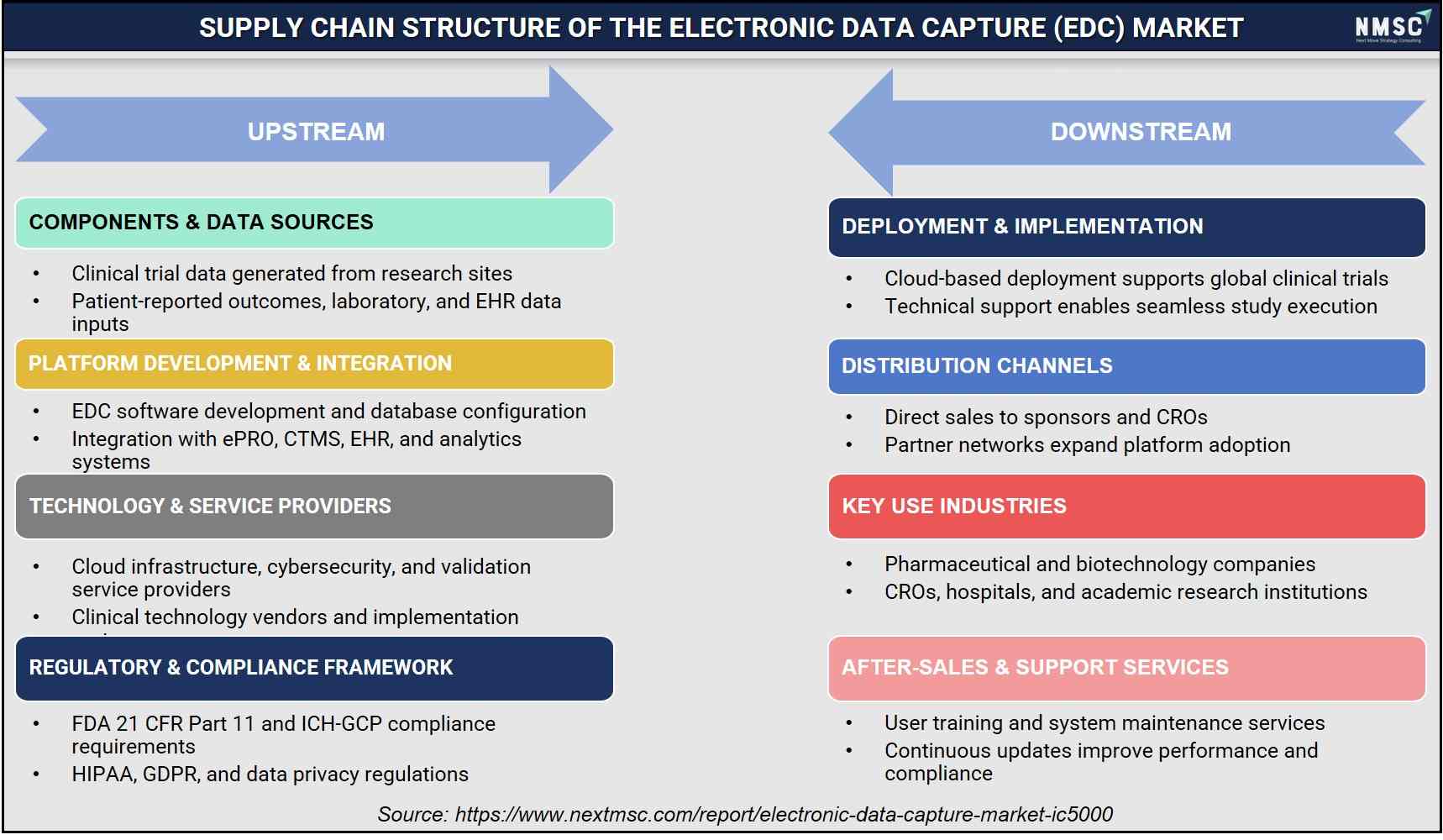
Based on our comprehensive assessment, we found that the Electronic Data Capture (EDC) Market value chain begins with clinical data generation from research sites, laboratories, and healthcare systems. Technology vendors develop software platforms and integration capabilities, while cloud providers ensure secure deployment. Downstream participants include pharmaceutical companies, CROs, and healthcare institutions, supported by training, maintenance, and regulatory compliance services.
Competitive Landscape
|
Key Takeaways |
Details |
|
Market Structure |
Moderately consolidated at the enterprise level, with Medidata Solutions, Oracle, Veeva Systems, and IQVIA collectively commanding significant global market share. The mid-market segment is fragmented, with over 20 active vendors competing on price, specialization, and ease of deployment. |
|
Innovation Focus |
AI-powered data quality monitoring, decentralized trial support, ePRO integration, and risk-based monitoring automation are primary innovation investment areas across leading Electronic Data Capture platform vendors. |
|
M&A Activity |
Strategic acquisitions dominate as larger eClinical suite vendors seek to absorb point-solution EDC providers and expand geographic reach. Recent transactions reflect consolidation around cloud-native platform capabilities and therapeutic area specialization. |
How Do Companies Compete in the Electronic Data Capture Market?
The Electronic Data Capture market is characterized by a tiered competitive structure where enterprise-scale vendors compete on platform comprehensiveness and global regulatory validation credentials, while mid-market and specialist vendors compete on cost efficiency, therapeutic area expertise, and ease of implementation. NMSC's analysis indicates that competitive strategies in the Electronic Data Capture market have evolved from product feature differentiation toward ecosystem integration capabilities, with vendors increasingly measured on their ability to connect EDC data with external systems including clinical trial management systems (CTMS), pharmacovigilance platforms, and regulatory submission tools.
Which Kind of Companies Dominate the Electronic Data Capture Market?
Large integrated eClinical suite vendors with validated global platforms dominate the enterprise segment of the Electronic Data Capture market. Medidata Solutions (a Dassault Systemes company) leads through its Rave EDC platform, which holds a significant installed base among top-tier pharmaceutical sponsors. Oracle Corporation's Clinical One platform benefits from deep integration with Oracle Health Sciences products and a globally distributed validation infrastructure. Veeva Systems has rapidly gained enterprise market share through its Vault EDC offering, leveraging its existing clinical data management customer relationships. IQVIA leverages its Axiom EDC within a broader data and analytics service bundle, differentiating through integrated clinical analytics.
AI-Native Differentiation and Open Standards Drive Market Success in the Electronic Data Capture Market
AI-native platform differentiation is emerging as a decisive competitive factor in the Electronic Data Capture market. Vendors that have natively embedded machine learning capabilities into core EDC workflows, rather than layering AI features onto legacy architectures, demonstrate meaningfully superior data quality outcomes and query resolution efficiency. Open standards adoption, including CDISC Study Data Tabulation Model (SDTM) and Clinical Data Interchange Standards Consortium (CDISC) ODM alignment, is increasingly a baseline competitive requirement as sponsors mandate interoperability for regulatory submission readiness. Based on our market evaluation, vendors with native CDISC compliance and API-based open architecture integration frameworks are winning a disproportionate share of competitive vendor evaluations.
Market Players to Opt for Merger and Acquisition Strategies to Expand Their Presence in the Electronic Data Capture Market
Strategic mergers and acquisitions are expected to remain a primary growth lever for Electronic Data Capture market participants over the 2026-2035 forecast period. Larger eClinical platform vendors are likely to acquire specialist vertical platform vendors serving niche therapeutic areas such as oncology adaptive trials, rare disease, and medical device clinical investigations. Geographic acquisitions targeting established EDC vendors in Asia Pacific and Latin America will accelerate as market leaders seek to bypass the extended timeline of organic market entry in regulatory complex environments. Private equity-backed mid-market EDC vendors are also attractive acquisition targets as enterprise platforms seek to broaden their addressable market beyond large pharma sponsors.
Who Are the Key Market Players in Electronic Data Capture?
-
Medidata Solutions, Inc.
-
Oracle Corporation
-
Veeva Systems Inc.
-
IQVIA Holdings Inc.
-
Merative L.P.
-
OpenClinica, LLC
-
Castor EDC B.V.
-
Medrio, Inc.
-
Viedoc Technologies AB
-
Anju Software, Inc.
-
Clario, LLC
-
Signant Health Holdings, Inc.
-
CRScube Inc.
-
Clinion AI Technologies Private Limited
-
Calyx Health, Inc.
-
Fountayn, Inc.
-
ClinCapture, Inc.
-
Cloudbyz, Inc.
-
Datacapt Pty Ltd
-
Octalsoft Solutions Private Limited
What Are the Latest Developments in the Electronic Data Capture Industry?
|
Date |
Event |
|
April 2026 |
Oracle Health launched a digital check-in solution leveraging CLEAR’s identity verification technology, supporting CMS’s "Kill the Clipboard" effort and enabling secure, paperless patient registration that integrates directly into clinical study data workflows. |
|
February 2026 |
Medidata (Dassault Systèmes) launched Medidata AI Study Build, a generative AI capability that configures Rave EDC and eCOA systems directly from study protocols, reducing study start-up times by automating traditionally manual database design tasks. |
|
January 2026 |
Oracle Corporation launched the Oracle Life Sciences AI Data Platform, a generative AI-enabled solution that unifies customer, third-party, and over 129 million de-identified longitudinal EHR records to accelerate R&D, clinical trial safety monitoring, and commercialization workflows. |
What Are the Investment Opportunities in Electronic Data Capture?
Capital Inflows and Private Equity Activity
The Electronic Data Capture market continues to attract increasing investor attention as clinical trial digitalization becomes a strategic priority across the pharmaceutical and biotechnology industries. Enterprise EDC platform vendors benefit from highly recurring revenue models supported by multi-year subscription agreements, creating strong revenue visibility and attractive valuation profiles. We observed that private equity firms have increasingly targeted mid-market eClinical and EDC software providers as platform acquisition opportunities, recognizing their potential for accelerated growth through product enhancement, geographic expansion, and cross-selling within broader clinical technology portfolios. The continued consolidation of the eClinical technology landscape is expected to create attractive investment opportunities across both established vendors and emerging niche platform providers.
Cloud Infrastructure and Data Localization Investment
Cloud infrastructure investment represents a critical growth opportunity within the Electronic Data Capture market as sponsors increasingly require globally scalable platforms capable of supporting multi-regional clinical trials. Growing regulatory emphasis on data sovereignty under frameworks such as GDPR, China's Data Security Law, and India's Digital Personal Data Protection Act is driving demand for region-specific hosting capabilities. We found that EDC vendors investing in dedicated cloud infrastructure, localized data centers, and advanced cybersecurity architectures are better positioned to secure enterprise contracts where regulatory compliance and data residency requirements are key procurement criteria. As global trial complexity increases, infrastructure investments are expected to remain a major source of competitive differentiation within the market.
ESG and Sustainable Clinical Research Enablement
Environmental, Social, and Governance (ESG) considerations are becoming increasingly important in investment decisions across healthcare technology markets, including Electronic Data Capture. EDC platforms play a direct role in supporting decentralized and hybrid clinical trial models that reduce patient travel requirements, improve participation from underserved populations, and lower the environmental footprint associated with traditional site-centric studies. We assessed that institutional investors with ESG-focused mandates are increasingly evaluating eClinical technology providers as opportunities to combine financial performance with measurable healthcare accessibility and sustainability outcomes. This alignment between clinical innovation and ESG objectives is expected to strengthen long-term investor interest in the sector.
Digital Transformation and Enterprise Modernization
Enterprise digital transformation initiatives across pharmaceutical companies and contract research organizations are creating sustained demand for Electronic Data Capture platforms. Clinical development organizations are allocating substantial budgets toward integrated digital ecosystems where EDC serves as the foundational layer for clinical data collection, management, and analytics. We further analyzed that investments in artificial intelligence, clinical analytics, decentralized trial technologies, and connected eClinical platforms are increasing the strategic importance of EDC systems within broader technology modernization programs. These multi-year digital transformation initiatives create long sales cycles but often result in high-value enterprise contracts that provide significant revenue visibility and customer retention benefits for EDC vendors.
Strategic Mergers, Acquisitions, and Platform Consolidation
Strategic M&A activity continues to reshape the Electronic Data Capture market as software vendors seek to build end-to-end clinical technology ecosystems. Leading eClinical providers are increasingly pursuing acquisitions that strengthen capabilities in clinical trial management systems (CTMS), ePRO, RTSM, patient engagement technologies, and advanced analytics. We noticed that investors are particularly focused on companies capable of delivering integrated platform solutions across the clinical development lifecycle. As sponsors seek to reduce vendor fragmentation and improve operational efficiency, consolidation activity is expected to accelerate through 2035, creating attractive opportunities for both strategic acquirers and financial investors within the Electronic Data Capture market.
Key Benefits for Stakeholders
For Pharmaceutical and Biotech Companies
Pharmaceutical and biotechnology companies gain access to comprehensive market sizing, segmentation, and forecast analysis across the Electronic Data Capture market. This intelligence supports long-term technology investment planning, vendor selection, and digital clinical trial strategy development. Our detailed segmentation analysis by deployment model, commercial model, buyer type, and end-user industry enables sponsors to benchmark adoption trends and identify the most suitable EDC solutions for their clinical development programs. The competitive landscape assessment further assists procurement teams in evaluating platform capabilities, pricing structures, and implementation strategies with greater confidence.
For Contract Research Organizations (CROs)
Contract research organizations benefit from detailed insights into competitive dynamics, commercial models, and evolving customer requirements within the Electronic Data Capture market. This analysis supports service portfolio optimization, pricing strategy refinement, and partnership development initiatives. Our assessment of leading EDC vendors, deployment preferences, and buyer behavior enables CROs to strengthen their positioning in increasingly competitive clinical research outsourcing environments while identifying opportunities for operational differentiation and revenue growth.
For EDC Platform Vendors
EDC platform vendors gain actionable intelligence on market opportunities, competitive positioning, and high-growth segments across the global Electronic Data Capture market. Detailed analysis of deployment trends, buyer preferences, and regional adoption patterns supports product roadmap prioritization and geographic expansion planning. The report's evaluation of emerging customer requirements, regulatory developments, and commercialization strategies enables vendors to identify white-space opportunities, optimize go-to-market approaches, and strengthen competitive advantage in an evolving eClinical technology landscape.
For Investors and Financial Analysts
Investors and financial analysts receive an independent and data-driven assessment of the Electronic Data Capture market's growth trajectory, competitive structure, and investment outlook. Revenue forecasts, CAGR analysis, and segment-level performance assessments support valuation modeling, investment due diligence, and portfolio construction activities. Our review of industry consolidation trends, recurring revenue business models, and emerging technology adoption patterns provides a structured framework for identifying acquisition opportunities, market leaders, and high-growth investment targets within the broader eClinical ecosystem.
For Regulatory Bodies and Policy Makers
Regulatory agencies and policy makers gain a comprehensive understanding of Electronic Data Capture adoption trends, technology capabilities, and evolving data integrity requirements across global clinical research environments. The report provides insights into how regulatory frameworks influence technology adoption, operational practices, and compliance strategies. This information supports evidence-based policy development, modernization of clinical research regulations, and ongoing efforts to strengthen data quality, transparency, and patient safety across the healthcare sector.
For Academic and Hospital Research Institutions
Academic medical centers, hospitals, and investigator-led research organizations benefit from strategic intelligence regarding available EDC platform options, deployment approaches, and commercial models. The analysis supports informed technology procurement decisions, operational planning, and digital research modernization initiatives. Comparative assessments of vendor capabilities and implementation strategies help research institutions optimize clinical data collection processes while improving regulatory compliance and research efficiency.
For Government and Public Health Agencies
Government organizations and public health agencies gain access to regional adoption trends, technology capability assessments, and market development indicators within the Electronic Data Capture market. These insights support national clinical research infrastructure planning, digital health investment strategies, and public-sector modernization initiatives. The report also provides a framework for evaluating how electronic data collection technologies can enhance research productivity, strengthen healthcare innovation ecosystems, and improve evidence generation capabilities at a national level.
Key Market Segments
By EDC Software
-
Enterprise Platform
-
Global Multi-Study Platform
-
Integrated Clinical Data Platform
-
-
Mid-Market Platform
-
Commercial Cloud Platform
-
Emerging Vendor Platform
-
-
Open Source and Consortium Platform
-
Specialist Vertical Platform
-
Medical Device Trials
-
Academic Research
-
-
Other EDC Software
By EDC Services
-
Implementation and Validation
-
Study Build
-
Database Design
-
System Validation
-
Integration Services
-
-
Migration and Conversion
-
Legacy Data Migration
-
Study Migration
-
-
Managed Support and Training
-
User Training
-
Technical Support
-
Platform Administration
-
-
Managed Data Services
-
Data Review Support
-
Data Quality Management
-
Database Maintenance
-
By Deployment
-
Cloud
-
Hybrid
-
On Premise
By Commercial Model
-
Subscription
-
Term License
-
Per Study
-
Managed Service
-
Community and Support
By Buyer Type
-
Sponsors
-
CROs
-
Sites and Site Networks
-
Academic and Hospitals
-
Government and Public Health
By End User Industry
-
Pharma and Biotech
-
Medical Device and Diagnostics
-
Academic and Hospital Research
-
Government and Public Health Research
By Region
-
North America: U.S., Canada, and Mexico
-
Europe: UK, Germany, France, Italy, Spain, Sweden, Denmark, Finland, the Netherlands, and the Rest of Europe
-
Asia Pacific: China, India, Japan, South Korea, Taiwan, Indonesia, Vietnam, Australia, Philippines, Malaysia, and the Rest of APAC
-
Middle East & Africa: Saudi Arabia, UAE, Egypt, Israel, Turkey, Nigeria, South Africa, and the Rest of MEA
-
Latin America: Brazil, Argentina, Chile, Colombia, and the Rest of LATAM
Conclusion and Recommendations
Long-Term Outlook
The Electronic Data Capture Market is entering a period of sustained expansion as clinical research organizations accelerate digital transformation initiatives and regulatory authorities continue to emphasize data quality, transparency, and real-time accessibility across clinical development programs. The market is projected to grow from USD 1.80 billion in 2025 to USD 4.50 billion by 2035, registering a CAGR of 9.6% during the forecast period. We further analysed that this growth reflects the convergence of rising pharmaceutical R&D expenditure, increasing clinical trial complexity, expanding adoption of decentralized and hybrid trial models, and growing demand for integrated eClinical technology ecosystems. As sponsors seek to improve trial efficiency, patient engagement, and regulatory compliance, Electronic Data Capture platforms are evolving from standalone data collection tools into foundational components of end-to-end clinical data management infrastructure.
Strategic Positioning Recommendations
EDC vendors should prioritize investment in cloud-native architecture, artificial intelligence-enabled workflows, and open integration frameworks that facilitate seamless interoperability with adjacent eClinical technologies. Organizations that embed AI-driven query management, risk-based monitoring capabilities, and automated data quality controls within their platforms will be better positioned to meet evolving sponsor expectations and secure premium enterprise contracts. Investment in CDISC standards compliance, regulatory submission automation, and API-driven ecosystem connectivity should remain a strategic priority as customers increasingly favor unified clinical technology environments over fragmented point solutions. Therapeutic-area specialization, particularly in oncology, rare disease research, and medical device investigations, offers an opportunity for vendors to establish differentiated market positioning and strengthen customer retention.
Investment Attractiveness
The Electronic Data Capture Market represents an attractive investment environment supported by recurring subscription-based revenue streams, high customer switching costs, and durable long-term demand generated by global clinical trial activity. We assessed that cloud-based deployment models, AI-enabled EDC platforms, managed data services, and Asia-Pacific expansion strategies represent the highest-conviction investment themes over the forecast period. The market's ongoing transition toward integrated eClinical platforms is expected to drive both organic growth and consolidation opportunities, creating favorable conditions for strategic acquisitions and platform expansion initiatives. Investors should closely monitor M&A activity among EDC, CTMS, ePRO, RTSM, and clinical analytics vendors as platform convergence continues to reshape the competitive landscape.
Market Shifts and Key Risks
The most significant market shift underway is the transition from standalone Electronic Data Capture systems toward fully integrated clinical development platforms capable of supporting data collection, analytics, monitoring, patient engagement, and regulatory reporting within a unified environment. This trend favors vendors with broad eClinical portfolios and strong interoperability capabilities while increasing competitive pressure on narrowly focused point-solution providers. Key risks to market growth include potential reductions in pharmaceutical R&D spending resulting from pricing and reimbursement pressures, increasingly complex global data privacy regulations governing cross-border data transfers, and cybersecurity threats targeting sensitive clinical research information. We observed that vendor capability in data security, regulatory compliance, and business continuity planning is becoming a critical procurement criterion for sponsors and CROs evaluating long-term technology partners.
Growth Pathways
Organizations seeking to maximize value from the Electronic Data Capture Market should pursue a phased growth strategy aligned with evolving clinical research requirements. In the near term (2025–2028), priority should be placed on cloud migration, process standardization, and integration of EDC platforms with broader eClinical ecosystems. In the mid-term (2028–2031), organizations should focus on expanding artificial intelligence capabilities, implementing advanced analytics workflows, and supporting decentralized clinical trial operations through enhanced digital connectivity. In the long term (2031–2035), market leaders are expected to differentiate through intelligent clinical data ecosystems that leverage predictive analytics, automation, and real-time decision support across the entire clinical development lifecycle. Asia Pacific is expected to remain the most attractive geographic growth engine throughout this period, supported by increasing clinical trial activity, expanding CRO capacity, favorable government initiatives, and continued investment in healthcare research infrastructure.
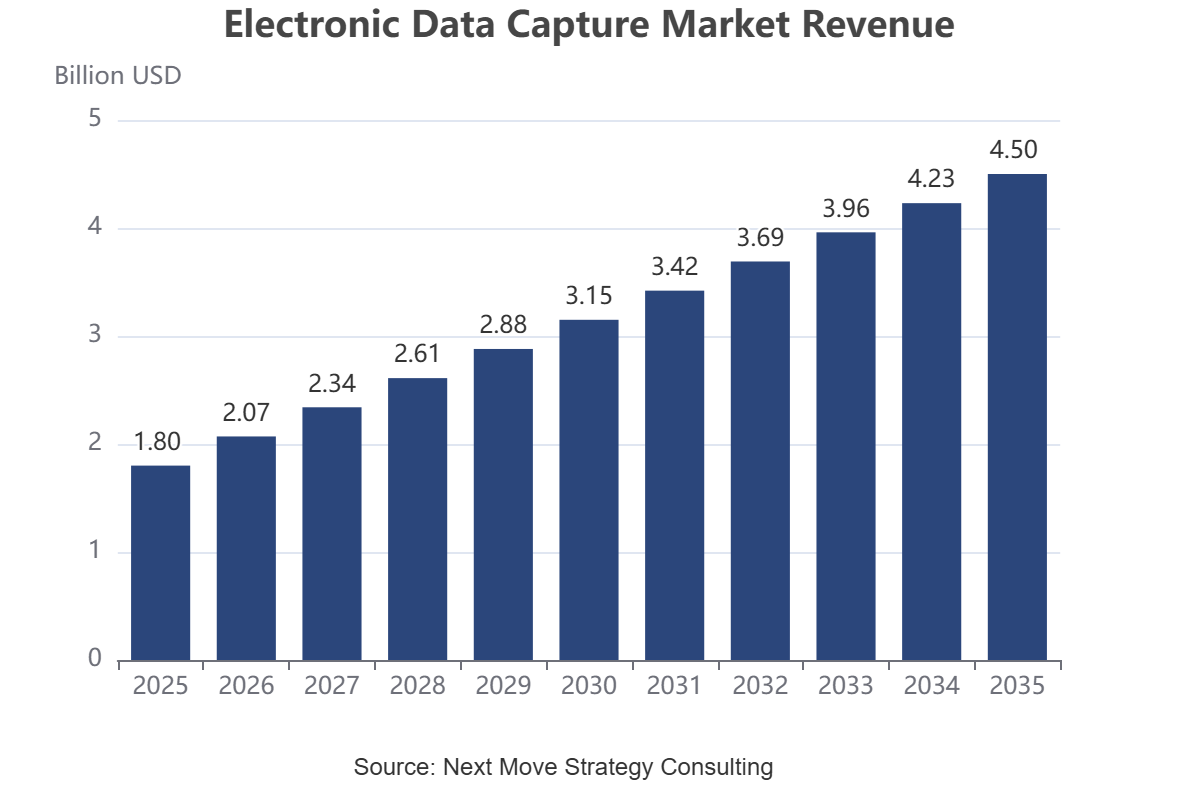
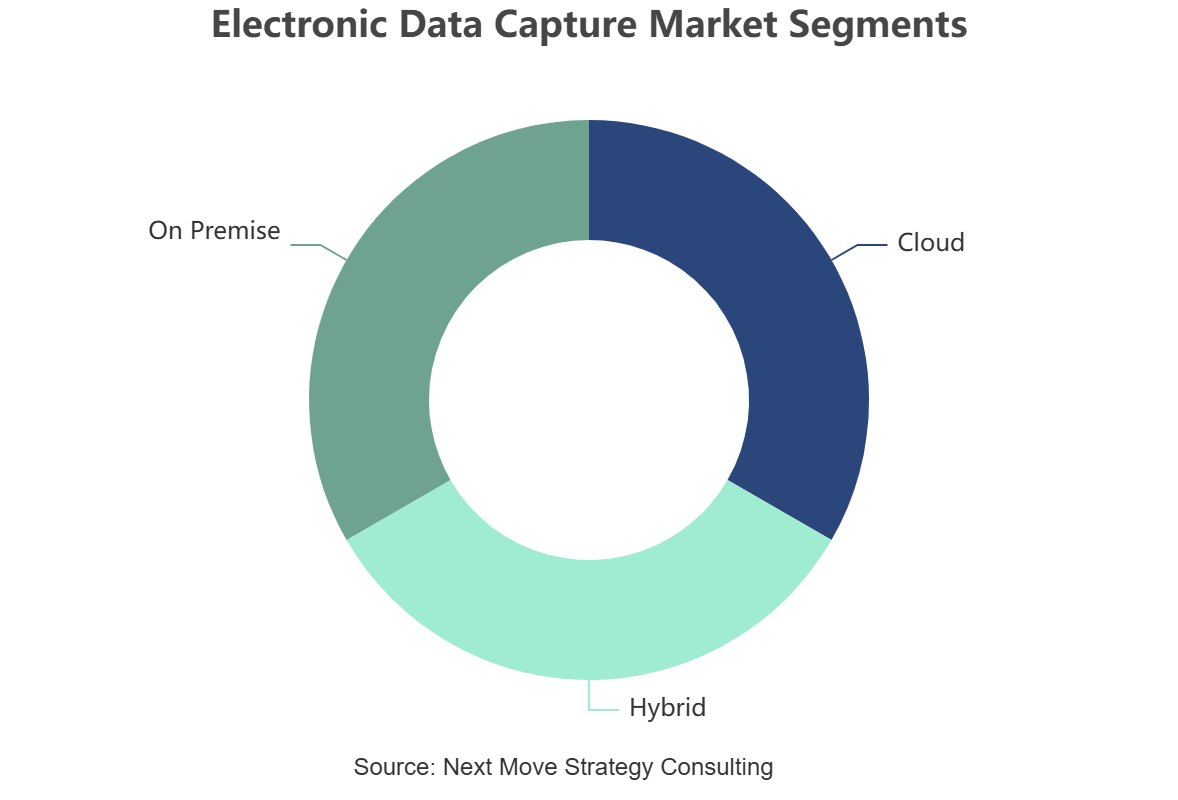
About the Author
 Saista Faiyaz
— Saista Faiyaz is Research Associate at Next Move Strategy Consulting, where she has covered consumer markets and healthcare technologies for 3 years. Her work includes primary interview review, secondary-source validation, market sizing, and structured analysis of company and industry data. She supports research by comparing evidence across sources, organizing findings into market narratives, and documenting assumptions used in analysis. Her scope includes cross-market benchmarking, and reports.
Saista Faiyaz
— Saista Faiyaz is Research Associate at Next Move Strategy Consulting, where she has covered consumer markets and healthcare technologies for 3 years. Her work includes primary interview review, secondary-source validation, market sizing, and structured analysis of company and industry data. She supports research by comparing evidence across sources, organizing findings into market narratives, and documenting assumptions used in analysis. Her scope includes cross-market benchmarking, and reports.
About the Reviewer
 Supradip Baul
— Supradip Baul is an accomplished business consultant and strategist with over a decade of rich experience in market intelligence, strategy, technology, and business transformation. His work has included rigorous qualitative and quantitative analysis across multiple industries, helping clients shape investment decisions and long-term roadmaps. Earlier in his career, he was associated with Gartner, where he contributed to industry-leading reports and market share analyses. He has worked with leading global companies and holds an MBA with a dual specialization in Marketing and Finance.
Supradip Baul
— Supradip Baul is an accomplished business consultant and strategist with over a decade of rich experience in market intelligence, strategy, technology, and business transformation. His work has included rigorous qualitative and quantitative analysis across multiple industries, helping clients shape investment decisions and long-term roadmaps. Earlier in his career, he was associated with Gartner, where he contributed to industry-leading reports and market share analyses. He has worked with leading global companies and holds an MBA with a dual specialization in Marketing and Finance.
At Next Move Strategy Consulting, we understand that insightful market research is the cornerstone of successful business decisions. That's why we employ a robust and multifaceted approach, combining various methodologies to deliver the most accurate and actionable data for our clients.

Research Landscape
We navigate the world of research with two primary approaches:
Qualitative Approach
Our qualitative research methodologies involve immersive techniques such as in-depth interviews, focus groups, and observational studies. By engaging directly with individuals and stakeholders, we uncover valuable insights that quantitative data alone may overlook.

Quantitative Research
In tandem with qualitative methodologies, NMSC leverages the power of Quantitative Research to provide a robust foundation of numerical insights. Through systematic data collection and analysis, we quantify patterns, preferences, and market trends, offering a comprehensive view of the business landscape.
Our quantitative research approach employs diverse tools, including surveys, experiments, and statistical modelling. These methodologies enable us to gather data from a large and representative sample, ensuring the statistical significance of our findings. By employing structured questionnaires and standardized data collection methods, we guarantee the reliability and validity of the information we present to our clients.
Quantitative research is particularly effective in measuring the prevalence of trends, assessing market size, and gauging the impact of various factors on consumer behavior. The numerical precision attained through this approach equips our clients with actionable insights, facilitating data-driven decision-making and strategy formulation.


Our Specialized Toolbox for Industry-Specific Market Research
We deploy a specialized arsenal of techniques tailored to meet your unique requirements. Here's a glimpse into our comprehensive toolbox:

Information Procurement
The stage entails acquiring market data or relevant information through various sources and methodologies.


Market Research Approach
We utilize both top-down and bottom-up approaches in market research analysis to achieve a comprehensive understanding of the market dynamics, leveraging the broad perspective of industry trends and macroeconomic factors alongside detailed insights from specific segments and individual companies.

Porters Five Forces Analysis
We conduct Porter's Five Forces analysis to evaluate the competitive landscape of an industry, providing us with insights into factors that affect profitability and strategic positioning.

SWOT Analysis

Forecasting
We utilize a forecasting model to predict future consumption by considering parameters like population, economics, regulations, market competition, drivers, constraints, technology, and pricing. We also employ statistical techniques such as multilinear regression, exponential smoothing, moving average, ARIMA, and Monte Carlo simulations for accurate predictions. In econometric forecasting, we analyzed short-term and long-term event impacts, attributing values based on regulatory frameworks, economic factors, and market events.





 Speak to Our Analyst