How the Global Point-of-Sale Software Market Is Being Shaped by Small Business Demand

Until recently, point-of-sale software was built for big retail chains and restaurant groups. The licensing costs alone were enough to keep small businesses out.
The global POS software market is now worth well over ten billion dollars, and a growing share of that growth is coming from small and mid-sized businesses. What was once a secondary trend is now at the center of the market.
Small Businesses Are Now the Market's Biggest Driver
Enterprise clients still spend more per account. But there are far more small businesses than large ones, and they've started buying POS software at a pace that's reshaping where vendors put their attention.
The shift happened because the product got cheaper and simpler at the same time. Those two things don't usually happen together. When they do, markets move.
What's driving small-business adoption isn't a single feature or a single moment. It's a combination of things that came together over the last few years and made the old way of doing things feel impractical.
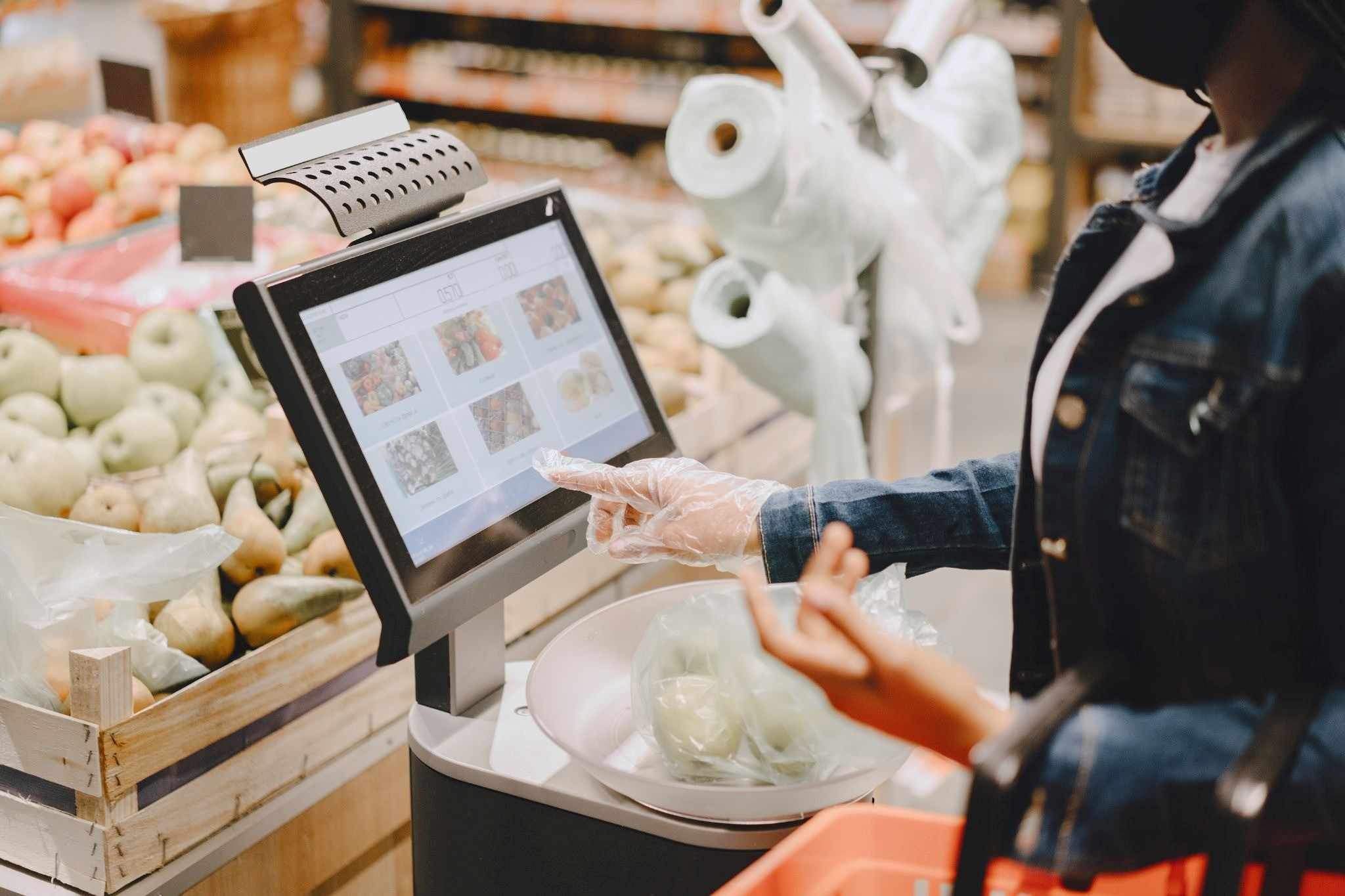
What's Actually Pushing Small Businesses Toward POS Software
The clearest change is pricing. Old POS systems required upfront hardware costs, long-term contracts, and software licensing fees. Cloud-based subscriptions changed the cost structure entirely.
A food truck or a neighborhood boutique can now get started for a monthly fee that fits inside a normal operating budget.
Consumer behavior pushed things along too. Customers now expect to tap their card or phone. They want digital receipts. They ask about loyalty points. A business that can't handle these things feels dated, and small business owners know it.
Inventory also got complicated. A shop carrying a few hundred SKUs can't track stock with a notebook or a spreadsheet. When errors cost you money and time, you start looking for software.
The pandemic sped all of this up. Contactless payment went from a nice option to something customers expected. Even very small operations started asking about their software options.
How Vendors Are Redesigning Their Products Around Small Business Needs
This is where the market has seen the most activity. Vendors that used to sell to chains and franchises have started peeling back the complexity. Features built for multi-location management or enterprise reporting were buried or removed. The interface got simpler. Setup time got shorter.
Pricing went modular. A single-location coffee shop doesn't need a full CRM module. Vendors figured out that offering a lower base price with optional add-ons gets more small businesses through the door. They can grow into more features later.
Hardware changed too. Tablet-based systems and mobile card readers replaced bulky terminals. A tablet on a stand costs a fraction of what a traditional POS terminal cost a decade ago. That matters a lot when you're running tight margins.
For small business owners evaluating their options, the range of available tools has grown considerably. A practical point-of-sale software today typically includes inventory tracking, payment processing, and basic sales reporting, bundled at a price point that didn’t exist five years ago. Vendors have clearly taken note of what this segment actually needs versus what it can afford.
Integration also became a priority. Connecting a POS system to accounting software, an online store, or payroll used to require a developer. Now it's usually a few clicks. That removes a real barrier for owners who don't have technical staff.
What This Means for Market Competition and Pricing Trends
The entry-level price for POS software has dropped to the point where it's putting pressure on mid-tier vendors. If a smaller competitor can offer core features for fifteen dollars a month, a vendor charging three times that needs a strong reason why.
Larger companies have responded by acquiring smaller SMB-focused software companies rather than rebuilding from scratch. It's faster, and it brings in customers that were hard to reach through traditional sales channels.
Freemium models are now common. A business can get started for free, use the product for a few months, and then decide whether the paid tier is worth it. That changes how purchase decisions happen. It's less of a sales process and more of a product trial.
Geography matters here too. Markets in Southeast Asia, Latin America, and parts of Africa have large small business economies that are still moving away from cash. POS adoption in these regions is growing faster than in North America or Western Europe, and vendors are paying attention.
The thing that's actually separating competitors now isn't the feature list. It's how fast a new user can get set up, and what the support experience looks like when something goes wrong.
Where the Market Goes from Here
AI-assisted tools are starting to reach smaller operators. Inventory forecasting, sales pattern analysis, and automated reorder suggestions are features that used to belong to enterprise software. They're moving downstream.
Some vendors are going further, offering small business lending or insurance products tied directly to POS transaction data. A system that sees your daily sales can make a credit decision much faster than a bank. That's a meaningful value add for a business owner who's been turned down for a loan before.
The small business segment won't stay simple forever. Owners who started with a basic setup will ask for more over time. The vendors that understand how small businesses actually manage cash, staffing, and inventory, not in theory but in practice, will hold onto those customers longer.
The center of gravity in POS software has shifted. Big enterprise clients still matter, but the market is being shaped by the needs and budgets of people running smaller operations. That's not going to reverse. As small-business demand keeps rising, vendors that can serve this segment well will define what comes next.
About the Author
 Sanyukta Deb
— Sanyukta Deb is Digital Marketing Team Lead at Next Move Strategy Consulting, where she has led content strategy and technical SEO for the firm's B2B market research publications for over 2 years. Her editorial process translates NextMSC's primary and secondary research — spanning technology, industrial, and consumer sectors — into commercial narratives, backed by search-intent, keyword, and competitive analysis. She brings 5 years of overall experience in digital marketing and content strategy.
Sanyukta Deb
— Sanyukta Deb is Digital Marketing Team Lead at Next Move Strategy Consulting, where she has led content strategy and technical SEO for the firm's B2B market research publications for over 2 years. Her editorial process translates NextMSC's primary and secondary research — spanning technology, industrial, and consumer sectors — into commercial narratives, backed by search-intent, keyword, and competitive analysis. She brings 5 years of overall experience in digital marketing and content strategy.
About the Reviewer
 Debashree Dey
— Debashree Dey is Assistant Manager at Next Move Strategy Consulting, where she supports cross-vertical market content and communications across diverse industries for 6 years. Her professional background includes senior content writing, communications, and published manuscript authorship, with experience developing audience-focused business narratives and maintaining clear, consistent messaging. Her role supports research-led content development and editorial quality across NextMSC publications.
Debashree Dey
— Debashree Dey is Assistant Manager at Next Move Strategy Consulting, where she supports cross-vertical market content and communications across diverse industries for 6 years. Her professional background includes senior content writing, communications, and published manuscript authorship, with experience developing audience-focused business narratives and maintaining clear, consistent messaging. Her role supports research-led content development and editorial quality across NextMSC publications.

















Add Comment