Enterprise Software Trends: macOS Alternatives for Businesses
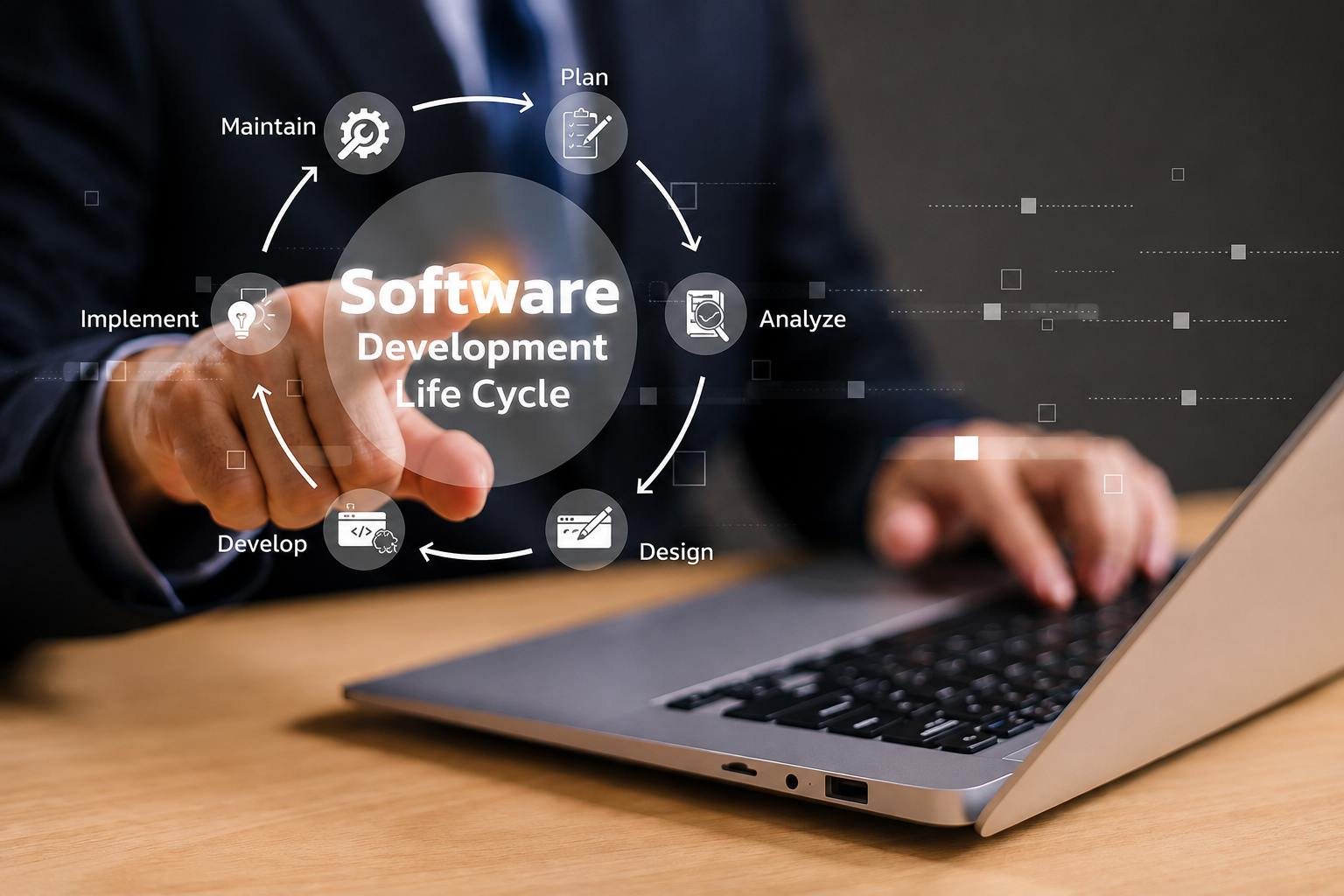
Enterprise software is undergoing changes that are evident not only in analytics systems and cloud platforms, but also in everyday work tools. Many companies more and more often opt for specialized solutions that integrate better with corporate infrastructure, scale alongside the business, and support automation. This trend is especially noticeable in organizations where entire departments use Macs. When a team works with large volumes of documents, communications, multimedia files, or project data, the limitations of basic apps are more apparent than ever. That’s why enterprise software trends are moving increasingly toward a shift from general-purpose system tools to professional platforms that are designed for teamwork.
Standard macOS Applications Are No Longer Meeting Business Needs
Apple’s built-in apps have their strengths. They’re free, stable, and well-integrated with the macOS ecosystem. For personal use, this is often sufficient. However, the corporate environment has different requirements. Companies need:
-
Centralized management
-
Access control and change logging
-
Integration with corporate services
-
The ability to standardize workflows
At this stage, many companies begin to evaluate which tools actually improve employees’ daily work and which merely meet basic needs. A comparison of the best alternatives to built-in macOS apps shows that professional users often seek solutions with more flexible file management, more productive tools for note-taking and email, as well as better automation, and much more. For businesses, this means that alternatives to macOS apps are often seen not as a way to replace standard programs, but as part of a broader strategy to optimize the digital work environment.
How the Desktop Software Market Is Changing
In the past, companies tried to use as few programs as possible to simplify support. Today, the situation is different. Organizations more and more often choose separate tools for:
-
Project management
-
Document management
-
Communication
-
PDF processing
-
File management
-
Automation
This is because specialized products evolve faster than all-in-one apps. They regularly gain new features and integrations with other services. Additionally, they offer capabilities tailored to professional users.
Integration as a key factor
Integration has been one of the main reasons to switch to third-party productivity tools. Business processes no longer exist in isolation. A document can be linked to a CRM, a task in a project management system, a corporate repository, and e-signature tools.
Standard macOS apps work well within the Apple ecosystem. However, they often fall short compared to specialized solutions when it comes to working with enterprise platforms. These include Google Workspace, Microsoft 365, Slack, Salesforce, Jira and other B2B systems.
Scalability as the Key Consideration
As a company grows, its software requirements change. Why is that? A tool that works well for a team of five people can create problems for a company with 100 employees.
Scaling changes almost everything:
-
License management
-
Backup
-
Version control
-
Staff training
-
Support and security
That’s why B2B software replacement rarely happens because of a single feature. Usually, this decision is driven by the need to standardize workflows and reduce operating costs.
Centralized administration
With enterprise apps, administrators can centrally manage settings, user access, and security policies. These are particularly important for international companies and remote teams. The workload on IT departments is greatly relieved by the ability to:
-
Quickly deploy new software
-
Revoke access
-
Enforce uniform security policies
The Role of Digital Workspace Software in Modern Organizations

Modern digital workspace software brings together documents, tasks, communication, and company knowledge in a single environment. The result is fewer switches between applications and improved process visibility. In this model, standalone applications gradually lose their central role, becoming merely supporting tools. The bulk of the work takes place on specialized enterprise platforms.
Automation of repetitive processes
Automation is one of the most important drivers of the transition to third-party software. Companies strive to minimize manual operations:
-
File sorting
-
Document processing
-
Report generation
-
Request routing
-
Data synchronization
Third-party productivity tools often provide built-in automation features or integration with platforms like Zapier, Make, etc., or with enterprise APIs. This reduces the time spent on routine tasks and minimizes errors.
Security. Compliance with Corporate Requirements
1. Data control.
For many industries, security is a critical issue. Financial institutions and law firms, healthcare organizations and technology companies must control where data is stored, who has access to it, and how it is processed.
Specialized enterprise solutions often support:
-
Advanced encryption
-
User activity auditing
-
Data retention policies
-
Compliance with international security standards
2. Access Management.
In large organizations, it is important not only to protect data, but also to properly assign access rights. Standard features of modern B2B software include user roles and groups, as well as temporary permissions and integration with corporate authentication systems.
The Economics of Switching to Third-Party Solutions

At first glance, it may seem that using free system software is always cheaper. However, companies more and more often evaluate not only the license cost but also the total cost of ownership. If a specialized tool saves an employee even 15–20 minutes a day, reduces the number of errors, or automates routine processes, then its implementation can quickly pay for itself. For large teams, even a slight increase in productivity always has a tangible financial impact.
That is precisely why the desktop software market is increasingly focused on measurable business outcomes. Specifically:
-
Performance
-
Integration
-
Automation
-
Scalability
Conclusion
The shift from standard macOS applications to specialized enterprise solutions is part of a deeper digital workplace transformation. Companies no longer evaluate software solely based on the number of features. They analyze how well a tool supports scalability, integration, security, and automation. The Mac remains an important platform for business. But it is increasingly rare for it to be the sole source of work tools. The most successful organizations create an ecosystem in which system apps are complemented by professional platforms. These platforms can support complex enterprise processes. That is why alternatives to macOS apps are not just a matter of convenience today, but a crucial element of modern B2B strategy.
About the Author
 Sanyukta Deb
— Sanyukta Deb is Digital Marketing Team Lead at Next Move Strategy Consulting, where she has led content strategy and technical SEO for the firm's B2B market research publications for over 2 years. Her editorial process translates NextMSC's primary and secondary research — spanning technology, industrial, and consumer sectors — into commercial narratives, backed by search-intent, keyword, and competitive analysis. She brings 5 years of overall experience in digital marketing and content strategy.
Sanyukta Deb
— Sanyukta Deb is Digital Marketing Team Lead at Next Move Strategy Consulting, where she has led content strategy and technical SEO for the firm's B2B market research publications for over 2 years. Her editorial process translates NextMSC's primary and secondary research — spanning technology, industrial, and consumer sectors — into commercial narratives, backed by search-intent, keyword, and competitive analysis. She brings 5 years of overall experience in digital marketing and content strategy.
About the Reviewer
 Debashree Dey
— Debashree Dey is Assistant Manager at Next Move Strategy Consulting, where she supports cross-vertical market content and communications across diverse industries for 6 years. Her professional background includes senior content writing, communications, and published manuscript authorship, with experience developing audience-focused business narratives and maintaining clear, consistent messaging. Her role supports research-led content development and editorial quality across NextMSC publications.
Debashree Dey
— Debashree Dey is Assistant Manager at Next Move Strategy Consulting, where she supports cross-vertical market content and communications across diverse industries for 6 years. Her professional background includes senior content writing, communications, and published manuscript authorship, with experience developing audience-focused business narratives and maintaining clear, consistent messaging. Her role supports research-led content development and editorial quality across NextMSC publications.


















Add Comment