Essential Safety Equipment Every Industrial Workplace Should Have
Walk into any warehouse, manufacturing plant, or construction site, and you'll notice something right away: there's always something happening. Forklifts are moving pallets, employees are operating machinery, deliveries are arriving, and maintenance crews are keeping equipment running. In busy environments like these, safety isn't simply another item on a checklist; it's an essential part of keeping people protected and operations running smoothly.
While every workplace has its own unique hazards, one thing remains consistent: the right safety equipment can help reduce exposure to workplace risks. Investing in appropriate equipment, maintaining it properly, and training employees to use it correctly can contribute to safer operations, better efficiency, and a stronger overall safety program.
Whether you're setting up a new facility or reviewing your current safety procedures, here are some of the most important types of equipment every industrial workplace should consider.
Personal Protective Equipment Is the First Line of Defense
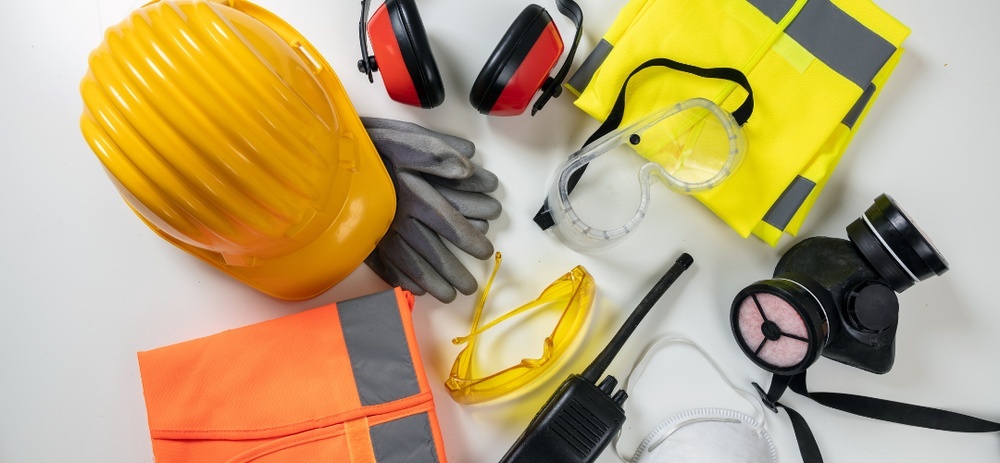
Before discussing machines or facility upgrades, it's important to start with the basics. Personal Protective Equipment (PPE) helps protect workers from specific hazards they may encounter during their daily tasks.
Depending on the industry and the hazards identified in a workplace assessment, PPE may include:
-
Hard hats
-
Safety glasses or face shields
-
Steel-toe or protective footwear
-
High-visibility clothing
-
Cut-resistant gloves
-
Hearing protection
-
Respirators
Providing PPE is only part of the process. Employees should also understand when and how to use it properly. Even appropriate equipment may provide limited protection if it is worn incorrectly, poorly maintained, or not used when required.
Regular inspections can help identify damaged, worn, or improperly fitted PPE so that it can be repaired or replaced when necessary. Employers should also select PPE based on the specific hazards present rather than relying on a one-size-fits-all approach.
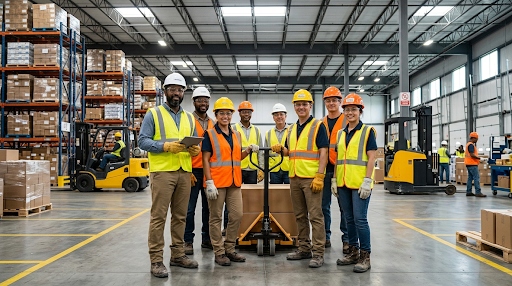
Clearly Marked Emergency Equipment Saves Valuable Time
Emergencies rarely happen with advance warning. That's why industrial workplaces should make necessary emergency equipment easy to locate and accessible when it is needed.
Depending on the facility and the hazards present, this may include:
-
Fire extinguishers
-
First aid stations
-
Eyewash stations
-
Emergency showers
-
Automated External Defibrillators (AEDs)
-
Emergency exit signs
Emergency equipment should not be hidden behind machinery, stored materials, or other obstructions. Routine inspections and maintenance can help ensure that equipment remains accessible and functional.
Workplaces may also conduct emergency drills appropriate to their operations. Practicing evacuation, fire response, or other emergency procedures can help employees understand their responsibilities and respond more effectively during an actual incident.
Specific equipment requirements and inspection schedules can vary depending on the workplace, industry, and applicable local regulations. Employers should consult the safety requirements that apply to their jurisdiction and facility.
Machine Guards Protect Workers From Moving Parts
Industrial machinery makes modern production possible, but it can also introduce serious hazards when appropriate safeguards are missing or improperly maintained.
Machine guards are designed to help prevent unintended contact with moving parts, rotating components, blades, belts, gears, and other hazardous areas.
Effective machine guarding should be designed around the equipment and the hazards it presents without creating additional risks for workers. Removing or bypassing a guard can expose employees to serious injury and should not be treated as a shortcut to faster production.
Routine maintenance and inspections should include checking guards to ensure they remain securely installed and continue to function as intended. Any damaged or missing guard should be addressed before affected equipment is returned to normal operation.
Good Lighting Improves Workplace Visibility
Lighting is one of the most overlooked aspects of workplace safety.
Poor visibility can make it harder for employees to identify hazards, read labels, navigate walkways, operate equipment, or perform maintenance tasks accurately. Adequate lighting is therefore an important consideration when designing or evaluating an industrial facility.
Warehouses and industrial facilities should pay particular attention to lighting in areas such as:
-
Storage aisles
-
Loading docks
-
Stairways
-
Production lines
-
Maintenance areas
-
Emergency routes and exits
LED lighting is widely used in industrial environments because of its energy efficiency, long service life, and ability to provide consistent illumination. However, the appropriate lighting level depends on the specific task and environment.
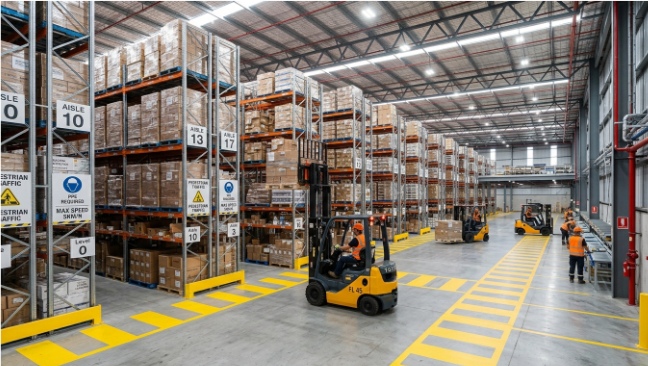
Floor Safety Should Never Be Overlooked
A clean and well-maintained floor contributes directly to a safer workplace.
Oil, water, loose packaging materials, debris, and other contaminants can create slip and trip hazards. Consistent housekeeping practices can help reduce these risks and keep walkways and work areas accessible.
Facilities may also consider using:
-
Anti-slip floor treatments
-
Floor warning signs
-
Safety barriers
-
Clearly marked pedestrian walkways
-
Protective bollards around equipment
-
Spill-control materials
Good housekeeping isn't simply about appearance; it is an important part of identifying and controlling avoidable workplace hazards.
Proper Sanitation Supports Worker Health
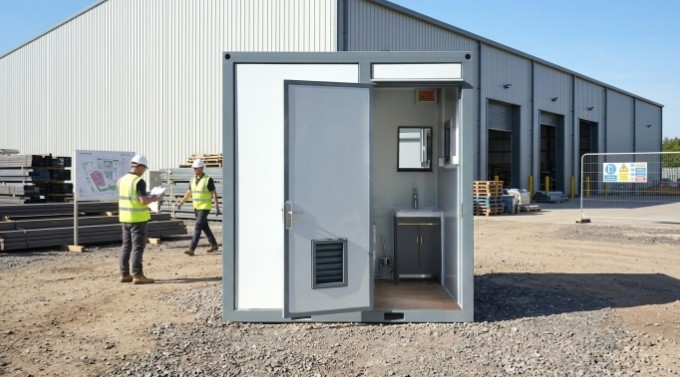
Workplace safety also includes providing employees with reasonable access to clean and sanitary facilities. This can be particularly important on construction sites, outdoor industrial yards, temporary work locations, and remote facilities where permanent restrooms may not be available.
Portable toilets can provide temporary sanitation facilities where permanent plumbing or restroom infrastructure is unavailable or impractical. Depending on the worksite, temporary sanitation arrangements may also include handwashing stations and other hygiene facilities.
When selecting sanitation facilities, employers and site managers should consider factors such as:
-
Number of workers
-
Expected duration of the project
-
Site layout
-
Frequency of cleaning and servicing
-
Availability of handwashing facilities
-
Local health and sanitation requirements
-
Accessibility needs
Sanitation requirements can vary by jurisdiction, industry, workforce size, and jobsite conditions. Employers should verify the requirements that apply to their particular location rather than assuming that the same standards apply everywhere.
Keeping sanitation facilities clean, accessible, and appropriately serviced can support worker comfort and hygiene while reducing unnecessary interruptions during the workday.
Safe Material Handling Reduces Injuries
Many workplace injuries don't result from dramatic accidents. They can also occur during routine lifting, carrying, pushing, pulling, or moving of materials.
Appropriate material handling equipment can reduce the physical demands associated with moving heavy or awkward loads while helping employees complete tasks more efficiently.
Common examples include:
-
Pallet jacks
-
Forklifts
-
Hand trucks
-
Lift tables
-
Platform carts
-
Conveyors and other mechanical handling systems
The appropriate equipment depends on factors such as the weight and dimensions of the load, travel distance, workspace, frequency of movement, and type of material being handled.
Using the right equipment may also help reduce unnecessary physical strain and improve workflow. However, equipment selection should be based on a proper assessment of the task and associated hazards rather than on cost alone.
Employees who operate powered equipment should receive appropriate training, and workplaces should establish procedures for safe loading, lifting, transporting, and storing materials. Maintenance and inspection programs are equally important for keeping handling equipment in safe operating condition.
Safety Signage Helps Everyone Stay Alert
Industrial facilities are constantly changing. Deliveries arrive, work zones shift, and maintenance activities can create temporary hazards.
Clear safety signage helps communicate important information quickly and can reinforce established workplace procedures.
Examples include:
-
Forklift traffic warnings
-
PPE requirement signs
-
Hazardous material labels
-
Emergency exit directions
-
Restricted-access notices
-
Floor and pedestrian traffic markings
Signs should be easy to see, understandable to the intended audience, and positioned where employees can reasonably notice them before encountering the associated hazard.
Regularly reviewing signage can help ensure that it remains visible, accurate, and relevant to current workplace conditions.
Training Is Just as Important as Equipment
Even the best safety equipment cannot replace knowledgeable employees and effective procedures.
Depending on the workplace and applicable requirements, training may cover topics such as:
-
Hazard recognition
-
Equipment operation
-
Emergency response procedures
-
Fire safety
-
Lockout/tagout procedures
-
Safe material handling
-
Proper PPE use
-
Workplace-specific procedures
New employees should receive appropriate safety orientation before performing tasks that expose them to workplace hazards. Refresher training can also be useful when procedures change, new equipment is introduced, an employee's responsibilities change, or inspections identify recurring issues.
Creating a culture in which employees feel comfortable reporting hazards and suggesting improvements can further strengthen a workplace safety program.
Building a Culture of Safety
One of the biggest differences between workplaces with strong safety programs and those that struggle isn't necessarily the amount of equipment they purchase. It is often how consistently safety is integrated into everyday operations.
Companies that prioritize safety encourage employees to look out for one another, report potential hazards, participate in inspections, and follow established procedures. Managers and supervisors can reinforce these expectations by demonstrating safe practices themselves and addressing reported hazards promptly.
A strong safety culture doesn't develop overnight. It requires consistent communication, appropriate training, equipment maintenance, hazard assessment, and management involvement.
Over time, these practices can contribute to fewer incidents, improved employee confidence, and more reliable operations.
Final Thoughts
Industrial workplaces depend on people, equipment, and well-planned processes working together. No single piece of safety equipment can eliminate every workplace hazard, but combining appropriate PPE, emergency equipment, machine safeguards, adequate lighting, sanitation facilities, material handling tools, clear signage, and ongoing training can create a more comprehensive approach to workplace safety.
The most effective safety programs begin by identifying the hazards specific to a workplace and then selecting appropriate controls and equipment to address them. Regular inspections, maintenance, employee training, and reviews of applicable regulations help ensure that those measures continue to meet the needs of the operation.
Ultimately, creating a safer workplace isn't simply about purchasing equipment or meeting a regulatory requirement. It is about protecting employees, reducing preventable risks, supporting efficient operations, and creating an environment where people can perform their jobs with confidence.
About the Author
 Sanyukta Deb
— Sanyukta Deb is Digital Marketing Team Lead at Next Move Strategy Consulting, where she has led content strategy and technical SEO for the firm's B2B market research publications for over 2 years. Her editorial process translates NextMSC's primary and secondary research — spanning technology, industrial, and consumer sectors — into commercial narratives, backed by search-intent, keyword, and competitive analysis. She brings 5 years of overall experience in digital marketing and content strategy.
Sanyukta Deb
— Sanyukta Deb is Digital Marketing Team Lead at Next Move Strategy Consulting, where she has led content strategy and technical SEO for the firm's B2B market research publications for over 2 years. Her editorial process translates NextMSC's primary and secondary research — spanning technology, industrial, and consumer sectors — into commercial narratives, backed by search-intent, keyword, and competitive analysis. She brings 5 years of overall experience in digital marketing and content strategy.
About the Reviewer
 Debashree Dey
— Debashree Dey is Assistant Manager at Next Move Strategy Consulting, where she supports cross-vertical market content and communications across diverse industries for 6 years. Her professional background includes senior content writing, communications, and published manuscript authorship, with experience developing audience-focused business narratives and maintaining clear, consistent messaging. Her role supports research-led content development and editorial quality across NextMSC publications.
Debashree Dey
— Debashree Dey is Assistant Manager at Next Move Strategy Consulting, where she supports cross-vertical market content and communications across diverse industries for 6 years. Her professional background includes senior content writing, communications, and published manuscript authorship, with experience developing audience-focused business narratives and maintaining clear, consistent messaging. Her role supports research-led content development and editorial quality across NextMSC publications.


















Add Comment