From AI to Biodegradable Formulas: Is Sustainable Revolution Changing the Future of Fabric Care?
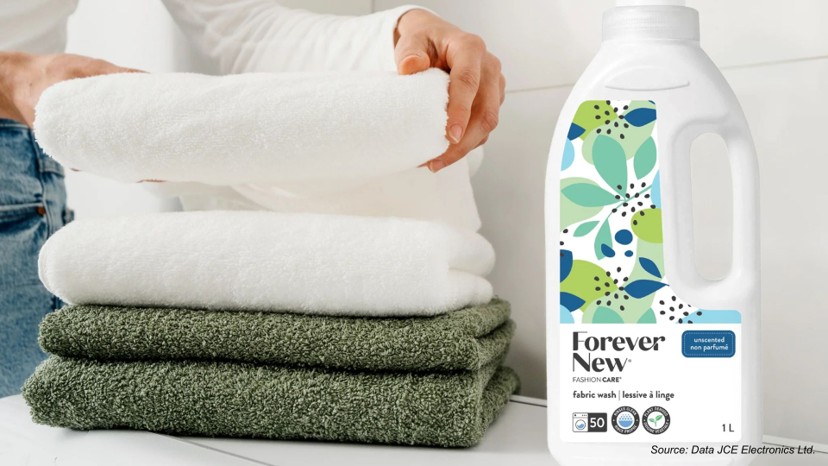
The global Fabric Care Market is witnessing a significant transformation, driven by innovations that extend far beyond traditional cleaning solutions. From biodegradable ingredients and AI-powered dosing systems to energy-efficient cold wash technologies, the sector is evolving toward a holistic approach where performance, convenience, and environmental responsibility intersect.
Fabric care is no longer just about removing stains, it is becoming a reflection of sustainable living, efficiency, and modern consumer lifestyles. This shift signals a new era where detergents are reimagined not merely as cleaning agents but as symbols of conscious, eco-friendly choices worldwide.
According to Next Move Strategy Consulting, the fabric care industry is set to maintain strong growth momentum, with market size expected to reach around USD 185.84 billion by 2030. Valued at USD 127.26 billion in 2024, the global market is projected to rise to USD 140.37 billion by 2025, marking a solid CAGR of 5.77%.
Curious about the Fabric Care Market? Grab a FREE Sample Now!
Rising consumer affluence, increasing environmental awareness, and the rapid expansion of e-commerce are driving robust demand for premium and sustainable fabric care solutions worldwide. As digital platforms make laundry essentials available at consumers’ fingertips, brands are innovating to combine high-performance formulations with enhanced shopping experiences, ranging from eco-friendly detergent pods and subscription-based liquid refills to smart dispensers that optimize dosing automatically.
How Urbanization and Digital Retail are Redefining Global Fabric Care Habits?
Rapid urbanization in cities worldwide, coupled with evolving lifestyles, is driving a fundamental shift in how consumers approach the fabric care market. Compact living spaces, smaller washing machines, and growing environmental awareness are fuelling interest in cold-wash technologies, low-foam formulations, and eco-friendly detergents.
Modern households now demand high-performance solutions capable of tackling diverse challenges, from maintaining delicate fabrics and performance sportswear to reducing water and energy consumption, without compromising sustainability.
At the same time, the rise of global e-commerce platforms is transforming product discovery and repeat purchasing behaviour. Brands are leveraging data analytics to deliver hyper-personalized solutions, ranging from enzyme-enriched stain removers for busy families to fragrant, skin-friendly concentrates for young professionals. This convergence of urban living dynamics and digital retail convenience is reshaping the global fabric care market trends, where innovation, customization, and sustainability are emerging as the new benchmarks for modern consumers.

How are Biotech, AI, and Green Chemistry Revolutionizing the Fabric Care Market Demand?
At the forefront of the global fabric care market, chemical and biotechnological innovations are reshaping how laundry is done:
-
Plant-Based Surfactants & Biopolymers: Surfactants derived from coconut, corn, and sugarcane are replacing conventional petrochemicals, offering fast stain removal and full biodegradability. Advanced biopolymers help maintain color vibrancy and fabric strength, ensuring garments last longer while reducing environmental impact. Leading companies are exploring novel carbon-neutral production methods, turning industrial emissions into high-performance cleaning ingredients.
-
Precision Enzymes: Customized enzymes such as cellulases, proteases, and lipases are now engineered to target specific stains, from coffee to oil, at lower temperatures, helping reduce water and energy usage. Global enzyme producers are expanding production capacity to meet rising demand across home care, textile, and industrial segments, while collaborating with detergent brands to optimize formulations for diverse water and fabric conditions worldwide.
-
AI-Driven Formulations: Artificial intelligence is increasingly being leveraged to design formulations that maximize cleaning efficiency, minimize resource consumption, and enhance consumer experience. By simulating real-world washing conditions, AI helps brands tailor detergents to regional water types, washing machines, and fabric preferences, creating highly personalized, sustainable solutions.
Together, these technologies are driving the global fabric care market toward a future where sustainability, performance, and science-backed innovation converge, redefining laundry for modern consumers everywhere.
Is the Future of Fabric Care Smart, Sustainable, and Personalized?
In today’s world, convenience, sustainability, and customization are reshaping how consumers access fabric care solutions worldwide:
-
Subscription & Direct-to-Consumer Models: Brands are increasingly offering subscription-based detergent and fabric care services, delivering concentrated liquids or pods directly to consumers’ doorsteps. This approach ensures consistent supply, reduces packaging waste, and allows companies to personalize formulations based on household needs, washing frequency, and fabric types. Global players like Procter & Gamble and smaller D2C startups are leveraging this model to enhance engagement while promoting sustainable consumption.
-
Compact, Eco-Friendly Formats: Solid detergent tablets, dissolvable pods, and refillable pouches are gaining traction across Europe, North America, and Asia-Pacific. These formats reduce plastic use, simplify storage, and provide precise dosing for optimal cleaning performance. Brands are experimenting with biodegradable wrappers, water-soluble films, and modular packaging to offer consumers convenient yet environmentally responsible alternatives to traditional liquid detergents.
-
Smart Dispensing & IoT Integration: Innovative washing systems equipped with smart dispensers or connected IoT devices are enabling households to measure, dispense, and adjust detergent amounts automatically. This not only improves washing efficiency but also reduces water and energy consumption, aligning with global sustainability goals.
These developments are transforming the global fabric care market expansion into a space where innovation, personalization, and eco-conscious delivery converge, redefining convenience for the modern consumer.

How Are Leading Brands Driving Innovation and Sustainability in the Global Fabric Care Industry?
The global fabric care market share is increasingly shaped by sustainability initiatives, with brands adopting eco-friendly formulations and packaging to meet consumer demand for responsible products. Innovations like Unilever’s Botanical Fabric Conditioner, which is 95% biodegradable and uses post-consumer recycled materials, demonstrate how environmentally conscious solutions are gaining traction. This focus on sustainable products is driving market growth by attracting eco-aware consumers and encouraging broader adoption of green laundry practices worldwide.
Technological advancements are transforming how consumers interact with fabric care products. Henkel’s Smartwash Technology, which employs AI-driven dosing systems for precise cleaning, reflects a broader trend toward personalized, tech-enabled laundry solutions. Such innovations enhance convenience and efficiency, differentiating brands in a competitive market while encouraging adoption of smart laundry devices, ultimately expanding the market for advanced fabric care products.
Circular economy initiatives are redefining the fabric care landscape. Ventures like The Fill, which provide eco-friendly refillable products, are responding to growing consumer interest in waste reduction and sustainable consumption. By integrating refillable packaging and promoting reuse, these initiatives are not only reducing environmental impact but also opening new business models within the market, stimulating growth in premium, sustainable fabric care segments.
The adoption of green chemistry in fabric care formulations is a key market differentiator. Brands like P&G are innovating with lower-plastic, recyclable packaging for products such as Tide, while Unilever is upgrading factories and supply chains for greater efficiency. These efforts reduce environmental footprint, enhance brand reputation, and encourage regulatory compliance, creating long-term market resilience and positioning sustainability as a central factor in market expansion.
At this pivotal moment, the global fabric care market is not merely responding to evolving consumer needs, it is actively shaping the future of sustainable laundry. Brands that successfully integrate green chemistry, AI-driven personalization, biotech innovations, and circular packaging are leading the charge toward a smarter, cleaner, and more responsible approach to fabric care.
From Unilever’s biodegradable, energy-efficient solutions to Henkel’s smart dosing technologies, the market is redefining performance while minimizing environmental impact. By combining innovation with sustainability and consumer-centric design, the global fabric care market growth is poised to set new benchmarks for efficiency, convenience, and eco-conscious living worldwide.
About the Author
 Tushmi Dutta
— Tushmi Dutta is a focused researcher specializing in detailed analysis and insight-driven research across diverse business landscapes. She supports strategic initiatives through structured data interpretation, thorough validation, and clear communication of findings that aid informed decision-making. With a strong interest in writing, she enjoys presenting research insights in an engaging and accessible manner. Beyond work, she enjoys traveling, reading, painting, and continuously learning new skills that contribute to her creative and professional growth.
Tushmi Dutta
— Tushmi Dutta is a focused researcher specializing in detailed analysis and insight-driven research across diverse business landscapes. She supports strategic initiatives through structured data interpretation, thorough validation, and clear communication of findings that aid informed decision-making. With a strong interest in writing, she enjoys presenting research insights in an engaging and accessible manner. Beyond work, she enjoys traveling, reading, painting, and continuously learning new skills that contribute to her creative and professional growth.
About the Reviewer
 Supradip Baul
— Supradip Baul is an accomplished business consultant and strategist with over a decade of rich experience in market intelligence, strategy, technology, and business transformation. His work has included rigorous qualitative and quantitative analysis across multiple industries, helping clients shape investment decisions and long-term roadmaps. Earlier in his career, he was associated with Gartner, where he contributed to industry-leading reports and market share analyses. He has worked with leading global companies and holds an MBA with a dual specialization in Marketing and Finance.
Supradip Baul
— Supradip Baul is an accomplished business consultant and strategist with over a decade of rich experience in market intelligence, strategy, technology, and business transformation. His work has included rigorous qualitative and quantitative analysis across multiple industries, helping clients shape investment decisions and long-term roadmaps. Earlier in his career, he was associated with Gartner, where he contributed to industry-leading reports and market share analyses. He has worked with leading global companies and holds an MBA with a dual specialization in Marketing and Finance.


















Add Comment