How Advanced Technology Is Reshaping Military ATV & UTVs
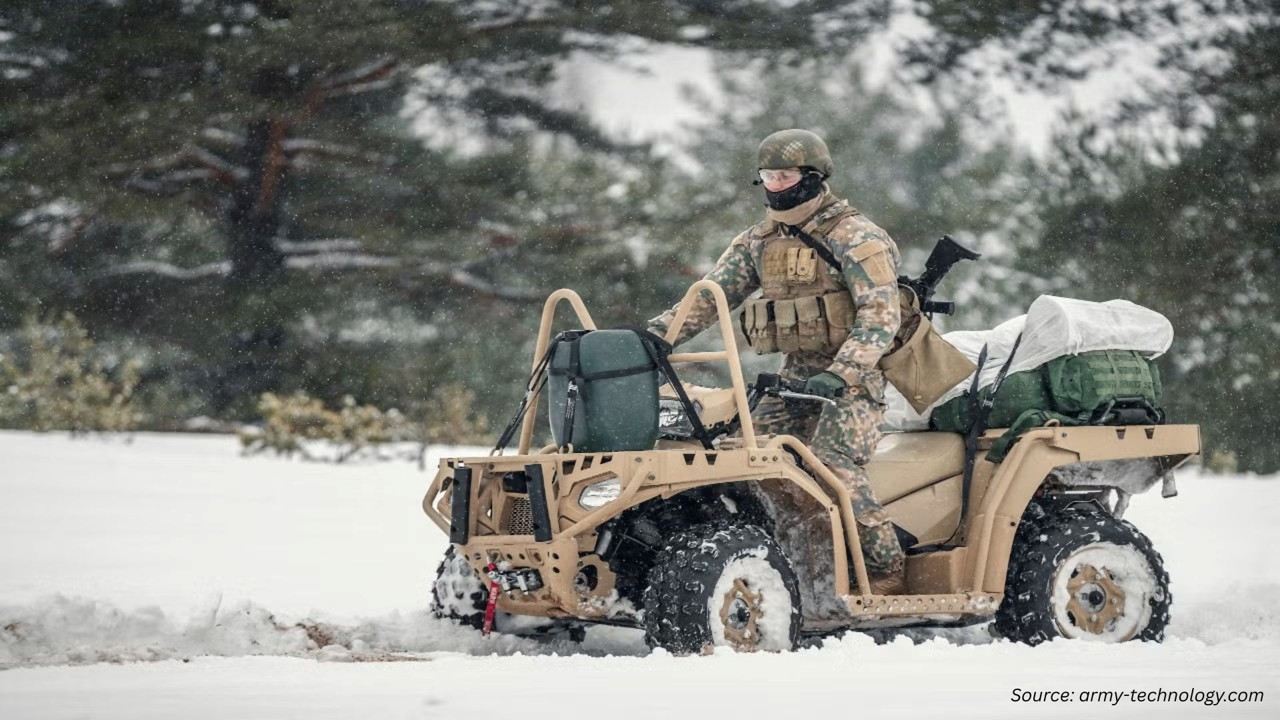
The global Military ATV & UTV Market was valued at USD 1,082.41 million in 2025 and is projected to reach USD 1,777.49 million by 2035, expanding at a 4.92% CAGR from 2026 to 2035 as electric propulsion, modular mission systems, autonomy, and connected vehicle controls move from enabling features toward core procurement requirements. The Military ATV & UTV Market is changing because modern military users need more than compact mobility: they need platforms that can power electronics, carry mission kits, reduce operational signatures, and adapt to reconnaissance, logistics, casualty evacuation, and border-security roles. This article examines four technology shifts with the strongest evidence behind that transformation.
For an In-depth Analysis of the Military ATV & UTV Market, Try a FREE Sample.
Silent Electric Propulsion Is Giving Reconnaissance Vehicles a Lower Signature
Battery-electric propulsion is becoming one of the most consequential technology changes in light tactical mobility because the value proposition extends beyond emissions. For the Military ATV & UTV Market, reconnaissance and special-forces missions make lower acoustic output and reduced thermal signature as important as range or horsepower. NMSC's analysis identifies battery electric vehicles as the fastest-growing propulsion category, with a 6.33% CAGR between 2026 and 2035, although internal-combustion platforms still account for the largest revenue base.
CORVUS provides a clear defense-specific example. In January 2025, the company announced that Spain's Air and Space Force had acquired 64 multipurpose UTVs, with half specified with electric propulsion and the remainder with diesel power. The electric EX4 uses a 16.5 kW motor, while the fleet is intended for transport and support work across air bases and operational areas. CORVUS Air and Space Force announcement This is important because it shows electrification moving into real defense fleets rather than remaining a purely demonstration-stage concept.
BRP is also pushing electric off-road technology into production. In August 2025, Can-Am introduced the Outlander Electric for the 2026 model year, combining a liquid-cooled battery, inverter, motor, and onboard charger with a silent-drive architecture. BRP announcement on the Outlander Electric These products are not identical to military vehicles, but they show how battery packaging, thermal management, charging, and control electronics are becoming more mature across the underlying ATV and UTV technology stack. That maturity can lower the engineering barrier for defense-specific adaptations.
Key takeaway: Electric propulsion is changing military ATV and UTV requirements from simple mobility toward signature management, onboard power, and software-enabled energy control. Adoption is likely to remain mission-specific, with reconnaissance roles moving ahead of general logistics fleets where charging infrastructure and range constraints remain harder to solve.
Modular Mission Kits Are Turning One Vehicle Into a Multi-Role System
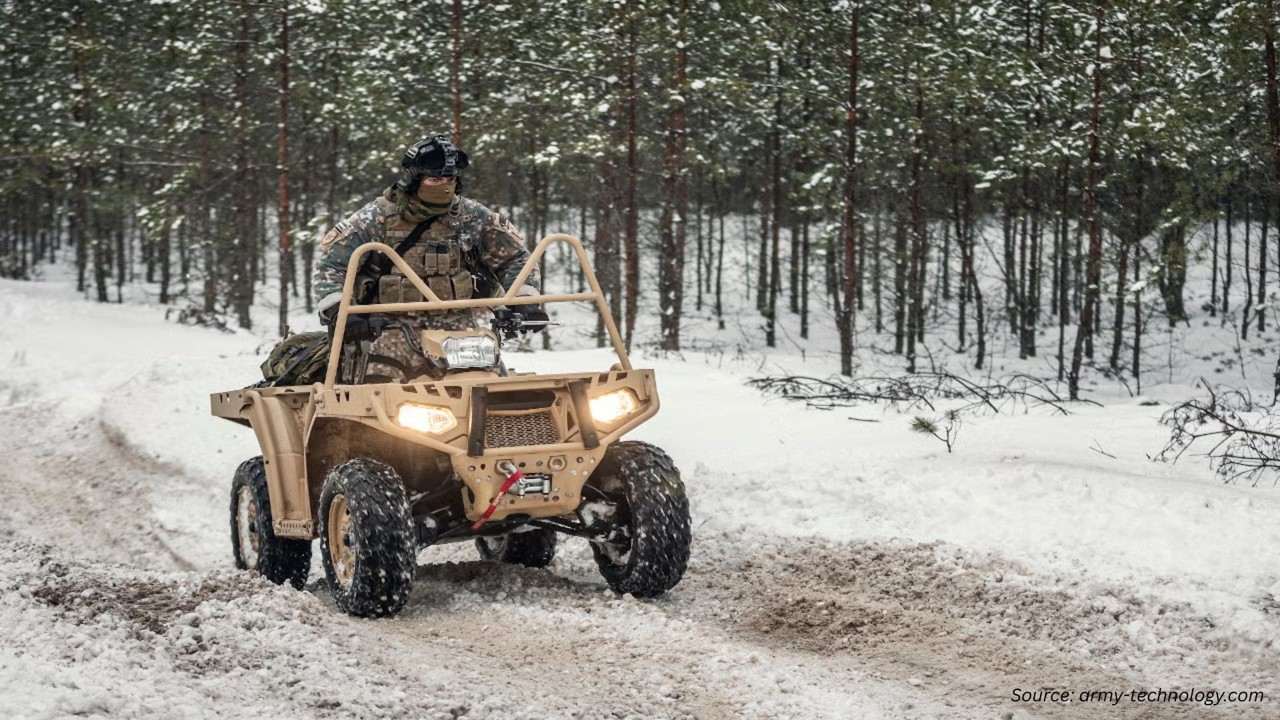
Military buyers increasingly want a platform that can be reconfigured instead of a separate vehicle for every mission. The architecture is straightforward: a common chassis carries interchangeable kits for logistics, casualty evacuation, communications, surveillance, command-and-control, or other payloads. This approach can reduce fleet diversity while making the vehicle more useful across dispersed operations.
The NMSC report shows why that shift matters to the Military ATV & UTV Market. Other Special Forces represented the largest defined end-user segment in 2025, while Border Security Forces recorded the fastest CAGR at 5.81%. Both use cases reward compact platforms that can be rapidly configured around the mission rather than fixed-purpose utility vehicles.
The market's end-user mix is summarized below:
End User, 2025–2035 (USD Billion)
|
End User |
2025 |
2035 |
CAGR |
|
Army |
$332.00 Billion |
$569.02 Billion |
5.37% |
|
Marine Forces |
$162.75 Billion |
$260.31 Billion |
4.64% |
|
Air Force |
$99.95 Billion |
$155.00 Billion |
4.32% |
|
Border Security Forces |
$96.06 Billion |
$171.63 Billion |
5.81% |
|
Other Special Forces |
$391.65 Billion |
$621.53 Billion |
4.56% |
|
Total |
$1,082.41 Billion |
$1,777.49 Billion |
4.92% |
The table shows that demand is distributed across traditional armed-service users and specialized security roles, making reconfigurability commercially relevant across the Military ATV & UTV Market rather than only in one mission category.
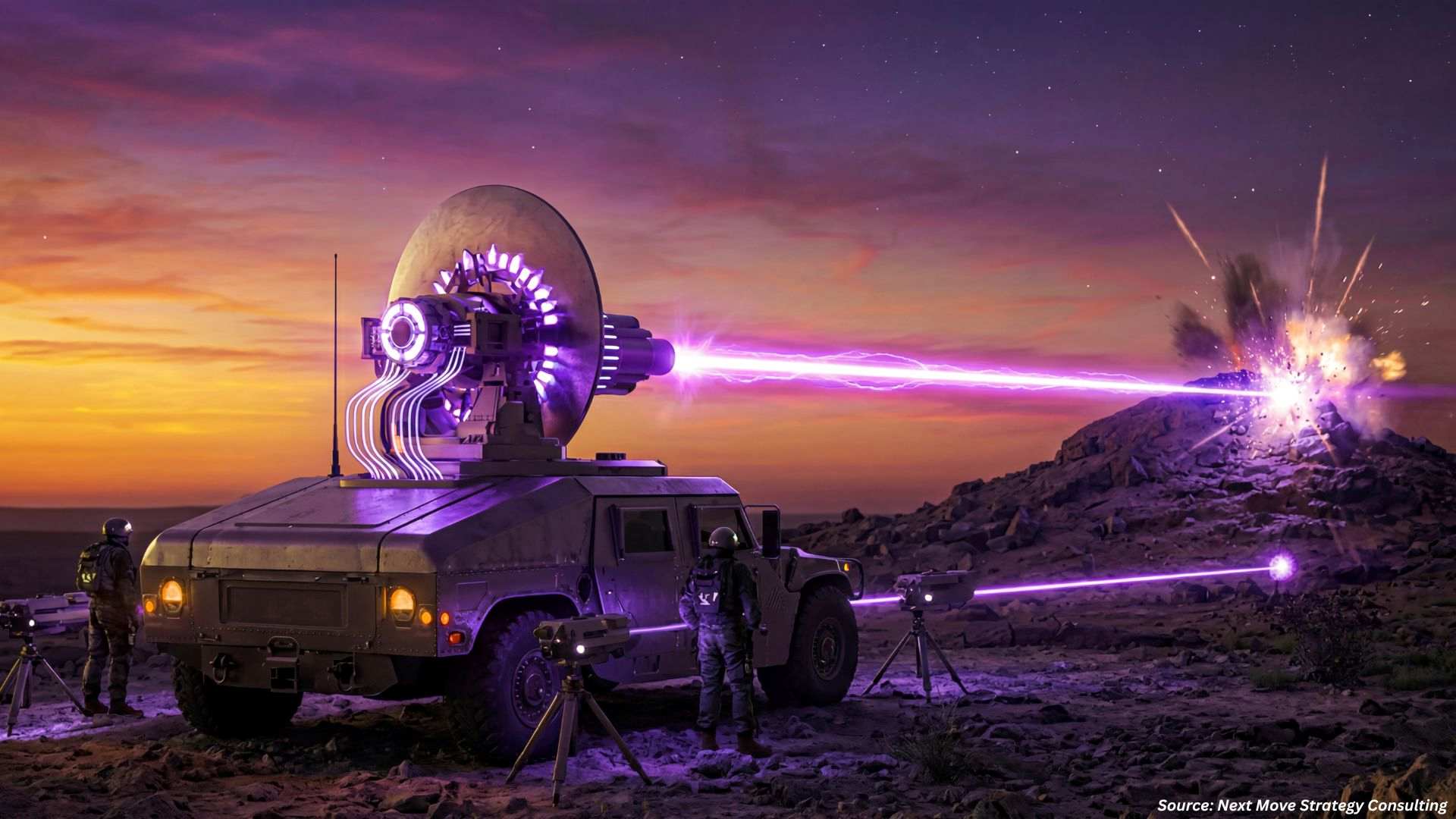
Polaris illustrates how modularity is being industrialized. Its MRZR Alpha platform is offered with 1 kW or 5 kW exportable power, and Polaris says the architecture has been used with counter-UAS systems, direct-fire weapons, high-energy lasers, intelligence, surveillance and reconnaissance equipment, autonomy packages, casualty-evacuation litters, and communications equipment. In June 2026, the U.S. Marine Corps placed an initial order for more than 70 MRZR Alpha vehicles, with more than half configured with the 5 kW export-power option. Polaris Marine Corps MRZR Alpha order The development matters because exportable power turns the vehicle into an electrical host for mission systems, reducing the need to dedicate payload space to a separate generator.
Tomcar and JSW Sarbloh Motors are taking a complementary route. Their 2025 joint venture is designed to indigenize, manufacture, assemble, and support the Tomcar TX range in India, with the first India-assembled units planned for early 2026 and demonstrations aimed at defense and paramilitary agencies. JSW overview of its Tomcar defence partnership The collaboration combines Tomcar's mission-grade vehicle engineering with JSW's local manufacturing capabilities, showing how modular, rugged platforms are increasingly tied to localization strategies as well as vehicle design. The result is a procurement model in which platform flexibility and local sustainment reinforce each other.
Autonomy, UAS Integration, and Onboard Power Are Extending the Mission Envelope
The next technology layer is autonomy. For military ATV and UTV platforms, autonomy does not necessarily mean a fully driverless vehicle. In practice, the nearer-term opportunity is assisted driving, supervised autonomy, automated convoy movement, remote operation, and integration with unmanned aerial or ground systems.
Polaris provided direct evidence of this transition in March 2026, when three autonomy companies Dataspeed, Forterra, and Overland AI selected Polaris off-road vehicles for the U.S. Army's xTech|Edge Strike: Ground competition in Germany. The participating platforms included the MRZR D4 tactical vehicle alongside Polaris utility and sport side-by-sides. Polaris xTech|Edge Strike autonomy announcement The company described autonomy as a way to expand the roles of existing vehicles, which is significant because it points to software and autonomy kits being layered onto established mobility platforms rather than requiring entirely new vehicle architectures.
The Military ATV & UTV Market is also seeing this direction through mission-system integration. Polaris lists UAS launch and counter-UAS applications among military use cases, while the MRZR Alpha supports exportable power and multiple mission configurations. The combination creates a practical edge-computing model: the vehicle provides mobility and electrical capacity, while sensors, radios, autonomy computers, and unmanned payloads perform the higher-level mission functions.
For procurement teams, the implication is that future UTV value will increasingly be judged by system integration rather than drivetrain performance alone. Open interfaces, electrical headroom, payload mounting, and software compatibility become strategic attributes because they determine how easily a platform can absorb new mission technologies over its service life.
“More than just a troop carrier, a single MRZR Alpha can be transformed into multiple configurations for different environments and unique missions.” — Nick Francis, Vice President, Polaris Government & Defense.
Connected Vehicle Controls Are Making Tactical UTVs More Software-Defined
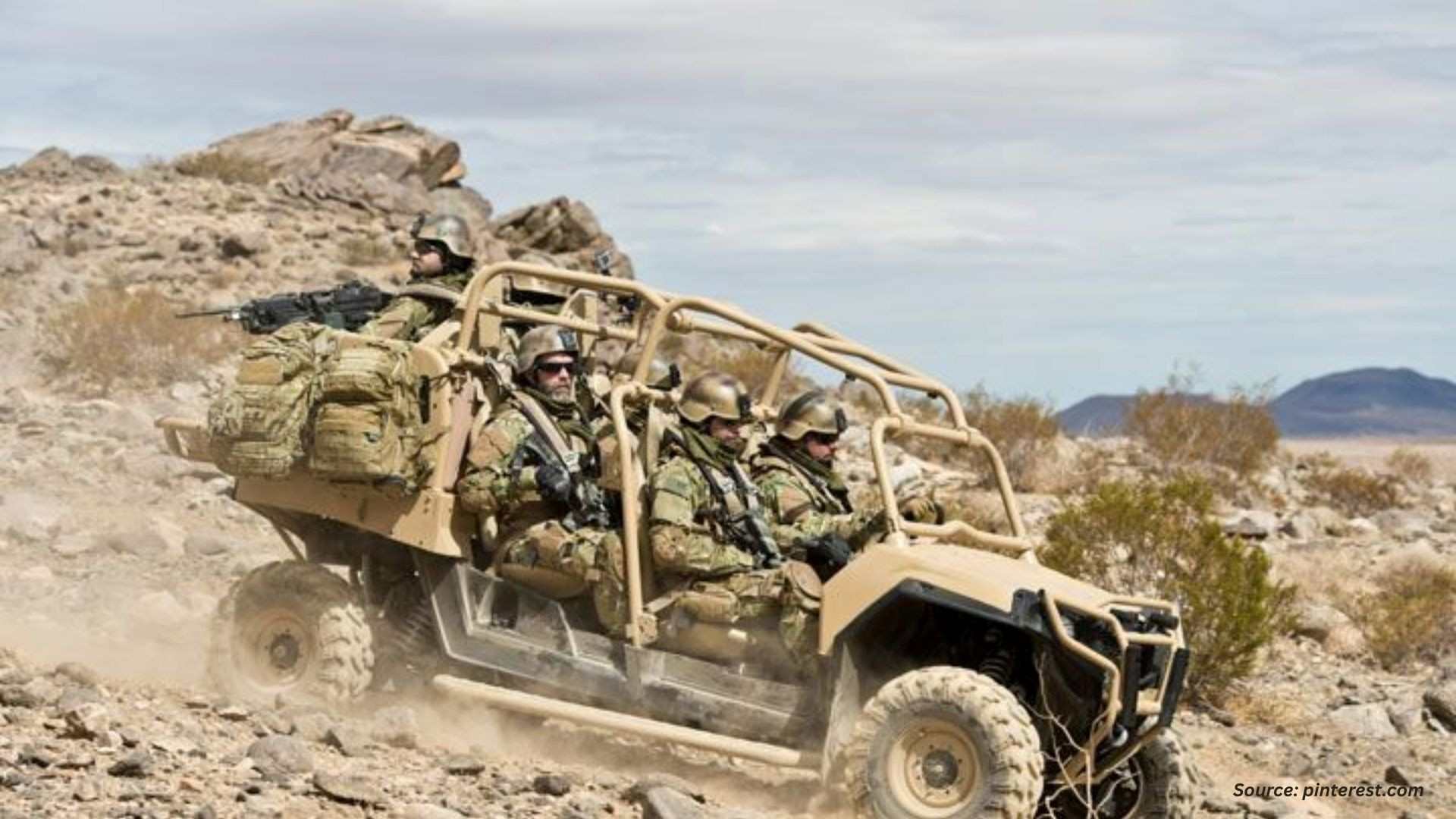
For the Military ATV & UTV Market, a fourth change is happening below the headline level: vehicle control systems are becoming more digital. Electronic power management, adaptive drivetrains, digital instrumentation, navigation, and remote data access are not military-exclusive technologies, but they increasingly form the baseline from which tactical variants are engineered.
Honda's 2025 Pioneer 1000-5 is a useful reference point. The model combines a six-speed dual-clutch transmission with Advanced Transmission Logic that adapts to driving conditions, alongside selectable two- and four-wheel drive modes. Honda 2025 Pioneer 1000-5 specifications In August 2025, the U.S. Army Corps of Engineers solicited a Pioneer 1000-5 with accessories for operational utility requirements, illustrating how commercial UTV technology can enter Department of Defense support environments. That connection matters because large defense fleets often need low-complexity utility vehicles as much as dedicated tactical platforms.
This is where IoT and big-data concepts become applicable without overstating their current role. The near-term military opportunity is not a consumer-style connected-car experience; it is controlled access to vehicle health, location, energy state, and mission-system status in environments where connectivity may be intermittent. A more software-defined platform can simplify maintenance diagnostics and make future upgrades easier, provided the electronics are designed for ruggedized and secure operation.
The same principle applies to lifecycle support. A vehicle that can expose consistent diagnostic data, accept software-defined control logic, and share a common electrical architecture gives maintenance teams more options when platforms operate far from fixed workshops. That does not eliminate field-service constraints, but it can improve troubleshooting, configuration management, and readiness when fleets are dispersed across difficult terrain.
Inside the Military ATV & UTV Market Report
Band Title: Inside the Military ATV & UTV Market Report
Band Subline: Configuration, propulsion, end-user, and regional analysis across 33 countries, with 2025–2035 forecasts.
Band Button: “Explore the Full Report”
Taken together, these technology shifts show a market progressing from rugged transport toward modular mission infrastructure. Electric propulsion introduces quieter operation and new energy-management possibilities; modular architectures allow one chassis to serve multiple roles; autonomy expands what a small vehicle can do with fewer operators; and connected controls make the platform more observable and upgradable. NMSC's market model projects the global Military ATV & UTV Market from USD 1,082.41 million in 2025 to USD 1,777.49 million by 2035 at a 4.92% CAGR, a trajectory consistent with steady modernization rather than a wholesale replacement of combustion fleets. The central technology question for manufacturers is therefore not which single feature wins, but how efficiently each platform can host the next generation of power, autonomy, sensing, and mission equipment.
About the Author
 Liza Phukan
— Liza Phukan is Research Associate at Next Move Strategy Consulting, where she has covered emerging industries and market research across sectors for 3.5 years. Her work includes analyzing industry developments, validating market data, and developing structured business content from research findings. She uses secondary research and data-validation practices to turn complex market information into clear decision-useful market analysis for business audiences and support report development and B2B.
Liza Phukan
— Liza Phukan is Research Associate at Next Move Strategy Consulting, where she has covered emerging industries and market research across sectors for 3.5 years. Her work includes analyzing industry developments, validating market data, and developing structured business content from research findings. She uses secondary research and data-validation practices to turn complex market information into clear decision-useful market analysis for business audiences and support report development and B2B.
About the Reviewer
 Supradip Baul
— Supradip Baul is an accomplished business consultant and strategist with over a decade of rich experience in market intelligence, strategy, technology, and business transformation. His work has included rigorous qualitative and quantitative analysis across multiple industries, helping clients shape investment decisions and long-term roadmaps. Earlier in his career, he was associated with Gartner, where he contributed to industry-leading reports and market share analyses. He has worked with leading global companies and holds an MBA with a dual specialization in Marketing and Finance.
Supradip Baul
— Supradip Baul is an accomplished business consultant and strategist with over a decade of rich experience in market intelligence, strategy, technology, and business transformation. His work has included rigorous qualitative and quantitative analysis across multiple industries, helping clients shape investment decisions and long-term roadmaps. Earlier in his career, he was associated with Gartner, where he contributed to industry-leading reports and market share analyses. He has worked with leading global companies and holds an MBA with a dual specialization in Marketing and Finance.
















Add Comment