Inside the Military ATV & UTV Market’s Strategic Shift
Market Transformation in Military Mobility
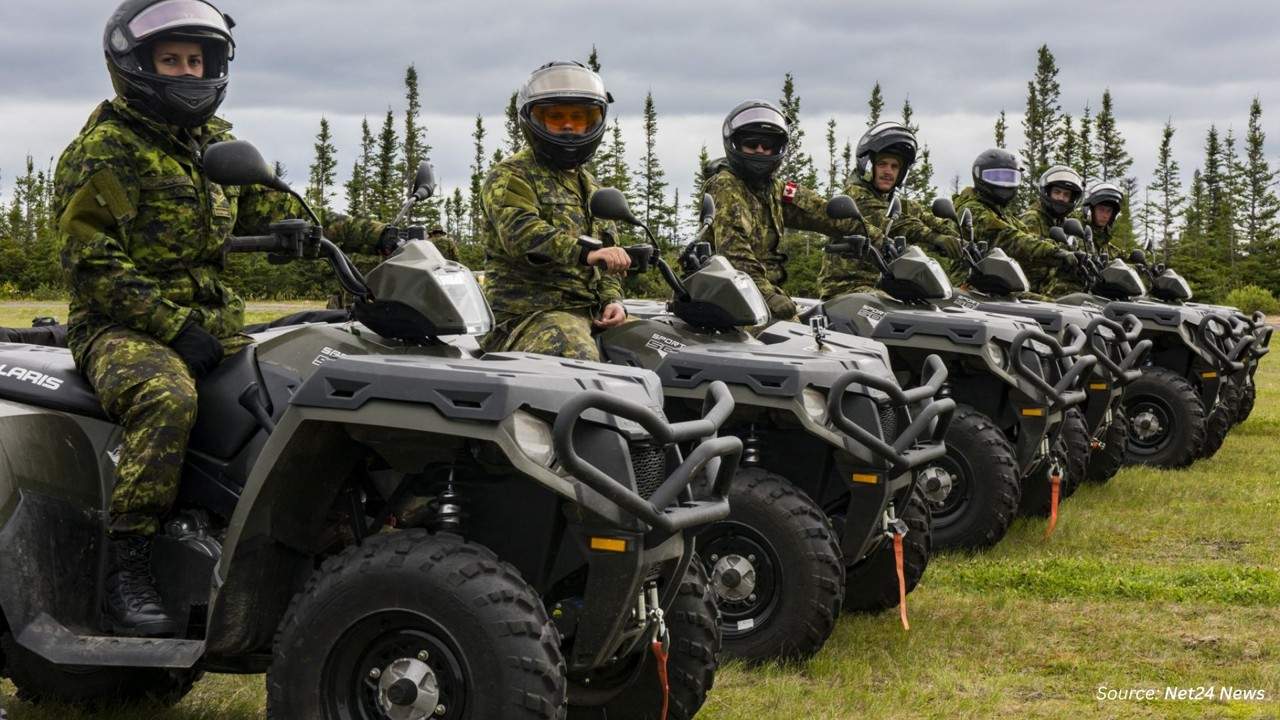
The Military ATV & UTV Market is moving beyond basic off-road transport toward lighter, configurable mobility systems built for reconnaissance, logistics, casualty evacuation, border security, and special operations. The market was valued at USD 1,082.41 million in 2025 and is projected to reach USD 1,777.49 million by 2035, at a 4.92% CAGR from 2026 to 2035. This structural shift is being driven by the need for compact platforms that can move rapidly across difficult terrain while carrying mission equipment, power loads, communications systems, or specialized payloads. UTVs account for the larger vehicle-configuration share, while electric propulsion is gaining ground as militaries examine lower-noise and lower-signature mobility options.
Based on our assessment, technology adoption is also changing what buyers expect from these platforms. GPS-enabled systems, onboard power, modular mission kits, autonomy integration, hybridization, and electric drivetrains are becoming part of a broader requirement for adaptable tactical mobility rather than stand-alone vehicles. Procurement structures are simultaneously becoming more demanding, with defense qualification, interoperability, lifecycle support, and regional supply resilience influencing supplier selection. North America remained the largest regional market in 2025, Europe is the fastest-growing major region, and the report identifies border security procurement and special-forces reconnaissance as important expansion pathways. The result is a market where engineering flexibility, qualification depth, and field support increasingly matter alongside vehicle durability.
Want Insights on the Military ATV & UTV market? Access a FREE Sample Instantly
Key takeaway: The category is shifting from rugged mobility alone to configurable mission capability. Through 2035, competitive differentiation will increasingly depend on how effectively manufacturers combine modular vehicle architectures, electric or hybrid propulsion, onboard power, qualification readiness, and scalable support with the demands of specialized military and border-security users.
Polaris Inc.
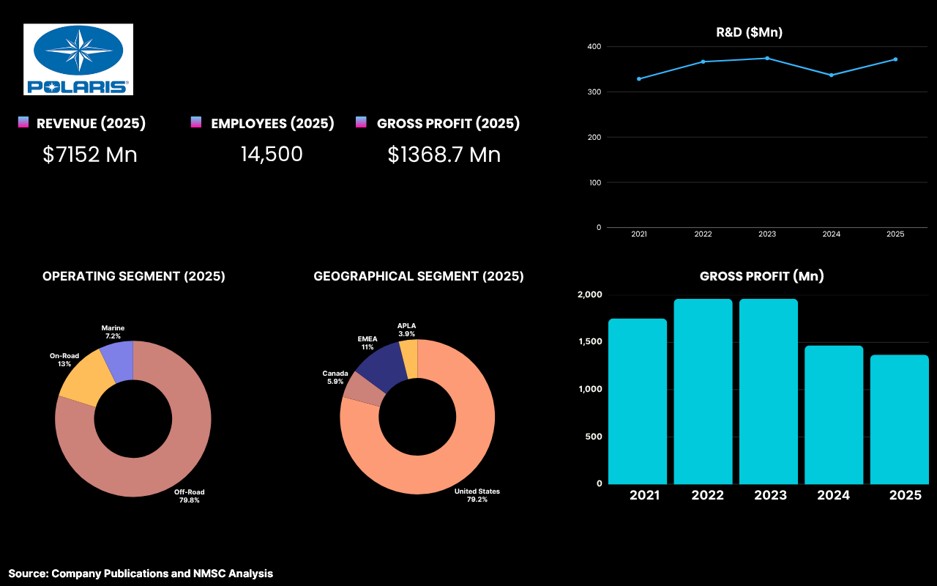
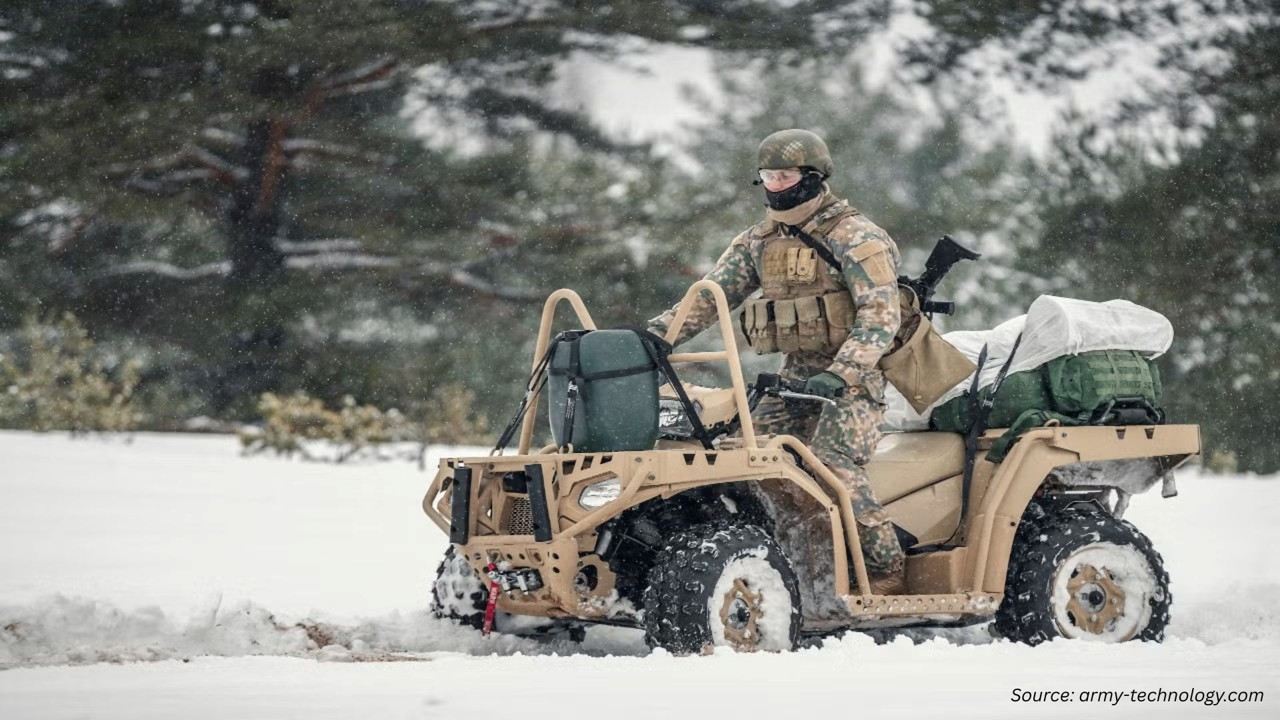
Polaris Inc., headquartered in Minnesota, operates across off-road vehicles, snowmobiles, boats, commercial transportation, and dedicated government and defense mobility. Its Polaris Government & Defense business supplies highly mobile, air-transportable vehicles for military and public-sector missions, making the Military ATV & UTV Market directly relevant to its platform strategy. The MRZR family, including the MRZR Alpha and MRZR D, shows how the company has moved from recreational powersports engineering into purpose-adapted tactical mobility with modular payloads and expeditionary support.
In May 2026, the U.S. Marine Corps awarded Polaris Government & Defense a sole-source contract for continued MRZR Alpha production and delivery, with a ceiling of up to USD 98 million and an order period of up to five years. The vehicle is designed for expeditionary operations, air transport, higher payloads, and multiple mission configurations. For the Military ATV & UTV Market, the award reinforces the importance of established defense qualification and installed procurement relationships. It also extends Polaris’s exposure to a procurement environment increasingly focused on deployability, adaptability, and logistics efficiency.
Based on our evaluation, Polaris occupies a strategically significant position because it combines a large commercial manufacturing base with a dedicated defense organization and a portfolio built around modular light tactical mobility. The company’s recent NATO and Marine Corps activity suggests that standardized procurement frameworks can become an important route to international scale. Its competitive position will depend on sustaining qualification depth while extending autonomy, exportable power, and mission-kit integration without undermining the reliability expected from established defense fleets.
The propulsion structure illustrates the market’s two-speed transition: combustion platforms remain dominant, while electrification is expanding more quickly. The report’s end-user split also shows where demand is concentrated:
Military ATV & UTV Market by End User, 2025–2035 (USD Billion)
|
End User |
2025 (USD Million) |
2035 (USD Million) |
CAGR |
|
Army |
$332.00 Million |
$569.02 Million |
5.37% |
|
Marine Forces |
$162.75 Million |
$260.31 Million |
4.64% |
|
Air Force |
$99.95 Million |
$155.00 Million |
4.32% |
|
Border Security Forces |
$96.06 Million |
$171.63 Million |
5.81% |
|
Other Special Forces |
$391.65 Million |
$621.53 Million |
4.56% |
|
Total |
$1,082.41 Million |
$1,777.49 Million |
4.92% |
Other Special Forces represented the largest defined end-user pool in 2025, while Border Security Forces recorded the fastest projected CAGR. That structure supports manufacturers capable of adapting compact platforms for specialized reconnaissance, patrol, logistics, and rapidly deployable support missions.
Bombardier Recreational Products Inc. (BRP)
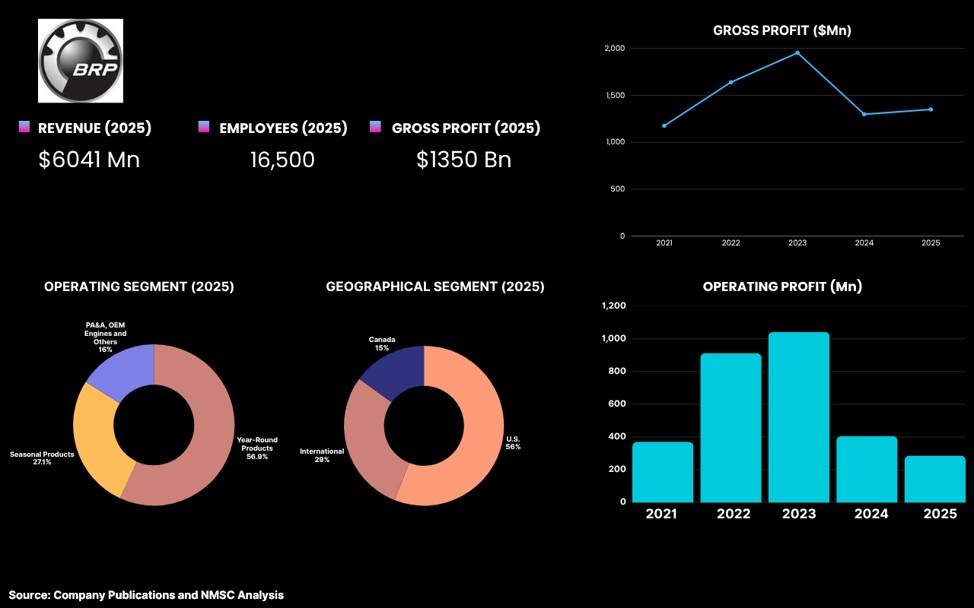
Bombardier Recreational Products Inc. (BRP), headquartered in Valcourt, Quebec, develops powersports products under brands that include Can-Am, Ski-Doo, Sea-Doo, and Lynx. Its Can-Am Off-Road portfolio spans ATVs and side-by-side vehicles designed for utility and demanding terrain, creating a direct technology bridge into the Military ATV & UTV Market. The company’s relevance rests particularly on the transferability of rugged chassis design, powertrain development, vehicle electronics, and four-season off-road capability into specialized government applications.
In August 2025, Can-Am introduced the 2026 Outlander Electric, alongside additional ATV and side-by-side innovations. BRP positioned the vehicle as a major step in its off-road electrification strategy, adding battery-electric capability to a mainstream ATV platform. For the Military ATV & UTV Market, the development is relevant because the report identifies battery-electric propulsion as the fastest-growing propulsion category, with a 6.33% CAGR through 2035. The launch therefore gives BRP a broader electric engineering base from which future low-noise, reduced-signature tactical applications could develop, although military qualification would remain a separate requirement.
Our assessment indicates that BRP’s strategic position is anchored in advanced powersports engineering rather than a defense-only operating model. Its opportunity lies in adapting mature commercial technologies to specialized environments where low acoustic signature, maneuverability, and all-terrain performance can create value. The key strategic variable will be whether BRP can convert electric and digitally enabled off-road development into platforms that meet military qualification, durability, support, and procurement requirements without losing the manufacturing efficiency of its broader portfolio.
“More than just a troop carrier, a single MRZR Alpha can be transformed into multiple configurations for different environments and unique missions.” — Nick Francis, Vice President, Polaris Government & Defense; source: Polaris Government & Defense.
Honda Motor Co., Ltd.
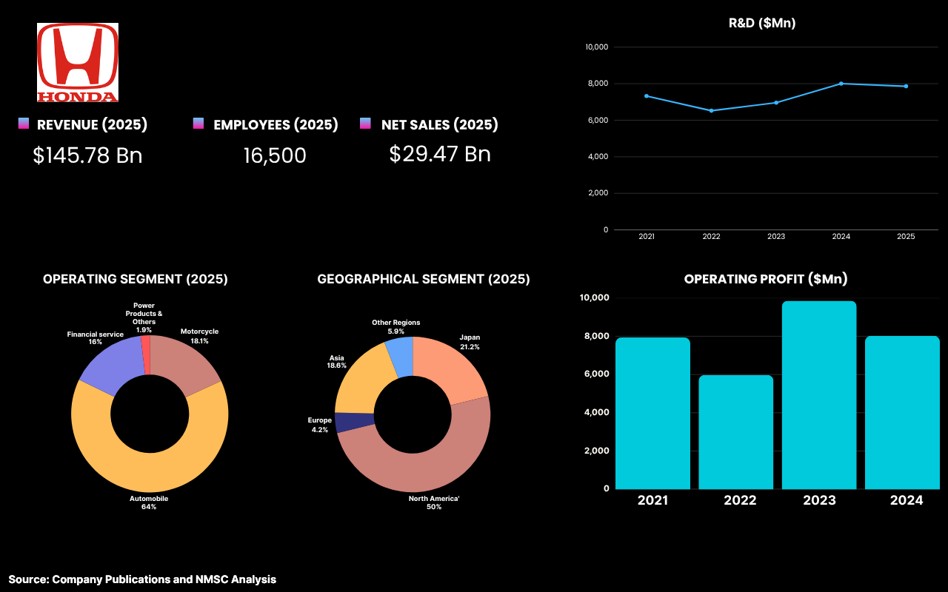
Honda Motor Co., Ltd., headquartered in Minato, Tokyo, Japan, operates a broad mobility portfolio spanning motorcycles, automobiles, power products, and off-road vehicles. Its ATV and side-by-side activities are directly relevant to the Military ATV & UTV Market because Honda's utility-oriented platforms emphasize durability, maneuverability, traction, and practical payload capability across demanding terrain. The company's established powersports engineering base provides a foundation for adapting commercial off-road technologies to institutional and specialized mobility requirements.
In January 2025, American Honda announced the return of its 2025 side-by-side lineup, including the Pioneer family, reinforcing the company's continued focus on utility-oriented off-road mobility. The Pioneer range combines selectable two- or four-wheel drive, automatic transmissions, cargo functionality, and multiple seating configurations across its utility models. For the Military ATV & UTV Market, this continued product development is relevant because the same attributes support applications requiring compact transport, maneuverability, equipment carrying, and operation across difficult terrain. The development also demonstrates Honda's ongoing investment in versatile UTV architectures that can serve a broad range of specialized mobility requirements.
Based on our assessment, Honda holds a significant position in the Military ATV & UTV Market through the combination of global manufacturing scale, established off-road engineering, and a diversified powersports portfolio. Its strategic opportunity lies in translating proven utility-vehicle technologies into increasingly specialized applications where durability, compact maneuverability, drivetrain reliability, and lifecycle support are important procurement criteria. The company's position in the market also gives it scope to participate in the longer-term transition toward more technologically capable and potentially electrified off-road mobility platforms.
CORVUS Innova, S.L.
CORVUS Innova, S.L., based in Spain, specializes in utility task vehicles designed for agriculture, commercial applications, and demanding off-road environments. Its product portfolio includes diesel and battery-electric UTVs, giving the company a relatively direct connection to the Military ATV & UTV Market’s emerging mix of conventional and low-signature propulsion. CORVUS is particularly relevant where buyers need compact utility platforms for transportation, material handling, patrol support, and operations across prepared and unprepared surfaces rather than heavy combat vehicles.
In January 2025, CORVUS announced that Spain’s Air and Space Force had acquired 64 of its UTVs for use at air bases and operational areas, with half of the vehicles using electric propulsion. CORVUS said the operation exceeded USD 3.43 million (EUR 3 million), with potential future acquisitions estimated at USD 6.17 million (EUR 5.4 million). The development directly connects to the Military ATV & UTV Market because it demonstrates procurement of mixed-power utility vehicles inside a military organization and shows how electric configurations can move from commercial product lines into operational support fleets.
Our assessment places CORVUS in a specialized position centered on utility mobility, compact platforms, and propulsion flexibility. Its military relevance is reinforced by an actual defense procurement involving both diesel and electric configurations, which provides a practical reference point for future platform development. The company’s ability to scale manufacturing, maintain support infrastructure, and demonstrate reliability across multiple operating environments will determine how far it can extend from national procurement into broader European and international defense mobility programs.
Band Title: Explore the Military ATV & UTV Market Report
Band Subline: 2025 size, 2035 forecast, 33-country coverage, configuration, propulsion, end-user and regional analysis.
Band Button: “Explore the Full Report” → NMSC Military ATV & UTV Market Report
Arctic Cat Inc.
Arctic Cat Inc., based in Thief River Falls, Minnesota, develops ATVs, side-by-sides, and snowmobiles for customers across the United States, Canada, and international markets. Its ATV and side-by-side portfolio places the company within the commercial-platform side of the Military ATV & UTV Market, where established off-road products can be adapted for utility, patrol, transport, or specialized terrain missions. The company’s U.S. manufacturing heritage and focus on rugged recreational and utility vehicles provide an established engineering base for applications that prioritize mobility and terrain access.
In August 2025, Arctic Cat announced that vehicle production had restarted at its Thief River Falls, Minnesota, plant just 90 days after the company was acquired by a new ownership group. The company reported that the first vehicle produced after the restart was a Wildcat XX, while its St. Cloud engine facility was also ramping up production for the next generation of Arctic Cat machines. For the Military ATV & UTV Market, the production restart is relevant because restored manufacturing capacity can support continued development and availability of off-road platforms, while strengthening the company's ability to serve markets that depend on consistent vehicle production and supply.
Based on our assessment, Arctic Cat enters the next phase with a renewed manufacturing base and a portfolio spanning ATVs and side-by-sides across core North American markets. Its strategic position in military mobility is less about a dedicated defense division and more about the potential adaptability of established utility platforms. Future participation will therefore hinge on whether the company invests in defense-specific configurations, qualification processes, mission accessories, and procurement relationships that can translate commercial off-road engineering into sustained government demand.
The broader market landscape combines a mature combustion base with a growing technology layer. Internal-combustion platforms generated the largest propulsion revenue in 2025 at USD 869.25 billion in the report’s displayed segmentation, while battery-electric platforms reached USD 119.82 billion and registered the fastest growth at 6.33% through 2035. UTVs also held the larger vehicle-configuration pool at USD 801.43 billion in 2025, reflecting the value of payload, seating, and multi-role utility in military missions.
Across the Military ATV & UTV Market, competition is increasingly shaped by procurement specialization, product differentiation, localization, modularity, and technology adoption. Polaris is reinforcing dedicated tactical mobility through NATO and U.S. Marine Corps contracts; BRP is expanding electric off-road capability; ARGO combines extreme-terrain and amphibious engineering with unmanned mobility; CORVUS has demonstrated a mixed electric-diesel defense fleet procurement; and Arctic Cat is rebuilding its manufacturing platform after ownership change. These strategies reflect different routes into the same structural transition rather than a single competitive formula.
Looking ahead, our analysis indicates that growth opportunities will increasingly cluster around silent-drive reconnaissance platforms, modular multi-role kits, border-security fleets, autonomous systems, and vehicles designed for distributed operations. The principal challenges remain long defense qualification cycles, budget constraints in selected emerging markets, and limited battlefield charging infrastructure for electric vehicles. Through 2035, the market’s direction is likely to remain centered on compact, adaptable, field-serviceable mobility systems that can absorb new powertrains, mission payloads, and digital capabilities while meeting increasingly specific procurement standards.
About the Author
 Liza Phukan
— Liza Phukan is Research Associate at Next Move Strategy Consulting, where she has covered emerging industries and market research across sectors for 3.5 years. Her work includes analyzing industry developments, validating market data, and developing structured business content from research findings. She uses secondary research and data-validation practices to turn complex market information into clear decision-useful market analysis for business audiences and support report development and B2B.
Liza Phukan
— Liza Phukan is Research Associate at Next Move Strategy Consulting, where she has covered emerging industries and market research across sectors for 3.5 years. Her work includes analyzing industry developments, validating market data, and developing structured business content from research findings. She uses secondary research and data-validation practices to turn complex market information into clear decision-useful market analysis for business audiences and support report development and B2B.
About the Reviewer
 Supradip Baul
— Supradip Baul is an accomplished business consultant and strategist with over a decade of rich experience in market intelligence, strategy, technology, and business transformation. His work has included rigorous qualitative and quantitative analysis across multiple industries, helping clients shape investment decisions and long-term roadmaps. Earlier in his career, he was associated with Gartner, where he contributed to industry-leading reports and market share analyses. He has worked with leading global companies and holds an MBA with a dual specialization in Marketing and Finance.
Supradip Baul
— Supradip Baul is an accomplished business consultant and strategist with over a decade of rich experience in market intelligence, strategy, technology, and business transformation. His work has included rigorous qualitative and quantitative analysis across multiple industries, helping clients shape investment decisions and long-term roadmaps. Earlier in his career, he was associated with Gartner, where he contributed to industry-leading reports and market share analyses. He has worked with leading global companies and holds an MBA with a dual specialization in Marketing and Finance.















Add Comment