How Are All-Terrain Vehicles Transforming Modern Mobility?
All-Terrain Vehicle Market are no longer limited to off-road recreation. From automotive showcases to life-saving disaster response, their role is expanding rapidly. Recent developments in 2026 highlight how these machines are evolving into versatile, high-performance solutions across industries.
This blog examines how all-terrain vehicles are shaping mobility, using verified insights from recent events and innovations.
What Role Do All-Terrain Vehicles Play in Automotive Culture?
In April 2026, the 64th annual Draggins Rod and Custom Car Show in Saskatoon demonstrated how all-terrain vehicles are gaining visibility beyond niche markets. The event attracted large crowds, with attendees lining up outside Prairieland Park to explore a wide range of vehicles.
The show featured modern all-terrain vehicles alongside motorcycles and vintage cars, offering visitors an interactive environment where they could engage directly with vehicle owners. The event, which dates back to 1957, has grown into a large-scale celebration of automotive innovation and culture.
All-terrain vehicles are becoming mainstream in automotive showcases, indicating broader public interest and cultural relevance. Their inclusion in major events reflects increasing visibility and consumer engagement.
How Are All-Terrain Vehicles Advancing in Disaster Response?
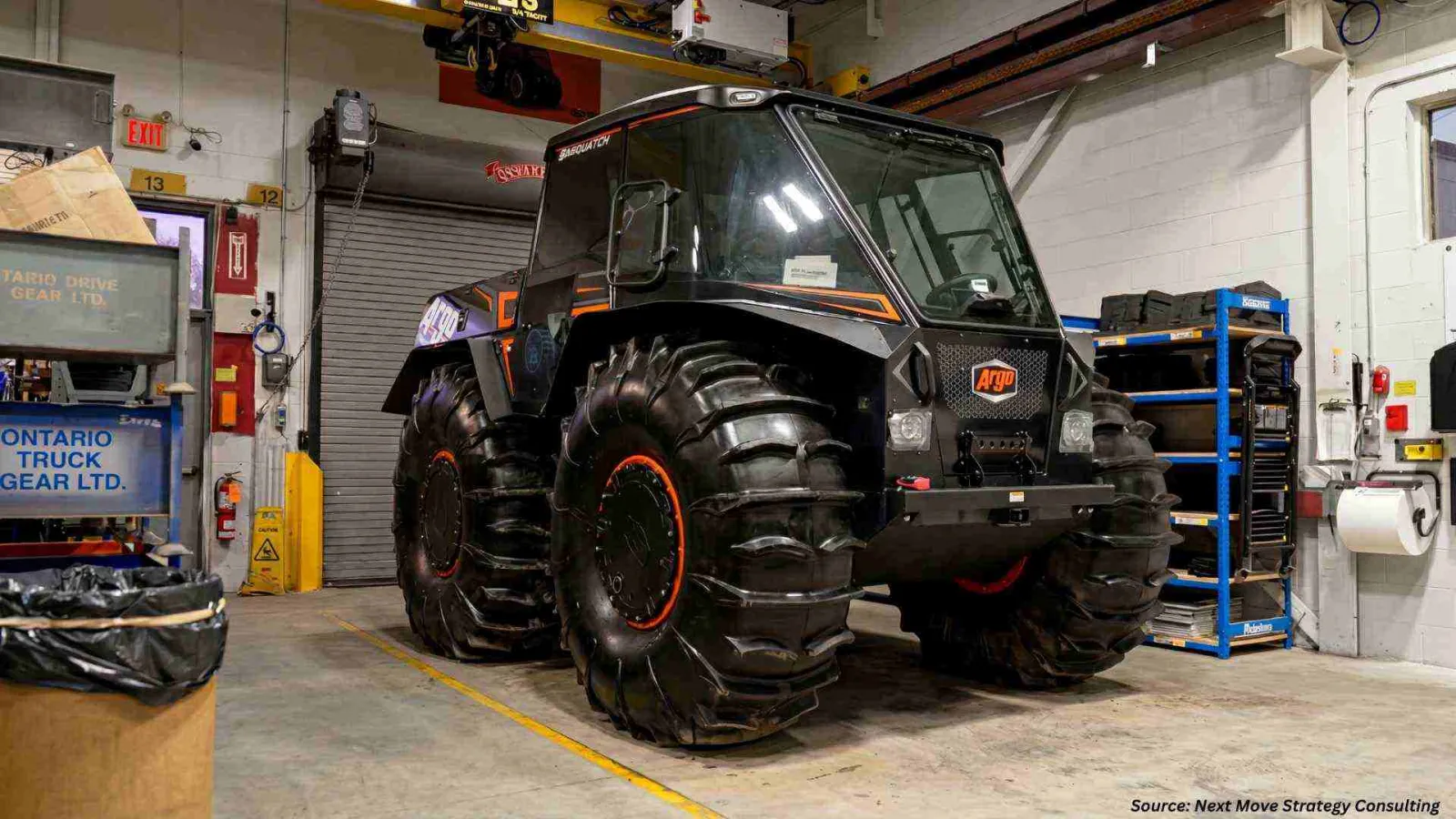
One of the most significant developments comes from Canada, where a next-generation rescue vehicle is gaining global attention. The ARGO Sasquatch, developed by Argo XTV, represents a new class of extreme all-terrain vehicles.
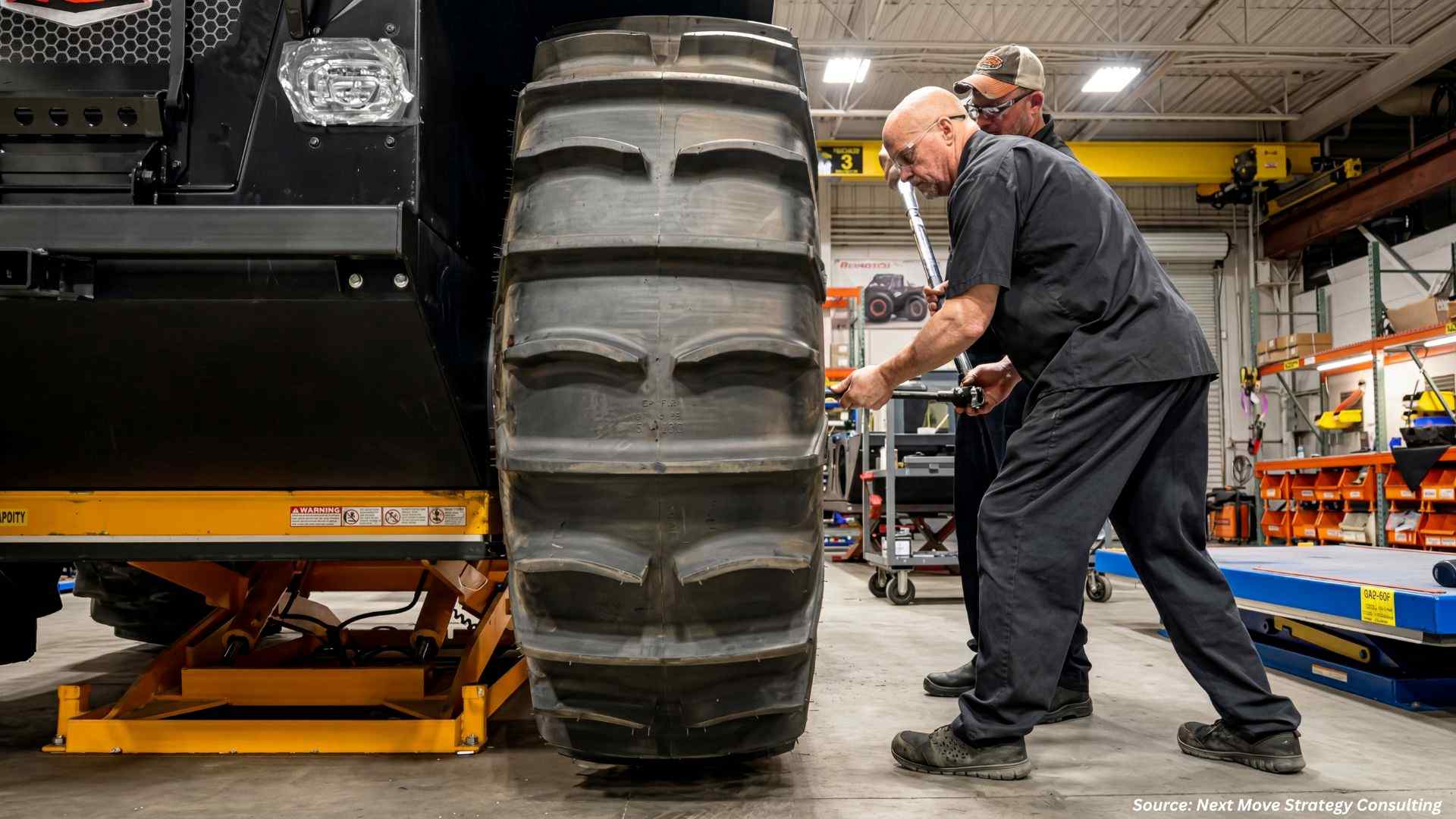
This vehicle weighs approximately 5,000 pounds and is designed to operate across land and water. It can navigate snow, ice, and rugged terrain while also rotating 180 degrees in place. A key feature is its ability to automatically adjust tire pressure, improving traction in difficult environments.
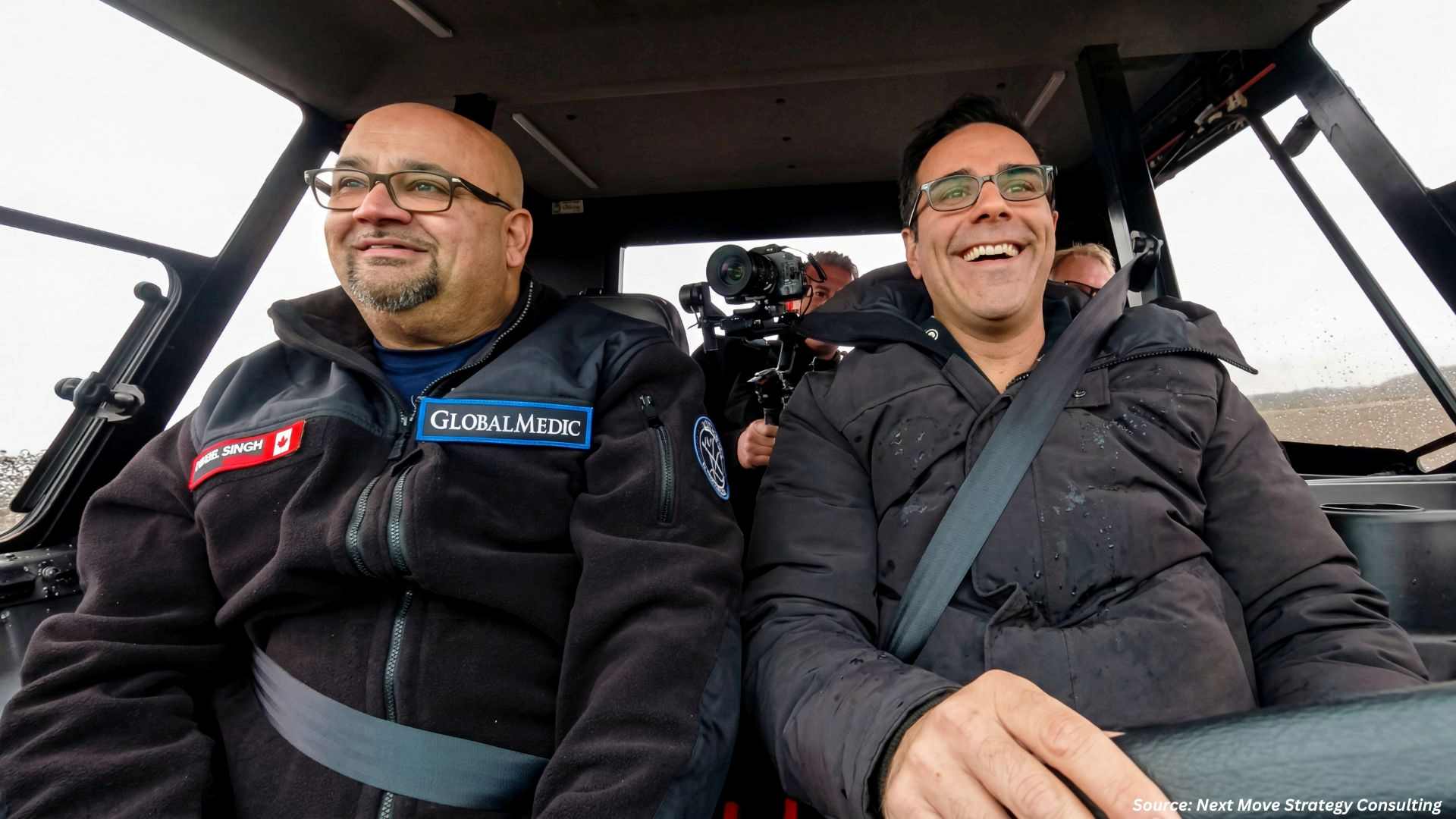
Rahul Singh, founder of GlobalMedic, highlighted its role in reaching individuals in situations where conventional vehicles such as snowmobiles are ineffective. The vehicle enables rescue teams to access the final stretch of difficult terrain and provide critical support.
All-terrain vehicles are evolving into essential tools for disaster response. Their ability to operate in extreme conditions makes them highly valuable for emergency and rescue operations.
Sasquatch XTX Performance & Engineering
|
Component |
Technical Specification |
Practical Mobility Benefit |
|
Engine |
HD Hyundai 1.8L Turbo Diesel |
High low-end torque for "crawling" through deep mud and snow. |
|
Transmission |
HDT™ Automatic e-Steer™ |
Enables Zero-Turn capability (spinning 180° in place). |
|
Mobility System |
71" ARGO XT328 Tires |
Massive cupped-tread tires that act as "paddles" in water. |
|
Terrain Control |
ATC (Argo Terrain Control) |
One-touch inflation/deflation of tires while driving. |
|
Amphibious Speed |
4 mph (6 km/h) |
High-buoyancy design allows for crossing lakes and floods. |
|
Payload Capacity |
2,645 lbs (1,200 kg) |
Large enough to carry rescue teams and heavy medical gear. |
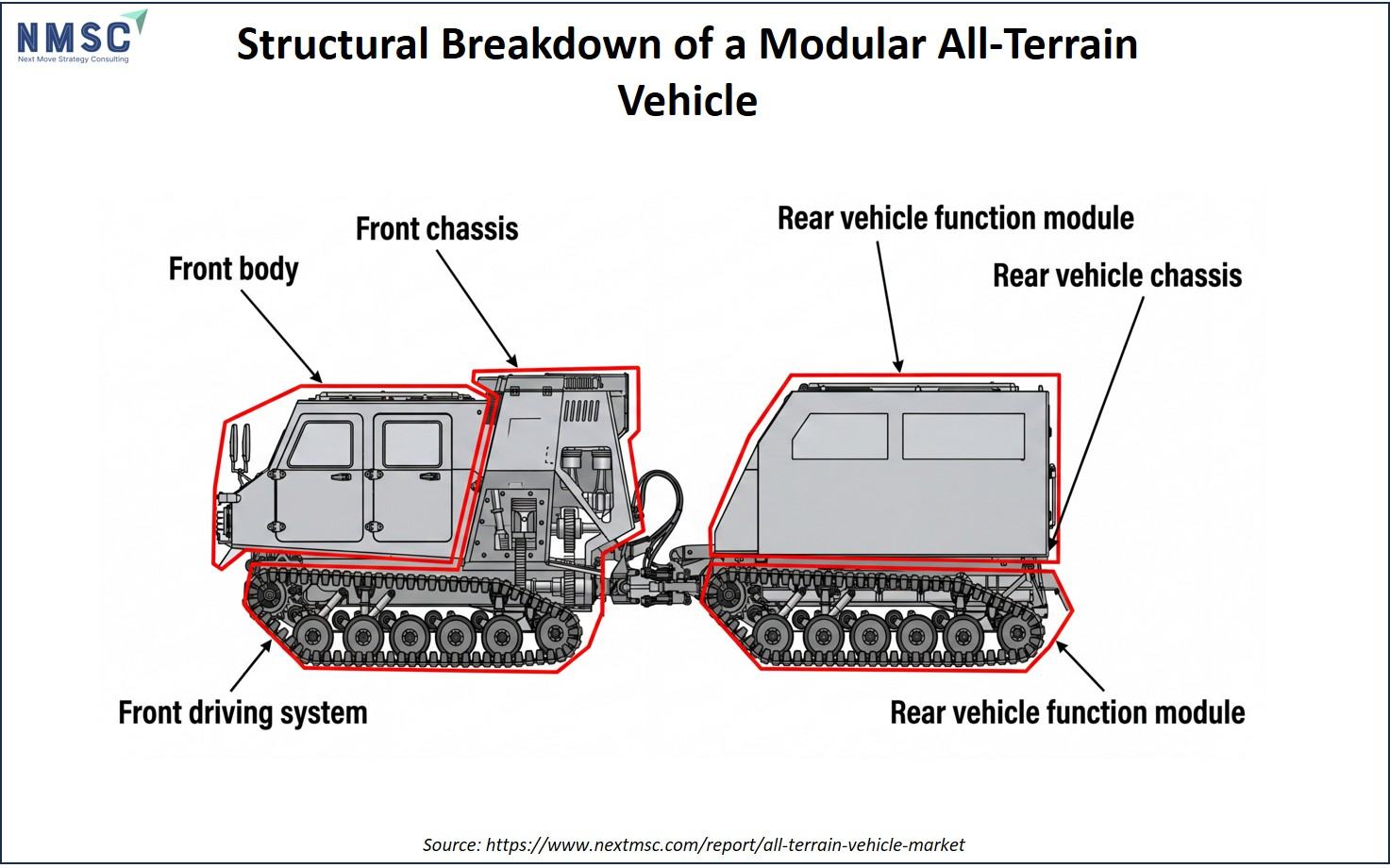
Functional Design and Mobility Features of an All-Terrain Vehicle
This image illustrates the functional architecture of an advanced all-terrain vehicle, focusing on how its design supports mobility and adaptability in extreme conditions.
The front driving system, supported by continuous tracks, plays a critical role in propulsion. These tracks distribute weight evenly, allowing the vehicle to move smoothly over soft or unstable surfaces. The front chassis and body provide structural support and protect internal components, including the operator area.
The rear vehicle function module is a key highlight, showcasing the vehicle’s ability to adapt to different operational needs. Whether used for transportation, rescue missions, or equipment deployment, this module can be configured accordingly. The rear chassis ensures durability while maintaining balance with the front unit.
The articulated connection between the two sections enhances maneuverability, enabling the vehicle to navigate tight spaces and uneven terrain effectively.
In summary, the image demonstrates how engineering design, modularity, and tracked mobility systems work together to create a highly capable all-terrain vehicle suited for both industrial and emergency applications.
Why Is Global Demand for Advanced All-Terrain Vehicles Increasing?
The ARGO Sasquatch is attracting growing international attention. While sales in the United States have been affected by rising material costs, demand in regions such as Europe, Australia, and New Zealand is increasing.
The manufacturing facility in New Hamburg, Ontario, employs around 150 workers, indicating ongoing production despite economic challenges. This trend reflects a broader shift toward adopting advanced all-terrain vehicles in response to climate-related emergencies and operational needs.
Global demand is rising due to environmental challenges and the need for reliable mobility solutions. International markets are recognizing the value of advanced all-terrain vehicle technology.
Performance and Capability Overview
|
Feature |
Specification |
Impact |
|
Electric Range |
>100 km (WLTP) |
Reduces emissions |
|
Total System Output |
Up to 280 kW |
High performance |
|
Torque |
Up to 750 Nm |
Strong acceleration |
|
Hybrid Configuration |
Electric + Fuel |
Flexible driving |
|
Charging Flexibility |
AC & DC supported |
Convenience |
Key Drivers Influencing All-Terrain Vehicle Evolution
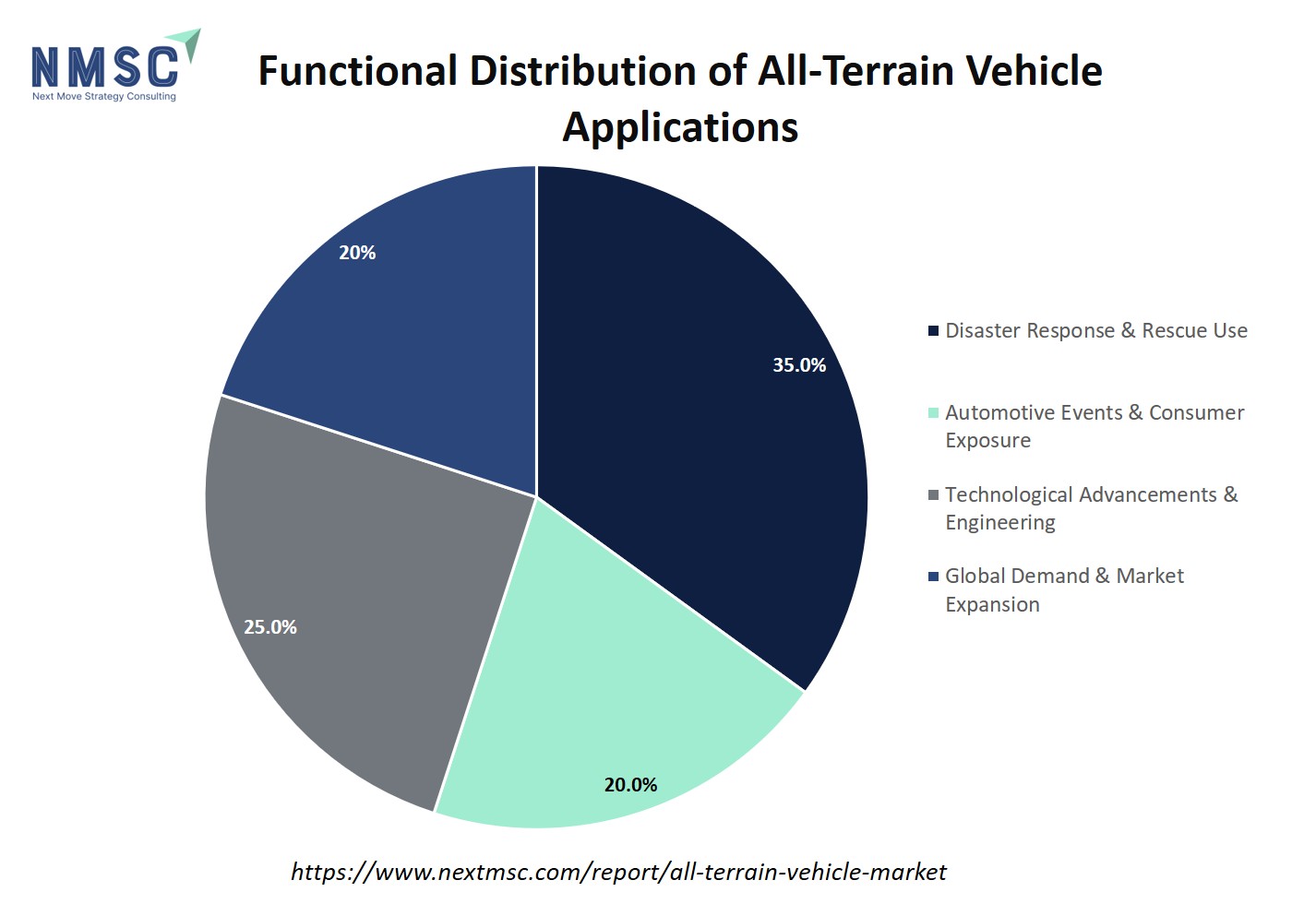
The pie chart highlights how different factors contribute to the growing importance and transformation of all-terrain vehicles in 2026. The largest portion, representing 35%, is dedicated to disaster response and rescue applications. This indicates that the primary value of these vehicles is increasingly tied to their ability to operate in extreme conditions and support emergency operations where conventional transport cannot function effectively.
The next significant segment, 25%, focuses on technological advancements and engineering. This reflects how innovations such as amphibious capabilities, adaptive traction systems, and hybrid power integration are enhancing performance and expanding the usability of these vehicles across multiple terrains.
Two equal segments, each accounting for 20%, represent automotive events and global demand. The automotive events segment shows the role of exhibitions and public showcases in increasing awareness and consumer engagement. Meanwhile, global demand highlights the rising adoption of all-terrain vehicles across international markets, driven largely by climate-related challenges and the need for resilient mobility solutions.
Overall, the chart demonstrates a clear shift toward functionality and innovation, with practical applications and advanced engineering playing a more dominant role than traditional recreational use.
Functional Layout of Hybrid Powertrain and Energy Systems
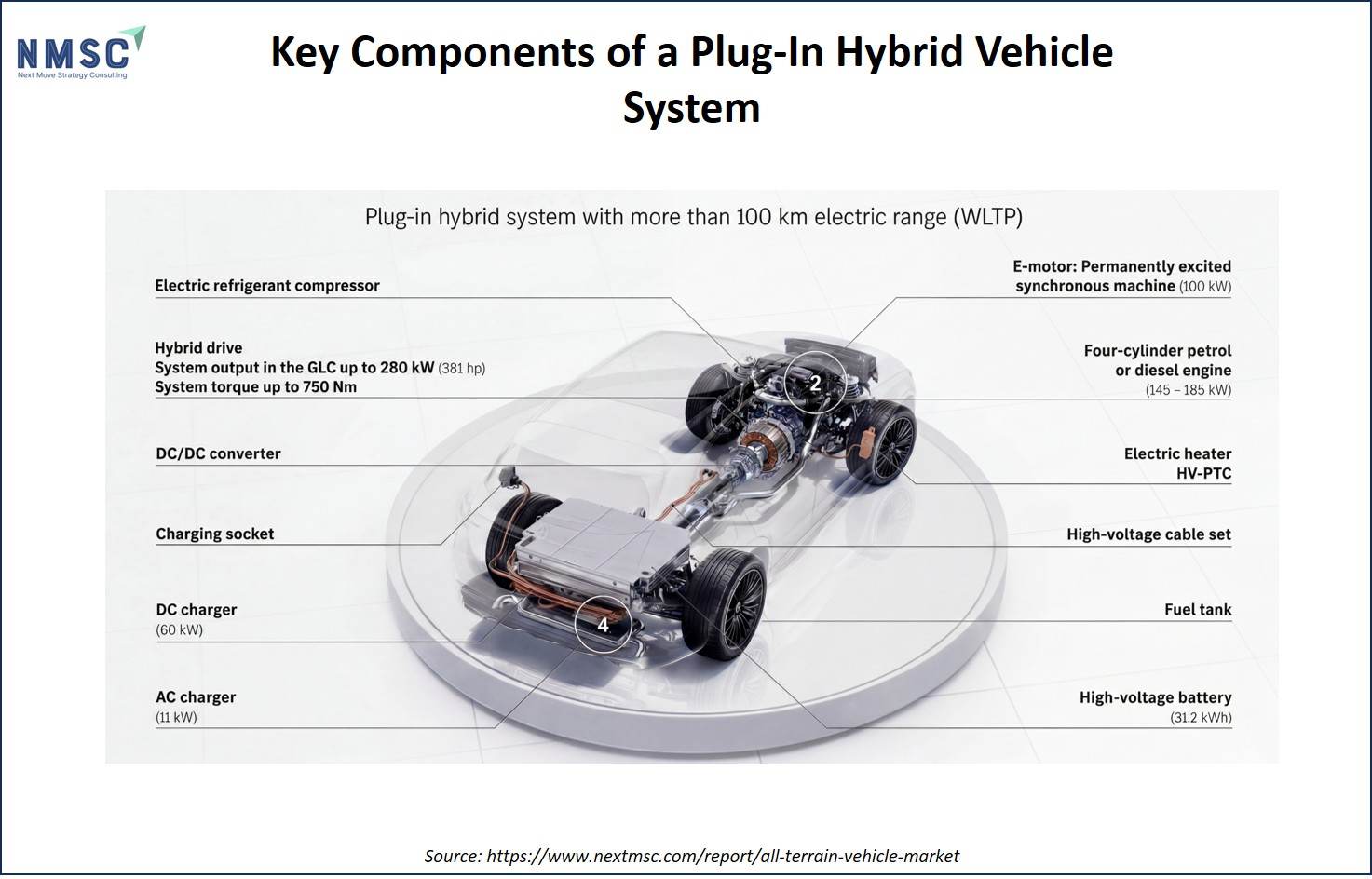
This image illustrates the functional layout of a modern hybrid powertrain, focusing on how different subsystems interact to optimize vehicle performance and energy usage.
The hybrid drive system is central to the design, combining electric propulsion with a conventional engine to deliver both efficiency and reliability. The electric motor supports low-emission driving, while the fuel tank and combustion engine provide backup for longer journeys.
Energy flow within the vehicle is managed through a network of components, including the high-voltage battery, DC/DC converter, and high-voltage cables. These elements ensure that power is efficiently transferred between the battery, motor, and auxiliary systems.
Charging infrastructure is another key aspect, with both AC and DC charging options allowing for flexible recharging depending on availability and time constraints. Supporting systems such as the electric heater and refrigerant compressor enhance operational efficiency by maintaining optimal temperature conditions.
Overall, the diagram demonstrates how integrated hybrid systems, energy management, and charging technologies work together to create a versatile and efficient vehicle platform suited for modern mobility needs.
Competitive Landscape of the ATV Market
The ATV market features a diverse group of established players, including Polaris Inc., Honda Motor Company Ltd., Yamaha Motor Company Ltd., Bombardier Recreational Products Inc., Arctic Cat, Kawasaki Heavy Industries Ltd., Suzuki Motor Corporation, CFMOTO Powersports Inc., Hisun Motors Corporation, and Kwang Yang Motor Co., Ltd. These companies are actively pursuing strategies such as new product introductions and business expansion initiatives to strengthen their competitive edge and sustain their positions in the market.
Major Trends Shaping the Present
All-terrain vehicles are increasingly integrated into public automotive events, which is improving their visibility and accessibility. At the same time, their purpose is shifting from recreational use to functional applications such as rescue and disaster response.
Technological innovation is another defining trend. Features such as amphibious capability, adaptive traction systems, and precision maneuverability are setting new performance standards. Additionally, climate-related challenges are accelerating the demand for vehicles that can operate in extreme and unpredictable environments. The present landscape highlights a transition toward practical, high-impact applications. All-terrain vehicles are becoming more advanced, more visible, and more essential across industries.
Next Steps: What Should Stakeholders Do?
-
Invest in innovation to develop vehicles capable of handling extreme environments
-
Expand use cases into healthcare, disaster relief, and infrastructure support
-
Monitor global demand trends driven by climate-related challenges
-
Increase participation in automotive events to boost visibility and adoption
Final Conclusion
All-terrain vehicles are undergoing a significant transformation. From attracting attention at automotive shows to enabling critical rescue operations, their role is expanding across multiple domains.
They are no longer limited to recreation but are becoming essential tools for addressing real-world challenges. As environmental pressures and logistical demands increase, all-terrain vehicles are positioned to play a central role in the future of mobility.
About the Author
 Sanyukta Deb
— Sanyukta Deb is Digital Marketing Team Lead at Next Move Strategy Consulting, where she has led content strategy and technical SEO for the firm's B2B market research publications for over 2 years. Her editorial process translates NextMSC's primary and secondary research — spanning technology, industrial, and consumer sectors — into commercial narratives, backed by search-intent, keyword, and competitive analysis. She brings 5 years of overall experience in digital marketing and content strategy.
Sanyukta Deb
— Sanyukta Deb is Digital Marketing Team Lead at Next Move Strategy Consulting, where she has led content strategy and technical SEO for the firm's B2B market research publications for over 2 years. Her editorial process translates NextMSC's primary and secondary research — spanning technology, industrial, and consumer sectors — into commercial narratives, backed by search-intent, keyword, and competitive analysis. She brings 5 years of overall experience in digital marketing and content strategy.
About the Reviewer
 Debashree Dey
— Debashree Dey is Assistant Manager at Next Move Strategy Consulting, where she supports cross-vertical market content and communications across diverse industries for 6 years. Her professional background includes senior content writing, communications, and published manuscript authorship, with experience developing audience-focused business narratives and maintaining clear, consistent messaging. Her role supports research-led content development and editorial quality across NextMSC publications.
Debashree Dey
— Debashree Dey is Assistant Manager at Next Move Strategy Consulting, where she supports cross-vertical market content and communications across diverse industries for 6 years. Her professional background includes senior content writing, communications, and published manuscript authorship, with experience developing audience-focused business narratives and maintaining clear, consistent messaging. Her role supports research-led content development and editorial quality across NextMSC publications.















Add Comment