Zero-Emission Trucks Hit 9% Globally: 2026 Market Shift
Introduction
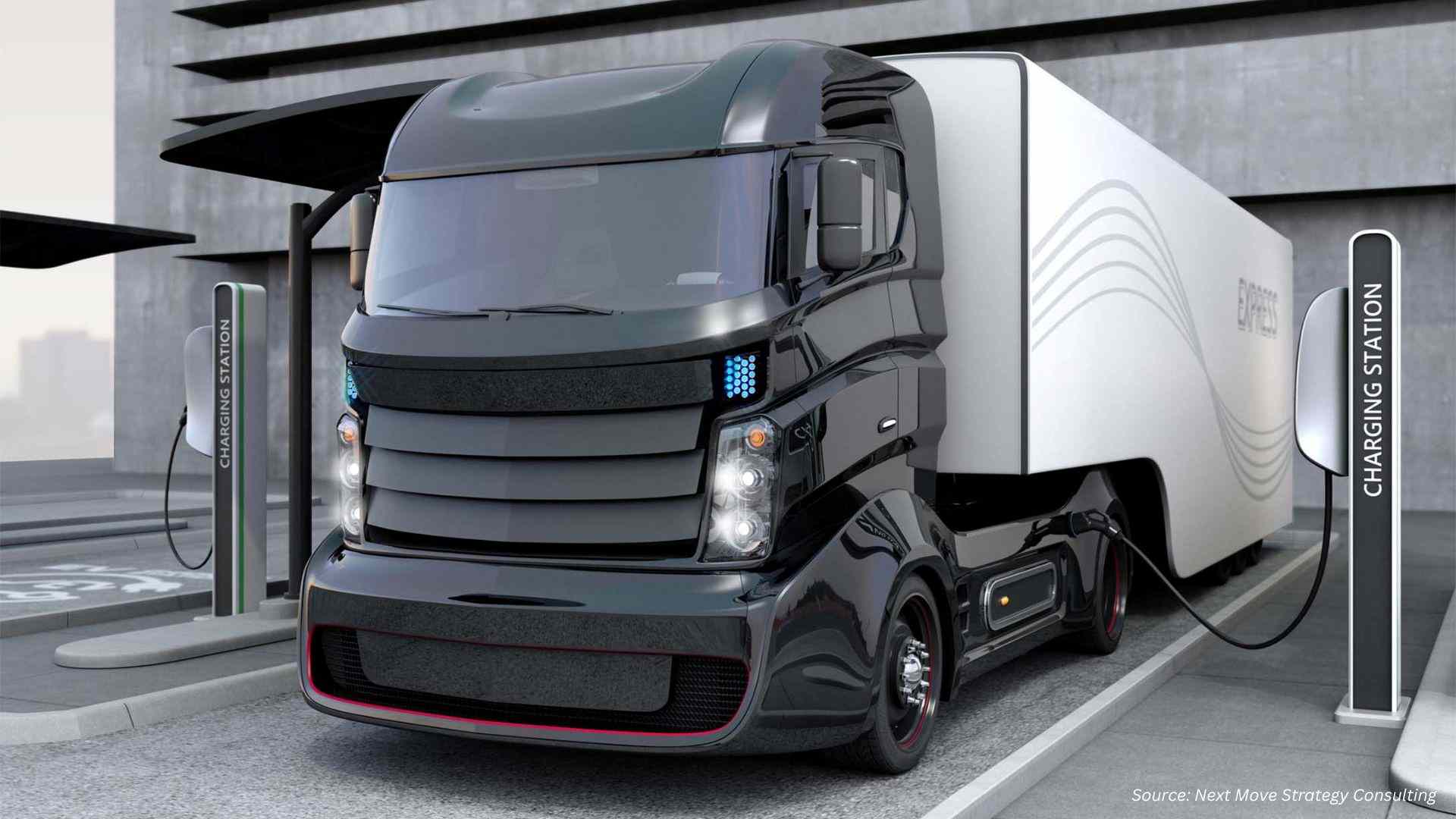
The commercial vehicles sector has crossed a decisive threshold. In 2025, sales of electric trucks doubled year-on-year, exceeding 400,000 units for the first time and reaching 9% of all truck sales worldwide. For an asset class that diesel dominated for a century, this is no incremental adjustment — it is the early architecture of a structural realignment in global freight.
For C-level executives and institutional investors evaluating fleet electrification, the question has shifted from whether zero-emission trucks are viable to how quickly the transition will compress diesel's competitive advantage. This guide examines the breaking developments shaping electric heavy-duty trucks in 2026, analyzes the regulatory and competitive forces at play, and translates the data into actionable strategic implications for stakeholders across the value chain.
The Tipping Point: Breaking Developments Redrawing the Electric Truck Industry
The most consequential signal of 2026 arrived from Beijing. On June 15, China's Ministry of Transport rolled out the nation's first detailed electrification target for heavy trucks, mandating that battery electric vehicles (BEV) trucks constitute 40% of new heavy truck sales and 20% of the total fleet — approximately 1.6 million vehicles — by 2030. On short-haul routes around Beijing, the target rises to 80%, accompanied by a build-out of 3,000 charging and battery-swap stations under a "zero-carbon highway" initiative.
China's momentum is already ahead of policy. In 2025, electric models made up nearly a third of new heavy truck sales in the country, and in December 2025 the electric sales share reached approximately 50% for the first time. The electric heavy freight truck segment globally almost tripled, rising from around 84,000 units in 2024 to a record 230,000 in 2025, while China accounted for over 90% of global electric truck sales.
In parallel, a defining Western milestone occurred on April 29, 2026, when Tesla rolled the first Semi off its high-volume production line at Gigafactory Nevada, a facility engineered for 50,000 units of annual capacity. Priced at roughly $290,000 for the 500-mile Long Range variant, the Semi is the lowest-priced Class 8 battery electric tractor on the market and, in California's Clean Truck & Bus Voucher program, accounted for 965 of 1,067 applications between January 2025 and February 2026 — with Daimler, PACCAR, and Volvo combined receiving fewer than 100.
For More Information – Download FREE Sample on Commercial Vehicle Market Report
NMSC Strategic Perspective
At Next Move Strategy Consulting, we interpret these developments as the convergence of two distinct electrification models reaching critical mass simultaneously. China's trajectory is policy-amplified but fundamentally demand-led — battery electric heavy freight trucks have already achieved total cost of ownership parity with diesel in specific high-utilization applications such as ports, mining, and steel production. The West, by contrast, is now entering a manufacturing-scale phase led by vertically integrated players. Our view is that the competitive battleground over the next 36 months will not be technology validation, which is largely settled, but rather charging infrastructure density, residual-value certainty, and supply-chain control. Stakeholders who treat fleet electrification as a financing and infrastructure challenge — rather than a vehicle procurement decision — will capture disproportionate value.
Section Summary: The electric truck industry has moved decisively from pilot-scale to mass-market dynamics, propelled by China's binding 2030 targets and the commencement of high-volume Western production. The transition is now governed by infrastructure and economics rather than feasibility.
-
Electric trucks reached 9% of global truck sales in 2025, doubling year-on-year to exceed 400,000 units.
-
China's 2030 mandate targets 40% of new heavy truck sales and a 1.6-million-vehicle electric fleet.
-
Tesla's Semi entered high-volume production in April 2026 at the market's lowest Class 8 BEV price point.
Industry Impact Analysis
The policy landscape is bifurcating sharply across regions, creating divergent risk profiles for global investors. In Europe, electric truck sales rose 40% year-on-year in 2025 to nearly 17,000 units, supported by HDV CO2 standards requiring a 15% emissions reduction versus 2019, alongside proposed road-toll exemptions for battery electric trucks. Germany, Europe's largest market, approved EUR 1.6 billion in electric truck charging funding, while the United Kingdom led regional growth with sales expanding more than 55%.
The United States presents a contrasting picture. Sales still increased 25% to 17,000 units in 2025, yet policy momentum weakened materially: California's Advanced Clean Trucks regulation was revoked, and the US Environmental Protection Agency repealed greenhouse gas emission standards for medium- and heavy-duty vehicles. Notably, over 95% of US electric truck sales in 2025 were medium freight trucks, with Rivian selling nearly 10,000 units driven by its Amazon partnership.
A further competitive disruption is the impending arrival of low-cost Chinese manufacturers in Europe, with Reuters identifying more than half a dozen Chinese producers planning European heavy truck sales. This places established European original equipment manufacturers under simultaneous pressure from regulatory compliance costs and price competition.
Section Summary: Regulatory divergence is the defining structural risk of the current cycle. Europe is consolidating policy-driven demand, China is institutionalizing leadership, and the United States is entering a phase of reduced federal mandate support that shifts momentum toward economics-led adoption.
-
Europe's electric truck sales grew 40% in 2025, underpinned by binding CO2 standards and national funding.
-
US federal policy support contracted with the revocation of Advanced Clean Trucks and GHG standards.
-
Low-cost Chinese entrants are preparing a wave of European market entries, intensifying competitive risk.
Pros and Cons of Recent Market Developments
|
Pros |
Cons |
|
Battery electric heavy freight trucks have reached TCO parity with diesel in high-utilization use cases. |
Purchase prices remain two to three times higher than diesel equivalents, a barrier for smaller fleets. |
|
High-volume production has lowered Class 8 BEV entry prices, with the Tesla Semi at roughly $290,000. |
US federal mandate support has weakened following regulatory repeals. |
|
Average battery electric HFT range neared 310 km in 2025, with 600–800 km models launching in 2026. |
Model availability stagnated; only six net new BEV heavy-duty models were added globally in 2025. |
|
China is institutionalizing demand with binding fleet targets and infrastructure build-out. |
Multiple Western start-ups, including Nikola and Volta Trucks, filed for bankruptcy. |
Key Data & Statistics
Table 1: Global Electric Truck Sales by Region, 2025
|
Region |
2025 Electric Truck Sales |
Year-on-Year Growth |
Electric Sales Share |
|
China |
Over 360,000 (>90% of global) |
More than doubled |
~25% of truck market |
|
North America |
20,000 |
+25% |
— |
|
Europe |
~17,000 |
+40% |
3% |
|
Rest of World |
1,900 |
−15% |
— |
|
Global |
Over 400,000 |
Doubled |
9% |
Table 2: Global Electric Heavy Freight Truck (HFT) Sales Trajectory
|
Metric |
2024 |
2025 |
|
Electric HFT sales (units) |
~84,000 |
230,000 |
|
Electric share of total HFT sales |
Just over 3% |
9% |
|
China electric HFT share |
13% |
28% |
|
BEV share of electric truck sales globally |
— |
97% |
Future Outlook & Forecast
The trajectory through the remainder of the decade points to accelerating, geographically uneven expansion. Battery technology and range economics are converging on long-haul viability: Volvo announced an electric HFT with 600 km range for the second quarter of 2026, Renault unveiled a comparable model, and Tesla expects to begin deliveries of an 800 km-capable semi-trailer truck in 2026. These ranges already address the daily needs of many long-haul drivers, who average 400–1,000 km.
China's first-quarter 2026 sales rose more than 20% year-on-year, and industry forecasts suggest the country could outpace its own targets — battery producer CATL has predicted that as many as half of China's heavy truck sales could be electric by 2028. For 2025, electric truck sales outnumbered LNG truck sales in China for the first time, capturing over 25% of the truck market.
NMSC's strategic reading is that the next phase of zero-emission trucks growth will reward business-model innovation as much as hardware. The emergence of "truck-as-a-service" structures — bundling vehicle, charging infrastructure, and energy supply into a single monthly payment — directly addresses the capital-expenditure barrier that has constrained smaller operators. Combined with battery-swapping, which accounted for around 15% of China's electric truck sales in 2025, these models are the mechanisms most likely to unlock mass-market fleet electrification.
Section Summary: Long-haul range parity, China's potential to exceed binding targets, and the rise of service-based ownership models position the electric truck market for sustained double-digit expansion, with the primary uncertainty residing in regional policy direction rather than technology.
-
Long-haul BEV trucks with 600–800 km range are launching in 2026, closing the diesel range gap.
-
China may reach 50% electric heavy truck sales by 2028, ahead of official targets.
-
Truck-as-a-service and battery-swapping models are emerging as the key enablers of mass adoption.
Next Steps for Stakeholders
For C-level executives and institutional investors, the strategic imperatives are clear and time-sensitive:
-
Prioritize high-utilization deployment first. Concentrate initial electrification on predictable, high-mileage routes — ports, mining, and industrial corridors — where TCO parity with diesel is already demonstrable.
-
Treat charging and energy as core strategy, not infrastructure overhead. With China targeting 3,000 charging and battery-swap stations by 2030, infrastructure access will increasingly determine fleet competitiveness.
-
Hedge against regulatory divergence. Structure capital allocation to account for strong policy tailwinds in Europe and China against reduced federal support in the United States.
-
Evaluate service-based procurement models to neutralize the upfront price premium and de-risk residual-value exposure.
Conclusion
The data now tells an unambiguous story: commercial electric vehicles have moved from the margins to the mainstream of global freight. With zero-emission trucks reaching 9% of worldwide sales, China codifying a 1.6-million-vehicle fleet target, and high-volume Western production underway, the electric truck market has entered an irreversible scaling phase. The decisive variable for the years ahead is execution — building infrastructure at pace, controlling supply chains, and deploying ownership models that make fleet electrification financially accessible. Stakeholders who act on these signals now will define the competitive contours of an industry being rebuilt in real time.
About the Author
 Sanyukta Deb
— Sanyukta Deb is Digital Marketing Team Lead at Next Move Strategy Consulting, where she has led content strategy and technical SEO for the firm's B2B market research publications for over 2 years. Her editorial process translates NextMSC's primary and secondary research — spanning technology, industrial, and consumer sectors — into commercial narratives, backed by search-intent, keyword, and competitive analysis. She brings 5 years of overall experience in digital marketing and content strategy.
Sanyukta Deb
— Sanyukta Deb is Digital Marketing Team Lead at Next Move Strategy Consulting, where she has led content strategy and technical SEO for the firm's B2B market research publications for over 2 years. Her editorial process translates NextMSC's primary and secondary research — spanning technology, industrial, and consumer sectors — into commercial narratives, backed by search-intent, keyword, and competitive analysis. She brings 5 years of overall experience in digital marketing and content strategy.
About the Reviewer
 Debashree Dey
— Debashree Dey is Assistant Manager at Next Move Strategy Consulting, where she supports cross-vertical market content and communications across diverse industries for 6 years. Her professional background includes senior content writing, communications, and published manuscript authorship, with experience developing audience-focused business narratives and maintaining clear, consistent messaging. Her role supports research-led content development and editorial quality across NextMSC publications.
Debashree Dey
— Debashree Dey is Assistant Manager at Next Move Strategy Consulting, where she supports cross-vertical market content and communications across diverse industries for 6 years. Her professional background includes senior content writing, communications, and published manuscript authorship, with experience developing audience-focused business narratives and maintaining clear, consistent messaging. Her role supports research-led content development and editorial quality across NextMSC publications.















Add Comment