How Are Automotive Solar Chargers Supporting the Future of Electric Mobility?
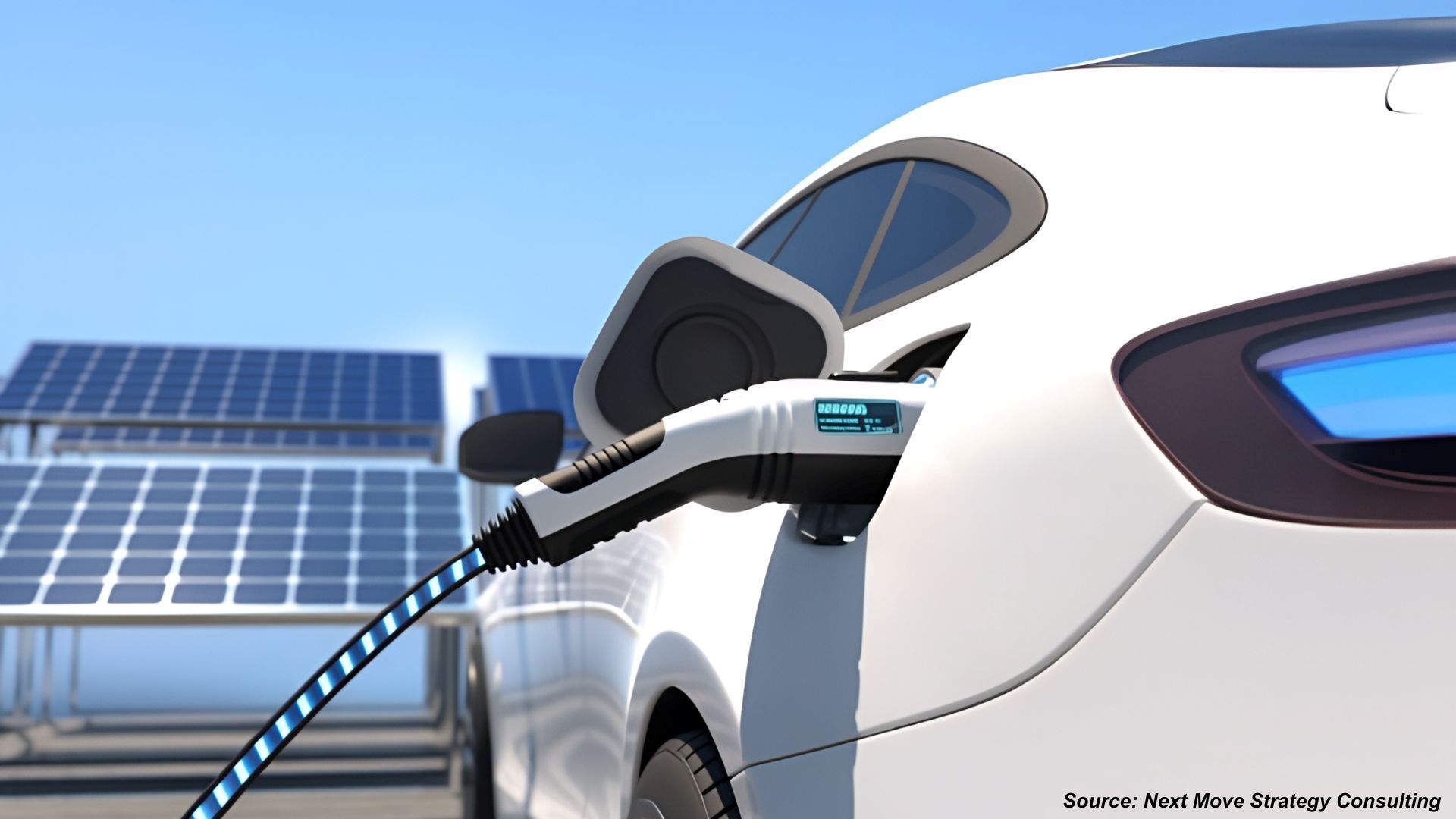
The automotive industry is rapidly evolving as electric mobility becomes a global priority. Alongside advancements in battery performance and charging infrastructure, the Automotive Solar Chargers Market is gaining significant attention as part of the broader transition toward cleaner and more efficient transportation systems. Rather than functioning as standalone charging solutions, these systems are increasingly being integrated with battery storage technologies and ultra-fast charging networks to improve energy efficiency and reduce dependence on traditional power grids.
How Is Solar-Storage-Charging Integration Reshaping EV Infrastructure?
The growing adoption of electric vehicles has increased pressure on charging infrastructure worldwide. Consumers continue to face concerns related to charging time, accessibility, and energy reliability, especially during peak travel periods and cold weather conditions. Automotive solar chargers are becoming relevant because they can support localized energy generation while improving charging flexibility.
BYD stated that its SSC FLASH Charging system is designed to integrate solar energy generation with battery storage and high-speed charging. This approach aims to reduce stress on local electricity grids while supporting more sustainable transportation infrastructure. The company announced plans to build 20,000 FLASH Charging Stations across China and expand globally by the end of 2026.
The company also reported that its latest charging technology can charge vehicles from 10% to 70% State of Charge in just 5 minutes and reach 97% charge in approximately 9 minutes. Even at temperatures as low as -30°C, charging performance showed only a slight increase in charging duration compared to room temperature conditions.

|
Technology Update |
2026 Development |
|
Charging speed |
10% to 70% in 5 minutes |
|
Near-full charging |
97% charge in 9 minutes |
|
Cold-weather charging |
Only 3 additional minutes at -30°C |
|
Charging station expansion |
20,000 stations planned in China |
|
Charger output |
1500 kW single-connector output |
This development reflects how automotive solar charging systems are evolving beyond supplementary technology and becoming part of integrated mobility ecosystems.
Automotive solar charging systems are increasingly supporting fast, renewable, and grid-conscious EV infrastructure development.
The integration of solar generation, battery storage, and charging systems demonstrates how automakers are focusing on long-term energy sustainability alongside vehicle innovation.
Why Is Charging Efficiency Becoming a Major Industry Focus?
Charging speed remains one of the biggest barriers to wider EV adoption. Slow charging experiences, charging station congestion, and reduced battery efficiency in winter conditions continue to affect consumer confidence.
According to BYD Official Website, the company identified slow charging and poor low-temperature charging performance as two of the industry’s most persistent challenges. To address these issues, BYD developed what it calls a “Lithium-Ion High-Speed Channel” alongside a “Full-Spectrum Intelligent Thermal Management System.”
These technologies were designed to reduce internal battery heat generation while improving thermal dissipation during high-speed charging. The company also stated that the 2nd Generation Blade Battery exceeded China’s national safety standards during testing.
In addition to charging performance, the battery system reportedly increased energy density by 5% compared to the previous generation while enabling a driving range of more than 1,000 km in the DENZA Z9GT model.
The emphasis on thermal stability and energy efficiency highlights how charging infrastructure innovation is now becoming equally important as battery innovation in the EV sector.
The automotive industry is focusing heavily on charging efficiency because user convenience and infrastructure reliability directly influence EV adoption.
Battery safety, charging speed, and renewable energy integration are emerging as connected priorities within next-generation mobility systems.

How Is BYD’s Global Expansion Influencing EV Infrastructure Trends?
The growing interest in automotive solar chargers is also linked to the rapid international expansion of electric vehicle manufacturers. As EV adoption increases globally, companies are investing more aggressively in supporting energy and charging ecosystems.
According to Autoblog, BYD surpassed Ford Motor Company in global vehicle sales during 2025. The report stated that BYD sold 4.6 million vehicles globally, while Ford sold 4.4 million vehicles during the same period.
Exports reportedly accounted for approximately 25% of BYD’s total sales, with the company exporting more than 1.05 million vehicles in 2025. The automaker has also established manufacturing facilities in Brazil, Thailand, and Hungary to support regional demand across South America, Southeast Asia, and Europe.
The report further noted that BYD exclusively produces plug-in hybrid and battery electric vehicles, reinforcing the company’s commitment to electrified transportation systems.
|
Automaker |
2025 Global Vehicle Sales |
|
BYD |
4.6 million |
|
Ford |
4.4 million |
What Could Be the Long-Term Impact of Automotive Solar Chargers?
Automotive solar chargers are expected to contribute to broader sustainability goals by supporting cleaner energy use and reducing pressure on traditional electricity networks. Although these systems are still evolving, integrated renewable charging ecosystems are becoming a strategic focus for automakers and infrastructure developers.
BYD described its Solar-Storage-Charging initiative as part of its long-term “Three Green Dreams” vision focused on accelerating transportation electrification and promoting greener mobility solutions.
As battery technology improves and charging networks expand, automotive solar chargers could help create more decentralized and energy-efficient transportation infrastructure in the coming years.

Automotive solar chargers are gradually becoming part of a larger renewable mobility ecosystem that combines clean energy, storage systems, and advanced charging infrastructure.
The increasing integration of solar-assisted charging technologies reflects the automotive sector’s broader shift toward sustainable transportation solutions.
Leading Companies Expanding Innovation in the Automotive Solar Chargers Market
The Automotive Solar Chargers Market features the presence of several prominent companies, including Span.io, ChargeNet, MOEV Inc., Hive Power SA, Delta Electronics, Inc., GoSun Inc., Paired Power, and Bharat Heavy Electricals Limited, among others. These companies are actively focusing on strategies such as product launches, technology advancements, and infrastructure expansion to strengthen their market presence and enhance competitive positioning within the industry.

Next Steps
Automotive manufacturers may continue expanding investments in renewable charging infrastructure and integrated energy systems to improve EV accessibility and efficiency. Infrastructure developers are likely to focus on scalable charging networks capable of supporting both ultra-fast charging and renewable energy storage.
Consumers can monitor advancements in solar-assisted charging technologies as automakers continue introducing more energy-efficient EV ecosystems. Policymakers may also play an important role by supporting renewable charging infrastructure and encouraging grid-friendly energy solutions.
-
Invest in solar-storage-charging infrastructure to support sustainable EV expansion.
-
Focus on ultra-fast charging technologies that improve consumer convenience.
-
Develop grid-friendly charging networks integrated with renewable energy systems.
-
Expand research on battery thermal management for better cold-weather performance.
-
Encourage public-private partnerships to accelerate clean mobility infrastructure deployment.
Conclusion
The automotive industry is entering a phase where charging infrastructure innovation is becoming just as important as vehicle performance. Recent developments from BYD demonstrate how solar-assisted charging systems, energy storage integration, and ultra-fast charging technologies are shaping the future of electric mobility.
As global EV adoption continues to expand, automotive solar chargers are expected to become an increasingly important part of sustainable transportation infrastructure.
About the Author
 Tania Dey
— Tania Dey is a content writer specializing in transformation-led, insight-driven storytelling. She develops research-backed, high-impact content aligned with evolving business priorities, digital behavior, and audience expectations. Her work helps organizations sharpen value propositions, strengthen visibility, and communicate strategic intent with clarity and precision. Grounded in data-informed storytelling, she brings a strong focus on relevance, consistency, and measurable digital impact across platforms.
Tania Dey
— Tania Dey is a content writer specializing in transformation-led, insight-driven storytelling. She develops research-backed, high-impact content aligned with evolving business priorities, digital behavior, and audience expectations. Her work helps organizations sharpen value propositions, strengthen visibility, and communicate strategic intent with clarity and precision. Grounded in data-informed storytelling, she brings a strong focus on relevance, consistency, and measurable digital impact across platforms.
About the Reviewer
 Sanyukta Deb
— Sanyukta Deb is Digital Marketing Team Lead at Next Move Strategy Consulting, where she has led content strategy and technical SEO for the firm's B2B market research publications for over 2 years. Her editorial process translates NextMSC's primary and secondary research — spanning technology, industrial, and consumer sectors — into commercial narratives, backed by search-intent, keyword, and competitive analysis. She brings 5 years of overall experience in digital marketing and content strategy.
Sanyukta Deb
— Sanyukta Deb is Digital Marketing Team Lead at Next Move Strategy Consulting, where she has led content strategy and technical SEO for the firm's B2B market research publications for over 2 years. Her editorial process translates NextMSC's primary and secondary research — spanning technology, industrial, and consumer sectors — into commercial narratives, backed by search-intent, keyword, and competitive analysis. She brings 5 years of overall experience in digital marketing and content strategy.

















Add Comment