How Are Electric Drives Powering the Future of Mobility?
Why Electric Drives Matter Today
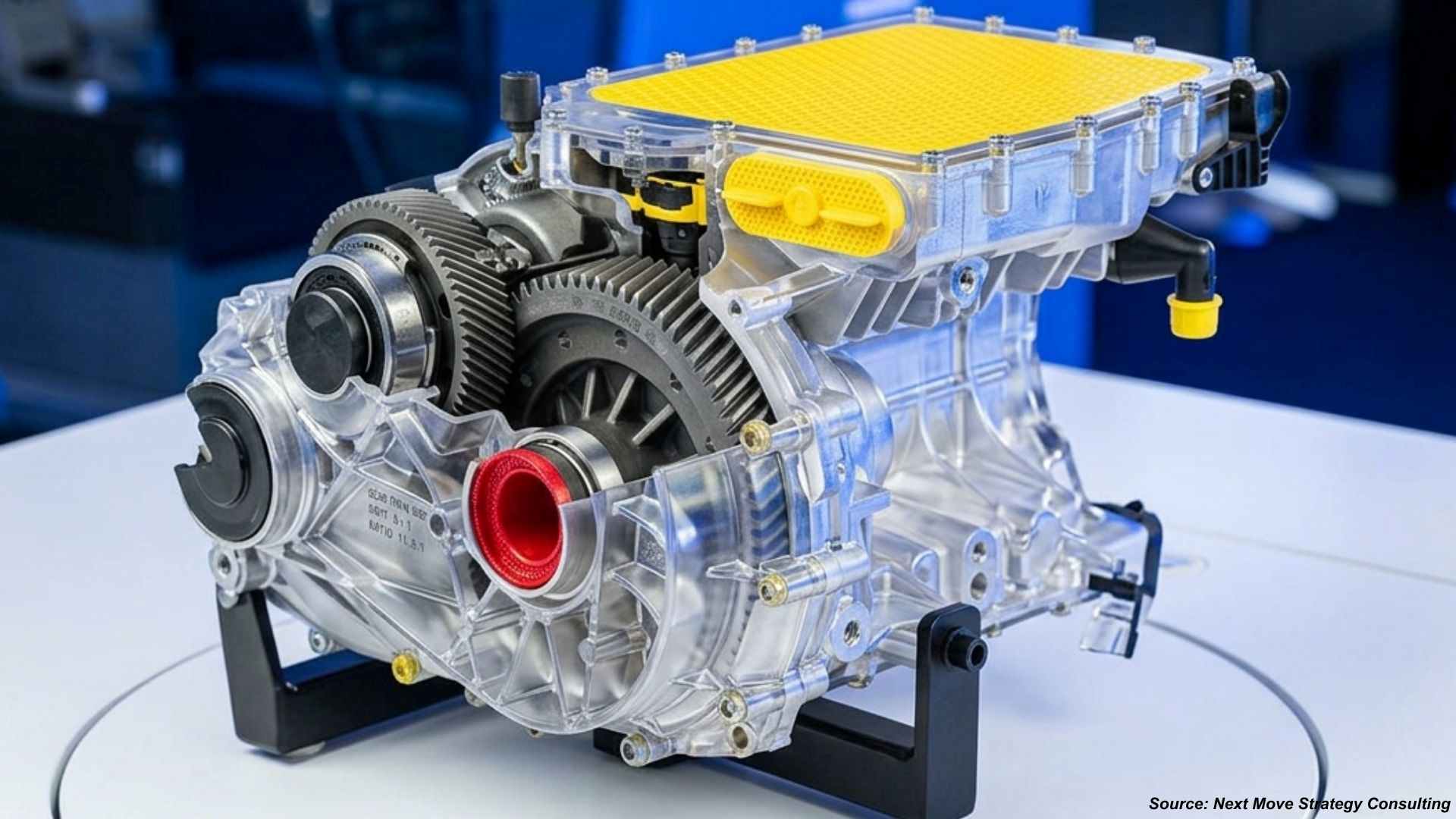
Electric Drives Market are at the heart of modern electric vehicles (EVs), converting electrical energy into motion with high efficiency and precision. As global mobility shifts toward electrification, advancements in electric drive systems are redefining performance, sustainability, and user experience. Recent developments from leading manufacturers and global studies highlight both technological breakthroughs and adoption challenges shaping this transformation. Electric drives are no longer niche components; they have become central to the future of transportation. They play a crucial role in enhancing vehicle efficiency, improving range, and supporting the transition toward cleaner mobility solutions.
Major Trends Shaping the Present: Electric Drives Evolution
The Volkswagen Group achieved a major milestone by producing 5 million electric drive units globally, reflecting large-scale industrialization of EV technologies. The Kassel plant alone increased output by approximately 24% year-on-year in 2025, producing over 850,000 units. Production is distributed across multiple global facilities, including Győr, Tianjin, and Zuffenhausen. This scale of production demonstrates that electric drives are transitioning into mainstream automotive manufacturing, supported by a strong global production network and consistent output growth.
Global EV Adoption Trends & Consumer Insights (2024–2025)
|
Metric |
Value |
Insight |
|
EV Purchase Intent |
14% |
Declined from 24% in 2024 |
|
Range Anxiety Concern |
29% |
Top barrier for consumers |
|
Charging Infrastructure Concern |
28% |
Major adoption challenge |
|
Battery Cost Concern |
28% |
Impacts buying decisions |
|
EV Owner Retention Rate |
78% |
High satisfaction among users |
|
ICE Owners Considering EV |
5% |
Low first-time adoption rate |
How Is Electric Drive Technology Improving Performance?
APP550: Efficiency Meets Power
The APP550 electric drive system represents a significant advancement in efficiency and performance. It delivers approximately 20% lower energy consumption compared to its predecessor, while increasing torque by around 75% and power output by roughly 40%. In series production, the system delivers up to 240 kW and 560 Nm of torque.The system also incorporates a combined oil and water cooling mechanism that enhances thermal efficiency without requiring an additional pump. These improvements contribute to better range, smoother acceleration, and reduced noise levels. Modern electric drives are therefore achieving higher efficiency while simultaneously enhancing overall vehicle performance, marking a significant step forward in EV engineering.
What Role Do Components Like Pulse Inverters Play?
Electric drives rely heavily on advanced electronics such as pulse inverters, which control the conversion and flow of electrical energy within the system. Volkswagen is developing in-house pulse inverters to strengthen its technological capabilities and reduce reliance on external suppliers.
These inverters enable faster product development, lower production costs, and greater manufacturing independence. Additionally, the use of silicon carbide as a semiconductor material enhances efficiency, improves vehicle range, and delivers better performance in everyday driving conditions. Pulse inverters are therefore emerging as critical components that influence both performance and cost efficiency in next-generation electric drives.
How Is Global EV Adoption Influencing Electric Drives?
Shifting Consumer Intent
According to EY’s Mobility Consumer Index, global consumer intent to purchase fully electric vehicles has declined, with only 14% planning to buy an EV in the next 24 months, compared to 24% in 2024. This shift is partly influenced by policy changes, including the removal of incentives in certain markets. Despite this short-term decline in intent, EV adoption continues to grow in key regions such as Europe and China. This indicates that while consumer sentiment may fluctuate, the long-term trajectory of electrification remains positive.
Electric Drive Performance Advancements (APP550 System)
|
Parameter |
Previous Generation |
APP550 Improvement |
|
Energy Consumption |
Higher baseline |
~20% lower |
|
Torque Output |
Standard |
~75% increase |
|
Power Output |
Moderate |
~40% increase |
|
Maximum Power |
Lower than 240 kW |
Up to 240 kW |
|
Maximum Torque |
Lower than 560 Nm |
Up to 560 Nm |
|
Cooling System |
Conventional |
Combined oil & water cooling |
What Are the Key Barriers to EV Adoption?
Consumer concerns continue to influence the pace of EV adoption. Range anxiety remains the most significant barrier, cited by 29% of respondents. Concerns about the lack of charging infrastructure and battery replacement costs follow closely, each identified by 28% of consumers. Interestingly, many modern EVs now offer ranges exceeding 250 miles, with some reaching over 400 miles. This highlights a gap between actual technological capabilities and consumer perception, indicating a need for better communication and awareness. These findings suggest that adoption challenges are not purely technological but are strongly influenced by perception and infrastructure visibility.
Do Consumers Stick with EVs Once They Switch?
A notable insight from the EY report is the strong retention rate among EV users. Approximately 78% of current EV owners intend to purchase another EV, while only 5% of internal combustion engine (ICE) vehicle owners are considering switching to electric. This indicates that once consumers experience electric mobility, they are highly likely to continue using it. The primary challenge, therefore, lies in encouraging first-time adoption rather than retaining existing users.
Performance Breakthrough (APP550)
The APP550 system delivers 20% lower energy consumption, 75% higher torque, and 40% greater power, highlighting significant efficiency and performance gains.

EV Adoption Reality Check
Global EV buying intent stands at 14%, with range anxiety affecting 29% of consumers, while 78% of EV owners remain committed to electric mobility.
This analysis is based on real-world industrial milestones and consumer behavior insights recorded in 2024 and 2025, reflecting current market dynamics. The discussion incorporates technical advancements in electric drive systems, including efficiency improvements, component innovation, and performance metrics.

Key Companies Driving Innovation in Electric Drives
The Electric Drives Market is shaped by a diverse group of global technology leaders and industrial specialists. Prominent players include Siemens AG, ABB Ltd., and Robert Bosch GmbH, alongside Danfoss A/S and Fuji Electric Co., Ltd., all of which contribute significantly to advancements in drive systems and automation technologies.
Companies such as Rockwell Automation, Inc., ZF Friedrichshafen AG, and Yaskawa Electric Corporation further strengthen the sector with their expertise in industrial and automotive solutions. In addition, Mitsubishi Electric Corporation, Nidec Motor Corporation, and WEG continue to expand innovation in motor and drive technologies, while Hitachi Hi-Rel Power Electronics Private Limited, Schneider Electric, TOSHIBA CORPORATION, and CG Power & Industrial Solutions Ltd. play vital roles in enhancing power electronics and energy-efficient systems across global markets.

Next Steps: What Should Stakeholders Do?
Stakeholders should prioritize improving consumer awareness regarding EV capabilities, particularly addressing misconceptions about range and performance. At the same time, enhancing the visibility and accessibility of charging infrastructure will play a critical role in building consumer confidence.
Focusing on first-time EV buyers is essential, as conversion at this stage significantly impacts long-term adoption trends. Continued innovation in electric drive components, including inverters and semiconductor materials, will further strengthen performance and cost efficiency.
Finally, aligning government policies with market needs, including stable incentives and infrastructure support, will help sustain momentum in EV adoption.
Final Thoughts
Electric drives are advancing rapidly, delivering improvements in efficiency, scalability, and performance. However, the pace of EV adoption depends not only on technological progress but also on consumer perception and infrastructure readiness.
While technology continues to evolve at a fast pace, addressing behavioral and informational barriers will be key to unlocking the full potential of electric mobility.
Next Steps: What Should Stakeholders Do?
-
Improve consumer awareness by clearly communicating real-world EV range, performance, and reliability to address perception gaps.
-
Expand and enhance the visibility of charging infrastructure to build confidence among potential buyers.
-
Focus on converting first-time EV buyers, as initial adoption strongly influences long-term market growth.
-
Continue innovation in electric drive components such as pulse inverters and semiconductor materials to improve efficiency and reduce costs.
-
Align policies and incentives with market needs to ensure stable and sustained EV adoption.
About the Author
 Tania Dey
— Tania Dey is a content writer specializing in transformation-led, insight-driven storytelling. She develops research-backed, high-impact content aligned with evolving business priorities, digital behavior, and audience expectations. Her work helps organizations sharpen value propositions, strengthen visibility, and communicate strategic intent with clarity and precision. Grounded in data-informed storytelling, she brings a strong focus on relevance, consistency, and measurable digital impact across platforms.
Tania Dey
— Tania Dey is a content writer specializing in transformation-led, insight-driven storytelling. She develops research-backed, high-impact content aligned with evolving business priorities, digital behavior, and audience expectations. Her work helps organizations sharpen value propositions, strengthen visibility, and communicate strategic intent with clarity and precision. Grounded in data-informed storytelling, she brings a strong focus on relevance, consistency, and measurable digital impact across platforms.
About the Reviewer
 Debashree Dey
— Debashree Dey is Assistant Manager at Next Move Strategy Consulting, where she supports cross-vertical market content and communications across diverse industries for 6 years. Her professional background includes senior content writing, communications, and published manuscript authorship, with experience developing audience-focused business narratives and maintaining clear, consistent messaging. Her role supports research-led content development and editorial quality across NextMSC publications.
Debashree Dey
— Debashree Dey is Assistant Manager at Next Move Strategy Consulting, where she supports cross-vertical market content and communications across diverse industries for 6 years. Her professional background includes senior content writing, communications, and published manuscript authorship, with experience developing audience-focused business narratives and maintaining clear, consistent messaging. Her role supports research-led content development and editorial quality across NextMSC publications.

















Add Comment