Ventilators Market: Statistics, Trends & Forecasts for 2026

Introduction
Every breath matters — and for millions of patients worldwide, that breath depends on a ventilator. The global ventilators market is undergoing one of the most consequential transformations in its history, driven by an escalating respiratory disease burden, the rapid integration of artificial intelligence into clinical care, and a regulatory environment that is demanding higher standards of device quality and post-market accountability.
According to the World Health Organization's June 2026 fact sheet, chronic obstructive pulmonary disease (COPD) is the third leading cause of death worldwide, responsible for 3.4 million deaths in 2023 — approximately 6% of all global fatalities. This staggering disease burden, compounded by aging global populations, rising tobacco use in low- and middle-income countries (LMICs), and worsening air quality in urban centers, is creating sustained, structural demand for ventilatory support across acute, sub-acute, and home care settings.
According to Next Move Strategy Consulting (NMSC), the global Ventilators Market was valued at USD 6.21 billion in 2023 and is projected to reach USD 10.08 billion by 2030, expanding at a CAGR of 7.2% from 2024 to 2030. This trajectory reflects not only the growing clinical imperative for respiratory support but also the technology-led value creation that is redefining competitive positioning across the industry. For C-level executives, institutional investors, and healthcare decision-makers, understanding the forces shaping this market is no longer optional — it is a strategic necessity.
For More Information: Download FREE Sample on Ventilators Market Report
AI Integration and Regulatory Dynamics: The Forces Reshaping the Ventilators Market
The AI Revolution in Respiratory Care
In April 2026, a GlobeNewswire press release from BCC Research highlighted a pivotal shift in the global medical ventilators market: artificial intelligence is no longer a peripheral feature but a core driver of product differentiation and clinical value. Healthcare systems worldwide are accelerating investments in AI-enabled respiratory care technologies to address rising critical care demands and operational efficiency pressures. Leading medical device manufacturers are embedding machine learning algorithms for ventilator weaning protocols, predictive maintenance, and real-time patient-ventilator interaction analysis. Cloud-based monitoring platforms are enabling healthcare providers to optimize ICU operations and extend ventilator management beyond traditional hospital settings — a development with profound implications for home care and sub-acute segments.
Hamilton Medical, one of the foremost innovators in ICU ventilation, exemplifies this trajectory. In March 2026, the company introduced an upgraded HAMILTON ventilator platform featuring enhanced lung-protective ventilation capabilities. The company's INTELLiVENT-ASV mode represents a closed-loop system that automatically controls oxygen delivery, minute ventilation, and PEEP using end-tidal CO2 and pulse oximetry readings — effectively reducing the cognitive burden on clinicians while improving patient outcomes. In December 2025, Hamilton Medical announced a cooperation with Timpel to introduce PulmoMap, an electrical impedance tomography device that connects to the HAMILTON-C6 ventilator and provides real-time lung ventilation visualization on a dedicated display. This development underscores the industry's movement toward sensor-rich, data-driven ventilation management.
ResMed, the global market leader in home and non-invasive ventilation, received FDA clearance in December 2025 for Smart Comfort, an AI-enabled feature that personalizes CPAP therapy based on individual patient data. The company's AirView cloud platform further enables remote monitoring of therapy data and device settings — a capability that is foundational to the emerging model of predictive respiratory care.
Advanced AI systems now use machine learning to adjust ventilation parameters based on patient-specific breathing patterns and real-time physiological data, with the clinical goals of predicting patient deterioration earlier, optimizing weaning, and reducing the risk of ventilator-induced lung injury.
Regulatory Landscape: Heightened Scrutiny and Quality Standards
The U.S. Food and Drug Administration (FDA) has maintained active oversight of the ventilators market throughout 2026, with several significant regulatory actions underscoring the importance of device quality and post-market surveillance. In May 2026, the FDA issued a recall for React Health VOCSN V+Pro Ventilators. In the same month, Philips issued a correction for its Trilogy Evo Platform Ventilators. ResMed issued corrections for its Astral Ventilator series in July 2026, and Hamilton Medical addressed a breathing circuit set recall in August 2026.
These regulatory actions reflect the FDA's rigorous post-market surveillance framework for life-sustaining devices and highlight the compliance challenges manufacturers face in maintaining product quality at scale. Critically, on June 29, 2026, the HHS Secretary determined that circumstances no longer justify the authorization of emergency use for ventilators — formally concluding the COVID-19 Emergency Use Authorization (EUA) framework that had been in place since the pandemic. This transition signals a definitive return to standard regulatory pathways and reinforces the importance of full premarket clearance for all ventilator products entering the U.S. market.
NMSC's Strategic Perspective on This Market Shift
From Next Move Strategy Consulting's analytical standpoint, the convergence of AI integration and heightened regulatory scrutiny represents a dual-edged dynamic for market participants. On one hand, AI-enabled ventilators command premium pricing and are increasingly preferred by hospital procurement committees seeking to optimize clinical outcomes and reduce ICU operational costs. On the other hand, the intensifying regulatory environment — particularly in the United States and European Union — is raising the barrier to entry for new market participants and increasing compliance costs for established players.
NMSC's analysis indicates that the ventilators market is undergoing a structural transition from volume-driven growth to value-driven differentiation. Manufacturers that invest in AI capabilities, cloud connectivity, and robust post-market surveillance systems will be best positioned to capture disproportionate market share as healthcare systems globally prioritize outcome-based procurement. The termination of COVID-19 EUAs further accelerates this transition, as it eliminates the expedited pathways that had allowed lower-specification devices to enter the market during the pandemic emergency period.
Section Summary:
The ventilators market is being reshaped by two powerful forces: the rapid integration of AI and digital health technologies, and an increasingly rigorous regulatory environment. These dynamics are simultaneously creating opportunities for innovation-led players and raising compliance barriers across the industry.
-
Hamilton Medical's March 2026 upgraded HAMILTON platform and INTELLiVENT-ASV closed-loop mode represent the frontier of automated ventilation in ICU settings.
-
ResMed's FDA-cleared Smart Comfort feature (December 2025) demonstrates the commercial viability of AI-personalized respiratory therapy.
-
The FDA's termination of COVID-19 ventilator EUAs in June 2026 marks a definitive return to standard regulatory pathways, raising the compliance bar for all manufacturers.
-
NMSC identifies value-driven differentiation — not volume — as the primary growth lever for ventilator manufacturers through 2030.
Industry Impact Analysis
The Respiratory Disease Burden: A Structural Demand Driver
The most fundamental driver of the global ventilators market is the escalating burden of respiratory disease worldwide. According to the World Health Organization's June 2026 fact sheet, COPD is the third leading cause of death globally, causing 3.4 million deaths in 2023 — approximately 6% of all global deaths. Nearly 90% of COPD deaths in individuals under 70 years of age occur in LMICs, where access to ventilatory support remains severely constrained.
Tobacco smoking accounts for over 70% of COPD cases in high-income countries, while household air pollution — primarily from biomass fuel combustion — is a major risk factor in LMICs. The WHO's inclusion of COPD in its Global Action Plan for the Prevention and Control of Noncommunicable Diseases underscores the disease's status as a global public health priority, with direct implications for ventilator demand across all care settings.
Beyond COPD, the aging of global populations is creating structural demand for ventilatory support. Elderly patients are disproportionately affected by respiratory conditions, cardiac complications requiring post-surgical ventilation, and neuromuscular diseases that necessitate long-term mechanical ventilation. This demographic trend is particularly pronounced in Asia-Pacific markets, where countries such as China, Japan, and South Korea are experiencing rapid population aging alongside rising rates of respiratory disease. According to NMSC, Asia-Pacific is expected to witness steady growth in the ventilators market during the forecast period, driven by the presence of a large geriatric population and growing cases of tuberculosis.
Market Consolidation and Competitive Realignment
The competitive landscape of the ventilators market has undergone significant realignment over the past 12 months. In October 2024, ZOLL Medical (an Asahi Kasei company) completed its acquisition of select Vyaire Medical ventilator product lines — including the Bellavista, Fabian, LTV, and 3100 HFOV lines — following Vyaire's Chapter 11 proceedings. This acquisition substantially expanded ZOLL's respiratory portfolio across acute care, neonatal, and portable settings, making it one of the few companies capable of serving that many care environments from a single product catalog.
Simultaneously, Medtronic has publicly announced plans to wind down and exit its ventilator product line, while continuing service and support obligations for installed systems. This strategic withdrawal by a major incumbent creates meaningful market share opportunities for remaining players, particularly in the acute care and ICU segments. The Philips Respironics recall legacy continues to influence market dynamics, having created an opening that ResMed has leveraged to extend its leadership position across the broader respiratory and sleep management market.
Home Care and Portable Ventilation: The Fastest-Growing Segment
One of the most consequential structural shifts in the ventilators market is the migration of respiratory care from hospital settings to home and sub-acute environments. Advances in battery technology, miniaturization, and wireless connectivity have made portable ventilators increasingly viable for long-term home use. Cloud-connected devices enable clinicians to monitor patient compliance and clinical parameters in real time, reducing the need for in-person follow-up visits and lowering the overall cost of care delivery.
This shift is being actively encouraged by healthcare payers and government health systems seeking to reduce the cost of inpatient care. The FDA's READI-Home Innovation Challenge (launched in 2026) specifically targets device innovation for home-based care, signaling regulatory support for the expansion of home ventilation solutions. According to NMSC, home care settings represent one of the most significant growth opportunities in the ventilators market through 2030, alongside hospitals and clinics, ambulatory care centers, and emergency medical services.
Section Summary:
The ventilators market is being driven by a convergence of structural demand factors — including the global COPD burden, aging demographics, and the shift toward home-based care — alongside significant competitive realignment driven by acquisitions, market exits, and product innovation.
-
WHO data confirms COPD as the third leading cause of global mortality, with 3.4 million deaths in 2023, creating sustained and growing demand for ventilatory support.
-
ZOLL Medical's acquisition of Vyaire Medical's ventilator lines (October 2024) and Medtronic's market exit are fundamentally reshaping the competitive landscape.
-
The home care segment is emerging as the fastest-growing end-user category, supported by portable device innovation and regulatory incentives such as the FDA's READI-Home Innovation Challenge.
-
Asia-Pacific represents a high-growth regional opportunity driven by aging populations, rising respiratory disease prevalence, and increasing government investment in critical care infrastructure.
Key Data & Statistics
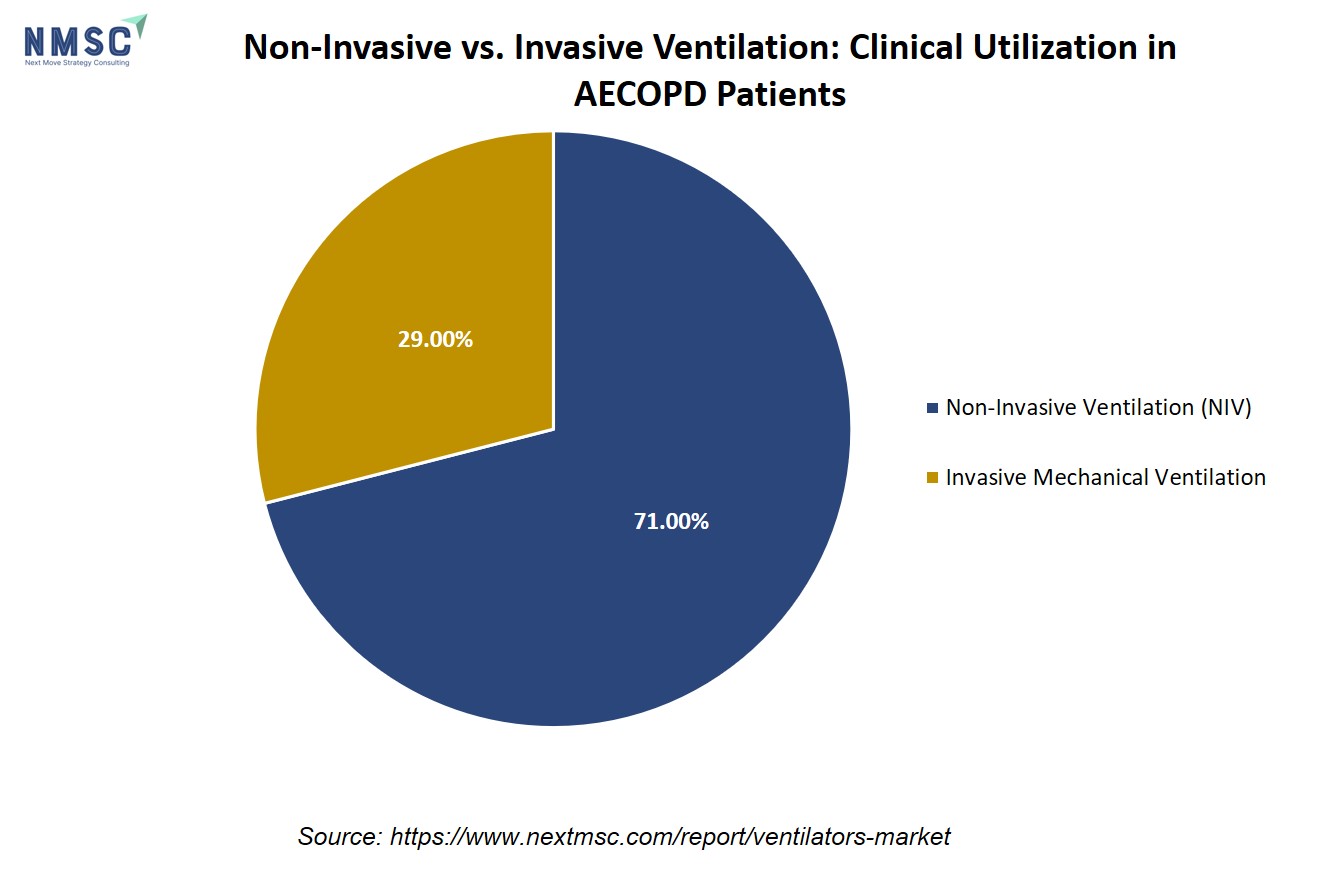
Key Regulatory and Industry Events Impacting the Ventilators Market (2024–2026)
|
Date |
Event |
Entity |
Significance |
|
October 2024 |
Acquisition of Vyaire Medical ventilator product lines (Bellavista, Fabian, LTV, 3100 HFOV) |
ZOLL Medical / Asahi Kasei |
Major portfolio expansion across acute, neonatal, and portable segments |
|
December 2025 |
FDA clearance for Smart Comfort AI-enabled CPAP therapy personalization feature |
ResMed |
First AI-personalized therapy feature cleared for home ventilation; strengthens ResMed's digital health platform |
|
December 2025 |
Cooperation with Timpel to introduce PulmoMap electrical impedance tomography device |
Hamilton Medical |
Real-time lung ventilation visualization integrated with HAMILTON-C6 ventilator |
|
March 2026 |
Launch of upgraded HAMILTON ventilator platform with enhanced lung-protective ventilation |
Hamilton Medical |
Advances closed-loop automation and lung-protective ventilation in ICU settings |
|
May 21, 2026 |
Recall of VOCSN V+Pro Ventilators |
React Health / FDA |
Post-market safety action; reinforces FDA's active oversight of life-sustaining devices |
|
May 28, 2026 |
Correction for Trilogy Evo Platform Ventilators |
Philips / FDA |
Ongoing quality management challenges for Philips respiratory portfolio |
|
June 29, 2026 |
Termination of COVID-19 Emergency Use Authorizations for ventilators |
HHS / FDA |
Return to standard regulatory pathways; higher compliance requirements for all manufacturers |
|
July–August 2026 |
Corrections for Astral Ventilator series; Breathing Circuit Set recall |
ResMed / Hamilton Medical / FDA |
Demonstrates active post-market surveillance; underscores compliance demands on market leaders |
Future Outlook & Forecast
Market Trajectory Through 2030
According to Next Move Strategy Consulting, the global ventilators market is projected to grow USD 10.08 billion by 2030, at a CAGR of 7.2%. This growth trajectory is underpinned by several converging forces that are expected to sustain demand across the forecast period: the proliferation of AI-enabled ventilation modes, the expansion of home care and portable ventilation, the growing burden of chronic respiratory diseases, and increasing government investment in critical care infrastructure across emerging markets.
North America is expected to maintain its dominant market position through 2030, supported by a large base of respiratory disease patients, high healthcare expenditure, and a favorable regulatory environment for medical device innovation. According to the Centers for Disease Control and Prevention (CDC), 30.8 million adults in the United States were engaged in cigarette smoking as of 2020 — a figure that translates directly into long-term demand for respiratory care devices.
Asia-Pacific is projected to be the fastest-growing regional market, driven by aging populations in China, Japan, and South Korea, rising tuberculosis burden in India and Southeast Asia, and increasing government investment in critical care infrastructure. The introduction of low-cost mechanical ventilators in the region is expected to further accelerate market penetration, particularly in rural and semi-urban healthcare settings.
Strategic Implications for the Ventilators Market
The ventilators market is transitioning from a volume-driven commodity segment to a value-driven, technology-differentiated market. The key strategic implications for the forecast period include:
1. AI and Digital Health Integration: Manufacturers that successfully embed AI capabilities — including predictive analytics, closed-loop automation, and cloud-based remote monitoring — will command premium pricing and preferred vendor status with hospital procurement committees. The convergence of AI technology and medical ventilation represents a fundamental shift in respiratory care delivery, driven by increasing demand for critical care capacity and the digitization of patient monitoring systems.
2. Home Care Expansion: The shift toward home-based ventilation represents the most significant structural growth opportunity in the market. Companies with established cloud connectivity platforms are best positioned to capture this segment, as telemedicine and remote patient monitoring become standard components of COPD and sleep apnea management.
3. Emerging Market Penetration: Low-cost, portable ventilator solutions tailored for LMIC healthcare systems represent a substantial untapped opportunity, particularly given the WHO's emphasis on expanding respiratory care access in regions where nearly 90% of COPD deaths in those under 70 occur.
4. Regulatory Compliance as a Competitive Advantage: In an environment of heightened FDA and international regulatory scrutiny, manufacturers with robust quality management systems and post-market surveillance capabilities will face fewer disruptions and maintain stronger market positions. The FDA's active posture in 2026 — including multiple ventilator corrections and the formal termination of COVID-19 EUAs — makes compliance infrastructure a genuine competitive differentiator.
Section Summary:
The global ventilators market is on a sustained growth trajectory through 2030, driven by AI integration, home care expansion, and rising respiratory disease burden. NMSC projects the market to reach USD 10.08 billion by 2030 at a 7.2% CAGR, with North America maintaining dominance and Asia-Pacific emerging as the fastest-growing region.
-
AI-enabled ventilation and cloud-based remote monitoring are the primary technology differentiators for the forecast period, with government and healthcare system investments increasingly prioritizing AI-enabled devices.
-
Asia-Pacific is the fastest-growing regional market, driven by aging demographics, rising respiratory disease prevalence, and government investment in critical care infrastructure.
-
Home care settings represent the most significant structural growth opportunity, supported by portable device innovation, telemedicine adoption, and regulatory incentives such as the FDA's READI-Home Innovation Challenge.
Next Steps for Stakeholders
For Hospital Procurement Officers and Healthcare System Administrators:
-
Prioritize AI-enabled ventilator platforms in procurement cycles, with particular attention to closed-loop automation capabilities and cloud-based remote monitoring integration.
-
Evaluate total cost of ownership — including training, maintenance, and software licensing — rather than unit acquisition cost alone, as AI-enabled platforms deliver measurable reductions in ICU operational costs over time.
-
Develop contingency procurement strategies in light of ongoing product corrections and recalls from major manufacturers, ensuring supply chain resilience for life-sustaining devices.
For Medical Device Manufacturers:
-
Accelerate investment in AI algorithm development and clinical validation to meet the growing demand for evidence-based automated ventilation. The competitive window for first-mover advantage in AI-enabled ventilation is narrowing rapidly.
-
Strengthen post-market surveillance systems to navigate the FDA's heightened oversight environment and avoid costly recalls that damage brand equity and market position.
-
Develop tiered product portfolios that address both premium ICU markets in high-income countries and cost-sensitive home care and LMIC markets, where the WHO has identified significant unmet need.
For Investors and Private Equity:
-
The ventilators market's 7.2% CAGR through 2030 (NMSC) presents a compelling long-term investment thesis, particularly in companies with established AI capabilities, cloud connectivity platforms, and diversified end-user exposure.
-
Monitor the competitive implications of Medtronic's market exit and the ongoing integration of Vyaire Medical's product lines into ZOLL Medical's portfolio, as these dynamics will continue to reshape market share distribution through 2027.
-
Assess the regulatory risk profile of portfolio companies, given the FDA's active post-market surveillance posture in 2026 and the return to standard premarket clearance requirements following the termination of COVID-19 EUAs.
For Healthcare Policymakers:
-
Leverage the WHO's COPD management frameworks and the FDA's READI-Home Innovation Challenge as models for expanding home-based ventilation access and reducing the burden on acute care facilities.
-
Invest in healthcare infrastructure in LMICs to address the disproportionate COPD mortality burden in these regions, where nearly 90% of COPD deaths in those under 70 occur, and where access to ventilatory support remains critically limited.
Conclusion
The global ventilators market is at a defining moment in its evolution. The convergence of an escalating respiratory disease burden — anchored by COPD's status as the third leading cause of global mortality, with 3.4 million deaths in 2023 — with the rapid integration of artificial intelligence, cloud connectivity, and portable device innovation is creating a market that is simultaneously larger, more complex, and more competitive than at any prior point in its history.
According to Next Move Strategy Consulting, the ventilators market is projected to grow from USD 6.21 billion in 2023 to USD 10.08 billion by 2030 at a CAGR of 7.2% — a trajectory that reflects both the structural demand drivers and the technology-led value creation that are reshaping the industry. The FDA's active regulatory posture in 2026, including the formal termination of COVID-19 EUAs and multiple product corrections across leading manufacturers, underscores the importance of quality and compliance as foundational competitive requirements in this market.
For C-level executives, investors, and healthcare decision-makers, the ventilators market in 2026 presents a clear strategic imperative: invest in AI-enabled innovation, expand into home care settings, and build the regulatory resilience necessary to operate in an increasingly scrutinized environment. Those who act decisively on these imperatives will be best positioned to capture the substantial growth opportunities that lie ahead in this critical segment of the global medical device industry.
About the Author
 Sanyukta Deb
— Sanyukta Deb is Digital Marketing Team Lead at Next Move Strategy Consulting, where she has led content strategy and technical SEO for the firm's B2B market research publications for over 2 years. Her editorial process translates NextMSC's primary and secondary research — spanning technology, industrial, and consumer sectors — into commercial narratives, backed by search-intent, keyword, and competitive analysis. She brings 5 years of overall experience in digital marketing and content strategy.
Sanyukta Deb
— Sanyukta Deb is Digital Marketing Team Lead at Next Move Strategy Consulting, where she has led content strategy and technical SEO for the firm's B2B market research publications for over 2 years. Her editorial process translates NextMSC's primary and secondary research — spanning technology, industrial, and consumer sectors — into commercial narratives, backed by search-intent, keyword, and competitive analysis. She brings 5 years of overall experience in digital marketing and content strategy.
About the Reviewer
 Debashree Dey
— Debashree Dey is Assistant Manager at Next Move Strategy Consulting, where she supports cross-vertical market content and communications across diverse industries for 6 years. Her professional background includes senior content writing, communications, and published manuscript authorship, with experience developing audience-focused business narratives and maintaining clear, consistent messaging. Her role supports research-led content development and editorial quality across NextMSC publications.
Debashree Dey
— Debashree Dey is Assistant Manager at Next Move Strategy Consulting, where she supports cross-vertical market content and communications across diverse industries for 6 years. Her professional background includes senior content writing, communications, and published manuscript authorship, with experience developing audience-focused business narratives and maintaining clear, consistent messaging. Her role supports research-led content development and editorial quality across NextMSC publications.


















Add Comment