How Are Leading CPOs Powering the Digital and Infrastructure Transformation of the Global EV Charge Point Operator (CPO) Market?
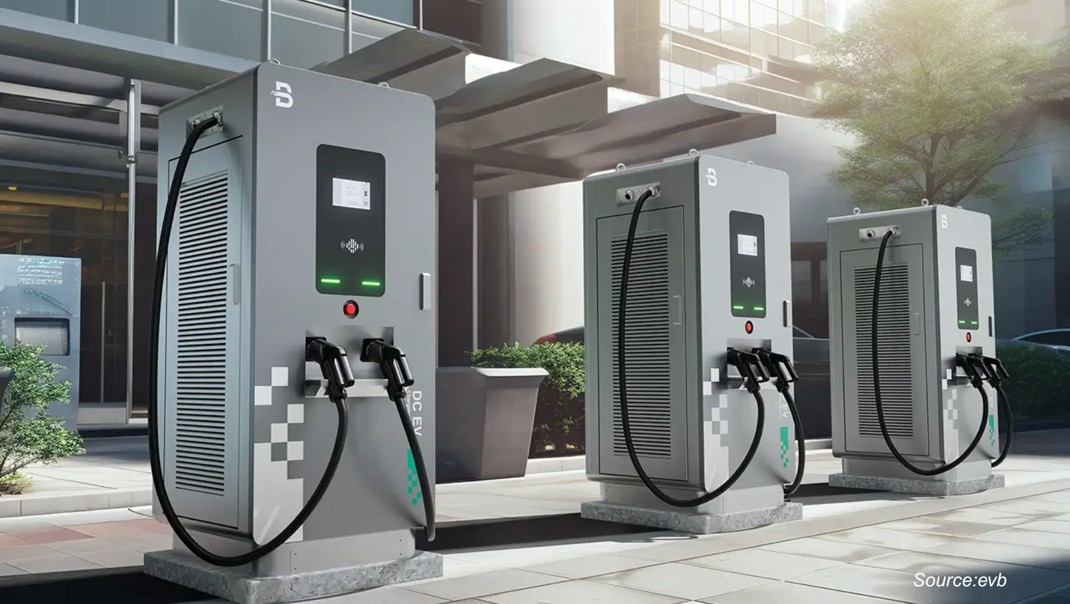
Based on NMSC’s assessment, we found that the EV Charge Point Operator (CPO) Market is expected to maintain steady growth momentum, with the market size projected to reach approximately USD 80.34 billion by 2035. We observed that the market was valued at around USD 11.22 billion in 2025 and is estimated to rise to USD 14.24 billion by 2026, reflecting a CAGR of 21.19%. The market is witnessing accelerated transformation driven by the rapid expansion of ultra-fast charging infrastructure, integration of energy management systems, and deployment of digitally enabled charging networks. As electric mobility adoption scales globally, operators are evolving from basic infrastructure providers into technology-driven energy and mobility platforms.
The integration of smart charging, real-time network monitoring, and data-driven optimization is enhancing charging efficiency, improving user experience, and increasing asset utilization. Moreover, we noticed that the growing emphasis on high-power charging corridors, fleet electrification, and seamless payment interoperability is pushing operators to develop scalable and interconnected charging ecosystems. This transformation is enabling faster charging access, optimized network performance, and improved reliability, ultimately positioning CPOs as critical enablers of a connected and electrified global mobility landscape.
EV Charge Point Operator (CPO) Market Overview
Based on our assessment of the EV charging ecosystem, we identified that the EV charge point operator market is evolving rapidly as transportation systems shift toward electrification and energy systems become increasingly decentralized. We observed that CPOs play a central role in enabling seamless and scalable electric mobility by deploying, operating, and maintaining charging infrastructure across residential, commercial, and public environments. Moreover, we found that they function as key intermediaries connecting EV users, energy providers, and mobility platforms while ensuring reliable access to charging services. In addition, our analysis indicates that market growth is being driven by rising EV adoption, supportive regulatory frameworks, and increasing investments in charging infrastructure. As a result, the expansion of public charging networks, combined with the growing need for high-capacity and accessible solutions, is reinforcing the strategic importance of CPOs in enabling large-scale EV adoption.
Furthermore, we observed that technological innovation is significantly transforming the operational landscape of the CPO market. Operators are increasingly integrating advanced software platforms, smart charging technologies, and energy management systems to optimise network performance and enhance service delivery. In particular, we identified that real-time data analytics, predictive maintenance, and dynamic load management are improving energy efficiency while reducing downtime. Additionally, the integration of digital payment systems, roaming capabilities, and user-centric applications is strengthening convenience and accessibility. At the same time, our assessment shows that the incorporation of energy storage and grid-interactive capabilities is enabling participation in broader energy ecosystems. Consequently, these advancements, combined with a strong focus on efficiency, reliability, and scalability, are positioning CPOs as critical enablers of a smart, connected, and energy-integrated mobility ecosystem.
Moreover, we identified that leading companies such as Tesla Supercharger Network, EVgo, Shell Recharge, and IONITY are actively shaping the competitive landscape through continuous infrastructure expansion and technological innovation. These players are focusing on ultra-fast charging deployment, strategic site selection, and integration of digital platforms to enhance network efficiency and user experience. In addition, our analysis indicates that investments in high-power charging hubs, interoperable systems, and energy management solutions are improving accessibility and utilisation across charging environments. As these companies scale infrastructure and strengthen reliability, we found that they are redefining service delivery standards, thereby positioning CPOs at the core of a connected and sustainable global mobility ecosystem.

Curious about the EV Charge Point Operator (CPO) Market? Download Your FREE Sample Report Now
Highlights of Tesla

Tesla Supercharger Network, developed and operated by Tesla, Inc., is one of the most extensive and technologically advanced EV fast-charging networks globally, supporting long-distance travel and high-frequency charging use cases across North America, Europe, and Asia. From our analysis of global charging infrastructure deployment patterns, we recognize Tesla as a vertically integrated operator that combines vehicle manufacturing, proprietary software ecosystems, and charging infrastructure within a unified platform. As a result, this integration enables seamless user authentication, optimized charging performance, and consistently high uptime across its network. In the context of the EV charge point operator (CPO) market, we observe that Tesla’s deployment strategy is closely aligned with increasing demand for ultra-fast charging, corridor-based infrastructure, and standardized user experience, thereby strengthening its position in high-utilization charging environments.
In November 2025, Tesla launched its first integrated Tesla Center in Gurugram, India, combining retail, delivery, and V4 Supercharging infrastructure as part of its structured entry into a high-growth market. Furthermore, in December 2025, the company operationalized its Supercharging facility at the same location, incorporating high-power chargers to support scalable deployment. In parallel, Tesla continued expanding Supercharger access to non-Tesla EVs across North America and Europe, thereby broadening its user base beyond its proprietary ecosystem. From our assessment, the India launch reflects a geographic expansion strategy, while network opening represents a utilization and monetisation strategy. Consequently, these developments enhance throughput, improve asset efficiency, and reinforce Tesla’s transition toward a more open and scalable EV charging infrastructure model.
Highlights of Shell Recharge

Shell Recharge, headquartered in the Netherlands and operated by Shell plc, is a leading player in the EV charge point operator (CPO) market, offering comprehensive public and semi-public charging solutions across Europe, North America, and selected international markets. We observed that by continuously expanding its portfolio of AC and DC fast chargers, ultra-fast hubs, and smart charging platforms, Shell Recharge has transformed EV charging from a basic utility into a convenient, user-friendly, and digitally integrated service. Our analysis indicates that its extensive network of urban, highway, and commercial charging points enables broad accessibility for private EV drivers, fleet operators, and corporate clients, supporting both short-range urban commuting and long-distance travel.
In August 2025, Shell Recharge, through Shell’s broader mobility strategy, continued expanding its high-power charging network across Europe and North America, with a strong focus on ultra-fast chargers deployed at existing retail forecourts and urban mobility hubs. From our assessment, we noticed that the expansion of charging infrastructure at fuel retail sites reflects alocation-leveraging strategy, while its growing fleet-focused solutions indicate a commercial demand capture strategy. Consequently, these initiatives are enhancing network utilization, improving return on infrastructure investments, and positioning Shell Recharge as a key player in bridging traditional energy retail with next-generation electric mobility ecosystems.
Highlights of BP Pulse
BP Pulse, the electric vehicle charging subsidiary of BP plc, operates as a rapidly expanding global charge point operator with a strong presence across North America and Europe, leveraging BP’s extensive fuel retail and energy infrastructure network. From our analysis of charging network deployment strategies, we recognize BP Pulse as a location-centric operator that strategically utilizes high-traffic sites such as fuel stations, highways, and airport corridors to maximize accessibility and utilization. This approach enables the company to combine energy supply capabilities with mobility services, thereby enhancing charging convenience and network reliability. In the context of the EV charge point operator (CPO) market, we observe that BP Pulse’s infrastructure strategy is closely aligned with rising demand for ultra-fast charging, fleet-oriented solutions, and amenity-rich charging environments, particularly in high-density urban and transit locations.
In October 2025, BP Pulse launched a 40-bay ultra-fast EV charging hub near Houston’s William P. Hobby Airport, equipped with 150 kW DC fast chargers and designed to serve ride-hailing drivers, rental fleets, and public user. Furthermore, throughout 2025, the company expanded its airport-focused charging strategy through partnerships with fleet operators such as Hertz, deploying hubs across major transit locations including Los Angeles, Boston, and San Francisco. From our evaluation, we noticed that the Houston hub reflects a high-utilization site strategy, while airport expansion represents a fleet and transit demand capture strategy. Consequently, these initiatives enhance network throughput, improve asset efficiency, and strengthen BP Pulse’s positioning as a scalable, high-traffic charging network operator within the global CPO market.
Highlights of Fastned
Fastned, headquartered in Amsterdam, Netherlands, is a leading European EV charge point operator specializing in ultra-fast charging infrastructure along highways and high-traffic transit corridors. From our analysis of European charging network deployment models, we recognize Fastned as a corridor-focused operator with a strong emphasis on premium, high-visibility charging stations designed to support long-distance electric mobility. Its standardized station architecture and high-power charging capabilities enable consistent user experience and operational reliability across geographies. In the context of the EV charge point operator (CPO) market, we observe that Fastned’s strategy is closely aligned with increasing demand for ultra-fast, en-route charging solutions, particularly as cross-border EV adoption accelerates across Europe.
During 2025, the company expanded its network to over 400 stations across nine countries, including entry into new markets such as Italy and Spain, alongside upgrades to existing high-utilization locations. From our primary research, we found that the financing initiative reflects a capital-backed scaling strategy, while network expansion and upgrades indicate a densification and utilization optimization strategy. Consequently, these developments strengthen Fastned’s ability to scale efficiently, improve station throughput, and reinforce its positioning as a premium, high-performance charging network operator within the European CPO market.
Highlights of Electrify America
Electrify America, a subsidiary of Volkswagen Group of America headquartered in Reston, Virginia, operates one of the largest open DC fast-charging networks in the United States, supporting multi-brand EV charging across public and commercial use cases. From our analysis of U.S. charging infrastructure strategies, we determined Electrify America as a scale-focused operator designed to enable mass EV adoption through open-access, high-power charging networks. Its deployment across highways, retail corridors, and urban centers ensures broad accessibility, while support for multiple connector standards strengthens interoperability. In the context of the EV charge point operator (CPO) market, we observe that Electrify America’s model is closely aligned with the industry shift toward open ecosystem charging, where cross-brand compatibility and network neutrality are becoming critical for maximizing utilization and long-term infrastructure relevance.
From our assessment of operational strategy, we identified that Electrify America is increasingly prioritizing high-capacity station formats, ultra-fast charging capabilities, and network standardization to improve throughput and reliability. The company’s focus on large-format charging hubs and consistent high-power deployment reflects a performance optimization approach aimed at reducing dwell time and increasing asset efficiency. In parallel, its emphasis on open network access enables broader EV adoption by accommodating diverse vehicle platforms without ecosystem restrictions. Consequently, Electrify America is positioning itself as a foundational infrastructure provider within the U.S. EV ecosystem, where scalability, interoperability, and network performance are critical to sustaining long-term competitive advantage in the CPO market.
Summary of EV Charge Point Operator (CPO) Market
The EV charge point operator (CPO) market is undergoing rapid transformation driven by accelerating EV adoption and rising demand for reliable, high-performance charging infrastructure. Based on our analysis, we observed that operators are prioritizing ultra-fast charging, strategic site deployment, and scalable networks to improve utilization and meet growing demand. In parallel, increasing focus on uptime, interoperability, and seamless user experience is driving the adoption of digitally enabled platforms, including real-time monitoring and smart energy management systems.
Furthermore, our evaluation indicates that energy integration and fleet electrification are key growth drivers shaping the market. The incorporation of grid connectivity, demand response, and energy optimization solutions is enhancing operational efficiency and enabling new revenue streams. As investment in high-capacity infrastructure and digital ecosystems continues to expand, CPOs are evolving into critical enablers of a connected and scalable electric mobility ecosystem.
About the Author
 Sikha Haritwal
— Sikha Haritwal is an assistant manager with strong expertise in market research, data analysis, and cross-functional coordination. She plays a key role in leading complex research initiatives, strengthening analytical rigor, and enabling data-driven decision-making across teams. Known for her leadership mindset and structured problem-solving approach, she supports process improvement, enhances operational efficiency, and contributes to building scalable frameworks that drive long-term strategic outcomes and organizational effectiveness.
Sikha Haritwal
— Sikha Haritwal is an assistant manager with strong expertise in market research, data analysis, and cross-functional coordination. She plays a key role in leading complex research initiatives, strengthening analytical rigor, and enabling data-driven decision-making across teams. Known for her leadership mindset and structured problem-solving approach, she supports process improvement, enhances operational efficiency, and contributes to building scalable frameworks that drive long-term strategic outcomes and organizational effectiveness.
About the Reviewer
 Supradip Baul
— Supradip Baul is an accomplished business consultant and strategist with over a decade of rich experience in market intelligence, strategy, technology, and business transformation. His work has included rigorous qualitative and quantitative analysis across multiple industries, helping clients shape investment decisions and long-term roadmaps. Earlier in his career, he was associated with Gartner, where he contributed to industry-leading reports and market share analyses. He has worked with leading global companies and holds an MBA with a dual specialization in Marketing and Finance.
Supradip Baul
— Supradip Baul is an accomplished business consultant and strategist with over a decade of rich experience in market intelligence, strategy, technology, and business transformation. His work has included rigorous qualitative and quantitative analysis across multiple industries, helping clients shape investment decisions and long-term roadmaps. Earlier in his career, he was associated with Gartner, where he contributed to industry-leading reports and market share analyses. He has worked with leading global companies and holds an MBA with a dual specialization in Marketing and Finance.

















Add Comment