How Are Personalized Skincare Solutions Reshaping Cosmeceuticals?

The Cosmeceuticals Market is evolving beyond traditional beauty products as consumers increasingly seek skincare solutions backed by science and tailored to individual needs. Rather than relying on generalized treatments, companies are focusing on personalized skincare programs that combine biotechnology, wellness, and dermatological expertise. This transformation is creating a more research-driven and consumer-centric approach to skincare.
Why Is Personalized Skincare Becoming More Important?
Consumers today expect skincare products to address specific concerns such as aging, acne, hyperpigmentation, and overall skin wellness. This shift is encouraging companies to move toward individualized treatments instead of universal formulations.
According to Bio-Xin Cosmeceuticals’ February 2026 announcement, the company plans to expand its personalized skincare solutions globally while continuing to focus on science-backed care models. The company stated that its treatments are designed around individual skin biology, lifestyle factors, and unique skincare requirements.
Muhammad Zahidul Hoque explained that personalization represents the future of skincare because every person’s skin behaves differently and requires customized attention.
This approach reflects a broader industry trend where skincare brands are attempting to create more targeted and long-term solutions rather than temporary cosmetic improvements.
How Is Biotechnology Influencing Cosmeceutical Innovation?
Biotechnology is becoming one of the most influential factors in the development of modern cosmeceuticals. Companies are increasingly relying on scientific research to improve skincare precision, treatment effectiveness, and product safety.
Bio-Xin Cosmeceuticals was founded in 2015 after Muhammad Zahidul Hoque identified a gap in Bangladesh’s market for advanced and science-driven skincare solutions. Drawing from his biotechnology and pharmaceutical background, he developed a model that integrates aesthetic care, wellness, and biotechnology into personalized skincare services.

|
Biotechnology Trend |
Industry Impact |
|
Research-based formulations |
Improves product credibility |
|
Personalized skin analysis |
Enables targeted treatments |
|
Clinical skincare development |
Increases consumer confidence |
|
Wellness integration |
Expands skincare applications |
What Does Clinical Skin’s Glytone Acquisition Reveal About Industry Direction?
Strategic acquisitions are becoming increasingly important as companies seek to strengthen their dermatological expertise and product portfolios.
In March 2024, Clinical Skin acquired Glytone from Pierre Fabre Laboratories as part of its expansion strategy within the cosmeceutical skincare segment. Glytone has established recognition for clinically effective dermatological products targeting aging, acne, and hyperpigmentation concerns.
The acquisition reflects a growing industry preference for skincare products supported by clinical efficacy and dermatologist trust. Executives from both organizations highlighted the importance of maintaining quality standards and strengthening innovation capabilities through the merger.
This development also signals that consumers are becoming more selective about skincare brands and increasingly value products with established scientific credibility.
Major Trends Shaping the Present Cosmeceuticals Landscape
Several trends are currently influencing the future direction of cosmeceuticals. Personalized skincare remains one of the strongest growth drivers as brands focus on creating individualized treatment experiences. At the same time, clinical validation is becoming increasingly important because consumers are demanding visible and scientifically supported results.
Another noticeable trend is the integration of wellness into skincare programs. Companies are no longer focusing solely on cosmetic appearance but are also connecting skincare with broader health and lifestyle goals. Strategic acquisitions are further accelerating innovation by allowing companies to combine research capabilities, dermatological expertise, and product development resources.
|
Emerging Trend |
Market Influence |
|
Personalized skincare |
Higher consumer engagement |
|
Clinical product validation |
Stronger brand trust |
|
Wellness-oriented skincare |
Expanded treatment models |
|
Strategic acquisitions |
Faster innovation growth |
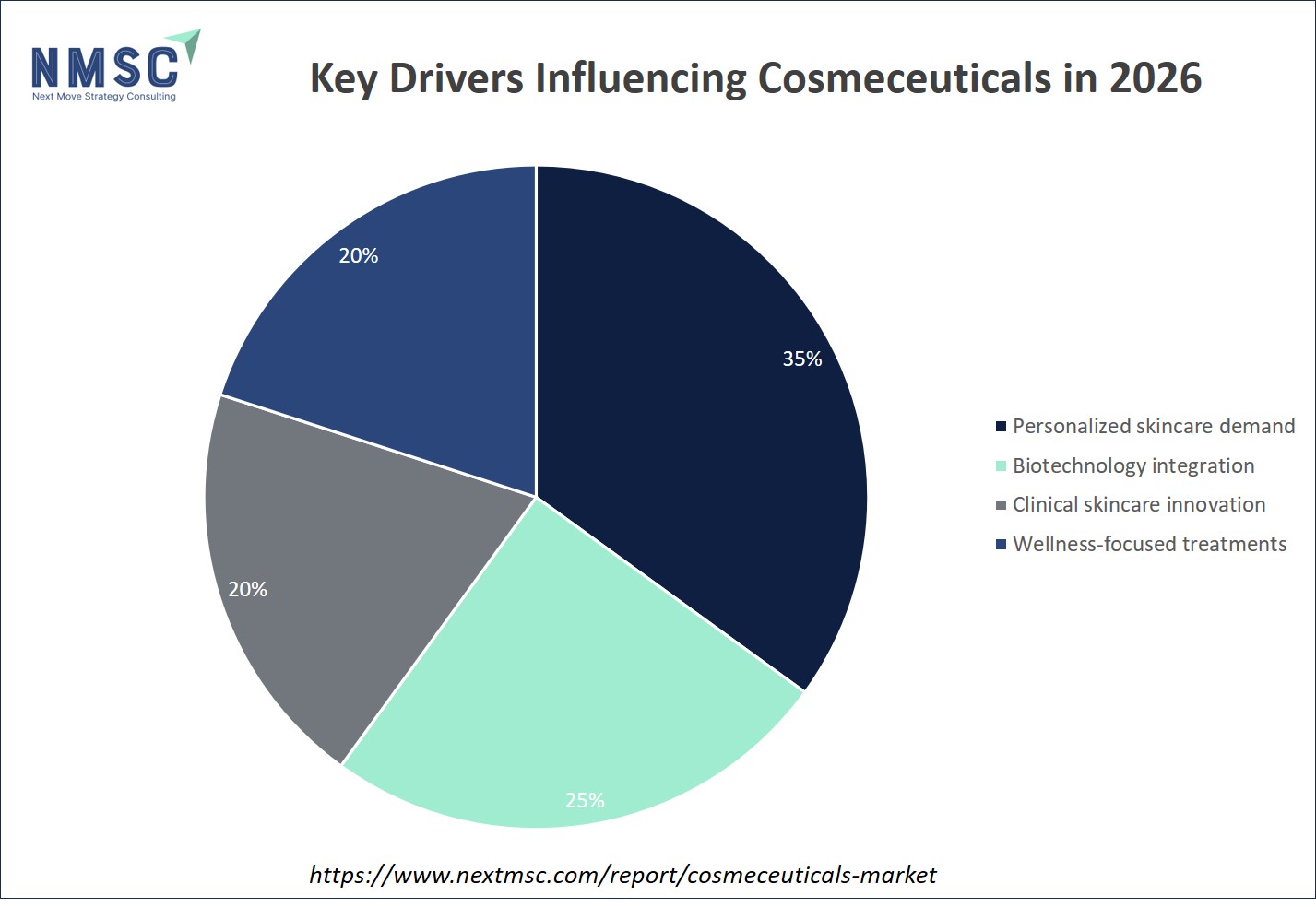
Key Drivers Influencing Cosmeceuticals in 2026
The pie chart highlights the major factors shaping the cosmeceuticals industry in 2026, with personalized skincare demand emerging as the strongest driver. The chart reflects how consumer preferences are shifting toward science-backed, customized, and wellness-oriented skincare solutions.
Personalized skincare demand accounts for 35% of the overall influence, making it the leading growth factor in the industry. This reflects the increasing consumer preference for products and treatments designed according to individual skin biology, lifestyle, and specific skin concerns.
Biotechnology integration contributes 25% to the industry’s transformation. Companies are increasingly using biotechnology and clinical research to improve skincare formulations, treatment precision, and product effectiveness. This trend is helping brands strengthen scientific credibility and consumer trust.
Clinical skincare innovation represents 20% of the market influence. The growing emphasis on dermatologist-supported products, clinically validated ingredients, and evidence-based skincare solutions is encouraging companies to invest more heavily in research and development.
Wellness-focused treatments also account for 20%, showing that consumers increasingly connect skincare with overall health and self-care. Brands are integrating wellness programs, aesthetic care, and holistic skincare approaches to create more comprehensive consumer experiences.
Overall, the pie chart demonstrates that the future of cosmeceuticals is being shaped by personalization, scientific advancement, clinical effectiveness, and wellness integration.
Competitive Landscape in the Cosmeceuticals Industry
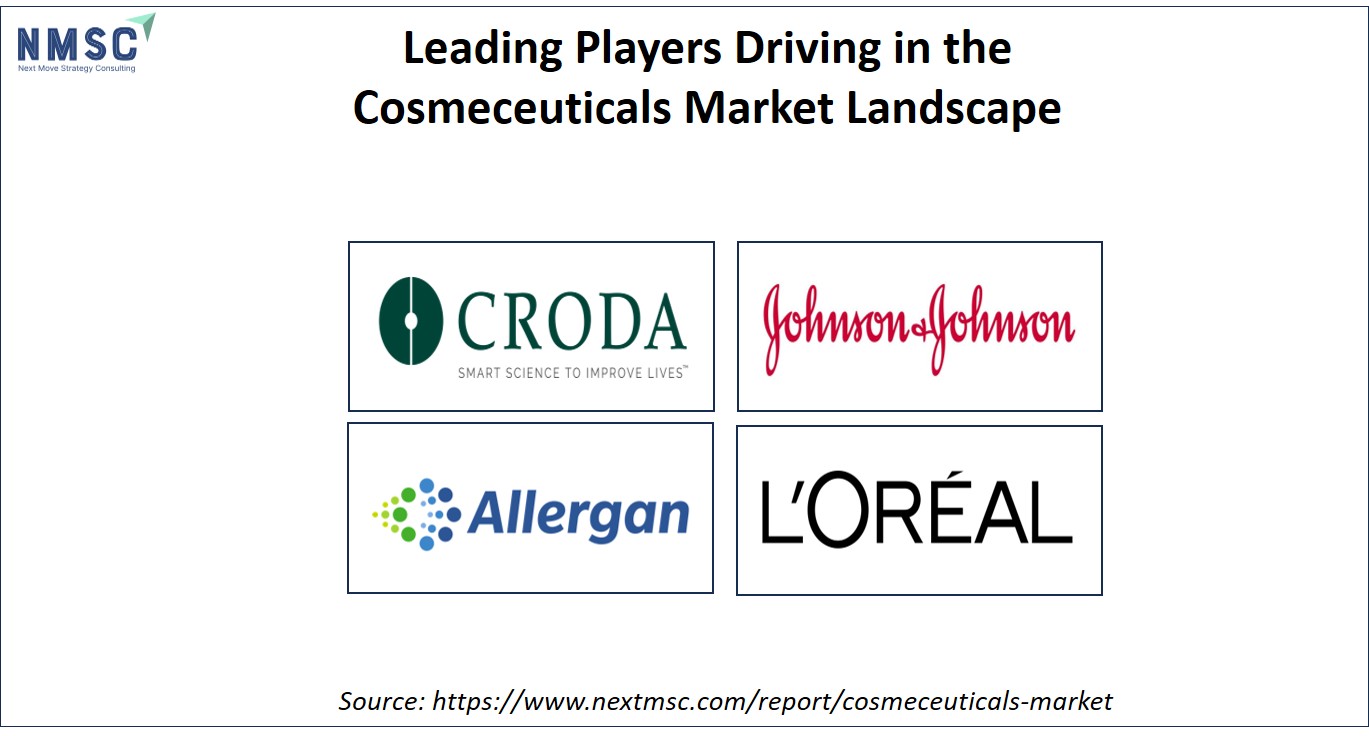
The cosmeceuticals industry includes several major players such as Croda International Plc, Johnson & Johnson, Allergan, L'Oréal S.A., Procter & Gamble, Shiseido, Beiersdorf, Elementis, Unilever, and Henkel. These companies are actively focusing on strategies including product launches, acquisitions, and innovation-driven expansion to strengthen their market presence and sustain competitiveness within the global cosmeceuticals industry.
Next Steps for Industry Stakeholders
Companies operating in cosmeceuticals can strengthen their market position by investing more heavily in personalized skincare technologies and biotechnology research. Expanding clinical partnerships and emphasizing transparent product claims may also improve long-term customer trust.
Businesses should additionally focus on integrating wellness-oriented services into skincare programs, as consumers increasingly associate skincare with overall health and self-care experiences.
-
Invest in biotechnology-driven skincare research to improve product precision and effectiveness.
-
Expand personalized skincare programs based on individual skin biology and lifestyle needs.
-
Strengthen clinical partnerships to enhance dermatological credibility and consumer trust.
-
Focus on transparent, science-backed product claims supported by clinical efficacy.
-
Integrate wellness and aesthetic care services to create holistic skincare experiences.
Conclusion
The cosmeceuticals industry is undergoing a significant transformation driven by personalization, biotechnology, and clinically supported skincare innovation. Bio-Xin Cosmeceuticals’ global expansion reflects rising demand for customized skincare experiences, while Clinical Skin’s acquisition of Glytone highlights the growing importance of dermatological expertise and scientific credibility.
As consumers continue prioritizing effective and personalized skincare solutions, companies that combine research-driven innovation with trustworthy care models are expected to lead the future of the industry.
About the Author
 Sanyukta Deb
— Sanyukta Deb is Digital Marketing Team Lead at Next Move Strategy Consulting, where she has led content strategy and technical SEO for the firm's B2B market research publications for over 2 years. Her editorial process translates NextMSC's primary and secondary research — spanning technology, industrial, and consumer sectors — into commercial narratives, backed by search-intent, keyword, and competitive analysis. She brings 5 years of overall experience in digital marketing and content strategy.
Sanyukta Deb
— Sanyukta Deb is Digital Marketing Team Lead at Next Move Strategy Consulting, where she has led content strategy and technical SEO for the firm's B2B market research publications for over 2 years. Her editorial process translates NextMSC's primary and secondary research — spanning technology, industrial, and consumer sectors — into commercial narratives, backed by search-intent, keyword, and competitive analysis. She brings 5 years of overall experience in digital marketing and content strategy.
About the Reviewer
 Debashree Dey
— Debashree Dey is Assistant Manager at Next Move Strategy Consulting, where she supports cross-vertical market content and communications across diverse industries for 6 years. Her professional background includes senior content writing, communications, and published manuscript authorship, with experience developing audience-focused business narratives and maintaining clear, consistent messaging. Her role supports research-led content development and editorial quality across NextMSC publications.
Debashree Dey
— Debashree Dey is Assistant Manager at Next Move Strategy Consulting, where she supports cross-vertical market content and communications across diverse industries for 6 years. Her professional background includes senior content writing, communications, and published manuscript authorship, with experience developing audience-focused business narratives and maintaining clear, consistent messaging. Her role supports research-led content development and editorial quality across NextMSC publications.

















Add Comment