Are Contact Lenses Entering a Smarter and Safer Era?
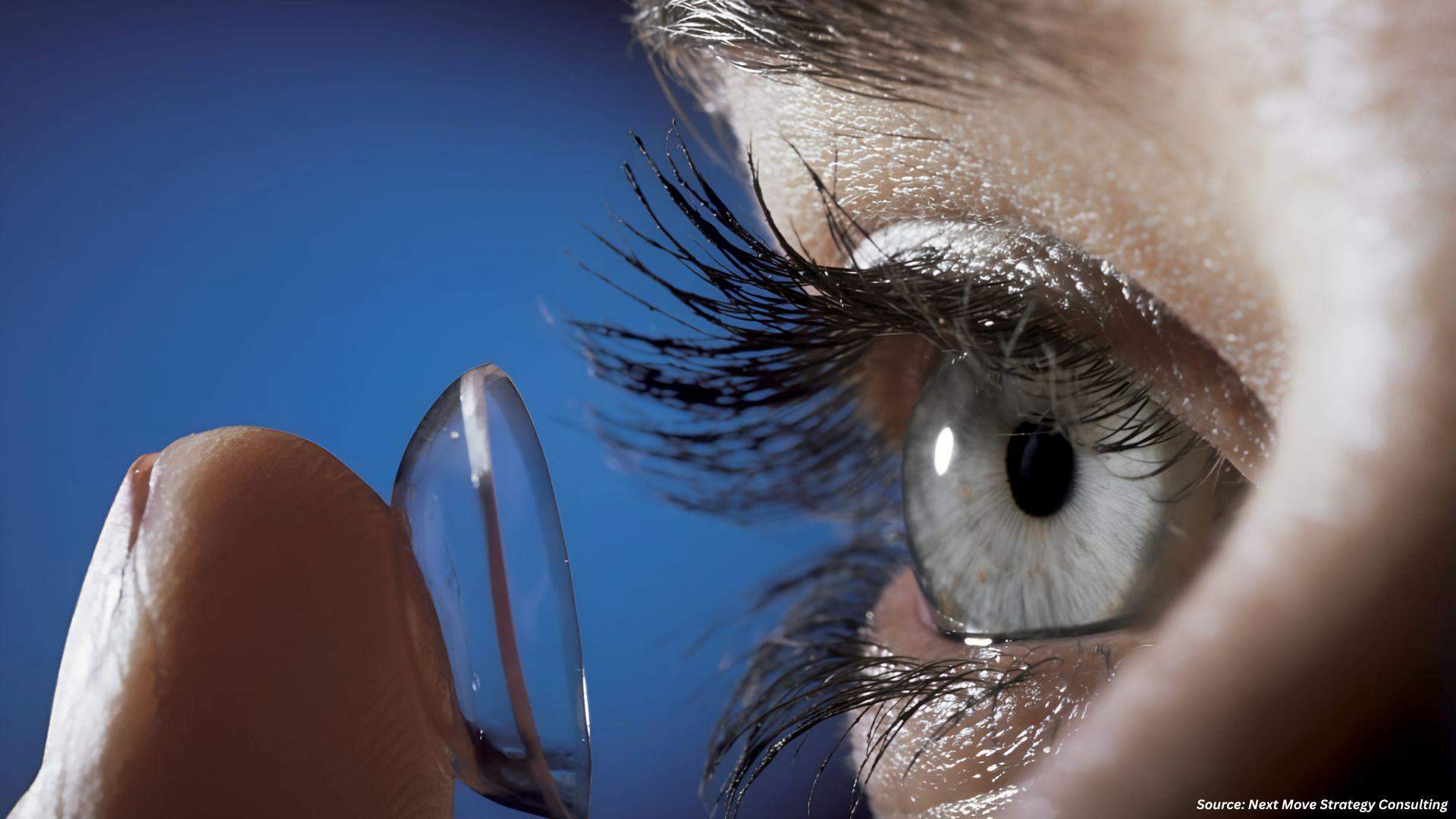
Contact lenses are undergoing a significant transformation. What was once a simple vision correction tool is now evolving into a sophisticated component of digital healthcare. Between 2024 and 2025, innovations such as smart lenses and developments like product recalls have highlighted both the potential and the responsibility within this space.
How Are Smart Contact Lenses Transforming Eye Care?
At GITEX GLOBAL 2024, smart contact lenses emerged as one of the most compelling innovations in digital health. These next-generation lenses are designed not just to correct vision but to function as real-time health monitoring tools.
Xpanceo introduced smart lenses capable of 3D imaging, data reading, and wireless data transmission directly from the eye. This allows visual and potentially biological data to be captured and transmitted seamlessly, without reliance on external devices.
Smart Contact Lens Capabilities
|
Feature |
What It Enables |
|
3D Imaging |
Advanced visual diagnostics |
|
Data Reading |
Monitoring of real-time eye-related data |
|
Wireless Transmission |
Instant data sharing with devices |
Smart contact lenses are evolving into compact, connected diagnostic tools, redefining how eye care and health monitoring are delivered.
What Role Does AI Play in Contact Lens Innovation?
Artificial Intelligence is playing a foundational role in enabling these advancements. The healthcare ecosystem is rapidly integrating AI, supporting innovations like smart contact lenses.
AI-powered healthcare investments are projected to account for 20% of global healthcare spending by the end of 2024, reflecting a shift toward intelligent, data-driven care systems.
Rather than functioning in isolation, smart lenses are part of a broader AI ecosystem, contributing real-time data that enhances diagnosis, treatment precision, and patient outcomes.
Balancing Innovation and Safety in Contact Lenses
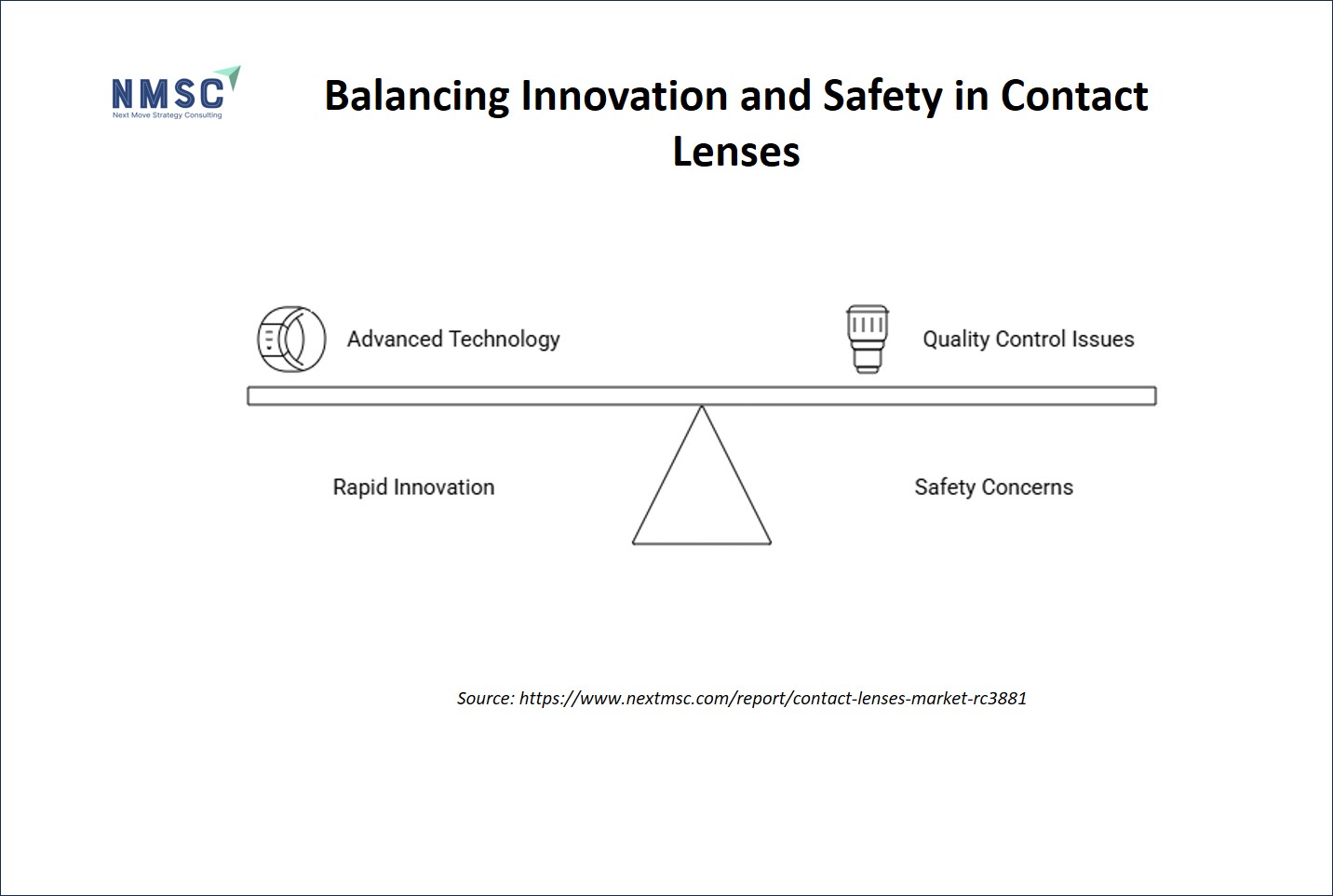
This infographic illustrates the delicate balance that defines the current evolution of contact lenses. At the center is a scale, symbolizing the need to maintain equilibrium between rapid technological advancement and essential safety standards.
On one side, the image highlights advanced technology and rapid innovation, representing breakthroughs such as smart lenses, AI integration, and enhanced functionality. These developments are pushing contact lenses beyond traditional vision correction into the realm of digital health and real-time monitoring.
On the opposite side, the focus shifts to quality control issues and safety concerns, emphasizing the challenges that come with increasing complexity. As lenses become more sophisticated, even minor manufacturing inconsistencies can affect user experience, making strict quality assurance and regulatory oversight critical.
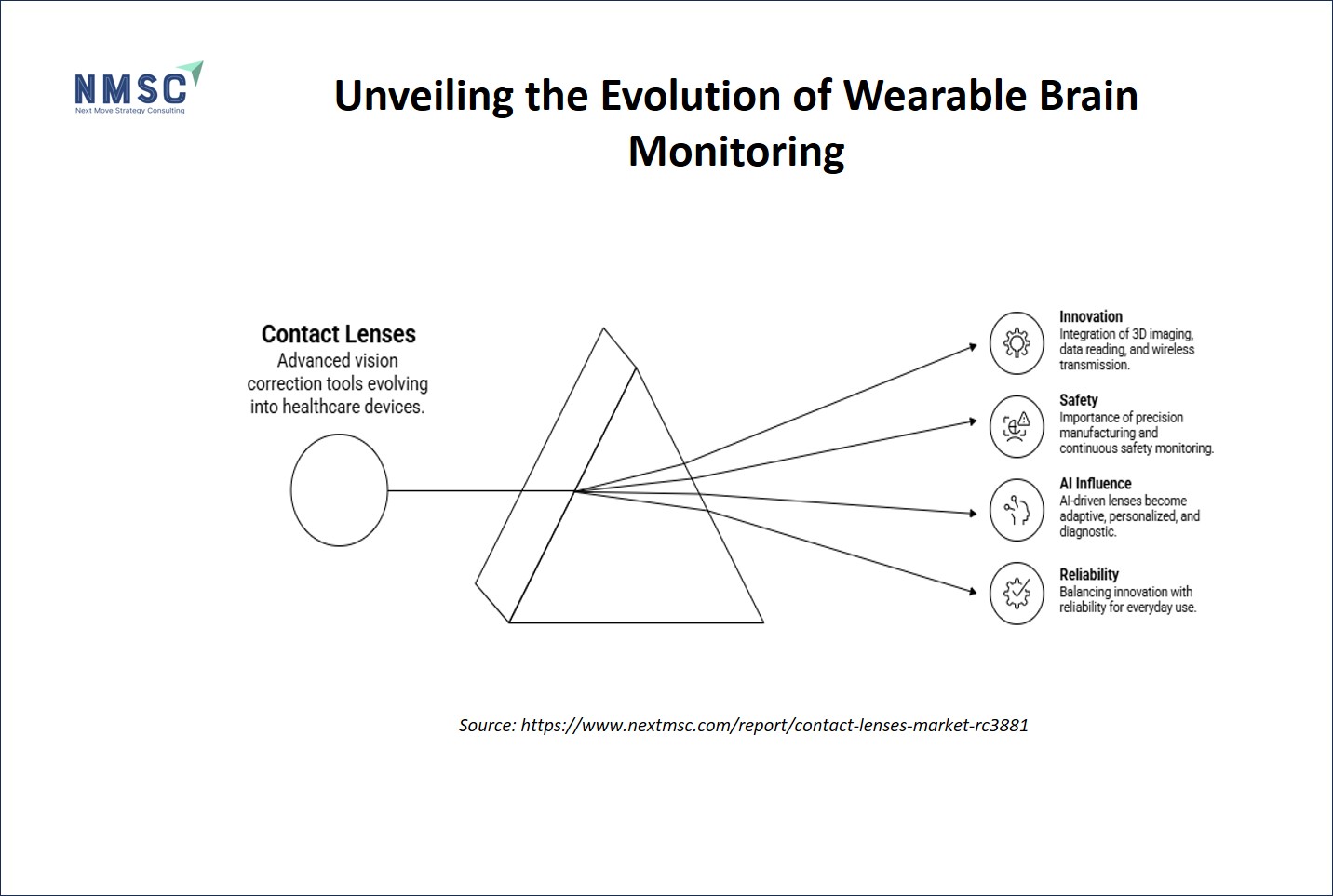
From Vision Correction to Intelligent Healthcare: The Evolution of Contact Lenses
This infographic presents a forward-looking view of how contact lenses are evolving from simple vision correction tools into advanced healthcare devices. At the center of the visual is a geometric structure, symbolizing a foundation of transformation, with contact lenses acting as the starting point of this evolution.
On the left, contact lenses are introduced as advanced vision correction tools that are now transitioning into healthcare-oriented devices. This highlights the shift from traditional usage to a more integrated role within digital health ecosystems.
The right side expands this transformation into four key pillars:
-
Innovation reflects the integration of technologies such as 3D imaging, real-time data reading, and wireless communication, positioning lenses as smart, connected devices.
-
Safety emphasizes the growing importance of precision manufacturing and continuous monitoring to ensure user protection as complexity increases.
-
AI Influence shows how artificial intelligence is enabling lenses to become more adaptive, personalized, and capable of supporting diagnostic processes.
-
Reliability underscores the need to balance rapid innovation with consistent performance in everyday use.
Are Contact Lenses Completely Safe Today?
Despite rapid innovation, safety remains a critical aspect of contact lens usage. A notable development in 2025 highlighted this balance between advancement and quality control.
A voluntary recall affected certain Acuvue Oasys Max 1-Day Multifocal Contact Lenses due to the presence of microbubbles within specific product batches. These microscopic voids were not associated with medical harm but could cause visual disturbances, especially in low-light conditions.
The Future of Smart Contact Lenses
Smart contact lenses are redefining the boundaries of eye care by integrating advanced technologies such as real-time data monitoring, 3D imaging, and wireless communication directly into a wearable device. These innovations signal a shift from traditional vision correction toward continuous health tracking, enabling users and healthcare providers to access critical insights without external tools.
At the same time, recent product recalls highlight the importance of precision in manufacturing and quality assurance. As contact lenses become more complex, ensuring safety, consistency, and user trust will remain essential. The future lies in balancing innovation with reliability, creating devices that are not only intelligent but also dependable for everyday use.
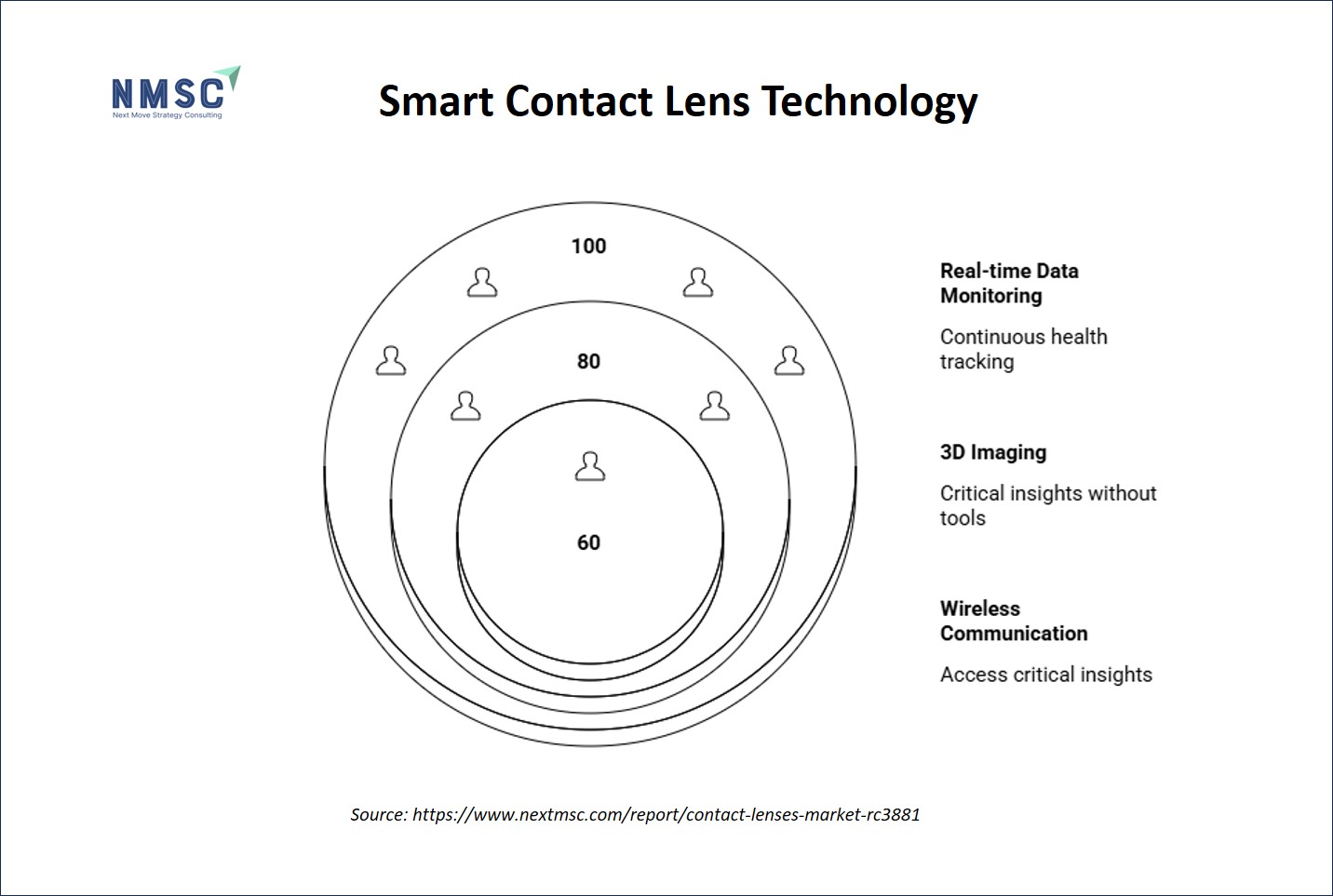
Smart Contact Lens Technology: Layers of Intelligent Functionality
This infographic highlights how smart contact lenses are built around multiple layers of advanced capabilities, represented by concentric circles expanding outward. Each layer signifies an increasing level of functionality and value, illustrating how these lenses are evolving into comprehensive digital health tools.
At the core, the inner circle represents the foundation of smart lens technology, focusing on essential user interaction and basic functionality. As the layers expand outward (60 → 80 → 100), they indicate the growing integration of more advanced features and broader user impact.
On the right side, the key capabilities are outlined:
-
Real-time Data Monitoring emphasizes continuous health tracking, allowing users and healthcare providers to access ongoing insights without interruption.
-
3D Imaging enables deeper visual analysis, providing critical diagnostic insights without the need for external equipment.
-
Wireless Communication allows seamless transmission of data, ensuring that important information can be accessed and utilized instantly.
Recall Insight (2025)
|
Factor |
Explanation |
|
Root Cause |
Microbubbles in specific lens batches |
|
Health Impact |
No direct harm reported |
|
User Experience Impact |
Visual disturbances in low- |
What Trends Are Shaping the Present of Contact Lenses?
The current landscape reflects a convergence of innovation, intelligence, and accountability.
Contact lenses are increasingly becoming multi-functional devices, capable of collecting and transmitting data in real time. This positions them within the broader digital health ecosystem rather than as standalone vision aids.
At the same time, AI integration is enabling more personalized and precise care. These advancements are complemented by stronger regulatory oversight, ensuring that safety and transparency evolve alongside innovation.
Competitive Landscape of the Contact Lenses Industry
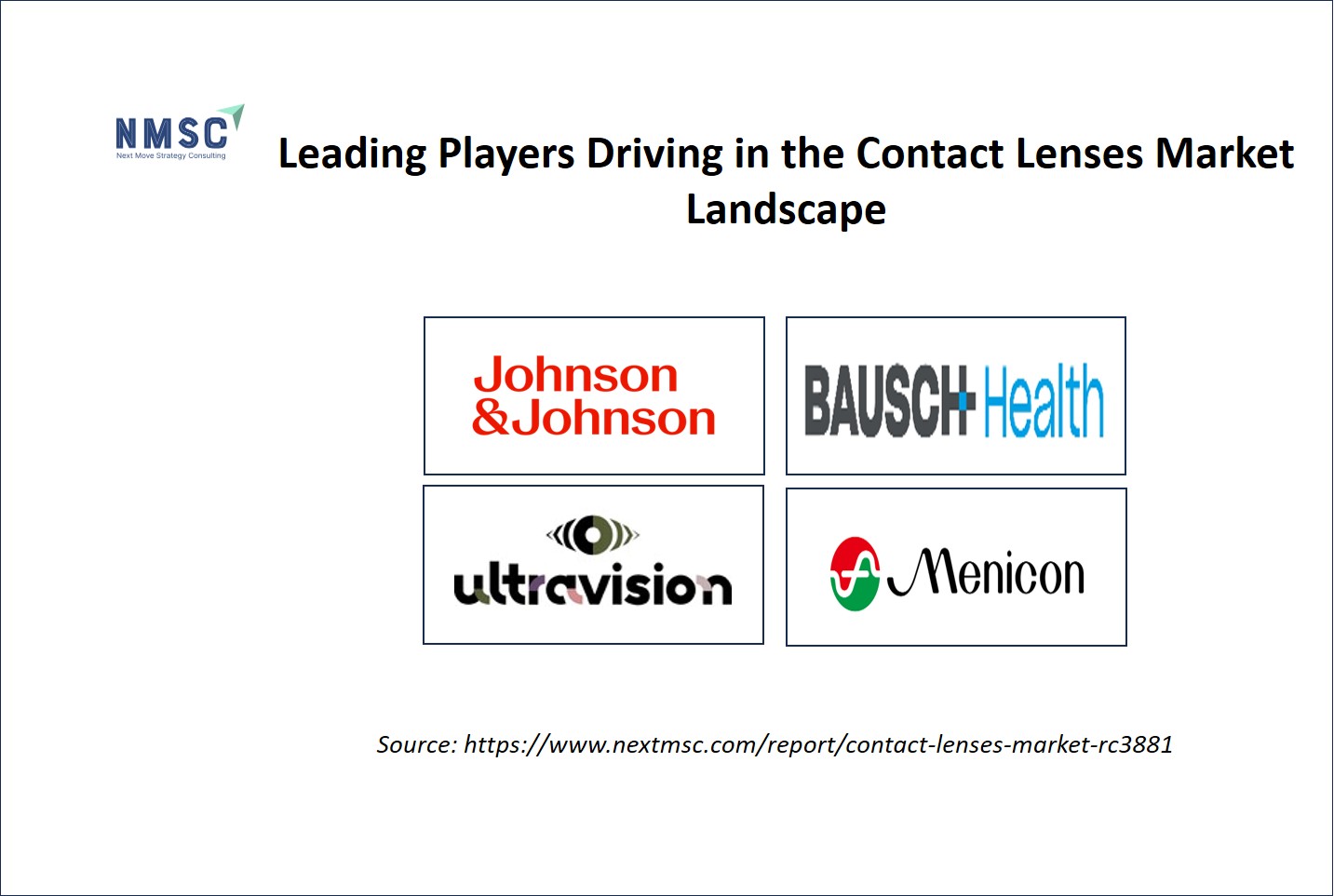
The contact lenses industry is led by several established global players, including Johnson & Johnson Vision Care (Acuvue), Alcon, CooperVision, Bausch + Lomb, Menicon Co., Ltd., UltraVision CLPL, Hydron Contact Lens Co., Ltd., SEED Co., Ltd., and Carl Zeiss Meditec AG. Among these, Johnson & Johnson, Alcon, CooperVision, and Bausch & Lomb hold a strong position due to their extensive scale, well-established brand presence, and wide global distribution networks, making them key competitors in the market.
At the same time, smaller and regional companies such as Hydron, Menicon, SEED, and UltraVision are strengthening their presence by focusing on niche segments, specialized lens offerings, and cost-effective solutions. This dynamic competitive environment encourages continuous innovation, with companies striving to differentiate themselves through enhanced comfort, diverse product portfolios, competitive pricing, and expanded distribution reach.
What Does the Future Outlook Look Like for Contact Lenses?
Looking ahead, Contact Lenses Market are expected to play a far more dynamic role in healthcare and everyday life. The shift toward smart lenses indicates a future where lenses may continuously monitor health metrics, assist in early diagnosis, and integrate seamlessly with digital ecosystems.
Future developments could focus on enhancing real-time analytics, improving user comfort, and ensuring flawless manufacturing standards. As innovation progresses, collaboration between technology companies, healthcare providers, and regulators will be essential to maintain trust.
There is also a growing expectation that lenses will become more adaptive, potentially responding to environmental conditions or user needs in real time. However, this progress must be matched with robust safety protocols and user education.
Next Steps: What Should You Do?
-
Stay informed about new developments and product updates as contact lens technology continues to evolve
-
Consult eye care professionals before adopting advanced or smart lenses
-
Check product details such as batch or lot numbers to ensure safety and authenticity
-
Pay attention to any unusual visual changes, especially in low-light conditions
-
Approach new innovations with awareness, balancing benefits with safety considerations
Final Thought
Looking ahead, the success of contact lenses will depend on how effectively innovation is balanced with reliability. Advancements must be accompanied by strong regulatory frameworks, ongoing clinical validation, and clear user guidance. At the same time, users will need to adopt a more informed and proactive approach, understanding not only the benefits but also the responsibilities that come with using increasingly advanced devices.
In the long term, contact lenses have the potential to become an integral part of personalized healthcare ecosystems, seamlessly connecting individuals with real-time insights and medical support. Yet, their true impact will be measured not just by technological sophistication, but by how consistently they deliver safe, accurate, and dependable performance in everyday use.
About the Author
 Sanyukta Deb
— Sanyukta Deb is Digital Marketing Team Lead at Next Move Strategy Consulting, where she has led content strategy and technical SEO for the firm's B2B market research publications for over 2 years. Her editorial process translates NextMSC's primary and secondary research — spanning technology, industrial, and consumer sectors — into commercial narratives, backed by search-intent, keyword, and competitive analysis. She brings 5 years of overall experience in digital marketing and content strategy.
Sanyukta Deb
— Sanyukta Deb is Digital Marketing Team Lead at Next Move Strategy Consulting, where she has led content strategy and technical SEO for the firm's B2B market research publications for over 2 years. Her editorial process translates NextMSC's primary and secondary research — spanning technology, industrial, and consumer sectors — into commercial narratives, backed by search-intent, keyword, and competitive analysis. She brings 5 years of overall experience in digital marketing and content strategy.
About the Reviewer
 Debashree Dey
— Debashree Dey is Assistant Manager at Next Move Strategy Consulting, where she supports cross-vertical market content and communications across diverse industries for 6 years. Her professional background includes senior content writing, communications, and published manuscript authorship, with experience developing audience-focused business narratives and maintaining clear, consistent messaging. Her role supports research-led content development and editorial quality across NextMSC publications.
Debashree Dey
— Debashree Dey is Assistant Manager at Next Move Strategy Consulting, where she supports cross-vertical market content and communications across diverse industries for 6 years. Her professional background includes senior content writing, communications, and published manuscript authorship, with experience developing audience-focused business narratives and maintaining clear, consistent messaging. Her role supports research-led content development and editorial quality across NextMSC publications.


















Add Comment