How Fiber Broadband, 5G, and Operator Bundles Are Turning ISPs into Global Smart Home Gatekeepers
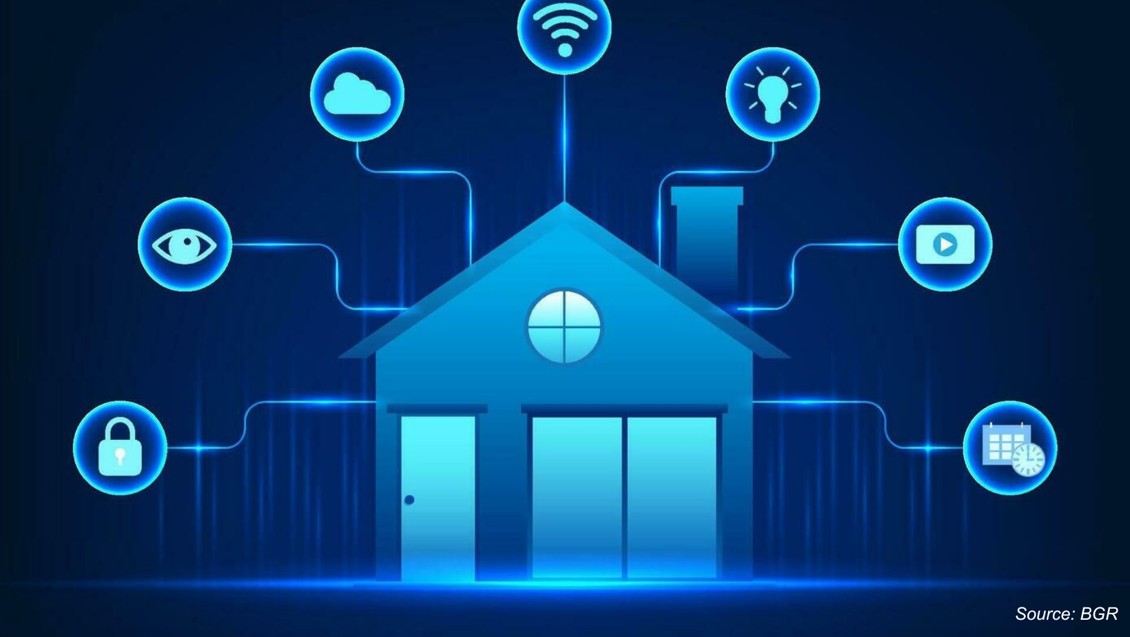
The global smart home market is entering a decisive phase of evolution, driven less by standalone devices and more by the rapid expansion of fiber broadband and 5G connectivity worldwide. As high-speed networks become more affordable, reliable, and widely available, telecom operators are no longer confined to selling connectivity. Instead, they are emerging as full-stack smart home service providers, bundling broadband with security, automation, energy management, and AI-enabled home services. This shift is redefining how consumers discover, adopt, and manage smart home technologies, positioning ISPs as ecosystem gatekeepers that influence device interoperability, customer onboarding, and long-term recurring revenues.
According to Next Move Strategy Consulting, the Smart Home Market size was valued at USD 179.61 billion in 2025, and is expected to be valued at USD 217.66 billion by the end of 2026. The industry is projected to grow, hitting USD 412.11 billion by 2030, with a CAGR of 18.07% between 2026 and 2030.
Want Insights on the Smart Home Market? Access a FREE Sample Instantly
Recent industry reports show the smart home market is growing at double-digit rates, fueled by rapid broadband expansion in certain regions, especially the Asia-Pacific, alongside rising urban smart-device adoption. This blog examines how next-gen connectivity, high-speed networks, and operator-led platforms are transforming the region’s smart home ecosystem.
Across North America, Europe, Asia-Pacific, and parts of the Middle East, smart home adoption is accelerating alongside next-generation network rollouts. Fiber-to-the-home deployments in the U.S., Western Europe, Japan, South Korea, and China, combined with 5G Fixed Wireless Access expansion in suburban and underserved regions, are laying the infrastructure foundation for always-connected homes. What began as basic automation is now evolving into integrated, service-driven ecosystems where connectivity, cloud intelligence, and household automation converge.
Fiber and 5G Are Becoming the Digital Backbone of Global Smart Home Ecosystems
Early smart home adoption was often constrained by unreliable Wi-Fi, bandwidth limitations, and fragmented connectivity. Today, widespread fiber broadband and 5G networks are removing these bottlenecks at scale. Symmetrical gigabit fiber enables households to support dozens of connected devices simultaneously, including security cameras, smart appliances, voice assistants, energy monitors, and entertainment systems. Low-latency 5G further enhances performance for real-time video, AI-driven automation, and cloud-assisted services.
In North America and Europe, fiber expansion is accelerating smart security, energy optimization, and whole-home automation use cases. In Asia-Pacific and the Middle East, 5G FWA is extending smart home adoption beyond dense urban centers into suburban and semi-urban markets. Globally, connectivity has shifted from a background utility to the primary enabler of intelligent living. Always-on surveillance, multi-room streaming, predictive appliance maintenance, and advanced energy management are now dependent on robust, operator-grade networks rather than consumer Wi-Fi alone.

Why Telecom Operators Are Becoming Global Smart Home Gatekeepers
Telecom operators occupy a uniquely powerful position in the smart home value chain. They control the household gateway, the broadband subscription, the mobile ecosystem, and increasingly the software layer that manages connected devices. Modern operator routers and gateways now embed support for Zigbee, Z-Wave, Thread, Bluetooth LE, and Matter, transforming traditional networking equipment into centralized smart home controllers.
By offering operator-managed platforms, ISPs eliminate the complexity of juggling multiple apps, hubs, and device brands. Consumers gain unified setup, single billing relationships, and centralized support, while operators gain control over ecosystem curation and service monetization. This model is visible globally through initiatives such as Comcast’s xFi ecosystem in the U.S., Deutsche Telekom’s Smart Home platform in Europe, BT and Vodafone’s connected home services in the UK, NTT’s smart living solutions in Japan, and operator-led ecosystems across APAC and the Middle East.
As a result, telecom providers are increasingly determining which devices integrate seamlessly, which platforms gain prominence, and how smart home services scale at the household level.
Operator Bundling Strategies Are Redefining Smart Home Adoption
Globally, ISPs are moving beyond connectivity by bundling smart home devices and cloud services into curated lifestyle packages. Security bundles typically include AI-enabled cameras, smart locks, sensors, and cloud storage. Energy bundles integrate smart meters, plugs, EV chargers, and appliance monitoring dashboards. Convenience bundles combine lighting automation, voice assistants, and smart switches into turnkey solutions.
These bundles lower adoption barriers by offering professional installation, device financing, guaranteed compatibility, and simplified onboarding. Instead of navigating fragmented retail channels, consumers receive pre-validated ecosystems tailored to security, energy efficiency, or convenience needs. This model is proving especially effective in emerging markets and first-time smart home households, while also deepening service adoption in mature regions.

Consumer Trends Fueling Operator-Led Smart Home Growth Worldwide
Globally, consumers are prioritizing simplicity, trust, and reliability over fragmented DIY experimentation. First-time buyers value operator-curated ecosystems that guarantee compatibility and offer professional support. In dense urban environments, rising safety concerns are driving demand for AI-enabled security and remote monitoring. Meanwhile, Gen Z and millennial households are accelerating the adoption of voice assistants, automation routines, and connected appliances that integrate seamlessly with mobile and cloud ecosystems.
Sustainability is another universal driver. Smart energy management, appliance optimization, and EV integration are gaining traction as households respond to rising energy costs and climate goals. These preferences align naturally with operator-led models that combine connectivity, intelligence, and service continuity.
Strategic Company Developments Accelerating the Global Smart Home Market
Several leading technology and appliance companies are driving the next phase of global smart home growth through AI-enabled innovations, cross-device platform integration, and strategic partnerships with telecom operators.
-
Samsung: Expanding the SmartThings ecosystem with AI-enabled appliances and Matter compatibility, reinforcing operator-led integration.
-
Xiaomi: Scaling its IoT ecosystem globally with affordable, interconnected devices, enabling wider adoption across emerging and mature markets.
-
Huawei: Advancing HarmonyOS as a cross-device smart home platform, supported by multi-protocol operator gateways for seamless interoperability.
-
LG, Panasonic, Haier: Embedding intelligence, energy optimization, and AI-enabled functionalities into home appliances designed for operator-managed ecosystems.
-
Bosch & Schneider Electric: Developing energy management and automation solutions compatible with ISP-led platforms, supporting sustainable and smart energy use.
These developments give telecom operators a wider portfolio of compatible, AI-enabled devices to include in smart home bundles, reinforcing integrated smart-living strategies worldwide.
An Outlook on The Future of Connected Living
The global smart home market is entering a defining era where fiber broadband, 5G, cloud AI, and interoperable standards converge to create truly intelligent living environments. Telecom operators are no longer peripheral players; they are becoming platform owners, ecosystem orchestrators, and service innovators. Their control over connectivity, gateways, and customer relationships gives them unmatched influence over how smart homes are deployed, monetized, and scaled.
As AI-enabled appliances, Matter-based interoperability, and energy-centric use cases gain momentum, smart homes are transitioning from device collections into managed digital services. The future of connected living will be seamless, scalable, and subscription-driven, with ISPs firmly positioned at the center of the global smart home ecosystem.
About the Author
 Mayurima Roy
— Mayurima Roy is Research Analyst at Next Move Strategy Consulting, where she has spent 4 years working across the firm's full industry coverage rather than a single fixed vertical. Her work centers on structured research, ongoing trend tracking, competitive assessment, and insight-led content development, translating complex market data into clear, decision-ready narratives that support informed client decision-making across diverse global industries, market sectors, and world regions every day.
Mayurima Roy
— Mayurima Roy is Research Analyst at Next Move Strategy Consulting, where she has spent 4 years working across the firm's full industry coverage rather than a single fixed vertical. Her work centers on structured research, ongoing trend tracking, competitive assessment, and insight-led content development, translating complex market data into clear, decision-ready narratives that support informed client decision-making across diverse global industries, market sectors, and world regions every day.
About the Reviewer
 Supradip Baul
— Supradip Baul is an accomplished business consultant and strategist with over a decade of rich experience in market intelligence, strategy, technology, and business transformation. His work has included rigorous qualitative and quantitative analysis across multiple industries, helping clients shape investment decisions and long-term roadmaps. Earlier in his career, he was associated with Gartner, where he contributed to industry-leading reports and market share analyses. He has worked with leading global companies and holds an MBA with a dual specialization in Marketing and Finance.
Supradip Baul
— Supradip Baul is an accomplished business consultant and strategist with over a decade of rich experience in market intelligence, strategy, technology, and business transformation. His work has included rigorous qualitative and quantitative analysis across multiple industries, helping clients shape investment decisions and long-term roadmaps. Earlier in his career, he was associated with Gartner, where he contributed to industry-leading reports and market share analyses. He has worked with leading global companies and holds an MBA with a dual specialization in Marketing and Finance.
















Add Comment