How GEA Group, KUKA AG, FANUC Corporation and Others are Driving the Food Robotics Market
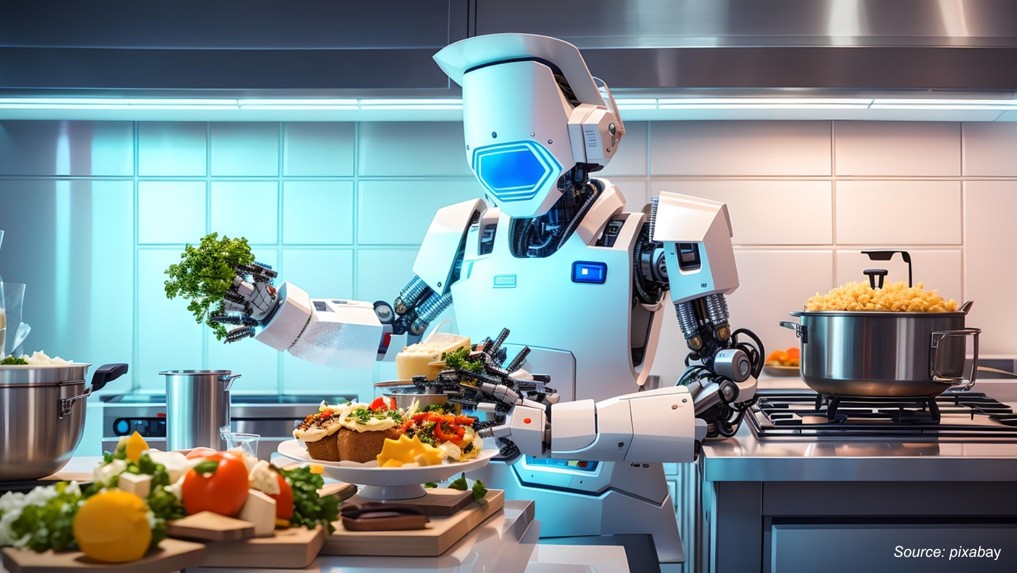
Based on NMSC assessment, the Food Robotics Market is expected to maintain steady growth momentum, with the market size projected to reach approximately USD 17.85 billion by 2035. We observed that the market was valued at around USD 3.64 billion in 2025 and is estimated to rise to USD 4.74 billion by 2026, reflecting a healthy CAGR of 15.89%. Our analysis indicates that this expansion is being driven by the rising adoption of AI-powered kitchen automation, contactless food service solutions, and data-driven operational models, alongside increasing investments in technology-driven food service operations across both developed and emerging markets.
For an In-depth Analysis of the Food Robotics Industry, Try a FREE Sample
We observed that the increasing adoption of AI-powered kitchen automation, smart robotic cooking systems, and data-driven operational tools is reshaping how food service providers operate globally. The growing demand for on-demand, technology-enabled food preparation and delivery solutions across restaurants, commercial kitchens, cloud kitchens, and catering services is creating new opportunities for industry players. Our analysis further indicates that with ongoing innovations in energy-efficient robotics, intelligent workflow management, and predictive analytics, the Food Robotics sector is poised to evolve into a smarter, more sustainable, and customer-focused market by the end of the decade.
Food Robotics Market Overview
Based on our assessment, the food robotics market is undergoing a significant transformation, driven by rising consumer expectations, technological innovations, and evolving service delivery models. We observed that the growing demand for faster, safer, and more personalised dining experiences, coupled with the focus on operational efficiency and sustainability, is prompting providers to reimagine food preparation and service through AI-powered kitchen automation, intelligent robotic systems, and contactless operations. Our analysis indicates that increasing adoption of data-driven workflows, predictive analytics, and smart robotic solutions is accelerating efficiency, consistency, and safety across restaurants, cloud kitchens, and commercial food service providers.
We also observed that the evolution of food service delivery is expanding market reach, with automated cooking, real-time monitoring, on-demand services, and multi-channel food platforms democratizing access to innovative and premium dining experiences worldwide. At the same time, governments and industry regulators are reinforcing this transformation by implementing stricter standards on food safety, hygiene, and environmental sustainability. Furthermore, our evaluation also indicates that smart robotics, digital analytics, and consumer awareness initiatives are influencing adoption trends, steering the market toward faster, more personalised, and sustainable Food Robotics solutions globally.
Based on our observation, several major companies are leading the food robotics market, including GEA Group, Krones AG, KUKA AG, FANUC Corporation, Yaskawa Electric Corporation, ABB, Middleby Corporation, OMRON Corporation, Kawasaki Heavy Industries Ltd., Universal Robots A/S, Syntegon Technology, Mayekawa Manufacturing Co., Ltd., DENSO Corporation, JBT Corporation, Pudu Technology, Techman Robot Inc., Staubli International AG, Epson Robots, Festo OY, and Tetra Pak International SA. We observed that these industry leaders are at the forefront of innovation, developing advanced robotic kitchen solutions, AI-driven automation systems, smart delivery platforms, and sustainable food production technologies. Our analysis indicates that by investing heavily in AI integration, robotics precision, and resource-efficient practices, these companies are addressing critical challenges such as operational efficiency, food safety, sustainability, and customer personalisation. These global leaders are collectively steering the food robotics industry toward its next phase, where kitchens and food service operations become increasingly intelligent, sustainable, and customer-centric.
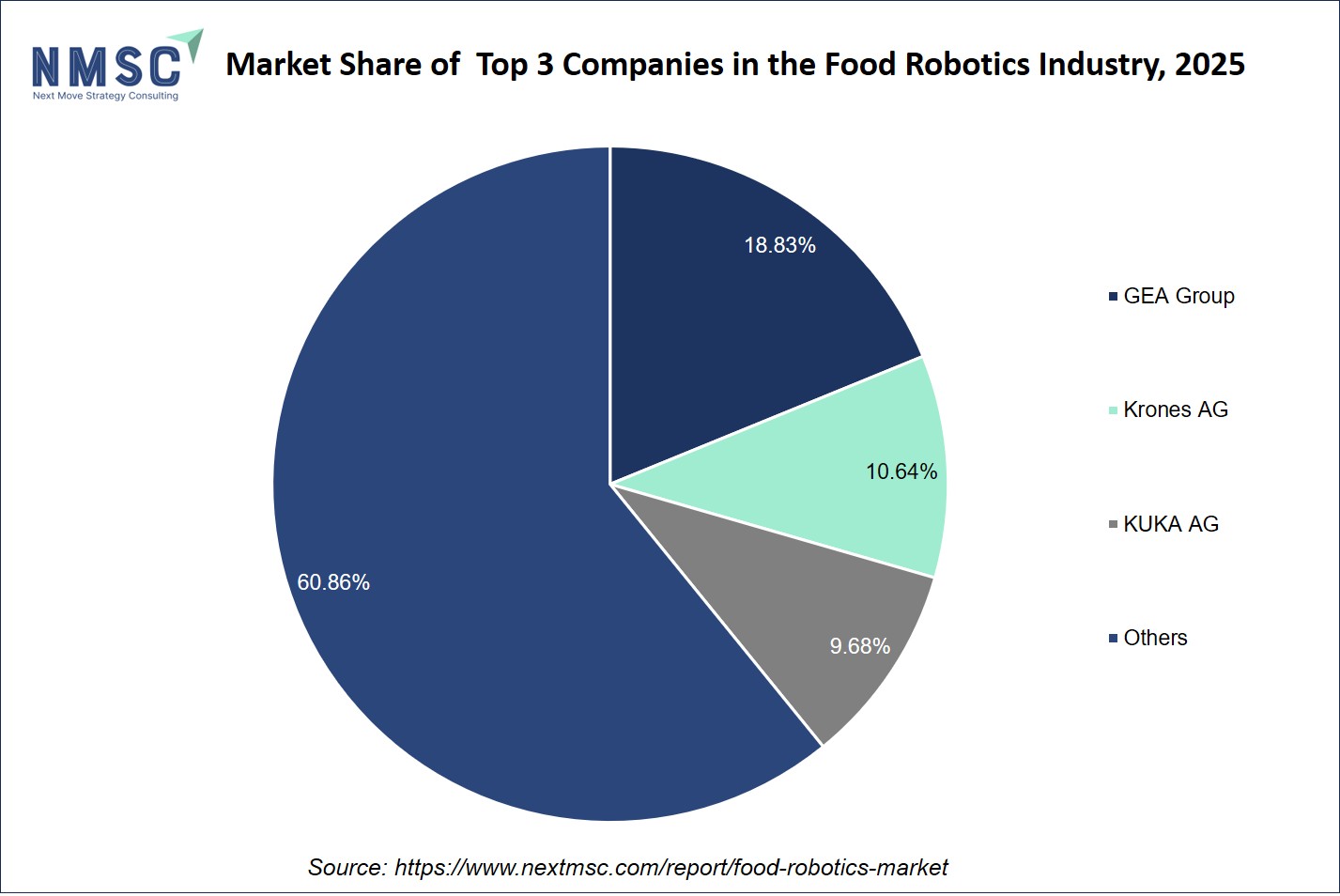
Highlights of GEA Group

GEA Group, headquartered in Germany, is a leading global player in the food robotics market, providing advanced automation solutions, processing technologies, and intelligent robotic systems for the food and beverage industry. We observed that by continuously innovating its portfolio of processing equipment, robotic kitchen solutions, and AI-enabled automation platforms, GEA Group is transforming traditional food operations into highly efficient, technology-driven, and sustainable production environments. Our analysis indicates that its extensive network of installations across Europe, North America, Asia-Pacific, and other key markets allows the company to serve diverse clients, ranging from large-scale food manufacturers to commercial kitchens and emerging cloud kitchen models.
We also observed that GEA Group’s leadership is reinforced by significant investments in research and development, driving innovations such as AI-powered process optimisation, robotics-assisted cooking and packaging, and smart monitoring systems that enhance efficiency, consistency, and operational safety. Based on our evaluation, the company’s emphasis on sustainability, including energy-efficient processing technologies, water-saving solutions, and environmentally responsible manufacturing practices, further strengthens its competitive edge. By combining technological expertise, global reach, and sustainable practices, we conclude that GEA Group has solidified its position as a dominant and innovative player in the global food robotics market, shaping the future of intelligent, efficient, and sustainable food operations.
Highlights of Krones AG

KRONES AG, headquartered in Germany, has established a leading position in the food robotics market, supported by its extensive portfolio of automated food and beverage processing solutions, robotic packaging systems, and intelligent production technologies. We observed that the company delivers high-performance, scalable, and sustainable solutions across Europe, North America, Asia-Pacific, and other key markets. Our analysis indicates that by continuously enhancing its portfolio of filling, labeling, packaging, and robotic handling systems, KRONES AG is transforming traditional food operations into highly efficient, technology-driven, and customer-centric production environments.
We also observed that the company’s market leadership is reinforced by a strong commitment to innovation, operational excellence, and sustainability, underpinned by significant investments in AI-driven automation, robotics integration, and smart monitoring platforms. Based on our evaluation, KRONES AG emphasises energy efficiency, water-saving technologies, and environmentally responsible manufacturing practices, strengthening its competitive position against peers. Our assessment concludes that by combining cutting-edge technology, global operational reach, and sustainable practices, KRONES AG has solidified its role as a leading and innovative provider of food robotics solutions worldwide.
Highlights of Kuka AG

Based on our assessment, KUKA AG, headquartered in Germany, has established a prominent position in the food robotics market by offering an extensive range of automated solutions for food processing, packaging, and handling. The company leverages its expertise in robotics to deliver high-precision, reliable, and hygienic systems that enhance operational efficiency across industrial kitchens, food production lines, and packaging facilities worldwide. By continuously advancing its portfolio of industrial robots, end-of-arm tooling, and intelligent automation solutions, KUKA has developed a technologically advanced, operator-focused ecosystem that optimises productivity, safety, and quality across global markets.
Our analysis highlights that KUKA AG’s market strength is supported by a strong commitment to innovation and engineering excellence, with strategic investments in R&D driving the development of advanced robotic systems, smart sensors, and AI-enabled automation for food applications. The company emphasises compliance with international safety and hygiene standards, manufacturing precision, and collaboration with food industry partners to provide reliable, scalable, and cost-effective solutions. Additionally, KUKA’s proactive approach to sustainability through energy-efficient robots, optimised production processes, and reduced material waste aligns with global industry standards.
Highlights of Fanuc Corporation

As per our observation, FANUC Corporation, headquartered in Japan, has established a strong foothold in the food robotics market by providing advanced automation solutions and delivering high-quality, efficiency-focused systems across Asia, Europe, and the Americas. We observed that by continuously enhancing its offerings with state-of-the-art articulated robots, SCARA robots, and collaborative automation systems tailored for food processing and packaging, the company has transformed food robotics from traditional manual operations into a more precise, flexible, and scalable experience. Our analysis indicates that its extensive network of service centres, combined with customer support programs, enables FANUC to address diverse operational requirements, production volumes, and hygiene standards across global food industry markets.
We also observed that the company’s market leadership is reinforced by the strategic adoption of advanced technologies, including AI-driven automation, smart sensors, and predictive maintenance tools that optimise production efficiency and product quality. Based on our evaluation, targeted investments in industrial R&D, operator training, and application-specific solutions have further enhanced process reliability, safety, and customer satisfaction. Additionally, the company’s proactive sustainability initiatives, including energy-efficient robots, waste reduction strategies, and environmentally responsible manufacturing practices, align with evolving industry regulations and societal expectations, strengthening its competitive position against peers. We conclude that by combining engineering excellence, a global service network, and technology-driven innovations, FANUC Corporation has cemented its role as a leading provider of advanced, sustainable, and scalable food robotics solutions worldwide.
Highlights of Yaskawa Electric Corporation

Yaskawa Electric Corporation, headquartered in Japan, has established a strong foothold in the food robotics market by providing high-performance robotic solutions and delivering reliable, efficiency-focused automation systems across Asia, Europe, and North America. We observed that by continuously enhancing its offerings with state-of-the-art Motoman robots, SCARA robots, and collaborative robotic solutions for food processing, packaging, and handling, the company has transformed food robotics from conventional manual operations into a more precise, flexible, and scalable production experience. Our analysis indicates that its extensive network of global service centres, combined with technical support programs, enables Yaskawa to address diverse production requirements, hygiene standards, and operational schedules across multiple food industry segments.
We also observed that the company’s market leadership is reinforced by the strategic adoption of advanced technologies, including AI-assisted automation, real-time monitoring, and predictive maintenance tools that improve throughput, safety, and product quality. Based on our evaluation, targeted investments in R&D, workforce training, and application-specific solutions have further enhanced operational reliability, process consistency, and customer satisfaction. Additionally, the company’s proactive sustainability initiatives, including energy-efficient robotic systems, resource-optimised manufacturing, and environmentally conscious operational practices, align with evolving industry standards.
Summary of the Food Robotics Market
The food robotics market is undergoing a dynamic transformation, driven by evolving industry demands, technological innovations, and a growing focus on efficiency, safety, and automation. We observed that traditional manual food processing and packaging operations are increasingly being complemented by AI-enabled robots, collaborative systems, and automated solutions, reflecting a rising need for precision, consistency, and operational flexibility. Our analysis further indicates that advancements such as intelligent vision systems, predictive maintenance, and automated handling equipment are enhancing productivity, hygiene, and overall process reliability.
We also observed that sustainability and cost-effectiveness are becoming key priorities, with manufacturers and operators adopting energy-efficient robots, resource-optimised workflows, and environmentally responsible production practices. While mature markets are emphasizing the deployment of cutting-edge robotics and fully integrated automation solutions, emerging regions are driving overall adoption and market expansion, contributing to global growth in food robotics applications. These combined trends are shaping a food robotics market that is increasingly innovative, scalable, and industry-centric worldwide.
About the Author
 Saista Faiyaz
— Saista Faiyaz is Research Associate at Next Move Strategy Consulting, where she has covered consumer markets and healthcare technologies for 3 years. Her work includes primary interview review, secondary-source validation, market sizing, and structured analysis of company and industry data. She supports research by comparing evidence across sources, organizing findings into market narratives, and documenting assumptions used in analysis. Her scope includes cross-market benchmarking, and reports.
Saista Faiyaz
— Saista Faiyaz is Research Associate at Next Move Strategy Consulting, where she has covered consumer markets and healthcare technologies for 3 years. Her work includes primary interview review, secondary-source validation, market sizing, and structured analysis of company and industry data. She supports research by comparing evidence across sources, organizing findings into market narratives, and documenting assumptions used in analysis. Her scope includes cross-market benchmarking, and reports.
About the Reviewer
 Supradip Baul
— Supradip Baul is an accomplished business consultant and strategist with over a decade of rich experience in market intelligence, strategy, technology, and business transformation. His work has included rigorous qualitative and quantitative analysis across multiple industries, helping clients shape investment decisions and long-term roadmaps. Earlier in his career, he was associated with Gartner, where he contributed to industry-leading reports and market share analyses. He has worked with leading global companies and holds an MBA with a dual specialization in Marketing and Finance.
Supradip Baul
— Supradip Baul is an accomplished business consultant and strategist with over a decade of rich experience in market intelligence, strategy, technology, and business transformation. His work has included rigorous qualitative and quantitative analysis across multiple industries, helping clients shape investment decisions and long-term roadmaps. Earlier in his career, he was associated with Gartner, where he contributed to industry-leading reports and market share analyses. He has worked with leading global companies and holds an MBA with a dual specialization in Marketing and Finance.


















Add Comment