Processed Food Market: MAHA Reforms Reshape a $6.98T Industry

Introduction
The global processed food market is undergoing one of its most consequential structural transformations in decades. Driven simultaneously by surging consumer demand for convenience, rapid cold chain expansion across emerging economies, and an unprecedented wave of regulatory reform in the world's largest food market, the industry is navigating a period of both extraordinary opportunity and material risk.
According to Next Move Strategy Consulting, the global Processed Food Market is estimated at USD 4.02 trillion in 2026, with projections indicating it will reach USD 6.98 trillion by 2035, expanding at a compound annual growth rate (CAGR) of 6.3% between 2026 and 2035.
For C-level executives, institutional investors, and procurement leaders, the central question is no longer whether the processed food market will grow — it is which segments, geographies, and business models will capture disproportionate value as regulatory frameworks tighten, consumer preferences evolve, and supply chain architectures are rebuilt around cold chain and digital infrastructure. This report provides the strategic clarity required to answer that question.
For More Information: Download FREE Sample on Processed Food Market Report
Landmark Regulatory Shifts Redefining the Processed Food Market
The MAHA Agenda: A Watershed Moment for the Processed Food Industry
On August 10, 2026, the U.S. Department of Health and Human Services (HHS) announced two landmark policy actions that sent an unambiguous signal to the global processed food industry. HHS proposed a rule requiring manufacturers to notify the U.S. Food and Drug Administration (FDA) whenever they determine that an ingredient added to human or animal food is "Generally Recognized as Safe" (GRAS). Simultaneously, HHS and the U.S. Department of Agriculture (USDA) submitted for final review the federal government's first proposed definition of ultra-processed foods (UPFs).
"Nearly 60% of the American diet is made up of ultra-processed foods, and childhood obesity now affects more than one in five American children," said HHS Secretary Robert F. Kennedy, Jr. "We cannot reverse America's chronic disease epidemic without transforming our food system."
These actions represent the most significant federal food policy intervention in a generation. Since Congress established the GRAS exemption in 1958, manufacturers have been permitted to reach their own conclusions that certain substances are generally recognized as safe without mandatory FDA notification. The proposed rule would close this long-standing gap, making GRAS notifications mandatory and expanding the public-facing inventory of submitted notices.
The FDA's Human Foods Program (HFP) has further outlined its 2026 priority deliverables, which include developing a federal added sugar reduction strategy, issuing a formal evaluation of Phase I voluntary sodium reduction targets, advancing front-of-package (FOP) nutrition labeling toward a final rule, and expanding inspection of food processing facilities. Following the issuance of FDA's Phase I voluntary sodium reduction targets in 2021, Americans' sodium intake has decreased by approximately 10%.
The proposed FOP labeling rule, which would require all packaged foods to display key nutritional information on the front of the package, is estimated to cost the food industry USD 1.3 billion in relabeling costs and USD 2.2 billion in reformulation costs.
Industry groups have responded with measured concern. The Consumer Brands Association, which represents companies including PepsiCo, Nestlé, and Kraft Heinz, criticized what it characterized as an overly broad UPF definition. "Any so-called definition that captures 80% of the nation's food supply while picking winners and losers is fundamentally flawed," said Rhonda Bentz, a spokesperson for the organization.
NMSC Strategic Perspective: Regulatory Pressure as a Structural Market Catalyst
From Next Move Strategy Consulting's analytical standpoint, the MAHA-driven regulatory wave is not merely a compliance burden — it is a structural market catalyst that will accelerate the bifurcation of the processed food industry into two distinct competitive tiers.
The first tier comprises manufacturers with the reformulation capability, ingredient sourcing infrastructure, and regulatory affairs capacity to adapt rapidly to tightening GRAS, UPF, and labeling requirements. These players — including Nestlé S.A., Danone S.A., General Mills, Inc., and Tyson Foods, Inc. — are already investing in clean-label ingredient decks, protein-fortified formulations, and natural color alternatives. Tyson Foods exemplified this direction in September 2025 with the launch of Tyson Chicken Cups, a ready-to-eat portable snack containing 30 grams or more of protein, and in July 2025 with the introduction of Tyson Simple Ingredient Nuggets, featuring a simplified ingredient list and gluten-free formulation.
The second tier comprises smaller regional manufacturers with limited reformulation budgets and constrained regulatory affairs capacity. NMSC's analysis indicates that these players face material risk of shelf-space exclusion in North America and Europe as retailer scorecards increasingly incorporate nutrition-label compliance as a listing criterion.
The GRAS reform proposal is subject to public comment and the federal rulemaking process before any requirements take effect, meaning the full compliance timeline extends into the late 2020s. However, the directional signal is unambiguous: manufacturers that delay reformulation investment will face compounding cost and competitive disadvantage as regulatory thresholds tighten progressively through the forecast period.
Section Summary: The August 2026 HHS announcement on mandatory GRAS notifications and the first federal UPF definition marks a structural inflection point for the processed food market. Regulatory compliance is transitioning from a background operational requirement to a front-line competitive differentiator.
Key Takeaways:
-
HHS proposed mandatory GRAS notifications on August 10, 2026, closing a decades-old regulatory gap that allowed manufacturers to self-certify ingredient safety without FDA visibility.
-
The federal government submitted its first proposed definition of ultra-processed foods for final review, creating a policy foundation for future labeling and reformulation requirements.
-
FDA's FOP labeling rule is estimated to cost the industry USD 3.5 billion in combined relabeling and reformulation costs.
-
Manufacturers with established clean-label and reformulation capabilities are positioned to convert regulatory pressure into a durable competitive advantage.
Industry Impact Analysis
Supply Chain and Cost Pressures Intensify Across the Processed Food Market
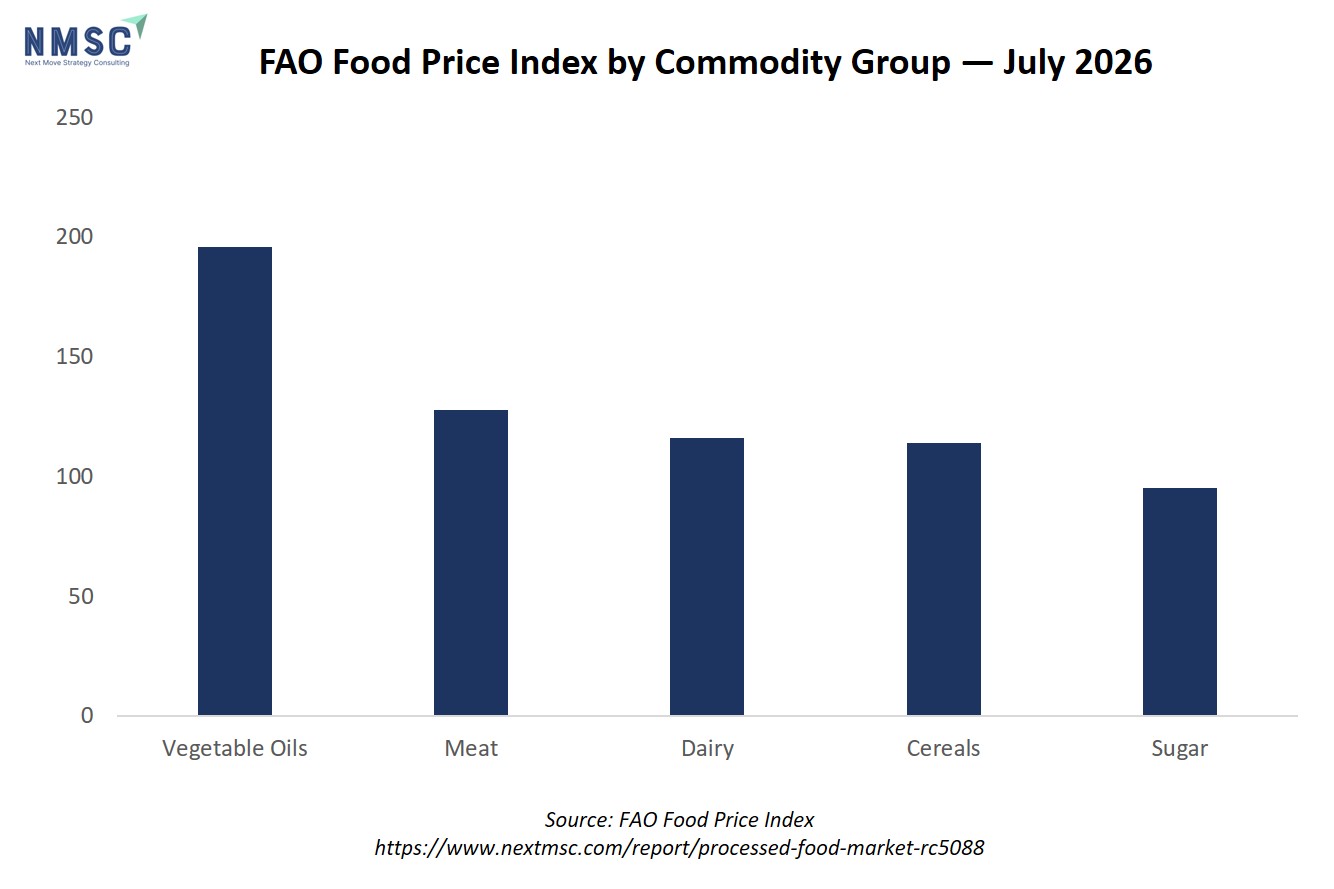
The regulatory transformation described above is compounding pre-existing cost pressures across the processed food supply chain. According to the USDA Economic Research Service, food prices are expected to increase 3.0% overall in 2026, following several years of above-average inflation driven by the COVID-19 pandemic, highly pathogenic avian influenza outbreaks affecting egg and poultry prices, elevated energy costs, and broader supply chain disruptions.
Changes in food policy that require or encourage food manufacturers to reformulate and relabel foods could put further pressure on food prices, particularly if state governments move forward with regulations in the absence of federal preemption, forcing manufacturers to produce different product versions for different markets.
Portfolio Restructuring Accelerates Among Global Manufacturers
The competitive landscape is being reshaped by deliberate portfolio restructuring. The Kraft Heinz Company's September 2025 announcement of a plan to separate into two independent, publicly traded companies illustrates how diversified manufacturers are pursuing sharper category focus in response to investor pressure and evolving consumer demand.
Conagra Brands introduced a broad portfolio of new snack and frozen food innovations at the 2025 Sweets & Snacks Expo, featuring new products across brands including Slim Jim, DAVID, Angie's BOOMCHICKAPOP, Vlasic, and Duke's. The Hershey Company simultaneously introduced multiple new products at the same event, including HERSHEY'S Milk Chocolate with Caramel, Reese's PB&J Big Cups, and Jolly Rancher Freeze Dried.
Cargill, Incorporated introduced new food ingredient solutions — including pectin alternatives, bake-stable fillings, and trans fat-free vanaspati — for bakery and processed food manufacturers at AAHAR 2025, signaling that ingredient suppliers are proactively repositioning their portfolios to serve reformulation demand.
Asia-Pacific Cold Chain Expansion Unlocks Structural Growth
While regulatory headwinds dominate the North American and European narrative, Asia-Pacific is experiencing a structural demand acceleration driven by cold chain infrastructure investment and rising middle-class packaged food spending. The Food Safety and Standards Authority of India's cold storage licensing framework is supporting investment in temperature-controlled logistics networks, compressing adoption timelines for frozen prepared meals and dairy alternatives across China, India, and Southeast Asia.
India represents the single fastest-growing country in the global processed food market, with a projected CAGR of 13.7% from 2026 to 2035, reflecting the convergence of rapid urbanization, expanding organized retail, and rising dual-income household penetration.
Key Takeaways:
-
USDA-ERS projects overall food price inflation of 2.9% in 2026, compounding reformulation and relabeling cost pressures for manufacturers.
-
Portfolio restructuring is accelerating, with Kraft Heinz's planned separation into two independent companies exemplifying the trend toward sharper category focus.
-
Asia-Pacific is the fastest-growing processed food market region, expanding at a 10.5% CAGR from 2026 to 2035, driven by cold chain investment and organized retail expansion.
-
India is the fastest-growing individual country market at a 13.7% CAGR, representing a compelling long-term capital allocation opportunity.
Pros and Cons of Recent Market Developments
|
Recent Development |
Pros |
Cons |
|
Mandatory GRAS Notifications (HHS, Aug 2026) |
Greater ingredient transparency; strengthens consumer trust; levels the competitive playing field for compliant manufacturers |
Significant compliance cost burden, particularly for smaller manufacturers; potential supply chain disruption if existing GRAS substances are revoked |
|
First Federal UPF Definition (HHS/USDA, Aug 2026) |
Creates a consistent research and policy foundation; enables targeted nutrition interventions; supports clean-label product differentiation |
Broad definitional scope risks capturing nutritionally adequate products; industry uncertainty during the rulemaking period may delay investment decisions |
|
FDA Front-of-Package Nutrition Labeling Rule |
Empowers consumers to make informed choices; incentivizes voluntary reformulation; aligns U.S. standards with international best practices |
Estimated USD 3.5 billion in combined industry relabeling and reformulation costs; potential for consumer confusion during transition |
|
Asia-Pacific Cold Chain Expansion |
Unlocks frozen and chilled prepared meal categories; accelerates market penetration for global brand owners; supports India and China growth trajectories |
Requires substantial upfront capital investment; regulatory harmonization across APAC markets remains incomplete |
|
Private Label Expansion by Mass Retailers |
Provides contract manufacturers with long-term volume contracts; drives above-average 8.8% CAGR growth; reduces consumer price sensitivity |
Margin compression for branded manufacturers; accelerates commoditization in staple categories |
|
AI-Driven Demand Forecasting Adoption |
Reduces spoilage and inventory waste in perishable categories; improves production planning efficiency; supports sustainability disclosures |
High implementation cost for mid-tier manufacturers; data quality and integration challenges across fragmented supply chains |
Key Data & Statistics
Table 1: Processed Food Market — Key Segment Metrics by Temperature State and Distribution Channel (2025)
|
Segmentation Axis |
Dominant Segment |
2025 Value |
Share |
Fastest-Growing Segment |
CAGR (2026–2035) |
|
Temperature State |
Ambient |
USD 2.39 Trillion |
~62% |
Frozen |
9.9% |
|
Brand Model |
Branded |
USD 2.73 Trillion |
~71% |
Private Label |
8.8% |
|
Distribution Channel |
Retail |
USD 2.46 Trillion |
~64% |
Industrial B2B |
8.7% |
Future Outlook & Forecast
The Processed Food Market's Path to USD 6.98 Trillion by 2035
According to Next Move Strategy Consulting, the global processed food market is projected to generate an absolute dollar opportunity of USD 2.96 trillion between 2026 and 2035, positioning convenience-oriented and fortified categories as a compelling area for capital allocation.
The Prepared Meals and Meal Kits segment is the single fastest-growing product category, registering a 9.8% CAGR from 2026 to 2035, as time-scarce urban households increasingly substitute home cooking with frozen and chilled ready-to-eat formats offering improved convenience and portion consistency. The Frozen temperature state is the fastest-growing format at a 9.9% CAGR, reflecting expanding cold chain investment and rising consumer preference for retained nutritional quality in prepared meals and vegetable preparations.
Private Label is the fastest-growing brand model at an 8.8% CAGR, driven by mass retailer expansion of own-brand portfolios and consumer value-seeking behavior. Industrial B2B is the fastest-growing distribution channel at an 8.7% CAGR, reflecting rising demand for formulated ingredient inputs among contract manufacturers and private label producers.
Regulatory Trajectory Through 2035
The regulatory environment will continue to tighten progressively through the forecast period. The FDA's mandatory GRAS notification rule, once finalized, will require manufacturers to provide the agency with information about existing uses of self-GRAS substances through a time-limited streamlined submission pathway. Post-market safety reviews of marketed food chemicals — including phthalates, propylparaben, butylated hydroxyanisole (BHA), and butylated hydroxytoluene (BHT) — are already underway, with the potential to require reformulation of products containing these substances.
The European Food Safety Authority's ongoing risk-assessment updates for food additives are compelling parallel reformulation investment in Europe, while national food safety authorities across Asia-Pacific are increasingly influencing ingredient sourcing standards. The net effect is a global regulatory convergence toward cleaner ingredient decks, lower sugar and sodium content, and greater transparency in food labeling — all of which will reshape product development priorities and capital allocation decisions across the processed food market through 2035.
Key Takeaways:
-
The global processed food market is projected to reach USD 6.98 trillion by 2035, representing a USD 2.96 trillion absolute dollar opportunity from 2026 to 2035.
-
Prepared Meals and Meal Kits (9.8% CAGR) and Frozen formats (9.9% CAGR) are the highest-growth segments, driven by cold chain investment and urban convenience demand.
-
Asia-Pacific will nearly triple its market size from USD 1.08 trillion in 2025 to USD 2.65 trillion by 2035, making it the most strategically significant growth region.
-
Progressive regulatory tightening across GRAS, UPF definition, and FOP labeling will accelerate reformulation investment and reshape competitive positioning through the forecast period.
Next Steps for Stakeholders
For C-Level Executives and Brand Owners:
-
Prioritize reformulation investment now. The GRAS reform and UPF definition proposals signal a multi-year regulatory tightening cycle. Manufacturers that begin clean-label ingredient sourcing and sugar/sodium reduction programs in 2026 will be better positioned to meet compliance timelines and retain retailer shelf-space allocation in North America and Europe.
-
Accelerate Asia-Pacific market entry and cold chain partnerships. With Asia-Pacific growing at a 10.5% CAGR and India at 13.7%, the window for establishing first-mover cold chain and distribution partnerships in these markets is narrowing. Early movers in frozen prepared meals and dairy alternatives will capture disproportionate share as organized retail penetration deepens.
-
Evaluate private label and Industrial B2B channel strategies. Private Label (8.8% CAGR) and Industrial B2B (8.7% CAGR) are the fastest-growing distribution channels. Manufacturers with flexible, high-throughput production capacity should actively pursue retailer-owned brand supply contracts and ingredient supply agreements with contract manufacturers.
-
Integrate AI-driven demand forecasting into supply chain operations. The FDA's own 2026 priority deliverables include AI-predictive models for food supply chain risk management. Manufacturers that deploy machine-learning-based demand sensing will reduce spoilage, optimize inventory, and improve production planning efficiency — particularly critical in the high-growth frozen and chilled categories.
For Institutional Investors and Financial Analysts:
-
Allocate capital toward manufacturers with credible reformulation credentials. NMSC's analysis indicates that regulatory alignment is increasingly a proxy for long-term retailer shelf-space retention. Manufacturers demonstrating validated clean-label and protein-fortified product pipelines represent lower regulatory risk and higher long-term revenue visibility.
-
Monitor the GRAS rulemaking timeline closely. The proposed mandatory GRAS notification rule is subject to public comment and federal rulemaking. Any acceleration of the compliance timeline could create near-term earnings pressure for manufacturers with high exposure to self-GRAS substances, representing both a risk and a potential short-side opportunity.
-
Weight Asia-Pacific and Middle East & Africa in portfolio construction. With MEA growing at 9.0% CAGR and Latin America at 9.2%, emerging market processed food exposure offers above-average growth potential relative to the mature North American and European markets.
Conclusion
The global processed food market stands at a structural inflection point. The August 2026 HHS announcement on mandatory GRAS notifications and the first federal UPF definition has crystallized what industry observers have anticipated for years: the era of self-regulated ingredient safety in the world's largest food market is drawing to a close. Combined with the FDA's ambitious 2026 priority deliverables — spanning FOP labeling, added sugar reduction, sodium targets, and expanded facility inspections — the regulatory environment will impose material reformulation and compliance costs on manufacturers across the value chain.
Yet the market's fundamental growth drivers remain intact and compelling. According to Next Move Strategy Consulting, the processed food market will expand from USD 4.02 trillion in 2026 to USD 6.98 trillion by 2035 at a 6.3% CAGR, with Asia-Pacific, the Middle East & Africa, and Latin America delivering above-average growth rates that will reshape the global competitive landscape. The manufacturers, investors, and supply chain partners that align their strategies with the dual imperatives of regulatory compliance and emerging market expansion will be best positioned to capture the USD 2.96 trillion absolute dollar opportunity that lies ahead.
About the Author
 Sanyukta Deb
— Sanyukta Deb is Digital Marketing Team Lead at Next Move Strategy Consulting, where she has led content strategy and technical SEO for the firm's B2B market research publications for over 2 years. Her editorial process translates NextMSC's primary and secondary research — spanning technology, industrial, and consumer sectors — into commercial narratives, backed by search-intent, keyword, and competitive analysis. She brings 5 years of overall experience in digital marketing and content strategy.
Sanyukta Deb
— Sanyukta Deb is Digital Marketing Team Lead at Next Move Strategy Consulting, where she has led content strategy and technical SEO for the firm's B2B market research publications for over 2 years. Her editorial process translates NextMSC's primary and secondary research — spanning technology, industrial, and consumer sectors — into commercial narratives, backed by search-intent, keyword, and competitive analysis. She brings 5 years of overall experience in digital marketing and content strategy.
About the Reviewer
 Debashree Dey
— Debashree Dey is Assistant Manager at Next Move Strategy Consulting, where she supports cross-vertical market content and communications across diverse industries for 6 years. Her professional background includes senior content writing, communications, and published manuscript authorship, with experience developing audience-focused business narratives and maintaining clear, consistent messaging. Her role supports research-led content development and editorial quality across NextMSC publications.
Debashree Dey
— Debashree Dey is Assistant Manager at Next Move Strategy Consulting, where she supports cross-vertical market content and communications across diverse industries for 6 years. Her professional background includes senior content writing, communications, and published manuscript authorship, with experience developing audience-focused business narratives and maintaining clear, consistent messaging. Her role supports research-led content development and editorial quality across NextMSC publications.


















Add Comment