How Is 3D Bioprinting Transforming Modern Healthcare?
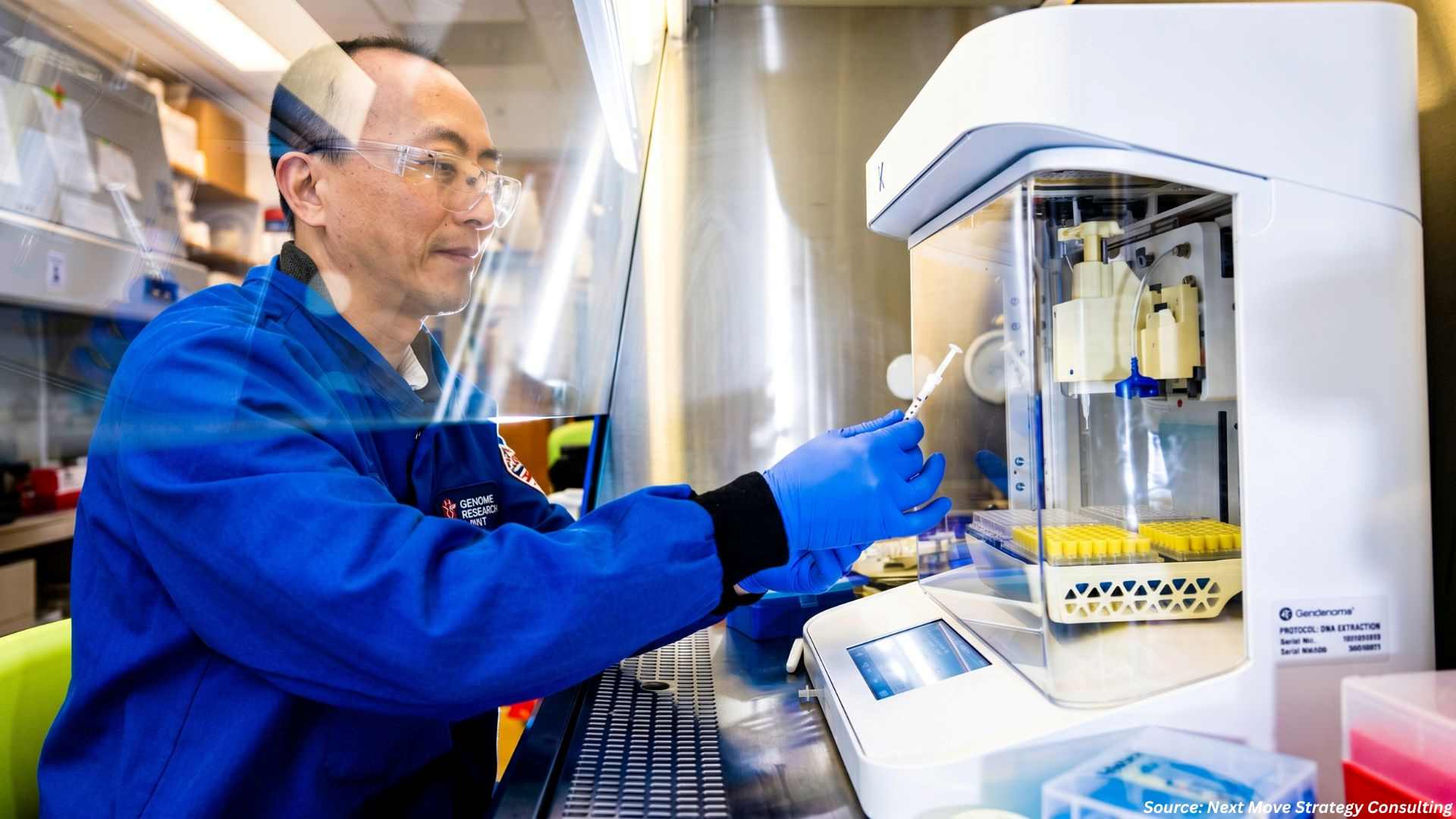
Three-dimensional bioprinting is steadily transitioning from experimental laboratories to practical medical applications. With breakthroughs in printing lung tissue and developing functional blood vessels, the field is beginning to address some of healthcare’s most complex challenges. These include organ shortages, transplant rejection, and the need for personalized treatment solutions.
What Makes 3D Bioprinting a Breakthrough in Medicine?
The significance of 3D Bio Printing Market lies in its ability to create living tissue structures using cells and specialized materials.
Unlike traditional 3D printing, which uses plastics or metals, bioprinting requires materials that can support biological functions.
A major advancement involves the development of elastic hydrogels that closely mimic the human body’s environment. These materials can retain water and provide flexibility, both of which are essential for sustaining living cells. Since the human body is approximately 60% water, maintaining a similar environment is critical for tissue development.
Earlier hydrogels were too fragile and could not withstand the mechanical stress required during printing. However, new formulations allow the material to stretch and recoil while maintaining structural integrity.
Can 3D Bioprinting Address the Global Organ Shortage?
One of the most urgent problems in healthcare is the lack of available organs for transplantation. Current data highlights a stark gap between supply and demand. Only about 7,000 lung transplants are performed globally each year, while millions of patients continue to wait.
Instead of replacing entire organs, researchers are exploring ways to repair only the damaged portions. For instance, scientists have successfully developed lung tissue using bioprinting techniques that can potentially replace specific diseased areas rather than the whole organ.
This approach is particularly relevant in conditions where damage is localized, such as tumors affecting a specific lung region while the rest remains healthy.

How Do Different 3D Bioprinting Techniques Work?
This image illustrates four major 3D bioprinting methods, each using a distinct mechanism to deposit bioink and create living tissue structures.
Inkjet Bioprinting works by ejecting tiny droplets of bioink onto a surface using a piezoelectric actuator. The process is similar to traditional inkjet printing but uses cell-containing materials. It is precise and suitable for creating fine patterns, although it may be limited in handling thicker materials.
Laser-Assisted Bioprinting uses laser pulses to transfer bioink droplets from a donor layer onto a substrate. This technique avoids direct contact with the material, reducing contamination risks and improving cell viability. It is particularly useful for high-resolution printing.
Extrusion Bioprinting relies on mechanical force to push bioink through a nozzle, forming continuous structures such as cylindrical tissues. This method is widely used due to its ability to print thicker and more complex structures, although it may expose cells to higher mechanical stress.
Stereolithography Bioprinting uses light to solidify layers of bioink in a controlled pattern. A light source projects specific designs onto the material, enabling the formation of highly detailed and structured tissues. This technique is known for its accuracy and smooth surface finish.

How Are Blood Vessels Being Printed Successfully?
Creating blood vessels is a crucial step because all tissues require oxygen and nutrients to survive. Researchers have developed a method that begins with mixing living cells into a liquid hydrogel solution. This mixture is then printed layer by layer into desired shapes, such as tubular structures resembling blood vessels.
After printing, exposure to blue light triggers a chemical reaction that solidifies the material while preserving cell viability. Over time, the cells grow and begin forming natural tissue within the printed structure.
An important aspect of this innovation is that the material is biodegradable. As the structure matures, the hydrogel gradually dissolves and is replaced by natural biological components such as collagen and elastin.
However, current models are still in development. Printed vessels remain relatively weak and cannot yet withstand human blood pressure. Researchers suggest that longer growth periods may improve strength and functionality.
What Are the Key Mechanisms Powering 3D Bioprinting Techniques?
This image presents five fundamental bioprinting approaches, labeled A to E, each illustrating a different method used to deposit bioink and build biological structures.
In A (Inkjet-Based Bioprinting), droplets of bioink are released through a nozzle using either heat or a piezoelectric actuator. This method enables precise placement of small droplets, making it suitable for detailed patterns, though it works best with low-viscosity materials.
In B (Extrusion-Based Bioprinting), bioink is continuously pushed through a nozzle using pneumatic pressure, a piston, or a screw mechanism. This allows the creation of continuous strands and more complex 3D structures, especially useful for thicker tissues.
In C (Laser-Assisted Bioprinting), a laser pulse targets a donor slide containing bioink. The energy propels droplets onto a surface below without direct contact. This technique enhances cell viability and precision due to its non-invasive nature.
In D (Stereolithography-Based Bioprinting), ultraviolet or visible light is used to solidify bioink in a patterned manner. The light selectively cures layers, enabling the formation of highly detailed and smooth tissue constructs.
In E (Scaffold-Based or Advanced Deposition Technique), bioink is deposited layer by layer onto a pre-formed or evolving scaffold structure. This supports the development of complex, interconnected tissue networks.

How Does Bioprinting Enable Personalized Medicine?
Personalized medicine focuses on tailoring treatments to individual patients based on their biological characteristics. Bioprinting supports this concept by using a patient’s own cells to create tissue structures.
This reduces the likelihood of immune rejection and improves compatibility. Early-stage experiments have already shown promising results. In animal studies, researchers observed no signs of rejection, indicating that the printed tissues integrate well with the host.
Additionally, the materials used in bioprinting can encourage the growth of new blood vessels from the patient’s own body. This natural integration is essential for long-term success.
What Challenges Still Limit Widespread Adoption?
Despite its potential, 3D bioprinting faces several challenges before it can become a standard medical practice. One of the primary limitations is scaling. While small tissue samples have been successfully created, producing larger, human-sized structures remains complex.
Cost is another significant factor. Research and development require substantial funding, and there are ongoing questions about how such treatments will be made accessible to larger populations.
Additionally, regulatory frameworks and insurance systems will need to evolve to accommodate these advanced therapies. Moving from successful animal studies to human trials also requires extensive validation.
What Are the Major Trends Shaping the Present?
Current developments indicate a clear shift in focus within the field. Researchers are moving away from rigid implants toward soft tissue engineering. There is also a growing emphasis on repairing specific parts of organs rather than replacing them entirely.
Another important trend is the use of biodegradable materials that act as temporary scaffolds. These materials support initial tissue formation and then gradually dissolve as natural tissue takes over.
Finally, there is a strong movement toward patient-specific therapies, reflecting the broader transition toward personalized medicine.
Visual Insight: How Bioprinting Works
A simplified representation of the process begins with extracting cells from a patient. These cells are then combined with a hydrogel material and printed layer by layer into a desired structure. A light-based trigger solidifies the structure, after which cells grow and mature into functional tissue.
How Are Key Focus Areas Distributed in 3D Bioprinting?
This pie chart highlights the primary areas driving advancements in 3D bioprinting, showing how focus is distributed across different aspects of research and development.
The largest share, Material Innovation (25%), indicates that the biggest emphasis is on developing advanced biomaterials. These materials are essential for creating functional, flexible, and cell-compatible tissues, making them the foundation of all bioprinting progress.
Three segments Organ Shortage Solutions (20%), Blood Vessel Development (20%), and Personalized Medicine (20%) hold equal importance. This reflects a balanced effort in addressing real-world healthcare challenges. Researchers are simultaneously working on reducing dependence on organ transplants, improving vascular structures for tissue survival, and tailoring treatments to individual patients.
The remaining portion, Adoption Challenges (15%), represents barriers such as cost, scalability, and regulatory issues. Although smaller in share, this segment is critical because overcoming these challenges will determine how quickly bioprinting can move into mainstream healthcare.

Leading Companies Driving Innovation in 3D Bioprinting
The landscape includes key players such as CELLINK, Stratasys, 3D Systems, Inc., Inventia Life Sciences, Aspect Biosystems Ltd., Cyfuse Biomedical, regenHU, Poietis, Corning Incorporated, ROKIT HEALTHCARE, INC., Prellis Biologics, Materialise, Brinter, The Bio Convergence Company, and UPM Biomedicals. These companies are actively investing in research and development, advancing product and technology innovations, and forming strategic collaborations. Their efforts are focused on strengthening product capabilities while expanding market presence and global reach.

What Does the Future Hold for 3D Bioprinting?
The direction of current research suggests that 3D bioprinting will play a significant role in future healthcare systems. As materials improve and techniques become more refined, the possibility of creating fully functional tissues and organs becomes more realistic.
The long-term impact could include reduced dependence on organ donors, faster recovery times, and more effective treatments tailored to individual patients.
Next Steps
Stakeholders looking to engage with this field should focus on strengthening research capabilities and supporting innovation. Continued investment in material science will be essential, as well as collaboration between academic institutions and healthcare providers.
Efforts should also be directed toward making these technologies accessible and affordable. At the same time, regulatory systems must adapt to ensure safety without slowing progress.
-
Invest in advanced biomaterials that improve tissue strength and flexibility
-
Support large-scale clinical trials to move from lab research to human applications
-
Encourage collaboration between research institutions, hospitals, and industry players
-
Develop cost-effective models to ensure broader patient access
-
Strengthen regulatory and insurance frameworks to support emerging therapies
Final Thoughts
3D bioprinting is steadily redefining the boundaries of modern medicine. The ability to create lung tissue and blood vessels demonstrates that the technology is moving closer to practical application. While challenges remain, the progress made in recent years confirms that bioprinting has the potential to reshape healthcare in a meaningful and lasting way.
About the Author
 Tania Dey is a content writer specializing in transformation-led, insight-driven storytelling. She develops research-backed, high-impact content aligned with evolving business priorities, digital behavior, and audience expectations. Her work helps organizations sharpen value propositions, strengthen visibility, and communicate strategic intent with clarity and precision. Grounded in data-informed storytelling, she brings a strong focus on relevance, consistency, and measurable digital impact across platforms.
About the Reviewer
 Debashree Dey is a senior content writer and communications specialist known for crafting audience-focused narratives and insight-driven content strategies. As a published manuscript author, she combines creative storytelling with strategic thinking to strengthen brand messaging, enhance visibility, and drive meaningful audience engagement across digital platforms. With a collaborative leadership approach, she contributes to high-impact communication initiatives that ensure consistency, clarity, and long-term brand value. Outside of work, she finds inspiration in creative projects, design exploration, and storytelling-driven ideas.











Add Comment