How Is Artificial Intelligence Redefining the Future of Mobility?
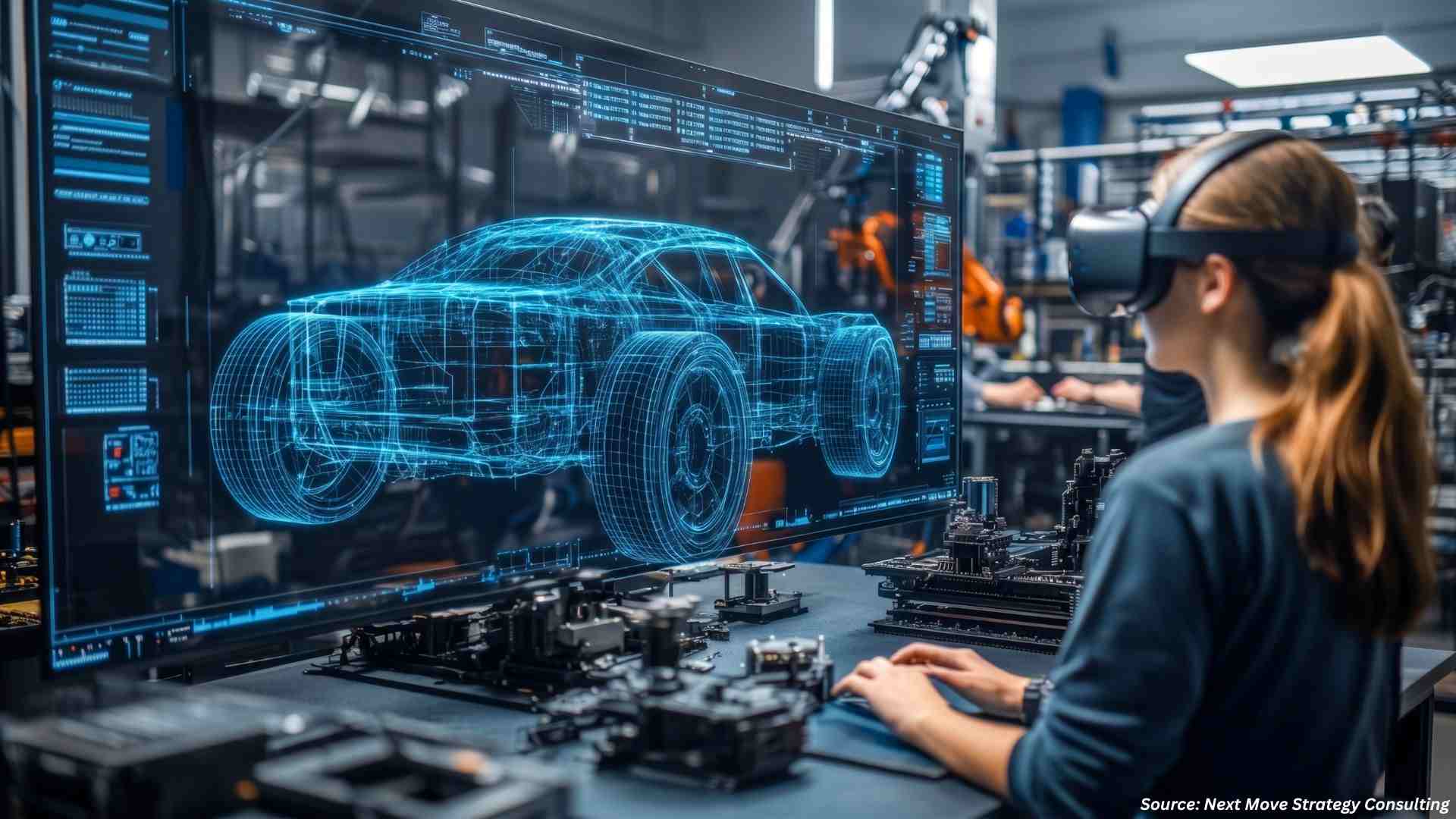
The Automotive Artificial Intelligence (AI) Market is entering a transformative phase where artificial intelligence has evolved from an experimental capability into a core industry driver. From intelligent vehicle systems in China to AI-powered dealership operations in North America, automotive companies are rapidly integrating data-driven technologies across manufacturing, navigation, retail, and customer engagement.
Governments and technology providers are also accelerating investments to ensure vehicles evolve into connected, self-learning platforms capable of making real-time decisions. Recent developments from China’s automotive sector and CDK’s dealership technology platform demonstrate how AI is reshaping nearly every layer of the automotive value chain.
Why Is Artificial Intelligence Becoming Central to Modern Vehicles?
China’s automotive industry is aggressively embedding AI into electric vehicles as part of Beijing’s national “AI Plus” strategy. According to Business Today Malaysia, the initiative focuses on building next-generation electric vehicles powered by domestic software ecosystems and semiconductor technologies.
Stephen Ma, Chief of Nissan Motor China, stated that there is “no longer a distinction between a technology company and a car company,” highlighting how mobility and intelligent computing are becoming increasingly interconnected.
This transition is visible in several newly introduced AI capabilities. Xpeng’s updated systems now allow drivers to issue conversational commands such as requesting parking near a shopping center entrance. The company also demonstrated camera-based navigation systems that function without relying heavily on maps or coordinates.
At the same time, Xiaomi expanded its HyperOS ecosystem into vehicles, enabling in-car restaurant bookings, coffee ordering, and task management. The system can even adjust lighting and music based on driver stress levels, demonstrating how AI is becoming deeply integrated into personalization and comfort.
Chinese chipmaker Horizon Robotics also introduced its Starry 6 processor, designed to support intelligent cockpit and driving functions across multiple in-car displays. These developments illustrate how vehicles are increasingly operating as intelligent digital platforms rather than standalone transportation machines.
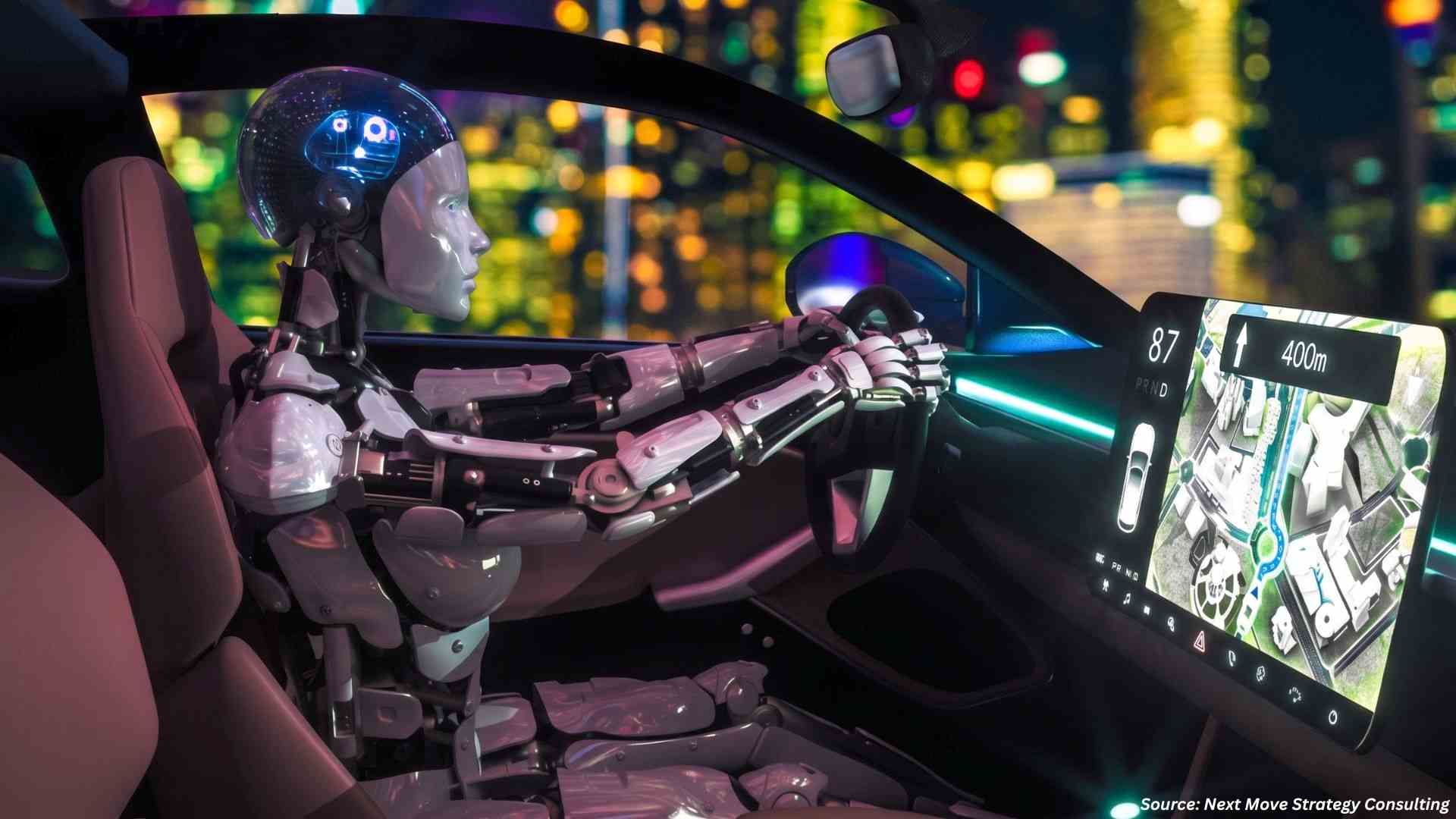
Key AI Advancements in Vehicles
|
AI Application |
Industry Impact |
|
Natural language commands |
Enables conversational interaction |
|
Camera-based autonomous navigation |
Reduces reliance on maps and |
|
Stress-responsive cabin systems |
Enhances personalization and |
|
AI-powered smart cockpit chips |
Supports advanced multi-display |
How Is China Accelerating AI-Driven Mobility Innovation?
China’s automotive sector is positioning itself as a global leader in AI-driven mobility through coordinated industrial strategies and large-scale investments. At the Beijing Auto Show 2026, multiple automakers unveiled intelligent mobility technologies designed to improve automation, connectivity, and user experience.
One of the most significant developments came from Huawei, which announced plans to invest more than US$10 billion over the next five years to expand computing power for smart driving systems. This move reflects the broader industry shift toward building advanced AI infrastructure capable of supporting connected and autonomous mobility solutions.
Dongfeng Motor also revealed plans to develop vehicles using what it described as “embodied AI technology,” aligning its operations with China’s long-term industrial strategy. The announcement signals how state-backed manufacturers are integrating AI into both manufacturing processes and future vehicle architectures.
The country’s broader strategy demonstrates that AI adoption is no longer limited to driver assistance systems. Instead, Chinese companies are building integrated ecosystems where vehicles connect seamlessly with digital lifestyles, entertainment services, navigation platforms, and cloud-based intelligence.
How Is AI Improving Dealership Operations and Customer Experience?
Artificial intelligence is not only reshaping vehicles but also transforming dealership operations through predictive analytics, workflow automation, and customer engagement tools.
According to Business Wire, CDK introduced a series of AI-driven innovations at NADA Show 2026 through its CDK Dealership Xperience (DXP) platform. The company emphasized that its technology platform is powered by the automotive retail industry’s largest dataset, enabling dealerships to make faster and more accurate business decisions.
CDK’s platform includes AI-generated summaries for customer relationship management and service operations, helping dealership teams reduce complexity and improve response times. The company also introduced AI-driven appraisals and pricing systems for vehicle inventory management, allowing dealerships to improve operational efficiency and accelerate decision-making.
Another important development is CDK’s Artificial Intelligence Virtual Assistant (AIVA), which increased consumer appointment scheduling by 25%. Predictive analytics capabilities within the CDK Intelligence Suite also enabled dealerships to achieve 20% more accurate forecasting while reducing KPI review time by 80%.
In service operations, AI-assisted diagnostics and predictive maintenance insights are helping dealerships improve repair planning and operational productivity. CDK additionally reported customer satisfaction scores exceeding 90% across its services portfolio.
AI Innovations in Dealership Technology
|
Operational Area |
AI Capability |
Business Outcome |
|
CRM and customer service |
AI-generated summaries |
Faster decision-making |
|
Forecasting |
Predictive analytics |
20% more accurate forecasting |
|
Consumer engagement |
AI Virtual Assistant (AIVA) |
25% increase in appointment |
|
Service operations |
Predictive service insights |
Enhanced maintenance planning |
What Does the Rise of Intelligent Mobility Mean for the Industry?
The automotive industry is rapidly evolving from a hardware-focused sector into a software-defined mobility ecosystem. Artificial intelligence is now influencing navigation systems, predictive maintenance, customer personalization, dealership operations, and connected digital experiences.
This transformation is creating a competitive environment where software capabilities and data intelligence are becoming just as important as manufacturing expertise. Companies are increasingly investing in AI-enabled platforms, semiconductor infrastructure, cloud computing, and connected mobility ecosystems to strengthen long-term competitiveness.
As intelligent systems become more deeply integrated across the automotive value chain, the industry is moving toward a future where vehicles function as continuously evolving digital platforms capable of improving safety, efficiency, and customer experience.
How Artificial Intelligence Is Revolutionizing the Automotive Industry
The infographic highlights the transformative impact of artificial intelligence across the automotive ecosystem. It illustrates how AI is improving vehicle safety, operational efficiency, and in-vehicle user experiences while also driving innovation and data-driven decision-making. The visual further emphasizes the growing role of government initiatives and strategic partnerships in accelerating AI adoption across the industry. Together, these factors demonstrate how artificial intelligence is reshaping mobility into a smarter, more connected, and technology-driven ecosystem.

Leading Companies Driving Innovation in the Automotive Artificial Intelligence (AI) Industry
The Automotive Artificial Intelligence (AI) industry is highly competitive, with major technology providers and automotive solution companies focusing on product innovation, strategic expansion, and advanced AI integration to strengthen their market presence globally. Key players operating in the industry include NVIDIA Corporation, Mobileye Global Inc, Qualcomm Technologies, Inc, Robert Bosch GmbH, Continental AG, Aptiv PLC, Huawei Technologies Co., Ltd, DENSO Corporation, ZF Friedrichshafen AG, Valeo SA, Waymo LLC, Aurora Innovation, Inc, NXP Semiconductors N.V, Cerence Inc, and Cognata Ltd. These companies are increasingly adopting product launches, regional expansion initiatives, and AI-driven innovation strategies to maintain their competitive edge in the global market.

Next Steps for Industry Stakeholders
Automotive companies looking to remain competitive in the evolving mobility landscape should prioritize investments in AI-enabled customer engagement platforms, predictive analytics infrastructure, and connected ecosystem development. Strengthening partnerships with semiconductor and software providers can also accelerate innovation and improve long-term scalability.
Organizations should additionally focus on developing governance frameworks that ensure reliability, transparency, and customer trust as AI adoption expands across vehicles and dealership operations.
-
Invest in AI-enabled customer engagement platforms to improve personalization and operational efficiency.
-
Strengthen data infrastructure to support predictive analytics and intelligent automation.
-
Explore partnerships with semiconductor and software providers to accelerate innovation.
-
Prioritize connected mobility ecosystems that integrate navigation, lifestyle, and service capabilities.
-
Develop AI governance strategies to ensure scalability, reliability, and customer trust.
Conclusion
Artificial intelligence is rapidly transforming mobility from a mechanical experience into a connected digital ecosystem. China’s aggressive AI-driven vehicle initiatives and CDK’s dealership automation technologies illustrate how the industry is shifting toward predictive intelligence, software integration, and real-time decision-making.
As vehicles become increasingly data-centric and dealerships adopt advanced AI platforms, the automotive sector is moving toward a future where intelligent systems drive efficiency, personalization, and operational excellence across the entire mobility landscape.
About the Author
 Sanyukta Deb
— Sanyukta Deb is Digital Marketing Team Lead at Next Move Strategy Consulting, where she has led content strategy and technical SEO for the firm's B2B market research publications for over 2 years. Her editorial process translates NextMSC's primary and secondary research — spanning technology, industrial, and consumer sectors — into commercial narratives, backed by search-intent, keyword, and competitive analysis. She brings 5 years of overall experience in digital marketing and content strategy.
Sanyukta Deb
— Sanyukta Deb is Digital Marketing Team Lead at Next Move Strategy Consulting, where she has led content strategy and technical SEO for the firm's B2B market research publications for over 2 years. Her editorial process translates NextMSC's primary and secondary research — spanning technology, industrial, and consumer sectors — into commercial narratives, backed by search-intent, keyword, and competitive analysis. She brings 5 years of overall experience in digital marketing and content strategy.
About the Reviewer
 Debashree Dey
— Debashree Dey is Assistant Manager at Next Move Strategy Consulting, where she supports cross-vertical market content and communications across diverse industries for 6 years. Her professional background includes senior content writing, communications, and published manuscript authorship, with experience developing audience-focused business narratives and maintaining clear, consistent messaging. Her role supports research-led content development and editorial quality across NextMSC publications.
Debashree Dey
— Debashree Dey is Assistant Manager at Next Move Strategy Consulting, where she supports cross-vertical market content and communications across diverse industries for 6 years. Her professional background includes senior content writing, communications, and published manuscript authorship, with experience developing audience-focused business narratives and maintaining clear, consistent messaging. Her role supports research-led content development and editorial quality across NextMSC publications.

















Add Comment