How Is Cloud OSS/BSS Reshaping Telecom Operations?
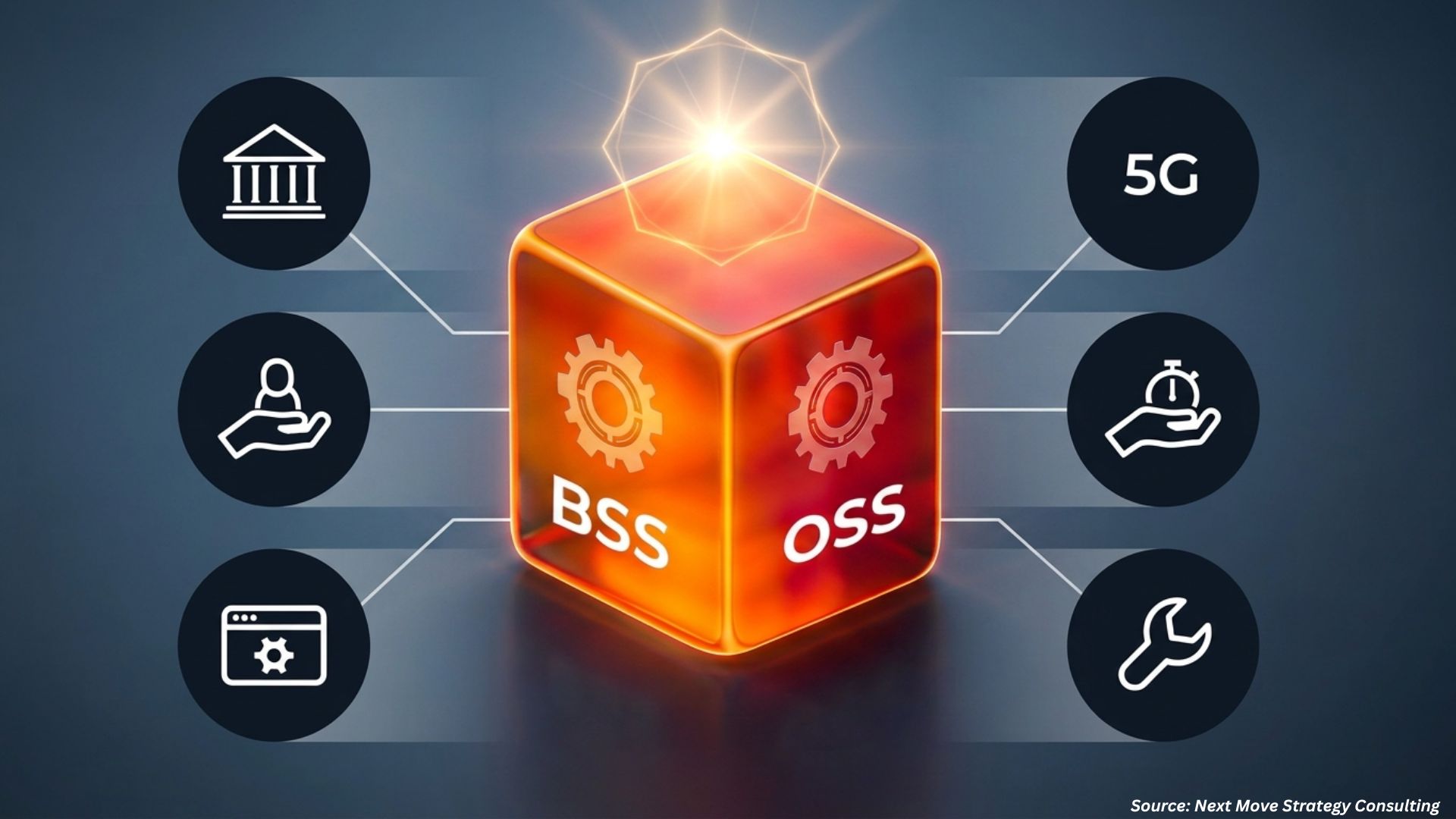
Telecom companies are entering a new phase where speed, automation, and customer experience matter as much as network coverage. Traditional operations support systems (OSS) and business support systems (BSS) were built for slower, hardware-led networks. Today, they must support 5G, cloud services, digital billing, and AI-driven operations in real time.
Recent developments from Cognizant and Telecom Review show one clear trend: telecom operators are moving toward cloud-native, intelligent, and autonomous operating models. This shift is making Cloud OSS/BSS Market a strategic priority rather than a back-end upgrade.
What Is Driving the Move to Cloud OSS/BSS?
The biggest driver is operational complexity. Telecom networks now include thousands of active nodes, multiple software layers, and massive daily data flows. Telecom Review noted that a tier-one operator may manage more than 50,000 active network nodes along with petabytes of daily operational data. At this scale, manual management becomes inefficient.
Another major factor is cost pressure. Network operations and maintenance can consume 20%–25% of operator revenue, making automation and smarter workflows essential for profitability. At the same time, customers expect faster service activation, reliable connectivity, and seamless digital experiences.
Why Unified Cloud Platforms Are Transforming OSS/BSS Operations
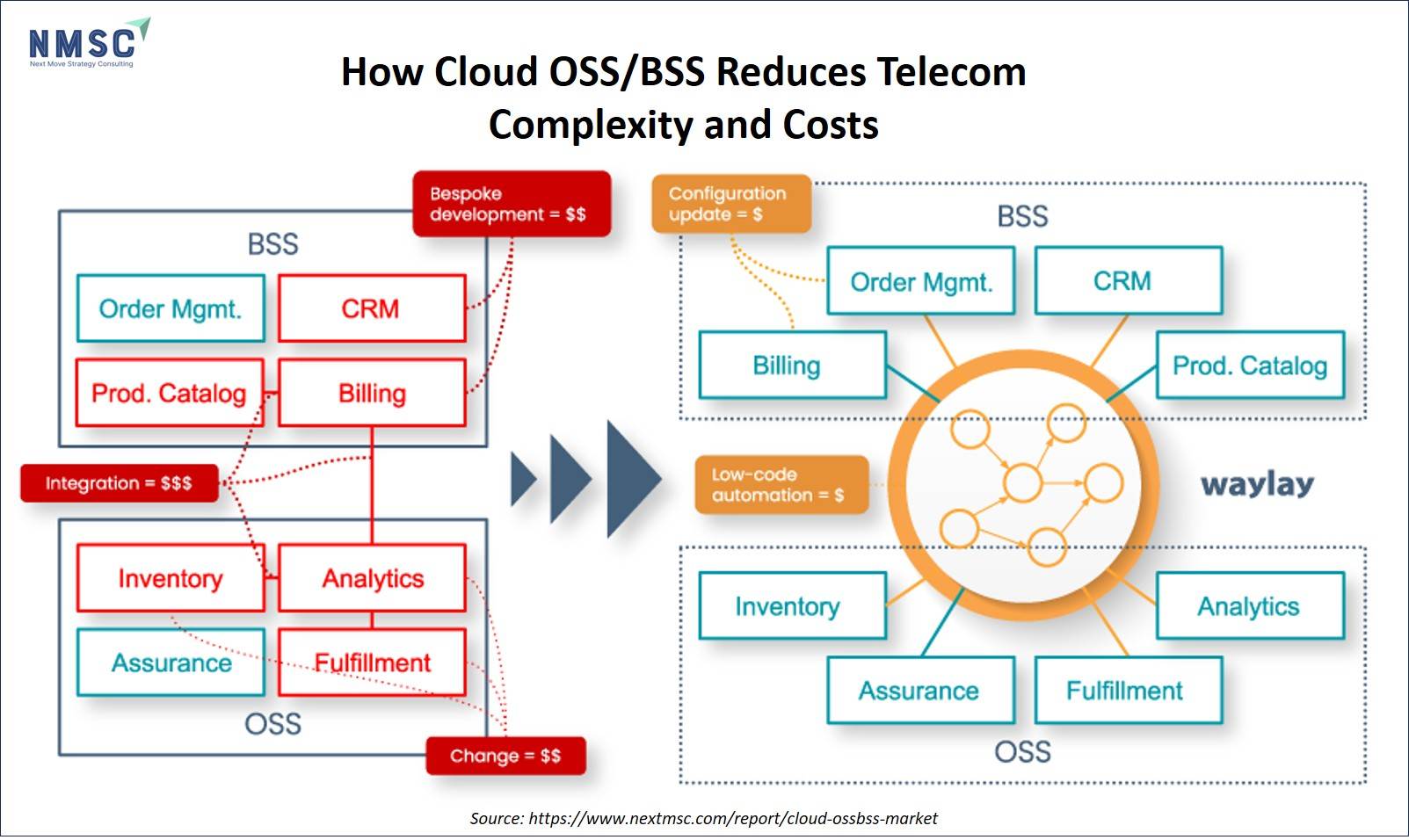
The visual highlights the shift from isolated legacy telecom systems to an integrated cloud ecosystem. Traditional architectures require multiple custom integrations and expensive modifications whenever new services or processes are introduced. This slows innovation and increases maintenance burdens.
In contrast, the cloud-based platform shown on the right creates a connected environment where order management, billing, CRM, analytics, assurance, and fulfillment work together seamlessly. With automation and simplified updates, operators can respond faster to market demands, improve customer experiences, and scale operations more effectively.
|
Key Pressure Point |
Business Impact |
|
Rising complexity |
Harder to manage networks manually |
|
High operating costs |
Need for automation and efficiency |
|
Customer demand |
Faster and better service delivery |
|
Compliance needs |
Stronger governance and reporting |
How Is AI Making Cloud OSS/BSS Smarter?
Artificial intelligence is transforming OSS/BSS from reactive systems into predictive systems. Instead of waiting for outages or service disruptions, AI can detect anomalies early and recommend or trigger corrective actions automatically.
Cognizant highlighted its use of AIOps-driven automation and cloud-native managed services to support predictive, self-healing networks. These capabilities help optimize OSS/BSS workflows, automate network management, and improve service-level performance.
Telecom Review also emphasized the shift toward predictive, closed-loop assurance, where systems continuously analyze data, learn from patterns, and improve operations over time.
AI and Cloud Migration Lead Cloud OSS/BSS Transformation
The pie chart highlights the main priorities shaping Cloud OSS/BSS adoption across the telecom industry. AI and automation adoption holds the largest share at 30%, showing that operators are focusing heavily on predictive analytics, automated workflows, and self-healing network capabilities to improve efficiency and reduce manual intervention.
Cloud-Native Migration follows with 25%, reflecting the growing need for scalable, flexible, and faster-to-deploy platforms that can replace legacy OSS/BSS systems. Customer Experience Enhancement accounts for 18%, indicating the importance of personalized services, faster onboarding, and seamless digital interactions.
Cost Optimization represents 15%, as telecom providers continue seeking ways to lower operational expenses and streamline processes. API and Data Integration contributes 12%, emphasizing the need for connected systems and real-time data sharing across business and network functions.
Overall, the chart shows that telecom companies are prioritizing smarter automation and modern infrastructure while also improving customer value and operational performance.

From Legacy to Cloud-Native OSS/BSS: Red Hat’s Integrated Platform for Telecom Transformation
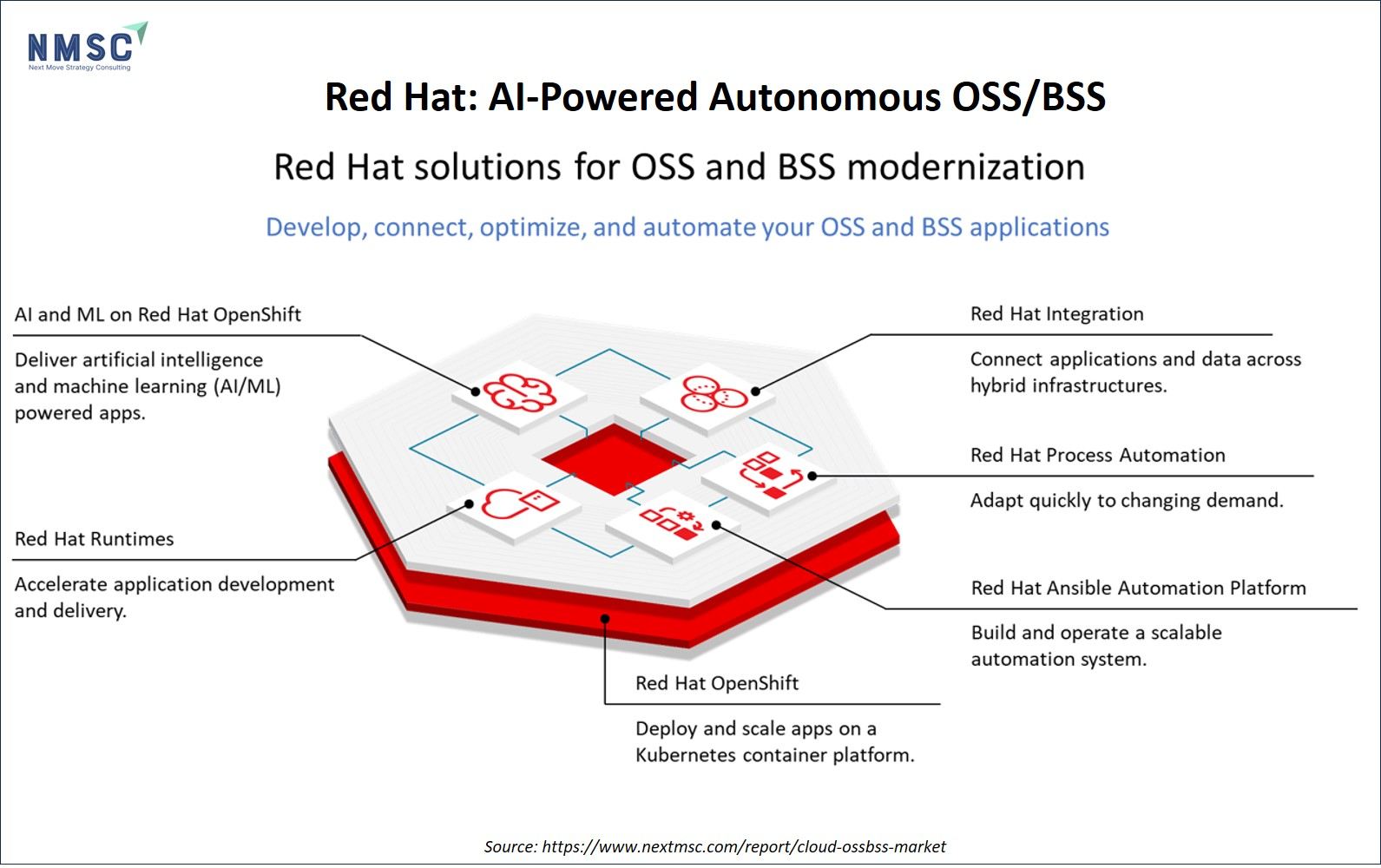
The image presents how Red Hat enables the modernization of OSS (Operations Support Systems) and BSS (Business Support Systems) through a unified, cloud-native architecture. At the core is Red Hat OpenShift, which provides a scalable Kubernetes-based foundation for deploying and managing applications. Surrounding it are key capabilities such as AI/ML integration for intelligent, data-driven operations, Red Hat Integration for connecting systems across hybrid environments, Red Hat Process Automation for streamlining workflows, and Red Hat Ansible Automation Platform for building scalable automation. Together, these components reflect the telecom industry’s shift toward autonomous, AI-powered networks highlighted in sources like Telecom Review Asia, where OSS/BSS systems are evolving into self-optimizing platforms. This approach also aligns with insights from Cognizant, emphasizing cloud-native, microservices-based, and AIOps-driven transformation to replace legacy systems. Overall, the image conveys that modern OSS/BSS is becoming an intelligent, automated, and highly integrated ecosystem that enhances agility, scalability, and customer experience in the telecom sector.
Why Are Cloud-Native Architectures Becoming Essential?
Legacy OSS/BSS platforms often depend on siloed databases, batch billing systems, and long provisioning timelines. Telecom Review noted that some provisioning cycles can extend to 90 days, which does not align with real-time enterprise expectations.
Cloud-native architectures solve this challenge by using modular applications, APIs, and scalable infrastructure. They allow telecom operators to launch services faster, integrate new capabilities more easily, and scale operations based on demand.
Telecom Review also referenced Gartner’s projection that by 2027, over 70% of new telecom OSS/BSS workloads will run on cloud-native architectures. This highlights how quickly the industry is moving toward modern deployment models.
How Are Industry Leaders Responding?
Technology providers are positioning themselves as transformation partners for telecom operators. Cognizant was recognized as a Leader in the 2025 ISG Provider Lens Telecom, Media, and Entertainment Industry Services Report, where leaders were identified for strong market presence, innovation, and competitive stability.
The company was noted for combining advisory services, AI frameworks, and telecom expertise to help clients modernize operating models and improve customer experiences. It also highlighted cloud partnerships that enable elastic scaling during live events and high-demand digital services.
This reflects a broader market reality: telecom transformation now requires both advanced technology and deep sector knowledge.

Validating Next-Gen Telecom Systems: OSS/BSS Testing in the AI-Driven Era
These components represent both OSS (network-focused operations like provisioning and network management) and BSS (customer-facing processes like billing and CRM), which together form the backbone of telecom services . The diagram emphasizes how testing ensures seamless integration across these domains, which is critical as telecom systems become increasingly complex and interdependent. This aligns with industry insights from Telecom Review Asia, where AI-driven transformation is pushing OSS/BSS toward autonomous, real-time operations, making robust testing essential to handle massive data, microservices, and dynamic network environments . Additionally, the structured coverage of multiple business and operational modules reflects the broader industry push highlighted by Cognizant toward modernizing legacy OSS/BSS into integrated, cloud-native, and AI-enabled platforms. Overall, the image conveys that comprehensive OSS/BSS testing is no longer optional but a critical enabler for ensuring reliability, automation, and performance in next-generation telecom ecosystems.

Leading Companies Strengthening Their Position in Cloud OSS/BSS
The cloud OSS/BSS sector is shaped by major technology providers such as Amdocs Limited, Netcracker Technology Corporation, Telefonaktiebolaget LM Ericsson, Nokia Corporation, Huawei Technologies Co., Ltd., Oracle Corporation, CSG Systems International, Inc., Salesforce, Inc., SAP SE (BRIM), AsiaInfo Technologies Limited, Hewlett Packard Enterprise Company, Cisco Systems, Inc., ServiceNow, Inc., Ciena Corporation (Blue Planet), Mavenir Systems, Inc., Hansen Technologies, Comviva Technologies Ltd., Tecnotree Corporation, Cerillion plc, and MATRIXX Software. These companies continue to strengthen their market presence through strategic partnerships, geographic expansion, product innovation, and business growth initiatives to remain competitive worldwide.

What Comes Next for Cloud OSS/BSS?
The next stage is autonomy. Telecom systems are evolving into environments that can monitor performance, predict issues, and take action with minimal human intervention. Rather than replacing people, this shift allows teams to focus on innovation, strategy, and customer value.
As networks become more dynamic, Cloud OSS/BSS will play a central role in monetizing 5G, supporting enterprise connectivity, and delivering digital-first customer journeys. Operators that modernize early are likely to gain stronger agility and long-term efficiency.
Next Steps
Telecom operators should begin by identifying bottlenecks in legacy OSS/BSS environments and prioritizing workloads that can move to cloud-native platforms quickly. Introducing AI in network assurance and service delivery can create immediate operational benefits. Stronger API integration and data governance will also be essential for long-term success. Finally, selecting partners with proven telecom expertise can reduce transformation risk and accelerate outcomes.
-
Audit existing OSS/BSS systems to identify performance gaps and legacy bottlenecks.
-
Prioritize migration of high-impact workloads to cloud-native platforms.
-
Deploy AI-driven automation for network assurance and service management.
-
Strengthen API integration and data governance across all business systems.
-
Partner with experienced telecom technology providers to accelerate transformation.
Conclusion
Cloud OSS/BSS is becoming a critical foundation for the future of telecom operations. As networks grow more complex and customer expectations rise, traditional systems are no longer sufficient to support speed, scalability, and efficiency. The adoption of AI, automation, and cloud-native platforms is enabling operators to modernize workflows, reduce costs, improve service delivery, and create more agile business models. Companies that invest early in intelligent and integrated Cloud OSS/BSS strategies will be better positioned to compete, innovate, and capture new growth opportunities in the digital telecom era.
About the Author
 Sanyukta Deb
— Sanyukta Deb is Digital Marketing Team Lead at Next Move Strategy Consulting, where she has led content strategy and technical SEO for the firm's B2B market research publications for over 2 years. Her editorial process translates NextMSC's primary and secondary research — spanning technology, industrial, and consumer sectors — into commercial narratives, backed by search-intent, keyword, and competitive analysis. She brings 5 years of overall experience in digital marketing and content strategy.
Sanyukta Deb
— Sanyukta Deb is Digital Marketing Team Lead at Next Move Strategy Consulting, where she has led content strategy and technical SEO for the firm's B2B market research publications for over 2 years. Her editorial process translates NextMSC's primary and secondary research — spanning technology, industrial, and consumer sectors — into commercial narratives, backed by search-intent, keyword, and competitive analysis. She brings 5 years of overall experience in digital marketing and content strategy.
About the Reviewer
 Debashree Dey
— Debashree Dey is Assistant Manager at Next Move Strategy Consulting, where she supports cross-vertical market content and communications across diverse industries for 6 years. Her professional background includes senior content writing, communications, and published manuscript authorship, with experience developing audience-focused business narratives and maintaining clear, consistent messaging. Her role supports research-led content development and editorial quality across NextMSC publications.
Debashree Dey
— Debashree Dey is Assistant Manager at Next Move Strategy Consulting, where she supports cross-vertical market content and communications across diverse industries for 6 years. Her professional background includes senior content writing, communications, and published manuscript authorship, with experience developing audience-focused business narratives and maintaining clear, consistent messaging. Her role supports research-led content development and editorial quality across NextMSC publications.


















Add Comment